Posted by: Omar C. Garcia | October 12, 2009

I Wanna Build an Ark

   08 October 2009 | Kampala, Uganda

   We stayed in Kampala for our third day of training. Once again, the threat of rain did nothing to keep people away. Folks from all denominations assembled beneath a tin-roofed church building surrounded by a row of neighborhood vendors. The aroma of chapatti, and other local foods being cooked outside, wafted into the building and mixed with the ascending sounds of praise. People outside the church scurried about, doing what they do everyday. As soon as the singing started, some stopped and peered in the windows.

   As in our previous days of training, we divided the almost two-hundred people present into smaller teaching groups. Perhaps the thing that has impressed our team of teachers the most is the eagerness of the learners and the steady flow of questions. Everyone, it appears, comes prepared to take notes. Again, pastors told me how grateful they were that we had come to teach on the sanctity of human life. They asked for copies of our material, which we are providing through The Comforter’s Center.

   After our first break, all of our groups reassembled for another time of worship. Only this time, the host pastor invited folks to come up and sing a solo, if they felt led to do so. This was the Ugandan version of the open microphone. Several people accepted the offer and blessed us with their renditions of familiar praise songs, others made up their own songs on the spot. Some of the singers were really good and others were painfully bad, but those assembled offered equally enthusiastic applause to all. Each singer started their song in the key of their choice. After a few bars the instrumentalists locked in on the key and improvised an accompaniment.

Baby Model   One of the painfully poor singers was a young man who walked to the front of the room and announced that God had inspired him with a song … just moments before! He reached into his pocket and pulled out the tiny model of a twelve-week old baby that we had distributed earlier. Looking at the model he said that he wanted for God to use him to help save babies threatened by abortion. “Like Noah,” he said, “I wanna build an ark to save babies from the floods of death.” And then he started to sing. The first few dissonant notes made it clear that he was not a singer. But, there was something about his heart that was infinitely more beautiful than his singing. His heart was heavy with concern and this was his way of expressing his determination to do something to help.

   It’s easy to giggle or roll our eyes when we hear someone who sings so poorly. However, I’m glad that God does not respond to us in that way. The psalmist admonished us to “make a joyful noise” (Ps. 100:1). The singer who sang his heart out about building an ark to save babies did just that. And, God received his offering. This man will never record a CD or have his song featured on iTunes, but he will do something much more important. He will stand for life in Uganda and speak on behalf of those who have no voice. I’m glad that he had the courage to sing his song. He has inspired me to continue building an ark.
Posted by: Omar C. Garcia | October 11, 2009

Half Roof, Full House

   07 October 2009 | Jogoseeta, Uganda

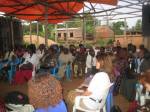
Jogoseeta   This afternoon we traveled a short distance outside of Kampala to the village of Jogoseeta. My friend Joseph, who I met on my first visit to Uganda, is the pastor of the Warriors of Christ Church located on the outskirts of this village. A narrow dirt road leads from the main highway to a gently rolling hill where a half-constructed church building stands like a lighthouse overlooking a sea of deep green fields. The building is framed with slender poles nailed and wired together. The completed portion of the building is sheathed with rusty corrugated sheets of tin. A single entryway leads into the building where white and blue plastic chairs accent the hard-packed and red dirt floor. The back portion of the building is completely open to the weather.
   When we turned off the main road we heard the faint sound of singing that became increasingly louder as we approached. Children greeted us with smiles and laughter when we arrived and the siren sounds of worship drew us into the building. The people assembled inside were singing and dancing for joy. I love worship in Uganda. It’s impossible to remain passive in the presence of such joyful singing and movement. It does not seem to matter at all if the one leading worship happens to sing off-key. Everybody embraces the joyful noise and offers their unrestrained worship to God. It’s obvious that worship here is about Him.

   I was a bit concerned about the weather. But, no one seemed to mind when the sky grew dark and taunted us with the spittle of rain. Those present had come to learn and were not about to let bad weather keep them from it. Once again, we divided the large group of about one hundred into smaller teaching groups. And, once again, folks listened intently and asked the kinds of questions that indicated their concern about the sanctity of human life. Several pastors thanked me between sessions for bringing our team of teachers to Jogoseeta. “We want to teach about this subject,” said one, “but we do not have any resources to help us understand what is happening inside the mother’s womb.”

   I found it convicting to meet with such a great group of people under a building with half of a roof. They were so focused on the message that their “classroom” did not matter. They had come to worship and to learn. In the West, we are often so focused on where we meet that we lose sight of why we meet and miss the message. I’ve heard it all over the past thirty-one years of ministry. The room is too hot or too cold, the chairs are too hard or too soft, the light is too bright or the room is too dark, the music is too loud or not the kind of music I like, ad nauseam. We want coffee in every room and don’t want for the lesson or sermon to drag on for too long. Somehow we have got to come back to the place where we realize that worship is all about God and not about us. We should be thankful for the freedom to hear and study His message in nice buildings that actually have roofs.

   I enjoyed our time at Warriors of Christ Church. These folks really are warriors who are willing to get their uniforms dirty and who are willing to deal with any inconveniences in order to advance God’s purposes. They seem to understand that we are in a battle for souls and they fight an enemy intent on stealing, killing, and destroying everything good, including babies in the womb. These warriors of Christ remind me that the goal of the Christian life is not to see who can get to heaven with the cleanest uniform. I want to be among the warriors of Christ who drag into heaven bloodied and bruised.

   I am grateful to God for those we met with today in a building with half of a roof. Let’s not allow our desire for comforts to make us into soft and complaining people. Let’s not allow all that we have to blind us to what we really need. Let’s embrace the spirit of the folks who meet every week under a half-completed building. Let’s joyfully worship and serve God who has blessed us with so much.

Posted by: Omar C. Garcia | October 8, 2009

The Comforter’s Center

07 October 2009 | Kampala, Uganda

This morning our team visited The Comforter’s Center in Kampala. Kingsland partnered with Life International to start this pregnancy help center in the heart of Kampala. I am always excited to introduce our Kingsland teams to Veronica Nakyewe and the compassionate staff at the center. Last Fall, Kingsland purchased the building that the center had been renting. And, our Kingsland mission teams always come bearing gifts for the center’s use – things like pregnancy tests, newborn baby outfits, quilts and receiving blankets, and an assortment of other things. This afternoon I spoke to a couple of hundred pastors and church leaders about the purpose of The Comforter’s Center and urged them to support this life-saving ministry. Here is a summary of what I shared with them.


C = Christ-Centered
| The Comforter’s Center is a Christ-centered ministry that is committed to the promotion and preservation of life. Jesus is “the way, the truth, and the life” (John 14:6) and came that we might have abundant and meaningful life (John 10:10). Jesus never took a life but instead gave His life for us. Jesus taught that the enemy is all about death and looks for every opportunity “to steal, kill, and to destroy” (John 10:10). His destructive agenda extends to the womb.

O = Obedient | The Comforter’s Center is obedient to the command of Christ. Jesus said, “As the Father has sent Me, I also send you” (John 20:21). The Father sent Jesus on a rescue mission to a dangerous place. We too must be willing to rescue those in danger and in dangerous places, including the womb.

Mother Teresa understood what it means to be on a rescue mission. She said: “Unborn children are among the poorest of the poor. They are so close to God. I always ask doctors at hospitals in India never to kill an unborn child. If there is no one who wants it, I’ll take it. I see God in the eyes of every child – every unwanted child is welcomed by us. … You know, people worry all the time about innocent children being killed in wars, and they try to prevent this. But what hope is there in stopping it if mothers kill their own children? Every life is precious to God, whatever the circumstances.”

M = Mandate | The Comforter’s Center has a mandate to speak for those who have no voice. Proverbs 31:8 states, “Speak up for those who cannot speak for themselves, for the rights of all who are destitute.” Children in the womb have no voice. They cannot speak up for themselves. They cannot say to an abortion-minded mother, “Please let me live. Please do not harm me. Please do not allow me to be torn limb from limb.” We must speak for the unborn.

God has always been concerned about the weak and vulnerable in society. A child in the womb is more vulnerable and at risk than any other members of society. If I am in danger, I can take steps to seek safety. I can move to a more secure home or neighborhood or community. However, if a child in the womb is in danger, it cannot move to a safer womb. We must therefore speak on behalf of the unborn.

F = Families | The Comforter’s Center recognizes that families are important. Psalm 127:1 declares, “Unless the Lord builds the house, its builders’ labor in vain.” God loves the home so much that He is willing to roll up His divine sleeves to help families build strong and safe homes where children can be nurtured to love and serve Him. Satan seeks to steal, kill, and destroy the home. The Comforter’s Center helps families in crisis to seek God and to make choices that honor Him.

O = Orientation | The Comforter’s Center offers orientation and guidance to those facing unplanned pregnancies. People in crisis can easily make wrong choices or turn in wrong directions. Young women with unplanned pregnancies are easily confused about what to do and where to turn. The Comforter’s Center exists to orient women toward life. When women come to the center, the staff embraces them with unconditional love and encouragement.

R = Rely | The Comforter’s Center relies on God to work through His people. Veronica and her staff cannot do their life-saving work alone. They need the cooperation and assistance of local churches and churches like Kingsland. They need resources to carry out their rescue missions. We must hold the ropes for The Comforter’s Center even as those who helped Paul escape from Damascus held the ropes for him (see Acts 9:25).

T = Tell | The Comforter’s Center faithfully tells the story of God’s love to every person who walks through their doors. To date, more than 800 women and family members and friends of abortion-minded women have placed their faith in Christ because of the ministry of The Comforter’s Center. God is using The Comforter’s Center to help people find new life in Christ and babies in the womb to have an opportunity to live.

Posted by: Omar C. Garcia | October 7, 2009

Sitting on the Edge

   06 October 2009 | Kampala en route to Mbale

   After two days of travel, Tuesday morning came early. Tired as we were this morning, we managed to bounce out of bed for a quick bite of breakfast. Then, we loaded our gear into two vehicles for our 350 km trek from Kampala to Mbale. The long ribbon of highway that leads northeast from Kampala is a feast for the eyes. Uganda is a beautiful and lush country where everything grows tall or wide or however it grows, only better than in other places. The colors of everything that grows here somehow seem more vibrant.

   Our journey took us past towns with names like Jinja, Magamaga, and Iganga — each bustling with the activity of early morning. Everywhere in Uganda, people start their day by shopping for fresh vegetables and fruit and meat. Looking at the mass of humanity in the markets makes you wonder if anyone is at home. I love the activity. As we drove through Namutumba, the local cattle auction was open for business. The fields adjacent to the highway looked like a sea of humanity and cattle. We drove across the Nile River and later the Mpologoma River with its banks protected by a standing army of papyrus plants.

   When we finally arrived in Mbale we were greeted by Reverend David, a young Anglican vicar with a passion for God and a local champion for the least of these. I could not help but smile as I reflected on today’s venue. David had arranged for our group of Baptists from Texas to teach a group of Anglican leaders at the local Pentecostal church. We received a warm and gracious welcome. This group was eager to learn what the Bible has to say about the sanctity of human life and related topics.

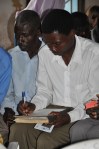
Mbale Notetaker   We divided the large group into smaller teaching groups. The thing that impressed me the most was the posture of everyone present. Without exception, every person in the group was sitting on the edge of their seat. They had come to learn. And, everyone sat close to the speaker, as if by doing so they would be able to soak in more of every word. Within a short time it started to rain. The tin roof of the building amplified the impact of every drop of rain. But, no problem! The participants just leaned in a little closer and urged their respective group leaders to keep teaching.

   I am so glad that we drove the long distance to Mbale. Those present were aware of abortion but had little understanding about how a baby grows in the womb. We gave each of them a model of a twelve-week old baby in the womb – the age at which many babies are aborted. This visual helped them understand the horror of how abortion rips apart tiny bodies with fingers and feet and eyes. These men and women are determined to speak to others about what they learned today – to speak for those who have no voice and to stand for life.

   Four years ago I met Kurt Dillinger, President of Life International. He described the unborn as the largest hidden people group in the world. His words pierced my heart. For years I have been concerned about the world’s remaining unreached people groups, many of which live in the 10/40 Window. But, I had never thought of the unborn as a hidden people group. I could not remain passive but had to act by leading our missions ministry to adopt the unborn as one of the people groups we are committed to reaching — and, in this case, protecting. I am so thankful that Kingsland willingly embraced protecting the unborn and that God led us to partner with Life International to start The Comforter’s Center in Kampala. The Comforter’s Center continues to live up to its name by standing for and spreading the message of life throughout Uganda. This is a message that has many in Uganda sitting on the edge of their seats.

Posted by: Omar C. Garcia | October 4, 2009

Graves of the Living

Dubai, United Arab Emirates en route to Kampala, Uganda

My heroes have always been travelers – those willing to venture beyond the comforts and security of home. I enjoy reading about the adventures of travelers, explorers, and missionaries whose discoveries and experiences have contributed to our understanding of the places and peoples of our planet.

I have great admiration for those who dreamed about distant horizons and dared to lose sight of the shore in order to reach them. In many ways, we are the beneficiaries of their courage. Some of these intrepid individuals returned to their homes and countless others lie buried in plots long forgotten.

I come from a family of travelers whose passports bear the stamps of a hundred countries. From the time I was a kid listening to conversations about far-away places to today, travel excites me. I like to travel but, more importantly, I love to travel with a purpose.

The thing that makes travel meaningful for me is the opportunity to travel as Christ’s ambassador (2 Cor. 5:20). I want to “Declare His glory among the nations, His marvelous deeds among all peoples!” (Ps. 96:3). I want to strategically invest my life for the sake of God’s purpose to make the nations glad in Him (Ps. 67:4). That means leaving home in order to engage with others — from my own community to the ends of the earth.

Making a difference for the kingdom must begin at home. God entrusted parents with the primary responsibility of teaching their children about Him and about His purposes (Ps. 78:1-8). However, making a difference for the kingdom also means leaving our homes, whether that means walking across the street or flying around the world to declare His glory. Despite the benefits of a good home, if we are not careful, staying at home may actually work against God’s purposes.


In his book entitled “Don’t Waste Your Life,” John Piper cautions: “No one will ever want to say to the Lord of the universe five minutes after death, I spent every night playing games and watching clean TV with my family because I loved them so much.” Piper continues, “I think the Lord will say, ‘That did not make me look like a treasure in your town. … Even sinners work hard, avoid gross sin, watch TV at night, and do fun stuff on the weekend. What more are you doing than the others?’” Indeed, what more? What makes us distinctive? What kind of example of selfless service that takes us beyond the comforts of home are we setting for our children?

As much as I enjoy traveling, I also enjoy coming home. Home is a safe, secure, and comfortable place for me – a place to renew my strength. I am so blessed to have such a nice home to return to after serving others – whether through weekend service initiatives or after engaging with unreached peoples on the other side of the world. One thing is certain, I want to be careful lest the comforts of home keep me from taking God’s love to those outside my home.

The Tuareg people of Niger are a nomadic group who traverse the sands of the Sahara. These nomads value their freedom of movement so much that they believe houses are the graves of the living. We can learn a thing or two from the Tuareg. Don’t get so caught up in buying new curtains and watching TV and doing fun stuff that you fail to declare His glory among the nations. Don’t let your home become a grave of the living.

Posted by: Omar C. Garcia | October 1, 2009

A Global Village

There are 6.7 billion people on the planet. Here is a snapshot of what the world would look like if we reduced the world’s population into a single global village.

Out of 100 people:

Ethnicity
  • 60 would be Asian
  • 14 would be African
  • 12 would be European
  • 8 would be Latin American
  • 5 would be American or Canadian
  • 1 would be from the South Pacific

Gender
  • 51 would be male
  • 49 would be female

Race
  • 82 would be non-white
  • 18 would be white

Religion
  • 67 would be non-Christian
  • 33 would be Christian

Conclusion: We live in a world that is non-American, non-white, and non-Christian. Here are a few suggestions for making meaningful connections with others in our global village. 

Look Carefully | Ask God to enlarge your view of our global village.

Engage Intentionally | Take advantage of opportunities to develop friendships with people who are not like you.

Pray Fervently | Pray that God’s name would be made known among the nations — and then, make His name known.

Think Deeply | Learn about the challenges (spiritual, political, economic, etc.) faced by others who live in our global village.

Act Purposefully | Act in such a way that others in our global village may know the reality of God’s love for them.

Give Liberally | Invest in initiatives that will bless the least fortunate who live in our global village.

Posted by: Omar C. Garcia | September 29, 2009

Highway of Holiness

“The highway of the upright is to depart from evil;
He who watches his way preserves his life.”

Proverbs 16:17

CB035146   Proverbs has much to say about roads, paths, and ways. One thing that Proverbs makes clear is that roads are linked to destinations. To embark down a road is to embark toward a destination and perhaps a destiny. The decision to embark down a road should therefore be made carefully and prayerfully. God’s Word instructs us that certain roads should be avoided altogether. We read a father’s instructions to his son in Proverbs 4:14-15, “Do not enter the path of the wicked, And do not proceed in the way of evil men. Avoid it, do not pass by it; Turn away from it and pass on.” Here we see that some roads are clearly marked “Do Not Enter” and should be avoided. However, other roads are not as clearly marked. They seem entirely safe and inviting to the unsuspecting traveler but lead to a dangerous destination. Proverbs 14:12 (and 16:25) speaks of such roads: “There is a way that seems right to a man, but in the end it leads to death.”
 
   Proverbs 16:17 speaks of “the highway of the upright.” In this verse we learn that the upright (or the righteous) individual sets himself upon a course that avoids or departs from evil. The righteous person understands that it is not only important to know which road to travel, but which roads to avoid as well. We must be wise and discerning enough to know that there are certain paths or courses that lead dangerously close to evil or perhaps into the very heart of evil. Some of those paths are clearly marked “Do Not Enter.” Others are unmarked but littered with the wreckage of human lives. We are to avoid these paths. Paul exhorted the Thessalonians to “abstain from every form (appearance) of evil” (I Thess. 5:22). The Psalmist wrote, “How blessed is the man who does not walk in the counsel of the wicked, Nor stand in the path of sinners, Nor sit in the seat of scoffers” (Ps. 1:1).
 
   Proverbs 16:17 states that the upright should avoid and depart from evil. This leaves no room for tolerance or even for curiosity. We have no business taking leisurely strolls down dangerous paths. Such departures from the main road can be costly. Proverbs 21:16 warns, “A man who strays from the path of understanding comes to rest in the company of the dead.” That is why Proverbs 16:17 declares, “He who watches his way preserves his life.” May we learn the importance of staying on the Highway of Holiness (see Isaiah 35:8). May we learn to obey the signs along the way and to steer clear of unmarked trails. Our destination, destiny, and life depends upon the road we choose to travel and how well we heed the signs along the way.

• • • • •

Written December 1990 | San Antonio, Texas

Posted by: Omar C. Garcia | September 27, 2009

Disposable Lives

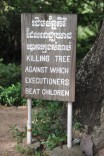
Killing Tree Sign   Early Friday morning, Kurt Dillinger and the Silent Fall documentary film crew returned to the Choeung Ek Genocidal Center to film a segment at the killing tree. This is the spot where the Khmer Rouge took babies from their mothers, swung them by their feet, smashed them against this tree, and then tossed their bloody remains into the adjacent mass grave. I have stood before this tree on two occasions. It’s an emotional experience. Pol Pot’s cadre committed atrocities like this because they had been systematically desensitized to the value of human life. Choeung Ek bears silent testimony to the fact that any worldview that fails to value life ultimately treats lives as disposable.

   About mid-morning, we headed northwest from Phnom Penh along Highway 5 toward Poipet and arrived a little more than five hours later. Poipet is located in Banteay Meanchey Province along the border between Cambodia and Thailand. The unusual thing about this area is what has happened on the narrow strip of land between the Cambodian and Thai passport control gates. Because it is illegal to gamble in Thailand, opportunists have built luxurious hotels with gambling casinos in this no-man’s land. Thais go there to gamble and Cambodians go there to work.

   The activity in this no-man’s land has attracted more than gamblers. Drug dealers and sex traffickers scurried in like roaches, eager to get in on the action. And, the poor have moved to Poipet as well, swelling the population of the area to more than one-hundred thousand people. Unfortunately, the infrastructure of the town cannot support the population. So, the poor live as squatters in a muddy slum filled with garbage and sewage. This slum extends almost ten kilometers along the south side of Highway 5. We slogged through the area and spoke with many who live in the most deplorable of conditions there.

Poipet Kids   As many as 40,000 of these poor people cross the border into Thailand daily to work as day laborers. These day laborers leave their kids alone all day — and sometimes for days. Their children do not attend school. And, because they are alone and vulnerable, many are kidnapped and taken to Thailand. Girls are sold to brothels and boys are sold as cheap labor to work at construction sites and brick factories. Some of these kids are used as mules to transport drugs. Those who control the lives of these kids treat them as disposable assets. There are rumors in the slums that if young Cambodian boys get sick or are injured on the job, they are tossed into the concrete mix and entombed in a building’s foundation. The poor here know that they are vulnerable and that their lives matter little to those with money and power.
   The poor of Poipet live in desperation and on scraps of hope. It is at this dark place that Life International and Kingsland Baptist Church will partner with Steve Hyde to care for the least of these. The governor of the province has made a hectare of land available for an orphanage and pregnancy resource center. Construction of the orphanage has started. Steve also hopes to raise additional funds to purchase the adjacent land where he plans to construct a school to educate the slum kids. I am encouraged that the work here has started. The orphanage will be called “Imparting Smiles” and is scheduled to open in December. I pray that God will use this joint initiative to impart hope and to affirm the value of human life in this dark place where lives are treated as disposable.

Posted by: Omar C. Garcia | September 26, 2009

The Faces of S-21

   The faces of S-21 haunt me. Security Office 21 is located in the heart of Phnom Penh and is today known as the Tuol Sleng Genocide Museum. Originally a school, the Khmer Rouge turned this campus into a place of unrestrained torture. For whatever reason, Pol Pot’s minions photographed the individuals they brought here. In many cases, they photographed these victims again after they had tortured and killed them. These photographs are the Khmer Rouge’s bloody fingerprints at the scene of one of recent history’s most heinous crimes. Today, rows upon rows of the victim’s photographs are displayed in the silent rooms of S-21.

   For the second time in a little more than a month, I stood and stared into the faces of these nameless individuals. The faces in the photographs share common characteristics and can easily be grouped by expressions – blank stares, frightened looks, bewildered brows, and more. Particularly troubling are the photographs of mothers holding their babies. Like the deserted island in William Golding’s “Lord of the Flies,” S-21 is a troubling study of humanity at its worst. Even more, it is a case study of the logical consequences of a worldview that devalues human life. The Khmer Rouge murdered men and women of every age, teenagers, children, babies, and even pregnant women.

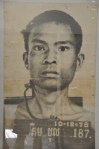
Prisoner 187   I could write about many of the faces of S-21, but two in particular have haunted me over the past few days. The first is the photograph of a man staring wide-eyed into the camera. He was prisoner number 187 and arrived at S-21 on December 10, 1978. I stopped and stared at his photograph and noted the date that indicated when he crossed the threshold into Khmer Rouge Hell. What was I doing on December 10, 1978 while this frightened man posed for Pol Pot’s photographer? I began my journey into full-time vocational ministry in 1978. I was single at the time and looking forward to driving home to enjoy Christmas with my family. Life was good for me on December 10, 1978. And honestly, I was not thinking about Cambodia or even aware of places like S-21.
   The date on prisoner 187’s photograph reminded me that every day of the year some unfortunate human being is suffering in some place on the planet. Prisoner 187 should remind us to live with greater awareness of the atrocities that are happening in our world and prompt us to promote justice. In the words of Proverbs 31:8-9, we must “Speak up for those who cannot speak for themselves, for the rights of all who are destitute. Speak up and judge fairly, defend the rights of the poor and needy.” I am particularly concerned about issues like abortion because when the pre-born are stripped of their rights, then what follows will eventually lead us down the path to S-21. Once abortion is accepted, then infanticide will be the next front line, and then euthanasia. From there it is but a short distance to the front steps of S-21.

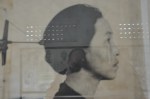
S-21 Woman   The second photograph that has haunted me is a side profile of a woman. Her head is leaning against a rod placed behind her head. This rod was positioned so that prisoners would not slouch while being photographed, but instead look directly into the camera. I looked at her face and noticed something I had not seen on my previous visit – a single tear streaming down her right cheek. I wondered about how many more tears she would shed in the solitude of her filthy cell, or while being interrogated and tortured. Did she cry for herself? Did she weep for family members she would never see again? Did she weep as she nursed her own wounds or as she nursed the wounds of others? Did she weep as she knelt blindfolded before a mass grave the moment before she was struck in the back of the head and killed?

   I thought about my own tears as I looked at her photograph. Actually, I thought about how few tears I shed. My life is comfortable and free from pain. I can read statistics about injustice and atrocities and feel anger and burn with indignation. However, it’s not until I stand before a photograph like this, a photograph of one of the two-million who died at the hands of the Khmer Rouge, that I finally feel a tear stream down my own cheek. The woman in the photograph reminds me that I too must weep. Her fate can become my fate if those filled with hatred in our world prevail. And, looking at what is happening in our world today, there is cause for weeping. We must, therefore, remain neither silent nor complacent in the face of injustice. Instead, we must work to affirm the worth and dignity of all people lest we too cross the threshold into a nightmare like S-21.

Posted by: Omar C. Garcia | September 24, 2009

Women on Mission

   As I write these words, I am seated in a small church building in Phnom Penh, Cambodia. I am here with Kurt Dillinger, President of Life International, and a small team of teachers and documentary filmmakers. Those in attendance have come here from throughout Cambodia to learn about what the Bible has to say about the sanctity of human life and related topics. For the past three days, over two-hundred pastors and church leaders have listened patiently under the hum of ceiling fans. Yesterday they struggled to listen under the noisy and chaotic cadence of raindrops beating against the building’s tin roof. Every chair in the building has been occupied by men and women listening while scribbling notes on pads balanced on their laps.

   I am especially pleased that over half of those in attendance are women. Yesterday, one woman approached me and told me how much she was enjoying our teaching sessions. “I will take this message of life to the people of my village,” she said. Then she smiled and added, “And if God will allow me, I will take this message to everyone in the world because everyone needs to hear it.” She is right. Everyone needs to hear what God has to say about the sanctity of human life. And, if this message is going to reach into every home and village in Cambodia, then it will only happen with the help of women like these. Women will make the difference! As much as I respect the men in the crowd, I believe that the women will do a much better job of taking this particular message to other women and to the children in their homes.

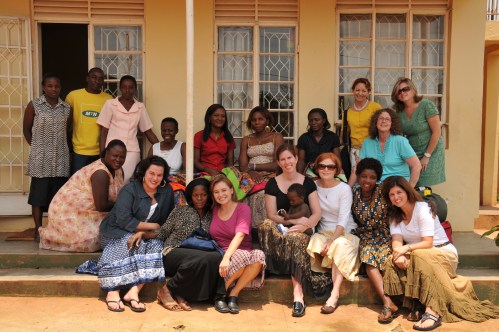
   I return home from Cambodia early on Tuesday morning, September 29. I get to enjoy a few days of rest before heading for the airport again on Saturday, October 3. I am leading a team from Kingsland to Kampala, Uganda to teach, work, and assist The Comforter’s Center – the pregnancy resource center we helped birth in cooperation with Life International. The unusual thing about this particular team is that it is made up entirely of women. A couple of the women are empty nesters, four of them have young kids at home, and two are single. However, each of these women shares a common concern for babies in the womb. For many pre-born babies, the womb is not a safe and nurturing place. Our Kingsland women will speak to women in Uganda about choosing life and about teaching their children to value life. These women will make a difference.

   As I look back over the past four years that I have served as Missions Pastor at Kingsland, I am especially blessed by the numbers of women who have joined God on mission from Katy to the ends of the earth. The very first local missions initiative I led at Kingsland was a team of almost fifty Moms and kids who served the least of these in Houston’s Fourth Ward. Over the past four years, Kingsland Moms have also ventured and served in mega-cities in South Asia, deep in the African bush in Tanzania, in the mountains of northern Morocco, in Mexico’s Copper Canyons, across the steppes of Mongolia, in the shadows of the Himalayas, among refugees in Kurdistan, and other places. God is using the women of Kingsland to make a difference in their own homes. And, He is also using them to make a difference in our world.

   I am thankful to God for the women of Cambodia and for the women of Kingsland. Their determination to advance God’s interests is making a difference in the lives of many people in our world. Thank you for your service, ladies. You are indeed an inspiration.

« Newer Posts - Older Posts »

Categories