Posted by: Omar C. Garcia | November 3, 2009

Kolkata’s Litter

   On any given day, Kolkata’s streets vibrate to the rhythm of constant pedestrian traffic. The streets here are the fertile ground of a forest of humanity – people who look like trees walking around (Mark 8:24). Kolkata’s streets are also filthy. They have been stained by the incessant activity of millions of restless people and are cluttered with the debris they cast aside. If germs have a Riviera, it’s here on the streets of Kolkata. Consequently, there is no such thing as a five-second rule here. Whatever touches the streets of Kolkata becomes unimaginably filthy. The streets here are not passive — they tattoo and leave their mark on whomever or whatever touches them.

   We were up early this morning to walk along Kolkata’s streets to Mother’s House, the place that serves as base camp for Mother Teresa’s Missionaries of Charity. The nuns celebrate mass at 6:00 A.M. every morning. It’s worth getting up early to experience worship with these dedicated servants and with the volunteers that come here to serve from all over the world. The sidewalks are not quite as busy this early in the morning and traffic is not as heavy. Merchants are out sweeping the litter on the sidewalks in front of their business, creating little mounds of festering filth that pedestrians must step over or around. The streets of Kolkata are just beginning to come alive with activity.

Homeless in Kolkata   Walking Kolkata’s streets early in the morning also reveal other mounds around which pedestrians must navigate. These are the mounds of Kolkata’s human litter, the thousands who sleep on the sidewalks – mothers with babies, old men and young children, the crippled and old women, and others. These are the cast-offs of a society segmented by caste and largely ignored because of a worldview that sees their plight as payment for the sins of a past life. These are the people who became Mother Teresa’s parishioners, the people she swept off the streets and into her homes. These are the people she invited to the banquet. She found Jesus hiding in the distressing disguises of these poor and vulnerable and dying people who litter the streets of Kolkata. And when she found Jesus hiding among the least of these, she offered Him food, water, clothing, shelter, medical attention, and more. She offered unconditional love, unrestrained kindness, and unlimited acceptance.

   I am glad that we got up early this morning to worship with Mother Teresa’s nuns. The priest who led the service sounded like an old Baptist preacher. His message was all about Jesus. “We must take Jesus into the streets,” he said, “and tell His story clearly, confidently, and convincingly.” And then, he talked about the persecution of Christians in Orissa, which is the next stop on our journey. “Christ’s followers will not be intimidated or stopped by threats or persecution,” he thundered. “We will take Jesus to the people and tell his redemptive story.” His challenge to tell and to show the love of Jesus to the people on the streets was right on target.

   This is my second visit to Mother Teresa’s homes. One thing that impresses and inspires me is the thousands of volunteers who come here from all over the world every month. Most come to serve for weeks and months at a time. Every one of them tells the same story of how they were inspired to serve God by Mother Teresa’s example of caring for humanity’s wrecked and discarded lives. And somehow, after serving and ministering to the broken lives swept in from Kolkata’s filthy streets, no one returns home the same. This experience changes you. No longer can you look at the sidewalks where you live with uncompassionate detachment. Ask God to guide you to show His love and to tell His story to those who live in the shadows and in the filth of the streets where you live. Determine that you will allow Him to use you to affirm the worth of those who live among the litter.

Posted by: Omar C. Garcia | November 1, 2009

A Micah 6:8 Trip

   En Route to Kolkata via Dubai

   Once again I am seated on a flight headed across the Atlantic to India via Dubai. I have flown this route many times before. Doyle Lowry, our Executive Pastor at Kingsland, is traveling with me. I am accustomed to flying far in the back of the plane with the chickens and livestock. I do so to save money. In fact, we redeemed miles for the tickets to take this trip. However, something pleasantly unexpected happened at the airport in Houston. Before boarding, the airline attendants called my name and Doyle’s and asked us to approach the ticket counter. They took our boarding passes and replaced them with two Business Class seats – free of charge. I’ll stop here because this post is not about the luxury I find myself in as I write these words at thirty-five thousand feet. But, I must say, “Wow! Thank you Lord, for this unexpected blessing!”

   As I have been praying about and reflecting on this trip, my thoughts turned to Micah 6:8 — “He has told you, O man, what is good; and what does the Lord require of you but to do justice, to love kindness, and to walk humbly with your God.” The three tasks of this trip align with the three things stated in this verse.

To Do Justice

   Our first stop is in Kolkata where I have a meeting with a friend who handles logistics for a large missions organization. We are going to discuss how we can collaborate as Kingsland starts funding two safe houses in India for women and young girls rescued from forced prostitution. One of these homes cares for one-hundred and fifty young women and the other for seventy. The residents of these homes range in age from thirty to girls ten-years old and younger. Every single one of these girls has experienced the unimaginable indignity, horrors, and helplessness of life in filthy brothels. Forced into a lifestyle they would not have chosen for themselves, each of these women will have to deal for a lifetime with the physical and emotional trauma they have suffered. They are victims of injustice – weak and vulnerable individuals who have suffered the loss of much at the hands of those stronger than them. The problem of sex trafficking and the kinds of abuses these women have suffered is a global problem. Issues of justice are not optional for Christians. We must work with God to deliver the afflicted from those who overpower and abuse them (Ps. 35:10). Kingsland is in the fight!

To Love Kindness

   While in Kolkata, Doyle and I will spend a couple of days serving at Mother Teresa’s homes for the destitute and dying. I first visited and volunteered at Mother Teresa’s homes in January of this year. It was one of the most challenging and fulfilling experiences of my life. Mother Teresa was a remarkable woman who was committed to looking for Jesus in the distressing disguises of the poor. And then, when she found the poor, she did for them what Jesus would do. Mother Teresa knew what it meant to love kindness. And, by demonstrating kindness to the least of these, she honored God. Proverbs 14:31 says, “He who oppresses the poor reproaches his Maker, but he who is gracious to the needy honors Him.” I will return to Mother Teresa’s homes in January 2010 with a team from Kingsland. We will work alongside the Missionaries of Charity who continue Mother Teresa’s life-saving work in Kolkata and in hundreds of locations around the world.

To Walk Humbly with Your God

   From Kolkata we will fly to Bhubaneswar in the state of Orissa, the state with some of the most violent persecution of Christians in India. From Bhubaneswar we will drive six hours into the Khondhamal Hills to our boys’ school named in memory of Diane Patterson. In the past weeks we completed the purchase of a hectare of land for our new campus. Doyle and I will meet with the director of our school and local builders to discuss the costs to build dormitories, classrooms, and a sports field. Ed Aboud, one of our Kingsland members, graciously had architectural plans prepared for our meeting. These plans will guide us as we begin the building process. Our school is committed to fulfilling Kingsland’s purpose of loving God, loving people, and equipping the generations. Half of the boys in our care are orphans and the others are from very poor Christian homes. Our boys are learning what it means to walk humbly with God in a place where it is costly to do so.

   Please pray for us in the coming days. The work that we are doing here will have a huge impact on the lives of many women and young girls and boys. And, determine to live a Micah 6:8 life in your home, community, or wherever your travels take you.

Posted by: Omar C. Garcia | October 29, 2009

The Kindness of Others

   One of the things I enjoy most about what I do is leading the people of Kingsland to demonstrate God’s love to others through practical and unconditional acts of kindness. Every week, our people engage in initiatives that bless others in need throughout our community. But today, I was the recipient of the kindness of others. Let me explain. My closest friends often call me the Job of cars because I seem to have more problems with cars than the average guy. That’s because I am so cheap that I drive my cars until the wheels fall off. Years ago I drove a car that broke down so often that I purchased complimentary tow ropes for all of my fellow staff members. That way, I did not feel so bad when I had to call on them to tow me to the mechanic. And, the best thing about the little van that I currently drive is that it doubles in value every time I fill it up with gas.

   Today, I experienced the kindness of a friend. As a Dad trying to maintain five vehicles, it seems that one of them is always in need of repair. I had to have the transmission in one of my vehicles repaired and went to pick it up today. What a blessing to learn that the cost had been covered by a friend. That’s no small thing! I am blown away by such a huge and gracious expression of love and kindness. While picking up this vehicle, my youngest daughter called from school to tell me that her battery was dead. Armed with jumper cables I drove off to the rescue as thunder clouds formed over our Katy skies.

   Today, I also experienced the kindness of a stranger. While my daughter was in class I jump-started her car and drove it to the nearest Auto Zone. The folks at Auto Zone tested the battery and determined that it was indeed bad and in need of replacement. An older gentleman at the store said that he would change the battery for me. While he was under the hood, it started to rain in biblical proportions. He had to run into the store for a while until the rain let up a bit. He told me, “I am doing this because I heard you tell the clerk that this was your daughter’s car. I have a daughter, too. And, I am doing this because I am a Christian.” I told him that I was the Missions Pastor at Kingsland. He smiled and told me that he was a pastor from Puerto Rico.

   Today, I experienced the kindness of a friend and a stranger — both Christ-followers and both determined to demonstrate God’s love to others in practical ways. Today, I was on the receiving end of the kindness of others. Richard, my new Puerto Rican friend, smiled as he stood in his rain-soaked clothes and told me to read Matthew 7:20 — “So then, you will know them by their fruits.” I am grateful to a friend and a stranger today for blessing me with the fruit of kindness. Their unconditional and unselfish acts of kindness have refreshed me and reaffirmed how blessed I am. They have inspired me to continue looking for opportunities to love and bless others — in Katy and beyond.

Posted by: Omar C. Garcia | October 26, 2009

A Chance to Die

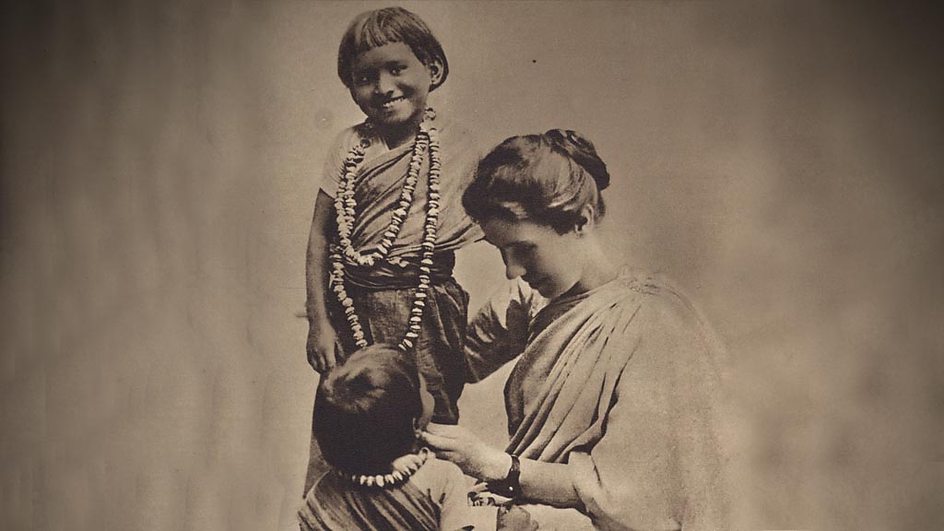
Amy Carmichael Portrait

Amy Carmichael was, perhaps, the most unlikely candidate for missionary work. Born in 1867 to devout Christian parents in Northern Ireland, she suffered from neuralgia — sharp nerve pain that often debilitated and caused her to be bedridden for weeks at a time. After the death of her father, she was adopted and mentored by Robert Wilson, cofounder of the Keswick Convention (an annual gathering of evangelical Christians in Keswick, England).

At the Keswick Convention of 1887, Amy heard Hudson Taylor, founder of China Inland Mission, speak about missionary life. She was profoundly touched by Taylor’s message. Amy later felt God’s call to serve Him as a missionary. She applied to China Inland Mission to serve in Asia but was not allowed to go because of concerns about her health.

In spite of her frail health, Amy was still convinced of God’s call to serve Him in foreign fields. She later joined the Church Missionary Society and served in Japan for fifteen months. However, after a brief visit to Sri Lanka, Amy felt God calling her to serve in India. She therefore moved to Tamil Nadu, the state located in the southernmost tip of the Indian Peninsula.

Amy spent the remaining fifty-six years of her life in Tamil Nadu and never returned to Ireland again. Just as Hudson Taylor had adopted the dress of the Chinese, Amy adopted the dress of the people she served. She even dyed her skin with dark coffee in an attempt to better relate to those she was trying to reach.

Amy Carmichael and Kids

Much of Amy’s work was with women and young girls. She founded an organization called Dohnavur Fellowship. This organization became a sanctuary to more than one-thousand vulnerable women and children, including young ladies forced to work as prostitutes to raise money for Hindu temples.

Amy often traveled long distances to save children from suffering and from abusive situations. Those she rescued affectionately called her Amma, which means mother in the Tamil language.

While serving in India, a young lady wrote to Amy and asked her what missionary life is like. Amy wrote back saying, “Missionary life is simply a chance to die.”

In 1931, Amy was badly injured in a fall and, as a result, was often bedridden throughout the remaining years of her life. Before her death in 1951 at the age eighty-three, Amy requested that no stone be put over her grave. The children and residents of Dohnavur Fellowship honored her wish and instead put a bird bath over her grave with the inscription “Amma.”

Amy labored selflessly to declare God’s glory among the nations. Over the course of her life, she wrote thirty-five books and hundreds of hymns and songs. Her life inspired many to serve as missionaries, including Jim and Elisabeth Elliot.

Amy once wrote, “Can we follow the Savior far, who have no wound or scar?” Jim Elliot certainly understood the meaning of those words and that the missionary life is simply a chance to die. Elliot later wrote in his journal, “He is no fool who gives what he cannot keep to gain what he cannot lose.” On January 8, 1956, Jim Elliot was martyred at the end of a spear in the jungles of Ecuador.

The kingdom of God has advanced over the past two millennia because of people like Amy Carmichael, Jim Elliot, and others like them who embraced the missionary life as a chance to die.

Posted by: Omar C. Garcia | October 24, 2009

Mason’s Question

  I look forward to every Saturday — even though Saturday is not a day off for me. Our missions ministry mobilizes the people of Kingsland to get involved in local service initiatives almost every Saturday of the year. Over the past four years more than 8,500 volunteers from our church have rolled up their sleeves and gotten their hands dirty by serving others on Saturdays. Today was no exception. Jon Davis, our Missions Ministry Associate, and I had the joy of serving with the New Ground and Outfitters Adult Bible Fellowship groups. Almost fifty parents and kids met at the Katy Christian Ministries campus ready to work. One of the most enjoyable things about our Saturday initiatives is getting to spend time with parents and their kids.

KCM Pergola  Today, some of our men built a beautiful pergola in the center of the garden we planted at Katy Christian Ministries earlier this year. This pergola will serve as a place where the staff and guests of Katy Christian Ministries can pray, meditate, or just enjoy a Texas sunset. Dads and sons worked together to hoist lumber, weed vegetable beds, complete work on some of the raised planting beds, and more. I love the sounds of power tools and laughter and good conversation. These sounds remind me that we do more than build things on Saturday, we also build people. And, when we work our muscles, God is always faithful to work in our hearts.

Michael and Claire  Our missions ministry is also committed to assisting area food pantries. We purchased several hundred pounds of beans and rice in bulk packaging. A group of parents and kids repackaged these items in small zip lock bags. The Katy Christian Ministries Food Pantry will distribute these and other food items to families in need throughout the coming week. One of our youngest participants was Claire, the two and a half year old daughter of Michael and Aimee Evans. With a plastic cup in her hand, she had an enjoyable time filling zip lock bags with rice. I asked Michael a few questions about serving with his daughter.
Omar | Michael, you and Aimee have participated in our weekend initiatives since the days before you were parents. How old are your children and why is it important to you to model service for your kids?
 
Michael | Aimee and I want our 2 1/2 year old Claire and 9 month old Sarah to always see service as a part of every day life. It is one of the ways we are working to equip the generations in our home. 

Omar | There are all kinds of fun things for parents to do with their kids on the weekend. It was obvious to me that you and your daughter had fun serving together today. What did you tell Claire about the contribution she made today?
 
Michael | Claire is young, but she understands what helping means. I explained that she was helping give people without food something to eat. Whether the full impact of the lesson is understood, she is both hearing and seeing God work through people for people.
 
Omar | What do you hope to see happen in your kids lives in the years to come as you continue to make memories of serving together?
 
Michael | We intend to make service a natural part of our entire family’s life. I pray that our girls’ hearts will be softened to the needs of others. I hope they look back on their lives and focus not on the presents we gave them, but on the memories we make, especially the ones that show them our faith through action.
 
Omar | What advice or encouragement would you give to other parents about the value of modeling servanthood and involving their kids in service initiatives?
 
Michael | We are certainly more efficient serving when kids aren’t underfoot. However you miss a great opportunity to teach them through example if you don’t bring them along. As all parents know, kids learn more from what they see than from what they hear. Don’t underestimate your kids. They may not be experts, but they can learn how to help in small ways. Don’t forget, each of us is asked to give what we can. Even if it is just a two-year old pouring rice into a plastic bag, God is glorified.

  I appreciate Michael and Aimee and all of the parents and kids who served today. At the conclusion of today’s projects, four year-old Mason Hereford looked up at his father, Carlton, and said, “This was fun, Daddy. When are we going to help somebody else?” Wow! That’s a great word from a four year-old. The concept of serving others is already a part of Mason’s vocabulary and thinking. That’s no accident. When parents lead their kids to serve others, good things happen in a child’s heart and mind. They begin to understand that life is not just about them, but about others. Hopefully, as they continue to serve others, they will grow up a little less selfish, a little more compassionate and considerate of others, and feeling less like the world owes them everything they want. I like Mason’s question. Let’s raise our kids to heed the words of Paul to the Philippian Church, “Do nothing out of selfish ambition or vain conceit, but in humility consider others better than yourselves. Each of you should look not only to your own interests, but also to the interests of others” (Phil. 2:3-4).

Posted by: Omar C. Garcia | October 22, 2009

Hannington’s Dust

James Hannington   In 1882, Oxford-educated James Hannington heard of two missionaries martyred on the shores of Lake Victoria in East Africa. Moved by their extreme devotion, Hannington offered himself to the Church Missionary Society to serve as a replacement. He departed England in 1882 and sailed for Uganda via Zanzibar in the Indian Ocean. However, he was so weakened by fever and dysentery that he was forced to return to England to recover. In 1884, Hannington was consecrated Bishop of Eastern Equatorial Africa and set sail again for Africa in January 1885. After arriving in Kenya, Hannington decided to blaze a new route to Uganda. The trek was difficult and risky. On July 22 Hannington wrote these words in his diary:

“The outlook is gloomy. … Starvation, desertion, treachery, and a few other nightmares and furies hover over one’s head in ghostly forms, and yet in spite of it all, I feel in capital spirits. Let me beg every mite of spare prayer. You must uphold my hands, lest they fall. If this is the last chapter of earthly history, the next will be the first page of the heavenly — no blots and smudges, no incoherence, but sweet converse in the presence of the Lamb.”

   Hannington and his team reached Lake Victoria in October of that year. However, their presence did not go unnoticed. On October 21, Hannington and his party were seized, imprisoned, and brutally treated by the soldiers of a regional ruler named Mwanga. Hannington continued to read the Scriptures and to take notes in his diary. On the seventh day of his imprisonment he wrote:

“A terrible night; first with noisy, drunken guards, and secondly with vermin, which have found out my tent and swarm. I don’t think I got one hour’s sleep, and woke with fever fast developing. O Lord, do have mercy on me, and release me! I am quite broken down and brought low. Comforted by reading 27th Psalm.”

   On the following morning, October 29, Hannington wrote in his diary that he had read and found comfort in the 30th Psalm. Later that day, Mwanga’s men escorted Hannington and his fifty porters toward the banks of the Victoria Nile. Mwanga’s men executed Hannington’s porters and then stabbed Hannington with their spears. As he died, the thirty-eight year old Hannington allegedly told his executioners, “Go, tell Mwanga I have purchased the road to Uganda with my blood.”

   Tertullian said, “The blood of the martyrs is the seed of the church.” He was right! England was so stirred by Hannington’s ultimate sacrifice that scores of volunteers enlisted to take his place, and within five years twelve thousand East Africans had become Christians. In the 30th Psalm, the Psalm that Hannington had read before he died, the Psalmist complained, “What will you gain if I die, if I sink down into the grave? Can my dust praise you from the grave? Can it tell the world of your faithfulness?”  (30:9). In Hannington’s case, his dust continues to praise God from the grave and to tell the world of God’s faithfulness. Our dust will speak for us after we die. So, like Hannington, let’s write a good script for our dust.

Posted by: Omar C. Garcia | October 19, 2009

Shackleton’s Want Ad

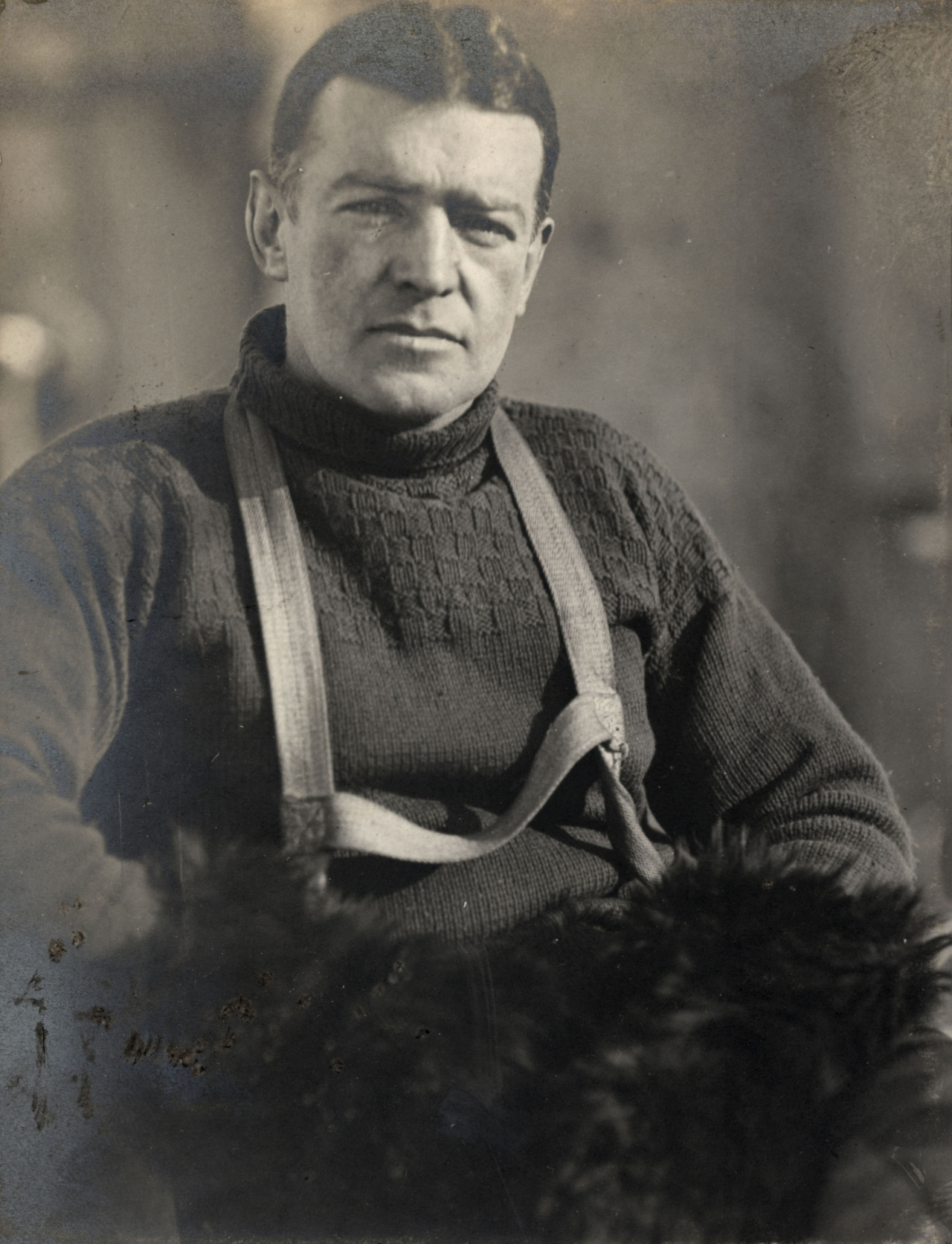
Ernest Shackleton is one of my historical mentors. He lived during the Heroic Age of Antarctic Exploration, the period from 1897–1922 during which sixteen major expeditions from eight countries focused on the Antarctic continent. Shackleton first ventured to Antarctica in 1901 aboard the Discovery as a member of the well-financed National Antarctic Expedition under the command of Robert F. Scott. Although this was the best equipped scientific expedition to Antarctica to that date, Scott and his team failed to reach the South Pole.

Shackleton
Shackleton returned to Antarctica in 1908 aboard the Nimrod as a member of the British Antarctic Expedition. By January 9, 1908, Shackleton and three companions had trudged to within 96 miles of the South Pole. However, finding themselves dangerously short of supplies, Shackleton made the most difficult decision of his life — he turned his men toward home. He later told Emily, his wife: “I thought you’d rather have a live donkey than a dead lion.”

In 1911, the Norwegian explorer Roald Amundsen and the British explorer Robert F. Scott led their respective expeditions to Antarctica in an attempt to reach the South Pole. On December 14 of that year, Amundsen arrived at the pole a month before Scott. Sadly, Scott and his four companions died on their return journey.

In 1914, with the prize of the pole already having been claimed by Amundsen, Shackleton set his sights on an ambitious new challenge — a trans-Antarctic expedition from the Wedell Sea to the Ross Sea. He hoped to be the first to cross the cold continent on foot. Shackleton described this expedition as “the last great polar journey that can be made.”

Shackelton's Want AdIn December 1914, Shackleton set out with twenty-eight men on the Imperial Trans-Antarctic Expedition. He is credited with running the most successful want ad in history: “Men wanted for Hazardous Journey. Small wages, bitter cold, long months of complete darkness, constant danger. Safe return doubtful. Honour and recognition in case of success.”

I am inspired by Shackleton’s want ad, but even more so by the hundreds who responded to the ad. Out of these applicants, Shackleton carefully chose and built his crew around a core of experienced workers. He looked for people who shared his vision and enthusiasm for exploration, optimists, those who wouldn’t flinch at menial tasks, and those who had the expertise he lacked. He made sure that every man he hired knew exactly what was expected of him.

Shackleton’s wise selection of a crew proved crucial to their survival when the Endurance, their ship, was trapped in the ice pack and later crushed. Shackleton and his men survived a twenty-month ordeal — one of the greatest survival stories of all time. After reaching Elephant Island, Shackleton selected a few men and made a daring attempt to reach a whaling station on South Georgia Island in a small lifeboat. He promised the men he left behind that he would return for them. Every day a man was assigned to watch for Shackleton’s return. Shackleton did return and rescued every member of his crew. All of his men survived in good health and in good spirits.

Long before Shackleton placed his ad in a local newspaper, God has been looking for and recruiting adventurous individuals willing to risk it all to advance His purposes and declare His glory among the nations. What will it take to advance His purposes? In the words of A.W. Tozer, “… every advance that we make for God and for His cause must be made at our inconvenience. If it does not inconvenience us at all, there is no cross in it! If we have been able to reduce spirituality to a smooth pattern and it costs us nothing — no disturbance, no bother and no element of sacrifice in it — we are not getting anywhere with God. We have stopped and pitched our unworthy tent halfway between the swamp and the peak.”

The truth is that many will get to the end of life’s journey wondering what God could have done in and through their lives had they been willing to give Him everything. I don’t want to have those kinds of regrets at the end of my journey. Instead, I want to go beyond — to go and to do and to engage with others for God’s glory. I am willing to risk it all for His purposes, to live passionately and adventurously for God, and to give Him everything. Doing so is costly, but failing to do so is even costlier. So, don’t settle for mediocrity and comfort. Sign on for the adventure of a lifetime!

• • • • •

Check out my reading list on Sir Ernest Shackleton under the Adventure | Exploration section of my Books page.

Posted by: Omar C. Garcia | October 17, 2009

Weekend Warriors

   It’s good to be back in Katy after having spent the past month in Cambodia and Uganda. I am grateful to Jon Davis, our Missions Ministry Associate, and Amy Granger, our Missions Ministry Assistant, for keeping the home fires burning while I was away. Our Missions Ministry is in constant motion, planning and leading over a hundred annual local and international missions initiatives as well as overseeing our Benevolence Ministry. This has been a good year. We estimate that by the end of the year, approximately 3,000+ Kingsland volunteers (several repeats) will have served in our various local and international initiatives.

   In spite of my jet lag, I was up early this morning to meet Jon at the Pregnancy Help Center of West Houston. Jon mobilized Kingsland’s Christian Fellowship and Mosaic Adult Bible Fellowships to meet some practical needs today. Our teams added some much-needed shelving at the center, built a security fence around air conditioning units, and added seasonal flowers and fresh mulch. The best part of our weekend initiatives is spending time with Kingsland’s weekend warriors and those to whom we minister. Debbie Stoddard, the PHC Executive Director, and some of her staff, joined us today. They were very grateful for all that our weekend warriors accomplished.

Katy PHC   I am also grateful to the parents who brought their kids to today’s initiative. One of the best ways to raise kids that have a heart for others is by including them in service initiatives. We always plan kid-friendly and age-appropriate projects for kids to do at each of our weekend initiatives. Over the past four years, Kingsland kids have joined their parents and grandparents to serve others from Katy to Houston’s inner-city neighborhoods. We want for parents and kids to make special memories by serving others together. My youngest daughter has joined me on over a hundred local service initiatives and two international mission trips. Serving others has strengthened our relationship by providing lots of opportunities for us to talk, laugh, get our hands dirty, and pray together.

Go Beyond Van   Our weekend warriors are making a difference throughout our community. One lady in an inner-city neighborhood told me she knows that good things are going to happen when she sees our Go Beyond work van and Kingsland volunteers in the neighborhood. An elderly man told me that his inner-city neighborhood was starting to feel safe again because of all of the work our weekend warriors had done there. An urban pastor told me that people were visiting his church because of the good work our folks had done in his neighborhood. One man told one of our weekend warriors that he was not a Christian but was definitely interested in learning more about Jesus because of the good work that our weekend warriors had done to help his neighbor in need. So, as Jesus said, let’s let our light shine before others in such a way that they see our good works and glorify our Father who is in heaven (Matthew 5:16). Join the ranks of the kingdom’s weekend warriors!

Posted by: Omar C. Garcia | October 14, 2009

Post-Abortion Memory

   Our team arrived home today after a week of teaching about the sanctity of human life in Uganda. We had a wonderful time with Veronica Nakyewe, the director of The Comforter’s Center, and her staff. One of the services offered at The Comforter’s Center in Kampala is post-abortion counseling. Many women who have had abortions come to the center seeking help to deal with feelings of guilt and remorse. Veronica and her staff compassionately work with these women, helping them to accept God’s forgiveness, to heal, and to embrace new hope for the future.

   All of our team members did a wonderful job of teaching about the sanctity of human life and related topics over the past week. Leslie Joyce, one of our team members, taught about forgiveness. Although Leslie has never had an abortion, she knows the particular pain of having a post-abortion memory — one that has repeatedly surfaced over the years. This is her story.

Omar | Leslie, you have never had an abortion yet know the sting of a post-abortion memory. Explain your first experience with an unplanned pregnancy, which is at the root of your particular post-abortion memory.

Leslie | When I was sixteen years-old, my best friend was sexually active and became pregnant. Her boyfriend of two years abandoned her and wanted nothing to do with the baby. She was devastated and did not know what to do.

Omar | Did your friend tell her parents about her pregnancy?

Leslie | No. She was convinced that if her parents found out they would force her to leave home. So, she felt she had no other option but to seek an abortion.

Omar | What did she do or where did she turn for help?

Leslie | Since we had been friends since we were very young, she confided in me and asked me to help her. And, once she told me about her situation, I wanted to help her to get an abortion.

Omar | What steps did you take to find out about where she could get an abortion and what that abortion would cost?

Leslie | We looked in the phone book to find information about abortion providers and scheduled an appointment. The clinic we visited did not require my friend to get her parents’ consent. The nurse at the clinic talked to her about the procedure and the cost of the abortion but nothing else. If I remember correctly, the cost of the abortion was about $375.00. 

Omar | Did your friend have the money to get an abortion?

Leslie | My friend did not have the money. So, we each sold personal belongings in order to raise the money for her to get an abortion. Once we had raised enough money, I personally drove her to the abortion clinic. At the time, neither of us ever stopped to consider the life of the baby in her womb. I really don’t think I realized that she was carrying a living baby created by God and that God had a plan or purpose for the child in her womb. We ended a life that day. I supported my friend in her decision and did not try to stop her.

Omar | What was it like on the day of the abortion?

Leslie | On the day of the abortion, I drove my friend to the clinic. She was one of seven young girls having abortions on that day. The nurse gave each of them a Valium and a magazine to read. Then, each girl was escorted to the room where the ten to fifteen-minute procedure took place. We had to stay an additional half-hour and then drove to my house where my friend told me about the procedure. We cried together. At the time, we rationalized the decision because we did not understand much about how a baby develops in the womb or what that little baby must have looked like.

Omar | How has that experience impacted your life?

Leslie | Looking back on the experience, I feel nothing but shame and guilt. Maybe I could have changed my friend’s mind. Maybe it could have ended differently. Later in life, when I was pregnant with my own babies, I would often think about the horrible choice we made and the baby that was never given a chance to live. It wasn’t until I was preparing to be a part of this team to Uganda that I truly accepted that if I asked God for forgiveness, He would forgive me for the role I had played in helping my friend to end the life of her baby. I am so thankful for the assurance of forgiveness that is found in 1 John 1:9 — “If we confess our sins, He is faithful and just to forgive us our sins, and to cleanse us from all unrighteousness.”

Omar | What advice would you give to others who have had an abortion or who, like you, have supported someone who has?

Leslie | I would tell them that there is no sin that God cannot forgive. The Bible is clear that God will forgive sin. He sent Jesus Christ, His only Son, to pay the penalty for our sin, including my sin of helping my friend to get an abortion. I would also tell others that God does not want for us to go through life punishing ourselves for our bad decisions or to be crippled by guilt. He wants for us to learn from our sins, turn from them, and seek the forgiveness He graciously offers us. No matter what we have done, there is no sin that falls beyond the scope of His grace and forgiveness.

Omar | I’m glad that Leslie shared her story with the various groups we spoke to in Uganda. So many who heard her story shed tears and nodded in affirmation as they listened. After each session many people approached Leslie to thank her for sharing her personal story and to talk about their own post-abortion stories. I’m thankful that she reminded those in attendance that our God is compassionate and gracious and offers us healing for the past and hope for the future.

Posted by: Omar C. Garcia | October 13, 2009

Innocence Lost

12 October 2009 | Undisclosed Location in Kampala, Uganda

This morning we pushed and shoved our way through Kampala’s traffic en route to a safe house – a sanctuary for young women rescued from the local commercial sex trade. The location of this house is a safely guarded secret because the security of those rescued is at stake. The pimps and madams who have lost girls do not generally give them up without a fight — thus the need for guarding the location of the house.

Veronica, the director of The Comforter’s Center, arranged for us to meet with a Ugandan woman named Annette, the director of this safe house. As we neared our destination, our driver turned left off of a paved road past a foul-smelling pile of garbage and onto a deeply rutted and muddy dirt road. A short distance down the road a woman opened a gate and ushered us into the small, walled compound.

Annette greeted us with a winsome smile and firm handshake. She led us inside the house where we sat on an old sofa and an assortment of plastic chairs. Annette sat with graceful posture and began to speak. It only took a moment to realize that she is not only very intelligent, but is a compassionate woman governed by a firm resolve to make a difference in the lives of young girls who have lost their innocence in the most horrible of ways.

The residents at this safe house are as young as ten to thirteen years old. Some of these girls were trafficked to Kampala from nearby Burundi and Rwanda. Others are Ugandan girls rescued from the brothels of Thailand and returned to Uganda. All of them lost their innocence in the same way and have lived through an unimaginable hell of horrors.

“We are committed to helping these girls change from the inside out,” said Annette. She emphasized that only Jesus can cleanse and heal them from what they have experienced in the past and give them hope for the future. Annette and her staff work to educate, rehabilitate, and resettle these girls in places where they can use new vocational skills to support themselves. Most of the girls stay for at least two years, some longer.

Visitors, including family members, are not allowed to visit the girls in the home. This may sound like a tough policy, but some of these girls were sold into prostitution by family members. The youngest resident is a ten-year old girl whose mother is a prostitute. This child lost her innocence in her own home to her mother’s clients. Therefore home, for some of these girls, is not a safe place and family members are not people they can trust.

Young girls, like those who live at this safe house, are a valuable commodity in the commercial sex trade. Men fearful of getting sexually transmitted infections prefer younger girls. However, once these girls have suffered the indignity of repeated rape and abuse, they fetch lower prices. These girls, noted Annette, then make only between one and four dollars a day by having repeated sexual encounters with clients.

The pimps or the “mommas” they work for take all of their money, leaving them in a vulnerable and dependent state. Those trafficked from other countries must deal with the additional challenge of being in a strange and unfamiliar city with no relatives or friends. The resulting loneliness and isolation adds to their feelings of despair and resignation.

Girls who try to escape or who resist the vulgar advances of misogynistic clients are subjected to physical abuse. Many of the girls trapped in the web of the commercial sex trade bear the scars of physical abuse and live with the fear or reality of contracting sexually transmitted infections.

Those who manage to escape and run to the police often suffer the additional indignity of being raped again, or must offer sexual favors in exchange for their freedom, or are returned to their pimps by the police. For some, it seems that there is no escape.

Annette and her team are working hard to provide a way of escape for young girls forced to prostitute themselves. The problem of commercial sex and sex trafficking is huge, but Annette is doing what she can to make a difference. And, who knows, God may use some of the girls rescued and rehabilitated by Annette and her staff to become champions who will in turn rescue others.

Annette reminds me that while we cannot do everything, we can each do something to help. A good place to start is by becoming informed about this and other issues concerning injustice. I recommend a book I recently read entitled, “Half the Sky: Turning Oppression into Opportunity for Women Worldwide” by Nicholas D. Kristof and Sheryl Wudunn. You can also learn more about what you can do to help by visiting the International Justice Mission website.

One of the last things Annette shared with us is that the young girls who reside at the safe house are encouraged to have a “Dream Book” in which they record their hopes for a brighter future. I like that. I am thankful that Annette, a wife and mother of three, has given her life to help young girls in need and to guide them toward a brighter future.

Please remember to pray for Annette and the young girls she cares for. Read more about this topic and ask God to guide you in doing something to help. Think about what you would do or would want for others to do if your pre-teen or teenage daughter was trapped in the dark world of commercial sex.

Pray for the young girls who lose their innocence every day in dingy brothels and other filthy places. And, pray that God will raise up more champions like Annette to restore hope to those trapped in the most hopeless of situations.

« Newer Posts - Older Posts »

Categories