Posted by: Omar C. Garcia | November 14, 2011

Eleven Eleven Eleven

I picked up a copy of the November 12th issue of the Khaleej Times, Dubai’s English language newspaper, just before boarding my flight from Dubai to Houston on Saturday. What I found interesting about this particular issue is that it featured three articles on marriage.

 A front-page article, entitled “A Date with Joy and Hope”, noted that thousands of couples throughout Asia had tied the knot on the 11th day of the 11th month of 2011. Aside from the novelty, this date is especially meaningful to the Chinese for whom numbers hold special significance. A nurse, who was among 460 ethnic Chinese couples who sealed their vows in Kuala Lumpur, said that the numbers 11/11/11 “rhyme with one husband, one wife and one soul in Chinese and signifies a marriage that would last a lifetime.”

In a related article entitled “Thousands of Asian Couples Rush to Wed on 11.11.11”, one of Hong Kong’s leading feng shui masters also said that November 11 was a good day for marriage because the numbers 11/11/11 signify eternal love. Many of the couples scheduled their ceremonies to take place at exactly 11:00 AM on this date that they believe is “the most auspicious in a century.” However, marriage planners said that “November 20 this year will be even bigger, since 20/11/2011 is an exact repetition of the numbers.”

Adding a bit of sobering perspective on marriage was an article entitled “Wife Beating Reason for Most Divorces in RAK.” RAK or Ras al-Khaimah, is one of the seven emirates of the United Arab Emirates. The article also pointed out that “domestic violence among spouses was cited as the reason in 72 per cent of the marital disputes in Dubai this year.” Child abuse, husbands staying out late, and financial problems are other reasons cited in family disputes.

Ultimately, the strength of a marriage is based on something much deeper than a particular combination or convergence of numbers. In the long run, it’s not the date that determines the success of a marriage. If you tie the knot with an abusive jerk on your special day, chances are that you have just purchased a front-row seat to more of the same. And, lest we point a critical finger at Buddhists and Muslims, Christ-followers are no exception to marriage woes. That is why the psalmist cautioned, “Unless the Lord builds the house, those that build it labor in vain” (Ps. 127:1). Cheryl and I tied the knot on 22 November 1980 and have enjoyed a great marriage not because of the date but because of our determination to keep Christ at the center of our marriage.

Marriage takes a lot of hard work on the part of a husband and wife. I sincerely hope that those who exchanged vows on 11/11/11 will indeed stay married for a lifetime and enjoy every happiness. Ultimately, however, the success of these marriages will depend on how these spouses treat one another on every ordinary and inauspicious day of the year. A great marriage is built one day at a time.

Posted by: Omar C. Garcia | November 10, 2011

An Open Door

Siem Reap, Cambodia

Over the years I have taken upwards of fifty-thousand photos on my travels. I especially enjoy shooting close-up portraits of people I meet along the way. Several of these adorn the walls of my office and home so that I never forget those who live at the other end of the Great Commission — those still waiting to hear the good news of God’s love. And, for whatever reason, I also enjoy taking photographs of doors. I have quite a collection of photos of interesting doors I have seen around the globe. There is just something about a door that intrigues me. If I am on the outside I wonder about what is on the inside. And, if I am on the inside I wonder about the limitless opportunities and adventures waiting just beyond the threshold.

This afternoon, while walking through Ta Prohm, one of the ancient temples in the Angkor complex located near Siem Reap, I took a photograph of a door I had not seen on my previous visits. I lingered for a moment as I wondered about all of the people throughout the centuries who had walked into and out of Ta Prohm through that particular door. Today the door is buckling under the stress created by a massive silk cotton tree. These trees are slowly swallowing and reclaiming this ancient site. Nevertheless, this door remains open and functional. Perhaps one day soon it will surrender to the assault of the silk cotton trees and crumble like so many of the surrounding structures in the complex. Until then, it remains an open door — a silent invitation to go beyond the threshold to engage the world.

As Christ-followers, we live in the day of open doors. Never before have we had such access to the peoples of the world. That’s why we must not be passive but instead act intentionally by stepping across thresholds to engage those who live beyond open doors. And, that’s why we must pray that God will open even more doors to give us access to those who are kept in darkness by hostile cultures and governments that deny their people the freedom to hear the gospel and decide for themselves what they will do with the claims of Christ. The Apostle Paul once asked the church at Colossae to specifically pray that God would open a “door for the word, to declare the mystery of Christ” (Col. 4:3). We must do the same. Seeing and photographing doors on my travels continues to remind me to pray for doors that are open to wider missionary and evangelistic horizons — doors that only God can open and that no man can shut (Rev. 3:8).

Posted by: Omar C. Garcia | November 9, 2011

Mediocre Mendicants

Poipet, Cambodia

Buddhist monks wrapped in their saffron-colored robes are a common sight in Cambodia. Every day they walk the streets and stand in front of homes and businesses, silently but expectantly awaiting a handout. I have seen them stand in front of the homes of the poorest of the poor in the slums of Poipet until the poor emerge with some morsel to place in their hands. But I have never seen them actually do anything practical to help the poor or to address their terrible plight in this place. This morning as Jon, Kevin, and I shopped for electrical supplies for repairs at the Imparting Smiles orphanage, two monks sat and watched a soap opera at the little open-air restaurant next door, another sat and listened to tunes on his iPod, and another put a new SIM card in his cell phone. Interesting behavior for guys who are not supposed to own anything. What would the Buddha say about these mediocre mendicants?

Worldview matters, especially when it comes to caring for widows, orphans, the alien, and the least of these. I find it interesting that the man who has found favor with Buddhist government officials in this province is Steve Hyde, a Christian who is addressing the urgent needs of orphans, the poor, and children at risk. He is helping people in need in personal, practical, and measurable ways. Lives are being saved from certain abuse and even death and many children face a brighter future as a result. Beyond his work of caring for orphans, Steve is leading the way in making improvements to local schools, paving roads and adding drainage to flood-prone Poipet, and building a women’s pregnancy help center and clinic, among a few other things! He is not here to take, but to help. He is not here to give a hand out but a hand up. And, his work is making a difference.

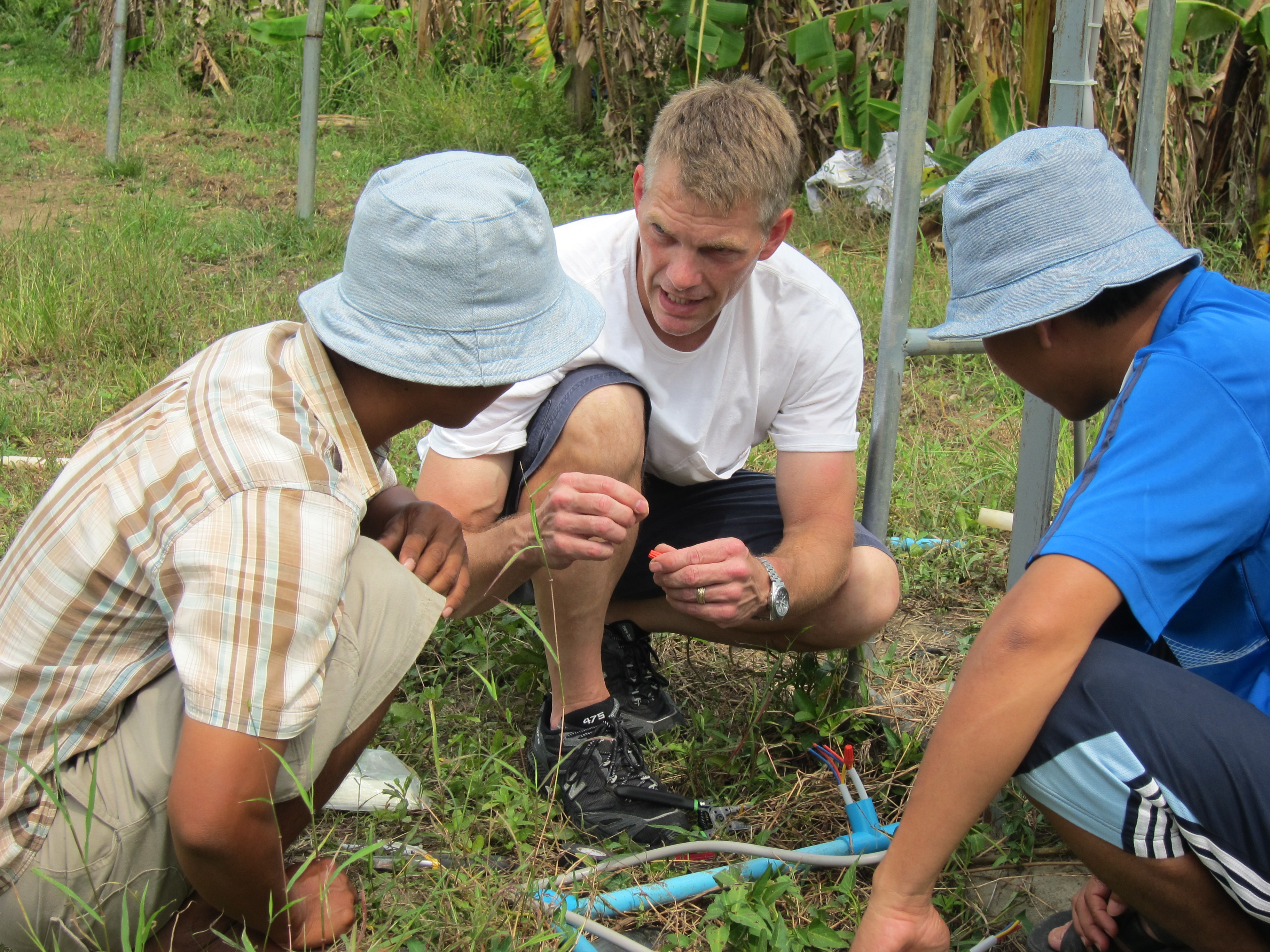
Today, we completed several of the key tasks we came to help with at the Imparting Smiles orphanage. Each of the tasks that Steve assigned to our team involved electrical work. With the assistance of our friend and Kingsland member Kevin Duty, we were able to ground one of the buildings and all outlets, add a float switch to the water tank, install new security lighting at the entrance to the campus, recharge batteries for a to-be-installed wind turbine, and spend time with the kids. The really great part of it all was doing each of these tasks while kids laughed and played and sang — a reminder of why we are here. This is their home and we want to do all that we can to make it a better and safer environment for them. At the conclusion of the day, as we twisted the last screw into place on the new light fixtures at the front gate, we could hear the kids singing during their evening worship time. Their singing was filled with the unmistakable joy that comes from knowing and loving Jesus.

One day, the kids at the Imparting Smiles orphanage will grow up to make a difference in Poipet and Cambodia and beyond. They will not expect to be served but, like Jesus, to serve and to care for others in ways that matter. Life is too short and too many people are hurting to just stand around expecting others to give to you. I prefer to follow the example of Jesus and care for the least of these by giving them a hand up. And honestly, I think the least of these prefer this as well.

Posted by: Omar C. Garcia | November 8, 2011

Why We Return

Poipet, Cambodia

There is something about distant and difficult places that tugs at my heart. I made a commitment to God while traveling by train across the Gobi Desert in 1998 to make unreached and unengaged people groups a greater priority in my life and to use whatever influence I have to raise awareness and funds for strategic initiatives to reach the least reached. I am also committed to forming strategic alliances with those who are working to reach the weakest and most vulnerable inhabitants on the planet — babies in the womb, children, and orphans. That commitment brought me to Cambodia in 2009. On my second trip here in that year, I met Steve Hyde, the Founder of Asia for Jesus. Steve introduced me to the work he is doing in Poipet, a small-town along the Cambodia-Thai border.

Poipet is a place steeped in hardship, evil, and danger for the poor, a place where their children are at risk of being kidnapped and trafficked for sex and labor. It’s the kind of place where the poor need a champion, someone who will invest in strategic initiatives that will tip the scales in favor of justice and opportunities for a brighter future. That’s why a guy like Steve is here, and that is why we are here as well. This past year, a family at Kingsland provided the funds to purchase 7.5 acres of land in Poipet. Steve has already started work on the pregnancy help center and women’s clinic at this site. Our good friends at Life International, an organization whose mission is to start pregnancy help centers around the world, provided the funding for the women’s center. A few weeks ago, the Kingsland couple that contributed the funds to purchase the land invested additional funds to begin the next phase of this project — a facility in which to educate and feed the children of the poorest of the poor.

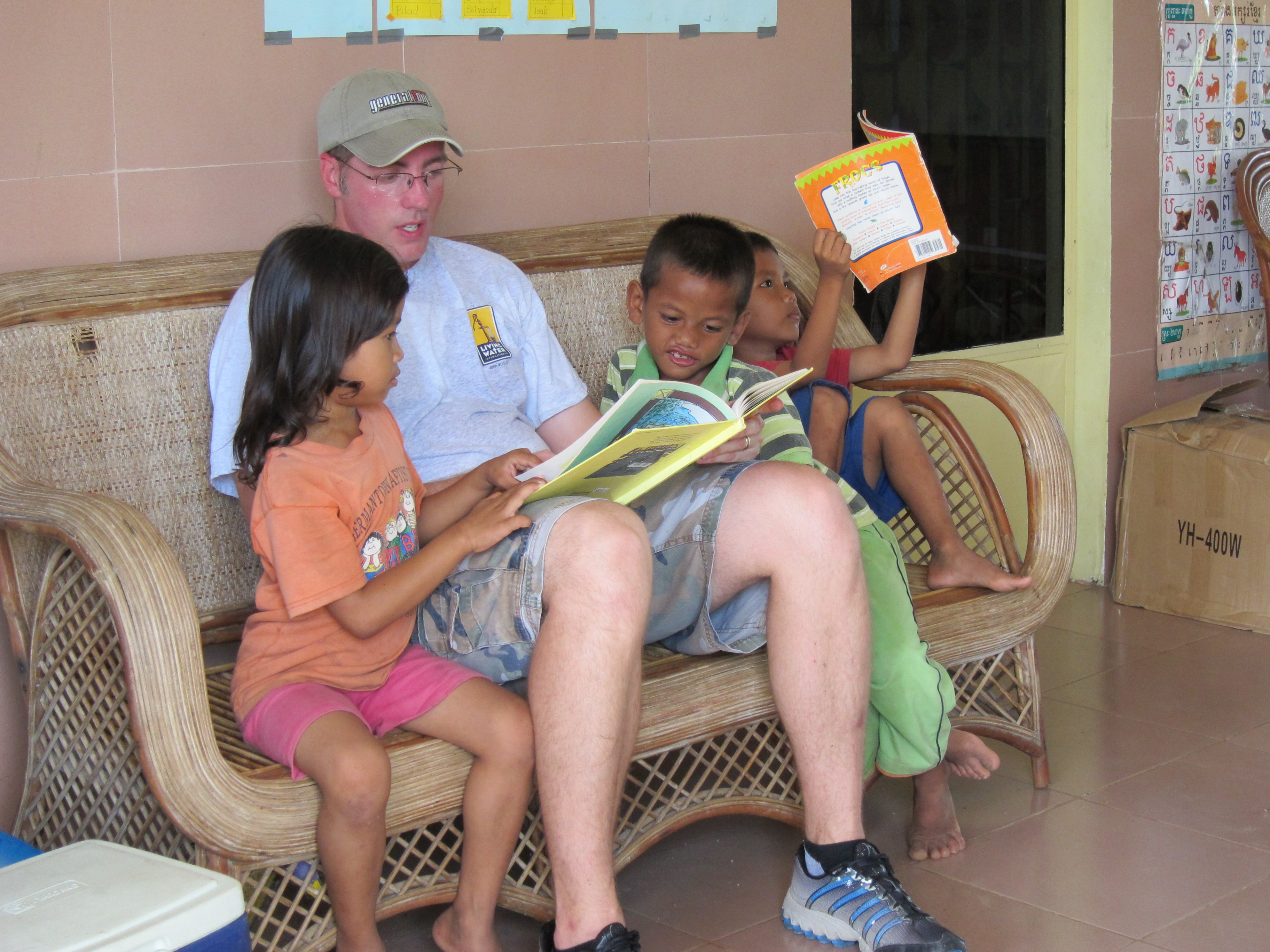
It was good to return to Poipet yesterday evening and to see the children at Steve’s Imparting Smiles orphanage this morning. Few things are better than seeing the smiling faces of these kids and being mob-hugged by them. Ultimately, they are the reason we return to a place like Poipet. We love God and love kids. These kids are being raised in a safe and loving Christian environment and represent hope for the future of Cambodia. When I was here a few weeks ago with a team of women to conduct a VBS, a Buddhist government official attended our closing program and told the crowd, “Your God is bringing hope to our region.” He also encouraged the kids who attended to continue learning about the God of the Christians. That’s another reason why we return. Our partnership with Steve and our presence in Poipet is helping to bring light to this dark place.

Posted by: Omar C. Garcia | November 6, 2011

A Son Remembers

Phnom Penh, Cambodia

It seems that everybody you meet in Cambodia has a story — a personal story of how they lost family members at the hands of Pol Pot’s Khmer Rouge. This should come as no surprise when you consider that approximately two-million Cambodians died between 1975 and 1978 during the violent regime of the Khmer Rouge. Yesterday, I asked my friend Karony to share the story of his father’s death with my friends Jon and Kevin who have joined me here to work at the Imparting Smiles orphanage. “Would you like me to take you to the place where the Khmer Rouge killed my father?” he replied. Without hesitation, I said yes. So, this morning we set out to visit the place where Karony’s father was arrested and later killed.

Our journey took us past the famous Choeung Ek killing field outside of Phnom Penh to another killing field located several kilometers off the main highway. “It’s been five years since I’ve been here,” explained Karony as we bounced down a rutted dirt road leading to seemingly nowhere. When we arrived, Karony talked about what happened on the day the Khmer Rouge entered his village, a story told to him by his mother. Karony was just three years old at the time that his father and the other men of the village were arrested without notice or cause. The Khmer Rouge warned the men that if they tried to escape they would be killed along with their family members. Sadly, Karony’s uncle did not heed the warning and was shot in the back as he tried to escape. The Khmer Rouge then killed his wife and children to make an example of them. As a result, Karony’s father and the others did not dare risk an escape lest the same thing happen to their families. Yet, in spite of their compliance, they were all mistreated by their captors and eventually killed.

Karony does not know where his father is buried, only that his remains are in one of the mass graves at this killing field. However, he does have an idea of how his father was likely executed. As a rule, the Khmer Rouge did not waste bullets in executing their prisoners. Instead, they made them kneel blindfolded before a mass grave and then clubbed them on the back of the head. To ensure that their victims were indeed dead, they beat the lifeless bodies with farming implements. Once the grave was filled they covered it up and dug another. Karony stood before a small building containing some of the bones and skulls unearthed in the area. Perhaps fragments of his father’s remain are there. He will never know. Other mass graves remain undisturbed out of respect for those who lie buried there.

Because Karony’s father refused to risk escaping and saving his own life, he saved the life of his three-year old son. Somehow Karony and his mother managed to escape death in those years when death harvested the lives of so many Cambodians. Today, Karony is a follower of Christ who is working to sow life in the places where so many Cambodians suffered and died. The atrocities of the Khmer Rouge are the logical end of a worldview that failed to recognize the sanctity of human life. It’s not enough to remember what happened at Cambodia’s killing fields. It’s imperative that a biblical worldview that holds life as sacred replace those that do not, lest history repeat itself. Karony is committed to doing just that by serving God’s purposes in Cambodia. It’s his way of honoring the sacrifice of his father who loved him.

Posted by: Omar C. Garcia | November 5, 2011

While You Slept

Kuala Lumpur, Malaysia en route to Phnom Penh, Cambodia

Hey Gina,

The past few days with you in Malaysia have been a dream come true for me as your Dad. I am so proud of you for having the faith and courage to travel half a world away from home to serve God’s purposes. And to think that you have already lived here for four months with the contents of a single piece of luggage convicts me that we all live with more stuff than we actually need. I enjoyed getting to know more about the place you now call home and the opportunity to meet your new friends. It makes me breathe a little easier knowing that you are surrounded by people who love you. But, what I enjoyed most was spending time with you. I savored every drop of our conversations and treasured every moment we spent together. I don’t think I can find the words to tell you how proud I am of you and how much I love you.

I appreciate you moving in to Abby’s room and letting me bunk in your room. I must confess that as comfortable as your bed is, I have not slept much the past two nights because I knew that the time for me to leave was drawing closer. I am not one easily moved to tears, but I have quietly wept in the darkness and silence of your room for the past two nights. Early this morning, I spent a long time in prayer for you while you slept. I knelt at your bedside and again entrusted you into the strong and capable hands of our Heavenly Father. I stood at the door to your room and asked God to bless your comings and goings. I knelt on your rug and asked God to guide your steps. I placed my hands on the map on your wall and asked Him to give you continued favor with your friends from the nations. I held your scarf in my hand and asked God to embrace and surround you with His protection. I even held your ball cap and asked God to fill you with wisdom. I looked up at your ceiling fan and asked God to continually refresh you with His kindness. And then I held your pillow and asked God to give you peaceful sleep and sweet dreams when you go to bed at night.

As your Dad, I have always been concerned about your safety and welfare. Now that we are separated by so many time zones, I live with the daily realization of how many things are out of my control. That’s why praying for you is so important to me. I am comforted by the fact that you are not just precious to me and Mom, you are precious to our Heavenly Father. I have entrusted you into His care, knowing that He is always where I cannot be and doing things I cannot do in order to keep you safe. I love you forever and never stop thinking about you. I will board my flight to Cambodia in a few minutes with the confidence that you are in God’s care.

All my love,
Dad

Posted by: Omar C. Garcia | November 3, 2011

Murugan and the Madman

Kuala Lumpur, Malaysia

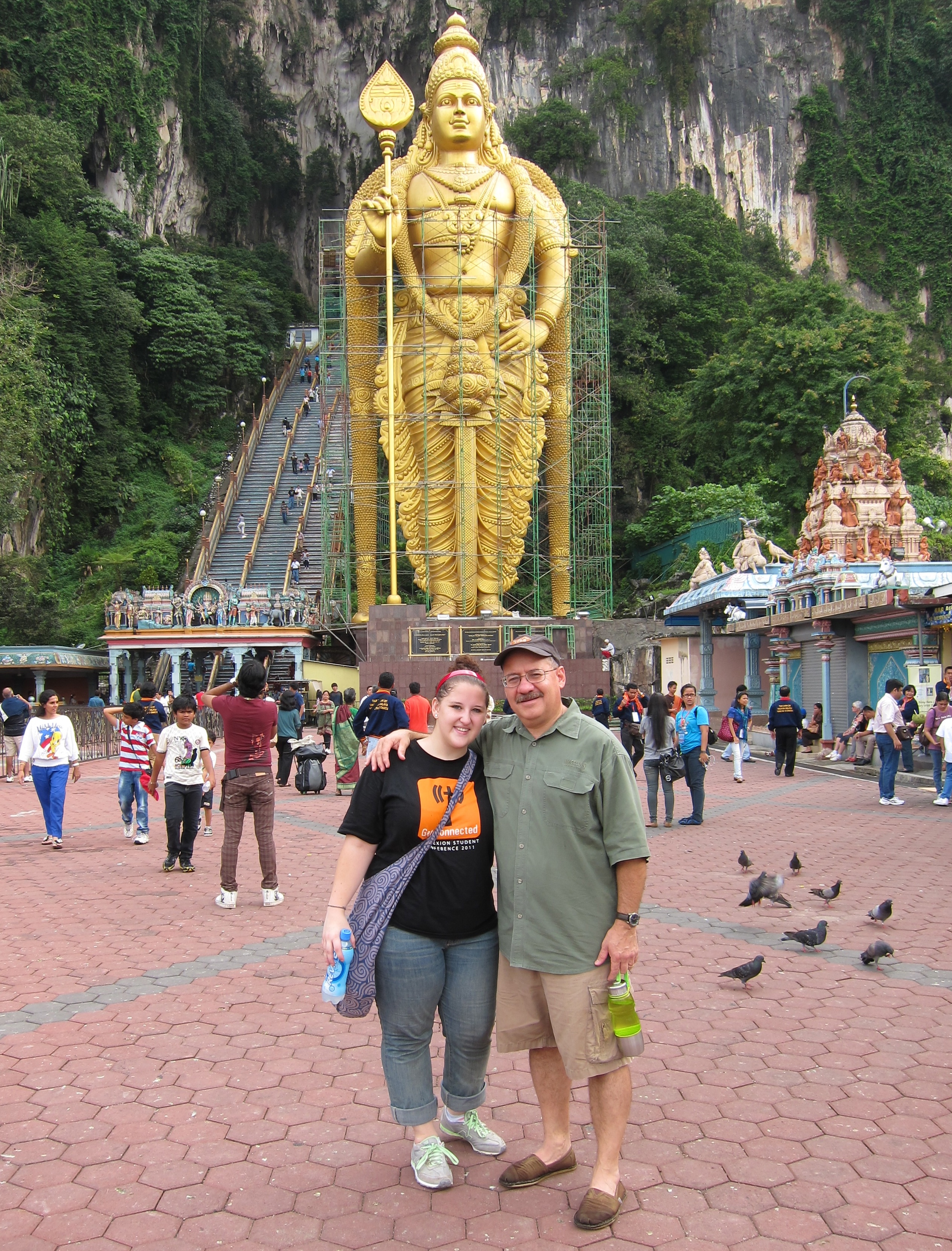
One of the advantages of living abroad is the opportunity to see first-hand how and where other people worship. It’s hard to escape the number of Muslim mosques and Hindu temples and shrines in a place like Malaysia. My daughter Gina has visited several of these places of worship and is learning about other faiths by observing and asking questions. At the same time, she is gaining a deeper understanding about what she believes as a Christ-follower. This morning, Gina and I traveled by cab to the Batu Caves — a sacred place for the Hindus of Malaysia and one of the largest and most popular Hindu shrines outside of India. A golden statue of Murugan, a Hindu deity, stands at the base of the hill. Devotees and visitors must climb a steep flight of 272 steps in order to reach the entrance to the limestone caves where Hindus come to pay homage to Murugan, the deity that defeated the demon Soorapadam. After our visit, Gina and I had a conversation about Ecclesiastes 3:11 as we walked to the train station. This verse says that “God has set eternity in the heart of man.” Gina and I talked about our biblical worldview and mandate to share and to show Christ to those around us.

After purchasing our tickets, Gina and I boarded our train and found two seats facing each other. Within minutes the train started moving. Gina and I were enjoying the sights and having a pleasant conversation when all of a sudden we heard a scream followed by a hard thud behind me. When I turned to see what was happening, I saw a man sprawled out on the floor having an epileptic seizure. Immediately every person around him left their seats and moved away from him. The people behind Gina stood to look at what was happening. I went over to the man and held him to make sure he did not hurt himself. When I looked up, the people around me were looking at me as though I were a madman. Some were staring at me behind wide and fright-filled eyes, others were shaking their heads with a look of disgust, and one man told me not to help. I ignored them all and continued helping the man. When the man finally came to his senses, I picked him up and helped him back to his seat — my hands now covered with his slobber. Gina handed me wipes to clean the man’s face. Before we reached our stop, I placed a hand on his shoulder, looked him in the eyes, and said a word of blessing over him.

This evening I had the privilege of leading the Thursday night Bible study that meets at the house where Gina lives. Students from Germany, Indonesia, Pakistan, Malaysia, Nigeria, and China attended. I spoke to these students about the two words that John chose to describe Jesus in his gospel. John said that Jesus was “full of grace and truth” (John 1:14). I told the students about the incident on the train and said that the thing that sets us apart as Christ-followers is demonstrating “grace and truth” in a world of hurting people. It wasn’t hard for me to help the man on the train because that is what Jesus would have done. As His follower I must do no less than to be His hands and feet, even at the risk of being perceived as a madman by those around me. As Gina and I walked off the train I thought about the admonition of Mother Teresa to look for Jesus in the distressing disguise of those who are poor and hurting and then to care for those individuals as Jesus would.

Today, Gina and I saw a giant statue of the Hindu deity, Lord Murugan. And we also saw a man having a seizure in the aisle of our train car. No one was there to be the hands and feet of Murugan. No one lifted a finger to help a man in distress except a follower of Christ, a madman who was willing to hold him until he came to his senses. I’m glad that Gina and I had an opportunity to help a man in distress today and to remind a group of students that we must be the hands and feet of Jesus, willing to do acts of kindness that the world may perceive as mad.

Posted by: Omar C. Garcia | November 2, 2011

Life is About the Moments

Kuala Lumpur, Malaysia

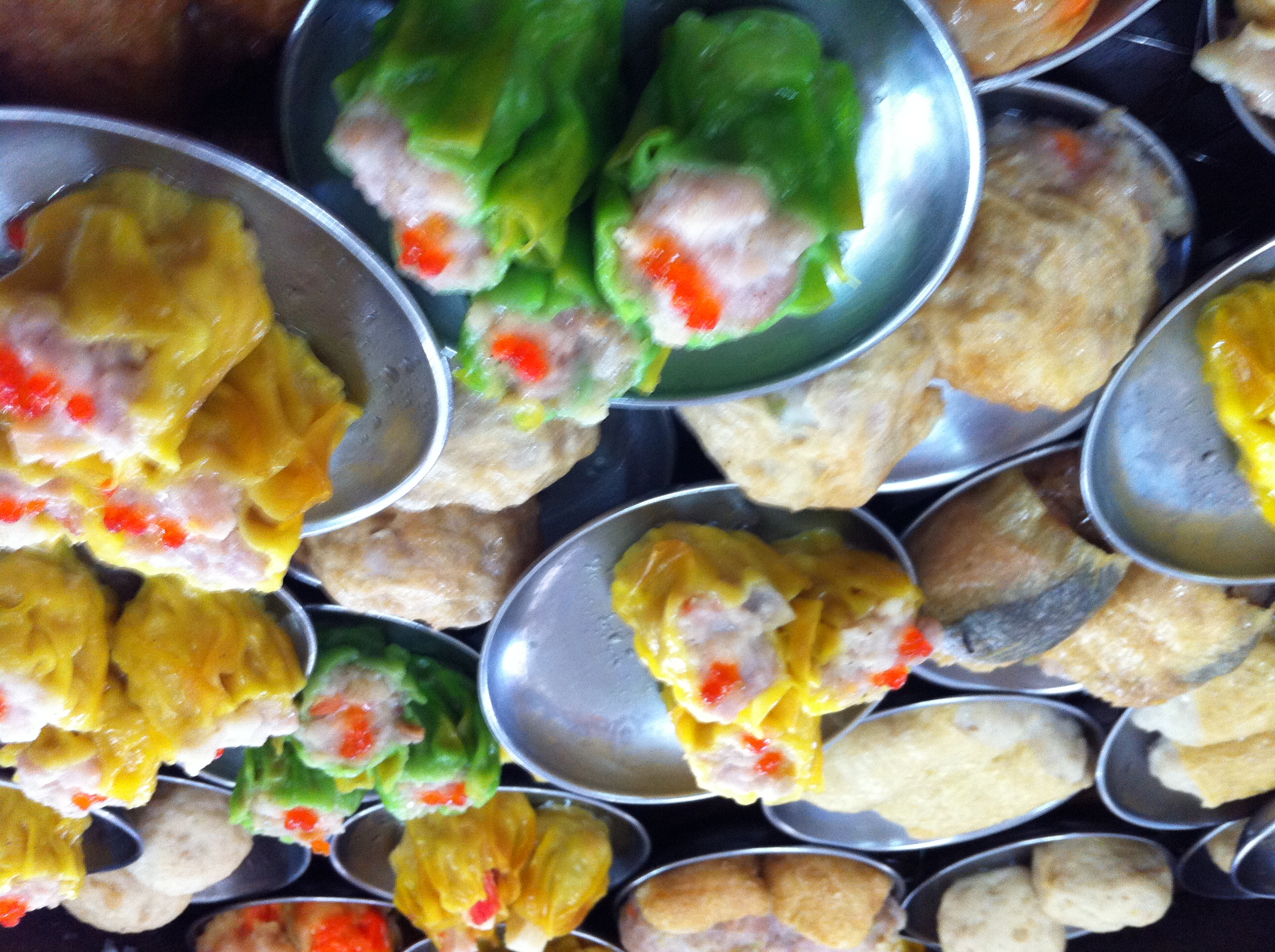
“Daddy, I can’t believe you’re here … that we’re here, together in Malaysia.” Those words have been the chorus of this day with Gina, repeated after the various verses of our day together. This morning, a Malaysian friend named Wilson picked Gina, Abby (her roommate), and me up for breakfast. “I want you to enjoy a typical Malaysian breakfast,” Wilson said to me. So, he drove us to a little restaurant where he ordered noodles with pork and a dumpling soup. It was delicious. One of the things I enjoy about travel are the colors of the foods and desserts. The taste is often another matter. Thankfully, the food at breakfast was really good. A women brought a tray of beautiful breakfast desserts to our table — little colorful works of art waiting to be consumed. Gina inspected everything set before me to make sure I had the best cut of meat and that everything was perfect. And then she made eye contact and said, “Daddy, I can’t believe you’re here…”

After breakfast, Gina and Abby took me to the train station for a trip across town to the central market, one of the best markets I have visited on any of my travels. Gina guided me through the maze of people and kiosks at the train station to purchase our tickets. And then I followed her up and down escalators to our particular terminal. I have been on some of the world’s most amazing rail journeys, including a 27-hour train ride across the Gobi Desert, but today I followed my daughter as though I was riding a train for the first time. She was concerned about every step I took and wanted me to have the best experience possible in her city. While we waited for the train, Gina stood next to me, put her arm around me, laid her head on my shoulder, and whispered, “Daddy, I can’t believe you’re here…”

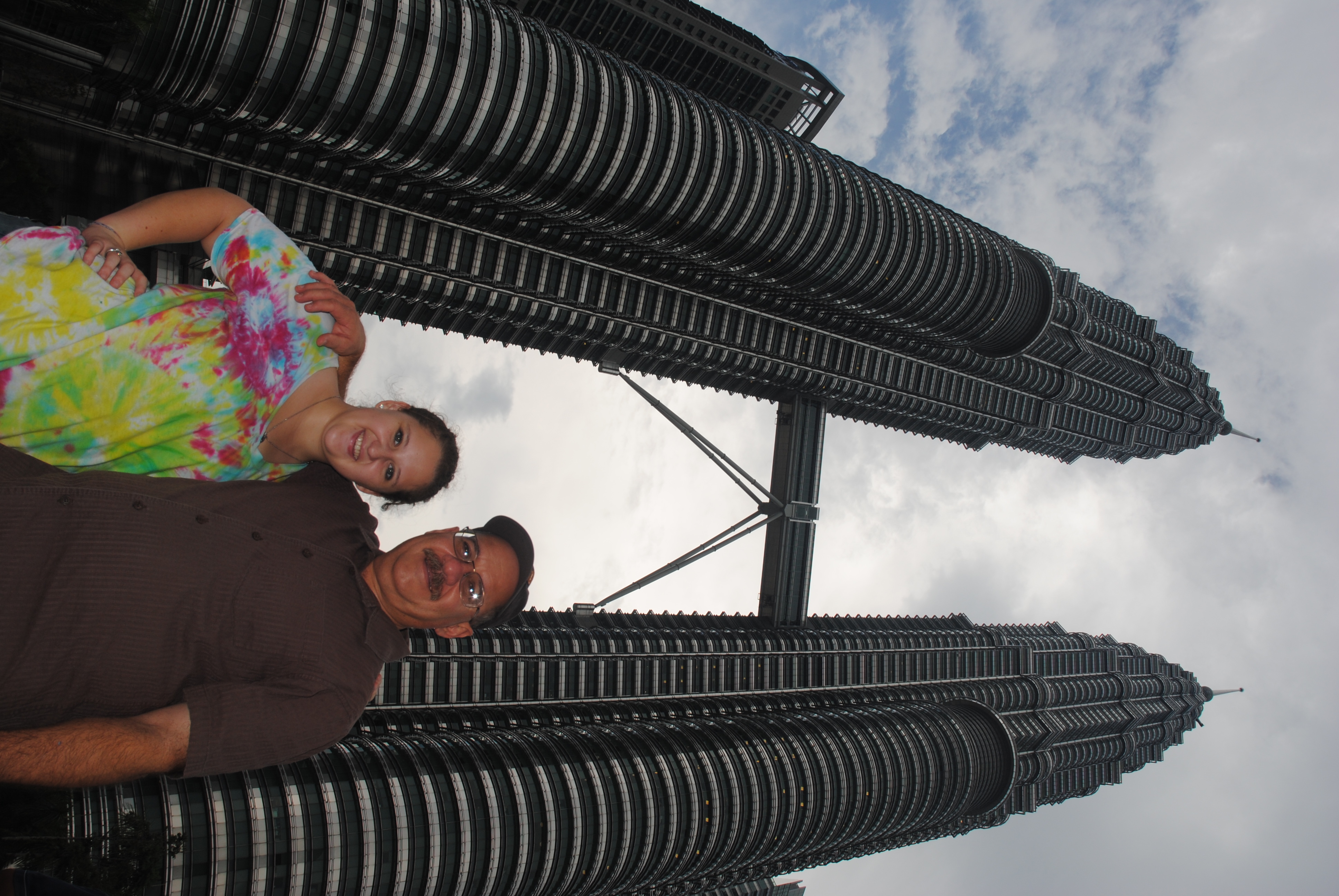
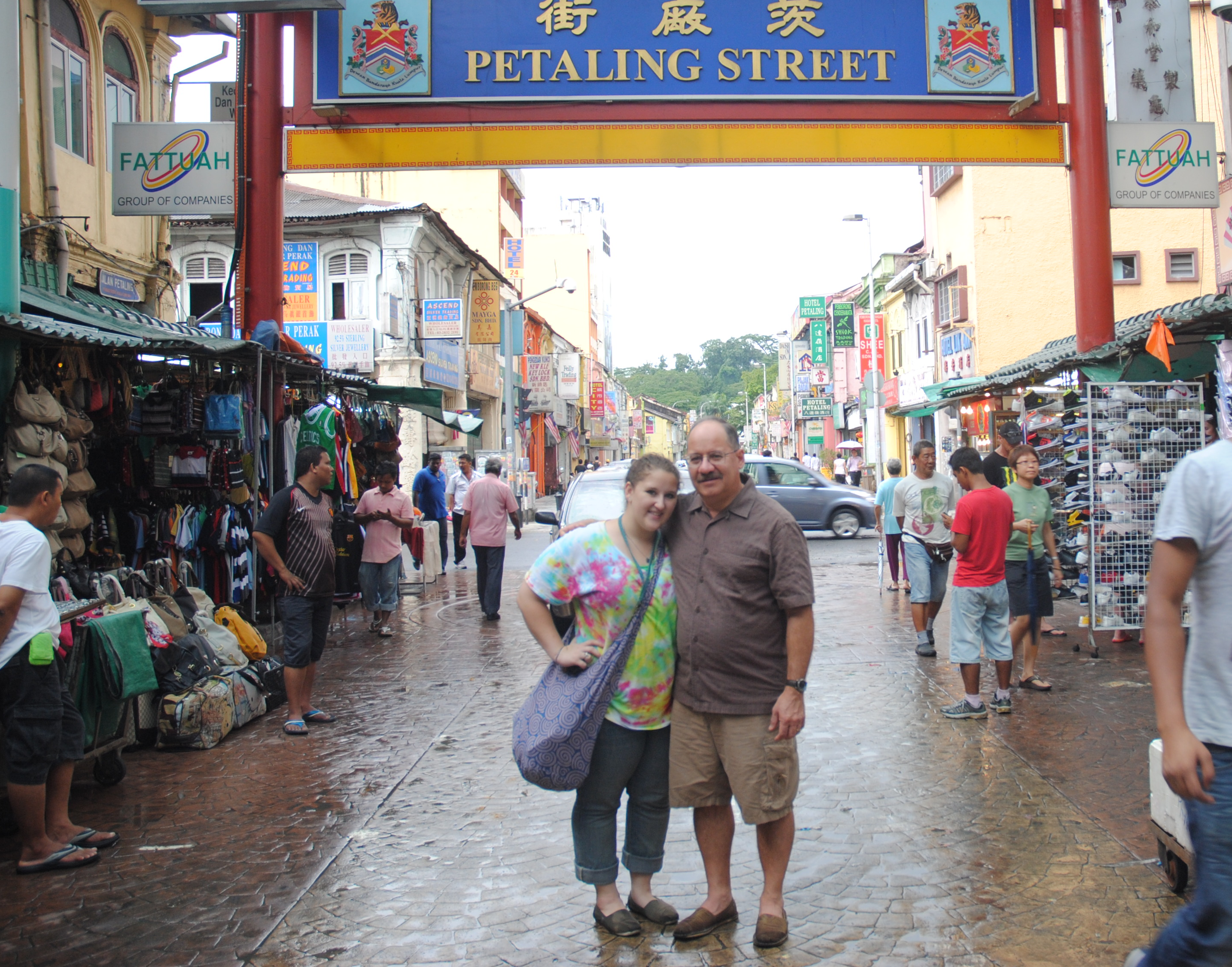
At lunch, Gina and Abby took me to the place where Wilson had brought them for their first lunch in Malaysia — a place called Old Town White Coffee. And then, after a bit of shopping, we traveled by cab to downtown Malaysia to see the Petronas Twin Towers, the tallest twin towers in the world. Magnificent architecture. Once again, as Gina and I posed to have our picture taken, she said to me, “Daddy, I can’t believe you’re here…” And then, we traveled by cab to the night market to meet some students. Gina wanted me to experience the crowds and the energy (and the unusual smell of stinky tofu) of this market that is only open on Wednesday evenings. As we slowly ambled through the crowded outdoor market the skies opened up and it started to rain. Without missing a beat, Gina turned to me and smiled as she said, “Daddy, I can’t believe your here, standing with me in the rain…”

I saw lots of really cool sights and stuff today, but this is not what I will remember about this day. What I will remember most are the moments that Gina and I spent together. She was excited about showing me the interesting places where she lives. But it was clear that she treasured sharing the experiences of the day with her Daddy. Throughout the day I found myself more interested in Gina than the sights of Kuala Lumpur. I enjoyed watching her and being with her in this place she calls home for this season of her life. Now, when she calls to tell me about her day, I will have a clearer picture of the context of her experiences here. I am now dreading getting on a plane to Cambodia on Saturday because Gina will remain here in Malaysia and I may not see her again until July of next year. So, I am treasuring every moment with her.

It’s late as I write this post. I am in a hyper-pensive mood as I consider how God has led my youngest daughter to serve Him half a world away from home. I can see how she has grown in her faith, in her ability to navigate around one of the largest cities in Asia, and how she has endeared herself to so many students and people here. As I write I keep hearing the words of Gina’s chorus, “Daddy, I can’t believe you’re here…” Just before I started to write I searched my iPod for George Strait’s song, “The Breath You Take” and listened to it once again. The chorus was strangely familiar…

Life’s not the breaths you take
The breathing in and out
That gets you through the day
Ain’t what it’s all about
Ya just might miss the point
Try’n to win the race
Life’s not the breaths you take
But the moments that take your breath away.

Today was a great day for me here in Malaysia, one that I will never forget because today God reminded me that life is about the moments that take your breath away. And today, He took my breath away!

Posted by: Omar C. Garcia | November 1, 2011

Why Context Matters

Kuala Lumpur, Malaysia

I arrived in Malaysia this afternoon feeling like a kid at Christmas, anxious to see my youngest daughter. Gina has lived here for the past four months and is scheduled to return to the States in July 2012. I scrambled off the plane like the proverbial bat out of … oh well, you get my point. I was in a really big hurry to clear immigration and customs because I wanted to see Gina. Of course, Murphy’s Law kicked in when I chose the shortest line at immigration. Somehow the second I stepped into queue, the immigration officer responsible for my line developed slower-than-molasses-in-winter syndrome. It was agonizing watching every other line grow shorter by the second while I stood in my line wondering if my passport might expire before I reached the counter. But, I finally made it through, collected my luggage, and hurried out to find Gina. Oh my, it was so good to see her and to hold and hug her once again.

Kuala Lumpur at night.

“Welcome to Malaysia, Dad,” she said. “I’m so glad you’re here. I want to show you this place that is my home for now.” Gina’s words reminded me of something that my mother-in-law had told Cheryl when she came to visit us for the first time after we had settled into our new home in Katy, Texas. “Darling, I am so happy to see your new home and to memorize every room. Now, when we talk on the phone, I will be able to picture where you are standing or sitting as we talk.” I feel the same way about being here. I want to memorize every room of the house where Gina lives and every street and restaurant. That way, I will be able to picture her in the context of where she lives. Somehow this helps and comforts me as a parent.

Once we arrived at the house where Gina lives, she wasted no time in introducing me to several of the students she has connected with here. Before going out to eat, friends from Korea, Indonesia, and Africa stopped by to meet “Gina’s Dad.” A little later we walked several blocks to Ali’s Restaurant, one of her favorite places to eat. Gina’s supervisors and several more students joined us there for a meal — students from Africa, China, and Malaysia. I loved every minute and couldn’t help but thank God for these friends who mean so much to my daughter. Now when Gina and I Skype or talk on the phone, I will have a much better understanding of her friends, surroundings, and her home here in Malaysia.

Today, God reminded me again of why context matters. Every person lives in a particular geographical, relational, cultural, and political context. In order to understand others we must make every effort to learn about the places where they live and the people who share that same space with them. Being on site is a great way to gain insight into why people live or think or act or worship as they do. That’s why it’s always good when a teacher visits the home of a struggling student or when we venture outside the comfort of our own homes to serve the poor or others in need. Being in and seeing the context in which others live can soften our hearts and strengthen our resolve. It can make us less critical or judgmental and more understanding and compassionate. Developing a deeper understanding of where and how others live can also give us a higher purpose in life — one that goes far beyond living our lives only to please ourselves.

So, look for ways to better understand the context in which your neighbors and the nations live. Determine to learn all that you can about the factors that influence and shape others. And then be prepared to love and care for them as Jesus would. I’m looking forward to learning more about Gina’s new home and friends in the coming days. And I’m especially happy to be in the context of her new adventure in Malaysia.

Posted by: Omar C. Garcia | October 31, 2011

Serving God’s Purposes

Dubai, UAE en route to Kuala Lumpur, Malaysia

Each of us are stewards of a generation — essentially a single and narrow slice of time in which to serve God’s purposes. And after that, we die and return to dust. However, what we do in our generation does not have to die with us and even our dust can continue to tell the world of God’s faithfulness (Ps. 30:9). In a sermon that Paul preached on his first missionary journey, he said, “For David, after he had served the purpose of God in his own generation, fell asleep and was laid with his fathers and saw corruption” (Acts 13:36). But, what David did in his generation impacted the course of redemptive history because he served the purpose of God. And he earned the enviable distinction of being known as a man after God’s heart (Acts 13:22). Although he made mistakes along the way, David set the standard for evaluating the kings that came after him, many of whom did not serve God well in their respective generation.

In order to serve the purposes of God in our generation, we must know what those purposes are and dedicate ourselves to making them a priority in our lives. For the sake of space, I will note just three of God’s purposes. First, the great commandment. Jesus challenged His disciples to “love the Lord your God with all your heart and with all your soul and with all your mind” (Matt. 22:37-38). Second, the great commission. The last command of Jesus was a command to take the good news into all the world (Matt. 28:19-20). And finally, the great requirement. Micah 6:8 tells us “to do justice, and to love kindness, and to walk humbly with your God.” We must embrace and faithfully live out these purposes. Our walk and our talk must match. The world will never see the gospel as good news if the messenger is bad news.

In order to serve the purposes of God in our generation, we must also understand our generation. In 1 Chronicles 12:32 we read that the men of Issachar “understood the times and knew what Israel should do.” We too, must understand the times in which we live in order to know how to serve God’s purposes, extend His kingdom, and bring glory to His name. We must never allow our zeal to leave home dressed in ignorance. Instead we must study the times, think deeply about them, and then pray for the wisdom to know what to do and the courage to do it. We live in the best of times and the worst of times that present us with both great opportunities and intimidating obstacles that can only be faced by those with the requisite courage and audacity to fulfill the purposes of God. May we live in such a way that it will be said of us that we served the purposes of God in our generation.

« Newer Posts - Older Posts »

Categories