Posted by: Omar C. Garcia | March 26, 2012

The Face of Hope

Tenali, India

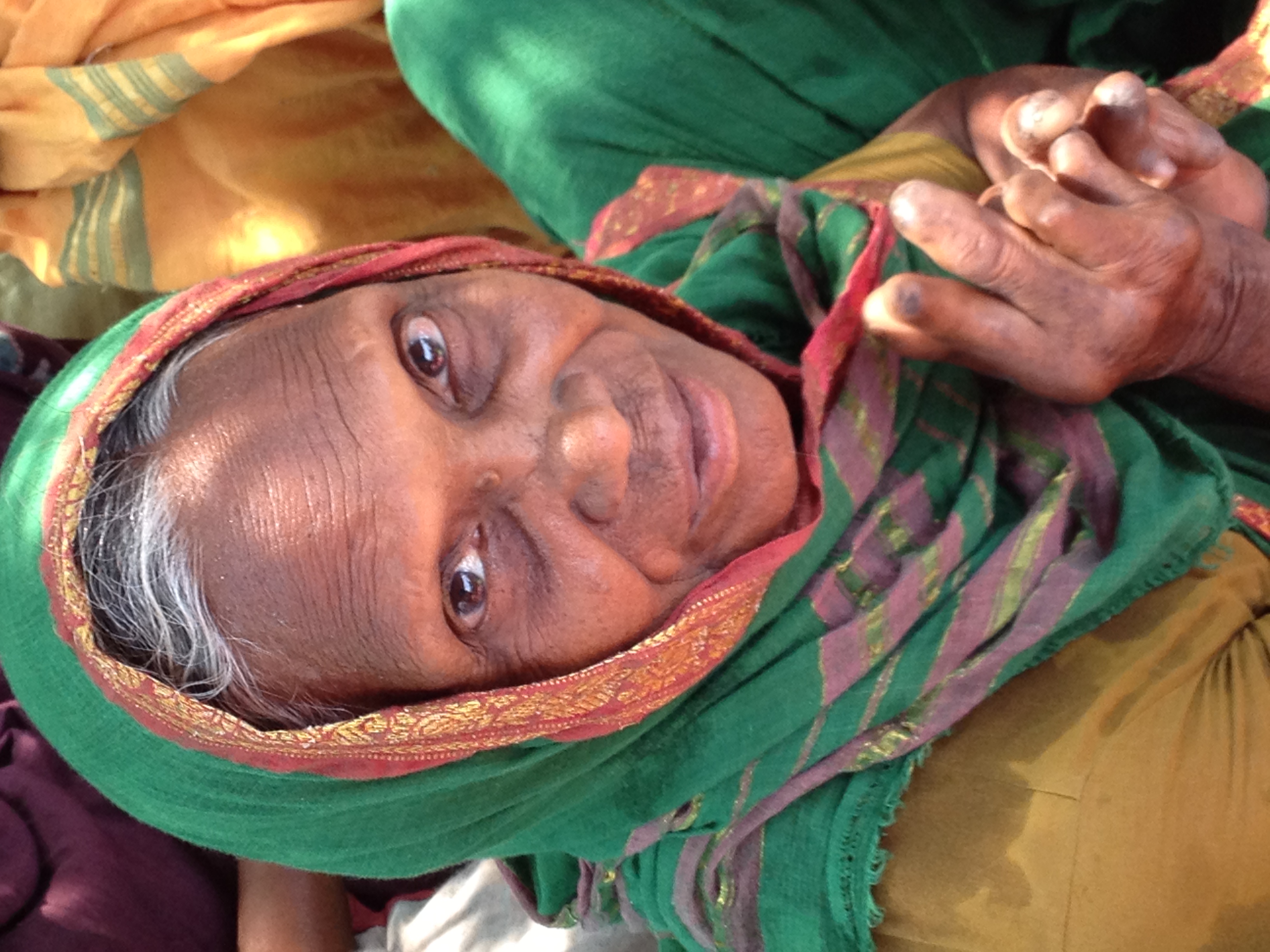
I saw the face of hope today in the most unlikely of places — the kind of places where despair bullies its way into hearts and homes and marks its territory with broken lives. India, it seems, is a breeding ground for despair. It grows abundantly here in the fertile soil of poverty, a caste system that does not treat all people the same, cultural norms that favor males instead of females, and much more. Harvest India, a Christian non-government organization based in Tenali, exists to battle despair head on. The organization currently supports the work of churches in 1,000 villages and has 10 orphanages, 3 nursing schools, 8 Bible colleges, and numerous other ministries. Their work is nothing short of amazing and inspiring. Today, I saw the face of hope in the places where Harvest India is working to make a difference.

I saw hope this morning in the faces of Dalit children that attend a Harvest India school. Dalits are the lowest caste, have generally been regarded as untouchable, and provide the labor force for the most menial, filthy, and dangerous jobs. Harvest India provides Dalit children with the opportunity to get a good education. Dressed in their blue and white uniforms, barefooted Dalit children welcomed us warmly into their classrooms, told us about their favorite subjects, and showed us some of their classwork. The children in every classroom were smiling and beaming with hope. Even the youngest seem to have a basic understanding that an education is important. They know that they are the fortunate ones because they have seen some of their classmates drop out of school to help their families earn extra money by working in agricultural fields.

I saw hope in the faces of women at a sewing center. All of the women who work at this center once had a very different profession as commercial sex workers — some by choice and some against their wills but all trapped in a dark world ruled by despair. Today, each of these women know the hope that is found in Jesus Christ and are learning new skills that will help give them a brighter future. These women make a product called Punjammies that are available for purchase online. We enjoyed our time with these women and the opportunity to encourage and affirm them.

I saw hope in the faces of the dying at a Harvest India HIV‑AIDS Hospice center. This center exists to help those suffering from these dread diseases, mostly very poor men, women, and children. Apart from the work of this center, those suffering from HIV-AIDS would have no place to go. The center provides medication, lodging, and the special diet that these sufferers need in order to survive from day-to-day. Over the past few years the center has assisted hundreds of individuals. The center is staffed by a doctor, a nurse, and a chaplain who leads daily devotions and prayer times. It was especially tough for me to see the children at the center, many of whom will become orphans in the near future. But, because of the work of Harvest India, those suffering from HIV-AIDS are able to receive the help that they need and know that Harvest India will make provision for their kids if there are no other relatives to care for them after their death.
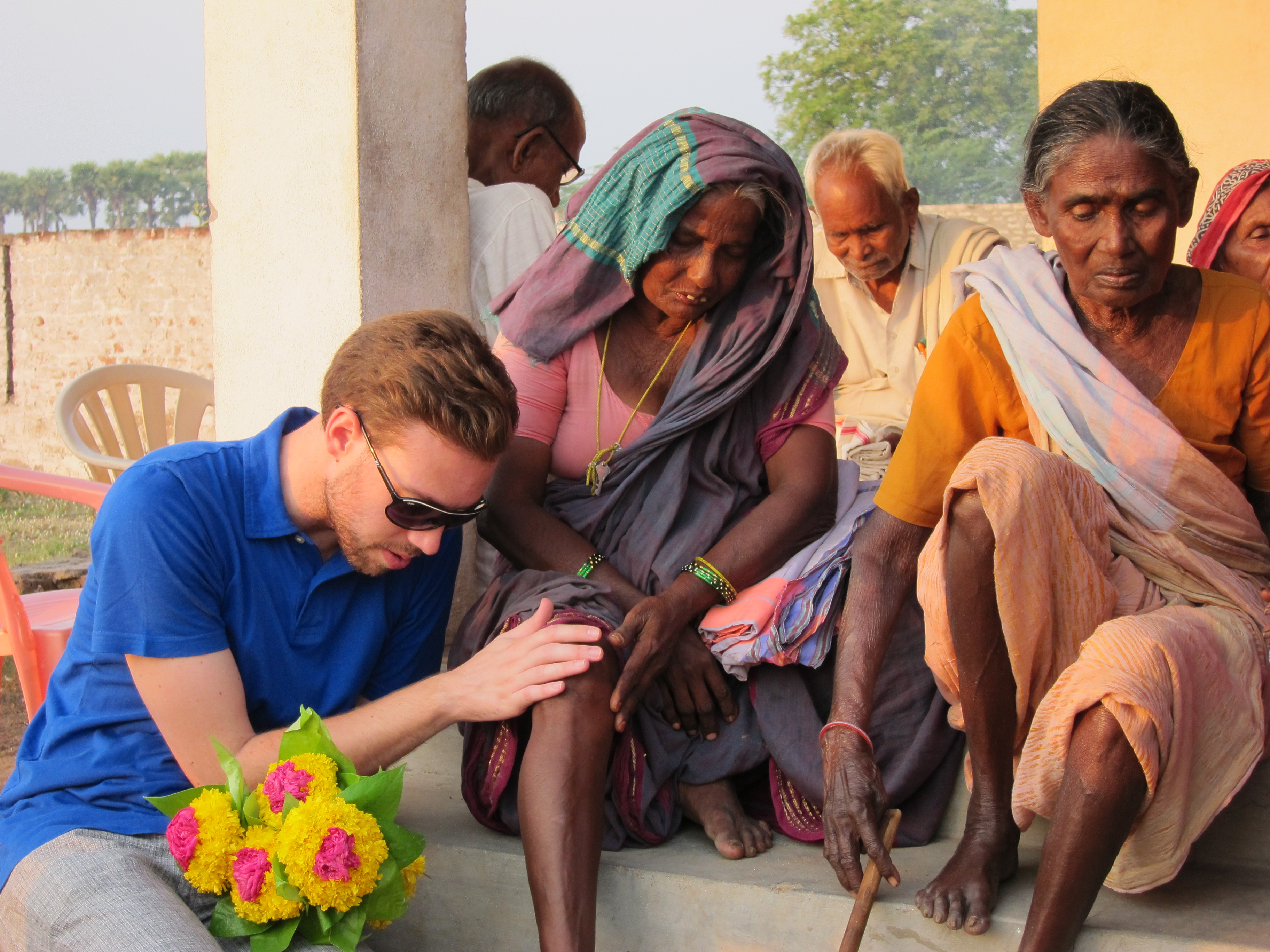
I saw hope in the wrinkled faces of the elderly at a Harvest India home for the elderly. The saddest part of our visit was listening to the stories of the residents, many of whom have families that cast them aside. In spite of the heartache they have experienced because of being rejected by the children they raised, they were grateful that Harvest India provides each of them with a safe place to live. I must confess that it upset me to hear that the children that these now elderly adults had raised did not care for them or visit them. Thankfully, these senior adults have found a new family among their peers and the staff at the elder care center.

Finally, I saw hope in the faces of former sex workers in Tenali’s red light district where Harvest India has a ladies hand-bag manufacturing ministry. The women employed in this business came out from the ranks of sex workers in the hope of changing their lives for the better. And, it’s working. I have never seen so many smiles on the faces of those who worked in one of the darkest pits of despair, satisfying their filthy clients for as little as a dollar or two. These women worked at the lowest and poorest rung of the commercial sex industry ladder in Tenali’s red light district. Today, these women and their children have found new hope in Jesus Christ and radiate His presence in an unmistakable way. It was a delight to meet and to spend time encouraging and praying for these women and their children.

It’s been a long day but one that has refreshed me and reminded me of the difference Christ-followers are making in some of the most difficult places and among some of the most desperate people on the planet. I am encouraged by the ministry of Harvest India and all that they are doing to evict despair from dark and dangerous places.
Posted by: Omar C. Garcia | March 24, 2012

Indispensable Interpreters

Tenali, India

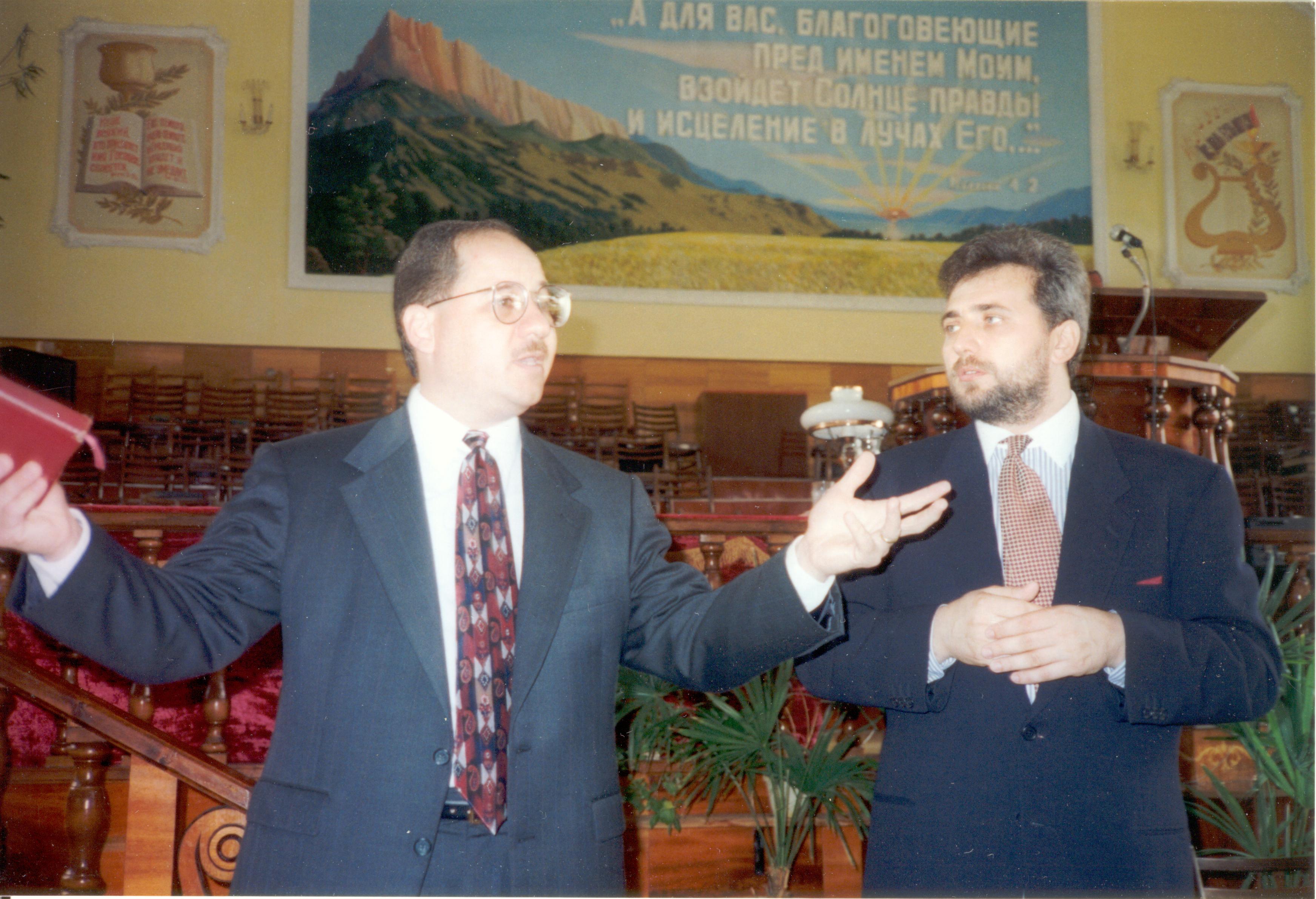
Speaking thru interpreter. | 1995 | Ukraine

The language-barrier can be one of the most frustrating aspects of travel. Airline magazines almost always advertise the latest language aids — from software that promises to have you speaking conversational Mandarin in weeks to iPhone apps for those in a bit more of a hurry. Among the best experiences I have had while traveling and speaking in many countries is that of communicating through an interpreter. An interpreter is someone who provides an oral translation between those who speak different languages and certainly much more dynamic than any smart-phone app. A good interpreter makes all the difference in how effectively you can communicate your message. Even better, a really good interpreter can keep you from making a fool of yourself by correcting any cultural verbal faux pas on the fly and before they reach the listeners’ ears.

On two of my three visits to Ukraine in the mid-90’s, a Jewish university professor served as my translator. As I preached in various places she often wept as she translated my words, occasionally turning to me and saying how wonderful Jesus was. Sadly, she resisted trusting Christ for fear of offending her parents. On another occasion in Ukraine, my good friend Dr. Jerry Squyres preached about the woman at the well, a story from the fourth chapter of John’s gospel. When he told his interpreter the subject of his message the young man returned a puzzled look. Because of Jerry’s southern accent the interpreter had heard him say “the woman at the whale” and reminded Jerry that it was Jonah and not a woman who was in the whale.  On more than a few occasions while speaking in Muslim nations, my interpreters have coached me on effective ways to communicate biblical truth. A good interpreter is invaluable!

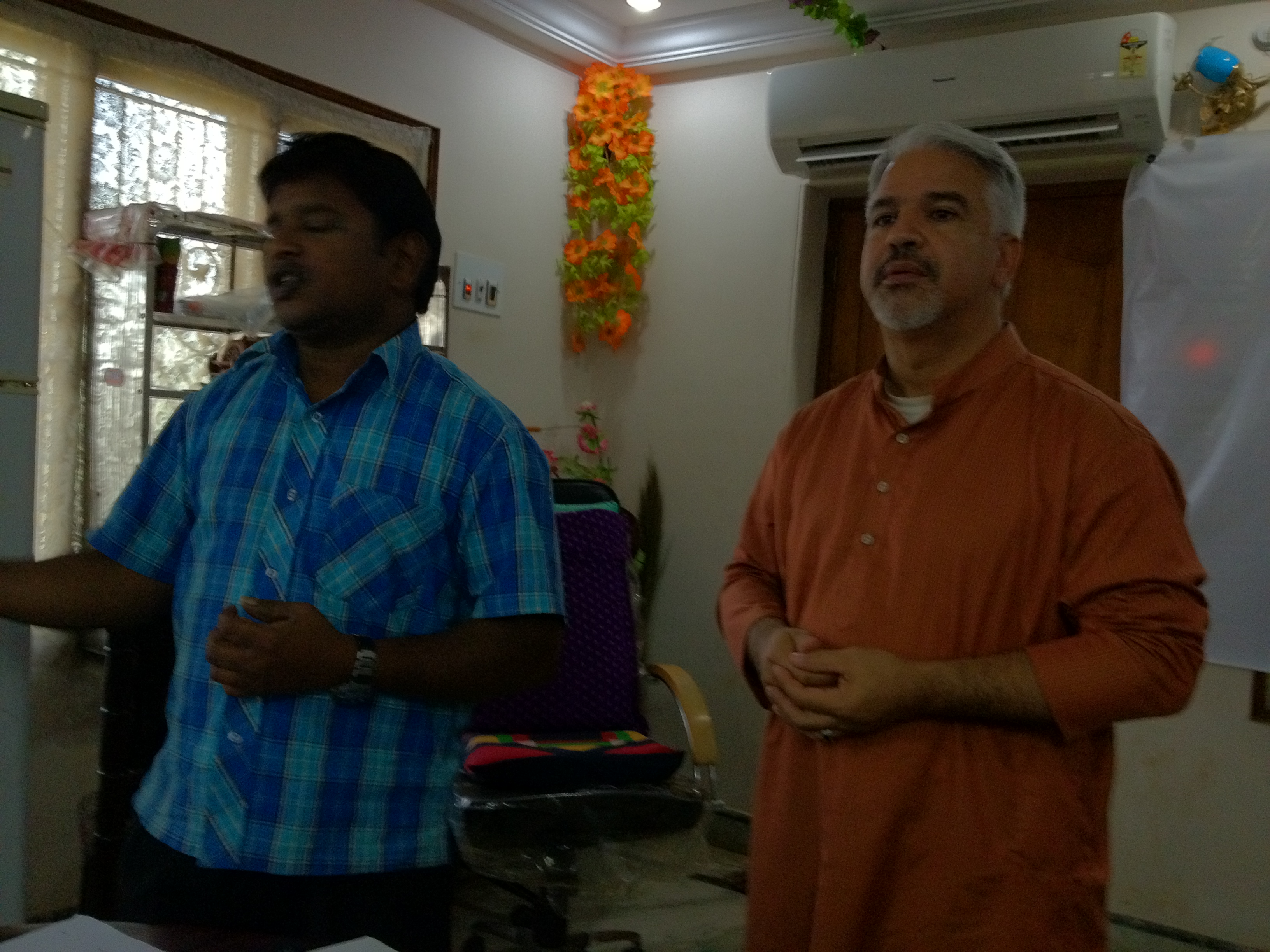
Daniel interpreting for Raul.

The first time I preached in India in 1998, I thought that my audience was disagreeing with every word that proceeded out of my mouth. Afterwards I lamented to my interpreter that I had failed to communicate effectively because everybody was shaking their heads to indicate disagreement. He put his hand on my shoulder, laughed, and told me the folks loved the message and then explained the Indian head-bob gesture to me. Since then I have spoken many times in India and have learned a lot about Indian culture from my interpreters. For the past two days my friend Raul Reyes, Vice-President of Equipping at Life International, and I have led the introductory sessions on the sanctity of human life for a group of local leaders who work with Harvest India. We have been privileged to work with a young man named Daniel, one of the best interpreters that I have ever met. This young man can translate English into Telugu at lightning speed and mimic every gesture and emotion. When you get into a speaking rhythm with a fantastic interpreter like Daniel, communication is seamless.

I am thankful for all of the interpreters I have met over the years and for what they have taught me about their respective cultures and the dynamics of their respective languages. In spite of what I hear on the evening news, I tend to think more positively about the nations in part because of having worked with so many good interpreters on my travels, men and women who care deeply about their families and communities. I am grateful for their help in communicating God’s good news. Without the help of these indispensable interpreters, communication would certainly be much more difficult. So, this is something of a mass thank you note to the dozens of interpreters who have assisted me over the years and who have reminded me that I am a part of a larger and wonderful family of Christ-followers.

Posted by: Omar C. Garcia | March 22, 2012

Four Hundred Lepers

Tenali, India

Leprosy is a word that has retained its power to frighten across the centuries. From ancient times when lepers were separated from the camp all the way to our present day, leprosy remains shrouded in fearful mystery. The vast majority of us will live a lifetime without ever meeting a leper or seeing what it does to the unfortunate few who suffer from this dread disease. Leprosy exacts more than a physical toll from its victims, it also robs them of the social interaction that provides each of us with the affirmation and encouragement we want and need. Wherever you find leprosy you will always find its cruel companions — rejection and isolation. Lepers can only find community among other lepers. Class distinctions, religious differences, or anything else that separates healthy human beings mean nothing when you have leprosy. Leprosy creates new loyalties.

Our team has come to India to teach about the sanctity of human life. However, this morning, before starting our first teaching session, God gave us an unexpected object lesson. Harvest India, our host, fed and provided medical attention to four-hundred lepers. This is something they do once a month. People with leprosy come to the city of Tenali from throughout the region to have their medical needs met, to share a meal together, and to receive a little financial help to sustain them. Each person expressed gratitude for the kindness extended to them. This is the one place where lepers know that another human being will reach out to touch them. And, it was indeed a privilege to hold hands that have been reduced to stubs and to embrace and affirm the worth of people who are feared and shunned by their own society. I also watched as a doctor removed what was left of a woman’s toe. The only payment she could offer was a smile and a nod of appreciation. It was more than enough for the doctor.

I am grateful for today’s experience and to know that Christ-followers here are living out their faith in the most practical of ways — by living like Jesus and caring for others as He would. Today I saw what it means to believe in the sanctity of human life and the difference that doing so can make in the lives of others. I not only saw Jesus in the distressing disguise of the lepers, I also saw Him in the tender actions of each volunteer who cared for the lepers. I have so many images of today that I will not forget and that will always serve as a reminder that even leprosy cannot rob people of their worth and value in God’s eyes. I am grateful for Dr. Suresh Kumar and the work of Harvest India and for the practical ways in which they are serving the purposes of God in Andhra Pradesh.

•••••
Read about my first encounter with a man with leprosy in Nigeria.

Posted by: Omar C. Garcia | March 20, 2012

On The Road Again

Houston, Texas en route to Andhra Pradesh, India

“One the road again” — words made popular by country music singer-songwriter Willie Nelson. These are words that have become something of a theme in my life. It seems that whenever I am in one place too long I begin to hear those words, “On the road again. Just can’t wait to get on the road again…” My wife Cheryl can sense my restlessness when I’ve been home more than a few weeks. I can’t watch the news or any program that gives me a peek into faraway places without wondering about the people who live there and what they believe and whether they have access to the gospel. I become restless thinking about those who live where Christ is not known or where the introduction of a biblical worldview can tip the scales in favor of justice for the oppressed or hope for those in despair.

I am currently on the road again, traveling to the state of Andhra Pradesh in Southern India to join our partners at Life International, an organization whose mission field is the one created by abortion. Our missions ministry has previously partnered with Life International to establish a pregnancy help center in Uganda. And together we are currently working with our friend Steve Hyde, founder of Asia for Jesus, to champion the rights of the preborn in Cambodia. Our team will spend the coming days teaching pastors, church leaders, and nursing students about all things related to the sanctity of human life. Each of us is responsible for several hours of teaching that we trust will give our listeners a more comprehensive understanding of God’s passion for the least of these and for the preborn — those precious lives hidden in the womb and that are the most vulnerable to acts of violence.

If you or I live in a dangerous place we have the option of relocating to a safer place. However, a child in the womb of a woman contemplating an abortion does not have the option of relocating to a safer womb. This is why we are spreading the message about the sanctity of human life. A couple of years ago, 33 miners in Chile became trapped in the bowels of the earth. The news of their life-threatening plight captured the imaginations of people around the globe. The world offered Chile its resources and expertise to help rescue these men. The almost 70 days that these men were trapped in the earth’s dark womb reminded us all that human life is indeed sacred. Fortunately for these men, their rescuers were for life and acted accordingly. If any of us had been trapped with them we too would have prayed for men and women who valued life and were willing to give themselves to our rescue. A child in the womb and in danger of being aborted deserves to have champions as well. That’s why I am on the road again to join our partners in spreading the message of life and sharing the story of why life is sacred.

Posted by: Omar C. Garcia | March 19, 2012

Caring for our Community

On Sunday, March 4, Kingsland closed its doors and sent an army of volunteers into our community to engage in more than 60 service initiatives. Our Caring for Katy day has become a much-anticipated day when the generations at Kingsland work side by side to serve and care for others. It’s an important part of fulfilling our purpose statement of loving God, loving people, and equipping the generations. Sean Cunningham, a member of Kingsland’s media staff, produced a video of the day’s activities. If a picture is worth a thousand words, then video must surely be worth thousands more. I hope you’ll take a moment to watch this brief video and purpose to allow God to use you to love and care for others in need throughout the year. For those of you who receive my blog posts via email, if you have problems viewing the video, you can also watch it on Vimeo.

Posted by: Omar C. Garcia | March 16, 2012

P.O. Box 507

One of the fondest and most enduring of my childhood memories is of the post office in Mission, Texas. My grandparents received all of their mail there for as long as I can remember. Every morning, my grandfather would stop by the post office on his way to work. From the time I could walk he started taking me on his daily visit to get the mail. He and I would ascend the dozen or more steps hand in hand, enter through the glass door, turn right, and go to Box 507. Just thinking about it reminds me of the peculiar but not unpleasant smell of the post office. These were the days before e-mail and junk mail, so every item in Box 507 was important. Sometimes my grandfather would open and read a letter while standing in the post office. I knew that it had to be something important. Over the years my grandfather also encouraged me to write letters and helped me to mail them. He taught me how to approach the man at the window to buy a stamp, where to place the stamp on a letter, and explained the journey my letter would take.

As I got a little older, my grandfather encouraged me to write letters to those in public office. I still have a copy of a reply I received from Senator John Tower when I was twelve years-old. When my grandfather told me that my cousins in Michigan wanted to see a real, live Texas horny toad (a horned lizard), he asked me to go out and catch one so that we could mail it to them. So, I did. We put the horny toad in a shoe box, punched holes in the side, included some bugs for a snack, and then headed for the post office. I still remember the sound of the horny toad scratching the inside of the box as we walked up the steps to the post office. We took the box to the window, the fellow there calculated the postage, and off went the Texas horny toad on his great adventure to Michigan. I am happy to report that the little critter arrived there safely, to the delight of my cousins.

Going to the post office daily with my grandfather gave me an appreciation for writing and receiving letters. It was just as fun for me to mail a letter as it was to receive one. Over the years I managed to hold on to several letters that are, today, worth more to me than gold. They are irreplaceable because they keep me connected to the people and the places that shaped me. I have several letters that my beautiful mother wrote to me when I took my first trips away from home while in high school. Her words are like an open window where I can stand and breath in the pleasant air of younger days. I also have letters from uncles sent from overseas. One letter from my Uncle Phil, dated 14 December 1962, begins with the words, “Greetings from Antarctica!” These kinds of letters transported me to all corners of the globe and started me thinking about the nations.

As much as I enjoy the convenience and speed of email, there will always be a part of me that misses going to the post office and the excitement of receiving a handwritten letter with an interesting stamp affixed to the upper right corner. I don’t write as many letters as I used to but I still try to write a few thank you notes and notes of encouragement every week. And, I still keep and treasure letters I receive that encourage me, letters that may also one day encourage my family after I’m gone. I know that the day is coming when handwritten letters will be a thing of the past, but I’m going to continue to do my part to postpone that day by writing letters. I miss standing in front of P.O. Box 507 with my grandfather, but I am grateful for the things I learned from him at the post office.

Posted by: Omar C. Garcia | March 13, 2012

Kony 2012 Observations

In the span of only a few days, the Kony 2012 video produced by the Invisible Children organization has been viewed more than 100 million times by people around the globe. This video about the atrocities committed by African warlord Joseph Kony over a span of almost three decades has set off a tsunami of feedback. Supporters, skeptics, and critics have all cast their words on the surface of the waters that continue to lap onto digital shores around the globe. I’m not sure the producers of the video ever imagined the range of opinion that Kony 2012 would generate. It seems that everybody has an opinion about what the producers did right, what they did wrong, what they should have done differently, and how they could have done it all better. As I have thought about the Kony 2012 video and read assorted responses over the past few days, these are a few of my observations.

On Thinking | Regardless of one’s opinion about the video, it has challenged people to think a little deeper about how Kony and his cronies have cast a pall of fear over Central African regions. I applaud any effort that gets folks thinking about global problems and generates discussion about possible solutions.

On Awareness | As someone who helps to mobilize thousands of volunteers to engage in serving others and meeting needs around the globe, I am a firm believer that awareness always precedes action. This video was designed to create broad awareness about Kony in the hope that doing so would set in motion actions that will bring the brutal warlord to justice in 2012. It remains to be seen if that will happen, but I am hoping for the best.

On Focus | In a day of decreasing attention spans and millions of two-minute YouTube videos to entertain restless, bored, and shallow minds, I am encouraged by the fact that more than 100 million folks spent half an hour watching the Kony video. In spite of the criticism that the video oversimplifies a complex issue, I have talked with young and old alike that were inspired to dig deeper on their own. That’s a good thing.

On Slacktivism | Slacktivism is a new term that describes the simple actions that people take in support of a cause — things like wearing a wristband, liking a Facebook page, signing online petitions, and other similar actions. However, lest we toss out all slacktivists with the bathwater, according to a Georgetown University study entitled “The Dynamics of Cause Engagement,” slacktivists are more likely than non-social media promoters to take practical steps in support of their favored cause.

On Agenda | Some of the criticism leveled against the Invisible Children and the millions who have watched the Kony video fall into the “there are other more important global issues” category. Many have been quick to question why they have not addressed this or that issue or why the masses have not been as moved by other atrocities. I lay that one at the feet of the critics and urge them to take ownership of whatever it is they think is a more important cause. The Invisible Children have focused for years on the plight of children. That is what they are about. That is their slice of the global issues pie.

On Sympathy | The Kony 2012 video struck a chord that resonates in the hearts of the masses and reminds us that people really do care about the plight of those who suffer injustice. The question of why these masses have not been as collectively moved by other issues is one that I cannot answer. But, I am grateful that millions have expressed outrage after viewing the Kony meme about what has been happening elsewhere in our global neighborhood.

On Judgment | Many have already passed judgment on both the message of the video and those who produced it. I think it’s far too early to do that. Time will tell whether the hopes of supporters or the fears of critics are realized. On a good note, two Representatives introduced a resolution today that spotlights “the atrocities of Joseph Kony and the Lord’s Resistance Army and supporting U.S. efforts to counter the LRA.” Let’s see where that leads in the days and weeks to come.

On Naiveté | As much as I support this initiative to bring Kony to justice, the reality is that neither the video nor Kony’s arrest will end violence in Central Africa. But, it will certainly help to have one less madman on the loose. And, while working to bring evil men to justice, we must also support the efforts of those who are working to help the victims of atrocities to rebuild their lives. As our world becomes smaller, we must continue to care about what happens in other people’s neighborhoods and cooperatively work to make our world a better place.

On Bigger Picture | When you consider the millions who have watched the Kony 2012 video, I think it’s safe to say that there will be a few who will reorder their lives to take a more direct and active vocational role in addressing issues of injustice. Perhaps a champion of justice in years to come will look back and say, “I became interested in helping the victims of injustice when I sat and watched a 30-minute video about a guy named Kony.” This is another reason why I like to look at the positive side of the Kony 2012 initiative. Who among us can truly know what may happen in the heart of a boy or girl or any individual who watched the video and felt a mixture of compassion and outrage.

Regardless of how you may feel about Kony 2012, I personally applaud the Invisible Children for causing us to think a little deeper, talk about things that truly matter, and consider how we will engage in making a difference in our world.

Posted by: Omar C. Garcia | March 11, 2012

Stop Kony in 2012

Over the past several days, Joseph Kony’s infamy has spread virally to almost every conceivable corner of the planet, or at least to the places where folks can connect to the internet. Kony is the head of the Lord’s Resistance Army, a brutal guerrilla group that has been at war with the Ugandan government for more than twenty years. Kony adopted the name Lord’s Resistance Army because of his desire to rule Uganda according to his warped vision of Christianity. However, there is nothing about Kony or his army and how they operate that even remotely resembles the teachings or example of Jesus Christ. The LRA has left a bloody trail of destruction, mutilations, and death throughout Uganda, the Democratic Republic of Congo, the Central African Republic, and South Sudan. Kony’s abuse of children is especially heinous. His army has abducted thousands of children over the years, forcing the boys to fight in his army and using the girls as sex slaves. One initiation rite for the boys includes forcing them to murder their own parents and family members.

The name Kony is a bad word throughout Central Africa. Those unfortunate enough to live within the reach of the LRA live in fear of working in their own fields or that their own children will become Kony’s next victims. Today, Kony is fighting only to maintain his power, and he will stop at nothing in order to do so. But, all of that may be about to change thanks to the efforts of the Invisible Children, a California-based advocacy group committed to making the world aware of the plight of the children who have fallen victim to Kony and the LRA. The Invisible Children organization recently produced a video about Kony that has gone viral. The message is simple — Kony is a bad guy who has operated for too long with impunity and must be stopped this year! The video and the Invisible Children website offer practical suggestions for getting involved in this initiative to bring Kony to justice. Only time will tell if this effort helps to lead to the arrest of Kony and other LRA leaders who are wanted by the International Criminal Court for crimes against humanity. I am praying that enough people will put enough pressure on policy-makers that they will, in turn, increase the pressure on Kony and stop him cold in his bloody tracks.

This initiative on the part of the Invisible Children to raise awareness about Kony is not without its critics. No big surprise. They have been accused of oversimplifying a complex issue and have had their motives questioned. Teddy Roosevelt once said, “It is not the critic who counts: not the man who points out how the strong man stumbles or where the doer of deeds could have done better. The credit belongs to the man who is actually in the arena…” I agree with Roosevelt. The Invisible Children folks are in the arena. And, as Roosevelt also said about the man in the arena, “at the worst, if he fails, at least he fails while daring greatly.” As for me, I am rooting for the Invisible Children and pray that their efforts to shine the light on Kony’s dark deeds will lead to his arrest. It may not happen overnight but I pray that it happens soon. Martin Luther King, Jr. said, “The arc of the moral universe is long, but it bends towards justice.” Kony may think that he is operating with impunity but will one day wake to find that it was only for a season. While the wheels of God’s justice sometimes seem to move slowly, there is no mistake about the fact that when they come they grind finely. I encourage you to visit the Invisible Children website to learn more about their efforts to see Kony brought to justice, take the time to watch their video, and then get involved.

Posted by: Omar C. Garcia | March 10, 2012

Regatta Rained Out

I have been looking forward to participating in Houston’s 40th Annual Buffalo Bayou Regatta with my son, Jonathan. The regatta is billed as Texas’ largest canoe and kayak race, boasting more than 400 entrants. This race covers 15 of the 52 miles of Houston’s historic Buffalo Bayou waterway. For the past few days Jonathan and I have been making preparations for the race. Yesterday we built a special rack for his vehicle so that we could carry both a canoe and a kayak and then mounted it in the rain. Although it has been raining, the latest news on Friday was that the race was still on. Jonathan and I have done some training on the bayou in the cold and rain, so we were prepared to go in spite of the weather. However, early this morning we received word that the regatta was cancelled for today and will be rescheduled. I’m a bit bummed. I was actually looking forward to doing the race in less than ideal conditions but certainly understand the decision to cancel. It’s the right call. I appreciate the Buffalo Bayou Partnership and their efforts to enhance the Buffalo Bayou waterway and to promote events that bring the people of our community together. That’s a good thing that even the rain can’t dampen.

PS — Happy Birthday, Niki. We love you!

Posted by: Omar C. Garcia | March 9, 2012

Here I Am, Send Me

I posted a blog yesterday about participating in a prayer summit earlier this week for pastors and church leaders from Katy and the surrounding communities. Daniel Henderson, President of Strategic Renewal, served as our facilitator and Wayne Kerr, Worship Pastor at Grace Fellowship, led us in worship. During our concluding session, Daniel asked us to complete the following sentence: Here I am, Lord, send me to __________. It was great to listen to the responses, some filled with emotion, as Wayne played the piano softly in the background. This simple exercise was absolutely refreshing because it challenged each of us to reconnect with the fact that it is God who calls us and it is incumbent on each of us to answer His call. I was struck by the fact that we are not in a position to dictate to or negotiate with God regarding when or where we want to be called but must, instead, obey His marching orders.

As we continued to pray while those in the room responded to Daniel’s challenge, God reminded me of the most important non-negotiable clause in a divine call — we must submit to His will. When God calls us we are wise to accept and to acknowledge His call with Isaiah’s words, “Here I am, Lord, send me” (Isa. 6:8). However, once we have accepted God’s call, we must then abandon our own will and ways and embrace the attitude expressed in the words of the old hymn, “Wherever He Leads I’ll Go.” I must continue to keep my heart open to His leadership and allow Him to guide me where He wants me to go in order to serve His purposes. It was obvious from listening to the responses of those in the room that God’s call does not always come at convenient times, will not always lead us to comfortable places, and seldom asks us to do easy tasks — a reminder that His purposes advance only at our inconvenience, never at our convenience.

I appreciate the challenge at the prayer retreat to think deeply about and to verbalize where and to what God has called each of us. After 34 years in full-time ministry I can testify to the faithfulness of God. Over the years He has led me to places where I have had to depend on Him and, more than a few times, He has placed me in contexts where I could not walk by sight. And, because my journey is not yet over, my 55-year-old heart remains open. I will not close it. I will not negotiate terms of convenience with God. I will continue to ask for the rugged places and not the green valleys. And I will continue to accept and obey His marching orders. Anything less will not do, will not advance His purposes, and will not bring glory to God. Here I am, Lord, send me. Wherever You lead, I’ll go.

« Newer Posts - Older Posts »

Categories