Posted by: Omar C. Garcia | April 1, 2009

Psalm 1

Tree by a stream in the Negev.

Tree by a stream in the Negev.

While visiting the Negev Desert in Israel, our team stopped by a tree growing beside a seasonal stream bed. It was the only tree in sight. The writer of Psalm 1, though not named, was doubtlessly a man with deep insight into life. He likely had seen such trees standing defiantly by streams of water in an otherwise hostile environment. Read Psalm 1 and consider where you are planted. Psalm 1 serves as the preface to the book of Psalms and, in the words of C.H. Spurgeon, forms the text “upon which the whole of the Psalms make up a divine sermon.”

1:1 How blessed is the man who does not walk in the counsel of the wicked,
Nor stand in the path of sinners,
Nor sit in the seat of scoffers!

The style of the righteous person’s life.

“Wicked” (ungodly) is a general term used to refer to the person who is out of touch with God. The righteous individual does not take the advice of the wicked. Such action might lead to standing where sinners stand in regard to spiritual, moral, and ethical issues. The righteous know that if they seek advice from those who are out of touch with God then they put themselves in danger of losing touch with God.

“Sinners” is a term used to describe habitual offenders or those who have developed the habit of missing the mark and veering from the straight and narrow. It is a term that describes those who have become established as strays or who are out of touch with God. The righteous do not loiter with habitual moral failures (see 1 Corinthians 15:33). Instead, they exercise caution in their associations with the ungodly. They desire to influence the ungodly rather than to be influenced by the ungodly.

“Scoffers” refers to those whose habit it is to treat with ridicule that which is holy and good and sacred. Scoffers criticize many things, but in particular, God’s people, God’s book, and God’s ways. Scoffers speak out of that which fills their heart (see Matthew 12:34). They are the most scandalous of sinners and, perhaps, the farthest from repentance.

The three complete phrases in verse 1 illustrate three degrees of departure from God by portraying conformity to this world at three different levels. First, accepting the advice of the world. Second, being a party to the ways of the world. Third, adopting the most fatal of the world’s attitudes. Notice also the progression: “walk. . .stand. . .sit.” Evil grows. Sin may begin quite simply, but it always becomes more serious.

We should be careful about the company we keep. | Parents often warn their children to be careful about the company they keep. Parents do not want for their children to be influenced to do wrong by the wrong crowd. Children do not always heed the advice of their parents and consequently prove how right the advice of their parents was. God, too, warns us to exercise caution regarding the company we keep. He knows that we can be influenced to do wrong by the wrong crowd. Paul wrote, “Do not be deceived: ‘Bad company corrupts good morals'” (1 Corinthians 15:33).

1:2 But his delight is in the law of the Lord,
And in His law he meditates day and night.

The staple of the righteous person’s life.

The “law of the Lord” is the righteous person’s diet. Law (torah) basically means direction or instruction. It can be confined to a single command, or can extend, as here, to Scripture as a whole. The law of the Lord stands opposed to the “counsel of the wicked” to which it is ultimately the only answer. The righteous do not need the “counsel of the wicked” because they have something infinitely superior available to them — “the law of the Lord.” The righteous do not stand with the wicked nor do they adopt the attitude of scoffers because God’s Word tells them how truly wonderful God is (see Psalm 119:38). The thing that makes the righteous different and distinctive from the wicked is their attitude toward God’s Word. The law of the Lord is a diet in which the righteous delight. They enjoy it. It is also a diet on which they depend. They cannot live without it. They must meditate on it both day and night.

We should be diligent students of the Word of God. | The righteous love the law of the Lord (Psalm 119:97) and meditate on it both day and night (Psalm 1:2). They hide God’s Word in their hearts (Psalm 119:11) and order their lives according to its teachings (Psalm 119:9). We must not be lazy or undisciplined in regard to Bible study. We should study, memorize, and meditate on God’s Word every day. Our daily lives will reflect the results of our study and understanding of God’s Word.

1:3 And he will be like a tree firmly planted by streams of water,
Which yields its fruit in its season,
And its leaf does not wither;
And in whatever he does, he prospers.

The stability of the righteous person’s life.

The life of the righteous is like a tree planted in close proximity to life-giving streams of water. They are able to survive the difficulties of life because of their closeness to the Lord. The righteous person’s life is also productive and pleasant — a life “which yields its fruit in its season, and its leaf does not wither.”

We can go far if we stay close to the Lord. | The righteous are like a tree firmly planted by streams of water. They are able to survive life’s scorching difficulties because of their closeness to the Lord. They can continue to be productive and pleasant through the kind of pains, problems, and pressures that immobilize and devastate others. The life of the righteous is not cut short by life’s difficulties. The person who stays close to the Lord will go far.

1:4 The wicked are not so,
But they are like chaff which the wind drives away.

The description of the wicked.

The wicked are those who are out of touch with God or who do not have a relationship with God. The phrase “are not so” declares that the wicked are not like the righteous. The difference between the wicked and the righteous is accentuated by the conjunction “but.” The wicked are likened to chaff, which is at the mercy of the wind. Chaff, unlike a tree firmly planted, is rootless and fruitless. Chaff is always at the mercy of the wind. It is unanchored. The life of the wicked is misspent. Because man was created to have fellowship with God and enjoy him forever, a life of anything less is a misspent life.

1:5 Therefore the wicked will not stand in the judgment,
Nor sinners in the assembly of the righteous.

The defenselessness of the wicked.

The wicked will have no defense before God on the Day of Judgment. Because the wicked choose to leave God out of their lives, they have absolutely no stability and will suffer collapse in the end. Sometimes the righteous are confused by the seemingly trouble-free life of the wicked. The psalmist was no exception. The writer of Psalm 73 wrote, “When I pondered to understand this, it was troublesome in my sight until I came into the sanctuary of God; then I perceived their end” (Ps. 73:16-17). The wicked may appear to be successful in life without God, but they will ultimately fail and fall.

We should stand with God or we will fall in the judgment. | The wicked are those who take a stand apart from God. They choose to leave God out of their lives. They live their lives without regard to God and His laws. They live their lives independent of God. They do not yield to the influence or guidance of God. On the Day of Judgment, however, they will have no defense. They will be unable to stand.

1:6 For the Lord knows the way of the righteous,
But the way of the wicked will perish.

The destiny of the wicked.

A man’s path determines his destiny. The wicked have chosen a course of life that ignores God and the things of God. The wicked man has chosen the broad way that leads to destruction (see Matthew 7:13). The word “perish” refers to a course that comes to nothing but ruin. Proverbs 14:12 warns, “There is a way that seems right to a man, but its end is the way of death.” C.H. Spurgeon comments, “The righteous carves his name upon the rock, but the wicked writes his remembrance in the sand.”
Posted by: Omar C. Garcia | March 31, 2009

Deuteronomy 4:44 – 5:5

• Introduction to Moses’ Second Message | Deuteronomy 4:44-49

4:44-49 | These verses form an introduction to Moses’ second message to Israel prior to their entry into the Promised Land. Note the similarities between this introduction and the one recorded in 1:3-5. The time and place of Moses’ second message (which begins in 5:1 and ends in 26:19) are set forth in this second introduction. The people were no longer at the foot of Sinai, they were now on the slopes of Pisgah (4:49). They stood on the brink of entry into the Promised Land having already tasted the first-fruits of victory in battle (4:46-47). The “law which Moses set before the sons of Israel” (4:44) is described as consisting of “the testimonies and the statutes and the ordinances” (4:45). Their success and happiness in the Promised Land would be directly dependant of their observance of God’s law.

• A Summons to Obey the Law | Deuteronomy 5:1-5

5:1-5 | Before recapitulating the law given forty years earlier, Moses reminded the people of the circumstances surrounding the giving of the law at Horeb and of their covenant with God. Moses summoned “all Israel,” a reference to an official gathering of the twelve tribes, to “hear … learn … and observe” God’s word (5:1). The order of these words is important.

First, the people were to “hear” God’s word. The word “hear” is used over thirty times in Deuteronomy. They were to give attentive consideration to God’s word with a view toward obeying it. Jesus said, “Blessed are those who hear the word of God, and observe it” (Luke 11:28).

Second, they were to “learn” God’s word. The word “learn” is used seven times in Deuteronomy. They were to study and understand God’s word. Ezra 7:10 states, “For Ezra had set his heart to study the law of the Lord, and to practice it, and to teach His statutes and ordinances in Israel.”

Third, they were to “observe” God’s word. The word “observe” is used almost one hundred times in Deuteronomy. They were to put into practice the things they heard and understood. James said, “But prove yourselves doers of the word, and not merely hearers who delude themselves” (James 1:22).

Moses reminded the people that they had entered into a covenant with God at Sinai. A covenant is an agreement between two parties. This covenant was made with the people gathered before Moses, even though they were not present at Sinai (5:2-3). God spoke to the people (5:4) through Moses (5:5) and gave them standards of conduct (the Decalogue or Ten Commandments) to govern their behavior and by which they could demonstrate their respect for the covenant.

The Ten Commandments are referred to in Deuteronomy and Exodus as the ten words, rather than our English designation ten commandments. This designation comes from the Septuagint translation of Deuteronomy 10:4 which states, “And He wrote on the tablets, like the former writing, the [deka logous] which the Lord had spoken… “ The term “deka logous” means ten words.

Victory is about more than winning a battle. | Deuteronomy records that prior to entering the Promised Land, Moses summoned all Israel and set the law before them. Moses did not call a meeting of military strategists. He did not call the people to inventory their weapons. He set the law before the people. Moses wanted for the people to understand that victory in Canaan was more than a matter of military superiority over their enemies. Their victory, prosperity, and longevity in the Promised Land were directly dependant on their attitude toward God’s word and their willingness to honor their covenant relationship with God.

Posted by: Omar C. Garcia | March 30, 2009

Tel Lachish

On the morning of March 9 we headed to Tel Lachish. A “tel” is an archaeological term that means “mound” (see the introductory paragraph to my post on Tel Arad). The prominent mound at Lachish contains the remains of at least eight major cities, the earliest dating to 4000 B.C.

We approached the ancient ruins by walking through a vineyard where we stopped to read and discuss John 15:1-11 — Jesus is the Vine and His followers are the branches. Jesus often taught profound lessons as He walked with His disciples through places like this.

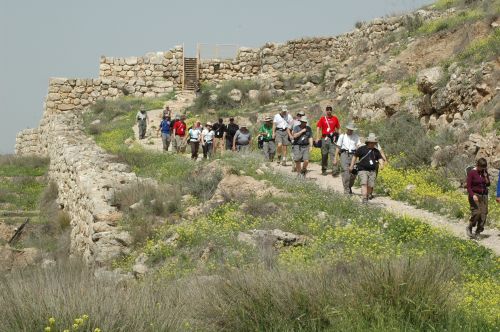
Looming in the background was Lachish, with the remnants of its walls and buildings standing patiently in the morning light, waiting for us to walk up the mound to learn their sad story. We walked the short distance from the vineyard up the rocky path leading to what once was the largest gate complex in Israel.

I have thought much about Lachish since returning home from Israel and offer this simple primer to provoke your study of this ancient site.

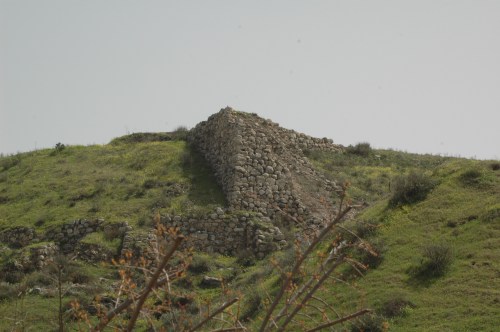
Remnants of Lachish’s ancient walls.

L = Location | Lachish is located southwest of Jerusalem in the Shephelah, the area that separates the coastal plains to the west and the Mountains of Judea to the east. In Bible times, the Shephelah was the place where worldviews collided. The Shephelah is dissected by valleys running from the mountains to the coastal plain. Prominent cities developed in each of the Shephelah valleys. The city of Lachish stood over the Lachish Valley and guarded the southern approach to Jerusalem from invaders. As long as Lachish stood, Jerusalem remained safe.

A = Archaeology | Archaeological excavations have peeled back layers of history at Tel Lachish to reveal what life was like for the inhabitants of the city. During the conquest, Joshua defeated the king of Lachish and apportioned the city to the tribe of Judah. Perhaps the saddest archaeological discovery from this period is evidence that the inhabitants of Lachish embraced pagan idol worship in violation of God’s commands. At some point in their history, the people of Lachish stopped looking to God and turned to pagan religions and idols for answers.

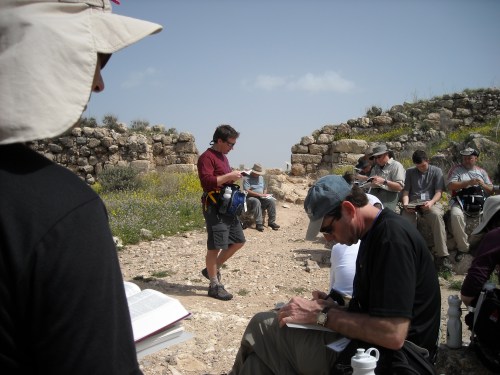
Learning about Lachish.

C = Call | God did not let this gradual departure from Him go unchallenged. Instead, He faithfully sent His prophets to call His people to repentance — to change their ways and to loosen their grip on the things that were causing their love for Him to grow cold. God’s prophets warned His people about the high cost of disobedience. He gave His people ample warning and sufficient time to repent of their disobedience.

H = Held | In spite of repeated warnings by God’s prophets, the people held on to their sinful ways. Instead of worshiping Him, they worshiped other gods. They tightened their grip on sin, turned their backs on God, and continued down a path that the prophets warned would lead to destruction. They failed to take God seriously. Perhaps emboldened by any apparent consequences to their actions, they forgot that the wheels of God’s justice may move slowly, but when they come they grind finely.

I = Invasion | God’s people finally exhausted His patience and He used the Assyrians as His instrument of accountability and punishment. The Assyrians invaded and destroyed the northern kingdom of Israel in 722 B.C. Emboldened by their successes the Assyrians turned their sights to the southern kingdom of Judah.

S = Sennacherib | The Assyrian King Sennacherib systematically attacked all of the fortified cities of Judah (2 Kings 18:13), including Lachish. The Assyrian army was known for its brutality. When they arrived at Lachish, even the massive gates and fortified walls of the city could not stop the Assyrian army. Sennacherib brutally tortured and killed as many as 50,000 people at Lachish. His conquest is commemorated in an elaborate bas relief on the walls of the royal palace in Nineveh. Archaeological discoveries have revealed the unmerciful brutality Sennacherib unleashed on his victims. Sadly, the godly people living in Lachish suffered the same terrible fate as the ungodly.

H = Hezekiah | After defeating Lachish, Sennacherib marched toward Jerusalem. He sent a demoralizing letter to King Hezekiah in which he defied God and boasted that he would be victorious over Jerusalem (2 Kings 19:8-13). However, Sennacherib underestimated King Hezekiah and his faith in God. Hezekiah had instituted much-needed religious reforms and had taken practical measures to prepare Jerusalem for Sennacherib’s attack. Hezekiah took Sennacherib’s letter “and went up to the house of the Lord and spread it out before the Lord” (2 Kings 19:14). He prayed, “And now, O Lord our God, I pray, deliver us from his hand that all the kingdoms of the earth may know that Thou alone, O Lord, art God” (2 Kings 19:19). God heard and answered Hezekiah’s prayer and gave him victory over Sennacherib (2 Kings 19:20-37).

Leaving Lachish.

God is still looking for people like Hezekiah — those who remain faithful to God and who live and work to impact the world for Him so that the world may know that He alone is God. Can He count on us?

Posted by: Omar C. Garcia | March 29, 2009

Tel Arad

On the afternoon of March 9 we visited Tel Arad. The word “tel” is an archaeological term that means “mound.” When an ancient city experienced a natural disaster or was destroyed by some other means, instead of removing the rubble, the next generation built on top of the ruins. Over time, the site was progressively elevated with the growing mound covering centuries of debris. Arad is located in a part of the Negev Desert that receives very little rainfall. We walked through the ruins of this ancient city and stood in what once was a home. With a cold wind blowing, we lingered and talked about hospitality in ancient times. Hospitality often meant life and refreshment to those traveling through this hostile desert region.

The Ruins of Tel Arad

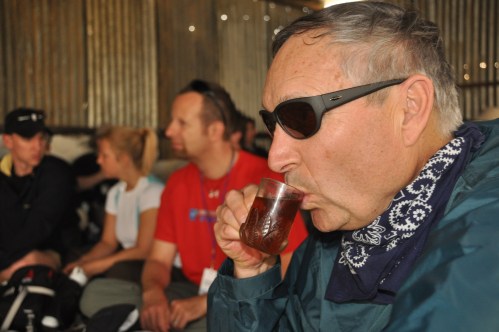
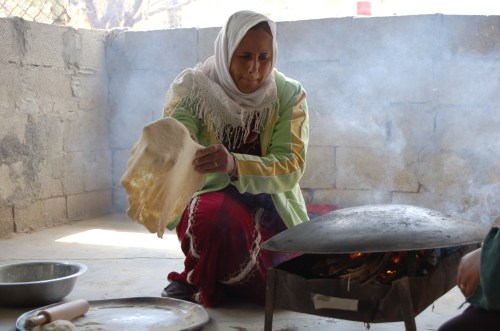
From Arad we walked a few miles across the adjacent rolling moonscape to a nearby Bedouin village. As we approached, the children ran out to greet us and escorted us to their camp. Our lesson in desert hospitality took on special meaning as our hosts served us hot tea and prepared their version of the tortilla for us. Although we had only walked a short distance, we were grateful for the opportunity to sit and enjoy hot tea on this cold afternoon. Here are a few thoughts I pondered as I meditated on the meaning of hospitality.

H = Heart | Offering hospitality to strangers was a moral imperative and sacred duty in Bible times. God told His people to show their “love for the alien” because they had been “aliens in the land of Egypt” (Lev. 19:34; Deut. 10:19). They knew what it meant to be treated harshly and unjustly. Hospitality is a matter of the heart — of extending to others the kind of care we would want for others to extend to us, especially in difficult circumstances and hostile places.

O = Openness | Offering hospitality requires that we have an openness to those in need. Jesus said that at the judgment He “will say to those on His right … I was a stranger and you invited Me in” (Matt. 25:34-35). And “to those on His left … I was a stranger, and you did not invite Me in” (Matt. 25:41-42). Mother Teresa defined her mission as looking for Jesus in the distressing disguise of the poor and then showing hospitality to those individuals.

S = Sent | People in Old Testament times believed guests were sent to them from God. Abraham showed this attitude when he entertained three strangers who proved to be angels (Gen. 18). The writer of Hebrews admonished his readers to “show hospitality to strangers” as Abraham had done, “for by this some have entertained angels without knowing it” (Heb. 13:2).

P = Philoxenos | The Greek word for hospitality is “philoxenos” — from the words “philo” (love) and “xenos” (stranger or guest). This word means “lover of strangers or guests” and conveys the idea of enjoying being a host. Our English word hospitality is from the Latin word “hostis” which means “enemy or stranger.” The Latin word “hospitem” can refer to a host or guest. Hospitals were originally hostels or hospices, places where pilgrims travelling to the Holy Land found a friendly reception.

Michael Haynes enjoying cup of tea.

I = Initiative | When Abraham saw three men near his tent, “he ran from the tent door to meet them” (Gen. 18:2). Abraham took the initiative to meet these strangers and then “hurried into the tent” (Gen. 18:6) to alert Sarah to prepare a meal for them. Abraham then “ran to the herd” to select a calf for the meal and then “hurried to prepare it” (Gen. 18:7). Abraham’s enthusiasm indicates his belief that God expected him to take the initiative to show hospitality to strangers.

T = Table | The table is central to hospitality. Abraham and Sarah prepared a meal for their guests (Gen. 18:2-8). One of the first things a host did was to offer a guest something to drink (Gen. 24:17-18) and then a meal (Gen. 26:30). Lot prepared a meal for his guests (Gen. 19:3). As Christ-followers, we should do the same (Mark 9:41).

A = Acceptance | A remarkable feature of hospitality in Biblical times was receiving an enemy as a guest. Some cultures have a rule that an enemy who has dismounted and touched the rope of a single tent is safe. Enemies enjoyed the same protection as friends (Gen. 19:4-8). I have been a guest in many Muslim homes on my travels. Once, while in the mountains of Pakistan, our host assured us of his protection. “You are my guest,” he said, “and I offer you my food and assure you of my protection.” I felt accepted and safe (Ps. 23:5).

The Bedouin version of the tortilla.

L = Linger | When the time came for a guest to depart, a host did his best to urge his guest to linger and stay a little longer — to enjoy one more meal or one more night before departing (Judges 19:5-10). When a guest was ready to leave, the guest would say, “With your permission,” to which the host replied, “Depart in peace” (Gen. 26:31). One way to honor a departing guest was to walk with him for a distance, as Abraham did with his guests (Gen. 18:16).

I = Insight | While the Bible encourages hospitality, it also offers a word of caution to those who offer hospitality. In 2 John 10 we read, “If anyone” [a traveling teacher] comes to you and does not bring this teaching [probably refers to the teaching about the incarnation (see verse 7)], do not take him into your house [do not offer shelter and lodging; keep them at a distance because they can endanger the spiritual health of the home and the church] or welcome [in either a private or official way; to give a welcome indicates fellowship and solidarity] him.”

3 John 5 offers this encouragement about opening our homes to God’s servants: “Dear friend [refers to Gaius], you are faithful in what you are doing [Gaius’ service was really a service to Jesus Christ (cf. Matt. 10:40; 25:34-40)] for the brothers [traveling ministers or missionaries; sincere ministers of the gospel as opposed to the false teachers of 2 John; read 1 Cor. 16:6; Titus 3:13], even though they are strangers [same as “brothers” in the first part of this verse; cf. Heb. 13:2] to you.”

T = Time | In Biblical times, a host devoted time to his guests. Guests did not expect privacy and would feel ill-treated or deserted if left alone, even at night. Because people slept with their clothes on, a male host and family members would sleep in the same room as their male guests.

Y = Yes | Offering hospitality seems to be an increasingly difficult thing in our culture. Our calendars are so full that we hardly have time to say yes to guests. Yet, unless we do so our children may not learn the importance of showing hospitality to guests or how to do so. So, let’s heed Paul’s advice in Romans 12:13 and practice, or pursue, hospitality.

Posted by: Omar C. Garcia | March 27, 2009

Jerusalem | Day 2-b

This post is a continuation of the events of March 16.

In Hezekiah's Tunnel

In Hezekiah's Tunnel

Hezekiah’s Tunnel | From the Temple Mount we traveled the short distance to Hezekiah’s Tunnel. More than 700 years before Jesus, King Hezekiah prepared Judah to face the threat of Sennacherib’s Assyrian army. Hezekiah instituted religious reforms and took practical measures to safeguard Jerusalem’s water supply (2 Kings 20:20; 2 Chron. 32:30). Without water, the city would not survive a siege. So, Hezekiah’s workmen created a tunnel by chiseling through solid rock. One team of workers started at the spring of Gihon in the Kidron Valley outside Jerusalem. The other team started on the western ridge of Jerusalem. Chiseling their way through rock, at points more than 140 feet underground, the two groups met in the middle — an amazing feat of engineering. Water still flows through the tunnel today.

We waded through the entire quarter-mile distance of the tunnel in knee-deep water. At places the tunnel was so narrow that our shoulders rubbed against both walls. The beams of our flashlights illuminated the chisel marks still evident on the walls of the tunnel, each mark a mute testimony to King Hezekiah’s determination to do everything possible to prepare his people to face the Assyrians.

Reflections | As we walked through the tunnel I tried to imagine what it must have been like for the workmen who labored so hard with hand-tools to chisel through solid rock. Each worker had a vested interest in the project — the survival of his family. Perhaps it was the thought of their families that kept them swinging their tools when they became weary. “How determined are we,” I thought to myself, “in confronting evil and in making provision for our families to not be overcome by the evil of our day?” Sadly, I think that far too often we allow evil to tunnel its way into our homes and hearts rather than taking steps to chisel a path away from evil.

Learning about the Pool of Siloam

Learning about the Pool of Siloam

Pool of Siloam | Siloam is a Greek translation of the Hebrew word “shiloah,” meaning “sent.” The pool of Siloam is located in the southeast corner of the city at the end of Hezekiah’s Tunnel. King Hezekiah’s workers built this pool to contain the living waters channeled inside the city walls through the underground tunnel. If the city were ever under siege, the people could access water at this pool without having to leave the city. Brilliant! We were fortunate to meet the Israeli archaeologist who is responsible for the current excavations at the pool of Siloam. He took time to talk to our group about his work and to show us around the site. Every day’s work at this dig yields new discoveries — ancient coins, pottery shards, stone pavers, and more. Exciting!

The pool of Siloam is mentioned in John 9. When Jesus saw a man blind from birth, He stopped to help him. Jesus spat on the ground and kneaded some mud to put on the blind man’s eyes. He then “sent” this man to the pool called “sent” — the pool of Siloam. The man obeyed Jesus and was healed, gaining both physical sight and spiritual insight about Jesus. Jesus had earlier told His disciples, “We must work the works of Him who sent Me…” (John 9:4). And Jesus, the sent one, later told His disciples, “as the Father has sent Me, I also send you” (John 20:21).

Reflections | As in Jesus’ day, many today are blind to His true identity as the Son of God. And, instead of allowing Him to satisfy their thirst with living waters, they drink from broken cisterns and never find the satisfaction they seek. Let’s do the work of Him who sent us and help others to gain new sight and insight about Jesus.

Hinnom Valley | Our afternoon hike took us to a beautiful green valley. The thick grass there was inviting and beckoned us to take a load off our feet.  As tired as we were on our final day of the trip, I think we all could have easily taken a nap on the beautiful carpet of grass. That is, until we learned about where we actually were!

The Hinnom Valley is known as Ge-Hinnom in Hebrew and is translated Gehenna in Greek. In Old Testament times, this was a place where people of Judah sacrificed their children to Baal (2 Chron. 38:1-4; Jer. 7:31). Even King Manasseh of Judah sacrificed some of his own sons in Baal worship here (2 Chron. 33:6). In Jesus’ time, Gehenna was a perpetual-burning garbage dump and the place where sewers carried and dumped their waste. This place became a metaphor for hell, where worms never die and the fire is not quenched (Mark 9:48).

Reflections | As I surveyed the Hinnom Valley I could not help but think about how easy it is for us to forget about the reality of hell. The green grass here concealed centuries of garbage, sewage, and human sacrifices to Baal. Perhaps if we thought a little more about hell we would be motivated to tell others about heaven more often than we do.

sign-oskar-schindlers-graveOskar Schindler | Although we did not visit Oskar Schindler’s grave, I took a photo of the sign that guides visitors to his grave near the Zion Gate. Schindler was a German businessman who saved 1,200 Polish Jews during the Holocaust. Liam Neeson played the role of Schindler in Steven Spielberg’s movie, “Schindler’s List.” The inscription on his grave reads, “The Unforgettable Lifesaver of 1200 Persecuted Jews.”

Brian, Ronen, and Marty

Brian, Ronen, and Marty

The Peace of Jerusalem | We concluded our visit to Israel at a hill overlooking the city of Jerusalem. We shared impressions of our trip and then read Psalm 122, one of the psalms of ascent, and prayed for the peace of Jerusalem. I am grateful to Brian Haynes, our Associate Pastor, to Marty O’Conner of Follow the Rabbi, and to Ronen ben Moshe, our Israeli guide. These men did a great job of working together to make our experience in Israel meaningful. I personally learned a lot and will continue to process what I learned every time I read the Scriptures. And, as Ronen often said throughout our journey — next year in Jerusalem!

Posted by: Omar C. Garcia | March 25, 2009

Jerusalem | Day 2-a

At Dome of the Rock

At Dome of the Rock

Temple Mount | On the morning of March 16 we visited the Temple Mount, the holiest site in Judaism. King David originally purchased this site from Araunah the Jebusite (2 Sam. 24:18-25). Chronicles identifies this location as Mount Moriah (2 Chron. 3:1), the place where Abraham had been willing to offer Isaac (Gen. 22:1-14). Solomon built the first Temple at this site (2 Chron. 2–6) but it was destroyed in 586 BC when the Southern Kingdom of Judah fell to the Babylonians. Almost a century later, Zerubbabel built the Second Temple here (Ezra 3:8-13). Finally Herod, in an effort to gain favor with his Jewish subjects and impress the Romans, enlarged the Temple platform and made the Jerusalem Temple bigger and better than ever. This construction work was still going on when Jesus was presented at the Temple (Luke 2:22). Herod’s project was finally completed in 60 AD but was destroyed by the Romans in 70 AD.

The Dome of the Rock was erected near the site of the Jewish Temple in the 7th century AD. This mosque, with its golden dome, is perhaps the most prominent feature of Jerusalem’s low skyline. Mount Moriah lies somewhere beneath the Temple Mount and the Dome of the Rock. The presence of this mosque makes it impossible for archaeologists to excavate the Mount.

Reflections | I reflected on the story of Abraham and Isaac as we walked around the Temple Mount. God said to Abraham, “Take now your son, your only son, whom you love, Isaac…” (Genesis 22:2). This is the first time in Scripture that the word “love” is used. I think it is interesting that the word is used in the context of a father’s love for his son and not of a man’s love for a woman. And, the first time the word love is used in the New Testament is at the baptism of Jesus when a voice out of the heavens said, “This is My beloved Son, in whom I am well-pleased” (Matt. 3:17).

Isaac asked Abraham an important question at this place, “Behold, the fire and the wood, but where is the lamb for the burnt offering?” (Gen. 22:7). Abraham replied that God himself would provide the lamb (Gen. 22:8). Isaac’s question reverberated through the centuries and found its ultimate answer in the words of John the Baptist who “looked upon Jesus as He walked and said, ‘Behold, the Lamb of God’” (John 1:36). Jesus, the Lamb of God, the perfect sacrifice (1 Peter 1:18-19), was not crucified on this mount, but on another mount called Calvary just outside the city walls — all because of love.

Team at Wailing Wall

Team Members at the Wailing Wall

Wailing Wall | We visited the Wailing Wall, also known as the Western Wall. This wall is part of the original retaining wall from the time of Herod and was the wall closest to the Holy of Holies. When the Romans destroyed Jerusalem and the Temple in 70 AD, they left this fifty-yard long section of the wall, perhaps to serve as a reminder of the grandeur of what they had destroyed. In the past, the Jews would gather here to mourn the loss of Jerusalem and the destruction of the Temple. Today, they gather here to pray. Men and women have their respective areas for prayer. Jewish men stand facing the wall, with their heads covered and wearing their tallits, or prayer shawls, with tassels on the corners. Jewish petitioners, as well as visitors, place strips of paper containing written prayers into the cracks and crevices of the wall. As I approached the wall, the folded pieces of paper wedged into the joints between the massive stones were as thick as mortar — a reminder that there is something within us that longs for a meaningful connection with God.

Reflections | While I was deeply moved by the sight of so many people praying at the wall, I gave thanks that Jesus makes it possible for His followers to approach God’s “throne of grace, that we may receive mercy and may find grace to help in time of need” (Heb. 4:16). And, we can pray at any time and from any place. Even so, I am glad that we spent an extra half-hour at the Wall. Most of us spent that time in prayer. I found it interesting that it was not hard to focus and concentrate while standing there and enjoyed my time with God. I came away from the Wall with admiration and respect for those who spend hours and even days praying there and concluded that I really have no excuses for being lax in my prayer life.

Posted by: Omar C. Garcia | March 23, 2009

Jerusalem | Day 1

Mount of Olives | On the afternoon of March 15, we left Bethlehem and headed to the Mount of Olives, located east of Jerusalem across the Kidron Valley. The Mount of Olives is approximately 325 feet higher than the Temple area and offers a panoramic view of Jerusalem. So, this was the perfect place to get oriented and from which to begin our walking tour of Jerusalem. The western slope of the ridge is a cemetery now completely covered with tombs. It is likely that this same area was covered with olive trees in the first century. From our high vantage point we walked to the nearby walled road that tradition holds is the route of Jesus’ triumphal entry into Jerusalem. The Sanctuary of Dominus Flevit (Latin for “the Lord wept”) is a small tear-shaped church located half way down the slopes of the Mount of Olives. It commemorates the place where Jesus stopped and wept over Jerusalem (Luke 19:41-44).

My Prayer | Lord, I am sorry that I don’t weep for my community the way Jesus wept for Jerusalem. Please give me greater perspective and help me to see clearly the people among whom I live. Help me to understand where and to whom they are looking for answers to life’s deeper questions and to be prepared to give an answer concerning the hope that is within me.

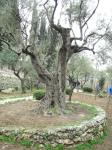
Olive Tree at Gethsemane

Olive Tree at Gethsemane

Gethsemane | Before entering the city, we stopped at the traditional location of Gethsemane. This is where Jesus went after the Last Supper and where He asked His disciples to “keep watch” as He prayed (Matt. 26:38). As we sat among the gnarled, ancient olive trees, it was not hard to imagine what that night must have been like as Judas betrayed Jesus with a kiss (Luke 22:47-48) and Peter cut off the right ear of Malchus, the slave of the high priest (John 18:10).

The name Gethsemane is derived from the Hebrew words “gat” (a place for pressing) and “shemanim” (oils). The Greek word “thlipsis” means great pressure and describes the point where crushed olives were placed on a press under heavy stone slabs. This intense pressure squeezed the olive oil out of the pulp. Jesus was under such intense pressure at Gethsemane that “His sweat became like drops of blood” (Luke 22:44). Soon He would feel the full weight of the sins of the world as He hung on the cross.

My Prayer | Lord, help me to not complain when I find myself under great pressure — at the place where thlipsis happens, between a rock and a hard place. Help me to understand how you use thlipsis to bring out qualities in my life that otherwise would remain hidden. Thank you for your commitment to conform me into the image of your Son (Rom. 8:29; Phil. 1:6) and for using thlipsis to make it happen (Rom. 5:3).

Praying at Bethesda

Praying at Bethesda

Pool of Bethesda | The Pool of Bethesda was unearthed by archaeologists in 1956. This pool is located near the Sheep Gate and the Temple Mount. It was also known as the Sheep Pool because the water from this pool was used to wash sheep, which were sacrificed in the Temple. Archaeologists have also found evidence of a nearby temple to Asclepius, the Roman god of medicine. In Jesus’ day, “those who were sick, blind, lame, and withered” (John 5:3) gathered at this place, attracted by the hope of being healed when “an angel of the Lord … stirred up the water” (John 5:4).

When Jesus visited the Pool of Bethesda, He saw a disabled man who had suffered for thirty-eight years (John 5:5). This man was within sight of the healing waters but had no one to help him into the pool (John 5:7). Of all the sick and disabled people gathered around the pool, Jesus found the one person who could not help himself and then helped him. Jesus healed this man on the Sabbath. The most meaningful part of our visit to the Pool of Bethesda was spending time in prayer there. Each of us prayed for people we know who are trapped in infirmities, dealing with desperate needs, and struggling to keep hardships from prying hope from their hands.

My Prayer | Lord, give me your eyes to help me see those around me who live each day in debilitating pain — both physical and emotional. Help me to remember that “even in laughter the heart may ache, and joy may end in grief” (Prov. 14:13). Please use me to offer the balm of encouragement to others and to guide the hurting to you.

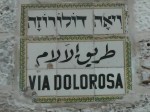
sign-via-dolorosa1Via Dolorosa | The Pool of Bethesda is near the beginning of the Via Dolorosa, a Latin term that means “Way of Suffering.” The Via Dolorosa is a street in the old city of Jerusalem that tradition holds was the path Jesus walked on His way to the crucifixion. Today, this path is lined with vendors and choked with a torrent of humanity. As we navigated our way through the crowds, I tried to imagine what it must have been like for those who watched Jesus walk and stumble along this path — with every painful step taking Him closer to an excruciating death for the sins of mankind.

My Prayer | Lord, thank you for walking the Via Dolorosa because of me and for me.

Church of the Holy Sepulchre | The Via Dolorosa ends at the Church of the Holy Sepulchre. This church is built on the rock of Golgotha. In Jesus’ day, this place was located outside the city walls. The Church of the Holy Sepulchre was built over both Golgotha, or Calvary, and the tomb where He was buried. While we were taught in Sunday School that Jesus was crucified on top of Golgotha, it is more likely that He was crucified at street level because the Romans wanted for passersby to see their victims at eye level so that they might serve as examples.

As we walked through the massive Church of the Holy Sepulchre, I was reminded of a poem written by George MacLeod that helps put the cross into perspective:

  I simply argue that the cross be raised again
  at the center of the market place
  as well as on the steeple of the church,
  I am recovering the claim that
  Jesus was not crucified in a cathedral
  between two candles:
  But on a cross between two thieves;
  on a town garbage heap;
  At a crossroad of politics so cosmopolitan
  that they had to write His title
  in Hebrew and in Latin and in Greek…
  At the kind of place where cynics talk smut,
  and thieves curse and soldiers gamble.
  Because that is where He died,
  and that is what He died about.
  And that is where Christ’s men ought to be,
  and what church people ought to shout.

My Prayer | Lord, thank you for paying the penalty for my sin and for your gift of eternal life. Thank you for those who shared the story of your love with me. Please help me to faithfully share your story with others.

Posted by: Omar C. Garcia | March 20, 2009

Bethlehem

As the last rays of the sun disappeared over the horizon at Caesarea, we boarded our bus and traveled south along the Mediterranean coast toward Tel Aviv. At Tel Aviv we turned onto Highway 1 which took us all the way to Jerusalem. I could not wait for the morning light to chase away the darkness that was concealing all of the sites I have waited a lifetime to see. I crawled into bed feeling like a kid on Christmas Eve. Morning could not come fast enough.

Bowing Low | The morning of March 15 brought more than light, it brought overcast skies, rain, and a cold breeze. No matter — we boarded our bus and headed to the town of Bethlehem, “the city of David” (Luke 2:4), located only a few miles from Jerusalem. The name Bethlehem means “house of bread.” Seven hundred years before Jesus was born, Micah prophesied that the Messiah, a descendant of David, would be born in Bethlehem (Micah 5:2).

On a treasure map, “x” marks the spot. In the Holy Land, a church marks the spot. Our first stop of the day was at The Basilica of the Nativity, built over the cave that tradition marks as the birthplace of Jesus. Guests must enter the basilica through a very low door called the Door of Humility. This door was created in Ottoman times to force even the most important visitor to bow low as he entered the holy place.

The Door of Humility

We entered the basilica through the Door of Humility and stepped into the dimly-lit nave flanked by rows of columns. The smell of incense, the sounds of worship in progress, and paintings of biblical scenes and saints welcomed us into the old church. Our guide spoke in hushed tones as he reviewed the story of Jesus’ birth. He then escorted us to the traditional site of the Nativity enshrined in the grotto beneath the choir area of the basilica.

Looking down into the grotto I was reminded that Jesus was not born in this building but in the cave it enshrines, a place where animals were once kept. We have seen many such caves on our treks around the country. They are more common than I imagined and come complete with the filth and fragrance of the animals they house. At the time of Jesus’ birth there were no shortage of palaces and fortresses where He could have been born, including the imposing and impressive Herodium just a short distance away. “But when the fullness of time came, God sent forth His Son…” (Gal. 4:4) who “emptied Himself” (Phil. 2:7) and was born in the most unlikely of places and laid “in a manger,” a feeding trough for animals (Luke 2:7).

Building High | Just a short distance from the place where Jesus was born is the Herodium, a fortress-palace built by Herod on top of the highest real estate in the area. We hiked to the top of the hill to look at the ruins of this once-great palace. The Herodium is an active archaeological site. We took a moment to watch the painstaking work of those who continue to peel back the layers of history here. Josephus recorded that Herod was buried in the Herodium. His words were confirmed in 2007 when Israeli archaeologist Ehud Netzer and his team found Herod’s grave (see National Geographic, December 2008).

Archaeologists at Herodium

At the time of Jesus’ birth, the Herodium was one of the largest and most luxurious palaces in the world. Herod spared no expense to build the biggest and the best on the highest mountain so that the world would know there is a Herod. The Herodium was so imposing that the first rays of the sun painted its shadow across Bethlehem each morning. Imagine that! Jesus — the king of the universe — was born in an insignificant cave, probably amidst animals, in the shadow of Herod’s greatness.

Today, all of Herod’s palaces and fortresses lie in ruins. Herod is remembered as the megalomaniac who became paranoid and killed many people, including babies (Matt. 2:16-18), in an effort to maintain his power. Herod had wealth and lavish palaces in which to dine and sleep, but Jesus had “no place to lay His head” (Matt. 8:20). Jesus did not leave a legacy of palaces or architectural accomplishments. He left something much more lasting. And, what Herod the Great feared (Matt. 2:3) came to pass. The baby born in Bethlehem beneath the shadow of his palace became a greater king than him and changed the world forever.

Posted by: Omar C. Garcia | March 19, 2009

Galilee | Day 4

No Regard | Early on the morning of March 14 we traveled southeast from the Sea of Galilee along Highway 65 toward Megiddo. This ancient city is strategically located near a critical mountain pass on the southern edge of the fertile Jezreel Valley. It was a military stronghold that guarded the well-traveled Via Maris trade route. The city was built on Mount Megiddo. The Greek name Armageddon, which refers to the surrounding area, is derived from the Hebrew Har (Mount) Megiddo. Armageddon is a symbol of the great battle between good and evil mentioned in Revelation 16:13-16. Over the centuries, numerous battles were fought for control of Megiddo because whoever controlled Megiddo exercised enormous influence over the ancient world.

Around Altar at Megiddo

Megiddo once served as a center for the pagan worship of Baal, the Canaanite god in charge of rain. Archaeologists have unearthed a bronze-age high place at Megiddo featuring a large round altar pre-dating the kings of Israel. We stood around this altar, contemplating the terrible things that took place here. The worship of Baal was characterized by all kinds of sexual acts performed to motivate Baal to send rain on the earth. These ancient worshipers regarded rain as Baal’s sperm. The most distressing aspect of Baal worship was the sacrifice of children. The statue of Baal that once stood on the altar in front of us had outstretched arms designed to receive children. The children placed in these arms were consumed by the raging fire built inside the statue’s hollow interior. The altar at Megiddo is a mute reminder that this was once a place where people had no regard for human life.

Reflection | It is easy to call the ancient people who sacrificed their children to Baal, and those who watched this happen, uncivilized brutes. But, are we any more civilized? If children in the womb are within reach of Baal’s arms, then how much longer will it be before children outside, or partially outside, the womb are silenced by those same arms? And, what will prevent Baal from ultimately consuming the elderly and infirmed? We must not remain silent or passive about the battle to protect the sanctity of human life. And, we must never forget that whoever controls Megiddo exercises enormous influence.

No Response | From Megiddo we traveled northwest along Highway 66 to Mount Carmel, the site of one of the most famous confrontations in the Old Testament. This beautiful part of Israel receives as much as thirty inches of rain a year, which is why the surrounding land was known as the breadbasket of Israel. However, things were different here during the time of Elijah the prophet. In Elijah’s day, the worship of God was in danger of being completely supplanted by the worship of Baal. Elijah appeared on the scene as a new Moses to deliver Israel out of the bondage of idolatry. He told King Ahab, “As the Lord, the God of Israel lives, before whom I stand, surely there shall be neither dew nor rain these years, except by my word” (1 Kings 17:1). A direct challenge to Baal, Elijah’s prediction was meant to accentuate Baal’s impotence. The drought was also God’s judgment on Israel for turning to other gods (see Deuteronomy 11:16-17).

View from Mt. Carmel

View from Mt. Carmel

Elijah challenged Ahab to gather all Israel at Mount Carmel along with the “450 prophets of Baal and 400 prophets of the Asherah, who eat at Jezebel’s table” (18:19), thus setting the stage for one of the most dramatic confrontations of all time. The rules of the contest were simple: two oxen would be prepared and placed upon wood (18:23), one by the prophets of Baal and one by Elijah. Each side would call upon their deity to set fire to the wood and consume the sacrifice. “The God who answers by fire, He is God” (18:24). Baal’s prophets called upon Baal from morning until noon, leaping about the altar. “But there was no voice and no one answered” (18:26). Elijah then prayed a simple prayer. “O Lord, the God of Abraham, Isaac, and Israel, today let it be known that Thou art God in Israel, and that I am Thy servant and that I have done all these things at Thy word” (1 Kings 18:36). God sent fire to consume the sacrifice (18:38). Contest over!

Reflection | Elijah asked the people to make up their minds regarding who they were going to follow, either God or Baal (1 Kings 18:21). Jesus said you cannot serve two masters (Matthew 6:24). John said God cannot stand lukewarm Christianity (Revelation 3:15-16). God always calls His people to devoted and loyal commitment to Himself.

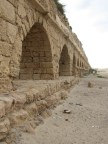
Aqueduct at Caesarea

Aqueduct at Caesarea

No Boundaries | After hiking down Mount Carmel’s steep slope, we headed east toward the Mediterranean coast to the ruins of Caesarea — not to be confused with Caesarea Philippi located in the northeastern part of the country. Herod the Great recognized Caesarea’s strategic location along the Via Maris trade route and built a magnificent walled city there, complete with temples, a theater, a sports arena, and more. Consistent with Herod’s other ambitious building projects, Caesarea boasted the largest harbor on the eastern Mediterranean coast. This man-made wonder was an amazing feat of engineering. Herod also constructed a palace where his guests enjoyed luxurious rooms, hot and cold baths, and a huge swimming pool, all with magnificent views of the Mediterranean. Elevated aqueducts supplied the city with fresh water from the springs of Mount Carmel. The city was covered with marble and could be seen from miles out at sea. Today, Herod’s magnificent city lies in ruins and the marble which once covered its buildings is gone. We found bits of marble as we walked along Caesarea’s rocky beaches.

Reflection | Herod crossed financial and engineering boundaries in order to build a city that would increase his wealth and power and make his name famous. He spared no expense so that the world would know there is a Herod. We all have a little bit of Herod in us — a desire to build, to acquire, to upgrade, and more in order to impress others and to make our name famous. Unlike Herod, Jesus built no palaces or temples or cities. Instead, He built something much more lasting out of “living stones” (1 Peter 2:5) — His church. As living stones we have a responsibility to tell our story so that the world may know that there is a God.

Posted by: Omar C. Garcia | March 18, 2009

Galilee | Day 3

This post is a continuation of the events of March 13. What follows are a few quick reflections on the places we visited as we continued our hike through Galilee.

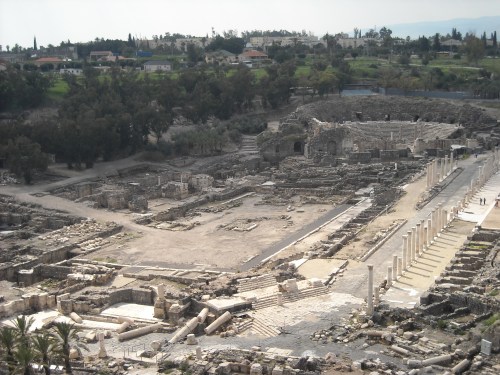
The Unrestrained | Our first hike of the afternoon took us to the top of a hill west of the Jordan River. What we saw when we reached the top took our breath away. Below us were the ruins of Beth She’an, the only city of the Decapolis located west of the Jordan River. I must add that these were impressive ruins — the evidence of a master-planned community, complete with all of the amenities of life. The people of Beth She’an enjoyed an unrestrained, self-indulgent, and comfortable lifestyle. They had a gymnasium, theatre, sports arena, upscale shopping, good schools, and magnificent temples. Even the public toilets were more extravagant than any of the ruins we saw at other locations in Galilee. Life in Beth She’an was obviously good.

The Ruins of Beth She’an

The ruins of Beth She’an are a compelling advertisement for Hellenism — a people-centered worldview that glorified human knowledge, accomplishment, and experience. Perhaps we were so impressed by what we saw because it was more like home than anything else we had seen. The heroes in Beth She’an were athletes, entertainers, and thinkers. Sounds like home to me! So, it wasn’t too difficult to imagine what life must have been like here. In fact, if you listen carefully you can still hear ancient whispers in the breeze, boasting “Who needs God when we have all this.”

Reminder | Beth She’an reminded me that it is too easy to allow all of the stuff of life to fool us into thinking that we are the measure of all things and that we have no need of God. There is perhaps no greater arrogance than adding stuff to our lives while subtracting God from our lives. That kind of math will get us into trouble. The people of Beth She’an leaned that lesson when an earthquake destroyed their magnificent city in A.D. 749 in only seven seconds. Sometimes it only takes seven seconds or an economic earthquake to remind us that we need more than stuff to survive.

The Unreached | From Beth She’an we traveled north to the ruins of Susita, located on 35-acre plateau on the eastern shore of the Sea of Galilee. The western edge of Susita drops steeply into the Sea of Galilee. Like Beth She’an, Susita was one of the modern Hellenistic cities of the Decapolis. It boasted magnificent Greek buildings, paved streets lined with columns and fountains, theaters, and pagan temples. As we hiked up the steep ancient street leading to the city gates, we saw evidence of a once-splendid city that was both an inviting and forbidding place in Jesus’ day.

Hiking into Susita

Mark 4:35 tells us that Jesus and His disciples traveled across the Sea of Galilee “to the other side.” When they arrived in the vicinity of Susita, they were met by a man possessed by many demons (Mark 5:1-20). Jesus cast the demons out of the man. The demons entered into a herd of pigs that then rushed off the steep slopes into the sea and drowned. It was easy for us to envision the scene from our high vantage point. The man wanted to go with Jesus, but Jesus told him to stay home and tell his story. The grateful man did as Jesus asked and told his story throughout the Decapolis, “and all the people were amazed” (Mark 5:20). That may explain why Susita later became a center of early Christianity. As we stood in the ruins of one of five churches in Susita, I could not help but wonder if this was the fruit of the once-demon possessed man who stayed home and shared his story with others.

Challenge | The one thing that every Christ-follower has is a personal story or testimony about Jesus. As we sat on the rocks overlooking the Sea of Galilee, Brian, our team leader, asked us to pair up and to share our personal story with one another. He then challenged us to do what the once-demon possessed man had done – tell our story often, both at home and “on the other side.” You never know how your story might change the history of a person or a place.

The Unknown | After hiking down Susita’s steep slope, we traveled to a remote location north of the Sea of Galilee and east of the Jordan River. We hiked across rocky fields toward the distant sound of rushing water. Soon the Jordan River was in sight. I expected to see calm waters gently meandering south to their final destination at the Dead Sea. However, at this time of the year the Jordan is a raging river foaming with white-water, a kayakers dream. In fact, we saw a kayak paddle lodged into the twisted limbs of trees caught on rocks in the middle of the river. I hope the kayaker fared better than his paddle.

Brian Teaching at Jordan

Seeing the river in all of its rage helped me to better understand what it took for the Israelites to cross the Jordan. Brian stood on a rock in the water, with rapids churning behind him, as he taught from the third chapter of Joshua. It was on the banks of the Jordan that Joshua ordered the people, saying, “When you see the ark of the covenant of the Lord your God, and the priests, who are Levites, carrying it, you are to move out from your positions and follow it. Then you will know the way to go, since you have never been this way before…” (Joshua 3:3-4). The river was at flood stage when Joshua led the people to cross, yet as soon as the priests’ feet touched the water, God stopped the flow of the river so that His people could safely cross (Joshua 3:15-16).

Reflection | I thought about Joshua’s orders as I sat and looked across the Jordan River. Whenever we are venturing into the unknown, to a place we have not been before, we must follow God and not get ahead of him. He knows the way we should go. And, we must exercise faith by getting our feet wet. Unless we get our feet wet we will not make much progress. We must exercise faith by getting our feet wet and then we must follow Him.

Note | Read my related blog on Joshua 3 entitled Stay Behind This Year.

« Newer Posts - Older Posts »

Categories