Posted by: Omar C. Garcia | June 7, 2009

One More Day with You

Clinton Close-up   On June 7, 2008, our family suffered the loss of my two-year old nephew. In the space of just a minute, Clinton Ryan innocently wandered off and accidentally drowned in a pond. I performed Clinton Ryan’s funeral service a few days later. In the midst of unimaginable pain, my niece Reecie and her family made the decision to donate Clinton’s organs so that others could be blessed. And, in the days following his death, Reecie wrote the poem posted below. After my Mom’s death, a friend sent me a card that said, “Death leaves a heartache that no one can heal. Love leaves a memory that no one can steal.” Memories are precious. I have discovered that writing about those memories is one important part of the grieving process. Below is the poem Reecie wrote, a poem filled with a mother’s memories and unfulfilled hopes for her baby boy.

If I Had Just One More Day with You!
by Reecie Miller

I remember watching you sleep at night,
praying the angels would guard you tight.
I hoped and dreamed for your life to be
filled with more than my eyes could see.

I had no idea
that we had few moments to share,
that you would leave my arms
and return to God’s care!

How my heart aches
to hold you once more,
to hear you say, “Mama”
and watch you run to the door.

If God would grant me
just one more day with you,
these are the things
I would want us to do!

I would gently wake you up
and run my fingers through your hair,
whispering, “good morning, handsome!
Mommy’s right here!”

We would play peek-a-boo
with the sheets,
then I’d kiss you all over
and pinch your sweet cheeks!

We’d go swimming in the pool,
like we always would do,
but today we’d stay a little longer—
a little longer than we should!

I would let you run through the house naked,
and I would laugh while you ran,
then I would pick you back up
and want to do it all again!

Life is too short
to worry about all the small things.
Time is way more precious—
more precious than it seems!

As our day would draw closer
to the very end,
I would beg God for an extension
to do it all over again!

I would remind you how much you are loved,
and that Heaven is not really that far,
that forever you will live
and be in my heart!

We would stand outside
and pick your very own star—
the star that will guide me,
when my life seems lonely and hard!

I’d kiss you one more time,
before having to let go,
and sing to you softly
as we waited for the Lord.

When the time would come,
and God would hold out his hand,
I would lovingly give you
right back to Him.

You were always His,
just mine for a while,
forever etched
is your precious smile!

I know that we cannot
negotiate for more time,
but two years wasn’t enough
for you to be mine.

Are you up there in heaven,
sitting on Jesus’ knee?
Are you peeking through the clouds,
watching over me?

Do you see me when I’m smiling?
Do you watch me wipe my tears?
Do you know how much
I still wish you were here?

Know that I Love You!
I will see you again, soon!
My work here on earth
is not quite through!

I promise to make you proud!
Your legacy will live on!
See you soon, handsome.
Love forever, Mom.

• • • • •

PS| Please read Clinton’s Eyes — the top read post on my blog — to read the letter Reecie wrote to the recipient of Clinton’s eyes.

Posted by: Omar C. Garcia | June 5, 2009

My Beautiful Mom | C

Mom in blue   This is my third installment of reflections on my beautiful Mom. I have so many sweet memories that I could fill a book. In the future I will occasionally write more lessons I learned from Mom. Thanks so much to each of you who sent flowers and plants. These beautiful arrangements were like a sweet embrace around my beautiful Mom. And thank you for all of your cards and e-mail condolences. I came home to find my desk covered with sympathy cards, each with beautiful expressions of support. And, I have been blessed and encouraged by e-mails and phone calls from around the world. Your kind condolences and thoughtful expressions have comforted me and my family more than I can tell you. I hope you enjoy these final (for the time being) thoughts about my beautiful Mom.

Mom’s Missions | Long before Rick Warren wrote his best-seller, “The Purpose Driven Life,” Mom modeled a purpose-driven life. After all of her kids left home, Mom prayed and asked God to give her specific missions to accomplish for Him. She did not want to allow all of the energy she had invested in raising her kids to go to waste. So, she pursued a new career as a home health care worker and loved every moment. Every time we talked she would tell me about those for whom she cared and how much she loved them — especially a little boy named Hunter Patton who absolutely captured her heart. She would give me Hunter updates and prayer requests every time we’d talk. Mom lived the rest of her life seeking and accomplishing these missions from God. She was Jesus with skin on as she cared for children with special needs, aging parents, friends, and neighbors. I should have known that she sensed the end was near when a few months ago she told me that she felt she had completed the last mission God had assigned her.

Lesson Learned: Mom understood that a purpose-driven life is a well-lived life. She loved God and expressed that love by serving others. She understood that the best antidote to feeling sorry for yourself is to get the focus off of yourself. It’s hard to whine and complain about your own aches and pains when you are helping to alleviate the hurts of others.

Mom’s Bible | I had the precious privilege of spending a few days with Mom and Dad last month before I flew to Kashmir. Before I left, Mom told me that she wanted to be buried with her Bible — a request that we have honored. Hunter’s family had given her the Bible years ago and it became her favorite Bible. Before turning Mom’s Bible over to the funeral home, I spent hours looking through it and was blessed by what I found. Mom had noted each of my international trips and the dates of those trips next to passages of Scripture that she was praying for me. I always knew that she was praying for my safety and success, but I never knew that she was recording these things in her Bible. It’s no wonder that I have survived so many occasions when I have been in danger in remote locations around the world. She kept me tethered to safety by her prayers. She had also noted the dates I had called home from overseas and initialed these notes with the letters TYL — Thank You Lord. In fact, passages throughout her Bible were marked TYL. She was always so grateful to God for His blessings and never missed expressing her gratitude to Him for even the smallest blessing.

Lesson Learned: Mom understood that God’s Word and promises are true. She trusted God for the welfare of each of her kids and bombarded heaven with prayers on our behalf. I’ve always known the Devil was evil, but I did not realize how stupid he was until he tried to mess with Mom’s kids. Her prayers for us and her trust in God’s promises shielded us from so many things that could have harmed us.

Mom’s Heartbeat | In addition to beating for her family, Mom’s heart beat for the least of these. She would bless people begging on the streets, visited people in hospitals and nursing homes who did not have others to care for them, and opened her heart and home to everyone in the neighborhood. At Mom’s funeral, I met kids who had adopted Mom and Dad as surrogate grandparents. Mom especially loved the work of my friends Jerry and Susan Smith in Mongolia. Jerry and Susan care for orphaned, abandoned, and abused kids. Mom was absolutely amazed by their work and was one of their key prayer warriors. And, earlier this year when I volunteered at Mother Teresa’s homes for the destitute and dying in Kolkata, Mom wept when I told her about my experiences. She always encouraged me to invest and pour myself out for the least of these because these were the people who were so important to Jesus.

A couple of years ago I introduced Mom and Dad to my friend Mary Lee, one of Kingsland’s urban ministry partners. We delivered food to Mary, the founder of Something Blessed, a ministry to mentally challenged (formerly) homeless adults. Mom and Mary formed a fast friendship. Every time I went home for a visit she would load me down with supplies for Mary and her ministry. Ironically, Mary is currently battling cancer. Mom loved Mary and prayed for her ministry to the least of these.

Mom's Little BoyAfter I visited the displacement camps in Darfur in 2003, I gave Mom some photos from that trip. One photo in particular touched her heart. It was a photo of a little boy wearing mismatched and oversized flip-flops to protect his feet from the sands heated by burning temperatures. She framed this photo and kept it on her reading table. She said that, to her, the little boy in the photo represented oppressed and hurting people. So, she framed the photo and kept it near to remind her to pray daily for the least fortunate around the world.

Lesson Learned: Mom’s heart beat with concern for the welfare of the most vulnerable members of society — children in need, children and people with special needs, widows and orphans, and the least of these. I will continue to honor her concern for the least of these for as long as I live.

A God Wink | My family and I have been so blessed to have so many friends, neighbors, and relatives stop by the house since Mom passed away. On Sunday, the day after Mom died, I sat in a chair looking down the hallway, wishing for one more opportunity to see Mom walk down the hall to greet me and to talk. I was so overcome by emotion that I excused myself and went to her little reading area next to Dad’s office. I stood there alone and wept, telling God that I just wanted to hear Mom’s voice again. At that moment I looked over at a stack of books that Mom had been reading and noticed one book in particular that had a page book-marked. I picked it up and when I read what was on the page my jaw dropped. It was, without question, a God wink and a divine hug! Here is what Mom had marked on the page of that book. It was a poem entitled…

The Watcher
by Margaret Widdemer

She always leaned to watch for us,
Anxious if we were late,
In winter by the window,
In summer by the gate;

And though we mocked her tenderly,
Who had such foolish care,
The long way home would seem more safe
Because she waited there.

Her thoughts were all so full of us,
She never could forget!
And so I think that where she is
She must be watching yet,

Waiting till we come home to her,
Anxious if we are late —
Watching from Heaven’s window,
Leaning from Heaven’s gate.

I don’t think it’s a coincidence that Mom had marked the page with this poem and that I noticed the book at the exact moment when my heart was aching to hear her voice once again. So, thanks for watching and waiting Mom. I love you and will see you again.

• • • • •

PS | If you have not already done so, please take a moment to read my first two posts on Mom — My Beautiful Mom | A and My Beautiful Mom | B.

Posted by: Omar C. Garcia | June 4, 2009

My Beautiful Mom | B

EPSON039   My beautiful Mom, Frances, passed away on May 30 after a brief but courageous battle with cancer. She was a gift from God and I am so grateful for all that she did to give me and my siblings the best childhood imaginable. She was a living example of a Proverbs 31 woman and made our home the most affirming, stable, and encouraging place in the world. She did not have a cookie-cutter approach to parenting but instead fine-tuned her parenting to best guide each of her children. She carefully monitored the people and things that touched our lives because she understood the power of influence. She kept the lines of communication open so that we would feel comfortable talking with her about anything that concerned us. She was the most beautiful and amazing woman in the world to me. This is my second installment of childhood reflections and lessons I learned from Mom.
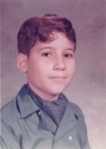
Sleeping Bag | Mom enrolled me in Cub Scouts when I was in grade school and helped me work through all of my badges. Later, I was excited to join the Boy Scout because Boy Scouts went on camp-outs. When our troop announced our first camp-out I learned that I needed a sleeping bag. Now, sleeping bags were expensive and a luxury that a family with five kids could not afford. So, Mom called her Mom and together they came up with a solution. They went to Sears and looked at the sleeping bags at the store. But, instead of buying a sleeping bag, which we could not afford, they decided to make me a sleeping bag. My Mom and Grandmother gathered material left over from their sewing projects and made me a sleeping bag in time for my first camp-out. And Mom did this without hurting the family budget. It was a pretty cool-looking and functional sleeping bag. I was never embarrassed to be the only scout in my troop to have a home-made sleeping bag. In fact, I used that sleeping bag through all of my years in Scouting.

Lesson Learned: Mom was resourceful and always found a way to help us. She did not depend on credit cards or rob Peter to pay Paul. She was imaginative and creative and used items we already had to meet unexpected needs.

Trash Day | One Saturday morning while I was watching cartoons, Mom asked me why I had not taken out the trash. I told her that I would do it later. Mom seized on this teachable moment and told me that I needed to show some initiative. “Initiative,” she said, “will help you succeed in life.” I didn’t know the meaning of the word so I asked her, “What’s initiative?” Mom answered in terms I could understand: “Initiative is taking the trash out before you have to be told to do so.” To this day, that is how I remember what the word initiative means. I thought a lot about what Mom had said and determined to start noticing things that needed to be done around the house and doing them before she had to ask me.

Lesson Learned: Mom knew how to communicate important lessons in terms I could understand. She wanted for her children to do the right things and to do kind things for others without having to be told to do so. She encouraged us to look for things that needed to be done and to take the initiative to do them.

The “F” Word | When I was in the fourth grade I heard the big bad “F” word at school for the first time. I did not know what this word meant, but when I got home I used it in a sentence. Mom was in the kitchen and whirled around and looked at me with a totally shocked expression. But, instead of washing my mouth out with soap or spanking me, she looked me in the eyes and calmly asked me where I had learned the word. I told her that I had learned it from my friend Tommy who lived on the next block. “Do you know what this word means,” she calmly asked. “No,” I replied. So she explained to me that this was a word that I should never use again in public or private and why I should not use it. Then she told me to get in the car and we drove to Tommy’s house. Mom spoke to Tommy’s mother about the new word her son had taught me. I don’t know about Tommy, but I did not use that word again and hate the word to this day.

Lesson Learned: Mom understood the value of a good explanation. Instead of punishing me for using a bad word that I did not understand, she helped me to understand why I should not use it. That was enough for me. I’m serious when I tell you that I have not used that word since then.

Ascot -- OmarSpiegel Catalogue | In the days before McAllen had so many shopping centers, Mom used to order our clothes from the Spiegel Catalogue. She would carefully peruse the pages of the catalogue to see what clothing we would need for the school year and then would work the family budget to see what she could afford to order. Mom would take measurements and then order pants and shirts for me for the Fall and Spring semesters of school. She figured that if the clothes looked good on the models in the catalogue, they would look good on her kids. One year the boys section offered a combination of double-knit pants and double-breasted shirts with ascots. Now, not many people we knew could tell you what an ascot was. Long story short — I arrived for my first-day of 7th Grade wearing double knit pants with penny loafers and a double-breasted shirt with a paisley ascot — the fashion equivalent of being the boy named Sue. I looked like Little Lord Fauntleroy. The hard part was that all of my friends were wearing Levi jeans, t-shirts, and PF Flyers. It was a hard first-day of school. I remember that the toughest kid in school came up to me during my first-period class and asked me what in the world I was wearing and what that thing was around my neck. I told him it was an ascot and then asked him if he had one. He said he didn’t but thought it was pretty cool looking. We became friends and no one gave me any trouble.
Lesson Learned: Mom understood that you don’t have to dress like everybody else in order to be accepted. She always wanted for her kids to look nice, but she helped us understand that we should always accept others for who they are and not because of how they dress. By the way, she later added Levi jeans and some PF Flyers to my school wardrobe.

• • • • •

PS | If you have not already done do, please take a moment to read my first post on my Mom entitled My Beautiful Mom | A and my final post entitled My Beautiful Mom | C.

Posted by: Omar C. Garcia | June 2, 2009

My Beautiful Mom | A

Frances Garcia

My sweet and beautiful mother, Frances, passed away on Saturday, May 30. Words cannot begin to express the terrible pain of that loss. Although I grieve with the hope of one day seeing Mom again in heaven, the pain of not seeing her again on this side of heaven is intense. For the first time in my life I made the journey home and Mom was not there to greet me. I had hoped to have her around for at least fifteen or twenty more years. But now I have to live with her absence. I will never get over her death — I will just have to learn to live with it.

As I was mourning the fact that she is gone, I remembered something Mom had told me years ago. On the day I was born in the Mission city hospital, two other babies were also born. However, both of these baby girls lost their mothers at birth. I was the only baby born on April 7, 1956 in the Mission city hospital to go home with his mother. When Mom and Dad arrived home with me, Mom said that the funeral procession for the mother of one of the babies born on April 7 was passing by on the street in front of our home. That street leads to Laurel Hill cemetery, where we laid Mom to rest today. The two girls who share my birthday never had the privilege of knowing their mothers. When I reflect on that, I realize how blessed I am to have had Mom for fifty-three years. I am grateful to God for each of those years.

I have often told others that I had the best childhood any kid could have had. My childhood was magical and adventurous. I grew up feeling safe and secure because my parents loved each other deeply. I learned from watching my parents that one of the best gifts a Mom can give to her children is to love and respect their Dad. And my Dad always loved and respected my Mom. He always treated her like a lady and she loved him for it. I am a better husband to my wife because of the example that my parents set for me and my siblings. Mom and Dad enjoyed 54-years of marriage together. I don’t think they were ever apart through all those years. And, in all of that time I never knew them to be unkind to one another.

They say that when you die your whole life passes before your eyes. Perhaps that is true, but I don’t know for certain. However, I can now say for certain that when Mom died I saw my whole life with her pass before my eyes. So many memories surfaced and brought me laughter, comfort, and joy. So, to give you a little taste of what it was like to have such a beautiful lady like Frances for a Mom, I have recorded a few of my fondest memories and the lessons I learned from Mom. Here is my first installment.

6 FrancesFirst-Born | Mom told me that when she and Dad left the hospital with me, they stopped by the church and dedicated me to God before taking me home. As the first-born child, I’m sure they had lots of concerns about being new parents. But, they had the wisdom to ask God for help.

Lesson Learned: Mom understood that as new parents, she and Dad could not raise me or my brothers and sisters apart from divine help. They got it right from the beginning. The Psalmist declared, “Unless the Lord builds the house, those who build it labor in vain.” (Ps. 127:1)

Brush Fire | It would not take long to discover why Mom needed divine help for parenting. When we lived on Holland Street in Mission, Texas we had neighbors whose backyard was covered with weeds that were tall and very dry. One hot South Texas summer, my friend George and I decided that we would crawl through those weeds and start a campfire like the Cowboys and Indians. So, I took a box of matches from Mom’s kitchen and George and I started our fire. However, because everything was so dry our little campfire spread and soon the entire backyard was engulfed in flames threatening to burn down the neighbor’s wood-frame house. Someone called the fire department and I got to see my first fire-truck up close and personal. Afraid that I would get in trouble, I hid the matchers in a place I thought no one would ever know and denied that I had anything to do with starting the fire. When I went home Mom stopped me at the door and told me to turn around and bring her the box of matches. And, to my surprise, she directed me to the exact place where I had hidden them.

Lesson Learned: Mom had x-ray vision. To this day I do not know how she knew the exact place where I had hidden those matches, and she never told me how she knew. Mom taught me that while I might be able to do things behind her back, I would never be able to do anything behind God’s back.

Fuller-Brush | Some of you remember the days of door-to-door salesmen. I remember the Fuller Brush man because I went to school with his son. Like Dad, he was a hard-working man. He wore a white shirt with perspiration stains under the arms, a Tom Landry-looking fedora, and carried a bulky sales case. Mom always bought something from the Fuller Brush man, however small. One day I looked out the window and saw the Fuller Brush man on our street. I told Mom and she scrambled to look for loose change around the house so that she could buy something from him — which she did. She bought a little brush. After he left, I asked Mom why she had bought a brush that she did not need. Mom told me that although she did not need the brush the Fuller Brush man needed the sale because he had a family to support and even a small sale would help him.

Lesson Learned: Mom understood that life is not just about what we want but about what others need. She taught me that sometimes you make sacrifices, however small, in order to help others. Mom modeled concern for others throughout her life and taught us to be sensitive and responsive to the needs of others.

• • • • •

PS | Today, June 2, 2009, is also my daughter Gina’s 18th Birthday. It’s been a tough day for her, but she shared a moving tribute to her grandmother at the funeral. Please take a moment to read my follow-up posts entitled My Beautiful Mom | B and My Beautiful Mom | C.

Posted by: Omar C. Garcia | June 1, 2009

Deuteronomy 9:22-29

• Examples of Rebellion | Deuteronomy 9:22-24

9:22-24 | These verses pick up again on the theme of verse 7. They provide further illustrations of Israel’s rebellion. The gist of these verses is: You have always been rebellious against the Lord. The implication is: And you still are!

The following is a quick reference to the incidents referred to in these verses.

Taberah (Numbers 11:1-3) — a word that means “burning.” A place so named to serve as a reminder of the complaining of the people and the anger of the Lord which was kindled by their complaining.

Massah (Exodus 17:7) — a name that means test. A place so named to serve as a reminder of the incident where the people complained because of lack of water and put God to the test. Refer to the comments on Deuteronomy 6:16.

Kibroth-hattaavah (Numbers 11:31-35) — a term that means “the graves of greediness.” A place so named to serve as a reminder of the people’s inordinate selfishness.

Kadesh-barnea (Numbers 13-14) — the place where the report of the ten spies inspired unbelief among the Israelites. Refer to the comments on Deuteronomy 1:19-46.

Take time to review the past. | A review of the past can remind us of God’s grace and goodness towards us. Moses reviewed the past of the Israelites, a past filled with numerous instances of grumbling, greediness, failure, and faithlessness. This review accentuated God’s goodness. A review of our past will likely yield numerous instances that can serve to accentuate God’s grace and goodness towards us.

• Moses Intercedes for the People | Deuteronomy 9:25-29

9:25-29 | These verses more fully describe the content of Moses’ intercession for the people. Notice the number of personal pronouns Moses used in his prayer to remind God that the people, though rebellious, were His (9:26 and 29). Moses also reminded God of His covenant with Abraham, Isaac, and Jacob (9:27). He also urged God to consider what the heathen nations would say if He destroyed Israel. While God would certainly justified in destroying Israel, Moses was concerned that the heathen nations might misunderstand such an action and conclude that God was unable to lead them to the Promised Land (9:28).

Posted by: Omar C. Garcia | May 31, 2009

Deuteronomy 9:7-21

• A Review of the Golden Calf Incident | Deuteronomy 9:7-21

9:7-21 | These verses illustrate Israel’s stubbornness. Moses reviewed the golden calf incident (Exodus 24:12-18 and chapters 32 and 34) to help the people understand that they had not been given the Promised Land because of their righteousness or the uprightness of their heart (9:5). They were, in fact, a forgetful and rebellious people. Notice the following significant facts in the review of the golden calf incident.

First, notice the difference between the behavior of Moses and that of the Israelites (9:9). When Moses went up on Mount Horeb he neither ate bread nor drank water for forty days and nights (9:9) while he patiently waited on the Lord to give him “the tablets of the covenant” (9:11). However, “when the people saw that Moses delayed to come down from the mountain” (Exodus 32:1), they asked Aaron to make them a god. Aaron willingly obliged the people’s request (Exodus 32:2-6).

We should use our influence for good. | When Moses was absent, the people grew impatient and asked Aaron to assist them in making a god. Aaron should have used his influence to encourage the people to patiently wait for Moses to return. Instead, Aaron assisted them in their sin. I heard someone say that we must neither bring sin upon others nor encourage them in it. We have a responsibility to guard our influence. Henry Ward Beecher wrote, “The humblest individual exerts some influence, either for good or evil, upon others.” We should always use our influence for good.

Second, notice the nature of the Israelite’s rebellion. Verse 10 indicates that the people had heard the terms of the covenant before they were written. Therefore, their rebellion and violation of the first two commandments was willful and not out of ignorance.

Third, notice the anger of the Lord over the Israelite’s rebellion (9:13-16). Within days of hearing the terms of the covenant, the people “turned aside quickly from the way which the Lord had commanded [them]” (9:16). God told Moses to leave the mountain and return to the people (notice that God referred to them as “your” people and “this” people but not “My” people) to behold what they had done. God told Moses that He would deal with the people in a two-fold manner (9:14). First, by destroying them. Second, by blotting out their name from under heaven. God could still fulfill His purpose through Moses.

Short-term memories can lead to long-term problems. | After hearing the terms of the covenant (9:10) and before those terms were written on the stone tablets (9:11), the Israelites quickly violated the first two commandments. The Israelites had short memories and consequently got themselves in big trouble. James (1:23-24) commented on the problem of a short memory: “For if anyone is a hearer of the word and not a doer, he is like a man who looks at his natural face in a mirror; for once he has looked at himself and gone away, he has immediately forgotten what kind of person he was.”

Fourth, notice the anger of Moses over the Israelite’s rebellion (9:17 and Exodus 32:19). Moses smashed the tablets of the law in the presence of the people, a powerful visual object lesson that illustrated the Israelite’s breaking of the covenant.

Fifth, notice the steps Moses took to deal with the situation (9:18-21). Moses interceded for the people and for Aaron (9:18-20 and 26-29). Notice the following things about Moses’ prayer.

• Moses was earnest in prayer: “And I fell down before the Lord” (9:18).
• Moses persevered in prayer: “forty days and nights” (9:18).
• Moses fasted in prayer: “I neither ate not drank water” (9:18).
• Moses was bold in prayer: “For I was afraid … but the Lord listened to me” (9:19).
• Moses interceded in prayer: “so I also prayed for Aaron at the same time” (9:20).
• Moses followed-up on his prayer by completely destroying the golden calf (9:21).

Our concern for others should find expression in prayer. | Moses’ concern for the welfare of the Israelites found expression in earnest intercessory prayer. His prayer Moses was heard and honored by God and Israel was spared destruction. James (5:16b) notes, “The effective prayer of a righteous man can accomplish much.” It is often easier to give up on people than to earnestly pray for them. Our concern for others should find expression in earnest and sincere intercessory prayer.

Posted by: Omar C. Garcia | May 30, 2009

Deuteronomy 9:1-6

• Reasons for Driving out the Canaanites | Deuteronomy 9:1-6

9:1-6 | In Deuteronomy 8 Moses told the people to recognize God as the source of all the blessings they would enjoy in the Promised Land (8:11-16) lest they become filled with pride (8:17). In Deuteronomy 9 Moses told them to recognize God as the source of their military victories (9:1-3) lest they take the credit for those victories (9:4-6). Moses assured the Israelites that they would cross over the Jordan to go in to dispossess nations greater and mightier than them (9:1), including the Anakim (9:2), a race of individuals whose intimidating appearance had struck terror in the hearts of the spies (Numbers 13:28, 31). The Anakim controlled the land in the southern part of Canaan with Hebron being their chief city. They were dispossessed by Joshua (Joshua 11:21-22). Caleb was given possession of Hebron (Joshua 15:13-14 and Judges 1:20). Moses assured the Israelites of victory over the Anakim (9:3).

Moses understood that the military victories in Canaan could cause the people to think that they had been successful in battle because of their righteousness. Therefore, he reminded the Israelites that God would not grant them any victories on the basis of their righteousness. Instead they would experience military victories for the following reasons: First, because of the wickedness of their enemies (9:4). Second, because of God’s promise to Abraham, Isaac, and Jacob (9:5). Third, because of God’s grace (9:6). The Israelites were a stubborn people who did not deserve God’s goodness. Read also Psalm 44:1-3.

We will face giants along life’s journey. | Just as the Israelites had to face the Anakim in Canaan, so must we face Anakim in our spiritual journey. There will be many occasions when we will face seemingly impossible situations, intimidating circumstances, and demoralizing odds. Just as Moses assured the Israelites that God would go before them against the Anakim, we too, can be assured of God’s presence and aid as we face the giants on our journey.

Posted by: Omar C. Garcia | May 28, 2009

Mattress Mack

Dino Rizzo’s book “Servolution: Starting a Church Revolution through Serving” is an inspiring read. Rizzo, the lead pastor of Healing Place Church in Baton Rouge, Louisiana, founded the church with the intention of reaching out to the least of these. From its earliest days, Rizzo led the people of HPC to serve and care for the people of their community without expecting anything in return.

Serving isn’t something the people of HPC think about doing, it defines who they are. One of the most challenging things Rizzo writes in his book is this: “If HPC closed down tomorrow, who would notice? Would there be an outcry from the city for us to keep our doors open?”

Rizzo continues, “If Healing Place Church disappeared from the map and no one felt the loss other than those who attended services, then we would have failed miserably.” Now, that’s something to think deeply about!

Rizzo’s question has haunted me since I read it.

Would our community care if our church closed down tomorrow? The fact of the matter is that churches in our city and nation close their doors every week, never to open again. And perhaps sadder, their respective communities seldom notice or care.

As I have contemplated Rizzo’s question something amazing happened in our community — the Gallery Furniture Warehouse burned to the ground. Well, that’s not exactly the amazing part of the story. What was amazing was the response of Houstonians.

The day after the fire people from throughout the community drove to the Gallery Furniture location — some with checks in hand for the store owner and others prepared to purchase anything in order to help out. Gallery Furniture is not a church, but what happened there caught the attention of the entire community.

Mattress Mack
Jim McIngvale, aka Mattress Mack, started Gallery Furniture in 1981 with a modest investment and built it into a multi-million dollar business. However, he started his business with the intention of doing more than making money. By his own confession he wanted to give back to the community. And, that’s exactly what he has done. McIngvale has poured millions of dollars into making Houston a better community.

I was present at a home in the 1990’s when a Gallery Furniture truck arrived to donate a house full of furniture for the family in need, something Mattress Mack does several times a year. Since the fire, Houston has been abuzz with stories of how people have been blessed and helped by Mack.

So, it’s no surprise that when his furniture warehouse burned to the ground, there was an outpouring of love from the community and an outcry for McIngvale to rebuild. Houstonians said, “It’s our turn to be there for Mack.”

There are several lessons that the church can learn from Mattress Mack, but I think that the most important lesson is the value of having an external focus.

For Mack, Gallery Furniture is about more than making money or saving people money, it’s about doing something beyond the walls of the store that will make a difference in the lives of Houstonians. You can’t turn on the television or drive around our community without seeing advertisements for Gallery Furniture.

Rizzo writes, “Remember, it’s not just about billboards, mail-outs, or phone directory ads. A name is just a name until you are able to make an impression of generosity and love for them to associate with that name.” Jim McIngvale understands that. When people think of Gallery Furniture they think about more than sofas and lamps. They associate the name with a man with a generous heart who is in business to help others.

Church leaders and members should learn from the response of Houstonians to the Gallery Furniture fire and determine to develop an external focus.

Reggie McNeal, author of “Missional Renaissance,” says that churches must move from being internally occupied to externally focused, and from primarily concentrating on institutional maintenance to developing an incarnational influence. He’s right.

Church must no longer be just about us and what we do to benefit our members. Churches everywhere need to join the servolution and invest in their respective communities. Proverbs 3:3-4 states, “Do not let kindness and truth leave you; bind them around your neck, write them on the tablet of your heart. So you will find favor and good repute in the sight of God and man.” That’s solid advice.

I’ve discovered that kindness can open the door for the truth. “Why are you doing this?” I am often asked while leading service initiatives around the community. I love that question because it is the sound of kindness opening the door for the truth. So, join the servolution and be Jesus with skin on to the people of your community.

Thank you Mattress Mack for all that you have done and will continue to do for our community. You have set a great example for churches everywhere about what it means to be externally focused and to care for others. If our church ever burns to the ground, I hope that the people of our community will notice and care and cry out for us to rebuild.

Posted by: Omar C. Garcia | May 26, 2009

Peripheral Compassion

   I just finished reading a challenging book by Dino Rizzo entitled, “Servolution: Starting a Church Revolution through Serving.” Rizzo is the founding and lead pastor of Healing Place Church in Baton Rouge, Louisiana. “Servolution” is the inspiring story of how he and his wife started a church to reach the poor and hurting and how God has used Healing Place Church to transform its community through practical acts of love and service. Rizzo addressed one of my favorite topics — what he calls “peripheral compassion.” He defines peripheral compassion as “the capacity to reach out and envelop the multitudes while noticing the tiniest need.” Peripheral compassion “is one of my favorite qualities I see in Jesus,” writes Rizzo, “and one I have always wanted to emulate.”

   Like Rizzo, we should all strive to emulate this quality. We need to intentionally work on sharpening our peripheral vision because unless we first see what’s there we will never be moved to respond compassionately. In the case of the Good Samaritan, the Bible says that “when he saw” the man who had been beaten and left for dead, “he felt compassion” (Luke 10:33). Seeing precedes compassion. However, seeing does not always result in compassion, as in the case of the priest and the Levite in the story who also “saw him” but continued on their way (Luke 10:31-32). So, how do we develop peripheral compassion? As I have thought about the answer to this question over the past few days, here are a few of the things that have come to mind. I hope these suggestions will help you to respond compassionately to what you see in your peripheral world.

Slow Down | Most of us are in such a hurry to get from Point A to Point B that we seldom consider the things that live in the blurry peripheral world. For example, we drive past hospitals but seldom consider those in the hospital. We drive past the guys begging for pocket change on street corners but seldom reflect on what they will have for lunch or where they will spend the night. We walk past people in our workplace and often miss the cues that signal they are in pain or carrying a weight of worry on their shoulders. So, slow down and take the time to look at who lives in your peripheral world.

Turn Your Head | Most of us are so focused on who or what is in front of us that we seldom turn our heads to see who or what is beside us. We get in our cars in the morning to drive to work or take the kids to school and easily miss the things along the way that indicate a need. For example, I have learned that the one house on the block that begins to show signs of neglect does not necessarily mean that I have a lazy neighbor. In some cases I have met widows or single moms living in those homes — nice people who have fallen on hard times and are struggling to make ends meet. So, take the time to turn your head to the right and to the left as you drive down the street in order to look for indicators of unmet needs.

Tune Your Ears | One way to sharpen your peripheral vision is by seeing with your ears! Learn to listen to what those around you are saying. You can discover a lot about what’s going on in other people’s lives by taking the time to listen to what they are saying. And, don’t miss the subtle clues. The writer of Proverbs said, “Even in laughter the heart may be in pain, and the end of joy may be grief” (Prov. 14:13). So, learn to tune in to others. You’ll have a better idea of how to respond compassionately if you know why and how people are hurting.

Open Your Mouth | If you see or hear something that concerns you, then ask questions. On more than one occasion I have actually knocked on a door, introduced myself as a Christ-follower from Kingsland, and asked about whether or not there was a need we could address. And, I have learned that, sometimes, folks are just grateful that I took the time to ask them about what is going on in their lives. Asking questions is one way to let others know we noticed them and that we care. So, don’t remain silent if you suspect someone may be in need. Open your mouth and at least inquire. You may miss opportunities to respond in a compassionate manner if you fail to talk to others.

Roll Up Your Sleeves | Like the Good Samaritan, do something to help. You can’t do everything but you can do something. Don’t underestimate how God can use even the smallest act of kindness extended in Christ-like love to the people in your peripheral world. Rizzo writes, “Jesus lived His life seeking opportunities to turn His love for people into action — everything a servolution is about.” So, roll up your sleeves and be willing to help.

Pay the Price | Extending compassion to those in your peripheral world will cost you. It’s much easier to rush from here to there and to convince ourselves that we don’t have time to notice or to help. After all, who has time to help a stranger change a tire in the rain or to offer to babysit for someone who needs to find a job? However, we will not change the world unless we are willing to pay the price and to be inconvenienced. So, allow God to show you where people are and what they are struggling with and then be willing to pay the price to help them.

For more on peripheral compassion, read my post entitled Heather’s Challenge.

Posted by: Omar C. Garcia | May 24, 2009

Observe Memorial Day

CB026343On Memorial Day, Americans will visit monuments and cemeteries to honor those who paid the ultimate price for the freedoms we enjoy. Parades and marching bands will make their way down many main streets in cities large and small throughout the country. Americans will fire up their barbecue grills or go to parks for family picnics. Whatever you do on Memorial Day, please be sure to set aside some time to help your children and grandchildren understand the reason we observe Memorial Day.

M= Meaning | We observe Memorial Day on the last Monday in May. Teach your children the meaning of Memorial Day — the day we remember those who gave their lives fighting for our freedom.

E = Educate | Teach your children and grandchildren about your personal family military history. Tell them about family members who served in the military and any who lost their lives while serving.

M = Mount | Mount an American flag in your yard or purchase several small American flags and place them on the graves of soldiers at a local cemetery. Buy small flags to give to neighbors.

O = Ownership | Take ownership of Memorial Day even if no one in your family has served in the military. The men and women who gave their lives did so to secure your freedoms. Honor them by observing Memorial Day.

R = Reach | Reach out to a family who lost a loved one in military service. Perhaps you can write a letter to a family who lost a son or daughter or place a flag and flowers upon their grave.

I = Internet | Search the internet for information on Memorial Day. Visit the Vietnam Memorial online or other sites to help your children learn about the sacrifices made by others for our freedom.

A = Ask | Ask God to continue to bless America. Pray for the families of those who have lost loved ones in military service. Pray for those presently serving in our armed forces.

L = Live | Encourage your children to live each day with gratitude and appreciation for the freedoms we enjoy. Purpose that you will not take this precious freedom for granted.

• • • • •

Note | I recently watched the movie Taking Chance and could not hold back the tears. Kevin Bacon stars in this movie based on the true story of Lt. Col. Michael Strobl who escorted the remains of Chance Phelps, a young Marine killed in Iraq, back home to his family for burial. This movie is worth watching on Memorial Day or any day. Please take a moment to read my post entitled Taking Chance.

« Newer Posts - Older Posts »

Categories