Posted by: Omar C. Garcia | May 2, 2010

Dachau | Do Not Forget

   Dachau Concentration Camp near Munich, Germany 

   As my Dad and Paul and I continue our sentimental journey through Germany, we set aside today to visit the Dachau Concentration Camp Memorial. After an early breakfast, we programmed the GPS in our Peugeot rental vehicle and navigated the autobahn from Rothenburg to the 1200 year-old Bavarian city of Dachau. Unfortunately, Dachau’s long history is overshadowed by the relatively recent atrocities of the Third Reich. Adolf Hitler became Reich Chancellor in 1933. A few weeks later, on March 22, Dachau was opened as the first concentration camp for political prisoners. As a result, Germany and the world would never be the same again. 
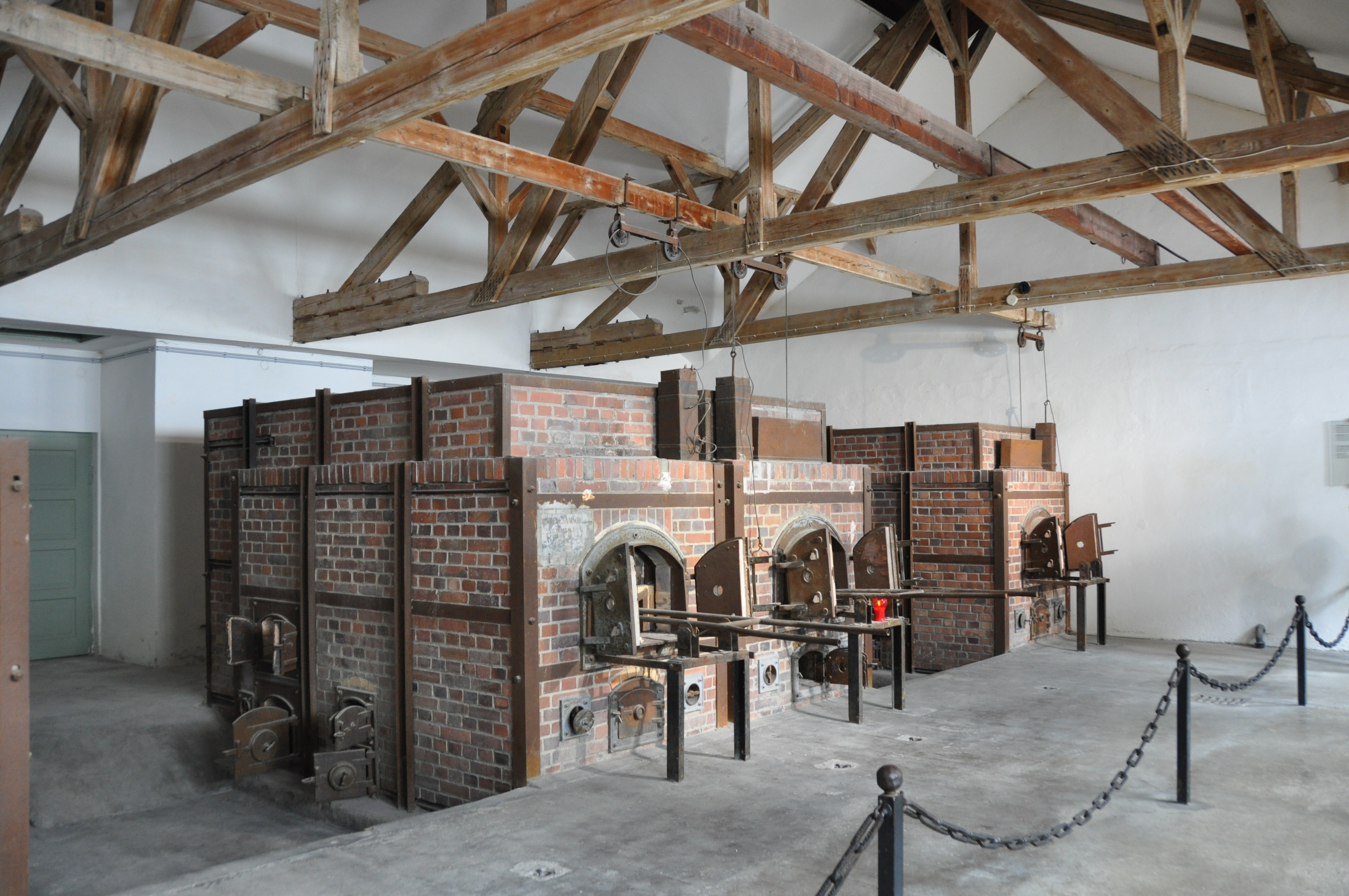
Crematorium at Dachau

Crematorium at Dachau

   The Dachau Concentration Camp is enclosed by a barbed-wire-topped wall accented by a series of guard towers. When it was in operation, the camp was also surrounded by a mile-wide restricted area. Within three years of opening Dachau, Hitler’s Nazi party began constructing a system of concentration camps where millions would suffer unspeakable indignity and death. By 1936, the terror at Dachau had intensified. Dachau became a school of violence where Hitler’s elite Schutzstaffel received training to operate the concentration camps under their command. It was there that these feared SS men learned the barbarous art of torture. And, it was from there that they exported these demonic innovations to other concentration camps throughout Germany and Poland. 

   Although many people died at Dachau, many more were sent from Dachau to gas chambers in other concentration camps located in places far from the eyes of the German public. Starting in 1942, the SS conducted horrific medical experiments on prisoners. In 1944, the SS set up a so-called special barrack which was a bordello in which female prisoners from the Ravensbruck concentration camp were forced into prostitution. In the final weeks before the liberation of the camp, the dead could no longer be burned in Dachau’s ovens due to a lack of coal. These remaining thousands were buried at Leitenberg, a lonely hill located north of the camp. Others were buried at the Wald Cemetery of the City of Dachau. 

   The Dachau Concentration Camp was liberated by US Army troops on April 29, 1945. However, ceremonies to observe the 65th anniversary of the liberation of the camp were held today. Dignitaries from several countries were present to make speeches and place memorial wreaths at the site. Ironically, it was overcast and raining, as if to indicate that heaven itself was weeping at the memory of what happened here. Ceremonies like this serve as a reminder to never forget the horrors that fear mixed with blind patriotism and evil leaders can unleash on the world. 

Dad at Mass Grave Site at Dachau

Dad at Mass Grave Site

   As we walked the grounds of Dachau today, I could not help but think about other places I have visited where people died en masse – places like Masada, the displacement camps of Darfur, Cambodia’s killing fields, and more. I was glad to learn that German students are required to visit a concentration camp. That’s good. But, I wish that every student on the planet could do the same because it seems that the only thing we learn from atrocities is that we never learn from atrocities. We need to preserve and visit places like Dachau. And, we need to have ceremonies to honor the memory of those who have suffered injustice at the hands of evil people. We must do so lest we grow complacent and tolerant of the evil that is always crouching at the door, ready to destroy us all.
Posted by: Omar C. Garcia | May 1, 2010

A Sentimental Journey

   Frankfurt, Germany en route to Rothenburg

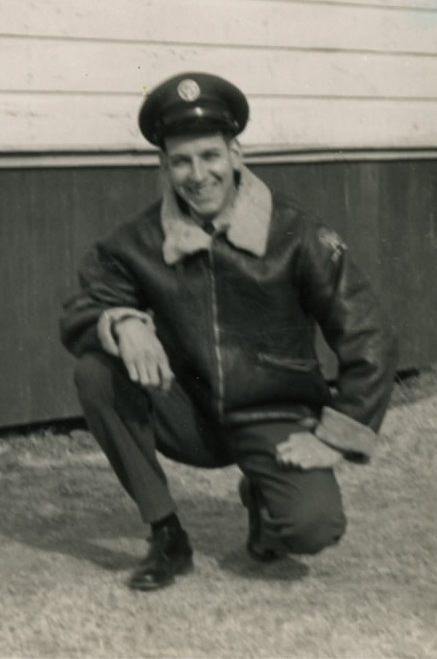
Dad in 1951

   In the summer of 1951, my Dad left the small South Texas town of Mission and boarded a ship bound for Germany. Just days after attending his grandfather’s funeral, Dad made his way to the east coast where he joined several thousand other young military recruits for the voyage across the Atlantic to their respective assignments. Two weeks later the troop carrier arrived at the port city of Bremer Haven. From there, Dad traveled by train to Sonthofen for his orientation. Although he had been trained to be an airplane mechanic, the Air Force reassigned him to serve with the Air Police. He attended Air Police training in the historic city of Oberammergau and then spent the next year serving in Wiesbaden. Dad then requested and was granted a transfer to the new air base at Spangdahlem where he served as the first crew chief for airplane mechanics.

   Back home, the girl that Dad loved was listening to the sentimental lyrics of “Harbor Lights” and other popular love songs. Over the next three years, Dad and his future bride exchanged love letters, telegrams, and photographs bearing sweet inscriptions – things I saw and read as a kid but did not fully appreciate. Now, they are a precious legacy of a love that never faded but only grew stronger with each passing year. After Dad returned home and married his beautiful bride, they spent and cherished all of their remaining days together. Their amazing love made our home a secure place. I could not have asked for better parents, a better home, or a better childhood

Dad in Rothenburg

   Life has been difficult for Dad and for all of us since Mom passed away last May. This will be our first Mother’s Day without Mom. And, had Mom survived her cancer, she and Dad would have celebrated fifty-five years of marriage in June. Today, my brother-in-law and I arrived in Germany with Dad. This is Dad’s first trip back to visit the places where he served when he was in the Air Force. Dad and Paul and I are on a sentimental journey. Over the next ten days we are going to visit the places where all of those love letters originated. And, at the end of our time here Dad is going to be the guest of honor at the air base at Spangdahlem. He will donate copies of old photos, be interviewed by an Air Force reporter, meet the current crew chiefs, and have a special dinner at the base.

   We will spend our first night in the old walled city of Rothenburg in a hotel whose foundation was built in the twelfth century. Amazing! I’m grateful to be here on this journey of discovery and for the opportunity to see all of the places I first learned about as a kid by looking at Dad’s old black and white serrated-edged photos. For the next ten days and for the first time in my life, I will see those old photos in living color.

Posted by: Omar C. Garcia | April 29, 2010

Where’s the Donkey?

   Last Friday I attended the “At the Corner of…” Conference sponsored by Mission Houston. The purpose of this conference was to foster a conversation within the Body of Christ in the greater Houston area about repentance that leads to missional living. My friend Jim Herrington invited me to share Kingsland’s story at this event held at the beautiful facilities of the Memorial Drive Presbyterian Church. I enjoyed listening to all of the speakers — especially those from our own community. I am always encouraged to hear what others in the Houston area are doing to advance God’s purposes. God is doing some cool things through lots of His faithful servants.

   Mark Labberton was the main speaker at the conference. Mark is a former pastor who now teaches at Fuller Theological Seminary and is the author of “Radical Obedience” and “The Dangerous Act of Worship: Living God’s Call to Justice.” Mark challenged us to reorder our lives to reflect what really matters most to God. “Worship,” said Mark, is “the dangerous act of waking up to God and to the purposes of God in the world, and then living lives that actually show it.” Others, including me, shared personal insight into how God has led them to engage with and to confront the issues that matter most to God — from ministering to the least of these to transforming neighborhoods through unconditional acts of love and kindness.

   Mark shared one story that was both amusing and convicting at the same time. When his son Sam was four-years old, Mark read him a children’s book about Palm Sunday. Sam was especially moved by the illustration on the cover of the book that depicted Jesus sitting on a donkey. Mark said that Sam stared at the illustration, put his hand on it, and then covered his heart with his hand. “Daddy,” Sam remarked with a serious tone, “Jesus is in my heart!” Mark affirmed Sam and told him that he was so happy that Jesus was in his heart. Sam however, continued to gaze at the cover illustration and asked, “But Daddy, where is the donkey?” Mark smiled and said, “Don’t worry, Sam, the donkey is in your heart, too.”

   Mark is right. There is a donkey in each of our hearts that tries to keep us from fulfilling God’s purposes in the world. The donkey is there — stubbornly present in our pride, selfishness, and sense of entitlement. It’s the donkey in us that keeps us from forsaking all that is comfortable, manageable, and predictable in order to advance God’s purposes. It’s the donkey that distracts us from venturing to where we’ve never been and keeps us from doing what we’ve never done. It’s the donkey that stubbornly refuses to allow us to reorder our priorities to reflect God’s priorities. It’s the donkey in us that keeps us silent in the company of those who need to hear God’s words of hope and encouragement. Yes, the donkey is in our hearts, too.

   Don’t let the donkey keep you from where you need to go. And, don’t let the donkey take you on a ride to where you should not go. Follow Jesus instead. He can subdue the donkey and lead you into adventurous living — the kind of living that will make a difference in the world today.

Posted by: Omar C. Garcia | April 25, 2010

What’s Your Song?

   My office is located next door to Josh Stewart’s office. Josh is Kingsland’s Worship Pastor and one of the most talented guys I know. One of the things I like most is listening to Josh sing. Listening to him sing makes me wish I could sing. But, alas, carrying any tune has never been something I have been good at. Josh however, is not only a talented singer — he is passionate about singing. He sings all the time. He sings in his office, he does vocal exercises as he walks down the hallway, and I have even heard him singing in the men’s room. I feel fortunate to share the office next to his because his singing makes me smile. Josh’s passion is obvious. His singing is the outward expression of his deep and passionate love for God.

   Josh has been out of the office the past couple of weeks. He is traveling in Israel with a Kingsland team. This week, I finally noticed that something was missing — the singing. The silence accentuated Josh’s absence and made me aware of the fact that no music was seeping through the wall that separates our offices. The hallway has been strangely silent. And, besides that, no one else dares to sing in the men’s room. But, Josh will be home soon and things will get back to normal. The music will return.

   Josh’s singing has caused me to think about music — particularly about my song. Although I can’t sing, I still have a song. I have come to realize that the song I have to offer God is my service to others. It’s what I think about all the time and what I love doing. I love to serve others — whether that service is expressed by leading our Kingsland folks to serve others through our missions initiatives, by assisting with our Wednesday night meals, or any other number of ways. I love to serve. That’s my song and what I have to offer God. It’s my “spiritual act of worship” (Rom. 12:1).

   Josh’s absence also got me thinking about what would happen if I stopped singing my song. Would others notice the silence? What needs would go unmet? Would my silence cause others to sing less? Would I be happy? Well, I know that I wouldn’t be happy. I wouldn’t be happy because serving others is a way for me to express my deep love for God. It’s my song — the song He has given to me. And, I love to sing my song as often as I can. Deep down inside I imagine God smiling every time I sing the song He placed in my heart.

   What about you? Have you found your song — the thing that you do best that brings glory to God, the thing that you are most passionate about? If so, don’t remain silent. Sing your song out loud as often as you can and bring glory to God and joy to those around you.

Posted by: Omar C. Garcia | April 21, 2010

Tents for Haiti

   Shelter — in addition to food and water, it’s one of life’s essentials. For the homeless in Houston’s urban areas, shelter can be as simple as a cardboard lean-to in a filthy alley. For those of us who live in the suburbs, our shelters are constructed out of materials that are more substantial than cardboard. We devote a great deal of money to the purchase of our shelters and spend even more to maintain and improve them. We are indeed blessed to enjoy the security of comfortable homes.

   On January 12 of this year, Haiti, the poorest nation in the Western Hemisphere, was rocked by a 7.0 magnitude earthquake. Kingsland responded by collecting over one-thousand pounds of medical supplies that were flown to Haiti on four private planes. Four of our members joined one of the first medical initiatives into the country. Today, the people of Haiti are still in desperate need. One of the greatest needs is for shelter. The rainy season has begun in Haiti and hundreds of thousands of Haitians are still without shelter. It’s hard for us to imagine what that must be like because few, if any, of us have ever had to face that kind of crisis.

   There is something practical that we can do to assist those in Haiti who have lost their homes and are still without shelter. Our missions ministry is assisting our friends at Houston Tents for Haiti by collecting new or gently used water-resistant tents. These tents will be shipped via truck to Miami and then by container ship to Port-Au-Prince. Once the tents arrive in Haiti, they will be distributed to Haitian communities by organization members of the Haiti Response Coalition.

   You can help. If you have a tent in your garage or attic that you are no longer using, please donate it Houston Tents for Haiti. Or, perhaps you can purchase a tent at a local sporting goods store to donate to the cause. There is no doubt that your kindness will bless a family in need. If you can help, please drop-off your tents at the reception desk at Honda Cars of Katy located at 21001 Katy Freeway on the corner of Westgreen and I-10. Please note that the drop-off deadline is April 30. Thanks for whatever you can do to provide shelter for the people of Haiti.

Posted by: Omar C. Garcia | April 19, 2010

Change for Good

   We launched our Just Change for a Just Cause initiative in February of this year. Hundreds of Kingsland members made a commitment to collect their pocket change in one of our Just Change banks. Each cent collected in these banks is used to meet the needs of the girls who live in the aftercare home we support in South Asia. Each of these sex-trafficking victims was rescued by champions of justice and placed in the aftercare home by the courts. Our financial support is used to provide meals, clothing, medical care, counseling, and vocational training for the girls. I recently posted a story about Jyoti, one girl who resides in the aftercare home. I can’t imagine where she would be today without the love and support she has received from the staff at the home.

   The people of Kingsland have embraced the challenge to go beyond in their giving in order to support our justice initiative in South Asia. Every week, folks bring their banks filled with change to the church and exchange them for empty banks. We have calculated that a bank filled with an assortment of change can hold about fifty dollars — enough to support two of the girls in our aftercare home for an entire month. Our pocket change is making a huge difference in the lives of young girls who have no one else to provide for their support in a safe place that keeps them out of harm’s way. Many of our members have told me that they are motivated to give because they would want for others to do the same if it was their daughters caught in the web of injustice. That’s a good motivation. Justice is, essentially, doing for others what we would want done for us.  Hebrews 13:3 exhorts us to “remember … those who are being tortured, as though you yourselves were being tortured.”

Daniel & Daughters

Daniel & Daughters

   In addition to the change collected in the banks, one member had a garage sale and donated all of the proceeds to our justice initiative. This sweet lady brought in several hundred dollars earned from the sale of stuff she no longer needed. Instead of using this money to purchase more stuff, she chose to give it toward the support of young girls who have had everything taken away from them, including their innocence and dignity. Other families have committed to going out less and giving what they would have spent on a meal or a movie to our justice ministry. My friend Daniel Salce, who has been putting his pocket change into a large five-gallon water jug for some time, approached me yesterday. He said that he wanted for his change to make a difference. So, he stopped by my office with his daughters and brought his jug of change in for us to count.

   It’s easy to convince ourselves that our pocket change won’t make much of an impact. But, when each of us contributes what we have and add it to what others are giving then the impact of every penny is multiplied. So, thank you to each of you who are placing your pocket change in our Just Change banks. Your thoughtfulness and kindness is making a difference in the lives of precious young girls in South Asia. Your change is helping to change lives for good.

• • • • •

Note | To learn more about Kingsland’s justice initiatives, please visit KingslandJustice.com.

Posted by: Omar C. Garcia | April 15, 2010

Invest in Others

I = Interest | Jesus invested personal interest in others. That’s one of the things that set Him apart from the religious leaders of His day. He cared about ordinary people — the kind of people easily overlooked because they live in the blurry world of our peripheral vision. It’s easy to convince ourselves that there is little or nothing interesting about certain people. But honestly, everyone is interesting if we will just take the time to find out how they are interesting. The only way to do that is to invest interest in others — to converse with them and to ask meaningful questions that can give us deeper insight into their lives. Investing interest in others also has the added benefit of affirming their worth. People generally appreciate it when others take a personal interest in them.

N = Needs | Investing personal interest in others is one of the best ways to learn about their needs. Parents who spend time with their kids are more likely to know about the challenges or hurts their kids are facing than parents who are too busy to do so. The same is true of any relationship. The less time we spend with others the less likely it is that we will know about and be responsive to their needs. That’s why it’s so important that we take time to converse with others and to actually listen to what they say. Spending time with others, asking meaningful questions, and listening to them can give us valuable insight into their lives.

V = Vision | Vision is the ability to look beyond the actualities in order to behold the possibilities. Jesus demonstrated that kind of vision. When Jesus met Simon for the first time, He looked beyond what Simon was and envisioned what he could become (John 1:42). Jesus then took the time to help Simon reach his potential — to become Peter, the solid man Jesus had envisioned he could become. When we invest interest in others and learn about their needs, it’s much easier to envision how God can use us to make a difference in their lives. However, God can’t use us to make a difference in the lives of people facing loneliness, addictions, suicide, domestic abuse, divorce, or hopelessness unless we take that first step of being genuinely interested in the welfare of others.

E = Example | Jesus set the ultimate example of what it means to invest in others. The Apostle Paul said that Jesus “emptied Himself, taking the form of a bond-servant” (Phil. 2:7). Paul also outlined what it takes to invest in others: “Do nothing from selfishness or empty conceit, but with humility of mind let each of you regard one another as more important than himself; do not merely look out for your personal interests, but also for the interest of others” (Phil. 2:4). It’s easier to be filled with self-importance than it is to empty ourselves and regard others as more important than ourselves. But, unless we are willing to empty ourselves of ourselves, we will miss opportunities to make a difference in the lives of others.

S = Sacrifice | Paul also said that Jesus “humbled Himself by becoming obedient to the point of death, even death on a cross” (Phil. 2:7-8). It always costs us something to make the kind of investment that will yield big dividends. Investing in the lives of others may require us to give up what we want in order to give others what they need. But, if we will look beyond the actualities to consider the possibilities, then we can sacrifice with the confidence that what we invest will yield fruit in the future.

T = Time | It takes time in order for any investment to mature and to begin yielding dividends. The word “time” reminds us that we must faithfully stick to the task of investing in others, that we should not grow weary in well-doing, that we should not become discouraged —  thinking that our time and efforts are being wasted, and that we should remain prayerful, persistent, and patient as we allow God to use us. If we do this, then we will see our investment come to maturity. So, let’s invest in others. And, let’s always keep in mind that investing personal interest in others is the first step to making a difference in their lives. Who will you invest in today?

Posted by: Omar C. Garcia | April 12, 2010

Bred for Prostitution

   If there is one thing that most parents share in common it is an instinctive desire to protect their children from harm. From the time our kids are very young we warn them of danger and take active steps to protect them from the people and things that we know will harm them. And, on those occasions when they do suffer harm, we ache over their pain and do everything possible to ease it. No one had to teach us to do so. It’s just something that comes naturally to most parents. That’s one reason why we scratch our heads in bewilderment when we hear stories of parents who have harmed, abandoned, or murdered their own children. It just doesn’t make sense.

   This past January, I met a young girl named Jyoti at the safe house we support in South Asia. She and a group of girls performed a beautiful cultural dance for our team. After her performance, Jyoti introduced herself to me and showed me her school work. I was impressed by her work and congratulated her on her good grades. Jyoti is one of over one-hundred young girls who have found refuge at the safe house. Each of these girls has lived through unspeakable horrors and abuse. Later in the day, I asked the staff to tell me Jyoti’s story. I was shocked by what I learned and the evil role that Jyoti’s own mother had played in her sad story.

   Jyoti was rescued from one of the largest red light areas in a large city in South Asia. She is from a community which traditionally sends their girl children into prostitution. The people of her village do not consider prostitution to be shameful work. The girls forced to work in brothels often return to the villages once they reach thirty years of age in order to marry and start a family. The men (including the fathers and siblings of the girls) frequently look after the businesses as pimps and brothel owners. This evil arrangement has become deeply ingrained in both the culture and financial stability of the community. And, because this has become such an accepted practice, many of the girls are sent away to work in brothels at a very young age.

   The safe house we support works to rescue girls like Jyoti. Unfortunately, corrupt community leaders have been able to successfully petition to have their girls released back into the custody of their parents — the people responsible for trafficking their own children. At one point Jyoti was released to her mother, but when the staff at the safe house learned that Jyoti’s parents intended to sell her again into prostitution, they petitioned the police to intervene. Jyoti was once again rescued from danger. However this time, the staff and legal counsel of the safe house successfully argued with the courts and managed to ensure that Jyoti will remain at the safe house.

   Today, with support from counselors, peers, and the staff of the safe house, Jyoti is going to sit for her high school exam. She is an excellent student, a skilled dancer, and hopes to one day become an airline hostess and travel around the world. Sadly, many other girls from Jyoti’s village are being bred for and forced into a life of prostitution. Jyoti’s story reminds us of why we must continue to pray, to give financially to the support of our safe house, and to speak on behalf of young girls trapped in a living hell. We must continue to champion this just cause.

• • • • •

Note | To learn more about Kingsland’s justice initiatives, please visit KingslandJustice.com.

Posted by: Omar C. Garcia | April 9, 2010

Inspired by Minjin

   I first met Minjin in Mongolia in 2008 when I took a team of volunteers from Kingsland to serve at my friend Jerry Smith’s homes for children. Jerry cares for children previously living in the sewers of Ulan Bator, abandoned in fields outside of Darkhan, or found living at the train stations along the Trans-Mongolian railway. Jerry and his wife Susan have done an amazing job of caring for and educating children who otherwise might be dead. Mongolia’s winter is no respecter of persons and claims vulnerable victims every year. Jerry rescued many of the kids under his care in the nick of time. His kids live in a warm, clean, and loving environment. 

Jean and Minjin

   Jerry recruited Minjin to serve as one of the translators for my 2008 team. Her mother is Mongolian and her father is half Mongolian and half Russian. Minjin’s father abandoned the family when her mother was pregnant with her younger sister. She has not seen him since. Raised by a single Mom in one of the toughest places on earth, Minjin is a remarkable young lady. She is intelligent, highly-motivated, and speaks excellent English. Minjin was 16 years-old at the time of our visit and became very good friends with Jean Carter, one of the older members of our team. Jean and Minjin have stayed in touch by e-mail over the past couple of years. 

   A few months ago Minjin came to the United States. The story of how she came is nothing short of inspirational. Minjin searched the internet for colleges in the United States and found a school in California that agreed to accept her. She made several trips from Darkhan to Ulan Bator to complete the paperwork to get a visa to travel to the United States. She and her mother saved the money for her travel and first-semester of school. Minjin boarded an airplane for the first time in her life in Ulan Bator and flew to Tokyo and then to Los Angeles. She enrolled in school and is working two jobs in order to support herself. She does not have a car. One job requires that she ride a bus for an hour and a half to a part-time job that pays her $7.00 per hour. Then, she rides the bus back after her shift ends at 11:00 PM. 

   Minjin does not have a computer so she goes to the school library to use public computers to complete her assignments. She took a computer class (without a personal computer) but could not afford the $150.00 book. But, she still passed the class! Minjin lives modestly and makes lots of personal sacrifices so that she can stay in school. She doesn’t complain, has a positive outlook on life, and is determined to stay in school. Her example makes it hard to tolerate the whining of kids who have every advantage and yet fail to accomplish much of anything. 

   Jean arranged for Minjin to travel to Katy during her Spring Break. We celebrated Minjin’s 18th birthday at Jean’s home last week. The following day, through the kindness of Kingsland members, we purchased a laptop computer and presented it to Minjin in my office. We also gave her a little stipend to assist with her living expenses. Minjin wept. She could hardly believe that folks who do not know her would express such kindness to her. Minjin’s visit to Katy became an opportunity for Minjin to experience the warmth and kindness of people who love others because they love God. Minjin is back in school in California. I know that God is going to use her to accomplish good things and to make a difference in her own country when she returns. She is an inspiration.

Posted by: Omar C. Garcia | April 7, 2010

Two Birthdays

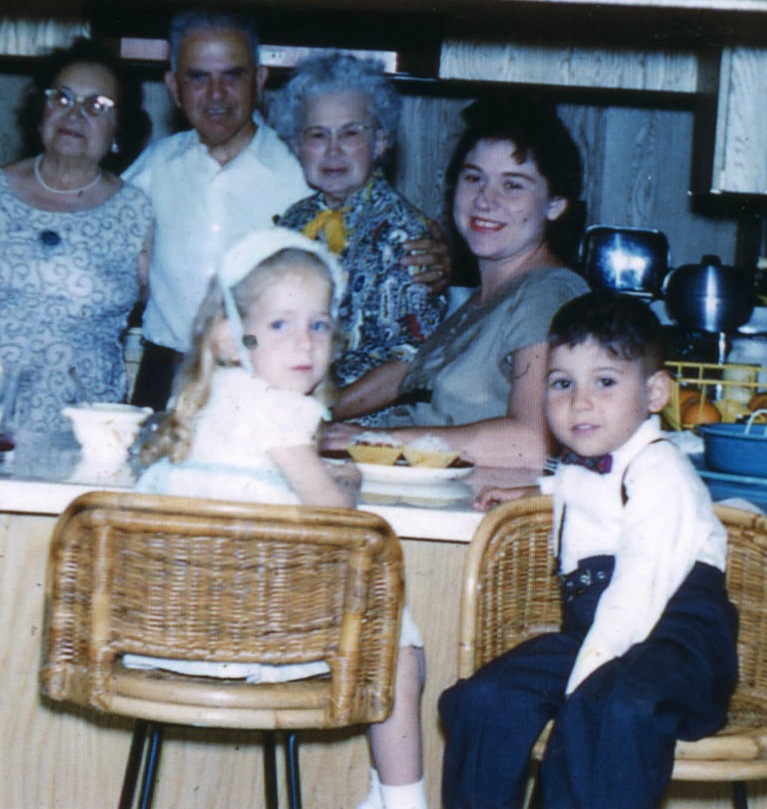
   Today is my 54th birthday and also my first birthday without my beautiful Mom. On the day I was born in a small one-story hospital in south Texas, two other babies were also born. However, both of these baby girls lost their mothers at birth. I was the only baby born on April 7, 1956 in Mission, Texas to go home from the hospital with his mother. My Mom told me that when she and Dad arrived home with me, the funeral procession for the mother of one of the baby girls born on April 7 was passing by on the street in front of our home. That street leads to Laurel Hill cemetery where we laid my Mom to rest on June 2, 2009. The two girls who share my birthday never had the privilege of knowing their mothers. When I reflect on that, I realize how blessed I am to have had Mom for fifty-three years. I am grateful to God for each of those years.

   Today is also my sister’s birthday. While I was celebrating my first birthday with my grandparents, my sister Bonnie (Yvonne) was making her entrance into the world. I met her a few days later and we’ve been great friends ever since. One of my earliest memories is of the time Mom and Dad took us to the beach in Corpus Christi. I was four years old and Bonnie was three. I didn’t want for Bonnie to go near the water because I had heard someone singing the song “My bonnie lies over the ocean…” I was afraid that the ocean would take her away. It didn’t. I’m thankful for all the years God has given us. And, I’m also thankful that Bonnie has always been there for me and my family.

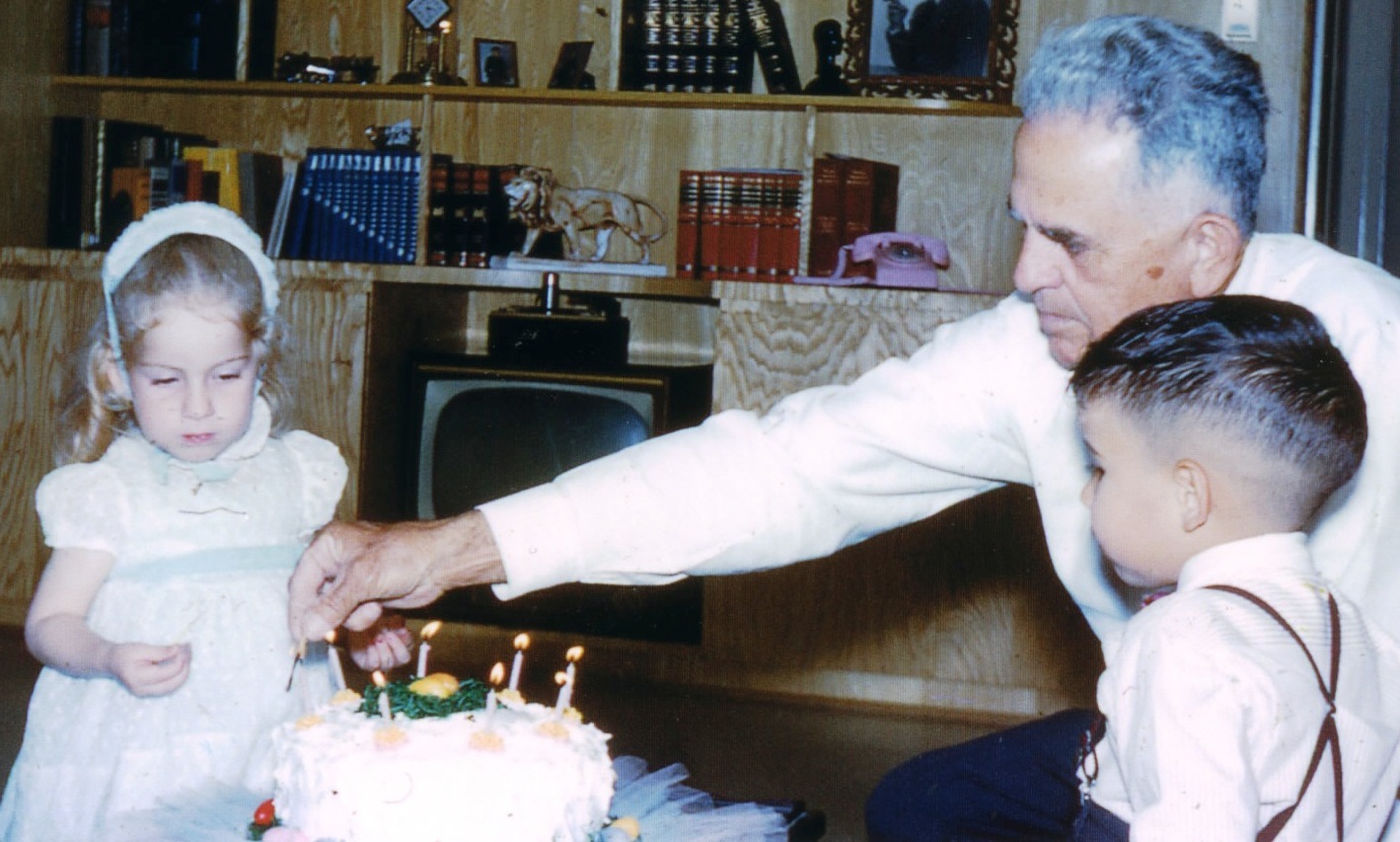
Bonnie and Me with our Grandfather

   Bonnie and I shared birthday parties until we became teenagers. For years Mom baked two cakes — one with blue-colored frosting and the other with pink. And, because we were fortunate to live close to our grandparents, our birthdays were always very special occasions. My parents understood that birthdays were a great way to affirm us and did all they could to make our day memorable. Dad was an avid photographer, so we have lots of photos and movies of our birthdays, holidays, and everydays. These have become even more treasured since my Mom passed away. Today, I miss my Mom and I am grateful for every cake she baked and frosted in pink and blue for Bonnie and me. I love you, Mom. I love you, Dad. And, I love you too, Bonnie. Happy Birthday!

« Newer Posts - Older Posts »

Categories