Posted by: Omar C. Garcia | May 18, 2010

The Death of Mary Lee

I met Mary Lee a little more than four years ago. Gemma Torres, a mutual friend, told me about Mary and her unique ministry to one of the most vulnerable segments of society — mentally and physically challenged homeless adults. My interest was immediately piqued. I had to meet this woman who had seen and responded to the needs of hurting people who live in the blurry world of our peripheral vision — the people most of us never notice. So, I called and spoke with Mary and set an appointment to visit her at Something Blessed Board and Care — the place she set up to care for the most vulnerable among the least of these. Located south of the city, the forty-minute drive to Something Blessed took me from Katy’s crape-myrtle lined boulevards to the narrow and culvert-flanked street leading to Mary’s front gate.

Meeting Mary face to face was indeed something blessed for me. As I listened to her speak, it was apparent that her words were in perfect sync with the rhythm of God’s heart for the least of these. As I watched her interact with those under her care, it was obvious that her hands were the hands of Jesus. I wondered how anyone could have so much patience to deal with the daily and often messy challenges of caring for such needy human beings. And yet, Mary was in her element with her little flock at Something Blessed. She was like a Mother Teresa serving the least fortunate in her own little Kolkata. She was not content to walk past or to ignore those in need. She could not sleep knowing that others had no place to sleep. So, she reordered her life to do something to help. She made a commitment to meet a need — a decision that altered the rest of her life.

I introduced my Mom and Dad to Mary Lee a couple of years ago. Mom and Mary became instant friends. Last year, Mary was diagnosed with cancer. A few weeks later my Mom was also diagnosed with cancer. My Mom passed away last May, only one month after her diagnosis. Mary was an encourager to me as I grieved the loss of my beautiful Mom. Over the past several months Mary fought a courageous battle against her cancer. I visited with her before I left for Germany three weeks ago. She was already under hospice care — not at her home, but at Something Blessed. She wanted to die among those she gave her life to help. I wept as I sat at Mary’s bedside, knowing that this would probably be our final conversation. And, it was. Mary passed away a few days ago. I will attend her funeral this week.

I will miss my good friend Mary Lee. I will miss our conversations and our times of praying together. I am grateful for what she taught me about loving God and loving people over the past few years. Mary indeed loved and trusted in God. I never once heard her utter a single word of complaint about her cancer and how it was progressively destroying her body. Mary wanted to live so that she could continue serving people in need, yet she was willing to accept whatever God had for her. Like Job, she did not blame God (Job. 1:22). Her attitude about her suffering mirrored Job’s, “Though He slay me, I will hope in Him” (Job. 13:15). Mary Lee was a champion to those in need. And she was a champion in my eyes. I was saddened by the news of Mary Lee’s death. But I am comforted by the purpose of her life — a life given to the service of others and a life that reflected the beauty of God’s love.
Posted by: Omar C. Garcia | May 14, 2010

All That Remains

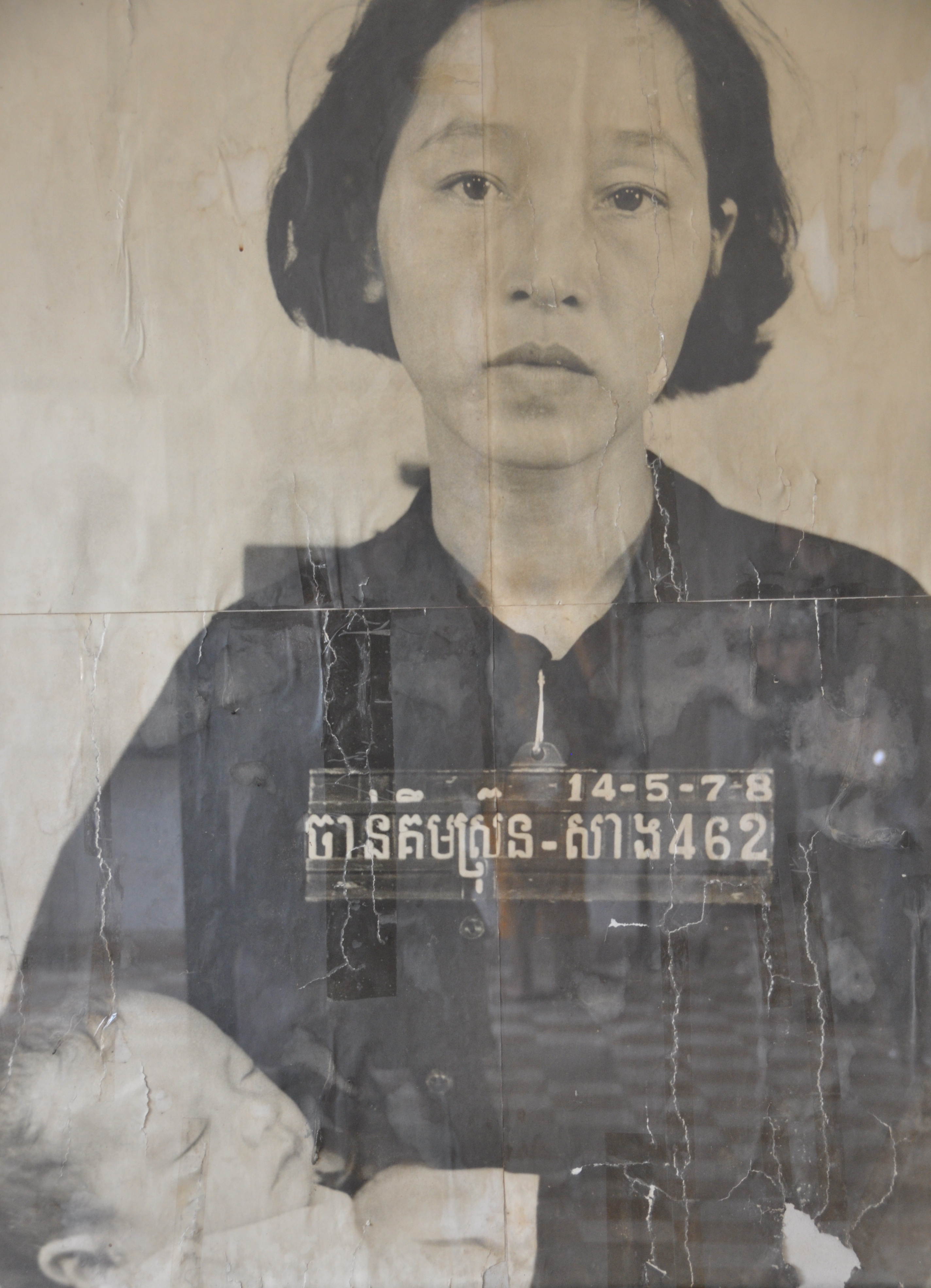
   Last August, I made a promise to someone I have never met — to a woman whose personal history is forever lost and who is buried in an unmarked grave. A woman with a vacant look in her eyes holding a sleeping baby in her arms. A single photograph is all that remains to document her existence. Her photograph is not on display in a family album or in the home of a loved one. Her photograph is one of hundreds on display at the Tuol Sleng Genocide Museum in Phnom Penh, Cambodia. Once known as S-21, or Security Office 21, this terrible place was part of Pol Pot’s network of death. In 1975, Pol Pot’s Khmer Rouge transformed a high school campus into a center for the detention, interrogation, torture, and murder of those deemed to be a threat to their cause. The Khmer Rouge kept meticulous records of every person who was brought to this center. They photographed each prisoner and, in many cases, photographed them again after torturing and killing them. The Khmer Rouge unwittingly left the world their photographic fingerprints at the scene of their crime.

   I walked slowly through each of the rooms at S-21. I looked into the cells, at the chains, at the locks, at the barbed wire, and at the photographs. For some reason, I felt compelled to walk slowly and to look at each of the faces in the hundreds of photographs on display. These were the unfortunate alumni who suffered unspeakable horrors at Pol Pot’s death campus. I say unspeakable because the barbarous torture methods employed by the Khmer Rouge are also documented at S-21. Each of the photographs on display bears the date when the particular individual was brought to the center. When I saw the photograph of the mother holding her sleeping baby, I lingered and stared, struck by the irony that she had arrived at S-21 on May 14 which was Mother’s Day in 1978. That was the last Mother’s Day that I lived in my hometown. While I was expressing appreciation to my beautiful Mother, this woman was taken from her home and transported to Security Office 21.

   Many, like this mother and child, were brought to S-21 for interrogation and later transported to one of the Khmer Rouge’s killing fields. She is very likely buried with her child at the nearby Choeung Ek Genocidal Center, located south of Phnom Penh. There is a mass grave there where mothers and babies were killed and dumped. This grave is located next to the killing tree. The sign in front of this tree says, “Killing Tree against Which Executioners Beat Children.” The Khmer Rouge saved ammunition by taking small children from their mothers, swinging them by their feet and smashing them against the killing tree. The lifeless remains of these children were then tossed into the adjacent mass grave. This was the fate of the mother and child in the photo that captured my attention.

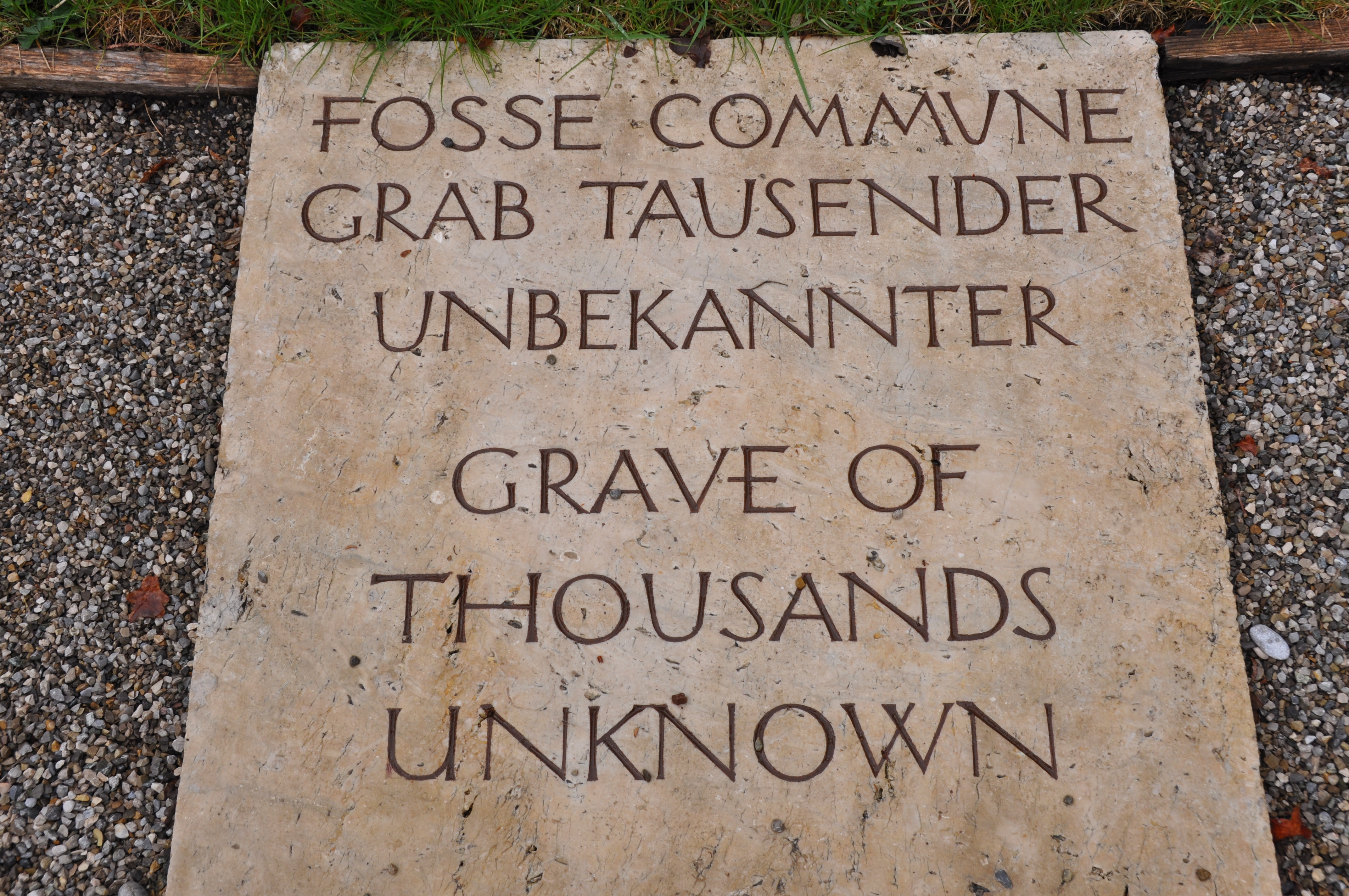
   Earlier this month I visited the Dachau Concentration Camp outside of Munich, Germany. I walked a path near the crematorium where thousands of unknown individuals were murdered and tossed into mass graves. I wrote in my May 2 post that the only thing we seem to learn from atrocities is that we never learn from atrocities. The Dachau Concentration Camp was liberated by US Army troops on April 29, 1945. As other concentration camps were liberated, the world began to learn the sickening details of Hitler’s genocidal campaign. Thirty-years later, Pol Pot and the Khmer Rouge unleashed a murderous campaign against their own people, killing upwards of two-million. Unless we learn from all that remains at the sites where terrible atrocities have occurred we are destined to do more of the same.

   Those suffering oppression matter to God and they should matter to us. Approximately 27 million people on the planet are trapped in some kind of slavery and are longing for deliverance. They live daily in fear and suffer abuses that no one should have to endure. That’s why I am committed to keeping my promise to the woman in the photo at S-21 — a promise to tell her story and to speak “for the rights of all the unfortunate” (Prov. 31:8), a promise to fight for and “to defend the rights of the afflicted and needy” (Prov. 31:9), a promise to work toward the day when “man who is of the earth may cause terror no more” (Ps. 10:17-18). By doing so I can help to ensure that all that remains of this woman’s life and death is more than a photo.

Posted by: Omar C. Garcia | May 11, 2010

Mapping Our Memories

Frankfurt, Germany en route to Houston, Texas | 10 May 2010

There is a relationship between geography and memory — between places and the things that happen at those places. For the past ten days I have been on a journey to associate memories with a map – a sentimental journey to learn more about my father by revisiting some of the places where he walked almost sixty-years ago. And what an amazing experience it has been. I could never have imagined what this trip would mean to my Dad and I certainly underestimated what it would mean to me. I have learned about the power of returning to the places of our past. Something very good happened as Dad revisited the places of his past. At every place we visited, the memories that still live there recognized him. It’s as though they had been waiting and watching for Dad to return. And when they saw him, they rushed forward like old friends to embrace him and to welcome him back. Dad’s reunion with his memories brought smiles, laughter, sentimental tears, and pensive silence.

Over the past ten days, I have also learned about the value of unearthing memories buried deep beneath the strata of our years. I am referring to the simple and ordinary day-to-day kind of things that are easily covered up by the bigger and more important happenings of our lives. Ordinary things like, “That reminds me of a song your Mother liked,” or “Your Uncle Phil was there to meet me when I arrived in New York Harbor.” These are just simple little details that might be considered the insignificant minutia of memories. But, these are the kind of intimate little details I am interested in. To know that my Mother loved a song because it reminded her of her fiancé serving overseas tells me something important about my Mom. To know that my Uncle Phil traveled from Washington DC to meet his younger brother tells me something important about the relationship between my Dad and his brother.

Our 1793-kilometer Germany Road Trip

I stated in an earlier post that much of our family history never makes it from one generation to the next. For whatever reason, many of the stories and memories that are pregnant with our own history never give birth. Unless we act intentionally to unearth and preserve our own family history, we will lose it forever. I am glad that Paul and I took Dad to Germany. Our 1793-kilometer road trip was an amazing adventure into the past that has given us greater insight into the present. And because we accompanied Dad on this adventure, we have added our own memories and stories to his. Each of the places on the map is now a place where our own memories will live alongside Dad’s memories. Our journey started in Frankfurt and included visits to (1) Rothenburg, (2) the Dachau Concentration Camp, (3) Munich, (4) Füssen, (5) Oberammergau, (6) Sonthofen, (7) Triberg, (8) Heidelberg, (9) Bitburg and Spangdahlem, and (10) Mainz and Wiesbaden.

Dad with Crew Chiefs on flight home

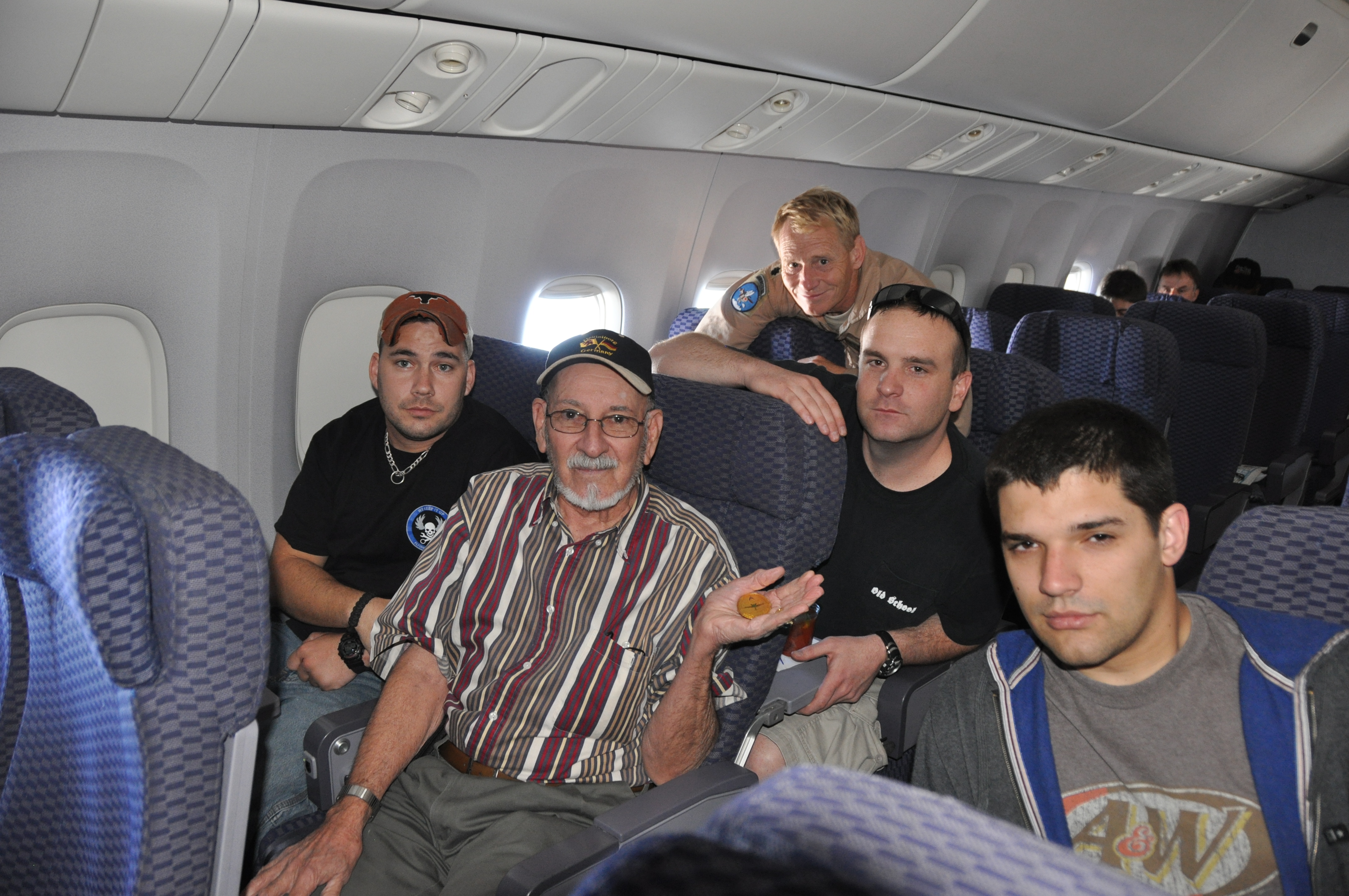
We added one final memory on our flight home from Frankfurt to Houston. When I heard one of three young men seated behind us address a fourth man as Colonel, I turned and initiated a conversation. These men serve with the Air Force and were returning to their base in California. I told them about our trip to Germany and that Dad had served as the fist crew chief at Spangdahlem Air Force Base. One of the men said, “Sir, the three of us serve as crew chiefs.” And then, one of them took Dad’s hand and placed one of the special crew chief coins in his hand and thanked Dad for his service. It was a special moment for these men whose service in the Air Force is separated by sixty years. The military brotherhood is indeed strong. I appreciate the kindness and encouragement that these young men extended to my Dad on the flight home.

If you have not already done so, I hope that you will take some intentional steps to record your family’s history and to map your family’s memories. Here are a few suggestions for mapping your family memories:

Explore | Discover the association between your family’s history and places on the map. Mark those places on a map to see where God has led your family. If possible, visit those places with a family member who can introduce you to the memories that live there.

Inquire | Interview older family members. Ask them lots of questions and take lots of notes. Leave a written legacy for the next generation. My grandfather took time to journal much of our family history. In addition, he recorded snippets of every day family happenings in the fly leafs of books in his library. These are a treasure to our family.

Display | Display old family photos alongside current family photos throughout your home. Talk to your kids about the people in the photos. If you have a childhood photo of a grandparent, display it alongside a photo of your kids.

Read | Ask parents and grandparents about any family letters that are stored away. Ask permission to make photocopies of these letters and share copies with your family. Perhaps you can frame a letter alongside a photo. One cherished piece framed on the wall of my parents home is of telegrams they exchanged on a Valentine’s Day when Dad was overseas.

Celebrate | Use holidays as occasions for older family members to share memories with younger family members. Ask them to share about how they celebrated holidays and birthdays when they were young.

Posted by: Omar C. Garcia | May 9, 2010

A Different Homecoming

   Mainz, Germany | Gutenberg Mother’s Day Marathon

Dad with Kenyan runners

   Today is Mother’s Day and our final day in Germany. Dad and Paul and I have had an amazing experience retracing Dad’s steps when he was stationed here as a young Air Force airman. We are spending our last two days at the Hilton Hotel in Mainz in a room overlooking the Rhine River. Our hotel is booked with runners from around the world who are here to run in the Gutenberg Marathon, held annually here on Mother’s Day. More than ten-thousand runners lined up his morning to run in the misting rain. Yesterday, we met Frederick Cherone from Kenya. This young man wore bib number 9 and ran in first position for most of the race. Today we reconnected with him and another one of the top finishers. These young men enjoyed sitting with Dad and looking at his digital photos of the race. It’s been great to see Dad enjoy this trip.

Johannes Gutenberg

   The Gutenberg Marathon is named after Johannes Gutenberg, the man who printed the first Bible using a movable printing press in the 1450’s. We visited the Gutenberg Museum in Mainz to see the Gutenberg Bible and a demonstration of the printing process that Gutenberg used. The process was labor-intensive to say the least, but God honored the work of men like Gutenberg who started the process of making the Bible accessible to the masses. As I looked at all of the beautiful Bibles on display, I thought about another beautiful Bible – my Mom’s Bible. After Mom passed away last May, I spent hours looking through her Bible and was blessed by what I found. Mom had noted each of my international trips and the dates of those trips next to passages of Scripture that she was praying for me. I always knew that she was praying for my safety and success, but I never knew that she was recording these things in her Bible. Mom believed that God’s promises are true and trusted Him for my welfare and that of my siblings.

Mom near El Paso

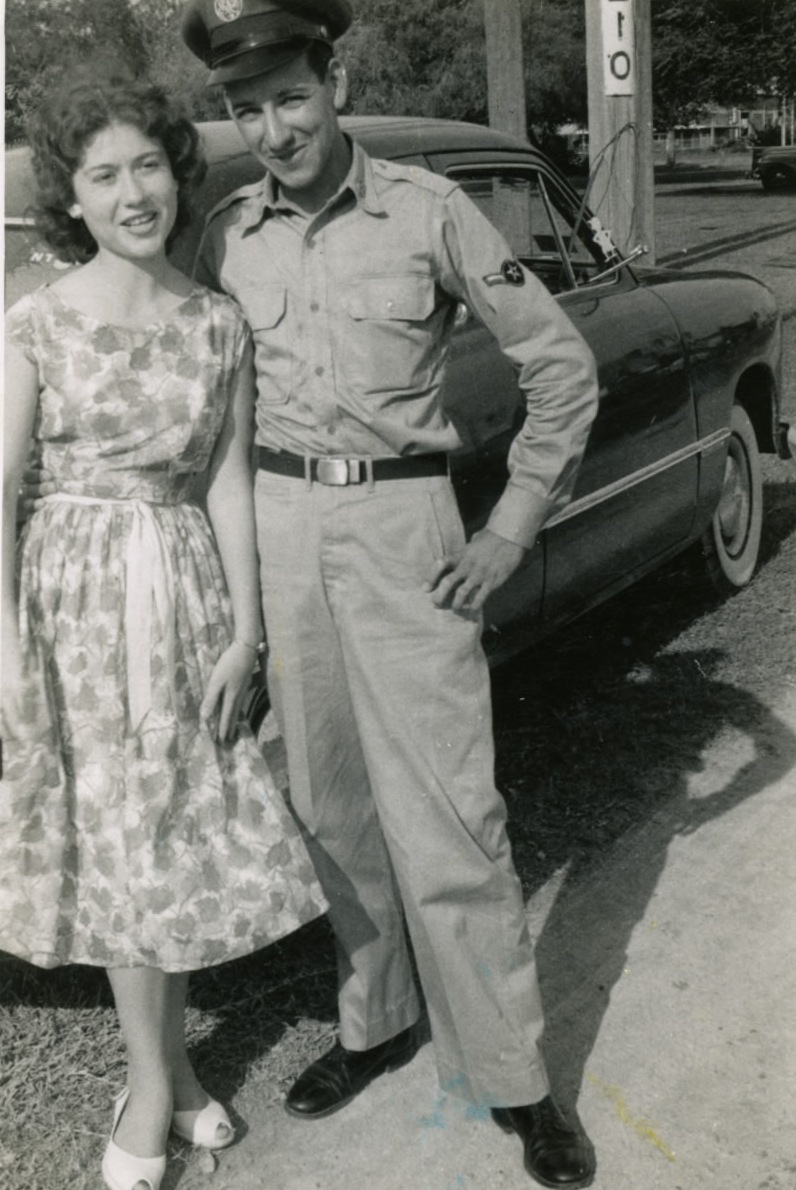
   Tomorrow morning we will drive back to Frankfurt for our nine-hour flight back to Texas. When Dad left Germany for the first time in 1954, he returned home by ship. His older brother met him when he arrived in New York harbor. They spent the night in New Jersey with John Redmond, one of Dad’s buddies from Spangdahlem. The following day Dad flew back to Texas. He had a few days off before he had to report to his base in Ardmore, Oklahoma. So, Dad borrowed his younger brother’s car and headed to Oklahoma by way of El Paso! Mom was working in El Paso at the time and she and Dad had not seen one another for almost four years. Dad went on to Oklahoma where he was honorably discharged from the Air Force in December 1954 Six months later, Dad married his beautiful fiancé on June 20, his birthday.

Paul, Dad, and Me

   Tomorrow, Dad will leave Germany for the second time. However, this homecoming will be different than his first because Mom will not be home to meet him when he arrives. She is spending her first Mother’s Day in heaven. Our hearts still ache. We all desperately miss her. I know that she would be so proud of Dad and all that he has experienced on this trip. Coming to Germany has been a sentimental journey and one that has given me a better understanding of my Mom and Dad’s love story. Being here has given context to the love letters to and from home that sustained Dad during his years in the service. This trip has also helped me to understand some of the things that shaped my Dad and, through his parenting, shaped me. I am grateful to Paul, my brother-in-law, for his partnership in making this dream come true for Dad and for us. My Mom dearly loved Paul, and so does my Dad and our family. Today, I miss Mom more than ever and am deeply thankful for the opportunity I have had to spend these days in Germany with Dad and Paul.

Posted by: Omar C. Garcia | May 8, 2010

The Kindness of Friends

   Mainz, Germany on the Rhine River

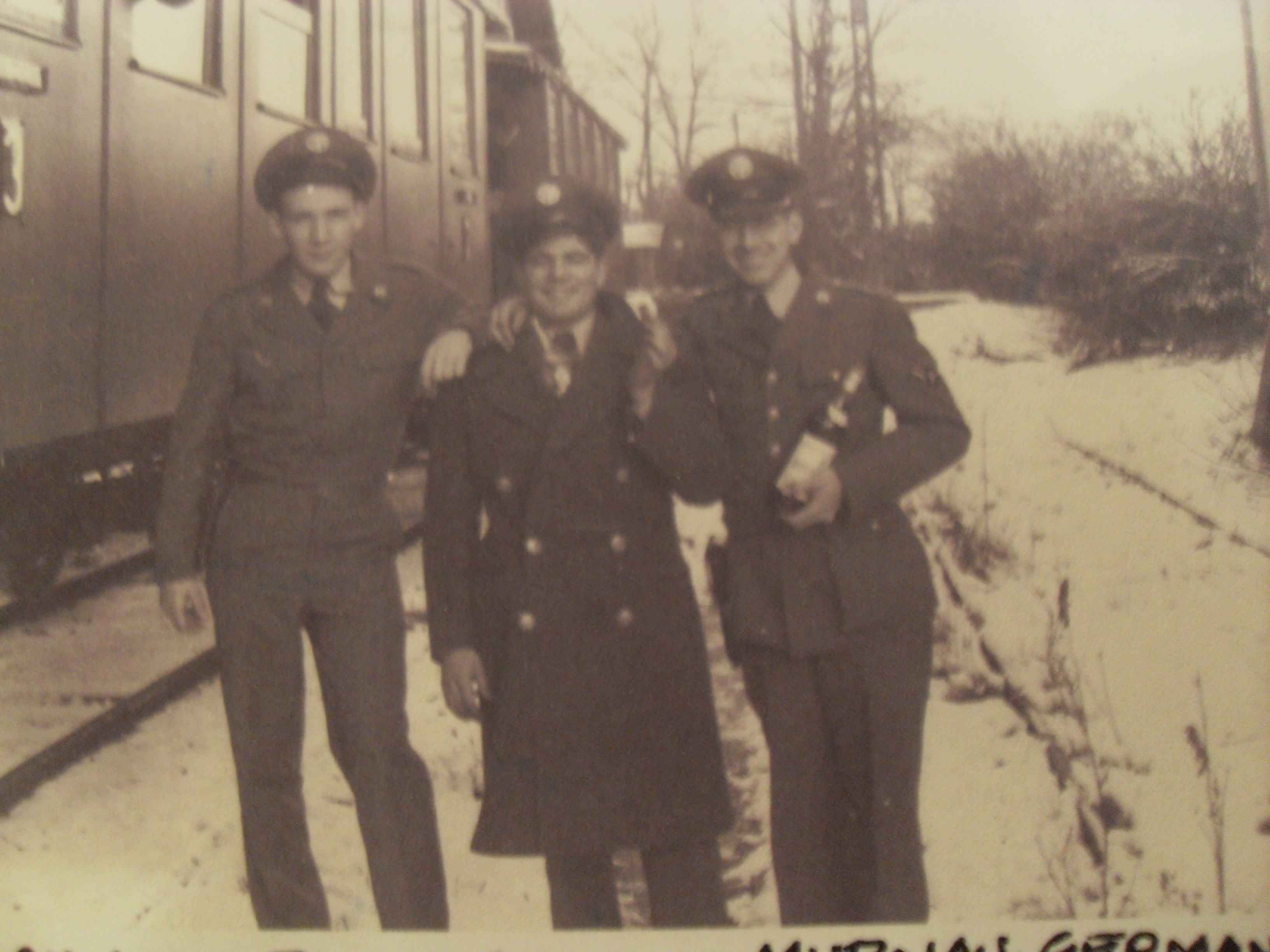
Dad and Friends in 1951

   Yesterday was a remarkable day for Dad as we visited Spangdahlem Air Force base near Bitburg. The base has grown significantly since Dad was here in 1952. At that time there were about fifty men assigned to the base. Today, there are over six-thousand men, women, and their families who call Spangdahlem home. The highlight of the day was the opportunity for Dad to meet the crew chiefs at the base – the folks who keep all of the airplanes flight-worthy. Dad served as the crew chief here when there was only one airplane at the base. Later more planes and personnel arrived. A couple of reporters interviewed Dad. One asked him what he considered to be one of the best things about serving at Spangdahlem. Without hesitation, Dad replied that it was the people – the friendships and camaraderie.

   No matter where we are or where we go, friends can make life better. When Dad arrived at Spangdahlem he did not know anyone else on the base. But, it wasn’t long before he knew all fifty guys who were serving here. One person I heard a lot about when I was a kid was a fellow named Harry Morales from New Jersey. Harry owned his own Jeep. That Jeep carried the two of them on adventures throughout Europe. There were no good road maps available at that time, but Dad had a world atlas that they used to plot their routes. Once when traveling from France to Spain they consulted the atlas and decided that the shortest route had to be across the Pyrenees. They followed a road up the mountains to a dead-end. They eventually found a route near the Bay of Biscay and made their way to Madrid. When Harry returned home, Dad loaned him $300.00 to purchase a new vehicle. Dad said that Harry promptly repaid the loan.

Herr & Frau Kraft 1952

    Dad also met and befriended people who lived in the communities near both Wiesbaden and the Spangdahlem air base. Yesterday, we entered the addresses of a few of the folks he had met in Luxembourg into our GPS and then set off to find them. Sadly, we learned that some had already died and others no longer live in the area. But, it was still good to visit the places where Dad enjoyed so many dinners with local families. This morning we traveled to Mainz, a city located across the Rhine River from Wiesbaden. While serving with the Air Police in Wiesbaden, Dad and his buddies would travel by bus to Biebrich, a borough of Wiesbaden located on the Rhine River. Dad and his buddies became friends with the Kraft family who owned a boat club and restaurant on the Rhine. We found the boat club but learned that the folks Dad knew as a young airman had passed away. However, the boat club and restaurant are still in operation.

Dad at Rhine River today

   A lot has changed over the past fifty-six years. The barracks where Dad lived while serving in Wiesbaden are no longer there. They have long since been torn down and replaced by a bank building. The English proprietor who owned the restaurant where Dad and his friends would eat spaghetti has died. Morales and the other guys he served with all scattered to the winds to start their post-military lives. Over the years they lost touch with one another. The kind families who would invite Dad and his friends to their homes for dinner are no longer here. And, the folks who owned the boat house and restaurant along the Rhine River have also died. But yesterday and today, Dad and Paul and I visited the places where they once lived. Visiting these places awakened many of Dad’s dormant memories of happy times. And, visiting these places did something inside of me. I felt a deep sense of gratitude for the kindness that each of these individuals showed my Dad when he was a young man far from home. Although they are gone, the effects of their kindness live on.

Posted by: Omar C. Garcia | May 7, 2010

The Sound of Freedom

Spangdahlem Air Force Base in Germany

Today, Paul and I choked back tears as Dad returned to Spangdahlem Air Force Base near Bitburg, Germany. Spangdahlem was a small air base when Dad first came here in 1952. When Dad arrived here he was the only airplane mechanic, which worked out well because there was only one airplane on the base. Other crew chiefs and aircraft would arrive later. In addition to his responsibility for servicing the only airplane on the base, Dad and the other fifty airmen erected the first pre-fabricated barracks buildings. These stark boxes were heated by pot-belly stoves. And, because Dad spoke more German than any of the other airmen on base, he was responsible for taking teams into town to purchase and bring coal back to the base to heat the barracks stoves. Dad describes it all as an adventure. He enjoyed his time, experiences, and friendships at Spangdahlem.

Dad being interviewed at Spangdahlem

Dad and Paul and I have been looking forward to this day for months. Not long after Mom passed away last May, Paul contacted the public affairs office at Spangdahlem and told them that we wanted to bring Dad back to Germany. Lieutenant Polesnak, a young twenty-four year-old woman from Michigan, arranged for Dad to have a tour of the base – now a sprawling town of its own with a population of more than six-thousand. To our surprise, she also arranged for a reporter and photographer and film crew to record Dad’s visit. Dad was interviewed for a piece that will air on armed forces television around the world. That is certainly more than we expected.

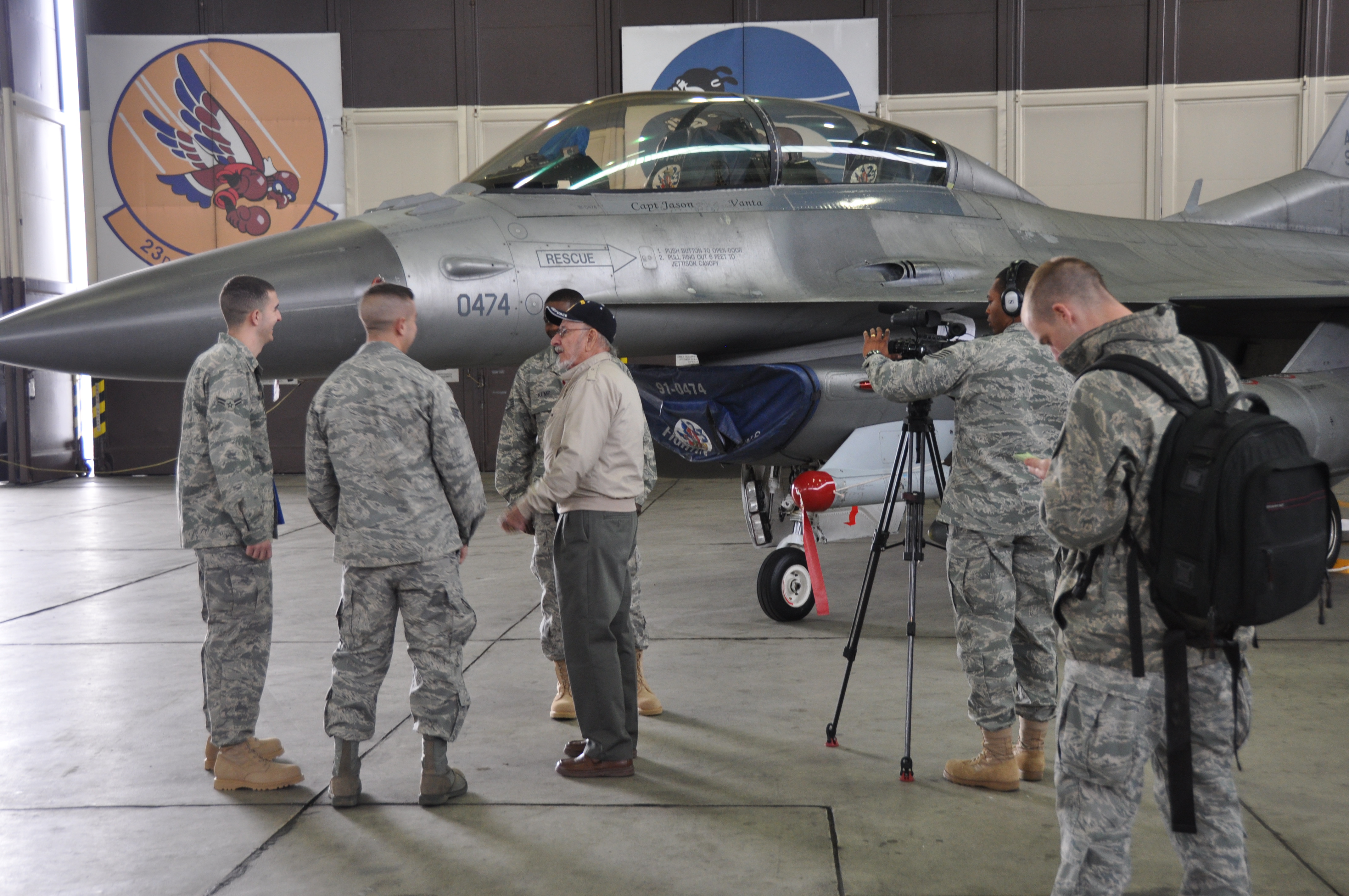
Crew Chiefs showing Dad the F-16 Jet

As an added bonus, Lieutenant Polesnak also arranged for Dad to visit with the crew chiefs on base. We had an opportunity to meet in one of the large hangers where they talked to Dad about their work on F-16 fighter jets and other aircraft. Dad showed them photos of what life was like on the base when he was here and photos of the airplanes he worked on from 1952 to 1954. Paul and I stood to the side and watched all of this unfold with tears in our eyes. Perhaps the sweetest moment was when one of the crew chiefs presented Dad with a special memento on behalf of all of the crew chiefs at the base. He then shook Dad’s hand and gave him a hug! Dad was so moved by this kind and thoughtful gesture. He quietly wept.

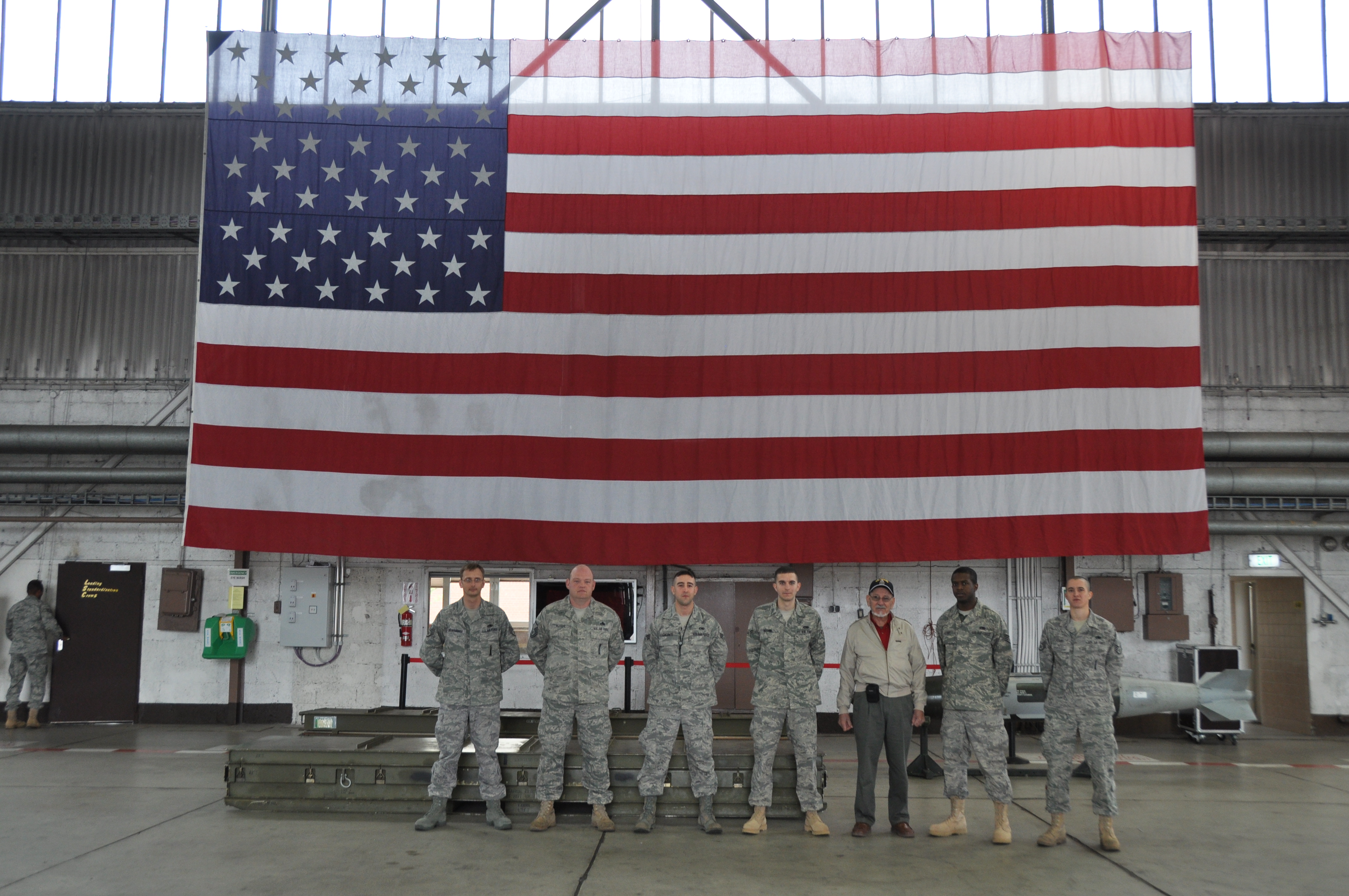
Dad with Crew Chiefs at Spangdahlem

It’s hard for me to write about everything that happened today without getting emotional. I love my Dad and am so thankful to God for every kindness he experienced today. Paul and I could not say thank you enough to everyone who made today so special and memorable for Dad. From the moment we stepped on base, Lieutenant Polesnak and every person we met treated Dad with the highest respect. Our military men and women are absolutely the finest in the world. I was moved by the words of one young man. As we were speaking, three F-16’s thundered down the runway one after the other. The noise was so loud that we could not speak. After a moment I commented on what an amazing sound these jets make as they take off. The young crew chief looked at me and said, “Yes, sir. It is indeed an amazing sound. That’s the sound of freedom.” I am grateful for Dad’s service at Spangdahlem and for those who serve here today to ensure that the sound of freedom is never silenced.

• • • • •

Read the story about Dad’s visit on the Spangdahlem Air Base website.

Posted by: Omar C. Garcia | May 7, 2010

Back in Spangdahlem

Bitburg, Germany | 06 May 2010

We awoke early this morning to cold temperatures, overcast skies, and misting rain in Heidelberg. However, the weather did little to curb our enthusiasm. After a quick breakfast, we packed our gear and drove to Trier. Situated along the Mosel River, Trier is Germany’s oldest city and home to Germany’s oldest church. According to medieval tradition, Helena, the mother of the Roman Emperor Constantine, donated her house to a Bishop named Agritius to convert it into a church. The Trier Cathedral is a UNESCO World Cultural Heritage site and still in use as a place of worship. We set aside some time to visit this impressive cathedral. We also visited the nearby Porta Nigra, or Black Gate – a remnant of a once-impressive wall built by the Romans to fortify the city of Trier.

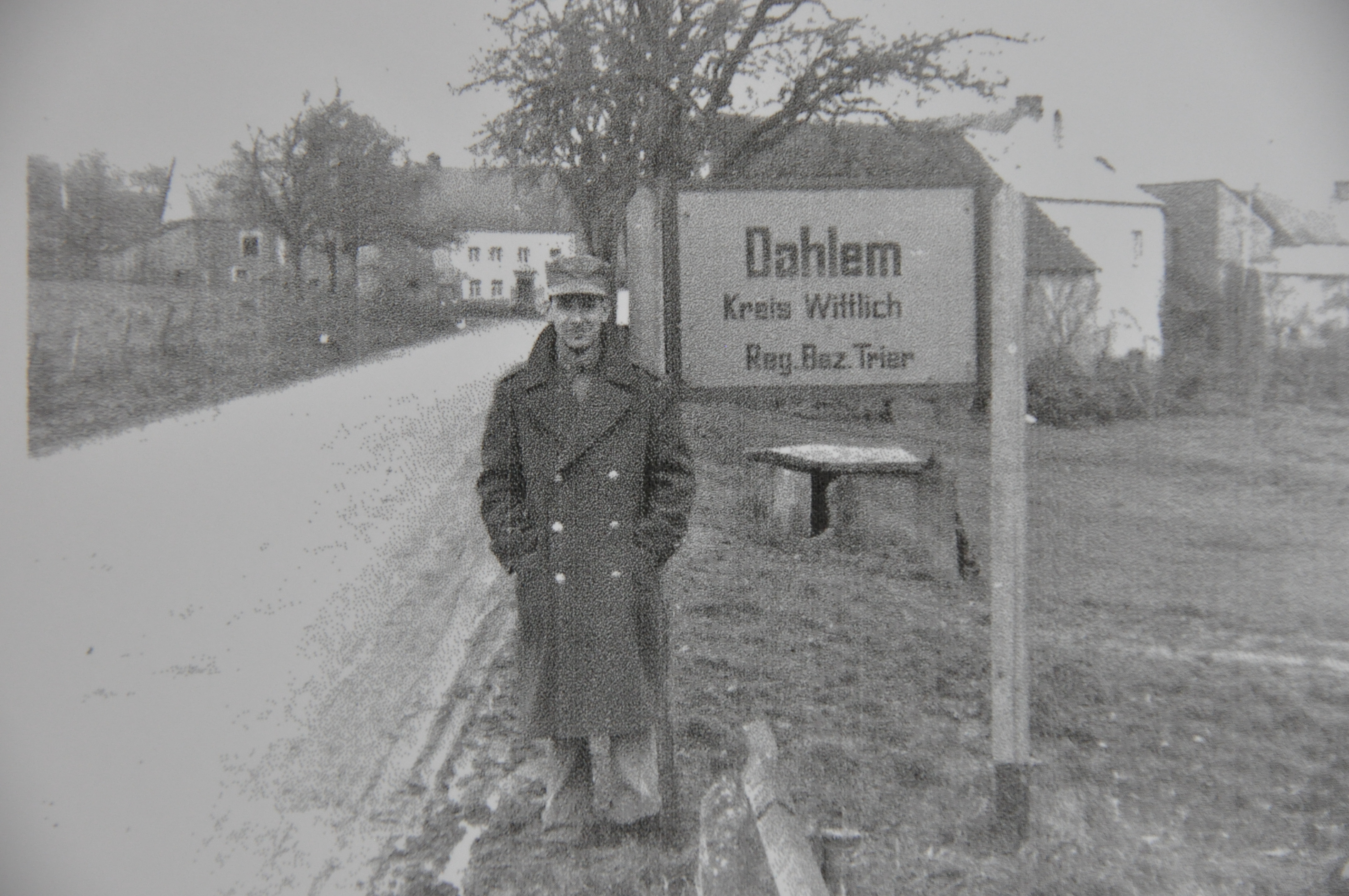
Dad in Dahlem in 1952

From Trier we drove to Bitburg, a two-thousand year-old town that once served as a resting place for the Roman Legions stationed at nearby Trier. Bitburg has had a military presence all through its history. Dad arrived at Spangdahlem Air Force Base, located just outside of Bitburg, in 1952. After checking in to our hotel we drove to the base. I could sense Dad’s excitement as he reminisced about his arrival here in 1952. After serving one-year with the Air Police at Wiesbaden, Dad was transferred to Spangdahlem. He traveled here alone from Wiesbaden by train. However, because there was no train station at the hamlet of Dahlem at that time, the train stopped in the proximity of the base to let him off. He asked a local resident for directions and walked the rest of the way. Spangdahlem was a small air base at that time. Dad served as the first crew chief and also helped to put together the first pre-fabricated barracks on the base.

Dad looking at Mom’s photo in barracks

It’s hard to describe what I felt as we approached the base this afternoon. I first heard the name Spangdahlem when I was a little kid and became acquainted with this place through Dad’s photos and stories. This is where my Dad spent two years of his life. This is the place where he kept a photo of my Mom in his foot-locker and from where he posted his love letters to her. This is where he took night classes to learn German. This is the place where he set up a darkroom in a closet to develop his own film. Because he was the only photographer among the enlisted men, he took and sold photos and used the money to travel to every adjoining country. And, he also sold photos for cigarettes which he used to barter for hotel rooms and transportation while on leave. The only photos that many of the men stationed here at the time have are the photos that Dad took and developed for them.

Dad at Air Base today

The things that happened here are a part of my history. Dad never could have imagined how God would later use his photos, his letters and telegrams home, and his stories to stir my curiosity about the world. I know this will sound nerdy, but while other kids were collecting baseball cards I was writing to chambers of commerce asking for travel brochures. I had quite an impressive collection of brochures and maps when I was a kid. I can’t imagine how different my childhood might have been if Germany had not been a part of my Dad’s history. As we drove back to our hotel I thought about all that has happened since Dad was here. He returned home and married the girl of his dreams. He provided a great home for his wife and five kids. He worked as an independent insurance agent and then started a new business when I graduated from high school. He never spent a day away from Mom and was with her when she drew her final breath. And today, he is back in Spangdahlem at eighty years young.

Posted by: Omar C. Garcia | May 5, 2010

Be a Family Historian

   Heidelberg, Germany 

   Germany is a beautiful country – much more beautiful than I imagined. My Dad first introduced our family to Germany, and other countries, when we were kids. We all traveled abroad on the wings of imagination fueled by Dad’s black and white slides and colorful stories. One of the best things about growing up in my family was listening to stories about people and places beyond our hometown. These stories gave us a good understanding about the bigness of the world and the beauty of its people. God used Dad to teach us the importance of loving and respecting all peoples. I believe that travel strengthened my Dad’s convictions about affirming the worth of every person. Mark Twain said, “Travel is fatal to prejudice, bigotry, and narrow-mindedness — all foes to real understanding. Likewise, tolerance, or broad, wholesome charitable views of men and things cannot be acquired by vegetating in our little corner of the earth all one’s lifetime.” 

   After leaving Sonthofen yesterday, we traveled the picturesque road that winds its way through the Black Forest to Triberg. Overcast skies and misting rain deepened the green hues of the trees and the red-tiled roofs of homes in hamlets and villages along the route. Triberg is a beautiful little community nestled in a tiny valley surrounded by high peaks clothed in tall pines. Triberg Falls, one of the highest waterfalls in Germany, plummets gracefully down granite outcroppings near the town. In spite of the rain, locals and tourists were moving about from shop to shop. Triberg is a great place to purchase a cuckoo clock, music box, or handicrafts skillfully carved by local artisans. We were happy to join the hoi polloi on the sidewalks of Triberg and found a quaint little place where we enjoyed a thick slice of Black Forest Cake! 

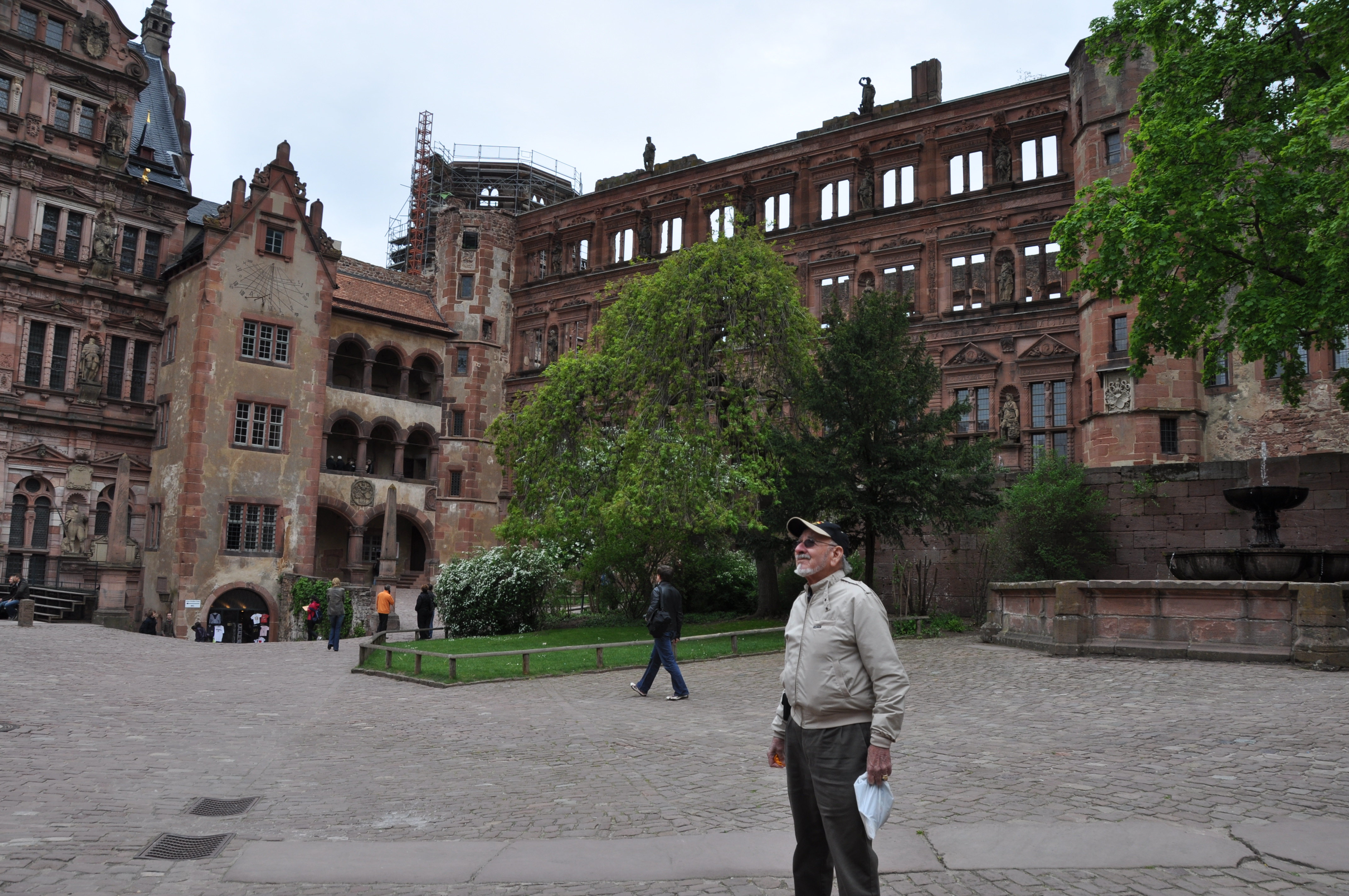
Dad enjoying Heidelberg Castle

   This trip to Germany has awakened many of my Dad’s dormant memories. Although it’s been almost sixty-years since Dad was last here, it’s amazing how revisiting the places he first visited as a young man has helped him to remember people he met and experiences that he had here. I’m sure Paul and I might never have heard some of these stories had we not brought him here. Today, we are in Heidelberg and visited the famous Heidelberg Castle whose previous visitors include the likes of Martin Luther, Victor Hugo, and Mark Twain. It was really cool to listen to Dad use his language skills today. He has much better language skills than I do. Dad and a souvenir shop-keeper at the castle got into a conversation that started in English, then German, then Spanish, and then back to English. I am glad to see him enjoying himself. He is a gracious and kind man. 

   This trip has reminded me of how much family history never makes it from one generation to the next. Sometimes that happens because family members die or live far away or any number of other reasons. Sadly, it’s often the death of a family member that causes us to ask questions about the people in an old photograph or about a name in a family Bible or about someone we’ve never met who attends the funeral. By then, it’s often too late to get answers to our questions. If you have not taken intentional steps to learn more about your family’s history, then don’t waste any more time. Here are a few things you can do to record and to pass on your family’s history. 

Interviews | Interview your grandparents and parents. Ask them to share stories about their childhood and your family that you can share with your children. If possible, interview them at a place that will awaken sleeping memories that might otherwise never be seen or heard. 

Photographs | Sit with your family’s elders and ask them to tell you the stories associated with old photographs. Record the stories and names of the people in the photographs. Use a photo service to create photo books that can be easily reproduced and shared with family members. 

Technology | Make video and audio recordings of family members. Use an interview format and ask them specific questions about your family history. 

Holidays | Use holidays, reunions, and other times when your family gathers together as a time to talk with older family members and to record some of your family’s history.

Journal | Don’t neglect to record your own history. If you are a parent, start a journal for each of your kids that you can pass on to them when they leave home or get married. Keep it simple and record colorful snippets of their childhood history. And, record some of the things that define you or that God has used to shape you.

   I’m glad to be in Germany to connect Dad’s stories with the photos I first saw as a kid. Being with Dad at the places where those photos were taken is beyond cool. You may not have to travel across the ocean to record more of your family’s history. But, if necessary, you must be willing to travel across town or across the country. Don’t lose sight of your past as you think about your future. Do what it takes to stay connected with your past. After all, you would not be here today were it not for those who came before you. For that reason alone you should want to know more about those who made your existence possible. So, consider becoming a family historian. Leave a record of your family’s history as a part of your legacy to the next generation.

Posted by: Omar C. Garcia | May 4, 2010

Cookie Crumbs of Love

Sonthofen, Germany

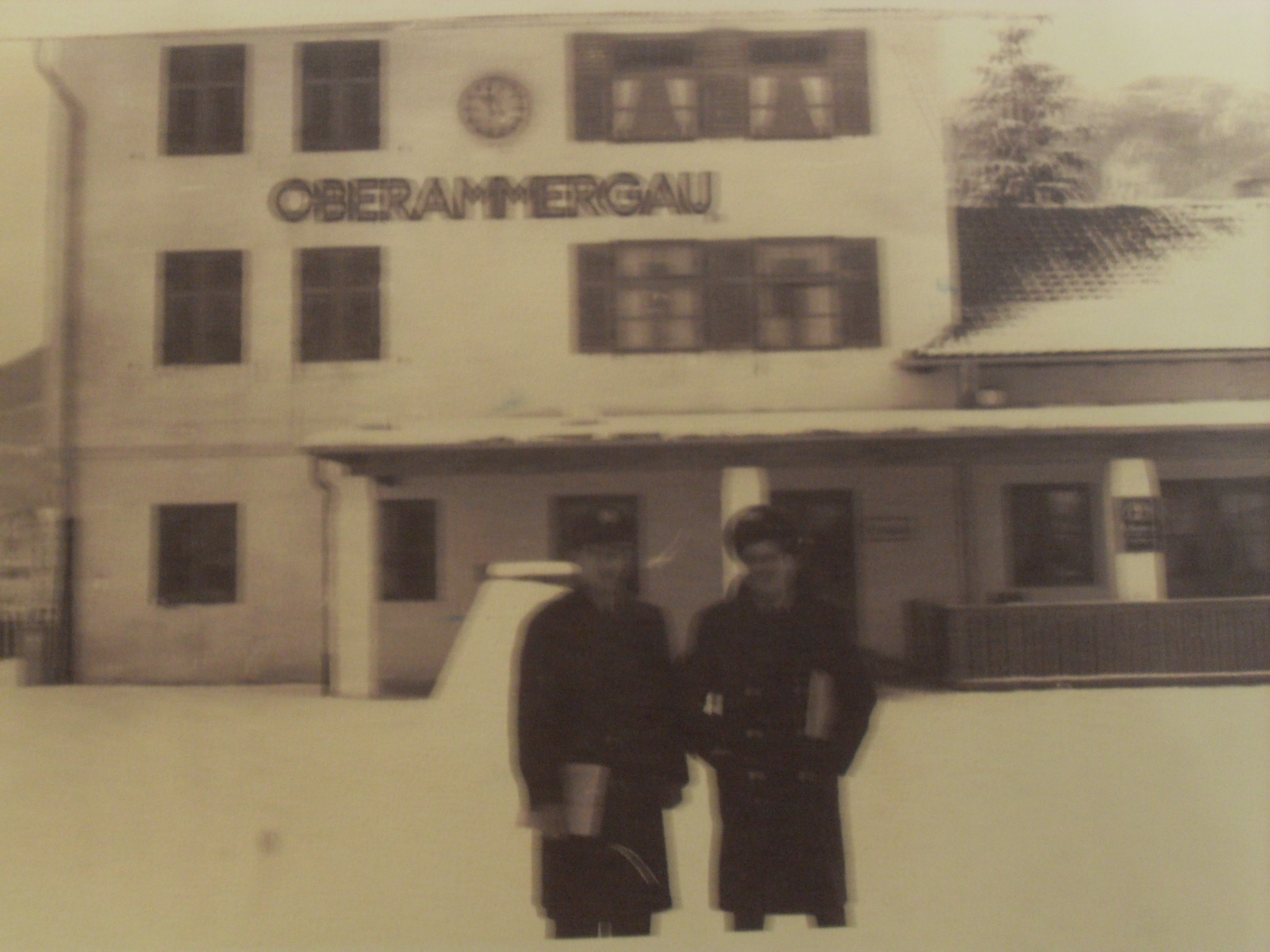
Yesterday, I had the opportunity to connect a thin slice of my history to Oberammergau. My Dad arrived at this historic village in December 1951 to be trained to serve with the Air (Military) Police. The mountains and the snow that winter were a world away from Dad’s hometown of Mission, a small South Texas town located a few miles north of the Rio Grande River. Dad wrote some of his first love letters to Mom from this place. It was great listening to him tell Paul (my brother-in-law) and me what it was like to be so far away from home and the girl he loved. Being here gave us geographical context for his love for Mom, but his stories gave emotional context to that love.

After our time in Oberammergau, we set off toward Füssen, the town at the southernmost end of the beautiful Romantische Straße or Romantic Road. We stopped just outside of Füssen to see the fairy-tale-looking Neuschwanstein Castle – the inspiration for Disneyland’s Sleeping Beauty Castle. This massive 19th-century castle is built on a rugged hillside. From a distance it appears to float on a lush green carpet of trees. The word impressive does not seem adequate enough to describe it. I’m also glad that we drove through the area around Füssen because this is where Steve McQueen’s famous motorcycle stunts were filmed for “The Great Escape,” one of my all-time favorite movies.

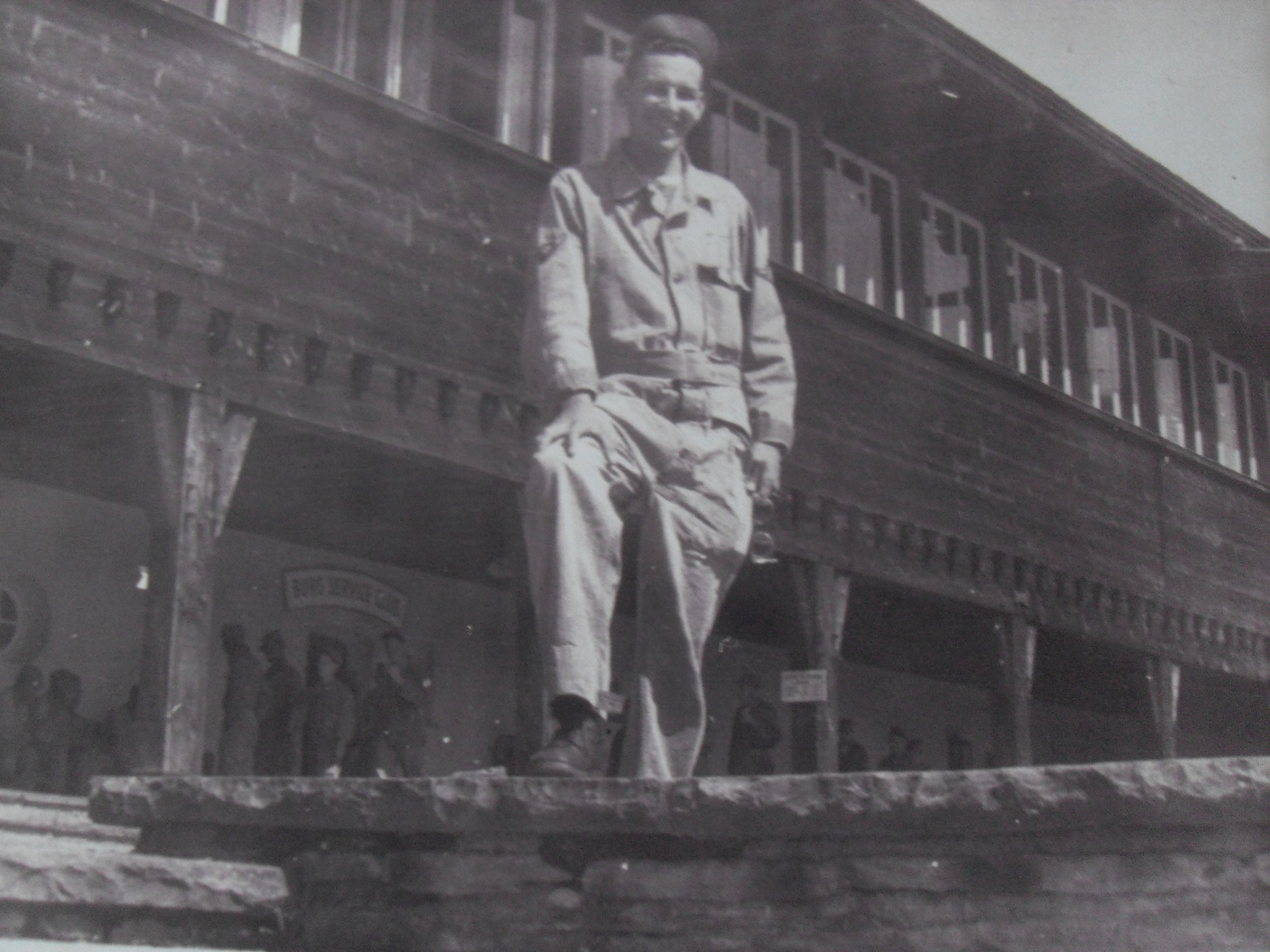
Dad at Sonthofen in 1951

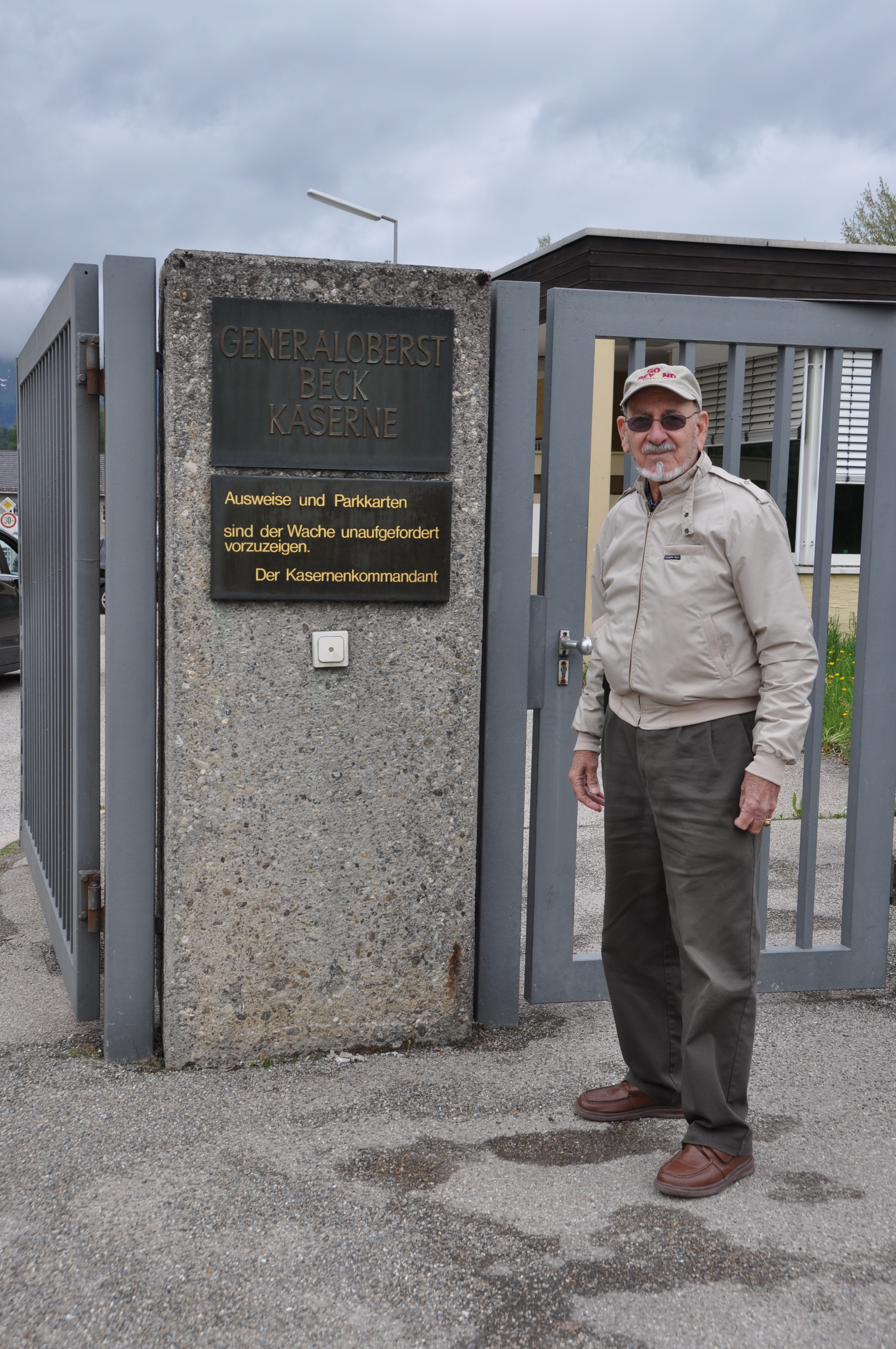
This morning we drove from Füssen to Sonthofen, the southernmost town in Germany. Hitler built the Ordensburg (fortress) Sonthofen here, one of the places where young boys were trained for service in Nazi Party organizations. For that reason, this beautiful location in the Bavarian Alps was bombed twice during World War 2. When Dad arrived by ship at the port city of Bremerhaven, he and other young recruits traveled by train to Sonthofen for orientation. Although Dad did not spend a lot of time in Sonthofen, we wanted to come here because it was where he received his orientation and marching orders. We stopped by the place where he stayed but could not enter because of construction. However, Dad showed the German guards some photos of what the place looked like when he was here.

Dad at Sonthofen today

During our drive to and through Sonthofen, Dad talked about the care packages he would receive from home. My grandmother was very connected to her three boys in military service and would send care packages filled with cookies, letters, the local newspaper, and practical goods to them on a regular basis. My Mom was very close to my Dad’s mother and would help her bake cookies and to prepare Dad’s care packages. Dad said that sometimes the packages arrived in great condition. And, at other times they arrived so damaged that there was nothing but cookie crumbs inside. But, that was ok. Even cookie crumbs were a connection to home – to his mother and to his future bride. It was good to visit one of the places today where Dad received some of his many care packages from home. To a young man far from home, even cookie crumbs sent with love taste better than the best mess hall food.

Posted by: Omar C. Garcia | May 3, 2010

The Context of Love

   Oberammergau, Germany 

   After an early breakfast at our hotel in Munich, my Dad and Paul and I set off for the historic city of Oberammergau. Our route took us down the picturesque Romantische Straße – the Romantic Road. The Bavarian Alps look down on this famous ribbon of highway that gently winds its way through story-book villages, green forests, glistening lakes, and fertile meadows. It’s one of the most beautiful places I have ever seen on any of my travels. We arrived at Oberammergau about mid-morning. Oberammergau is home to the world-famous Passion Play. This play was first performed by the villagers in 1635 in fulfillment of a vow they had made to God for sparing them from the bubonic plague. The local folks have performed the play every ten years since then. 

   Oberammergau is a unique village, to say the least. The people here are bound by a centuries old communal purpose. They are passionate about The Passion. Ornate Biblical scenes adorn almost every large building and local wood-carvers sell magnificent carvings of characters and scenes from the pages of the Gospels. Because of this, Oberammergau is often accused of “wearing too much make-up.” Perhaps that’s true. But, in spite of all of this, there’s something refreshing about the commitment of the people here to continue offering the world a wholesome gift. 

Dad (left) in Oberammergau | Dec. 1951

    It’s been almost sixty-years since my Dad’s first visit to Oberammergau. After a two-week voyage across the Atlantic, Dad arrived at the port city of Bremer Haven. From there he traveled by train to Sonthofen for his orientation. We’ll venture there tomorrow. From Sonthofen he traveled to the Air Force base at the ancient city of Wiesbaden, located on the northern bank of the Rhine River. Dad only spent a couple of days there while awaiting orders to attend military police training at the NATO base located outside of Oberammergau. He arrived in snow-covered Oberammergau in December 1951. After completing his training, Dad went back to Wiesbaden where he served with the Air Police for a year. 

   One of the best things my Dad did while serving in Germany was to write letters to his fiancé back home. Dad was a prolific letter writer and an avid photographer. One of the best things my beautiful Mom did was to keep Dad’s letters and photos. I don’t think either of them realized what a treasure their love letters and telegrams and photos would become to their kids. When I was young, I always enjoyed those evenings when Dad would set up his slide projector and tell us the stories behind his pictures. Today, as we sat at a local café, Dad talked about Mom and what he wrote to her in those letters from this place called Oberammergau. 

   There are no words to describe how being here with Dad and hearing him share about those letters has given unique context to his life and his love for Mom. Love does not happen in a vacuum. Love has context — even geographical context. The geographical distance between Oberammergau and our home town in South Texas intensified my parents love for one another. Mom faithfully waited for four-years for my Dad to come home so that they could begin their new life together. The letters they wrote to one another bear witness to the context of their love and their marriage testifies to its strength. It’s good to be here with my Dad and brother-in-law on this sentimental journey of discovery — a journey that is giving context to so many things I took for granted while growing up.

« Newer Posts - Older Posts »

Categories