Posted by: Omar C. Garcia | October 29, 2011

A Season of Growth

Four months ago, Gina, my youngest daughter, boarded a flight to Malaysia. She was 20 years and 32 days old when she embarked on her great adventure. It was not too difficult letting Gina go because of what we have seen God do in her life over the years. She loves God and loves people, so the opportunity to take time off from her own studies to serve students was a perfect fit. Her original assignment was for six months, but she has been approved to serve an additional six months. Now, instead of coming home in January, she will return home on July 3, 2012 — just one day shy of one year. She will spend her first Thanksgiving, Christmas, and birthday away from family. But, that’s ok. This is a remarkable season of life for her in which she has an opportunity to serve and learn and grow in a new and exciting context.
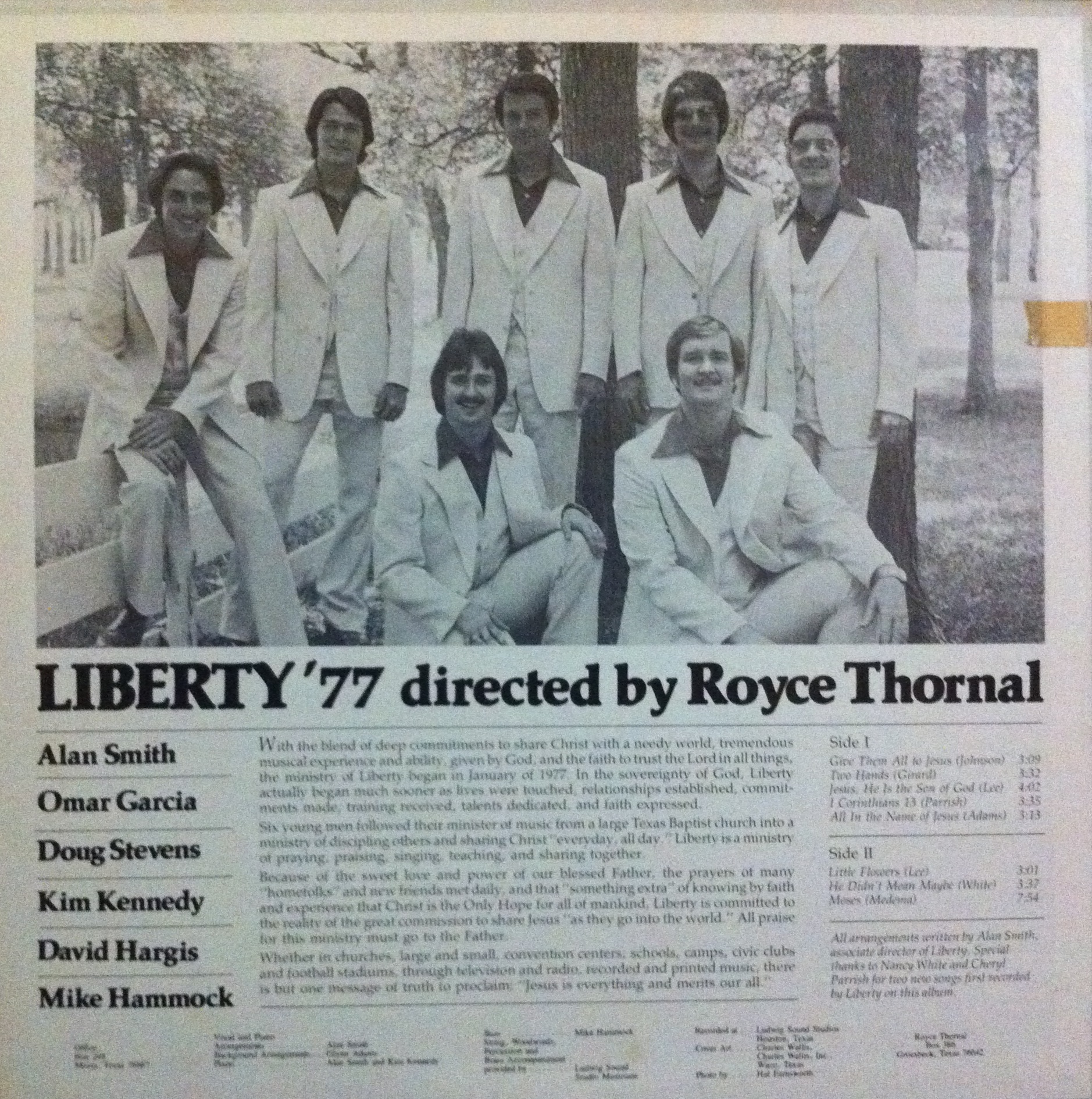
The back cover of our album.

One of the best seasons of personal growth in my life was the eleven months I spent on a Greyhound bus after my Sophomore year of college. I traveled the country with a singing and drama group called Liberty during 1976 and 1977. Our group recorded one album in those years before digital recordings and iTunes. Those who have heard me sing will not be surprised to learn that I was not one of the singers in the group. Instead I was responsible for speaking and teaching and also writing the skits that we performed. Those were great years in which I had opportunities to speak hundreds of times to thousands of students. The responsibility of teaching kept me in the Word and forced me to dig deep every day. I loved it! The things I learned during those years with my fellow travelers have served me well through the years. And, seeing America from our Greyhound bus was pretty cool, too.
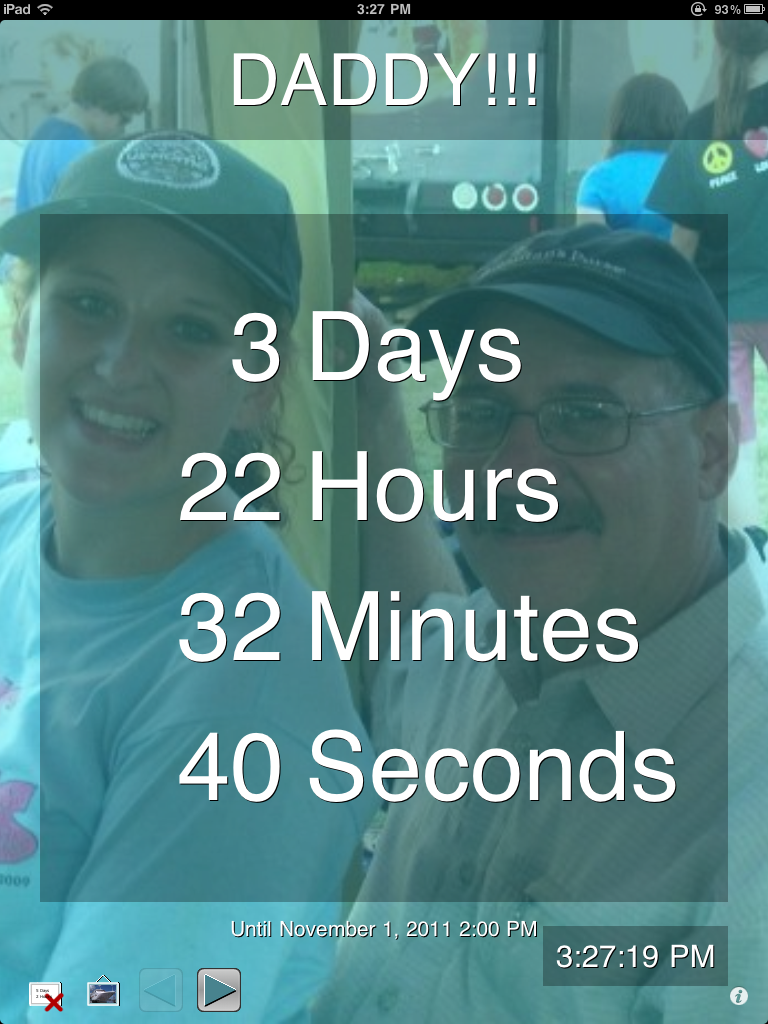
Since I have to be in Cambodia in November, I decided to take some personal time and leave a few days early in order to visit Gina. Malaysia is just a one-hour flight from Cambodia. Gina and I both have been counting the days until our reunion. She has a Countdown app on her iPad and sent me a screenshot of the time remaining until my plane lands in Malaysia. I must say that I can hardly wait to see her. Gina has a full schedule for me that includes meeting her new friends, teaching, and learning about the place she currently calls home. I’m also looking forward to the time we will have to talk face to face and the opportunity to hear more about what God is doing in her life. I know that the things she is learning in this season of growth so far from home will serve her well for a lifetime.

Posted by: Omar C. Garcia | October 27, 2011

A Mother’s Hidden Pain

Kolaches and breakfast tacos. That’s the reason Doyle and I found ourselves at the popular and family owned Weikel’s Bakery in  La Grange, Texas earlier this week. We were there to pick up a large order for a bunch of hungry folks at our annual staff retreat. While waiting for our order, I noticed a large photograph of a handsome young man in a football uniform on display in the bakery. His name and the date of his birth and death were printed on the photo. He was 23-years-old when he died. I turned to Doyle and said, “I wonder how that young man died.” Curious to know more, I walked over to ask one of the ladies behind the bakery counter.

Me: I couldn’t help but notice the photo of that young man in the football uniform. Who was he and how did he die?

Lady: That’s Mr. Weikel’s son. He was killed in a car accident. I think he was coming home from a football game when it happened.

Me: Oh my. I am so sorry to hear that.

Lady: Yea. He and I grew up together here in La Grange. He was a really nice guy.

And then, the lady behind the counter looked down and softly continued.

Lady: My son also died in a car accident. It happened two years ago on my birthday. He would have turned twenty this year.

And then she paused, turned her head from side to side, and continued. Two of his friends were also killed in that accident.

Me: I am so sorry for your loss. I can’t begin to imagine how painful that must have been for you.

Lady: Yea. It still hurts.

And then the lady paused, her eyes now moist, and softly said, Tomorrow is my birthday. It’s gonna be a tough day.

I spent a few more moments with her before she had to attend to another customer. As Doyle and I drove away we talked about this lady and the pain she will carry with her for the rest of her life. You just never know the kind of pain that the people you see everyday carry around inside — pain hidden behind a smile or buried so deep that no one can see it. But, it’s there. Proverbs 14:13 reminds us, “Even in laughter the heart may ache, and the end of joy may be grief.” That’s just one reason why we should try to be nice to everybody we meet. A courteous greeting, a warm smile, or an encouraging word are just some of the things that can bless those who carry heavy burdens of pain. So, the next time you look in to the eyes of the person behind the counter or in the next office or standing on a street corner, be kind to them. You just never know how God might use your kindness and concern as a soothing balm to bring a little relief and encouragement to someone in pain.

Posted by: Omar C. Garcia | October 26, 2011

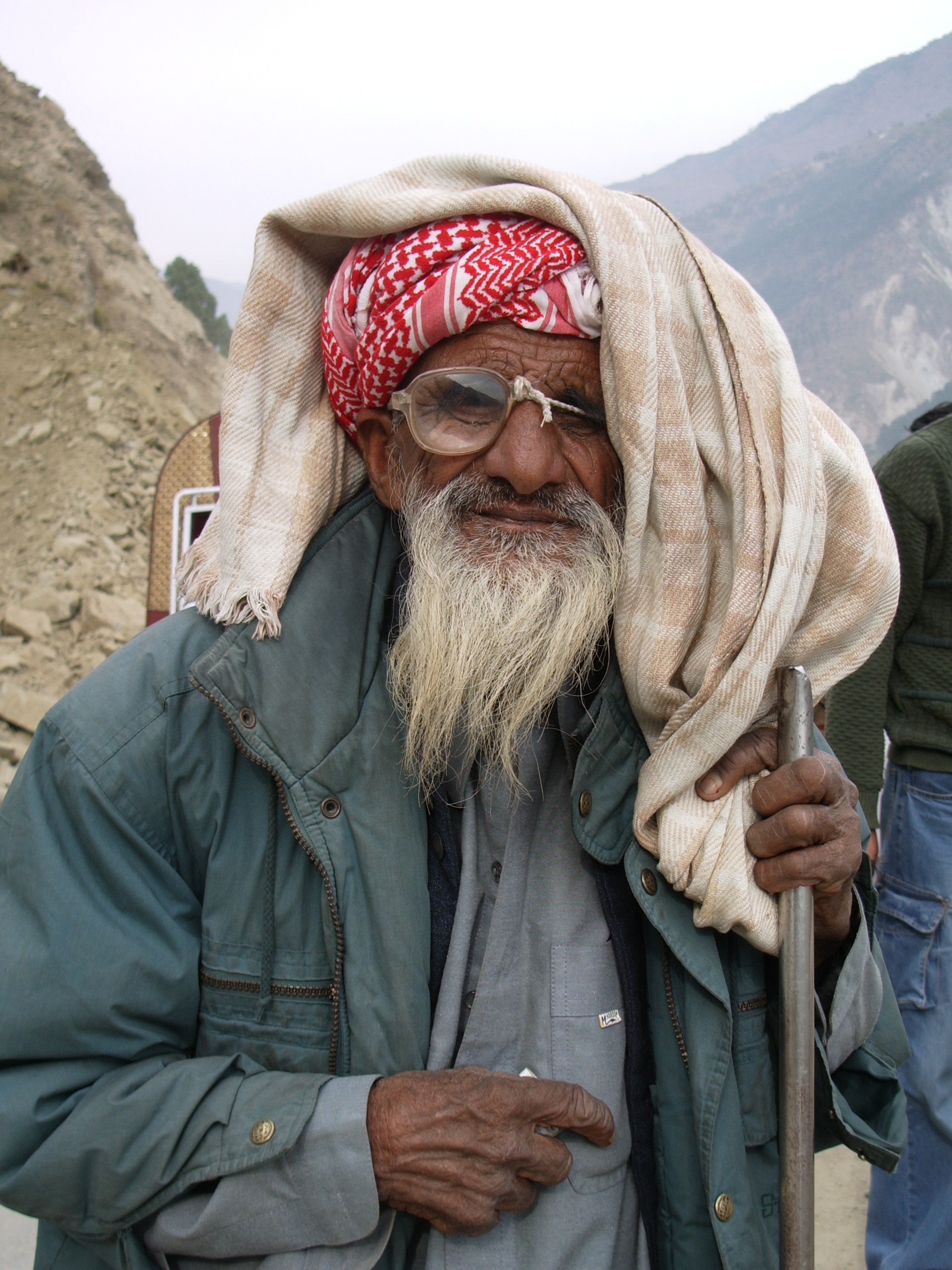
Wordless Wednesday

Near the epicenter of the earthquake. | 2005 | Balakot, Pakistan

Posted by: Omar C. Garcia | October 25, 2011

Lost and Found

This past Friday morning, I was reminded that there are few things that can be as frightening and frustrating as getting lost in a strange place. The reminder came to me in the form of a small and elderly Chinese woman standing on the sidewalk in front of my home. When she saw me walk out my front door she earnestly motioned for me to come near. When I approached, she spoke to me in Chinese while bending to trace what looked like numbers on the sidewalk. “English?” I asked. She shook her head and continued speaking to me in Chinese. Then I remembered that I had a Mandarin Chinese language app on my iPhone and motioned for her to calm down. I tapped on the appropriate phrases and when she heard the electronic voice on my phone speak Mandarin, she smiled. We now had a basis for communication. Using my iPhone app, I managed to find out that she was lost and could not find her way back to the place where she was staying. I felt a mild sense of relief.

Step two — I asked her to type the house address into the calculator on my phone. She did. I now had a house number but no corresponding street name. When I motioned which direction to go she could not tell me. So, I invited her to get in my truck and we drove up and down every street in my subdivision. However, I could not find the house number she had given me on any of the streets near my home. And although she had a cell phone, she could not reach the person she was staying with. But, after a few more attempts, someone finally answered. It was her daughter. I explained that her mother was lost and I was trying to get her home. The daughter thanked me and gave me her home address. The house numbers that she gave me did not match those that her disoriented mother had given me. However, once I had the correct information, I punched the info into my GPS and headed to her daughter’s home. When I stopped to let the little lost lady out of the vehicle she said, “Sank you, sank you, sank you.” I smiled and said, “You’re welcome.” Then, she stood and waved as I drove away.

Someone once asked the great frontiersman Daniel Boone if he had ever been lost. Boone did not hesitate — “No, but once I was a might bewildered for a few days!” Lost or bewildered, those who have no idea where they are need someone to rescue them and show them the way home. That’s what Jesus came to do. He defined His mission in these terms — “to seek and to save the lost” (Luke 19:10). Jesus told a story about a shepherd who had one hundred sheep but went in search of one that was lost until he found it (Luke 15:4-7). And He told the story of a woman who turned her house upside down until she found a coin she had lost (Luke 15:8-10). Jesus also told the story of a father who had two sons, the younger of whom left home and lost his way. When the young man finally found his way home again, the father celebrated his return with a great feast, telling everyone who attended, “For this my son was dead, and is alive again; he was lost and is found…” (Luke 15:24). In each case, the recovery of what had been lost resulted in rejoicing.

As Christ-followers we have a responsibility to help those who are spiritually lost or disoriented by pointing them to Jesus who is “the way, and the truth, and the life” (John 14:6). Jesus said that “there will be more joy in heaven over one sinner who repents than over ninety-nine righteous persons who need no repentance” (Luke 15:7). I’m glad I had the opportunity to help a little Chinese lady find her way home. The joy on her face when she saw her home reminded me of a greater joy that awaits those who will one day see Jesus because we helped them to find their way home.

Posted by: Omar C. Garcia | October 23, 2011

No Longer Unwanted

I have had an interest in names since I was a kid, perhaps because I had one of the more unusual or less common names among my classmates while growing up. I am actually named after my Dad. However, my Dad was named after a 12th century Persian poet named Omar Khayyám because my grandfather was very fond of his poetry. The name Omar has served me well over the years, especially on my travels to Muslim countries. One of my more interesting name-related experiences happened in Darfur in 2005. One evening a Muslim doctor from Chad who was working at the hospital in Al-Fashir drove to the house where I was staying. He knew that I was there with a team of Christian men. The good doctor greeted our team and then said, “Come with me, Mr. Omar” and motioned for me to get into his vehicle. So, I looked at my team and told them I would see them later … hopefully. The doctor then drove me to a house not far from where we were staying. “Come in,” he said. When I walked in I saw several other Muslim men seated at a table, waiting to eat. The doctor then turned to me and said, “Mr. Omar, we are curious. You are a Christian but you have a Muslim name. Tell us how you got your name.” So, my name gave me favor and opened up a wonderful door of opportunity for me to share with a group of curious Muslim men.

Associated Press Photo

Names are important. The writer of Proverbs wrote, “A good name is to be chosen rather than great riches, and favor is better than silver or gold” (Prov. 22:1). This morning I read an interesting story about names in an Associated Press article entitled, “Hundreds of Indian Girls Named ‘Unwanted’ Choose New Names.” According to the story, 285 girls who had names like “Nakusa” or “Nakushi” which mean “unwanted” in Hindi, participated in a renaming ceremony. These girls were saddled with this terrible name by parents who were disappointed that they had a girl instead of a boy. The writer also noted that the name “unwanted” — a name that makes these girls feel they are worthless or a burden to their families — is “widely given to girls across India.” Some girls chose new names with meanings such as prosperous, beautiful, and good. One 15-year-old girl chose the name “Ashmita” which means “very tough” or “rock hard” in Hindi. She said, “Now in school, my classmates and friends will be calling me this new name, and that makes me very happy.” Each of the girls received a certificate stating their new official names during the renaming ceremony.

I like the name Ashmita. It reminds me of another story about a person who was given a similar name. When Andrew first brought his brother Simon to Jesus, the Bible tells us that “Jesus looked at him” (John 1:42). The particular Greek word for “looked” is one that speaks of an intense and concentrated gaze — the kind of look that is able to see beyond the actualities to behold the possibilities. That’s why Jesus said, “So you are Simon son of John?” — in other words, “I can see who and what you are.” However, Jesus looked beyond those actualities to behold what others did not see in Simon. Jesus said to him, “You shall be called Cephas (which means Peter).” Peter is the Aramaic word for “stone” or “rock.” Jesus saw what no one else could see in Simon: the capacity for this fisherman to become a solid and rock-like man. So, Jesus gave Simon a new name, one that would always remind him of his potential.

I’m glad that today, 285 young girls in India selected new and good names for themselves, names that will help them to have a fresh start in life and remind them of their potential. And, I applaud Dr. Bhagwan Pawar who came up with the idea for the renaming ceremony. No one deserves to be called unwanted or to be stripped of the worth and dignity with which God clothed us.

Posted by: Omar C. Garcia | October 21, 2011

Burning Bible Calories

I invested the first twenty-seven years of my ministry in Christian education. I absolutely loved mobilizing and equipping leaders, organizing small groups, starting new groups, vetting curriculum, making provision for growth, and also writing curriculum for LifeWay Christian Resources. One of my top priorities through those years was finding creative ways to get folks out of the classroom and into the community, in other words, to move from the examination to the application of Scripture. One of my guiding verses for doing so was Ezra 7:10 — “For Ezra had set his heart to study the law of the Lord, and to do it and to teach His statutes and rules in Israel” (Ezra 7:10). It’s not enough to study or to teach, we must actually apply or practice what we know.

I often told our leaders that if we were to stop studying the Bible it would still take us a lifetime to apply what we already know. Most of our folks have so many options for studying the Scripture that they could spend the remainder of their lives in small groups. And, I know more than a few who are determined to do just that. But if all we do is consume Bible calories and never do anything to burn those calories, then we actually risk becoming spiritually unfit and ineffective. If all we do is consume Bible facts and truths, then we will not make much of an impact in a world that needs to see the transforming power of God’s love in action in ways that are personal, practical, and measurable.

When it comes to burning Bible calories, I am especially encouraged by the Ladies Ministry at Kingsland. Our ladies do more than meet to study the Bible in small groups every Thursday morning. They have become a force for the Devil to contend with. Our ladies are actively engaged in our justice ministry and helping us to make a difference in the lives of young girls trapped in the dark world of sex trafficking. They are also involved in providing personal feminine hygiene items for low-income women in our community. These items are expensive for single moms and other women who are struggling to support their families on little income. And, our women are making a difference in the lives of students in inner-city schools.

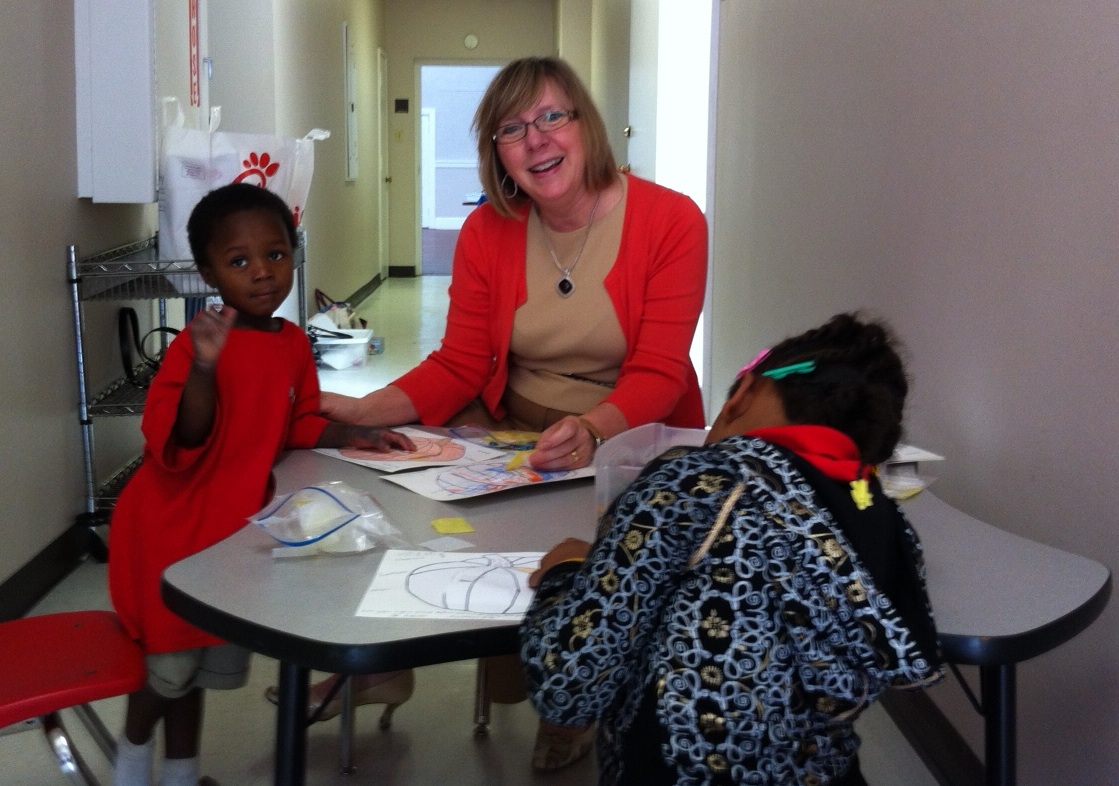
Today, the ladies who study the Bible together every Thursday burned a lot of Bible calories. They traveled by caravan to Houston’s Third Ward to invest time in the students at the new Generation One Academy. In addition to doing some fun projects with the kids, they took time to do a little tutoring, provided a Chic-fil-A meal for the children and also a hot home-made meal for the teachers in three locations. Afterward they spent time with the kids on the playground. I was so encouraged by their work today. These suburban Moms blessed and encouraged lots of kids and teachers and also learned a little more about what life is like for the poor children who call the Third Ward their home. It was a great day for everyone involved. I am proud of our ladies for setting a great example of what it means to serve others. Their willingness to invest a day serving children and teachers in the Third Ward made a difference. May we follow their example and look for personal, practical, and measurable ways to burn Bible calories by being doers of the Word.

Posted by: Omar C. Garcia | October 20, 2011

Finding Sacred Spaces

Sacred space is disappearing — not just for me but for all of us. It is being swallowed up by digital sprawl. With ever-increasing advancements in technology, there are few spaces that remain untouched by some form of communication. Whether we are in the car or on an airplane or in the shower, technology keeps us connected to email, internet, radio broadcasts, tunes, movies, and more. Phone apps silently push data to our digital devices, even when we are sleeping, so that we always have the world’s information close at hand. We stay connected to folks we know and barely know through various forms of social media. Twitter feeds keep us updated on the most mundane and inane things that those in our Twitter-world are doing. We snort noise like cocaine addicts and get jittery when things get too quiet. Lack of connection and digital stimulation makes us feel uncomfortable.

I am increasingly convicted about the necessity of finding sacred spaces — interruption-free zones that cannot be penetrated by the digital data and dandruff that I have grown accustomed to. I really work hard at setting aside time in which to think deeply and to reflect on the things that are stirring around in my heart. However, finding a quiet place in which to do so presents more of a challenge. That’s one reason I choose to drive rather than fly when I travel within the State. I prefer long periods of windshield time to another trip through a busy airport. I am convinced that there are riches to be found in the context of quiet and reflective periods. I wonder how many aha-moments I have missed over the years because I was too connected and therefore too distracted to see them. Unless I disconnect more often from the things that keep me tethered to technology and incessant noise, I am liable to miss more of those aha-moments that only come around every now and then.

I know that it’s not easy to disconnect, but it is vital to our sanity and survival that we learn to do so regularly. We must find and set apart as sacred those spaces that can enable us to get refreshed and recharged — places where we can enjoy a bit of solitude. We must not allow the endless noise and chatter around us to confiscate our silence. Whenever we find an opportunity to disconnect the data that can distract us, then we should do so. Only then will we have a greater opportunity to connect with the God who loves us and desires to have intimate fellowship with us. The Bible is full of examples of ordinary people and prophets who gained greater understanding and perspective on their times because they spent time with God in silent places. So, let’s heed the advice of Zephaniah, one of those prophets, who said, “Be silent before the Lord God!” (Zeph. 1:7). That was good advice then and it’s good advice now. Find and guard your own sacred spaces and discover the riches that grow in the soil of silence.

Posted by: Omar C. Garcia | October 19, 2011

Wordless Wednesday

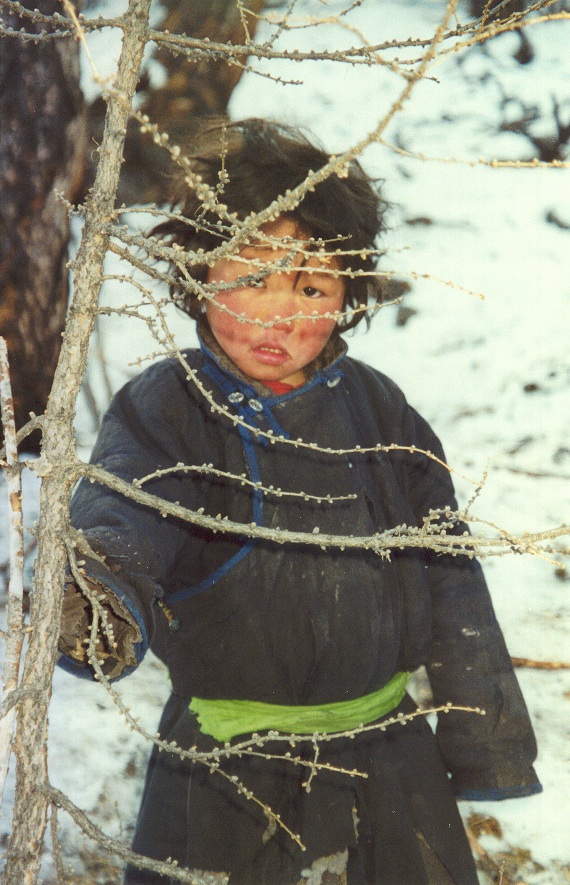
Tsaatan Girl (aka Reindeer People) | 2000 | Khövsgöl Aimag | Northern Mongolia

Posted by: Omar C. Garcia | October 17, 2011

Walk Around the World

Jean Béliveau returned home after eleven long years, concluding a remarkable 46-thousand-mile journey around the world — on foot! Seeking to escape the pain of losing his small business, Béliveau decided to run around the world. He set off on his great adventure at 9:00 AM on August 18, 2000, his 45th birthday. Béliveau ran all the way from his Montreal home to Atlanta, Georgia. After arriving in Atlanta, he slowed his pace and decided to walk the rest of the way around the world, a journey that would take him across 64 countries. Pushing a three-wheeled stroller containing a tent, sleeping bag, clothing, and a First Aid kit, Béliveau traveled with little or no money, depending instead on the kindness of those he met along the way to sustain him. And, he turned his pain into purpose by walking to promote peace and non-violence for the children of the world.

Béliveau’s journey is nothing short of remarkable. He walked across crowded urban areas and long stretches of lonely miles, across deserts and mountains, through all types of weather. Along the way he met thousands from among the world’s nations, tribes, peoples, and languages. As a result, Béliveau came home with a better understanding of the folks who share our planet and more determined than ever to be an ambassador for peace. He understands that “we may never have peace but if we take one step forward, and then another” he thinks “we can create a better world together.” Idealistic? Perhaps. But, at the core, I think he is right. Promoting better understanding among the peoples of the world must begin by taking intentional steps toward others so that we must look them in the face and notice the color of their eyes.

I think it’s a good thing that Béliveau decided to walk instead of to run. One of the things I often have to remind myself to do is to walk slowly among the people, just like Jesus. Walking slowly among the people makes it easier for us to develop peripheral compassion and to notice the things that are happening to our right and to our left, in the blurry shadows of our peripheral vision. Walking slowly makes it much easier for us to see those who are hurting or in need and to hear their desperate cries. Only then are we more likely to respond in a compassionate and timely way with the balm of love and encouragement that can make all the difference in a hurting person’s life. I don’t know whether Béliveau is a Christ-follower, but I do believe that Christ-followers can learn from him by walking slowly and intentionally among the people. Consider slowing down a bit in order to notice and to get to know the people in your world.

Posted by: Omar C. Garcia | October 16, 2011

Scratched in Stone

Over the past several years I have been privileged to meet persecuted believers in my travels through the 10/40 Window. These survivors of persecution all share a common trait — specifically a remarkable resolve to cling to their faith in Christ at all costs. One friend in particular was arrested and jailed in Bangladesh on charges that he was sharing his faith among Muslims. When a mutual friend of ours went to see about getting him out of jail, the man refused. “Please do not worry about me,” he said. “I have a wonderful opportunity to share my faith with people who have no option but to listen to me.” A month later, his case was dropped and he was released because too many of the other prisoners were coming to faith in Christ. Upon his release my friend went to visit those he had led to faith in Christ while in jail.

Centuries before my friend was imprisoned in Bangladesh, a young lady named Marie Durand was imprisoned in France on charges of being a Huguenot, a member of the Protestant church in France. The Huguenots were critical of the Catholic Church but enjoyed a measure of security under the tolerant terms of the Edict of Nantes, issued in 1598 by Henry IV. However, in 1685 Louis XIV of France issued the Edict of Fontainbleau, also known as the Revocation of the Edict of Nantes, making it illegal to be a Huguenot. Marie was born in 1715 and grew up in a Protestant home. Her family kept a Bible in a hiding place and secretly practiced their faith. And, in spite of the Edict of Fontainbleau, Marie’s older brother Pierre preached in fields, caves, and homes in defiance of authorities.

In 1730, Marie and her young husband Matthew were arrested and imprisoned on charges of being Huguenots. Marie was offered the opportunity to recant her faith but refused to do so. As a result, she was imprisoned in the Tower of Constance along with thirty other Huguenot women. Her captors offered to release her in exchange for giving up her faith. Again, she refused and instead scratched one word on the stone wall of her prison cell: Resist! Marie chose to stay in prison where she cared for and encouraged the other prisoners who came to love and respect her for her piety and commitment to Christ.

Marie spent the next thirty-eight years of her life imprisoned in the tower. When she was finally released in 1767, she learned that she was the only surviving member of her family and that Matthew, her husband, had also died. Marie returned to her family home where she lived until her death in 1776. Like Marie, the modern-day believers I have met who have suffered persecution all have the same stubborn resolve to resist and to stand firm in their faith. Those of us who live with no threat of physical abuse because of our faith should do no less than live boldly and courageously for Christ. And if the day comes when we too are facing a choice between our faith and fear for our lives, may we remember the single word that Marie scratched on the stone wall of her prison cell: Resist!

« Newer Posts - Older Posts »

Categories