Posted by: Omar C. Garcia | February 20, 2012

What We Leave Behind

Playa Salinitas, El Salvador

Lloyd and Cindy Dunlap have experienced every parent’s worst nightmare — the loss of a child. Two years ago their son Christopher, a medical student, was killed in a catastrophic car accident. At the moment they received the news of their son’s death their lives immediately changed forever. It’s still difficult for them to hold back the tears when they talk about Christopher. Cindy tries to control the tremble in her voice but it’s there, even if ever so slightly. This morning when our team met for our devotional time, Lloyd shared the story of Christopher’s death and how they are dealing with it. We hung on his every word. After Christopher died, his sister found a file on his computer labeled “Life Lessons.” Christopher had never told anyone about this personal project to essentially write his own proverbs. The Dunlap family is so glad to have discovered what Christopher left behind because it has given them deeper insight into his walk with God in the last year of his life. Lloyd has started writing a book about these Life Lessons and how they have impacted their family since Christopher’s death. I want to buy the first copy.

I’m really glad that Lloyd and Cindy are a part of our water well team here in El Salvador. But I’m especially glad that Lloyd shared Christopher’s story because it reminded me that one day we will all die in one way or another and our survivors (or somebody) will look through our stuff to see what we have left behind. Christopher never expected to die at the age of thirty much less consider how what he left behind would touch and encourage his family. Thankfully Christopher left behind something good. His story has reinforced my determination to leave behind something good, something that can bless my survivors and those who knew me. Each of us can leave behind notes and letters and stories and lessons for those who survive us. As I have been reminded by listening to the Dunlap’s story, even little things can take on a huge significance for others after we die, helping them to cope and to find a new normal that is comforting because it helps them to hold on to our memory.

We had a full day of drilling and teaching today. As I stood under a spray of water while operating the drilling machine, I thought about what we will leave behind in the village of Las Tablas when we return home at the end of the week. I am confident that we will leave more than a well that will provide clean water for the families in this small community. We will also leave an imprint of love and goodwill in the hearts of the recipients. I know that in the future our names and faces will fade in the memories of the people we have met here and that’s ok. And I know that one day this water well will become just an ordinary part of normal life for the people here. The new will wear off. And, that’s ok too. But perhaps one day a child or someone in this village will go to the well to fetch water and pause to give thanks to God for what we left behind in this village — a source of clean water provided in the name of Jesus who is the giver of the kind of water that can become in them “a spring of water welling up to eternal life” (Jn. 4:14). That is a good thing to leave behind!

Posted by: Omar C. Garcia | February 19, 2012

Jesus, El Salvador

Playa Salinitas, El Salvador

I am happy to be back in El Salvador. This small Central American nation is tightly wedged against the Pacific by neighboring Guatemala and Honduras. The Spanish conquistador Pedro de Alvarado is credited with naming the region Provincia De Nuestro Señor Jesus Cristo, El Salvador Del Mundo — translated “Province of our Lord Jesus Christ, the Savior of the World.” The name of the country was later abbreviated to El Salvador or “The Savior.” The country remained under Spanish control until 1821 when it declared its independence from Spain. El Salvador is a beautiful country and its people are among the friendliest I have ever met on my travels around the globe.

Our team of volunteers from Kingsland Baptist Church is here to drill a water well in cooperation with Living Water International. This will be the fifth water well we have sponsored and helped to drill. We will leave early in the morning for the village of Las Tablas, a community of 25 families in need of clean water. As I write this post, our hygiene training team is preparing for their first day of teaching the women and children in the village about how germs are spread and other health-related topics that will help them to adopt practices that can lead to healthier living. Our team will also teach the women how to use, care for, and maintain their new water well. The location of this well will help these villagers to spend less time fetching water, time that they can reinvest in their families.

Soon after we arrived, several of us walked to the Pacific Ocean, less than fifty yards from where we are staying this week. I love this particular location because there is a statue of Christ on a jetty of volcanic rock made smooth by the constant motion of the waves. Christ stands looking back toward the mainland with His arms extended. As I stood at that spot and looked back toward El Salvador, I could not help but reflect on the fact that Jesus loves the nations and so should we. And I thought it appropriate that Jesus stood above the breakers. Waves are often used as a metaphor for the stuff of life that can beat us down. That statue of Jesus standing above the waves is a reminder that He cares. The inscription on the plaque at the base of this statue reads: “y camino sobre las aguas para salvarnos…” which translated means, “and He walked on the surface of the waters to save us.” And indeed He does.

This week our team will be the hands and feet of Jesus among the people of Las Tablas. We will extend our arms to embrace them and to love them in the name of Jesus, El Salvador. We will spend the morning visiting in their homes and then begin the drilling process after lunch. We will eat our meals in their homes and get to know these families. We hope our presence encourages them and that the well that we drill will bless them for years to come and remind them of Jesus, the One who alone can supply us with living water and quench our deepest thirst.

Posted by: Omar C. Garcia | February 18, 2012

Taking Water for Granted

Water is, perhaps, one of the things we take most for granted every day. That’s because we are accustomed to having unlimited water on demand. We don’t have to carry containers to a well or a river nor do we have to ration water in order to make it last for the day. In just one twenty-four hour period on our planet, more than 200 million hours of women’s time is consumed in collecting water for domestic needs. According to a United Nations Human Development Report, an American taking a five-minute shower uses more water than a typical person in a developing country slum uses in a whole day. So, whether we are taking a hot shower, filling up a glass at the tap, or flushing a toilet, we are indeed among the world’s most fortunate people when it comes to having access to clean water.

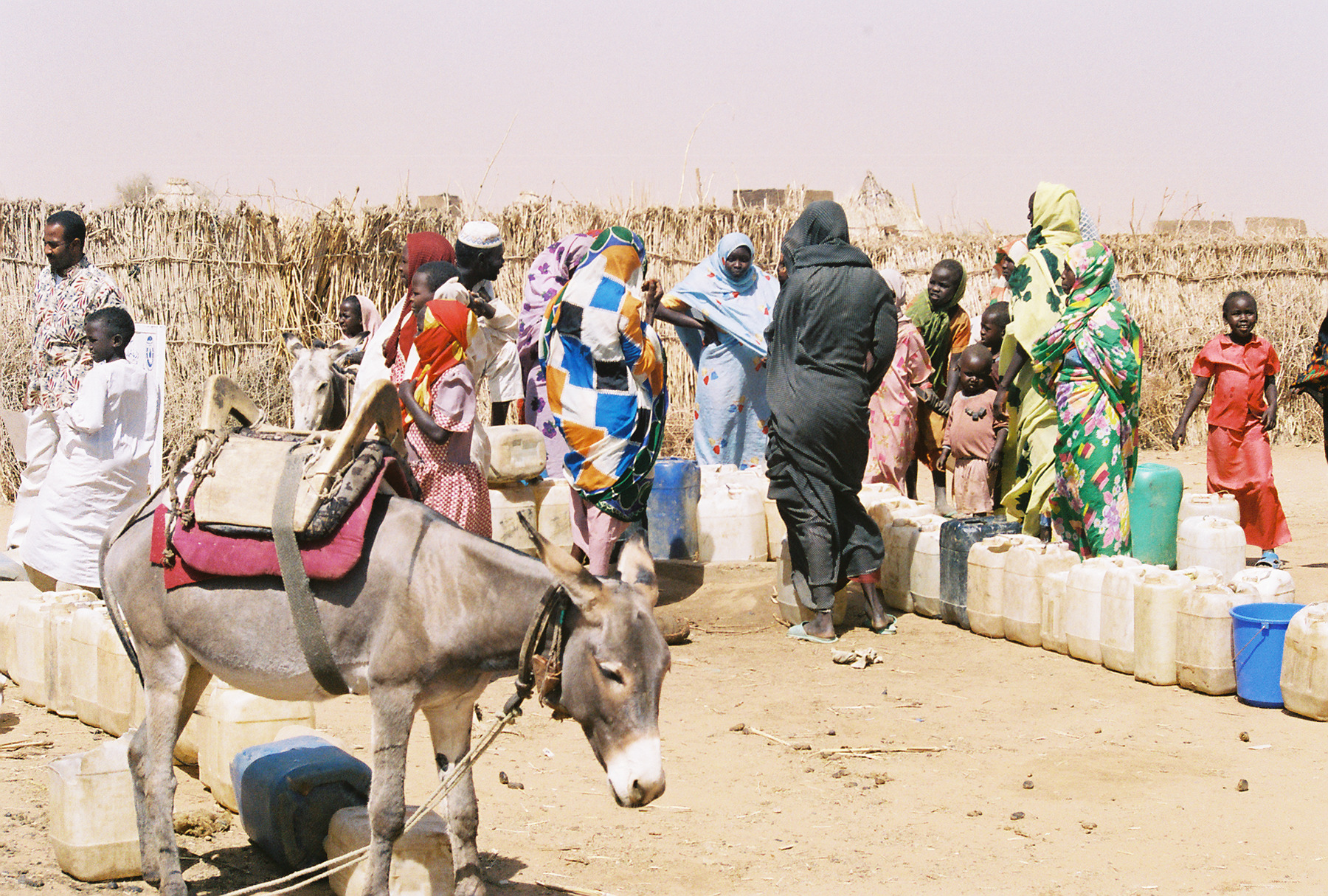
In the winter of 2004, I visited the Abu Shouk and Zamzam camps for internally displaced peoples in Darfur, Sudan. The triple-digit heat there is the worst I have ever experienced. No relief day or night. It was like living in an oven. One of my most vivid memories is of the numbers of women in queue to get water at the few wells that serviced these camps. The women waited long hours in the unrelenting heat in order to fill plastic jugs with water and then carried these heavy containers to their make-shift homes. This is a grueling but necessary daily task in order for the displaced peoples in these camps to survive.

The United Nations guy working in Darfur told our team that diarrhea was the number one cause of death in the camps. People died because they did not have enough water to rehydrate. The second leading cause of death was man-made malaria. Water stored in open containers became a breeding ground for mosquitoes. As late as two years ago, reports that I read indicated that a child died every 15 seconds from a water-related disease. Today, a child dies every 20 seconds from a water-related disease. That is still a shocking statistic. The last thing any of us would expect is to lose a child to diarrhea or some other water-related disease. Our kids will never be among the 24,000 kids under the age of 5 that die every day from causes like diarrhea contracted from unclean water. This year, our missions ministry has funded the drilling of a water well in Darfur in cooperation with my friend Dr. Jerry Squyres, founder of Innovative Humanitarian Solutions. This investment will result in lives saved.

Tomorrow, I will leave for El Salvador with the first of this year’s three water well drilling teams from Kingsland. Our missions ministry funds these wells and mobilizes volunteers to drill them in cooperation with Living Water International. When we started this initiative a couple of years ago, I asked my friend and Kingsland member Jim Coleman to serve as our missions ministry’s point man for our partnership with Living Water International. Jim agreed to take on this responsibility and continues to do an excellent job of training and leading our teams. I’m thankful for the opportunity for us to serve together again in El Salvador. I will blog about our adventures in El Salvador this week as I have opportunity. Thanks in advance for your prayers. And remember to give thanks for every drop of water you enjoy.

• Read more of my posts about our previous trips with Living Water International.

Posted by: Omar C. Garcia | February 16, 2012

On Uncomfortableness

My youngest daughter Gina currently lives in Malaysia where she teaches English to students from throughout Southeast and East Asia. She took a year off from college to go abroad in order to make connections for the kingdom. As a parent, I have never been more thankful for Skype. Gina and I Skype every morning and she visits with Cheryl via Skype in the evenings. As Gina and I were chatting yesterday morning, she said something that caught my attention and led to deeper discussion. She told me that she is trying to live each day in a state of uncomfortableness. Uncomfortableness can be defined as the willingness to embrace challenges and situations that will stretch us and cause us to grow in new ways but, more importantly, that will also help us to make greater contributions to kingdom causes. It is essentially the state of doing whatever it takes in order to advance a cause bigger than oneself.

Uncomfortableness flies in the face of what most people value. We are naturally oriented toward seeking comfort and security and tend to feather our nests accordingly. It is probably safe to say that most of what we earn and spend is invested in hedging against anything uncomfortable, unsure, unpleasant, and unsafe. However, these are things that matter little in regard to the kingdom of God. I have actually met people over the years who have made decisions about whether or not to participate in a short-term initiative based on the kind of toilets they will have to use on the field. That’s the kind of thing that puts the accent on comfort rather than on the commission to go into all the world with the good news. That’s also the kind of nonsense that A.W. Tozer may have had in mind when he wrote that the kingdom of God never advances at our convenience but rather at our inconvenience.

Gina explained that she was not just talking about physical kinds of discomforts, but also about that uncomfortable feeling that many Christ-followers get when faced with an opportunity to share their faith. She said that part of this personal challenge to embrace uncomfortableness included becoming more intentional about seizing opportunities to verbalize her faith. This is part of what it means to be fully engaged in the game, she said, rather than just cheering from the sidelines. Life is much more comfortable in the stands but much riskier on the field. However, God needs us on the field and in the game because that is where contests are won or lost. And that means that we must be willing to embrace uncomfortableness. We cannot afford to allow either the fear of what’s out there or the warmth of past victories to lull us into the kind of comfort that keeps us off the field. Instead we must see uncomfortableness as a friend that can guide us into arenas where we can experience new growth and deeper maturity. As for me, I too am going to become more intentional about living in a state of uncomfortableness and I intend to stay engaged in the game. After all, life is much more exciting on the field than in the stands.

Posted by: Omar C. Garcia | February 15, 2012

Wordless Wednesday

Getting it done in one load. | 2011 | Poipet, Cambodia

Posted by: Omar C. Garcia | February 13, 2012

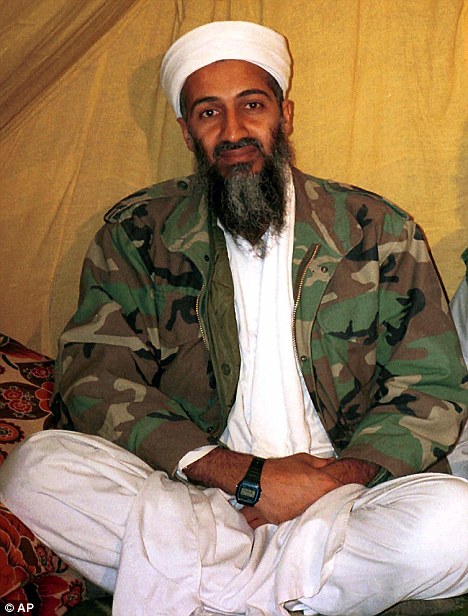
Bin Laden’s Hypocrisy

A story in yesterday’s issue of Britain’s The Sunday Times newspaper reported that Osama bin Laden allegedly urged his children and grandchildren to “go live peacefully in the West and get a university education” and that they “should not follow him down the path to jihad.” According to the news article, Zakaria al-Sadah, the brother of bin Laden’s Yemeni-born fifth wife, bin Laden told his progeny, “You have to study, live in peace and don’t do what I am doing or what I have done.” Wow! If this is indeed true then it is akin to Darwin telling his kids to go study creationism. And, if it is true, then bin Laden has earned himself a permanent place among history’s most despicable hypocrites — those whose crest displays the shameful motto: “Do as I say, not as I do.”

These alleged remarks by bin Laden also cast a sad light on the fact that those who recruit kids to do acts of jihad tend to recruit other people’s kids and not their own. Last year Ben Farmer, the Afghanistan Correspondent for The Daily Telegraph and The Sunday Telegraph, reported that the Taliban was recruiting boys as young as nine-years-old to serve as suicide bombers. Farmer wrote that young kids “are considered easier to recruit and more gullible than adults.” In describing how recruiters had manipulated young boys, Farmer wrote, “The boys had been given amulets containing verses from the Koran which they were told would protect them from the explosion. On their return, they would be hailed as heroes and their parents would be guaranteed entry into heaven.” It’s not likely that any of these recruiters would have told these same lies to their own kids.

Children are trusting by nature and generally tend to believe what adults tell them. Farmer noted in his article that “child bombers are often lied to, brainwashed, or coerced.” Jesus warned adults about misusing their influence and causing others to stumble. He taught that leading others astray, especially children, is a very serious offense with severe consequences — so severe, in fact, that it would be better to have a millstone tied around one’s neck and to be thrown into the sea than for a person to face God after causing a little one to stumble (Luke 17:1-2).

Did bin Laden regret the path he had chosen and was he indeed worried that his own children might follow his example? Did he really believe that his children “should not follow him down the path to jihad” as reported by his brother-in-law? If so, then he should have issued one of his video oratories to warn not just his own kids, but other children as well. But alas, it appears that he only sounded the warning within the hearing of his own household. That not only makes him a hypocrite, it makes him a villainous hypocrite. But, perhaps this latest news about the late al-Qaeda terrorist will serve as a cautionary tale that will save some poor child from being duped into unwittingly participating in another senseless act of violence. One can only hope.

Posted by: Omar C. Garcia | February 10, 2012

Paddling Makes Perfect

In his best-selling book entitled Outliers: The Story of Success, author Malcolm Gladwell examines the factors that contribute to success. Gladwell argues that success in any given field has less to do with talent and is instead the product of practice — lots of it. He makes a compelling case that highly successful people have invested no less than 10,000-hours of practice in their respective fields. At 20 hours a week, that translates into ten years of practicing specific tasks. This is a good reminder that success does not happen overnight but instead over time. Those who master a particular talent or rise to the top of their respective profession “don’t just work harder or even much harder than everyone else.” According to Gladwell, “They work much, much harder.”

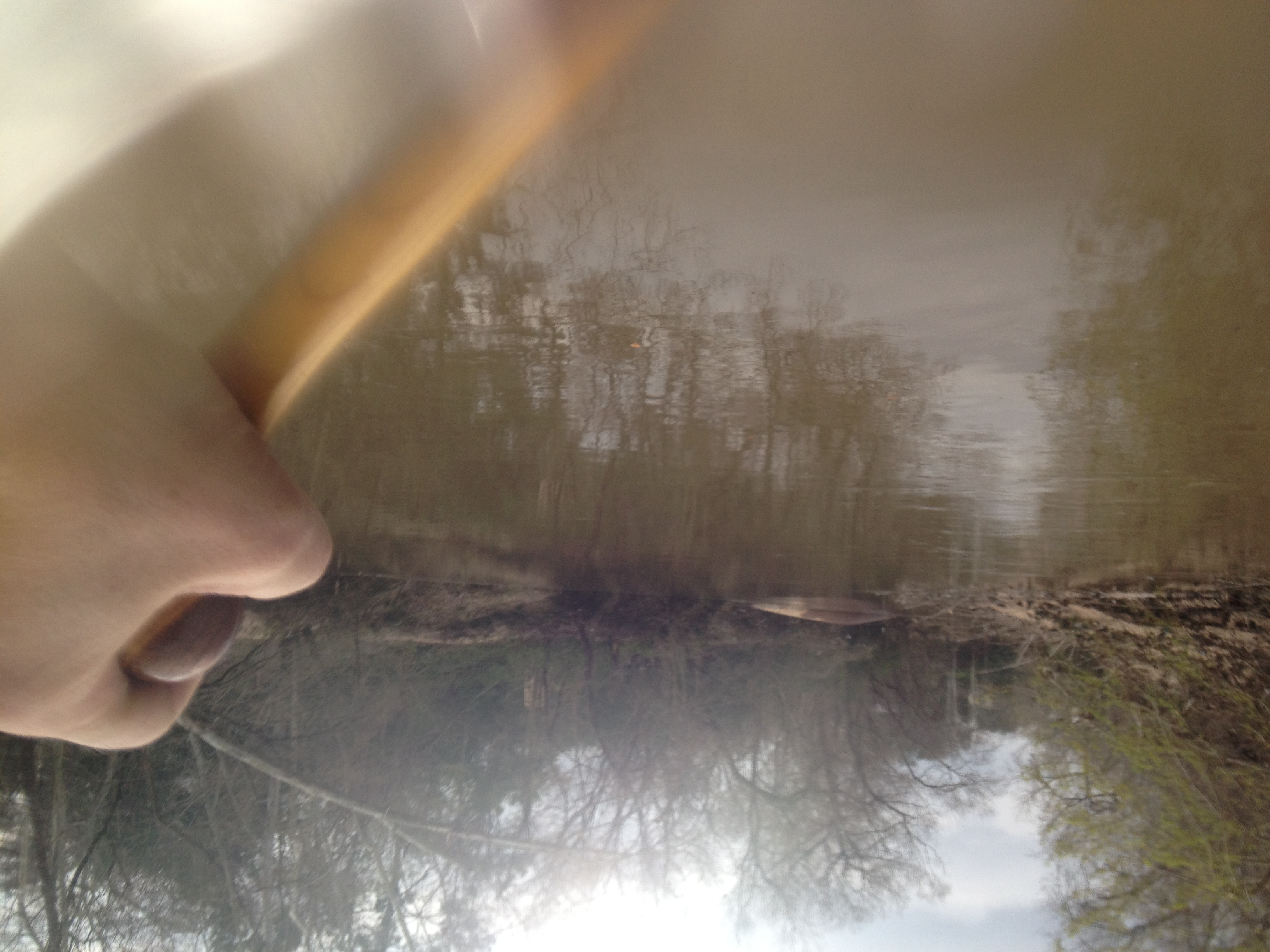
Paddling down Houston’s Buffalo Bayou.

With that said, I had Gladwell on the brain today as Jonathan took me to Buffalo Bayou to do another training run in preparation for the grueling 260-mile Texas Water Safari in June, billed as the world’s toughest canoe race. After completing the Texas Winter 100K Race last month, it was clear that I am in desperate need of practice — lots of it. So, Jonathan commandeered my calendar and filled in the white space with practice runs. But, these are not just “let’s paddle down the river” recreational kind of outings. These are practice runs with deliberate and clear objectives and goals, like helping me to refine my paddling technique and tweaking the way we paddle as a team. On our next practice run Jonathan wants for us to switch places in the boat so that I can have a better understanding of how to paddle and steer the canoe from the stern. I like that idea.

I am glad to have our training dates on my calendar. I need, we need, these regular training times in order to become a more efficient tandem team. We plan to do one of our training sessions on the San Marcos River under the tutelage of one of the best paddling instructors in the state. I am excited about that. Training is not necessarily easy and not always fun, but it’s part of the price you have to pay in order to get better at something. So, little by little, I will chip away at Gladwell’s 10,000-hour rule and might actually become a better paddler before I am too old to continue getting into a canoe. Someone who has followed our canoeing adventures on my blog recently commented to me, “You sure must love canoeing.” I smiled and replied, “Not really, but I do love my son and that’s why I get into a canoe.” And that’s also why I am committed to our training regimen.

I honestly do want to get better at paddling a canoe because, as Jonathan reminds me, how we paddle impacts both of us. I’m glad that Jonathan introduced our family to the world of marathon canoe racing because it has brought us all together in a new way. My oldest daughter Niki serves as our team captain and does an amazing job of handling logistical support at checkpoints along the race routes. My wife Cheryl and youngest daughter Gina love cheering us on. Even our dog Biscuit enjoys our canoe outings and always barks out a little encouragement, I think. So, as much as I am enjoying this new adventure, the best thing about it is doing it as a family. I like the thought of us spending 10,000-hours together over the coming years. That makes all of the practice and all of the races worth the effort.

Posted by: Omar C. Garcia | February 9, 2012

Stop Waiting to Talk

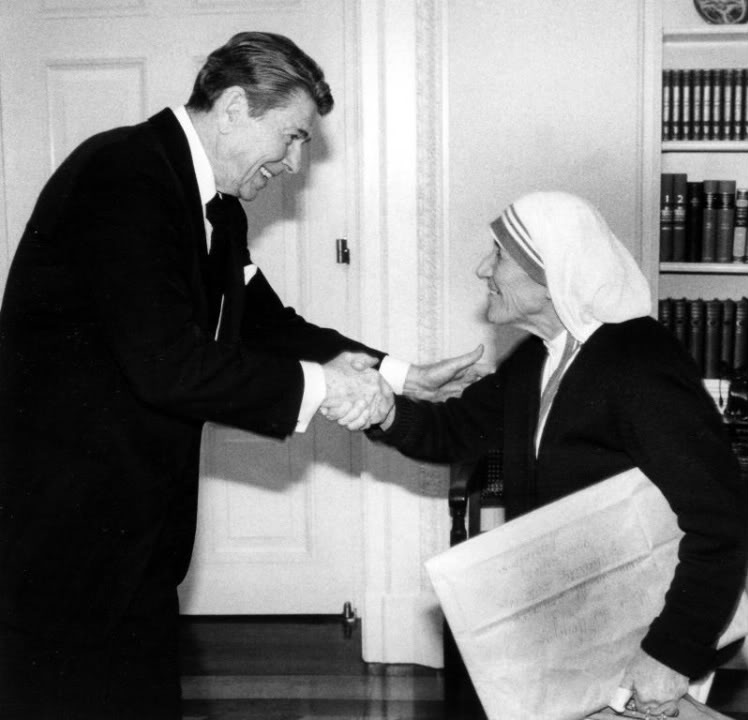
In 1985, Mother Teresa spent an hour meeting with President Ronald Reagan and his wife Nancy at the White House. After their meeting, reporters asked Reagan what he had said to Mother Teresa. Reagan replied, “When you are with Mother Teresa, you listen.” I like that! Reagan understood the importance of listening, especially when in the presence of the little nun who had captured the imagination of the world because of her love and care for the least of these. He showed great respect to Mother Teresa by simply listening to what she had to say.

Listening is something of a lost art — something that is not easy to do. Most people would probably say that listening is the opposite of talking. I wish that were true but I don’t think it is. When we have conversations with others, if we are honest, we are not listening as much as we are waiting to talk. In reality, waiting to talk is really the opposite of talking for most people.

This week I watched an episode of The Voice, the reality singing competition on NBC. What I found interesting was the format they used for selecting the contestants — something called “The Blind Audition.” With their backs turned to the contestants, the four judges listened to the singers without the benefit of any visual references or clues. This kind of format forced the judges to tune in to subtleties in voices that can otherwise be easily missed. That’s just one way to improve listening skills.

Another way to improve our listening skills is by realizing that listening is something that goes beyond words or the sound of a person’s voice. We can become better listeners by paying attention to body language and movements that can give us insight into the other person’s emotional state. Body language gives context to spoken words and can give deeper meaning to those words. We can easily miss those clues if we are more focused on what we are going to say next rather than on what the other person is saying and how they are saying it.

One way to acknowledge that we are actively listening is by leaning in or toward the person who is speaking. That’s a great way to show them that they have our undivided attention. And, instead of immediately seizing an opportunity to get our two cents in, try waiting a few seconds. Even a few seconds of silence are like building white space into the conversation and allows you to breath and to think before replying. And, if necessary, summarize what you heard the other person say and repeat it back to them. This reinforces both listening and understanding and helps to ensure that you have indeed listened.

We can improve our listening skills if we will make it a point to stop waiting to talk while others are talking. Good listening is hard work but well worth the effort because listening gives us deeper insight into the lives of the people around us. And, listening is also a great way to affirm the value of others. There are not many things that can make others feel that they are important as when we take a genuine interest in them and actively listen to what they have to say. So, stop waiting to talk and start listening. You’ll be glad you did, and so will others.

Posted by: Omar C. Garcia | February 8, 2012

Wordless Wednesday

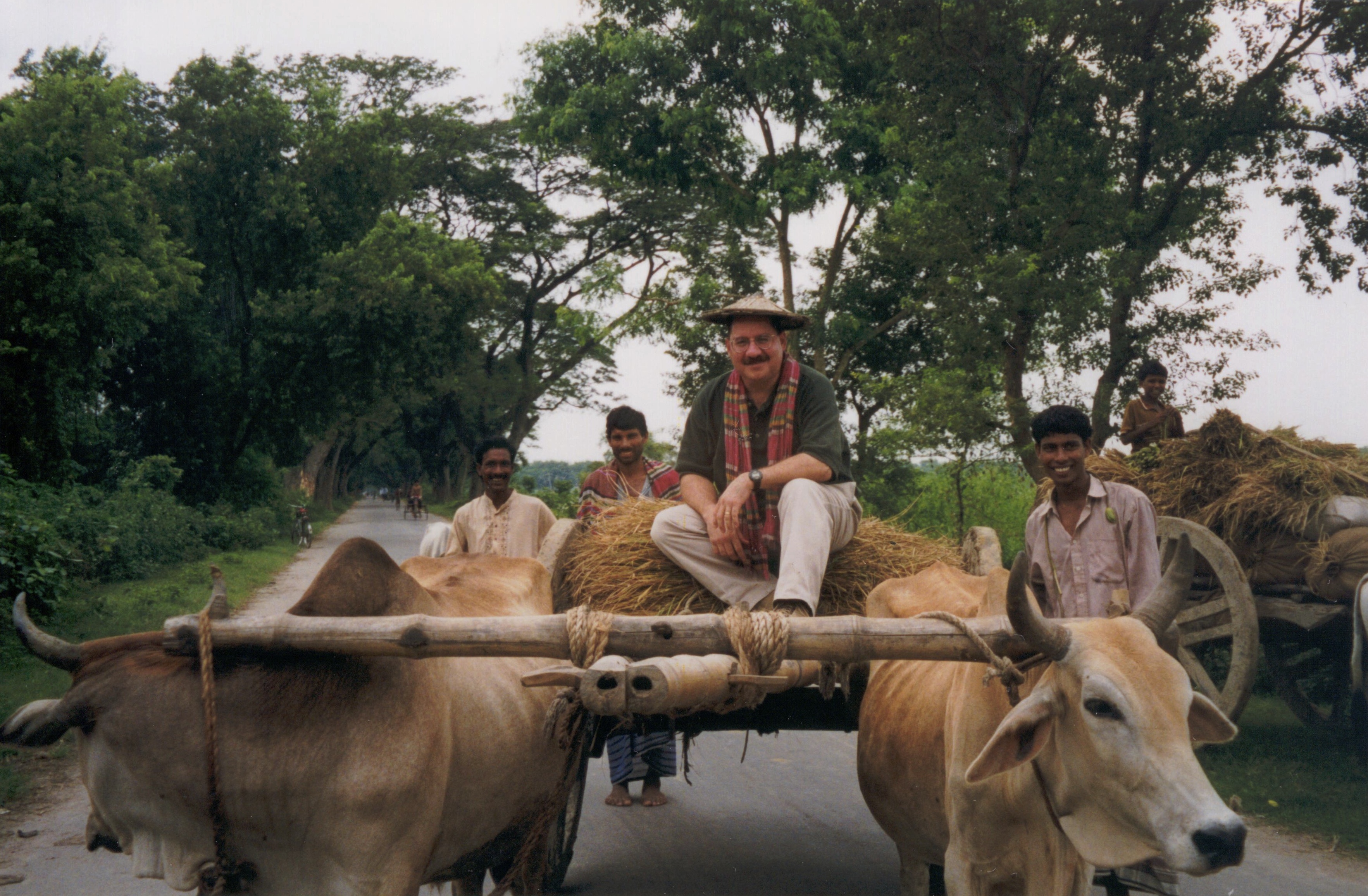
Somewhere between villages. | 1999 | Bangladesh

Posted by: Omar C. Garcia | February 6, 2012

The Grubs and the Grass

As a homeowner in the great state of Texas, I have learned the secrets of maintaining a green lawn by using the right seasonal fertilizers and treatments to kill weeds and pesky bugs. One year, in my younger days, I was having a problem with grubs and bugs that were feasting on my beautiful Saint Augustine grass. So, I purchased the prescribed poison to kill the little invaders but then made a fatal (pardon the pun) error. I reasoned that if I doubled the prescribed formula then I would more likely guarantee the death of the little critters feasting on my grass. I was right! However, I not only killed the grubs, I also killed what remained of my beautiful lawn. By over-treating the problem I had unwittingly orchestrated the death of every single remaining blade of grass on my lawn. I learned the hard way that more is not necessarily better when it comes to fertilizers and lawn treatments.

More is not necessarily a good thing in other areas as well, especially thinking. Now, don’t get me wrong. I am not suggesting that it is a bad thing to think about things. I am referring specifically to the process of over-thinking or over-analyzing things. While some folks don’t spend nearly as much time as they should thinking things through, others tend to over-think or over-analyze everything. Over-thinkers have an aptitude for introducing unnecessary worry into almost any process. They can make easy things hard, simple things complex, and painless things painful by introducing scenarios that are never likely to happen. This can lead to frustration and stagnation or what some have called analysis paralysis. Over-thinking is a form of fear and worry that can unwittingly lead us to sabotage great plans and dreams — or lead us to snatch defeat from the jaws of victory.

When it comes to thinking, we need healthy balance. We must learn to guard against acting too quickly because we did not think things through. And, we must learn to guard against acting too slowly or not at all because of over-thinking a matter. Over-thinking is a form of eisegesis or subjectively reading into a matter what is not there. The bottom line is that our plans will never be perfect or without the risk of failure. No amount of over-thinking or over-analyzing will change that or eliminate all the risks. Sometimes, regardless of the best laid plans of mice and men, things will go wrong. That’s life! The path of progress is messy and seldom straight. Sometimes we end up killing both the grubs and the grass. When that happens, learn from it and move on. Don’t allow over-thinking to overcome you.

« Newer Posts - Older Posts »

Categories