Posted by: Omar C. Garcia | August 21, 2012

Among Difference Makers

Grand Rapids, Michigan

There are not many things that I enjoy more than being among difference makers — ordinary individuals who have identified and turned their passion for God’s purposes into a pursuit for the sake of His kingdom. This week I am among difference makers at the Global Leaders’ Life Summit hosted by Life International in Grand Rapids. Life International is an evangelical Christian organization that multiplies healthy, Christ-centered, life-giving ministries wherever abortion is provided worldwide. The primary purpose of these ministries is to see people come to new life in Christ and pre-born lives saved from abortion.

Kurt Dillinger, the President of Life International, is a dear friend whose vision for life is impacting the global mission field created by abortion. However, Kurt’s vision is not limited to saving the lives of the pre-born, it also extends to addressing other violations of the sanctity of human life. To that end, Kurt and Life International invited their partners from around the globe to Grand Rapids in order to dialogue and to develop a clear strategy to effectively address the unprecedented attack on human life in our world today. This morning, I had the privilege of speaking to those in attendance during our worship time. But, for me, the best part of the day was listening and learning about what each of the participants are doing to stand for life around the globe.

As each of the participants shared their story, I noted several common denominators among them. These are just a few of the things that these difference makers have in common:

They see clearly. At some point each of them identified ways in which human life is devalued in their respective contexts.

They chose to act decisively. They did not wait for someone else to address the problems they identified. They did not waste time whining or complaining. Instead, they prayerfully considered what they could do to make a difference. Anne Frank wrote, “How wonderful it is that nobody need wait a single moment before starting to improve the world.”

They understand that their contribution matters. It was apparent to me as I listened that each of the participants understands that they cannot do everything but that what they have chosen to do really matters.

They are not easily discouraged. Each of the folks in the room has encountered brick walls and obstacles. Instead of giving up, they have found creative ways to keep going because they are motivated by a greater purpose.

They celebrate their victories and evaluate their defeats. For those who champion the sanctity of human life, every small victory counts. And, every defeat or setback is an opportunity to find a better way through.

What really impressed me was the range of issues that the participants are addressing. Each of them have taken ownership of a small slice of the sanctity of human life pie, but when you put all of those slices together, it’s quite an impressive looking pie. Here are just some of the issues that the difference makers in attendance are addressing:

• Abortion
• Civil War
• Genocide
• Bioethical Issues
• Marginalization and Abuse of the Elderly
• Corruption
• Prostitution
• Sex Trafficking
• Murder
• Honor Killings
• Gendercide | Gender-Selective Abortions
• Black Market Organ Donations
• Abuse of Children
• Caste System Abuses
• The Plight of the Poor, Widows, and Orphans

One thing is certain, each of the participants have forsaken comfort and security in order to make a difference. They will never get rich by what they are doing but they are enriched because of what they are doing. These difference makers would not have it any other way.

Posted by: Omar C. Garcia | August 20, 2012

The Fragrance of Christ

Houston, Texas en route to Grand Rapids, Michigan

Like most people, I like the smell of pleasing fragrances — everything from perfumes to good Texas barbecue. When I was in high school, I always dreaded sitting next to an odd kid named James because he had body odor that could peel paint. I was never unkind to him, I just tried to keep a reasonable distance from him so that I would live to graduate. I soon realized that I wasn’t the only one who had to hold his breath around James. Others who struggled with his body odor poked fun at him and laughed behind his back. One day I could not stand it any longer so I mustered up the courage to talk to James. I still remember our conversation. “Uh, James. I don’t know if you are aware of this or not,” then I paused and deeply sighed. “James,” I continued, “I don’t want to hurt your feelings but you have really … bad … body … odor!”

James stared back at me, a bit stunned by my words, and replied, “Really? Is it that bad?” I nodded my head and said, “Yes, James. It’s really that bad.” As we continued our conversation I discovered that James did not use deodorant because he was allergic to it. So, the only thing I could think of was to suggest that he smother himself in baby powder to mitigate the toxic cloud that seemed to hover around him. He smiled and thanked me. “I never thought about using powder,” he innocently said. James took my simple suggestion and things got much better. He not only smelled nicer but we became friends. In fact, he once told me that I was his only friend. Other than the occasional times I spent with him, James was pretty much a loner.

I am on my way to Grand Rapids and, for some reason, God brought James to mind as I changed planes at DFW Airport. Having thoughts of James pop into my head as I walked through a busy airport this morning is about as random as it gets. I lost touch with James after we graduated and later heard from a friend that he had died. As I reflected on James, I recalled a quote by Ralph Waldo Emerson that I read last week: “You cannot do a kindness too soon, for you never know how soon it will be too late.” The very thing I did not want to do in high school — to tell a guy that he had bad body odor — was perceived as a kindness by James. It was that simple act that unwittingly opened the door to an unexpected friendship with a guy I otherwise would likely not have befriended.

Reflecting on James also reminded me of something Mother Teresa often told her Missionaries of Charity: “Let no one ever come to you without leaving better and happier.” Mother Teresa encouraged the sisters in her order to go into the streets to find those who smelled the worst and to spread the sweet fragrance of Christ through unexpected acts of kindness. Each of us have opportunities every day to make things better for others through our kindness and through our words. Sometimes we end up doing something good when we least expect it, as in the case of my talk with James. Looking back on it all, I’m glad that James and I talked and became friends, even if only for a short time before he died. There is a lot of stuff in our world that stinks. That’s why I remain determined to look for opportunities every day to make our world smell a little nicer by spreading the fragrance of Christ. I hope you’ll do the same.

Posted by: Omar C. Garcia | August 18, 2012

My Love of Maps

I have loved and collected maps since I was a kid. I tried collecting baseball cards like my friends, but they just did not hold my interest. Maps, on the other hand, fascinated me. While my friends were memorizing stats on the back of baseball cards, I was the nerdy kid memorizing places on maps. Fortunately, I had access to lots of maps when I was growing up. My grandfather had a map of the United States on the wall of his home office as well as years of National Geographic magazines stuffed with awesome maps. In our home, I often perused the atlas that my Dad had used while serving overseas in the military. Mom and Dad also bought me a globe of the earth and a smaller one of the moon. And, as a member of Commander Whitehall’s Explorers Club in elementary school, I received a different map in the mail every month.

My map collection really took off when I learned that I could get free maps by writing to Chambers of Commerce around the country. I wrote lots of letters and received lots of maps completely free of charge. I reserved the top drawer of the wide dresser in my room as the place to keep my maps. When I joined the Boy Scouts I was exposed to topographical maps and started adding these to my collection. On a few occasions, I have drawn my own maps in my journals while traveling through remote regions in places like Bangladesh and Pakistan. And, I still purchase maps. Although I bought my first GPS before traveling to Darfur in 2005, I still prefer to hold a good map in my hands.

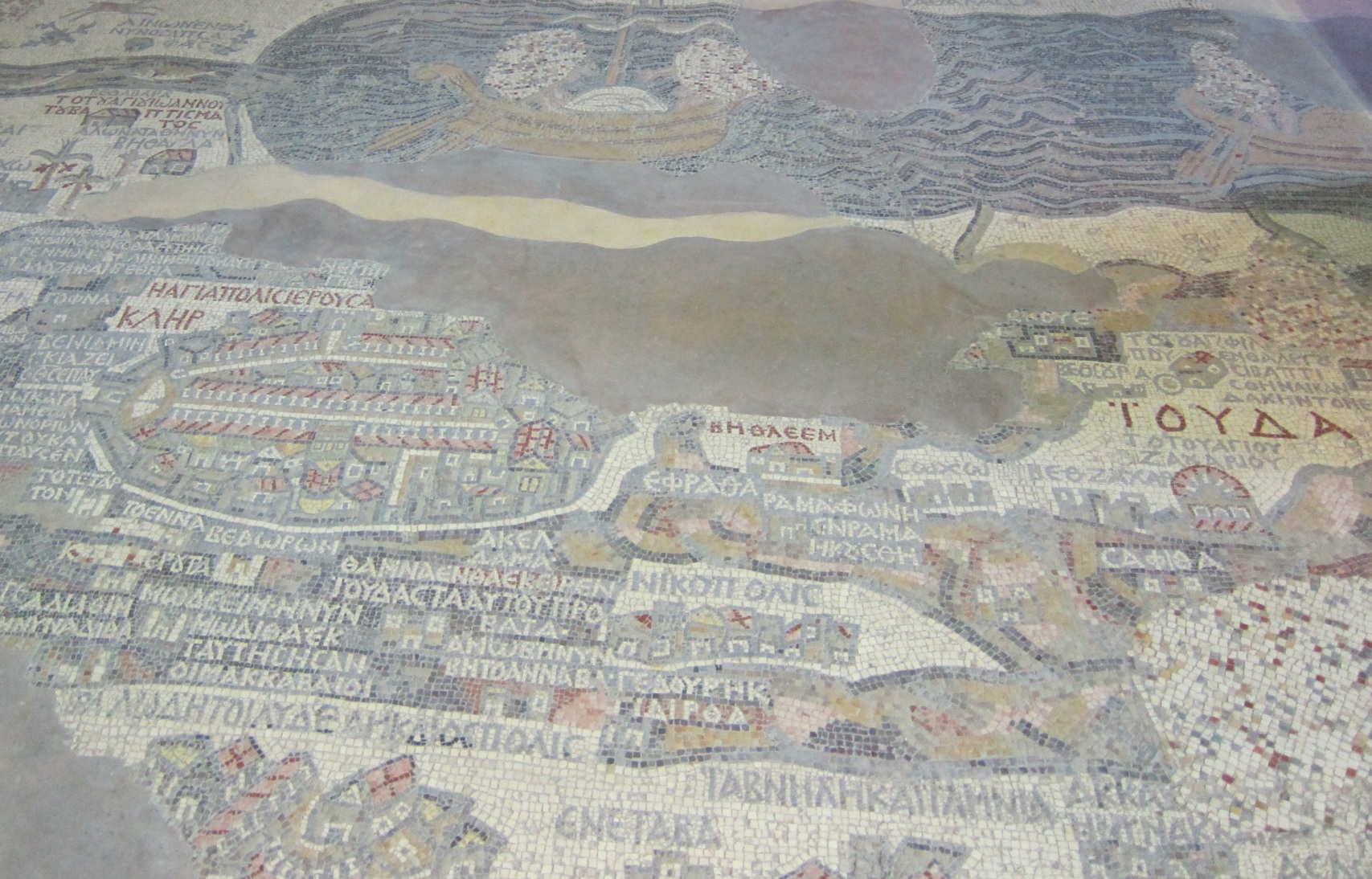
Earlier this year, I visited Madaba, Jordan — known as the City of Mosaics. When my friend Jamal Hashweh, the director of the Global Hope Network, told me that one of the oldest maps in the world was at the Greek Orthodox Basilica of Saint George, I had to go and see it. The map, which dates back to the 6th century AD, is a mosaic made up of more than a million small square-cut stones carefully laid onto the floor of the church. It is regarded as the oldest surviving original cartographical depiction of the Holy Land. What impressed me the most was the care and accuracy that the unknown cartographers used in depicting the Holy Land and Mediterranean world. It’s important that maps be as accurate as possible — something that is much easier to do in our technologically enriched world than it was when the Madaba map-makers laid out their map on the floor of the church one tiny square at a time.

When you think about it, we all owe a debt of gratitude to map-makers. Maps help us to understand how big the world is, how small we are, and the importance of understanding the context in which people live. Maps can also beckon us to go beyond the places that are familiar to us to discover what and who lies beyond the horizon. That’s important if we are to understand the world in which we live and how people are shaped by the particular places on the map that they call home. The next time that you look at a map, remember that our world is still full of interesting places and people waiting to be discovered. Make it a point to visit places both near and far and to meet the people who call those places home. Doing so will make looking at maps even more meaningful.

Posted by: Omar C. Garcia | August 15, 2012

Among the Ngöbe-Buglé

Along the outskirts of Volcán, Panama

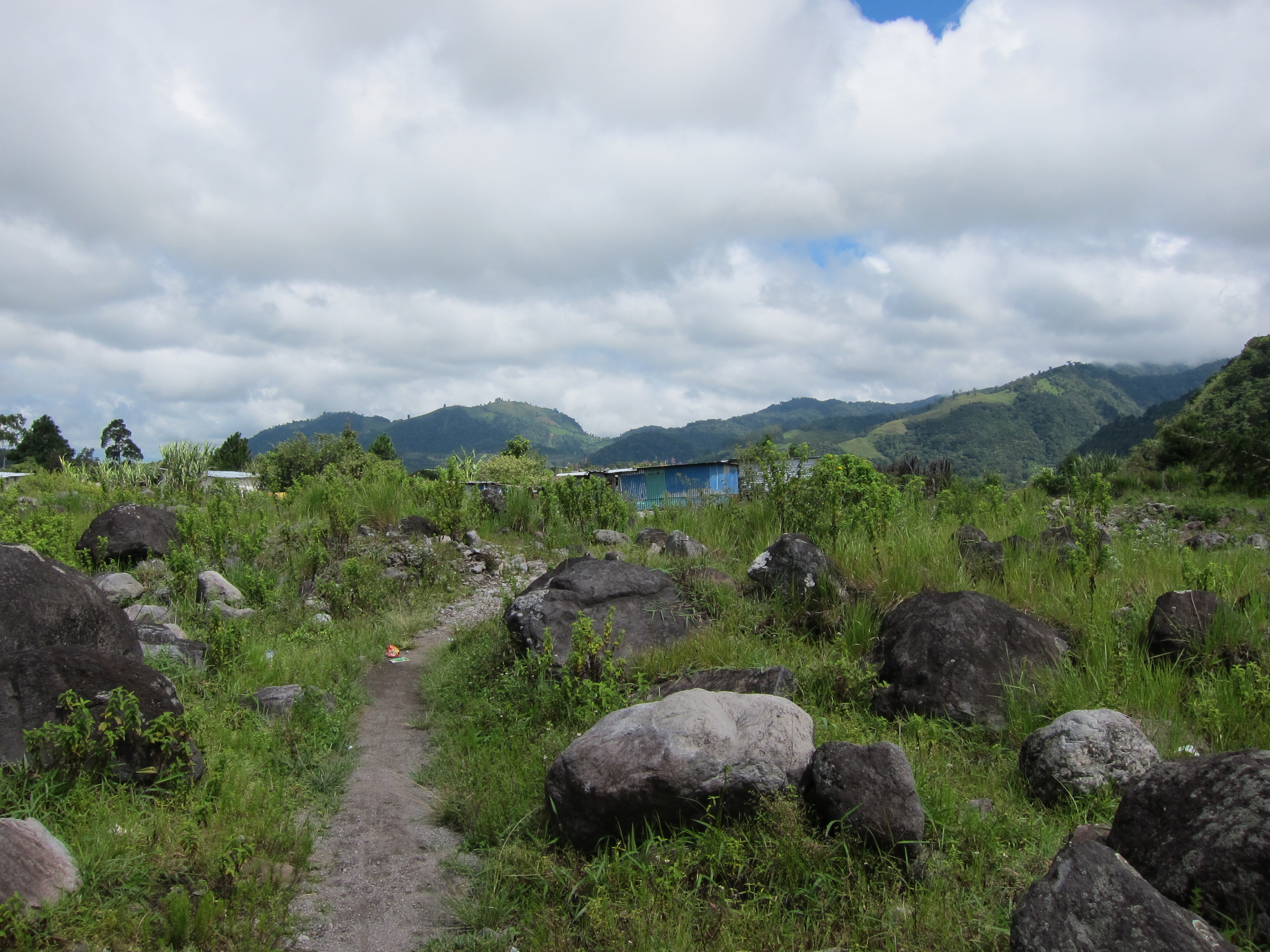
The best way to get to know both people and places is by walking slowly, which is exactly what we did this morning. We parked the car and took a stroll through the ragged outskirts of Volcán — the place that many Ngöbe-Buglé families call home. Of the several dozen native tribes that inhabited Panama when Spanish explorers first set foot here in 1501, only seven remain. Of those seven, the Ngöbe-Buglé are the most populous, numbering almost 200,000. Like the other remaining tribes, the Ngöbe-Buglé are struggling to maintain their cultural identity. For the most part, they continue to live in much the same way as they have throughout the centuries, relying almost exclusively on subsistence agriculture. The Ngöbe-Buglé also maintain their own comarca, an autonomous region much like a reservation.

In recent years, many of the Ngöbe-Buglé have been forced to leave their comarca in an effort to find ways to survive. Hundreds of families have made their way from mountain regions to nearby towns where they live as squatters and work for slave wages. The impression I have after talking to people in the area is that the Ngöbe-Buglé (and the other native peoples) are treated like the Dalits in India. They are regarded as Panama’s lowest caste and treated accordingly. And yet, like any of us, they simply want to survive and to give their children the opportunity for a better life.

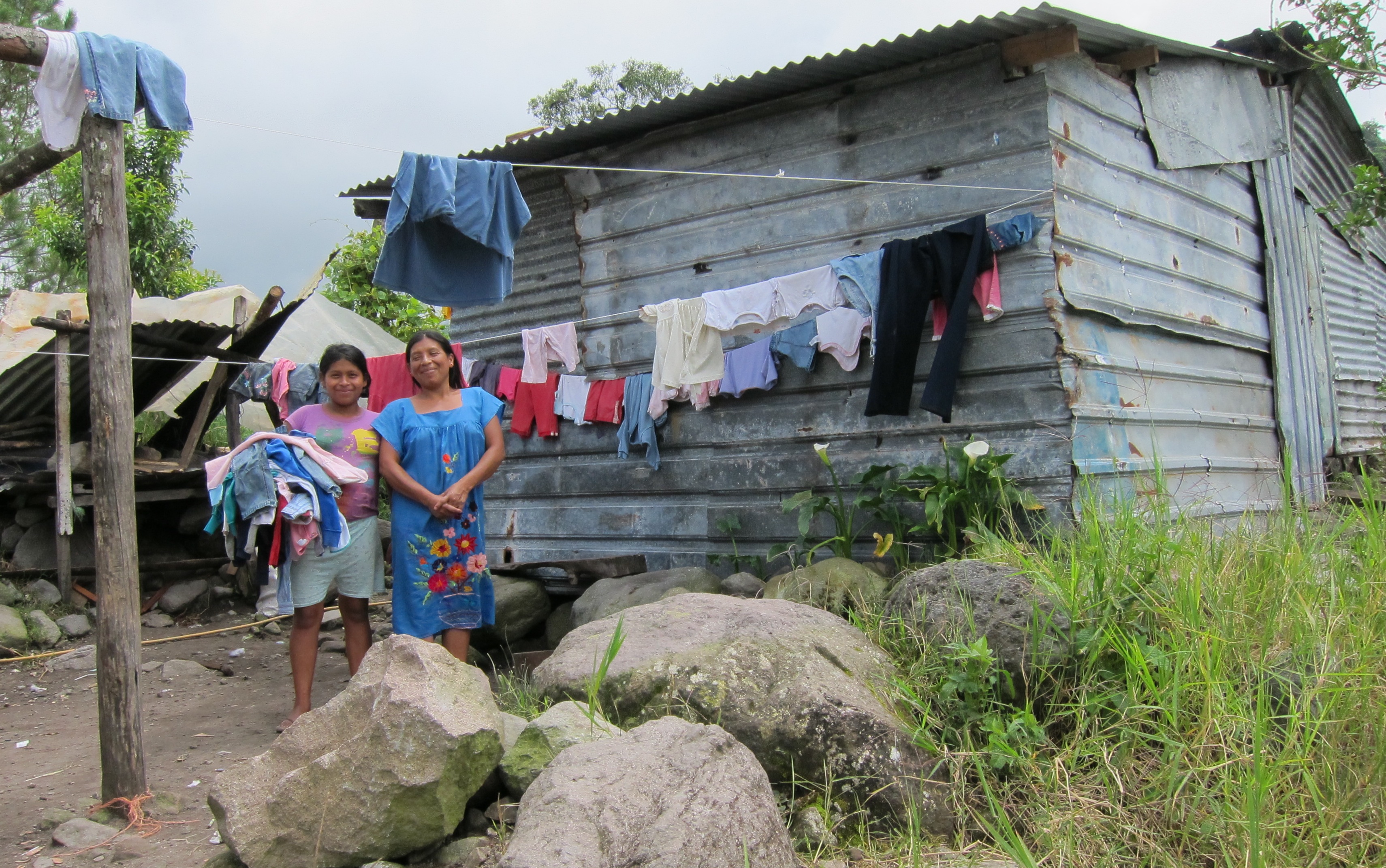
One woman we met today told us that she is working in a local restaurant and trying to save the money to get electricity to her corrugated metal hovel so that her kids can have light to do their schoolwork. She said that she can no longer afford to keep buying candles. To make things even more challenging, her 21 year-old daughter lives with her. This young girl has four children of her own and a fifth on the way. Remember these women the next time you think your life is hard and then pray for them! After visiting with this family I told my friends Jerry and Susan and their Pastor that Kingsland would provide the money for this hard-working mother to get electricity — a mere one-hundred dollars for us but a fortune to her. The local pastor will discreetly work with her to get electricity in the coming days.

My heart especially goes out to the children. Seeing and playing with them reminded me that they are indeed “precious in His sight.” My hope is that we can engage in working with the Ngöbe-Buglé people on future trips to Panama. They deserve the opportunity to hear the story of Jesus and to be affirmed and encouraged that there are no Dalits in the kingdom of God. Today was a good day. I am glad that we took the time to walk slowly among the Ngöbe-Buglé because God once again showed me that the real beauty of Panama is in its people — and that all people deserve to be treated with dignity and respect.

Hiking along the outskirts of Volcán.

Approaching some of the homes of the Ngöbe-Buglé.

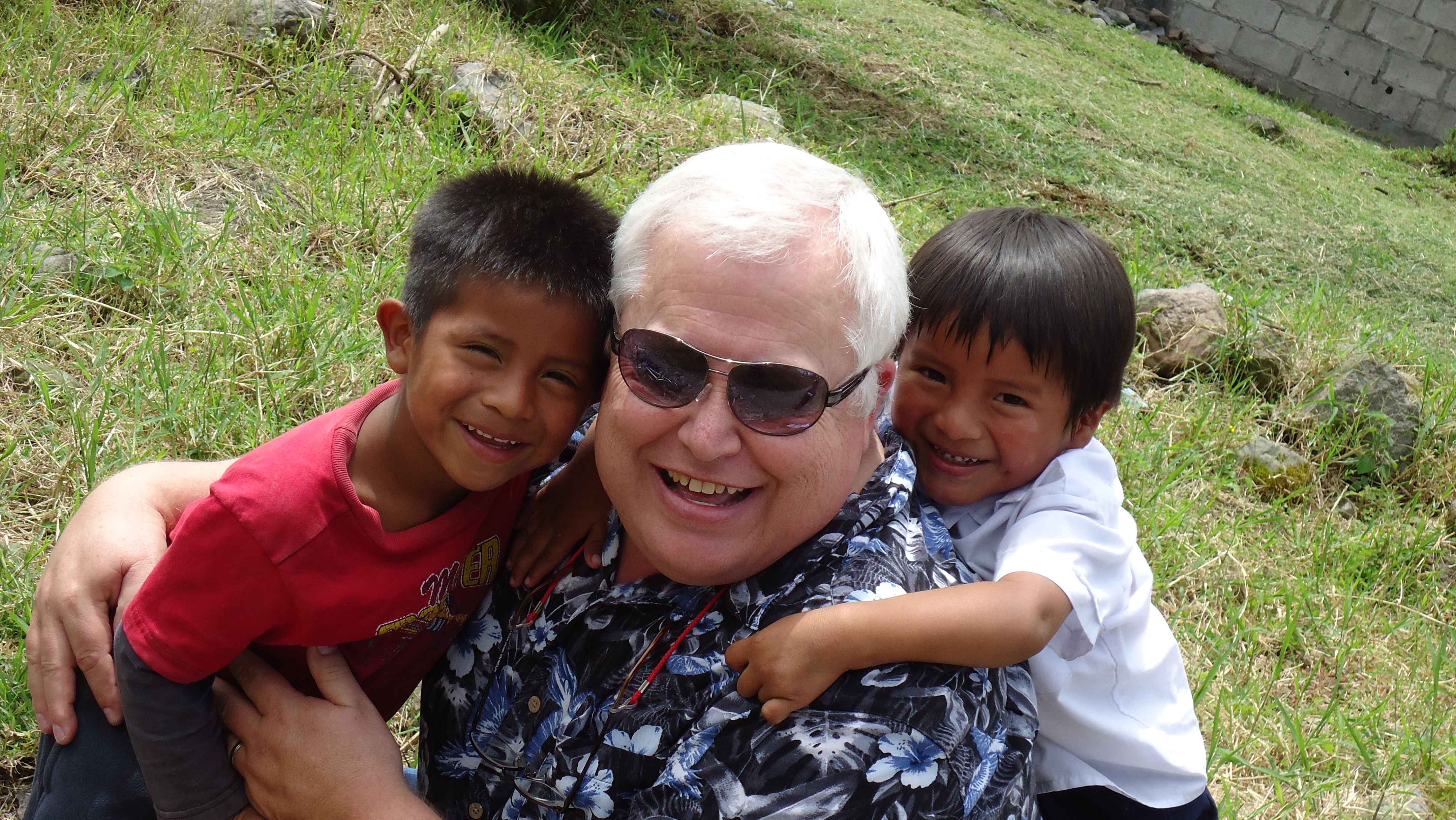
My friend Jerry Smith with Ngöbe-Buglé kids.

One of four children belonging to a 21 year-old mother.

Ngöbe-Buglé daughter (l) and mother (r) outside their home.

Posted by: Omar C. Garcia | August 14, 2012

The Real Beauty of Panama

Volcán, Panama | Chiriquí Province

Panama is unquestionably one of the most beautiful countries I have visited. It’s the rainy season here — and the fruit of each drop shows in the amazing panorama of colorful flowers accented against lush green trees with bromeliad rain-gauges clinging to their trunks. I am staying at a quaint little hotel nestled beneath the shadow of a dormant volcano named Baru, the highest point in the country. In the surrounding mountains, indigenous peoples work on coffee plantations and farms that produce an abundance of crops in the rich volcanic soil. The view outside my hotel room looks like something out of a Thomas Kinkade canvas. It all seems more than a little surreal. This is Panama, a country blessed with more than its share of natural beauty.

The view from my hotel room.

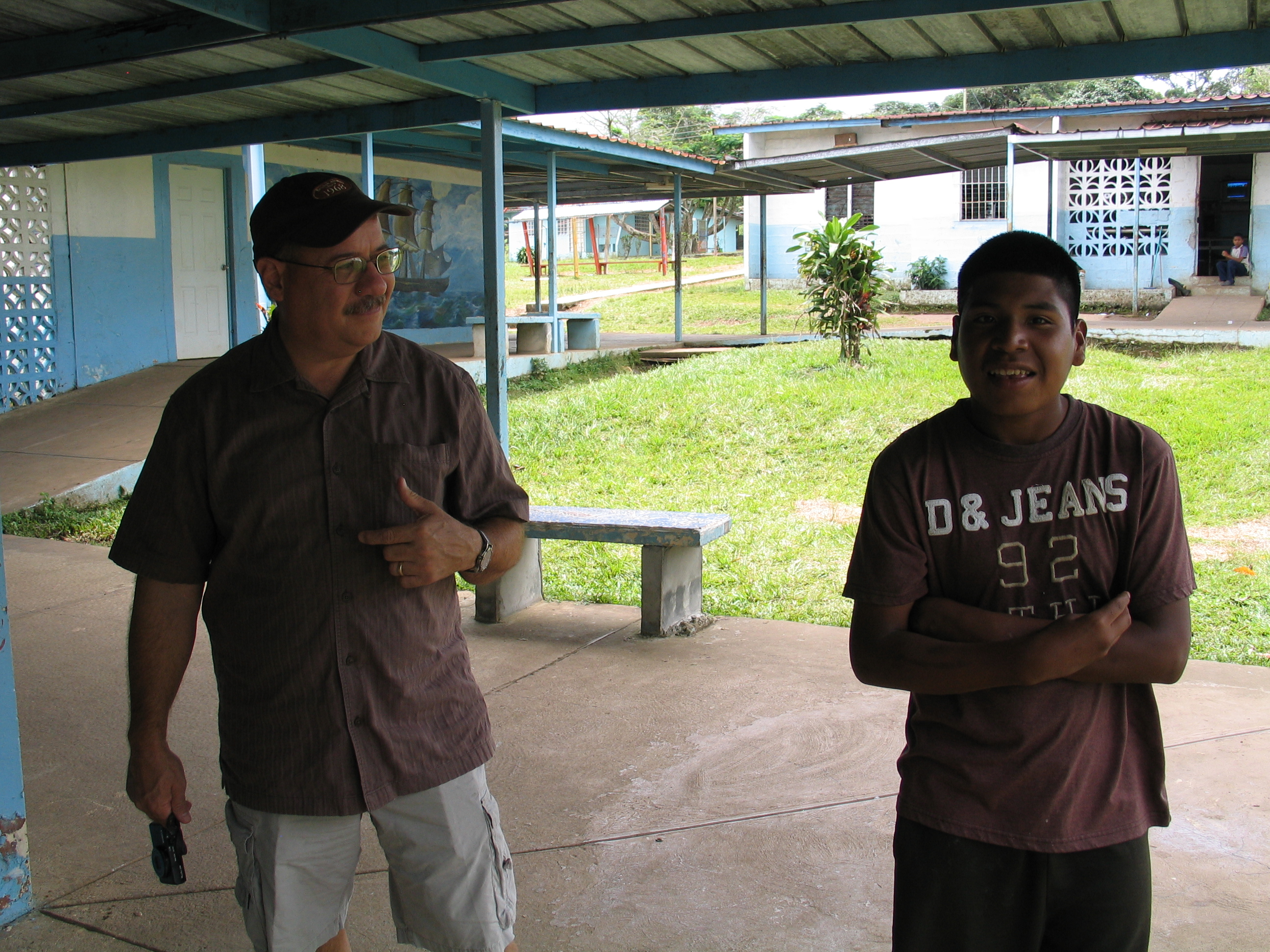
Today, I found an even greater beauty in Panama in the faces of the poor and neglected and those who care for them. This morning, my friends Jerry and Susan and their Pastor introduced me to a man who cares for throw-away kids. These kids are not orphans. They are kids who either escaped or were rescued from abusive homes or ended up on the streets because they were no longer wanted at home. In the course of our conversation, Victor, the director of the home where these kids live, said “I have the kids that nobody wants.” But what impressed me even more about Victor is that he sees the beauty and recognizes the potential in each of these kids, including those with special needs. Victor is a guy who believes in these kids so much that he has labored tirelessly and on a shoestring budget to give them a future and a hope. And, he has done this faithfully for the past thirty years. That is a beautiful thing.

I enjoyed meeting Chigri, a special needs kid cared for by Victor and his staff.

After spending three hours with Victor, we drove from the mountains to David, the capital of Chiriquí Province, to visit a prison for teenage boys and then an orphanage. Once again, I saw the real beauty of Panama in the faces of those who have given their lives to care for troubled boys and vulnerable orphans. At the end of the day we made one more stop at the home of a poor family that has faced more than their share of challenges. The family lived in a hovel made of scrap wood for years. As Angelica became increasing crippled by severe arthritis, her husband began to build her a new home — a palace by comparison at about 500 square-feet. What impressed me most is how he did it. Over the years Angelica’s husband purchased two or three cinder blocks at a time as he could afford them. Little by little their new home started taking shape, each new block a beautiful testimony to this man’s love for his family. In the meantime, their daughter Lourdes had three surgeries to repair her cleft palate. My friends Jerry and Susan are paying for the braces that Lourdes must wear before her final surgery. And they are blessing the family by purchasing the three windows for their new home and adding a toilet that Angelica can access with her wheelchair. That’s a beautiful thing.

Angelica’s old home.

Conversing with Angelica and her family outside their new home.

So, the beauty of Panama runs much deeper than its flora and fauna and its mountains and meadows. The real beauty of Panama can be seen in its people — especially those who are living out what it means to be a Christ-follower by quietly and selflessly loving and serving others without recognition.

Posted by: Omar C. Garcia | August 13, 2012

On the Isthmus of Panama

Panama City, Panama

I arrived in Panama, the crossroads of the Americas, at noon today. Panama is the narrowest and southernmost country in Central America — an isthmus that bridges two continents and provides access to two oceans. Nearly one-third of the 3.4 million people who call Panama home are impoverished and live on less than a dollar a day. Of the several dozen native tribes that inhabited Panama when the Spanish explorer Rodrigo de Bastidas first set foot on the isthmus in 1501, only seven remain. Today, Panama is a study in contrasts between things ancient and modern. Just a short distance from the skyscrapers and malls of Panama City, indigenous peoples still paddle dugout canoes and live in bohíos — thatched-roofed, open-sided dwellings.

Like many of you, I first learned about Panama in geography class. For me it was the most memorable Central American country that we studied because of the engineering marvel known as the Panama Canal. The idea of a canal across the isthmus was first conceived in 1525 by King Charles V of Spain and later became a reality at a cost of thousands of lives. On August 15, 1914, the first ship sailed through the canal, inaugurating the link between the Pacific and Atlantic Oceans.

Panama again blipped on my radar after US forces captured and arrested Colonel Antonio Manuel Noriega, military governor of Panama and de facto leader, and imprisoned him in Miami in the first few days of 1990. A few months after his arrest my mentor, Dr. Rudy Hernandez, traveled to Miami and led Noriega to faith in Christ. In the months that followed I read some of Noriega’s handwritten letters to Dr. Hernandez in which he talked about his life and new-found faith in Christ.

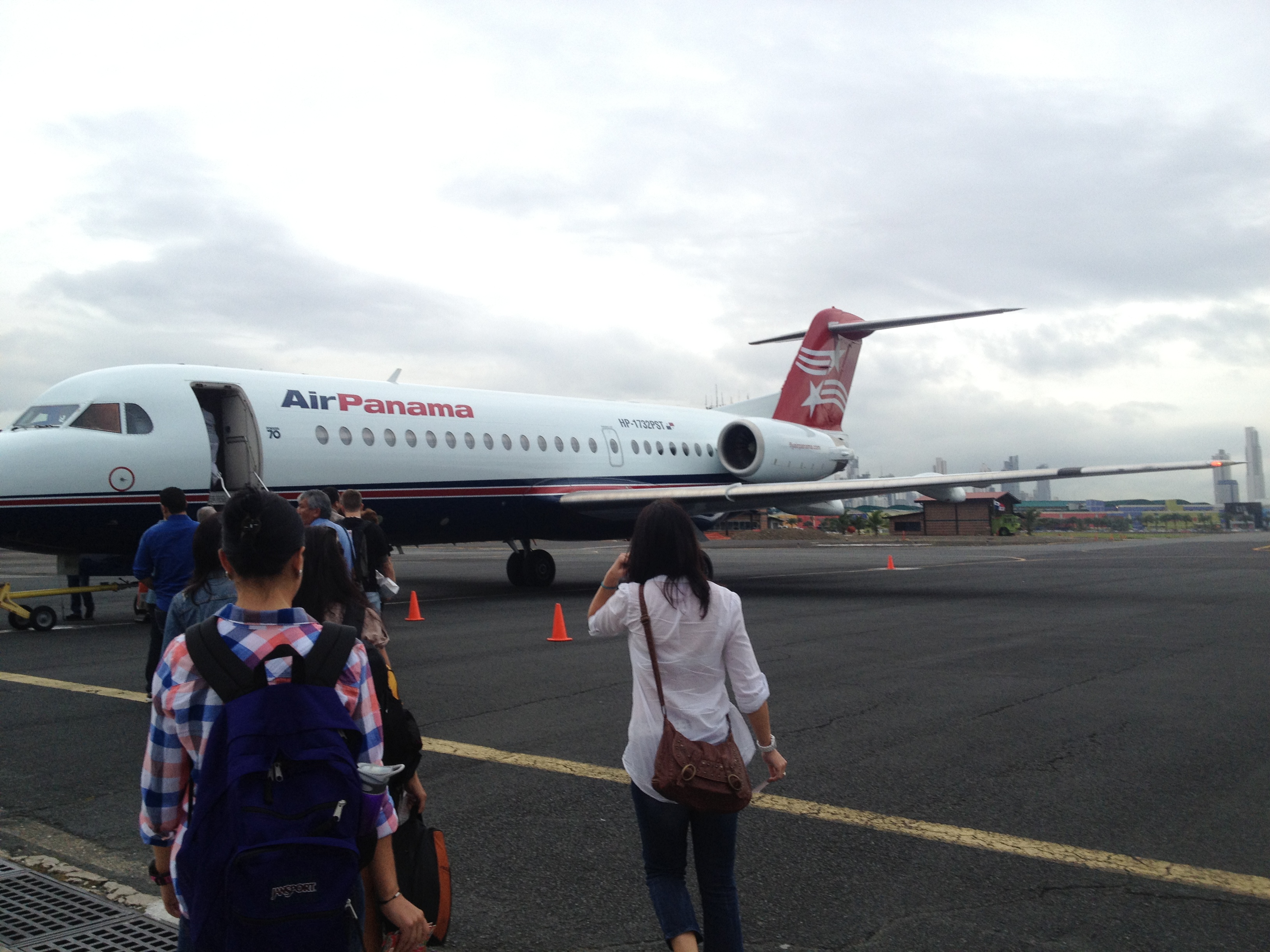
And now, I am in Panama — here to visit my old friend Jerry Smith with whom I worked for years in Mongolia. Jerry has set up a new base of operations here and I have come to spend a couple of days with him to explore new options for our ever-increasing numbers going out on mission each summer. It’s fantastic to have so many students and adults serving around the world each summer, but it has created new challenges for us. So, I am trusting that God will open additional doors of opportunity for us to serve Him and make Him known though our initiatives in the Western Hemisphere. In about an hour I will fly from Panama City, the capital of Panama, to David, Panama’s second largest city and the capital of Chiriquí Province. Jerry has arranged for me to meet pastors and ministry leaders and also to visit a prison for teenage inmates. I look forward to discovering what the Lord may have in store for us on the isthmus of Panama.

Posted by: Omar C. Garcia | August 12, 2012

Muscles and Hearts

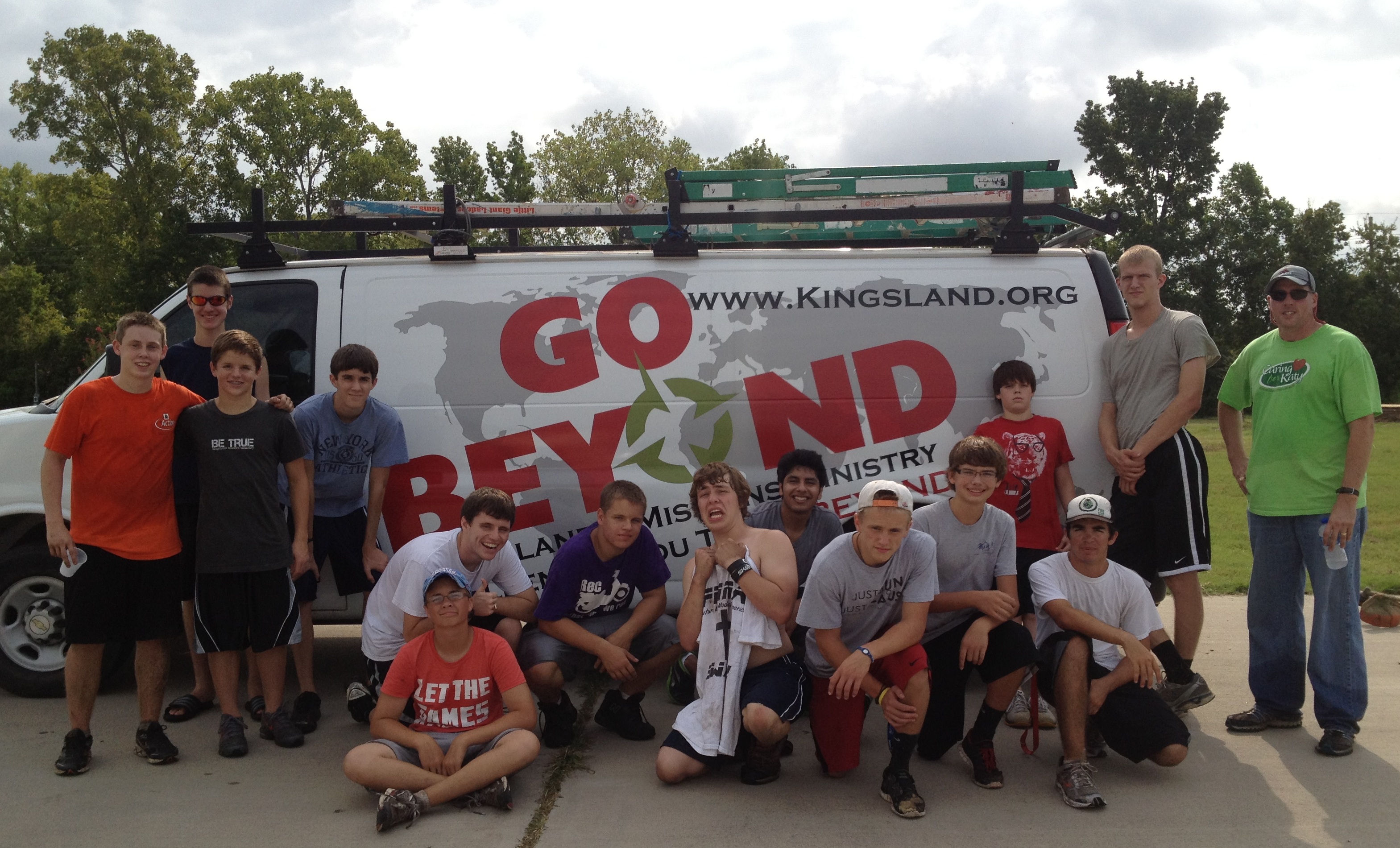
This past Saturday, Chris Kincaid, one of our student ministry interns, mobilized several of the guys he has been mentoring this summer to help us with one of our ongoing projects at Iglesia Sobre la Roca (Church on the Rock), located just down the street from Kingsland. Jon Davis, our missions associate, and I enjoyed our time with the guys. We spent several hours mowing and weed-eating what will be a prayer garden/walking track that we will help to construct this Fall at Church on the Rock. Chris and his guys worked really hard pulling weeds, moving mulch, mowing the area around a retention pond covered in weeds, and doing general clean-up. Jon and I absolutely loved working alongside these young men as they selflessly served another church in our community. A big part of what we work hard to accomplish through our missions ministry is providing opportunities for our students to work their muscles and get their hands dirty by serving others.

Seven years ago, when I first mobilized Kingsland volunteers to serve the people of our community, my old friend Paul Haas often wore a t-shirt to our service initiatives that was imprinted with this message: “Work the muscles. Build the heart.” I always liked that shirt! Over the years of seeing God work through thousands of Kingsland volunteers throughout our community, I have learned that paint brushes and hammers and lawn mowers and weed-eaters are powerful tools for personal transformation. God can use a simple thing like a lawn mower to do more than cut grass. He can use it to control the weeds that can easily choke out compassion from our hearts. I am really proud of Chris and our guys for their good work. I encourage you to join us on one of our Saturday initiatives in the coming months. I promise you that as you work your muscles God will indeed build your heart.

Posted by: Omar C. Garcia | August 11, 2012

A Greater Impact

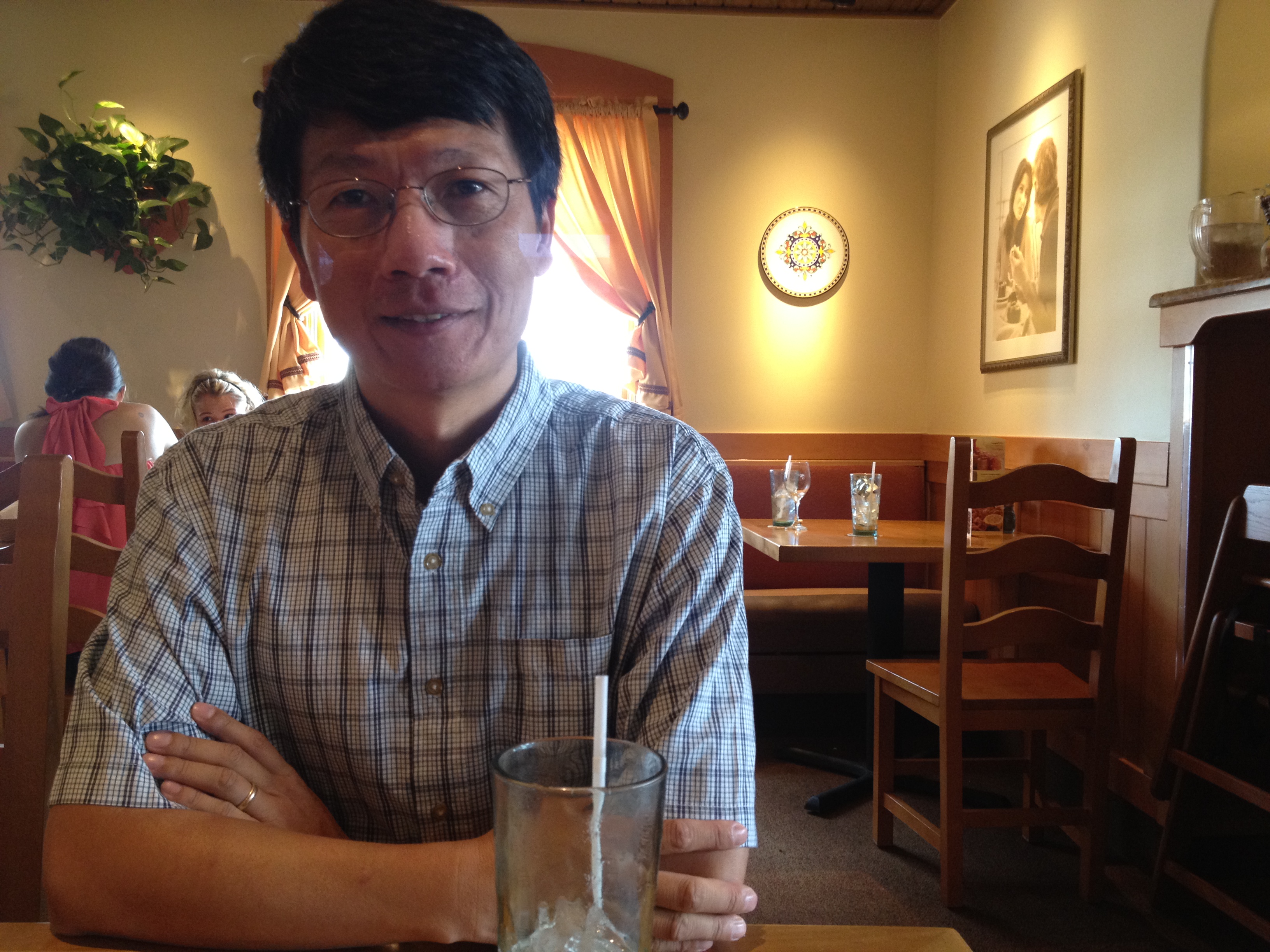
Earlier this week I had lunch with my friend Daniel Su, the lead pastor at Katy Christian Community Church. Daniel came to the United States from Xiamen, China in 1986 to study at Liberty Baptist Theological Seminary. After receiving his undergraduate degree in English in 1991, Daniel spent the next fifteen years involved in a campus ministry to Chinese graduate students and their families before moving to Katy in 2006.

Our conversation at the lunch table revolved around how to impact the nations for Christ. Daniel and I agree that reaching the nations involves more than going, it also includes staying and embracing the opportunities to engage with the nations represented in our own community. There is no question about the fact that the nations are strongly represented among us. More than 90 languages are spoken throughout the Houston area and 92 countries have consular offices here, the third highest in the nation. The nations have come to us!

Daniel spoke to me specifically about his experiences in reaching out to Chinese students who come to the United States to study and then return to China. As with any young person traveling abroad, it can be a bit scary for a Chinese student to come to America. As I listened to Daniel I kept hearing a recurring theme. He said that when a Chinese student arrives in America, that student expects that other Chinese will help them with things like getting oriented or solving problems related to living in a new culture, among other things. However, when a Christ-follower who is not Chinese steps up to assist one of these students it has a greater impact.

Daniel gave me numerous examples of how small acts of kindness by Christ-followers in America have made a huge difference in the lives of Chinese students. He told me about one Chinese girl in particular who was frustrated and disoriented on her college campus. An African-American Christ-follower noticed her and offered to help and even took the time to show her around campus. Daniel said that the young Chinese student could not stop talking about the kindness of that young lady. It’s acts of kindness like these that help to make others receptive to the truth and open to investigating the worldview behind the action.

I told Daniel something that my friend Jamal had shared with me earlier this year in Jordan while we were visiting Syrian refugees. I really like the way in which Jamal framed the same thing that Daniel and I were discussing: “If you will allow people to listen to and enjoy the music of your life, then sooner or later they will want to know the words.” That is the kind of thing that can have a greater impact. Daniel and I also talked about guys like Pol Pot and Bin Laden and others like them who had studied abroad. It’s hard to say, but perhaps if someone had engaged them in such a way that caused them to take serious inventory of their respective toxic worldviews, history might be different. But apparently no one made a greater impact on them through their friendship, kindness, or conversation.

I came away from my time with Daniel more encouraged and determined to be sensitive to the nations in my own neighborhood and in our own community. We can make a difference among the nations if we will live like Christ and look for every opportunity to make a greater impact in His name by simply following His example.

Posted by: Omar C. Garcia | August 10, 2012

Very Inspiring Blogger

This week, one of my readers named Rifat Mursalin, nominated Go Beyond Blog for the Very Inspiring Blogger Award. The purpose of this award is to recognize and to help spread the word about blogs that inspire and encourage others. In order to help spread the word about inspiring blogs, nominees must link back to the person who nominated them, post the award image, tell seven facts about themselves, and nominate fifteen other inspiring blogs. So, here goes…

Seven Facts About Myself

7. I like writing and mailing handwritten notes of encouragement and thanks to others.
6. I try to do an act of kindness, no matter how small, every day.
5. I enjoy competing in marathon canoe races with my son, Jonathan.
4. I am living my dream as Missions Pastor at Kingsland. Please don’t wake me up.
3. I love my kids and am grateful for what God is doing in their lives.
2. I love my wife and enjoy being in her presence. I miss her when I am away.
1. I am a deeply committed Christ-follower seeking to make Him known among the nations.

I have posted links to the Blogs That Inspire Me under my Blogs & More Tab. I like them all so it would be difficult for me to narrow the list. I encourage you to explore these various blogs and sites.

Thanks again, Rifat, for your nomination. I will continue doing my best to post inspiring and encouraging blogs.

Posted by: Omar C. Garcia | August 9, 2012

Start With The End

Over the past few weeks I have had the opportunity to speak to several groups about what it was like to compete in the Texas Water Safari with my son, Jonathan. Those of you who follow my blog know that the 260-mile Texas Water Safari is billed as the world’s toughest canoe race. It’s impossible to compete in an event like this without gleaning at least a few practical insights for daily living along the way. One of my many take-away insights came at the start of the race. When Jonathan and I were in position at the start of the race, my thoughts turned to the end of the race — something that we would experience almost four days later. In those brief minutes before the starting gun signaled the start, I was more determined than ever to make it to the end of the race.

I think it’s important to think about the end when you are at the beginning. Jonathan and I often talked about the finish line. In fact, Jonathan made it a point for me to not see the finish line on any of our training runs. He wanted for me to see it for the first time on the official race. I’m glad he did because the desire to make it all the way to the end and across the finish line is one of the things that kept me going mile after grueling mile. Thinking about the end had a definite and practical impact on every decision we made along the way, including how much to rest, when to take a few minutes to cool down in the river, and maintaining our nutritional intake. Keeping the end in mind gave purpose of every paddle stroke.

One of the good things about the Texas Water Safari is that the race is broken down into manageable portions with mandatory checkpoints along the way. The miles between these checkpoints are the smaller bites that help participants to successfully eat this elephant of a race. These checkpoints enabled us to get a few minutes of rest, to get refreshed, to keep things in context, and to maintain our focus on the end — the finish line. Every time we arrived at and then paddled away from a checkpoint, it made reaching the end that much more of a reality.

When we finally reached the finish line more than 93-hours after we had started, my thoughts turned back to the start of the race. It seemed surreal that we had actually finished the course — something that took an estimated quarter-million paddle strokes. I firmly believe that we reached the finish line because we started with the end in mind and because we made decisions along the way that kept us on track to reach the end of the course. If you are facing a daunting task, take time to consider the end before you start, break it down into manageable portions, get started, and keep paddling. It’s all worth it when you reach the finish line.

« Newer Posts - Older Posts »

Categories