Posted by: Omar C. Garcia | September 9, 2012

The Peeps Have Landed

Poipet, Cambodia

After two days of travel, Cambodia finally came into view as we descended through the clouds toward the tarmac at Siem Reap’s small airport. Once again, I am traveling with a team of women to work with our friend and partner Steve Hyde. Over the next week the eight of us will conduct a Vacation Bible School for the kids at the Imparting Smiles orphanage and the kids from the surrounding slum neighborhoods. Last year we had an attendance of almost one-thousand and expect as many this year. In addition to our VBS lessons, we have prepared a special lesson to teach the kids how to protect themselves from those who traffic in human beings. This is an important lesson because Poipet is one of the most dangerous places in the world for kids. Those who traffic in humans find plenty of low-hanging fruit in the slums here and they do not hesitate to pick it.
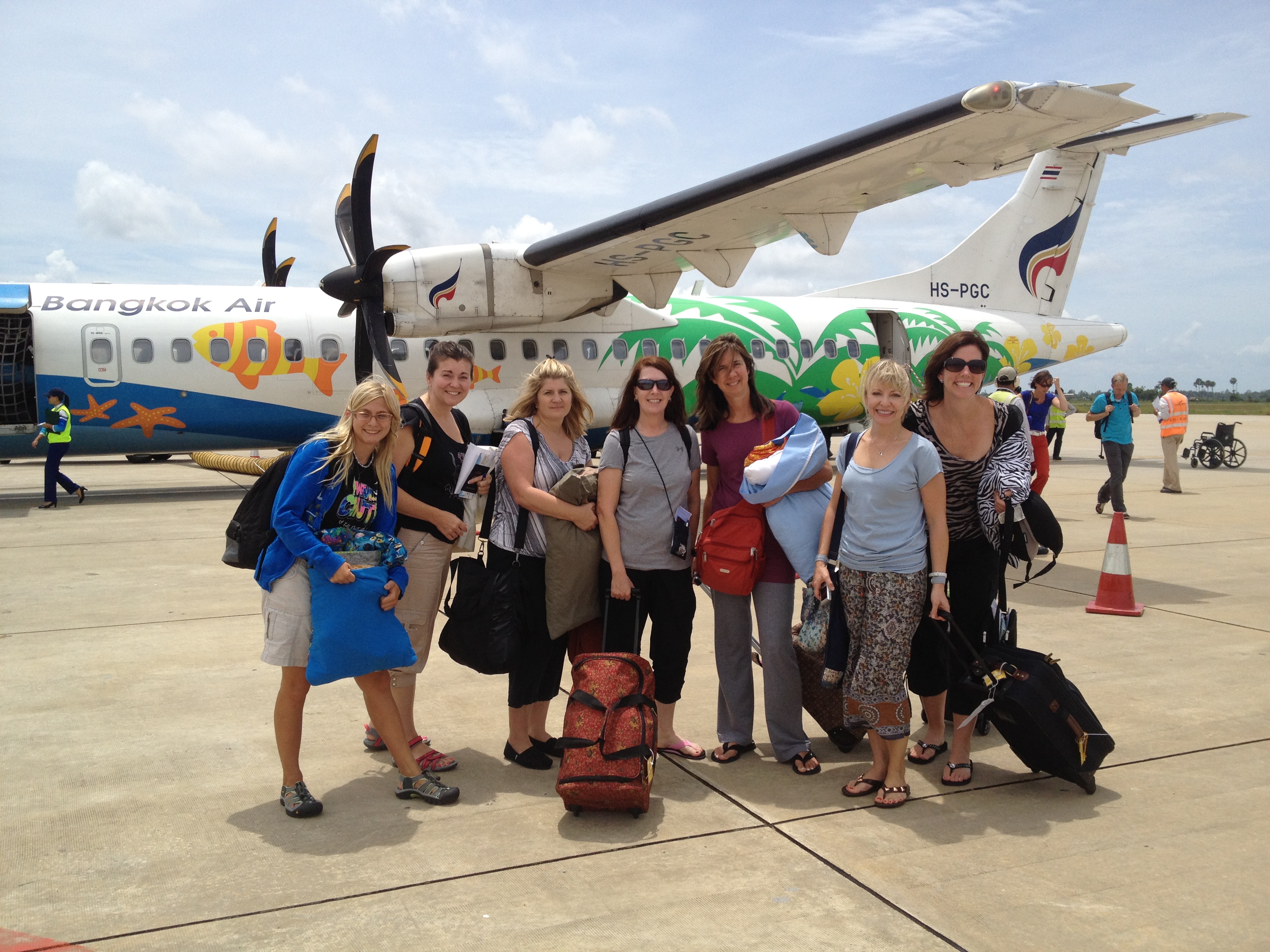
I am happy to be traveling again with a team of women. As the only man on the team, I do more listening than talking. I can generally hold my own in conversation but I am out of my league on this trip. Earlier today when they all got into a spirited discussion about how they buy and loan clothes to one another, I … just … stared. Girls really do that? Guys buy clothes but they don’t loan their clothes to other guys. I just can’t imagine one guy saying to another, “Hey there, Dude. I think that my Colombia fishing shirt would look really great on you. Wanna’ borrow it for your fishing trip this weekend?” When there was a two-second lull in that conversation all I could awkwardly contribute was, “I loaned Doyle my extra palm sander.” They … just … stared! I need to learn to keep my mouth shut when I am in the big-leagues of girl talk and just be a silent observer. Lesson learned.

The really great thing about traveling again with a team of women is that they take their responsibility very seriously. All but one of the team members are moms but all of them are absolutely dialed-in to what we are here to do. They have worked hard to prepare their lessons and have also spent considerable time in discussion about what why they chose to come on this particular trip. They care about the welfare of kids who don’t have parents or who are impoverished and live in desperate situations. As with the team last year, they are also prepared to give away countless hugs and kisses to kids, something that comes naturally to moms. I think it’s cool that those who are returning for the second time still remember names of kids who attended last year. More than once I have heard, “I can’t wait to see … and give her/him a big hug” I love that!

So, the peeps (as I affectionately like to call my team of women) have landed and are prepared for the huge task of loving, teaching, and demonstrating God’s love to lots of kids this week. It’s the rainy season here but the rains will do nothing to dampen our determination to make this a meaningful and memorable week for the kids who live at the Imparting Smiles orphanage and in the slums of Poipet.

Posted by: Omar C. Garcia | September 7, 2012

Go Beyond Just for Kids

I have had an interest in the nations since I was a kid growing up in the small town of Mission in South Texas. My interest in the nations is not something that happened by accident, but rather was the result of growing up in a family that loved the nations. It was not just one thing but instead a combination of things that fueled my interest in the peoples of the world. My Dad’s photographs and stories about his travels piqued my interest early on. Gifts sent from afar by traveling family members also fueled my curiosity about those who lived beyond my hometown. Books and magazines like National Geographic that were available in our home also played a role in teaching me about the nations. My membership in Commander Whitehall’s Explorers Club (for grade school kids) also contributed to my interest in the larger world. Every month I received a package from the Explorers Club — each one containing a map, a souvenir, a vinyl record, and information about the featured country. Looking back on it all, it’s easy to connect the dots. Learning about the peoples of the world helped me to fall in love with the nations.

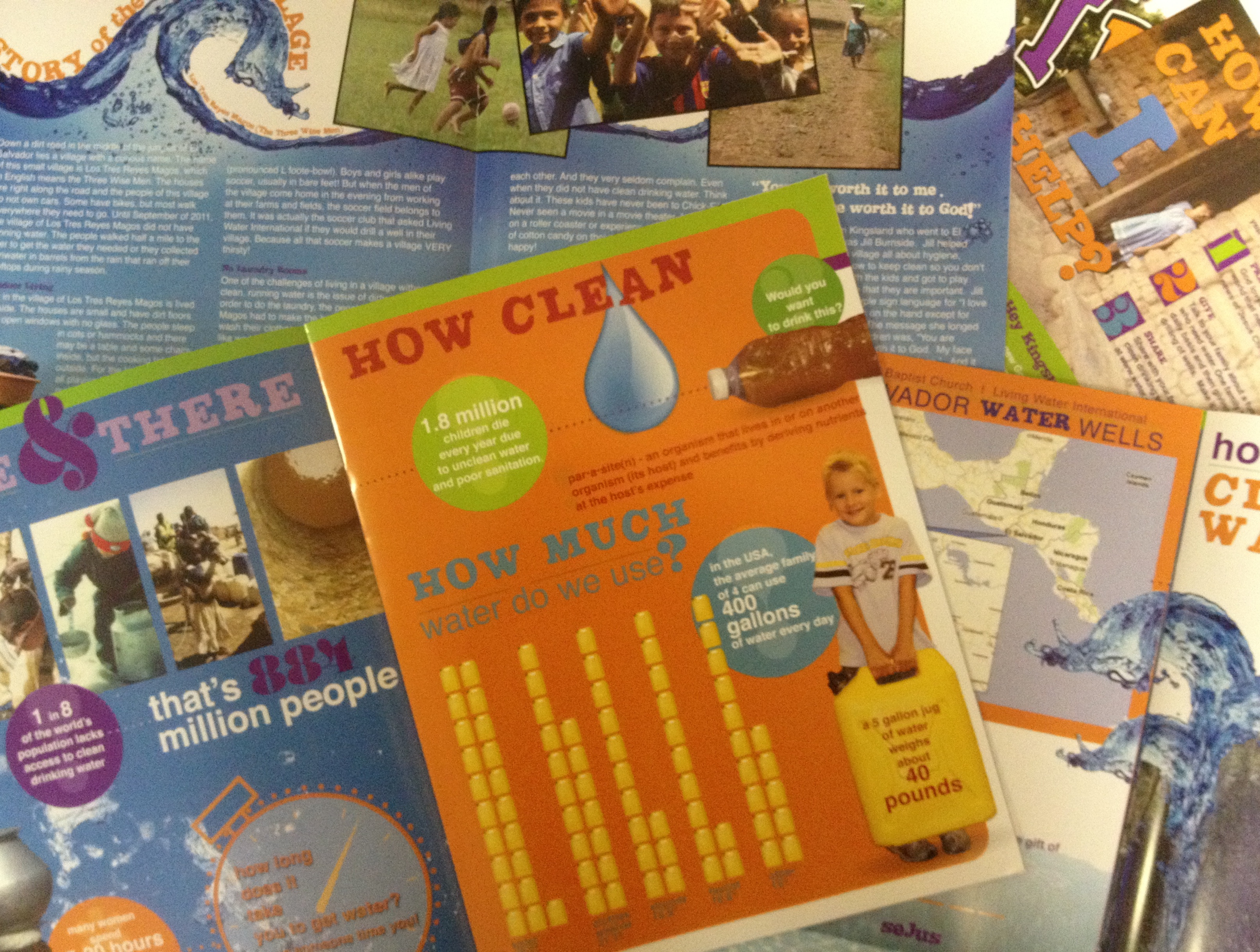
One of the more fulfilling seasons of my ministry was during the years I taught Royal Ambassadors, a program designed to teach kids about missions. I had lots of fun finding creative ways to engage kids with the nations. As a missions pastor, it has long been a desire of mine to do a publication just for kids — something specifically designed to package content about the nations in a kid-friendly way. That dream is now a reality. This Sunday, we will premier the first quarterly issue of Go Beyond Just for Kids. Our first issue is all about water and is full of information that will teach our kids about what kids in other parts of the world have to do in order to access water. In each of the following issues we will explore different aspects of life for kids around the world.

I am especially grateful to Andrea Bierschwale, Kristin Brown, Jason Brod, and Heidi Doe for their editorial and graphic design work. We will distribute copies of Go Beyond Just for Kids this Sunday morning at Kingsland. Copies will also be available at different locations around our campus. I encourage you to review the contents with your kids or grandkids and answer any questions they may have. Have fun with it and be sure to give special attention to the “How Can I  Help?” section. My prayer is that this new publication will help our kids to learn about and to fall in love with the nations.


Posted by: Omar C. Garcia | September 5, 2012

Far Views | Kashmir

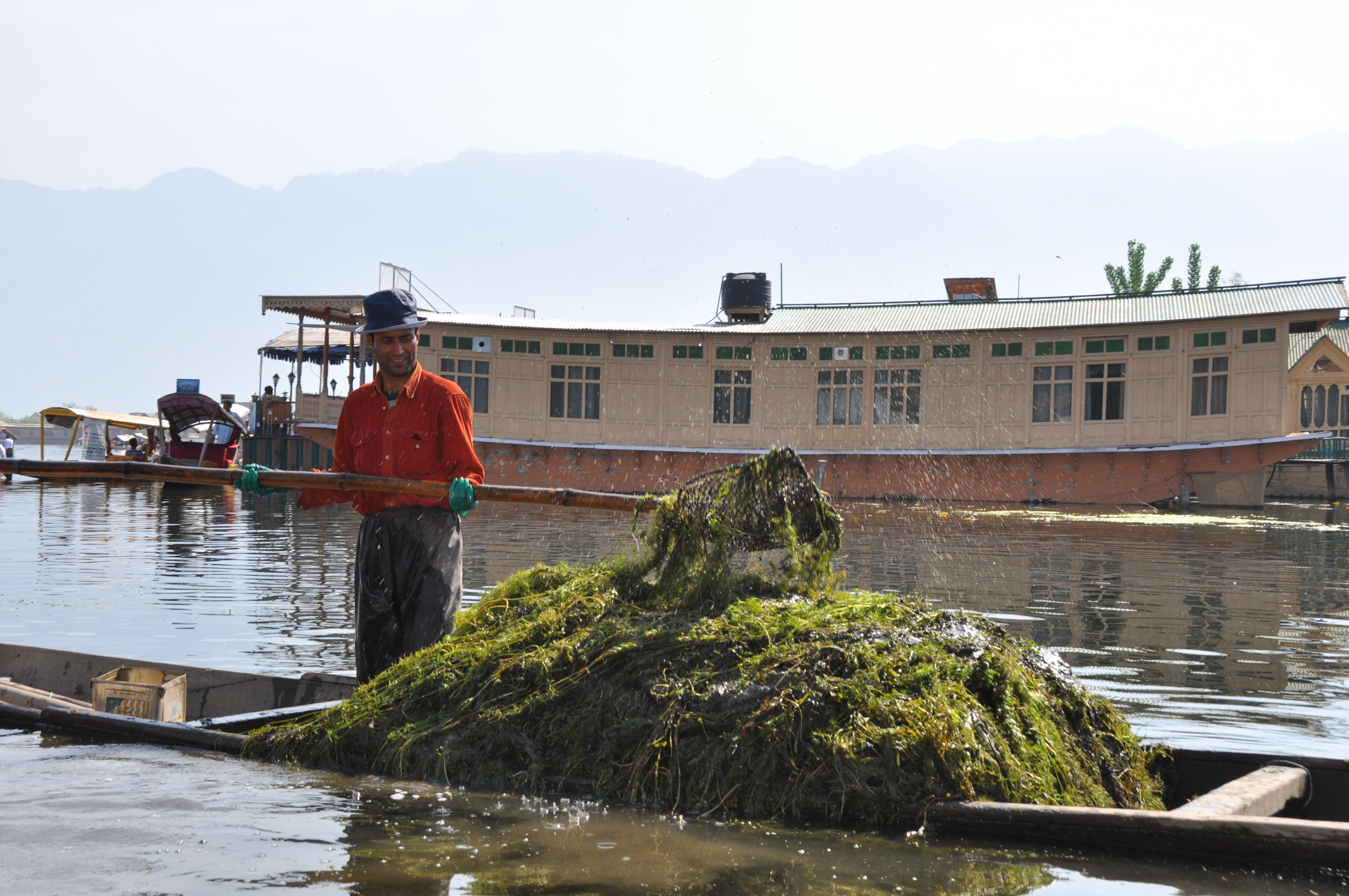
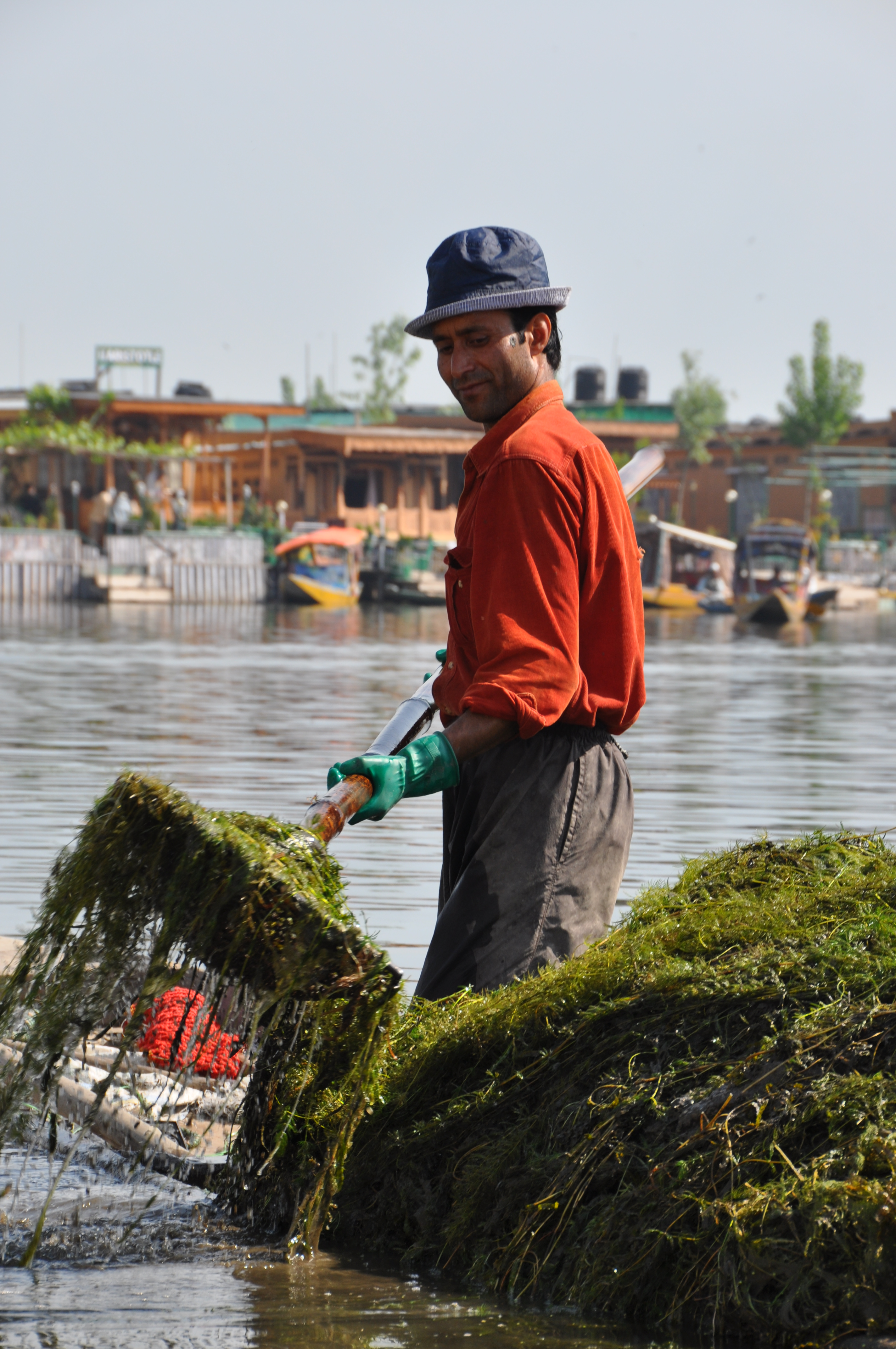
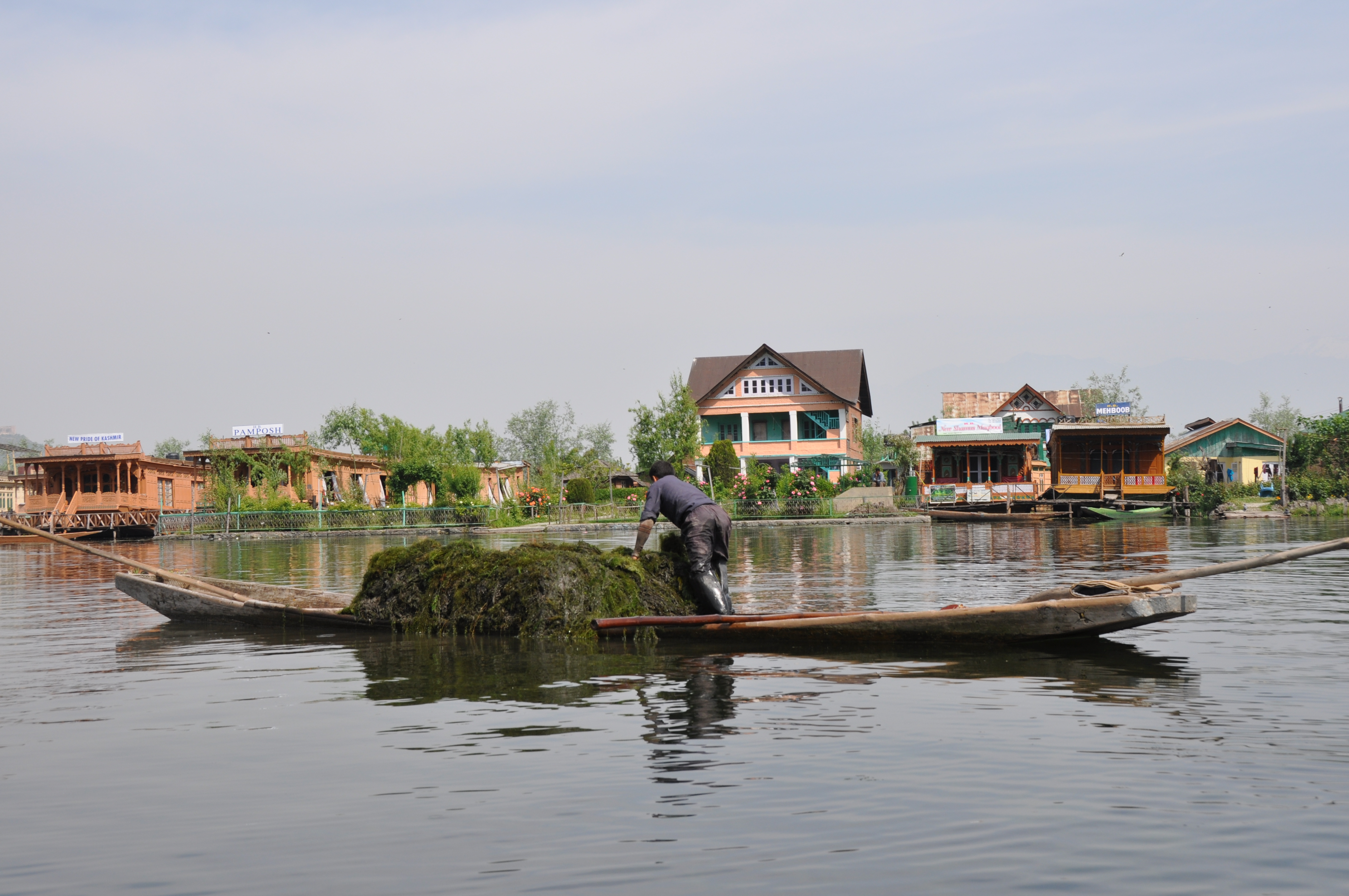
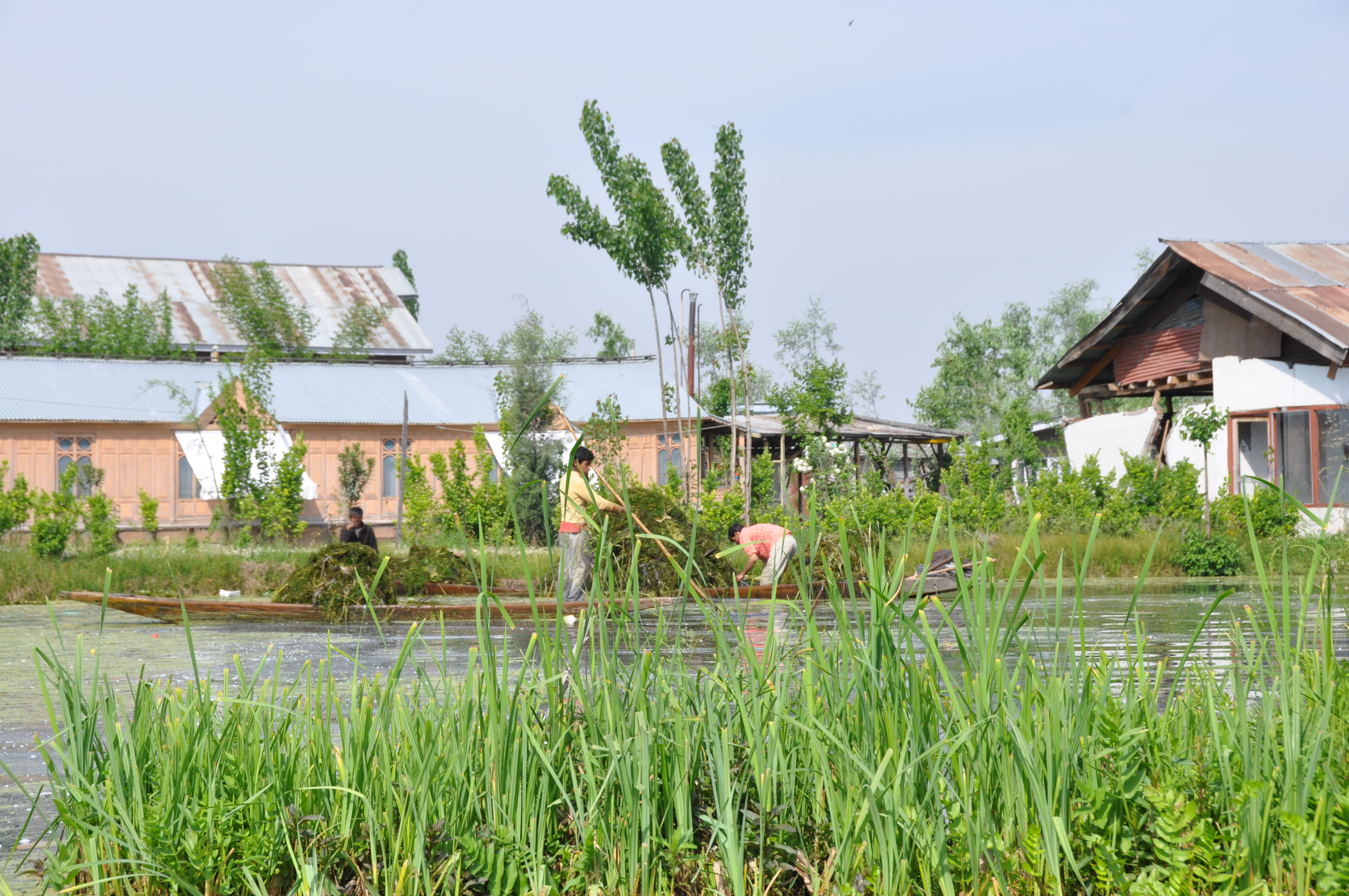
I took these photos of men in shakira boats removing hydrilla (aquatic weed) from Lake Dal in 2009 in scenic Srinagar, Kashmir in northwest India. This troublesome weed also grows in the Colorado River in Texas and presented a challenge to those of us who competed in the Colorado River 100 ultra marathon canoe race this past Labor Day weekend.

Posted by: Omar C. Garcia | September 2, 2012

The Race That Beat Me!

Reflections on the Colorado River 100 Ultra Marathon Canoe Race

My son Jonathan and I made it to the finish line of the 9th Annual Colorado River 100 ultra marathon canoe race this morning — and we are both exhausted.

This one-hundred mile endurance race is tough enough under normal circumstances. However, this year it was even tougher because of the fact that the water in the Colorado River is lower than normal. Race officials told those of us who competed in this race last year to expect the race to take us at least a couple of extra hours this year because of the river conditions. They were right! It took Jonathan and me more than two extra hours to finish the course, but we finished. Except for the times when headwinds stirred the surface of the water, the river was generally glassy smooth with no perceptible current. We worked hard to earn every mile.

The Colorado River presented an additional challenge to this year’s racers. The lower water level exposed more of the hydrilla that has infested the river. Hydrilla is a fast-growing weed (a kind of fresh water sea-weed) that grows in large clumps and spreads a carpet of ugly and smelly green algae when it breaches the surface of the waters. I first became acquainted with hydrilla when I visited Lake Dal in scenic Kashmir, India. Local officials there try to control the spread of the weed by harvesting it clump by clump, a task performed by workers in flat-bottom shakira boats.

The hydrilla along the Colorado River presents a challenge to canoeists, kayakers, and boaters. The stuff will either slow you down or stop you cold in your tracks if you fail to navigate around it. It’s hard enough trying to avoid it in the daytime, but almost impossible to do so at night. The low water level and the hydrilla-ridden obstacle course made the race tougher even for experienced canoeists and kayakers. As a novice, it beat and whipped me to the point of frustration and exhaustion, but Jonathan and I still made it to the finish line.

For me, the hardest part of this year’s race was the final thirty-eight mile stretch from the La Grange checkpoint to the finish line in Columbus. I don’t know how many racers dropped out at La Grange, but it was a significant number. And, because of the low-water conditions, race officials gave racers the option of doing 100 kilometers instead of 100 miles. The folks who opted to do 100 kilometers also left the course at La Grange.

The rest of us pressed on in the dark, paddling and squinting to try to find the best way through the frustrating carpet of hydrilla. We all took a beating. Jonathan and I and several others paddled together through the night which made it a little better because we were able to encourage one another to press on. And, soon after the sun came up, we all paddled in together to the finish line. The obstacles and challenges along the way beat us up and whipped us but did not defeat us. We finished the course.

This was my seventh marathon canoe race and seventh finish with Jonathan over the past year. I’m glad we finished the entire course and look forward to more adventures with Jonathan on Texas rivers in the years to come.

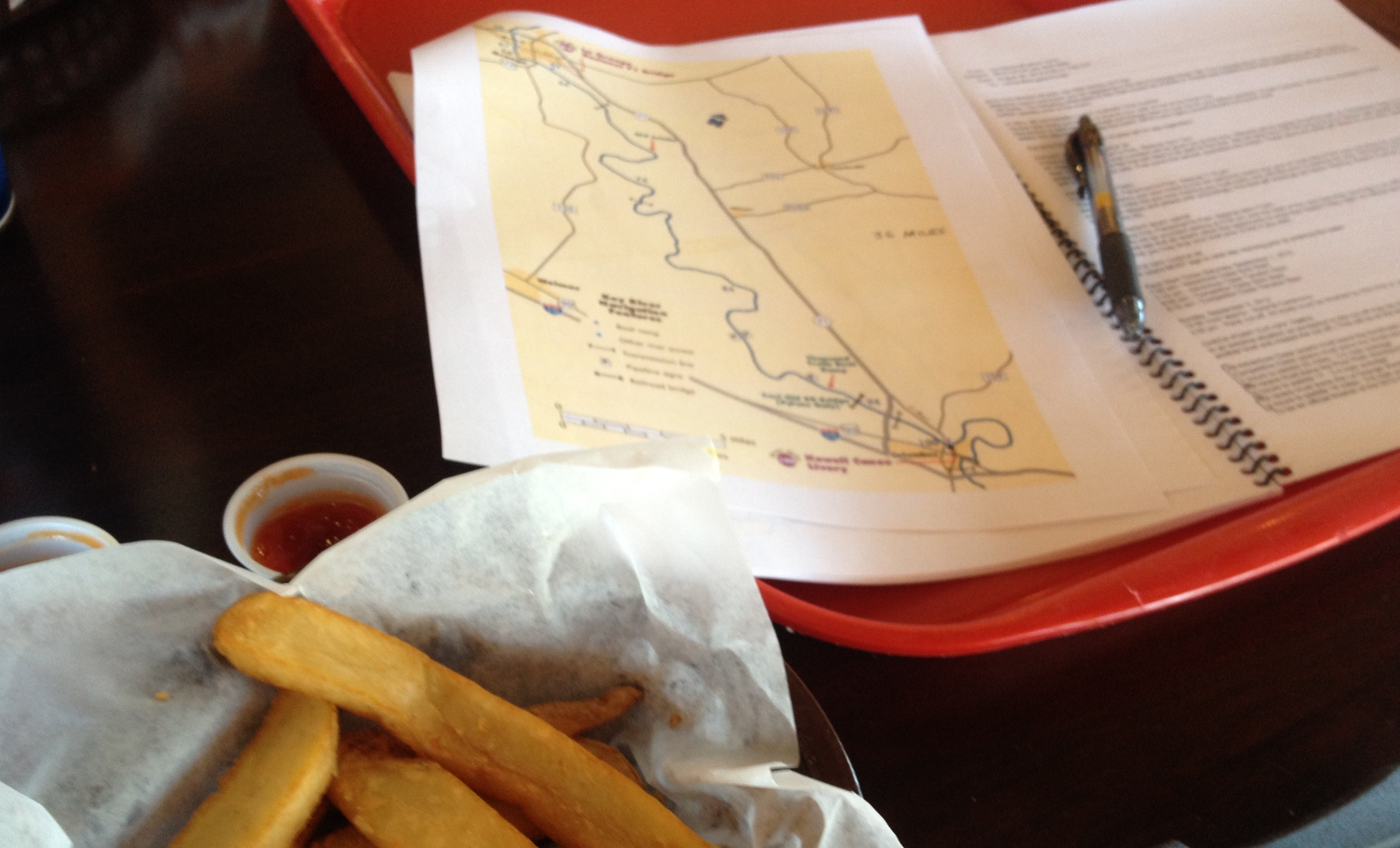
Reviewing the course over a burger and fries.

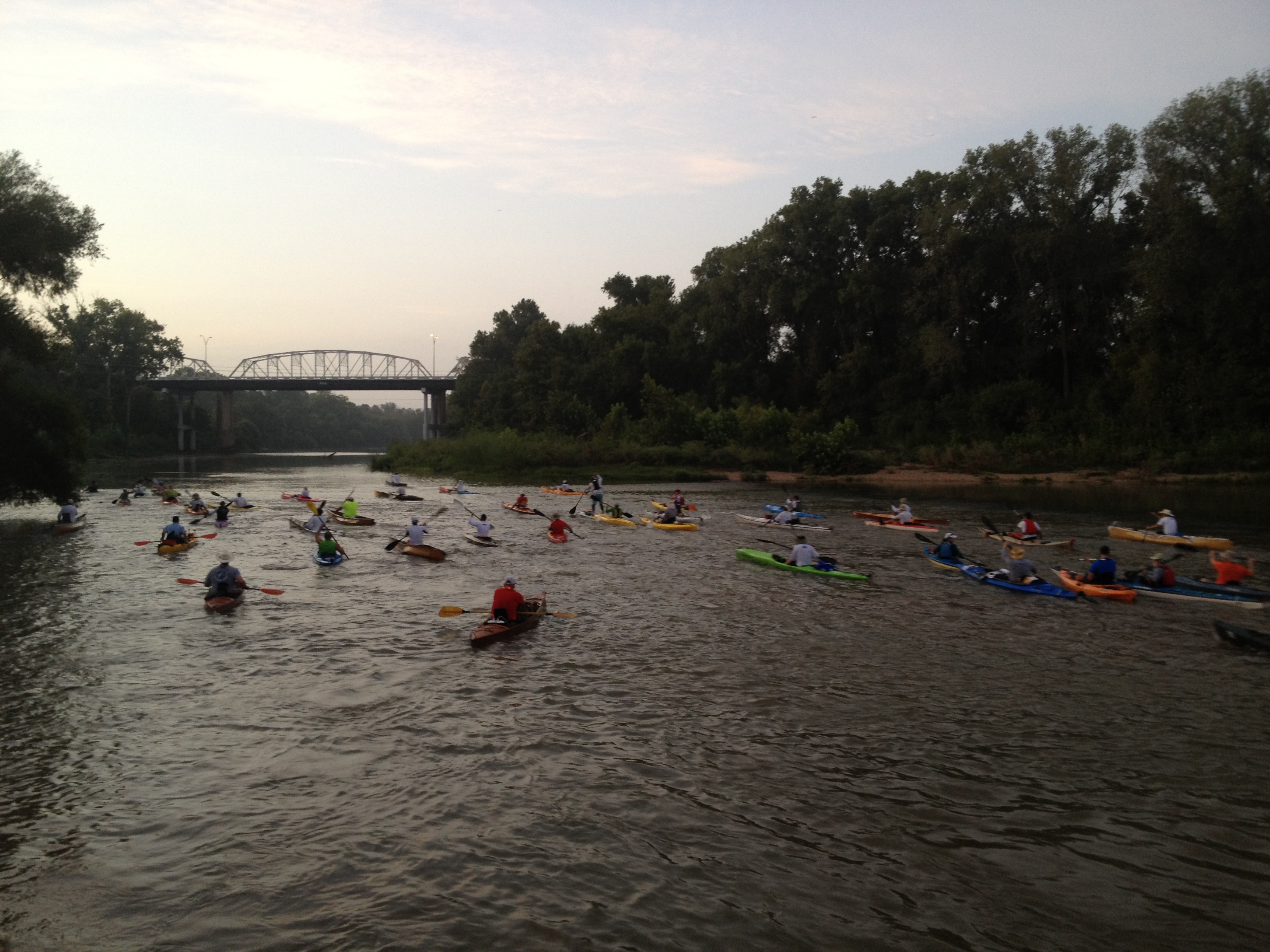
Adventure Class Solo boats leaving the starting line.

Adventure Class Tandem boats lining up at the starting line.

Jonathan and I reaching the finish line.

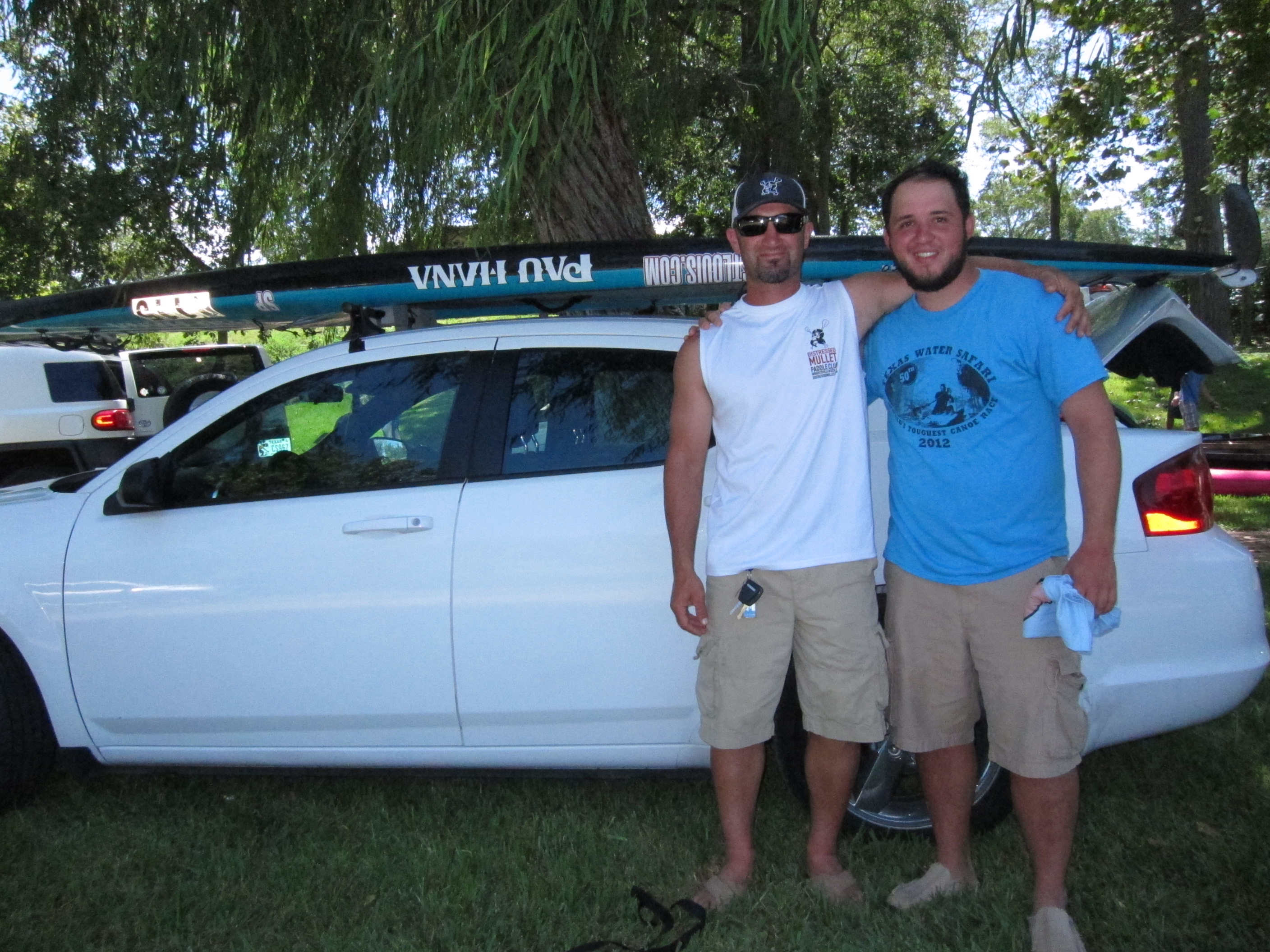
Our friend Shane Perrin. | The first to complete the race on a standup paddleboard.

The race course as recorded by Jonathan’s SpotTracker.

Posted by: Omar C. Garcia | August 31, 2012

Back on the River

In Bastrop, Texas for the Colorado River 100 Marathon Canoe Race

One year ago on Labor Day weekend, my son Jonathan and I competed in the Colorado River 100. This one-hundred mile marathon canoe race starts in Bastrop, Texas and winds its way southeastward toward the finish line at Columbus, Texas. It’s a tough race, primarily because the Colorado is a slow-moving river. Paddlers have to work hard to earn every mile. The official race website cautions: “Paddlers will have to endure Texas heat, night travel, fatigue, river critters and the elements in order to complete this challenge within 32 hours.” Jonathan and I are back in Bastrop to compete in the race for the second time. It’s been a month since we competed in the Neches River Wilderness Canoe Race and we are anxious to get back on the river.

Colorado River 100 pre-race meeting.

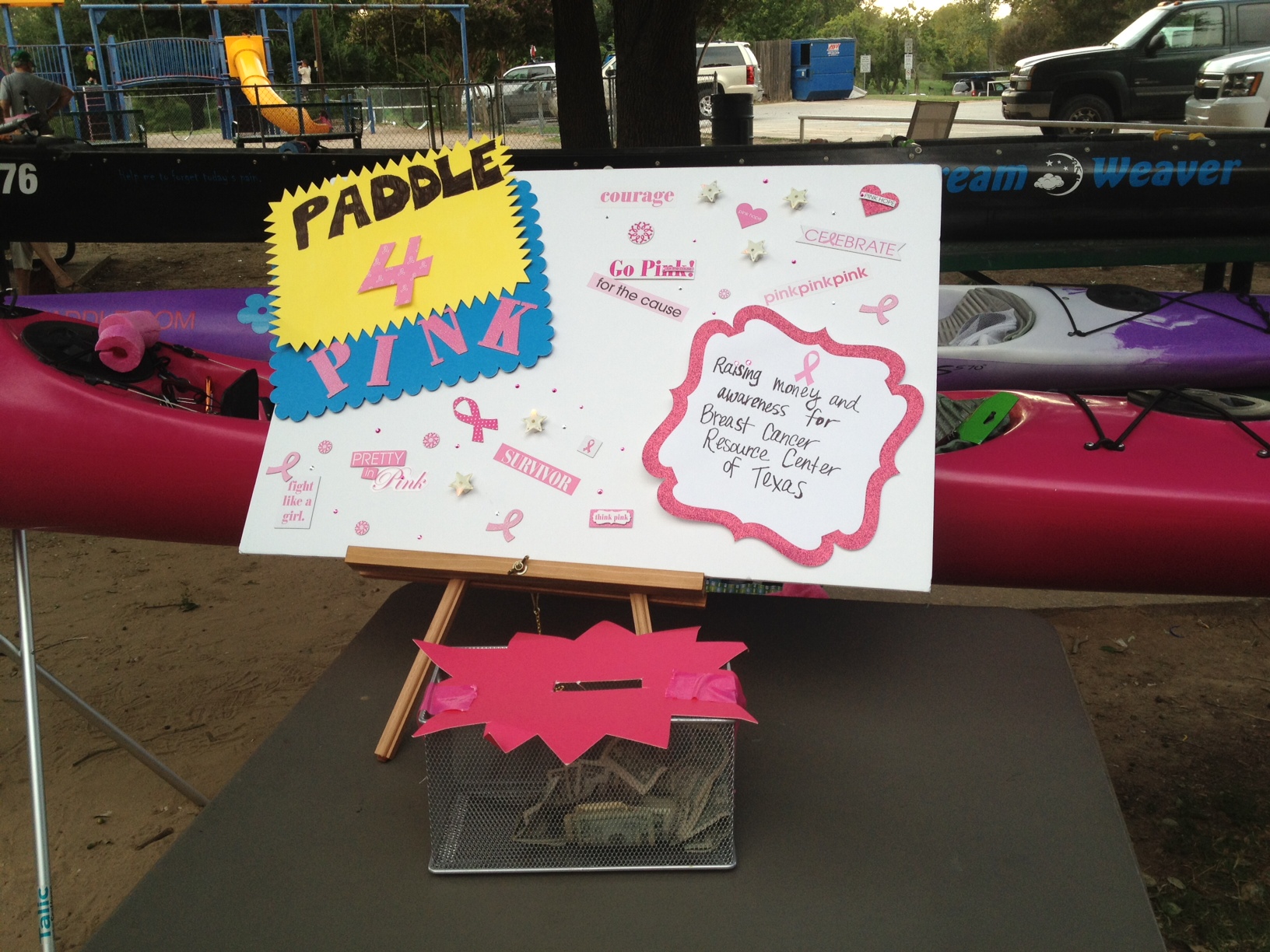
Having competed in and completed six marathon canoe races with Jonathan, I always look forward to my time with him. And, both of us look forward to seeing friends we have made on the previous races. Our friend Shane Perrin drove down from St. Louis, Missouri to be the first to compete in this race on a paddleboard. Shane competed in the Texas Water Safari and became the first to complete the 260-mile race on a paddleboard. Our friends Ben and Jay from the Taste of Texas restaurant in Houston are also here and many other friends that we reconnected with at the pre-race meeting. We learned at the pre-race meeting that several Wounded Warriors will compete in this year’s race as a part of their journey toward healing, an announcement that prompted the applause of all present. One young lady is here to compete and to raise awareness and funds for the Breast Cancer Resource Center of Texas.

Paddling with a purpose. | Breast Cancer Resource Center of Texas

The water on the Colorado River is low this year. Officials told those of us who competed last year that it will probably take a couple of additional hours for us to finish the course this year. Jonathan and I finished in a little more than 23-hours last year. Hopefully it won’t take us too much longer than that this year, but we’ll see. We just want to finish the course well. Race officials also cautioned us that more snake and alligator sightings have been reported along the route. This means that we need to be a little more alert, especially when paddling under overhanging branches along the banks, lest we pick up an extra passenger. It’s all part of the adventure.

Because my life is always in motion, I am especially grateful to have opportunities like this to spend with Jonathan. My wife Cheryl will serve as our team captain and resupply us with water at the checkpoints along the route. For those of you interested in following our journey, Jonathan has set up a SpotTracker page where you can follow our progress online. Our SpotTracker will be activated when we start the race at 7:10 AM tomorrow. I look forward to getting back in a canoe and on the river with Jonathan in a few hours.

Posted by: Omar C. Garcia | August 30, 2012

Chasing Storms

My son Jonathan and his friends Ben and Jay spent a couple of days this week chasing Hurricane Isaac, the slow-moving but powerful Category 1 storm that made landfall Tuesday evening on Louisiana’s southeast coast with 80 mph winds. When Jonathan called to tell me that his buddies had invited him to join them on this meteorological excursion my response was, “Be careful, call or text when you can, and enjoy the adventure.” I don’t really have a bucket list but if I did I think that flying into the eye of a hurricane with those guys who do that sort of thing in airplanes laden with weather gear would definitely be on my list. In a day when every mountain has been climbed and almost every corner of the planet explored, every storm presents a dynamic new challenge to those who study all things weather-related.

Jonathan’s friend Ben has a background in weather and has all sorts of gear to measure and monitor weather stuff. Once in Louisiana, the guys mounted the weather gear on Ben’s truck, hooked it up to their laptops, and rode out the storm. They took lots of photos and talked about their weather readings through the night. The following day they were able to see the destruction that the storm left in its wake — everything from downed power lines, over-turned trucks, a shingled roof that landed near where they parked, and a landscape littered with all sorts of miscellaneous hurricane dandruff and debris. That’s the nature of storms. They tend to change the landscape and often alter the lives of those in their path.

One thing is certain, storms are a part of life and we can’t escape them all. Sometimes we just have to hunker down and ride them out. Other times we have to strengthen our resolve and keep going in spite of the wind and rain. Winston Churchill once said, “If you’re going through hell, keep going.” That’s good advice. In 1986, Maine businessman Dodge Morgan sailed alone around the world. He dealt with some unbelievable storms along the way. When Morgan neared the half-way point of his trip the weather turned against him. As he looked at one of the six on-board cameras that silently chronicled his journey he said, “I may not be able to get through this day, but I can get through the next hour.” Later, one of the on-board cameras recorded Morgan saying, “Calm down, stay with it, one hour at a time.” Morgan made it through the storm that threatened to end his journey by pressing on one hour at a time.

I don’t know what storms you are facing, but know this — you don’t have to face them alone and you can make it through to calmer days. As I followed Jonathan’s journey online on his SpotTracker page, I was reminded of Scott Krippayne’s song entitled “Sometimes He Calms the Storm.” My favorite line in the song is this: “Sometimes He calms the storm and other times He calms His child.” Either way, He is faithful to help us when we are chasing storms and when storms are chasing us.

Posted by: Omar C. Garcia | August 29, 2012

Wordless Wednesday

In the slums of Poipet along the Cambodia-Thai border. | 2009 | Cambodia

Posted by: Omar C. Garcia | August 27, 2012

Freedom Place Garden

Last month I posted a blog entitled Hope at Freedom Place, a Christ-centered safe-house for victims of domestic sex trafficking. Situated on a 110-acre wooded campus on the outskirts of Houston, Freedom Place is the state’s first privately run safe house that provides long-term housing for American girls who are victims of sex trafficking. It is a safe haven where girls are not considered offenders but regarded as victims. We are blessed to have Freedom Place in our community and should do all that we can to support their good work.

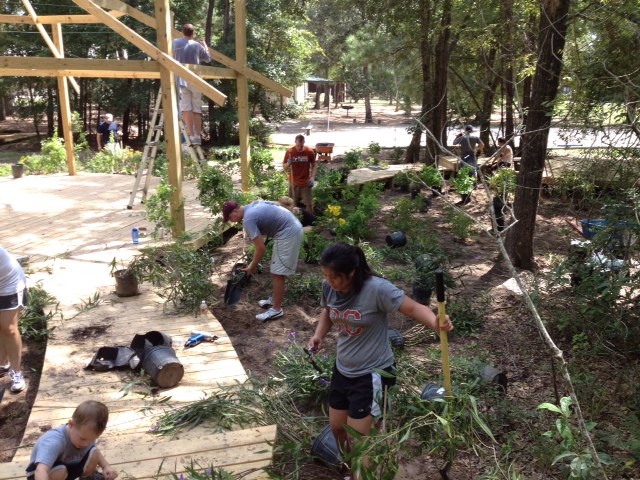
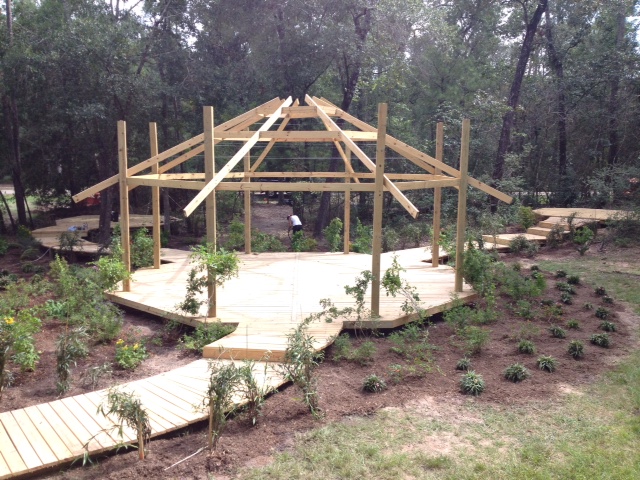
Earlier this year my friend Nikki Richnow, Chair of the Freedom Place Executive Council, asked if Kingsland’s missions ministry would create a prayer garden at Freedom Place — a tranquil oasis where their residents can spend quiet moments with God. I am happy to say that the project is now complete, thanks to the help of Jon Davis, our Missions Associate, Kingsland member Fred Abbot, and a number of Kingsland volunteers. The final plants are in the ground and situated so that they will grow to provide a canopy of shade over the main gazebo. May the Freedom Place garden indeed be a place where young girls whose lives have been damaged in unspeakable ways will have an opportunity to connect with God and to continue their journey toward healing.

Posted by: Omar C. Garcia | August 25, 2012

What’s In Your R.R.A.?

I don’t like the word retirement but know that one day, if I live long enough, I will have to retire — or at least transition to working at a different pace. Like many of you, I have a retirement account and occasionally think about the adjustments I will have to make to ensure that my modest retirement funds will outlast me. Retirement is big business. There is no shortage of retirement planners and consultants, retirement plans and calculators, and a variety of options for socking away our hard-earned bucks. That’s not a bad thing, but that’s not all we should be concerned about when it comes to retirement. We will need more than cash in our golden years.

Over the past thirty-four years in ministry, I have had more than one sobering conversation with guys who had worked hard, invested shrewdly in their IRAs and other retirement plans, but neglected to invest in their personal R.R.A. — and as a result, made a junk heap of their retirement. You are probably wondering what I mean by an R.R.A. since it’s not something you will read about in any financial literature about retirement accounts. An R.R.A. is a Relationship Retirement Account. What we invest in this account can make our retirement more meaningful than a pocket-full of Benjamins.

The concept of an R.R.A. came to me early in my ministry when a very successful church member who was getting ready to retire made an appointment to talk with me. As he began to unfold his story I discovered that things in his life were not as good as they had appeared to me and others. While he had invested brilliantly and made every financial provision for retirement, he neglected to invest as wisely in the relationships that mattered the most — his wife and kids. “I will retire this year,” he said, “and have more than enough money to do so.” Then he looked down and continued, “But, my wife is leaving me and my kids do not want to have anything to do with me. I have made a junk-heap of my retirement because I did not invest in them.”

It was too late for this man. Because he had failed to invest wisely in his personal Relationship Retirement Account throughout the years, his account was empty when he retired. There were no dividends to look forward to. Even his money could not buy him what he longed for the most — the relationships that give meaning and bring joy to our lives, especially in our Winter years. Earlier this month I wrote a blog entitled “Start With The End” in which I wrote about how having a clear vision of the finish line impacts the decisions you make along the way that can get you there successfully. If the man in my office had factored in relationships and envisioned a retirement blessed by meaningful relationships, he might have made different choices along the way to his retirement.

Regardless of whether we have more or less money to invest in our I.R.A. or other retirement plans, there is no excuse for not investing in our personal R.R. A. We can do this by loving, caring for, and nurturing those closest to us — the people who will be around when we retire. We are most foolish when we allow distractions, addictions, stubbornness, pride, and other things to keep us from loving the people who really do matter the most. But, the choice is ours. I don’t want to make a junk heap of my golden years. I may not get to the end a rich man in terms of money, but I am working to make certain that I get there rich in terms of relationships.

Posted by: Omar C. Garcia | August 23, 2012

Praying for the Nations

Grand Rapids, Michigan

“Divine work can only be accomplished in dependence upon divine power.” I first read these words by Watchman Nee, a Chinese Christian author and church leader, soon after I became a Christian in 1973 — the year after Nee died for his faith in a Chinese prison. These words had a profound impact on me as a new believer because they taught me from the start the importance of completely relying upon God to do His work. Human strength and resolve alone are not enough to accomplish the purposes of God. Over the years I have learned that the quickest way to grow weary and discouraged is by trying to labor for God in my own strength. He never intended for us to do His work in our own strength. Jesus taught His disciples this truth in John 15:5 — “I am the vine; you are the branches. Whoever abides in me and I in him, he it is that bears much fruit, for apart from me you can do nothing.”

I was reminded again yesterday of the importance of looking to God for the strength to accomplish His purposes among the nations. I am in attendance at the Global Leaders’ Life Summit at the headquarters of Life International in Grand Rapids. Life International is a Christian organization dedicated to championing the rights of the pre-born and others who are victims of world-views that disregard the sanctity of human life. This is a huge task that can only be accomplished in dependence upon divine strength. The folks at Life International understand that and therefore put a great deal of emphasis on prayer. They understand that prayer, and persevering in prayer, is essential and that prayer is the ministry from which all other ministries must flow. Oswald Chambers said it best when he wrote, “Prayer does not fit us for the greater work; prayer is the greater work.”

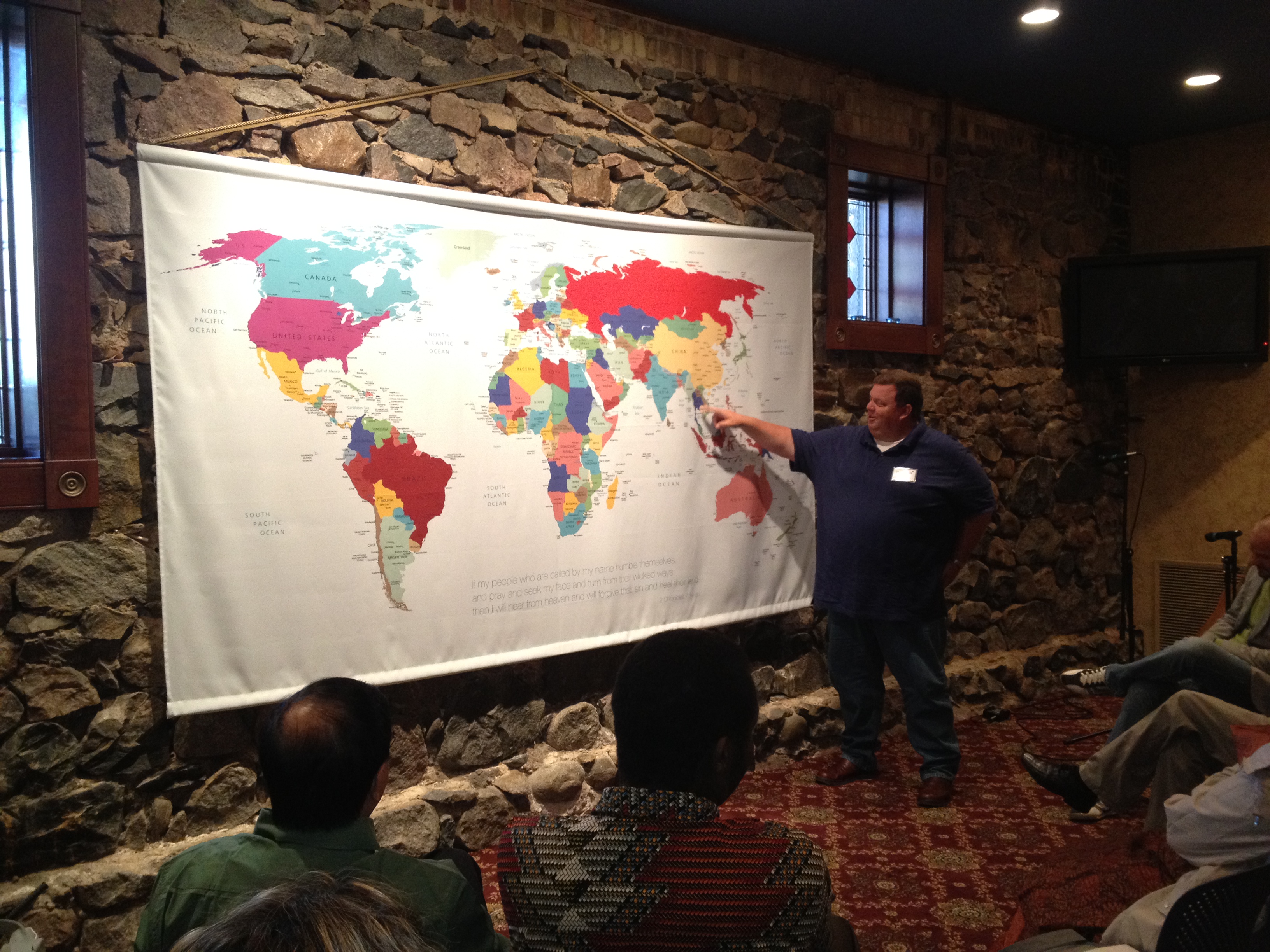
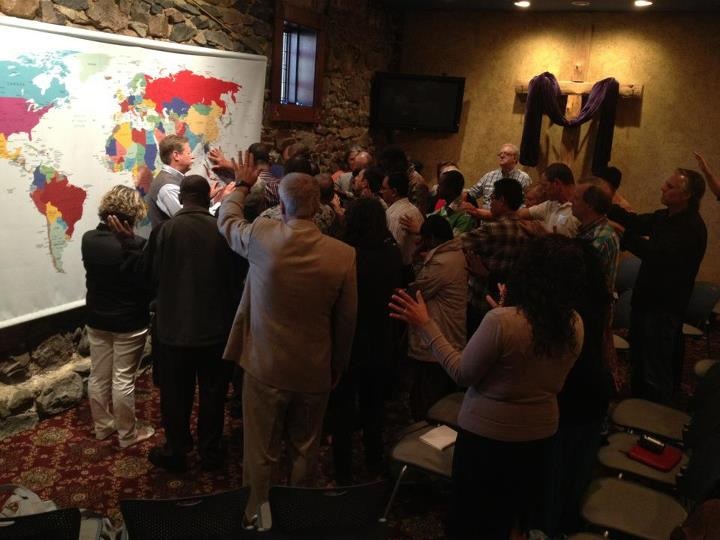
Yesterday morning, Kurt Dillinger, the President of Life International, led us in prayer for the nations. We specifically prayed for Steve Hyde and his life-saving work in Cambodia and throughout Southeast Asia. Steve spoke to us about what God has done in Cambodia over the past twenty years and the challenges that lie ahead. Cambodia is a nation steeped in death in both its past and recent history. And, Steve knows all about death. His wife lost all of her family but one sister to the Khmer Rouge and Steve’s father was martyred by radical Muslims in 2003 on the island of Mindanao. Steve and his wife Noit are committed to sowing the seeds of life and love in the very places where they lost their loved ones. After Steve briefed us on Cambodia, we joined him around the map. Steve placed his hand on Cambodia and the surrounding nations as we prayed and asked God for His divine strength to accomplish His purposes among these nations.

Each of us in attendance at the Global Leaders’ Life Summit understand the vast scope and magnitude of the challenge of standing strong for life among the nations. We also understand that we not only need each other, we desperately need the strength that comes from God alone. We know that every advance in the struggle to champion the sanctity of human life around the globe will be made on our knees and in total dependence on God. But, that’s ok. Following the Life-giver and standing for life is a cause worth living and dying for.

Steve Hyde briefing us on Cambodia and Southeast Asia.

Praying for Steve, Cambodia, and the surrounding nations.

« Newer Posts - Older Posts »

Categories