Posted by: Omar C. Garcia | December 6, 2012

Reading the River

Preparing for the 2013 Texas Water Safari

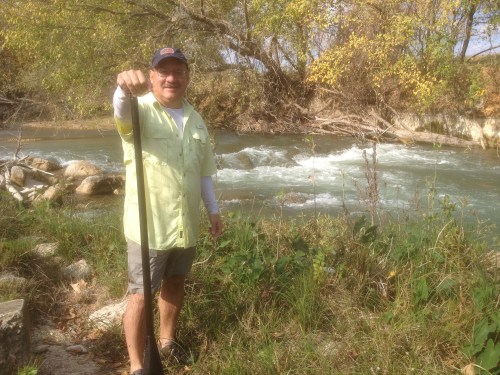
As Doyle and I continue our training to compete in the 2013 Texas Water Safari, we scheduled another lesson with Holly Orr of Paddle With Style. Holly is a multi-safari finisher and a respected paddling instructor. Lots of the folks who compete in canoe and kayak races in Texas have spent time with Holly. Our last lesson with her focused on paddling technique. It’s amazing how making what seem like minor adjustments can make major differences. However, today’s lesson was about more than tweaking our paddling technique, it was about learning to read the river.

Reading the river is essential to having a safe and successful experience on the water. As water flows downstream, it both influences and is influenced by the things it encounters along the way and consequently behaves in particular ways. Today we learned the importance of staying alert, looking ahead, and considering how to approach everything from ripples to rapids and sweepers to eddies. After making mistakes in reading the river on our last training run, today was a much more enjoyable experience as we paddled down the same technical section of the river. We definitely made the right call in scheduling today’s lesson with Holly.

At the end of our lesson with Holly, our good friend Dorsey Ward met us at our take-out point where Highway 20 crosses the San Marcos River outside of the small town of Fentress. Dorsey had driven all the way from Katy just to spend an hour with us. And, he had stopped by Luling Bar-B-Q to pick up several links of their delicious sausage and a loaf of bread. We enjoyed a relaxed roadside picnic near Dorsey’s childhood home. He shared a couple of stories about his childhood in Fentress and also encouraged us to persevere in our adventure.

I was really glad to see Dorsey and so thankful for his kindness in picking up some of the best sausage in the Lone Star State. My son Jonathan introduced me to Luling Bar-B-Q last year when we passed through Luling on our way to train on the San Marcos River. It’s one of those cool small town eateries where diners slather homemade Bar-B-Q sauce on perfectly seasoned meat and then eat it under the watchful eye of John Wayne, the patron saint of cowboys, whose photos adorn the paneled walls. If your travels ever take you through Luling, be sure to stop at Luling Bar-B-Q. You won’t be disappointed. Today’s adventure was made even more enjoyable because of the opportunity to have another lesson with Holly and to enjoy good food and fellowship with our friend Dorsey.

TWS Training Luling BBQ

Doyle outside of Luling Bar-B-Q en route to the San Marcos River.

TWS Training Omar and Dorsey

With Dorsey outside of the small town of Fentress.

TWS Training D and O

Feeling more encouraged after our lesson with Holly and fellowship with Dorsey.
Posted by: Omar C. Garcia | December 5, 2012

Wordless Wednesday

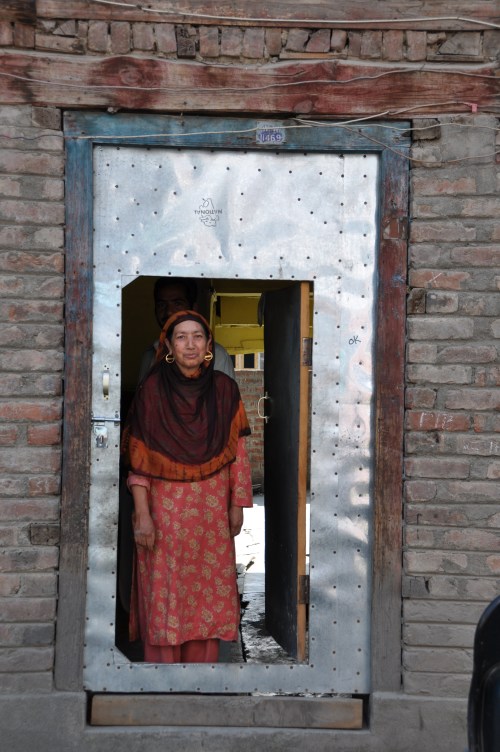
Kashmir 2009 Door Woman

Woman at her door. | 2009 | Srinagar, Kashmir

Posted by: Omar C. Garcia | December 3, 2012

When I Am Home

India OmarIt’s no secret that I am consumed by wanderlust — that strong urge to wander and to explore and to connect with those who live beyond my familiar borders. I have never been completely satisfied staying still or staying close. My heart is tuned to the frequency of exploring and experiencing other places and, no matter how hard I try, I struggle to keep my dial tuned to sitting still. That’s not a bad thing — it’s just the way God wired me. My wife Cheryl understands. She can sense when I am getting restless. It happens often when we watch programs about other places and interesting peoples. I find myself asking questions and jotting down information that I want to investigate. And, I often look at maps in order to understand how a particular place that I see featured in a television program fits into its larger geographical context.

In his poem entitled “The Men Who Don’t Fit In,” Robert W. Service described the restlessness that characterizes those consumed by wanderlust. Although his poem in its entirety is not flattering, he did capture the essence of what he called “the curse of gypsy blood.” In the first strophe of his poem, Service wrote:

There’s a race of men that don’t fit in,
A race that can’t sit still;
So they break the hearts of kith and kin,
And they roam the world at will.
They range the field and rove the flood,
And they climb the mountain’s crest;
Theirs is the curse of gypsy blood,
And they don’t know how to rest.

So, what happens to one cursed by gypsy blood when he cannot wander but must instead remain closer to home? There is a solution — an ointment to soothe the itch and food to satisfy the hunger. Here are a few of the practical things that help me when I am at home.

Stay curious about the world. | I believe in the importance of curiosity. I try to not consume empty mental calories when I am at home but to instead nourish my mind by reading and learning more about what is happening in the world. There are some really great programs about the nations on TV, all manner of books about fascinating peoples and places, and endless online resources to stay dialed in to the world at large. I enjoy reading travel blogs, especially those that feature good photos of interesting things in the world. And, although I really enjoy my monthly copy of National Geographic, my new favorite travel magazine is AFAR. I read every issue cover to cover.

Engage with the nations wherever you are. | When I can’t go to the nations, I look for the nations at home — people from other places who have come to live among us. I really enjoy meeting and conversing with people from other nations who live and work in my own community and make it a point to cross paths with them as often as possible. With every visit I learn a little more about them, their families, and other interesting things. And, they also learn more about me. It’s this exchange that is essential to building bridges of understanding.

Discover new places close to home. | I have learned that when I can’t go far from home I can always wander closer to home. There are so many interesting places close to home that are just waiting to be discovered. We can learn new things about where we live if we will look at the things around us through the eyes of a traveler who has come from afar to visit where we live. My wife and I recently wandered the backroads close to our home and had a splendid adventure. We discovered some beautiful places and met some very friendly folks along the way.

Continue to keep your eyes on the horizon. | I think its important to always have a dream or dreams that beckon us to stretch toward the next horizon. Those dreams may be of a future trip to some place near or far or of developing a friendship with someone from another nation. Regardless of whether you will travel sooner or later, keep your dream alive and patiently wait for the opportunity to turn it into a reality. Read about a place you would like to visit. Take notes and make plans. And when the opportunity presents itself, take your first steps toward your next horizon.

Posted by: Omar C. Garcia | December 1, 2012

Zig Ziglar

Zig ZiglarZig Ziglar died of pneumonia this past Wednesday at the age of 86. He was a renowned motivational speaker who enjoyed helping people achieve success in their careers and personal lives. Zig wrote more than thirty books over the span of his career. I have several of his books in my personal library and have read some more than once. I have also watched more of his motivational videos than I can remember. There was just something about his piercing insight and soothing voice that kept me coming back for more of his common sense elixir.

Zig’s own story is inspirational in itself. He was born in 1926, the tenth child in a family of twelve children. After the death of his father, his mother moved the family to Yazoo City, Mississippi where Zig grew up in poverty. After serving in the Navy in the Second World War, Zig found work as a salesman and soon became the consummate salesman. He started his career as a motivational speaker in the 1940s but did not write his first book, entitled “See You at The Top,” until 1975 at the age of 49.

Through his speaking and books, Zig dispensed the kind of wisdom that makes sense. “If you aim at nothing,” Zig cautioned, “you will hit it every time.” He often talked about the importance of taking the time to listen to and invest in others. “You never know when a moment and a few sincere words can have an impact on a life.” And, of course, Zig was an advocate of being kind and going farther. “There are no traffic jams on the extra mile.” It is worth Googling Zig Ziglar quotes, but it’s even better to read them in the context of his books.

Zig was a deeply committed follower of Christ. He came to faith in Christ at the age of 42. That commitment, said Zig, was the turning point of his life and impacted how he lived the rest of his life. For years Zig taught a Bible Study class at First Baptist Church in Dallas, Texas. I purchased the videos of his class and started a Zig Ziglar video class at the church I served in those years. It was one of the most popular and well-attended classes we offered.

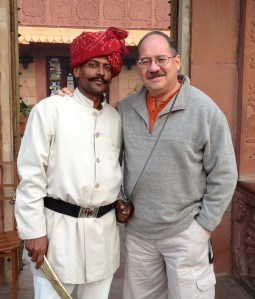
While serving in Irving, Texas, I had the unbelievable privilege of speaking at Zig Ziglar’s headquarters in Dallas. Zig heard through a mutual friend about a trip I had taken to share the gospel in remote villages along the Brahmaputra River in Bangladesh. I consequently received an invitation to share the story of my trip with his staff. I was nervous when Zig walked into the room. However, the moment Zig walked over and welcomed me I felt at ease. Jay Hellwig, his personal assistant, said that Zig “had the uncanny ability to make everyone he ran into feel like they were his friend.” I certainly felt that when I met Zig. Afterwards, he took the time to talk with me, to encourage me, and to personally thank me for sharing my story. For Zig, it was another day of doing what he did best. For me, it was one of the best days of my life.

Zig Ziglar and Omar

Posted by: Omar C. Garcia | November 30, 2012

The Reality Is Sinking In

Preparing for the 2013 Texas Water Safari

When it comes to the Texas Water Safari, the worst mistake that anybody can make is to underestimate the importance of training for this grueling 260-mile ultra-marathon canoe race. After having completed the Safari with my son Jonathan this past June, I am more determined than ever to step up my training for next year’s race. My friend Doyle has agreed to paddle with me in next year’s race. Jonathan is going to paddle with a younger partner in the hope of improving his time on his third Safari. Early yesterday morning, Doyle and I headed to the San Marcos River for our second official training run. We loaded the canoe onto his truck, stopped by Chic-fil-A for a quick breakfast, and then headed toward Luling, Texas.

Canoe at Chic-fil-A
TWS Training Run 2
When we arrived in Luling we parked my truck at Zedler Mill Dam. Our plan was to paddle the 22-miles between the first Safari checkpoint at Staples, Texas and the second Safari checkpoint where Highway 90 crosses the San Marcos River outside of Luling. From there we planned to paddle an additional 3-three miles to the portage at Zedler Mill Dam. Our training strategy is to paddle the entire course of the race before next June. We will paddle some of the more technical sections of the course more than once and continue to improve our paddling technique. We have a second lesson scheduled for next week with our instructor Holly Orr of Paddle with Style, a highly regarded instructor in the world of Texas canoeing and kayaking.

Prairie Lea Rapids
Tree Portage

Once again, the water in the San Marcos River was lower than we had hoped. This presented all sorts of new challenges along the way. The low water exposed all sorts of new obstacles including rocks, downed trees, gravel bars, and more. We encountered log jams to rival those along the Neches River Wilderness Canoe Race course. As a result, we had to portage more than a dozen times over gravel bars and three times through or around log jams. All of this slowed us down more than we had expected so that by the time we reached Luling 90 we had little daylight remaining. As we paddled toward Luling 90 we prayed for a good Samaritan to be there to give me a ride to pick up my truck since we would not make it to the Zedler Dam portage in daylight as we had hoped. As we rounded the last bend we saw a solitary figure on the bank — a young college student named Ryan who was checking out a fishing spot. He graciously agreed to give me a ride.

Blake's Menu
Doyle and I stopped to eat a burger at Blake’s Restaurant in Luling, a small-town cafe with a vintage feel and delicious food. Doyle remarked about how reality is starting to sink in as a result of this training run. The Texas Water Safari is going to be hard. This race always lives up to its reputation as the world’s toughest canoe race. I know that it’s hard. Doyle is beginning to realize just how hard it’s going to be but he is still all in. I sent Doyle a text just to remind him that if we had been on the Safari instead of a training run, we would still be on the river. That is a sobering thought, but it’s important to prepare mentally and not just physically. Doyle replied that he is still all in. In the coming weeks we will continue our physical training and our mental training as well. We will need both in order to finish the race. Thanks for following our adventure.

Text Message

Posted by: Omar C. Garcia | November 28, 2012

Wordless Wednesday

Child in Blind Town | 2008 | Jos, Nigeria

Posted by: Omar C. Garcia | November 26, 2012

World’s Poorest President

José Mujica, President of Uruguay, has been dubbed by media organizations as the world’s “poorest” president. His lifestyle stands in sharp contrast to that of other world leaders. The 77-year-old president has shunned the comforts of the presidential Residencia de Suárez and the convenience of chauffeured limousines. Instead, he lives on a small ramshackle farm on the outskirts of Montevideo, the capital of this Southern Cone nation, and drives his own 1987 Volkswagon Beetle. Mujica’s modest little home is guarded by two police officers and his three-legged dog, Manuela. He draws his water from a well, hangs his laundry out to dry, grows flowers, and battles weeds. Mujica reasons, “I’ve lived this way most of my life. I can live well with what I have.”

Perhaps the most remarkable thing about Mujica is what he does with his $12,000.00 monthly salary. He donates 90 percent of his monthly salary to charitable organizations that help the poor and small businesses. Mujica says, “I’m called ‘the poorest president’, but I don’t feel poor. Poor people are those who only work to try to keep an expensive lifestyle, and always want more and more. This is a matter of freedom. If you don’t have many possessions then you don’t need to work all your life like a slave to sustain them, and therefore you have more time for yourself.” Wise words, indeed, and worthy of consideration. Mujica had lots of time for the kind of reflection that led him to reorder his priorities. He spent 14 years in prison during Uruguay’s military dictatorship in the 1970s and 80s and was released in 1985 when Uruguay returned to democracy.

Although I do not agree some of the decisions Mujica has made as President of Uruguay, I do admire his personal example. And, I certainly do not regard him as the world’s poorest president. When I first read about Mujica, I remembered something that Mother Teresa had written: “Whoever is dependent on his or her money or worries about it is truly a poor person. If that person places his or her money at the service of others, then that person becomes rich, very rich indeed.” Jim Elliot, a Christian missionary martyred in Ecuador in 1956, wrote something equally profound in his journal. Elliot wrote, “He is no fool who gives what he cannot keep to gain what he cannot lose.” We can all learn something from this diminutive old man who has chosen to give away his possessions and to live a simple life. After all, it appears that he is actually much richer than people give him credit for.

Posted by: Omar C. Garcia | November 24, 2012

Our Backroads Adventure

Cheryl and I are finally home after two days of wandering and winding our way down Texas backroads. Our journey took us from our home in Katy all the way to Driftwood, a quiet little community nestled in the Texas Hill Country. From Driftwood we made our way south to Gonzales, the birthplace of Texas Independence. And then from Gonzales we slowly made our way back to Katy. We drove hundreds of miles, took lots of photos, and enjoyed some really delicious food along the way, including fried pickles and the biggest onion rings we’ve ever seen. As a result of our backroads adventure, we now know a little more about many of the places named on the Texas map — places like Cat Spring, New Ulm, Industry, Round Top, Muldoon, and many others. As someone who has traveled around the world dozens of times, I am proud to say that Texas has a lot of beauty to offer travelers, especially those willing to get off the beaten path.

Driftwood marked the point farthest north that we traveled to. It’s a tiny little place that seems to be frozen in time — days when life moved at a slower pace. It is a little Hill Country gem that can only be accessed via scenic drives in all directions.

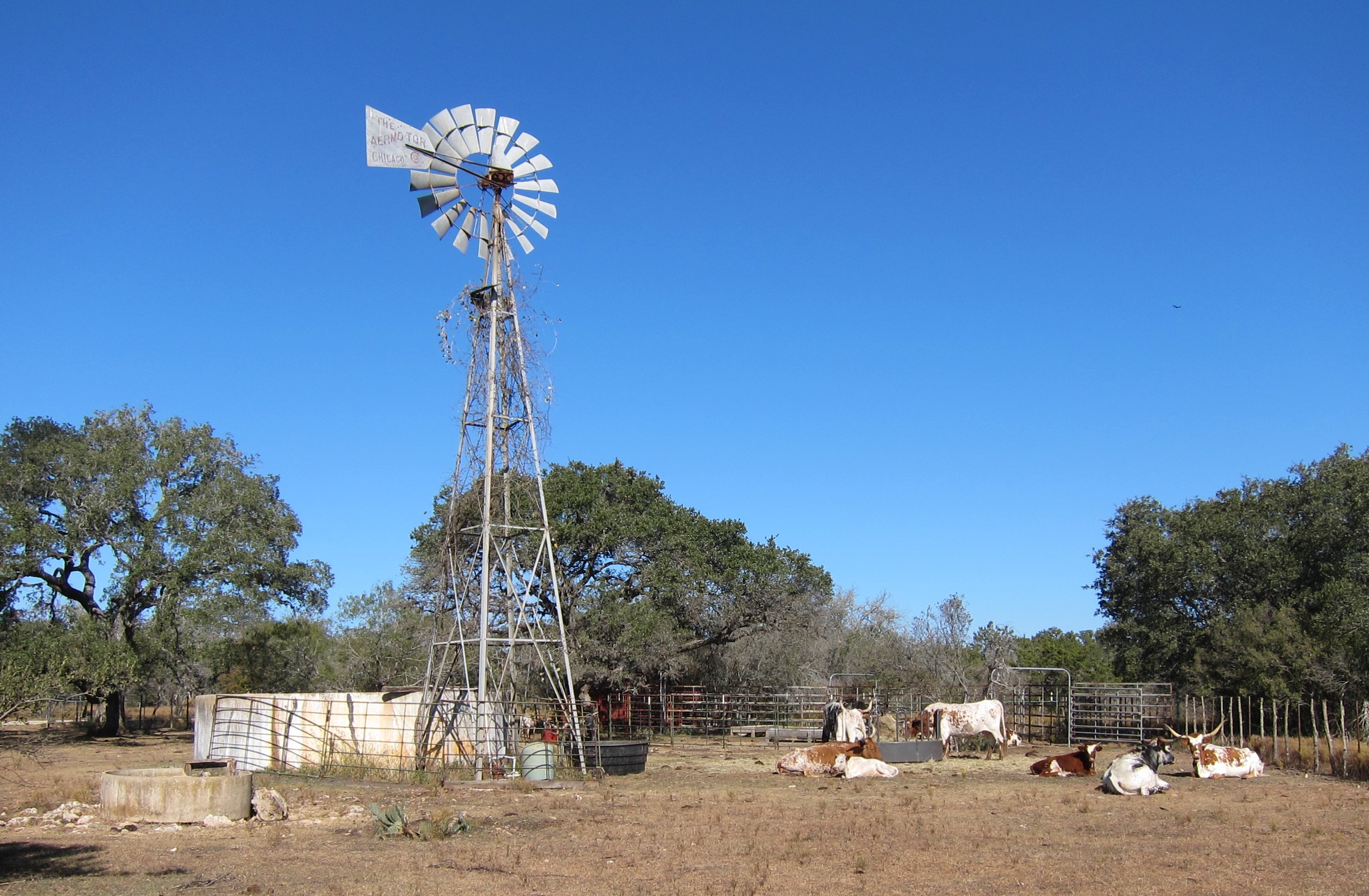
Not far from Driftwood we caught sight of longhorn cattle next to an old windmill. This is about as Texas as a drive like this gets.

Perhaps the most unusual sight we saw today was a red fire plug, out in the middle of nowhere! I had to stop and take a picture. The only thing around this fire plug are vast rolling meadows behind barbed-wire fences.

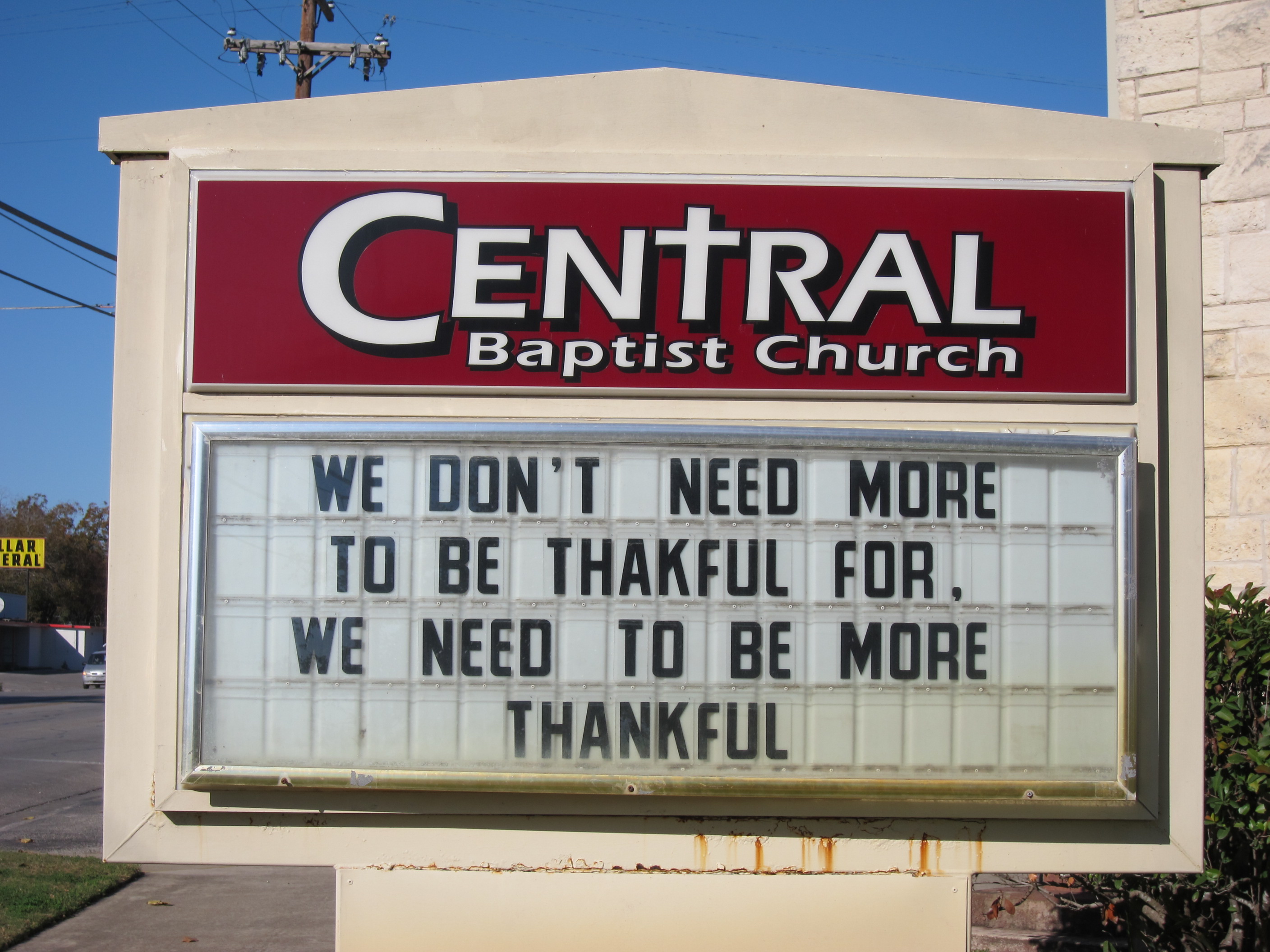
We drove past lots of churches in small towns, the kind that still put inspirational messages on their marquee. Twice along the way we turned down dirt roads to visit churches we had spied off in the distance. Worship is alive and well in rural Texas.

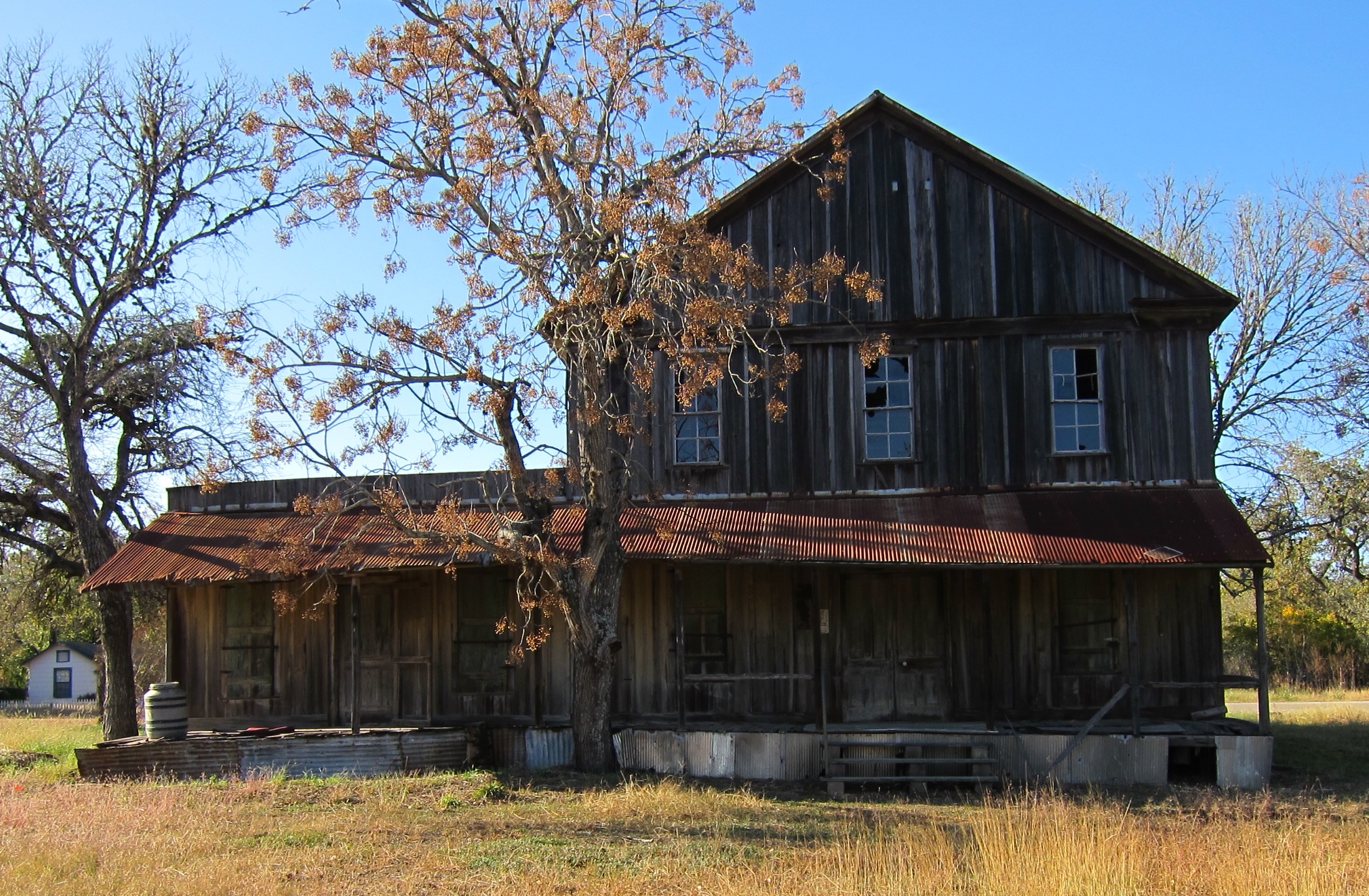
Any drive down Texas backroads will take you past old houses and buildings no longer in use. Every time I see one of these old places I can’t help but wonder about the people who built it, who lived there and for how long, and what it must have been like for those who lived there to celebrate holidays and live through the ordinary days.

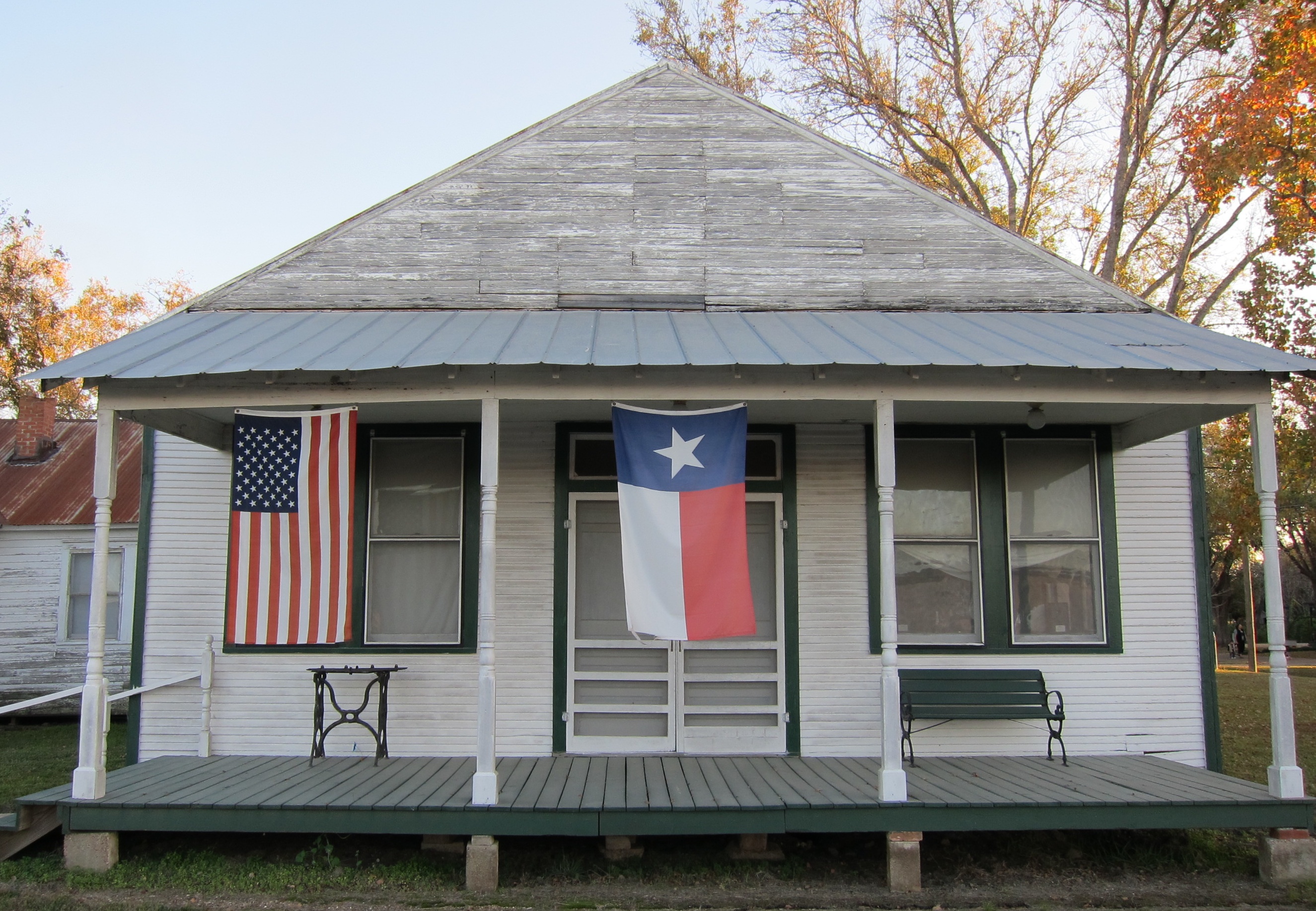
Patriotism is alive and well in rural areas. I wish I had counted all of the Texas and US flags that we saw along the way.

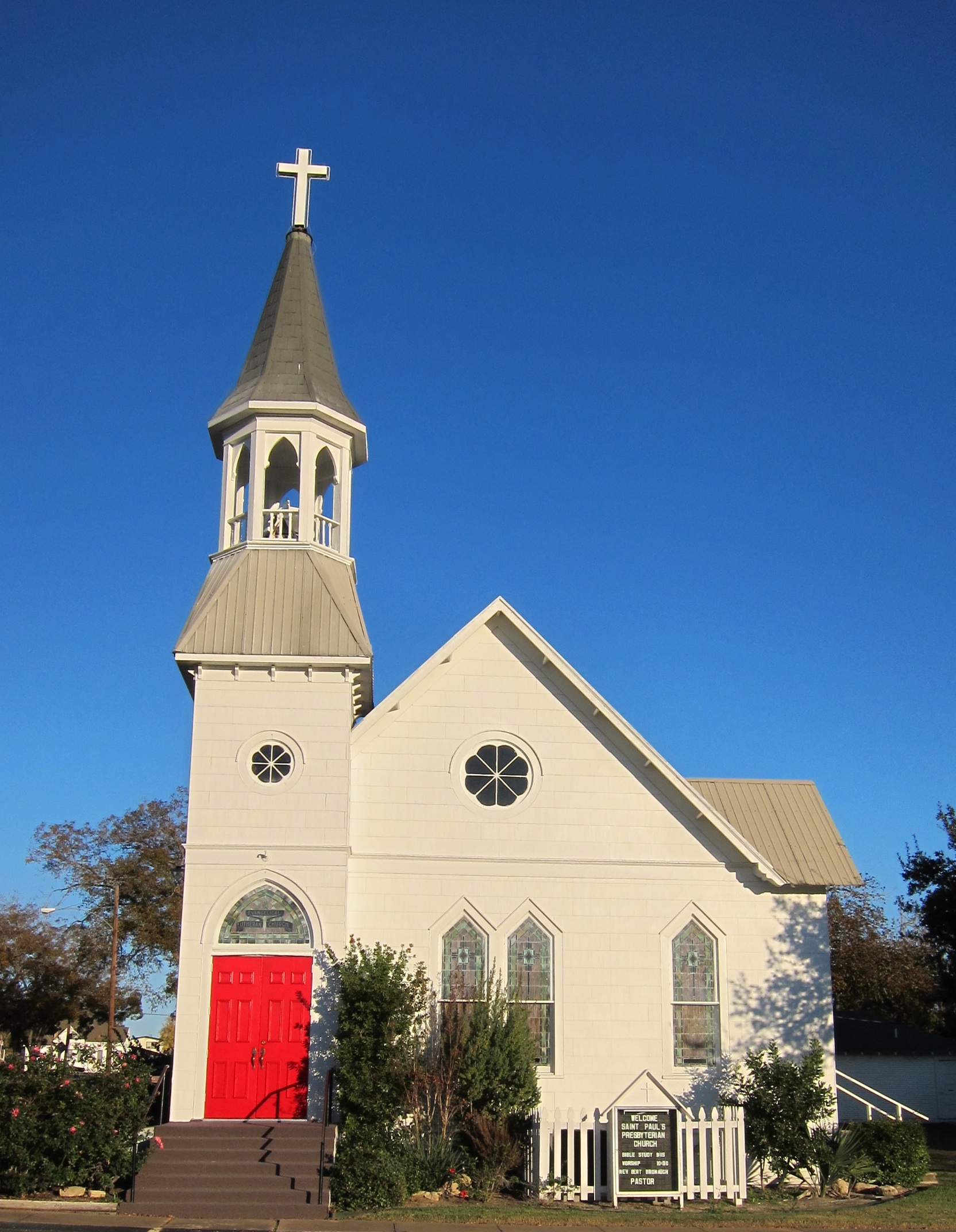
And, we had to stop to take a photo of the church with the red door. The contrast immediately caught our attention.

On the way home, Cheryl and I talked about how much we enjoyed our little adventure and where we might wander to next. We agreed to explore the backroads west of San Antonio in the near future. We hope to continue learning more about the great state of Texas, one backroad at a time.

Posted by: Omar C. Garcia | November 23, 2012

Our No Agenda Road Trip

Cheryl and I decided to do something a little different to celebrate our anniversary this year — a two-day backroads of Texas road trip. The only ground rule that we set for this trip is that we would have no particular agenda other than to stay off of the main roads and obey our whims to follow and explore beckoning backroads along the way. So, we set off this morning in the general direction of Round Top, Texas and took the first opportunity to get off of Interstate-10 to begin our adventure. We spent the entire day driving slowly and enjoying the sights off the beaten path. There is little traffic on these back roads which made our drive all the more enjoyable. It was kind of fun to not be in a hurry to get anywhere, especially since we did not have plans to be anywhere in particular. So, we stopped quite a few times along the way to look at scenery, to talk, and to take photos.


One of the most notable things about driving Texas backroads is the number of Texas and US flags that mark the entrances to rural properties along the way. We drove very few miles where we did not see flags fluttering in the breeze.


Texas backroads also offer lots of interesting sights. We saw an old rusty bicycle turned into yard art as we drove through Shelby and a longhorn-bedazzled old Lincoln in Round Top with a big sombrero atop its silver roof. The owners of this car likely have no problems finding their whimsical chariot in a parking lot full of cars.


We stopped for lunch at Los Patrones Mexican Grill in Round Top, a delightful little place in an old building with weathered wooden floors. The smell of fajitas drew us in although we enjoyed the beef enchiladas.


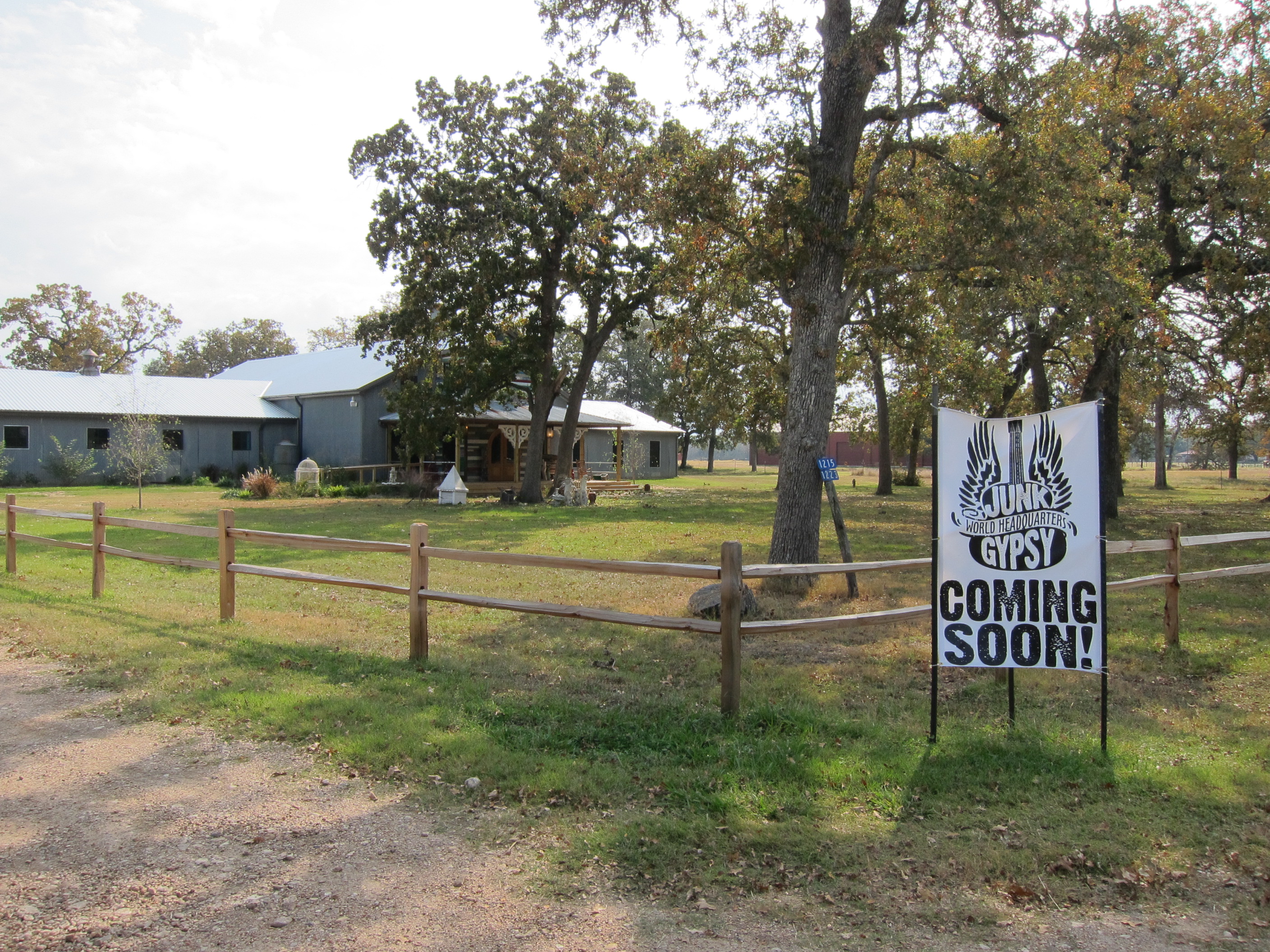
As we left Round Top we saw the future home of the Junk Gypsies store. The Junk Gypsies is one of our favorite HGTV programs. A few miles down the road we noticed a tiny white church. The sign out front identified it as the world’s smallest Catholic church that is still in use. About an hour later we noticed another church near Muldoon. This church is obviously no longer in use. As I walked through this weathered old building I noticed faded Sunday School quarterlies scattered on the floor. And, as I stood at the altar and looked out at the broken pews, I could not help but wonder how many people might have worshiped there over the years and made some really good decisions to love God and love their neighbors.


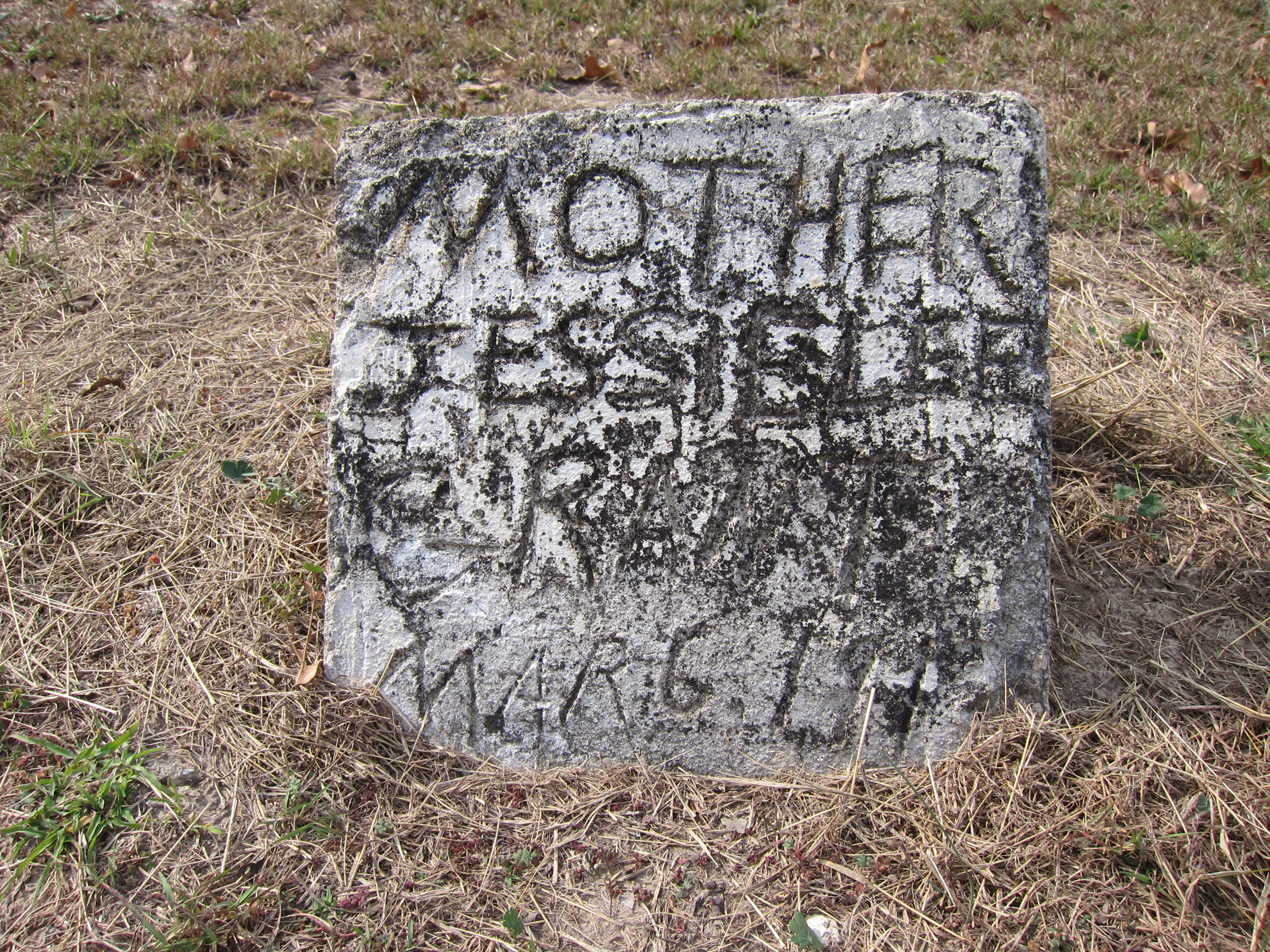
We also stopped by an old cemetery along the way and spent half an hour walking among and looking at the old grave markers. Many of them were so weathered that we could not read the names of those buried there. It was kind of sad to see so many weathered headstones with faded names and wondered if anyone ever visited these old graves. We saw no evidence of flowers, plastic or fresh, anywhere in this old cemetery.

We are excited to continue our Texas backroads adventure tomorrow. We are just going to see where the road leads and hope to make it home some time in the evening. I encourage you to consider taking your own off-the-beaten-path adventure close to your home. This is something you can do in a day, doesn’t cost much, and will clear your head and refresh your heart.

Posted by: Omar C. Garcia | November 22, 2012

Protecting the Flame

My wife Cheryl and I are celebrating our 32nd wedding anniversary today. This is the sixth time in the past thirty-two years that our anniversary has fallen on Thanksgiving Day.

Cheryl and I had our first Thanksgiving meal together while on our honeymoon at Red River, New Mexico. We heated up a couple of frozen turkey dinners, enjoyed our romantic meal together in front of the fireplace, and then headed out to the ski slopes.

Every Thanksgiving meal since then has been much more elaborate and always with family. I don’t think we could have imagined on our first Thanksgiving Day together where the years would take us and all of the great memories we would make along the way. We are indeed thankful for God’s goodness and the many ways in which He has blessed our marriage throughout the years.

Thanksgiving Day | 27 November 1980 | Red River, New Mexico

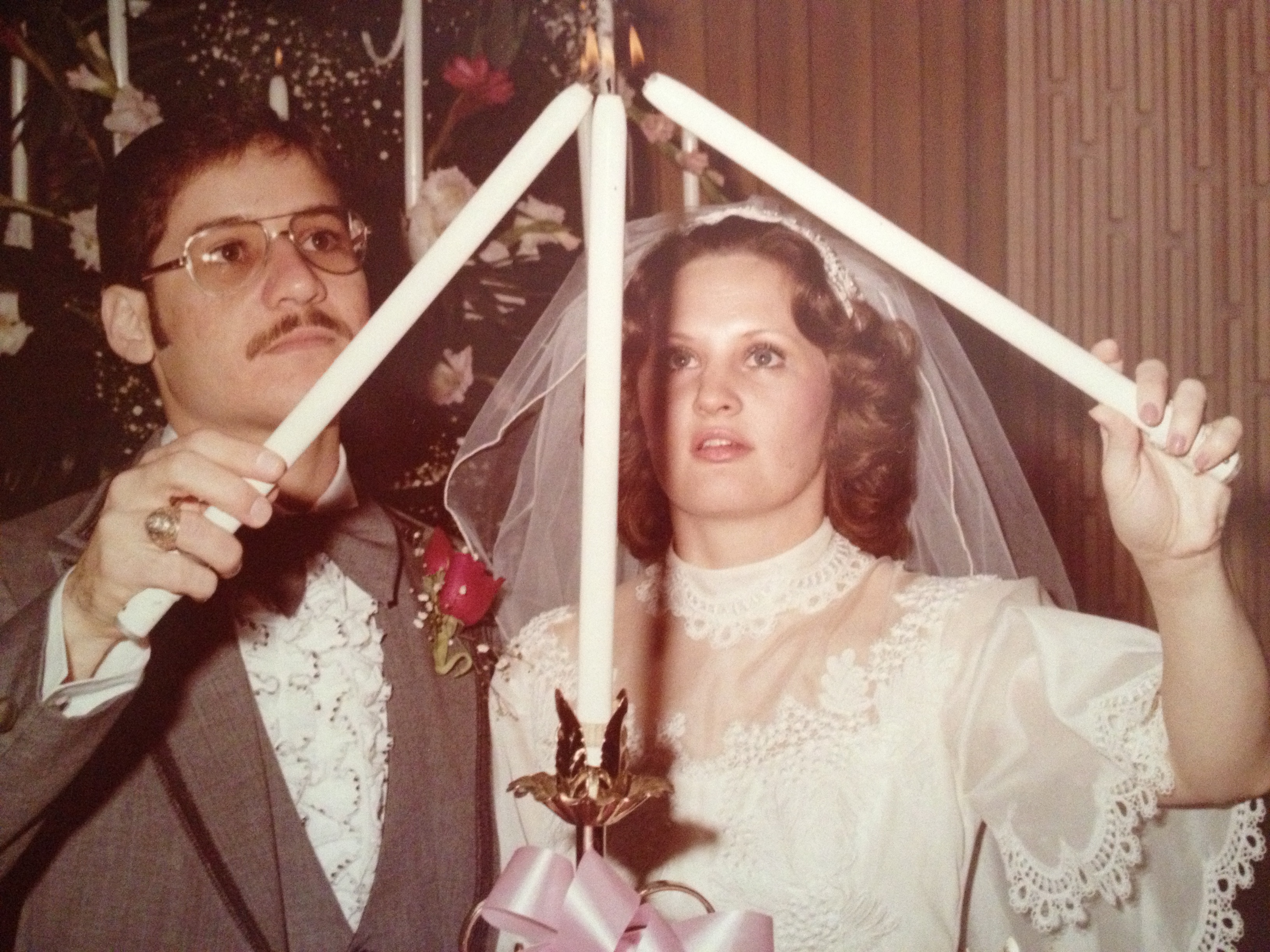
When Cheryl and I got married, we incorporated a Unity Candle into our wedding ceremony. I love what the unity candle represents — two becoming one. We understood then that lighting the Unity Candle was only the first step and that we would spend a lifetime protecting the flame. Protecting the flame is absolutely essential to a healthy marriage!

I read something interesting about those who carried the Olympic Flame before the start of the London 2012 Olympics. Unbeknownst to most of the watching public, a specially selected Torch Security Team was present every step of the way.

It was the responsibility of this team to protect the integrity of the flame at all times from anything that might threaten to extinguish it. This team also ensured the safety of each of the torch-bearers, made certain that the torch was exchanged properly, and protected the flame at night while we all slept.

Lighting our Unity Candle | 22 November 1980 | Corpus Christi, Texas

Every couple has a responsibility to protect their respective unity flame from the contrary winds that threaten to extinguish it. Sometimes these winds come with the unexpected force of a tornado and other times they come quietly. Whether these winds are generated by adversity or temptation or boredom, we have a responsibility to protect the flame.

Before Cheryl and I ever exchanged vows around the Unity Candle, we set up some sturdy breakers to protect the flame.

First, we agreed that we would pray together.

Second, we agreed that we would never allow the sun to go down on our anger and that we would never turn our bedroom into a battlefield.

Third, we agreed that we would never use the word “divorce” as a threat or even in a joking manner.

While these may not seem like the most profound things in the world, they have helped us to protect our unity flame. Each of these breakers is anchored and bolstered by our mutual commitment to God, our abiding love and respect for one another, and our determination to make it to the finish line together.

It’s been a long time since Cheryl and I shared our frozen turkey meal together on our first Thanksgiving. I can honestly say as I look back on those days when I was so in love with my new bride that, by comparison, those are the days I loved her the least.

My love for my wife has grown and deepened in ways I could not have imagined when we were on our honeymoon. And, our unity flame continues to burn because we protect it daily from anything that threatens to extinguish it.

Happy Anniversary, Cheryl. I love you more today than yesterday.

And, Happy Thanksgiving to you and yours. Who knows, I may apply to join the next Olympic Torch Security Team. I love what those folks do and what they represent!

« Newer Posts - Older Posts »

Categories