Posted by: Omar C. Garcia | December 15, 2015

To Our Sons

I love adventure. Over the years I have been privileged to experience some of the most amazing adventures all around the globe. My shortlist includes completing the Texas Water Safari with my son, crossing the Gobi by rail, biking through the jungles of Angkor, hiking in the foothills of the Himalayas, floating above Cambodia in a hot air balloon, backpacking the Lone Star Hiking Trail, venturing for days down a trans-Himalayan river, and more.

Cambodia Bike Team
While these adventures are all really cool, I believe that fatherhood is the greatest adventure of all. There is no question about the fact that I have lost my bearings more than once as a father — times when my life was way out of balance. And, I have made more than my share of parenting mistakes. Even so, I have tried to learn from every failure and to take intentional steps toward becoming a better Dad.

That’s why I enjoy meeting with my Band of Fathers core group. Our group is dedicated to building strong bonds between fathers and sons by means of shared study, shared mission, and shared adventure. We all believe that fatherhood is the greatest adventure of all and we are committed to making greater strides toward becoming champions to our sons and our families.

Over the past year, our group has spent time in study and in prayer for one another and for our boys. We have benefited from guest speakers — others dads who have shared their personal stories with us. We have also participated in a couple of local shared mission initiatives to help others in need. Most recently we ventured to the Guadalupe Mountains for a cold-weather adventure with our boys.

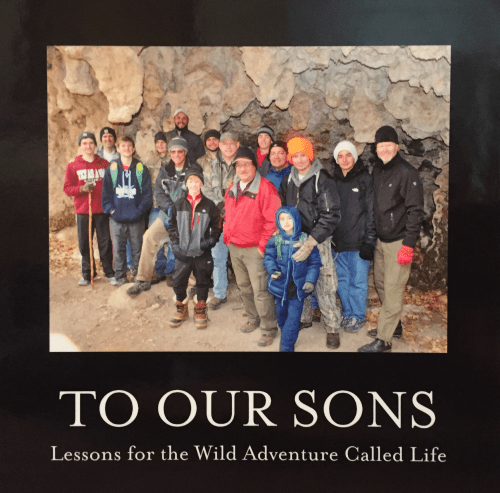
To Our Sons Cover
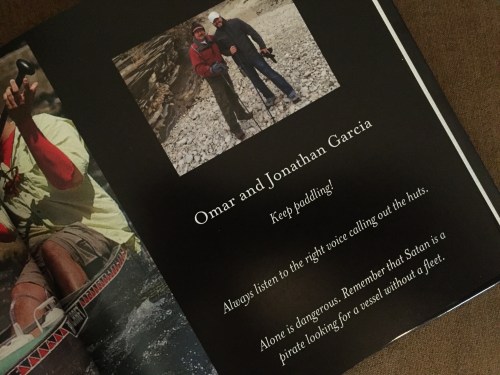
As we come to the end of this year, our group has compiled a book dedicated to our sons. Our goal was to each contribute two or three bits of practical and spiritual wisdom that each of us have respectively shared with our sons over the years. Each of us also included a couple of our favorite father and son pics. We will present these books to our sons at Christmas. We pray that these lessons for the wild adventure called life will be a blessing to our boys.
To Our Sons Page
We live in a day when it’s easy to adventure vicariously through reality television shows about folks who live off the grid. I confess that I enjoy watching these programs that feature rugged individuals trying to survive in some of the planet’s most hostile environments. But, our greatest adventure will never be watching reality television or even biking through the jungles of Angkor. Our greatest adventure should be raising our kids to love and serve God and to enjoy life in a way that pleases Him.

I am thankful for my Band of Fathers — brothers united in the cause of becoming better dads. We look forward to sharing our practical lessons for the wild adventure called life with our sons. And we look forward to how God will continue to grow and guide us to become better dads in the coming year.

Posted by: Omar C. Garcia | December 13, 2015

Hill Country Bushwhacking

John Muir, regarded as our nation’s most influential naturalist and conservationist, said, “Of all the paths you take in life, make sure a few of them are dirt.” There is indeed something of great value in taking the time to travel down dirt paths — or any rugged paths that challenge you and require you to pay greater attention to your surroundings.

This past weekend, several in our family enjoyed a mini-reunion at a spot in the Texas Hill Country that is near and dear to our hearts — a place where we watched our kids enjoy the great outdoors. Returning to this spot so many years later with those same kids now grown and with kids of their own was absolutely cool.

Family Hike Selfie
In addition to enjoying some fabulous meals, lots of laughter, and reminiscing around the fire, we spent time hiking down dirt and rock-strewn paths in the hills, with little ones in tow. What a beautiful thing it was to have three generations together, enjoying one another’s company under beautiful Texas skies.

IMG_7079
I especially enjoyed the time I spent trekking with my nephews Clinton and Ryan. I watched both of these boys and my own kids grow up together on the many weekends we spent in the Hill Country. As soon as I arrived, Clint and I took a familiarization hike down Flat Creek — a picturesque cold water creek that eventually winds its way to the Frio River. We had a great time together.

Ryan Hill Country Cave
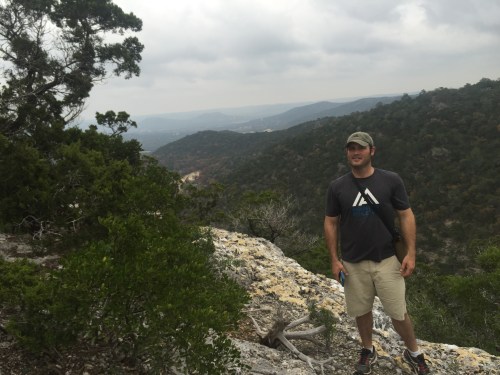
Later, when my nephew Ryan arrived, we set off on a couple of bushwhacking hikes through the hills — making our own trails. Ryan wanted to find an old limestone cave he had stumbled across as a kid. So, we set off through the hills like a couple of billy goats, weaving our way upward through stands of cedar, pine, mountain laurel, maple, and elm trees.

Omar Hill Country Hike
As we hiked, Ryan and I talked a lot about the joy and benefits of getting off the trail and blazing our own. Bushwhacking involves navigating from a known point through an unknown area to another known point on the map. The time we spent meandering up a hill through dense growth left its mark on our legs and arms. No big deal. It was all worth it when we reached the top of the hill where we enjoyed a magnificent view of the surrounding countryside.

Ryan Atop Hill
My friend Russell Almond, a member of my Band of Fathers core group, often reminds his son that difficult paths can lead to beautiful places. I absolutely agree. And, it seems that the more layers of difficulty you have to overcome to reach those places, the more beautiful your destination seems. That was certainly the case when Ryan and I reached the top of the hill. While we enjoyed the journey, the destination was breathtaking.

Fallen Tree A in 12-2015
I’m always one to look for metaphors when spending time outdoors — those simple life lessons that can help me persevere. One of the best things about our hikes this weekend was finding an old fallen tree that inspired me when I first came across it while hiking in this area in the 1980s. The tree is still there. I added photos to a story that I wrote about this tree more than twenty-five years ago and posted on my blog a few years back. I hope you’ll take a moment to read The Fallen Tree and that you will look for opportunities in the coming year to take a few dirt paths and do a little bushwhacking of your own.

Posted by: Omar C. Garcia | December 9, 2015

Hope Bringer

The writers of the psalms understood what it meant to be in trouble. “How long, O Lord, will you look on?” David cried out. “Rescue me from their destruction, my precious life from the lions!” (Psalm 35:17). I love the Book of Psalms. There are times when the psalms speak to us. And there are times when the psalms speak for us — times when we are in such utter distress that we must borrow the language of the psalms to cry out to God.

The theme of dealing with injustice is woven throughout the psalms. These writers understood the schemes of the wicked and their unscrupulous ways of oppressing the weak and vulnerable. The emotion is there — in desperate yet hopeful words calling on God to act on behalf of the oppressed.

“O Lord,” the psalmist wrote with assurance, “Thou hast heard the desire of the humble; Thou wilt strengthen their heart, Thou wilt incline Thine ear to vindicate the orphan and the oppressed, That man who is of the earth may cause terror no more” (Ps. 10:17-18).

 This hopeful passage reminds me of Martin Luther King, Jr’s observation: “The moral arc of the universe is long, but it bends toward justice.” Ultimately, no one sins with impunity, including those who are guilty of the gross oppression of the weak.

Hope Bringer Team
Every year, our missions ministry mobilizes teams to work with our justice partners in West Bengal, India. Kay Smith serves as our point person to connect our folks with young girls who have suffered unimaginable evils at the hands of sex traffickers.

Earlier this year, Kay led a team to work with our friends at Jewels In A Crown, a ministry that reaches out to young victims trapped in Kolkata’s filthy brothels. The focus of this trip was to help these women move toward healing by writing their own psalm and then setting it to music. The response was emotionally overwhelming.

Hope Bringer Girls
Kingsland member Bobby Miles, a choir director in one of our local schools, accompanied the team and set the girls’ anguished cries to music. The result — an emotionally charged song entitled Hope Bringer. Bobby Miles and Hope Shaw recorded the song in English and incorporated the girls singing in their native Hindi in the background resulting in an absolutely beautiful composition.

Hope Bringer CD
Today, we received the first shipment of CDs featuring the Hope Bringer composition. Jewels In A Crown will sell these to raise funds to continue their outreach initiatives in Kolkata. I am grateful for Kay and all of our members who have served victims of oppression and trafficking in Kolkata and beyond. These initiatives are a key component of inviting all people to experience true fulfillment in Jesus Christ, one home at a time.

Posted by: Omar C. Garcia | December 6, 2015

On Radicalization

Last Wednesday’s San Bernardino mass shooting by Syed Farook and his wife Tashfeen Malik injured twenty-one and killed fourteen of Farook’s own co-workers. No one, not even their neighbors, suspected that this couple had turned their rented quarters into a small armory and that Farook and his wife were hatching an unbelievably heinous plan that would forever alter the lives of so many innocent people, including their own six-month old daughter.

San Bernardino Killers
News of this senseless massacre on the heels of the Paris terrorist attack caused us to again collectively sigh and wonder about why anyone would do something so horrible. Days later, authorities discovered that Malik had posted to Facebook a pledge of allegiance to ISIS leader Abu Bakr al-Baghdadi. The social media behemoth quickly removed her post because it violated community standards that prohibit the promotion of terrorism or the glorification of violence.

ISIS, never one to miss an opportunity to advance their own name in the wake of violence, called the murderous couple “supporters” — a somewhat lesser designation than their usual “knights” or “soldiers” designations. Of course, on Saturday, ISIS-sponsored al-Bayan Radio declared,”We pray to God to accept them as martyrs.” Really? Accept cold-blooded murderers as martyrs? Therein lies one of the fundamental flaws of Islamic theology.

Authorities want to know about the radicalization of Farook and Malik, both of whom had ties to Saudi Arabia. Were they influenced by Wahhabism? Perhaps they were motivated by the media of terrorist organizations like Al Qaeda and ISIS — both of which call on people to commit acts of terror on their own and even offer step-by-step instructions on how to make certain weapons, like the pipe bombs found in the residence of the murderous couple. One law enforcement official anonymously commented, “This is looking more and more like self-radicalization.”

The word radical comes to us from the Latin term radicalis or radix which means root. The National Counterterrorism Center defines radicalization as “a process by which an individual or group comes to adopt increasingly extreme political, social, or religious ideals and aspirations that (1) reject or undermine the status quo or (2) reject and/or undermine contemporary ideas and expressions of freedom of choice.” Of course, the worst expression of radicalization is the type that leads to politically or religiously motivated violence.

There is a troubling consistency when we hear of the radicalization of Muslims. Somehow this radicalization always leads to the disregard of the sanctity of human life, to violence, and to death. Muslims must ultimately come to terms with the most disturbing and dangerous element of their worldview, something at the root of their theology — the sanction to kill infidels or those who are not of like faith and practice. This in addition to the belief that martyrs can expect to enter a heavenly brothel with as many as seventy-two houri or virgins at their disposal.

Radicalism looks much different among Christ-followers. A Christian who radically lives out the teachings of Christ lives as Christ lived. This kind of radicalism never leads to death but instead to compassionate acts of service, to sacrificial acts of love, and to the affirmation of life, even the lives of those who are not Christ-followers.

When my friend Steve Hyde’s father was targeted and killed by radical Muslims in the Philippines, Steve vowed a vengeance of love. This is, in part, what Steve shared at his father’s funeral:

“I will avenge my father’s death, but not like the plans of the Evil One. To kill and destroy is easy, but to love your enemy is God’s command. The plans of Jesus are peace and love through the forgiveness of sins. I will go and bring Jesus throughout this evil world and take the light of Jesus into the darkness.”

Steve Hyde reminds us of the kind of radicalization that will change our world for the better. To love others, after all, is at the root of what we believe as Christ-followers and what Christ modeled for His followers.

Posted by: Omar C. Garcia | November 30, 2015

Band of Fathers Adventure

Earlier this year I started the Band of Fathers, a core group for fathers interested in becoming better dads and champions to their sons. Jonathan, my own son, was my inspiration for starting this group. Ours is a modern day prodigal story with a happy ending. Jonathan and I learned a lot of valuable lessons through the dark years — experiences that brought us closer than either of us could have ever imagined was possible.

Jonathan and Dad
Shared adventure became a key component that strengthened my relationship with Jonathan. Over the years we have participated together in almost a dozen ultra-marathon canoe races and many other outdoor adventures. These adventures have placed us in a context where we have had to work together to overcome physical challenges in order to reach common goals. And, they have given us room to have amazing heart-to-heart conversations.

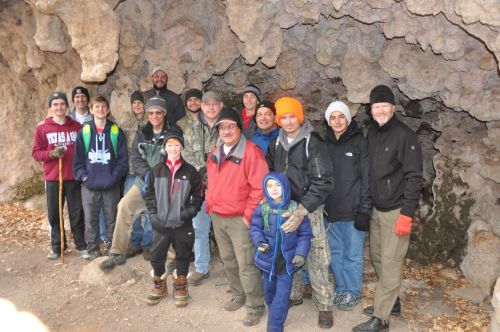
McKittrick Canyon TeamSo, when my friend Gil Harris challenged me to pray about starting a core group for men, my heart immediately leaned toward meeting with fathers and providing opportunities for them to serve others and to have memorable outdoor adventures with their sons. Over the past year our Band of Fathers has made some special memories by serving others with our sons.

IMG_6908
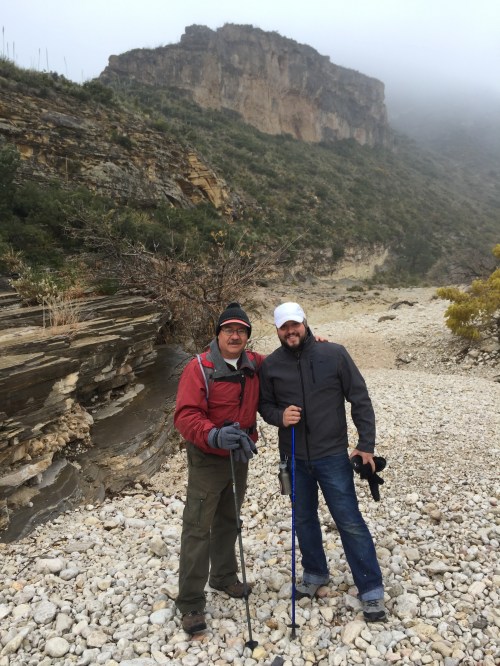
For the past eight months, we have looked forward to venturing to Guadalupe Mountains National Park for our first shared adventure of the year. We set the weekend after Thanksgiving to hike to the summit of Guadalupe Peak, the highest point in Texas. Unfortunately, the weather did not cooperate. But, that did not stop us from going. Plan B was to hike McKittrick Canyon — a place described as the most beautiful spot in Texas.

James Tent Set-up
When we arrived at the national park late Friday afternoon, temperatures were already starting to drop from the lower 30s into the upper 20s. Watching our fathers and sons work together to set up camp in the freezing rain was inspirational. No one complained about the cold. Everyone pitched in to help. And everyone was thrilled when our meal of hot dogs, chili, and hot chocolate was ready.

Ice on Tent
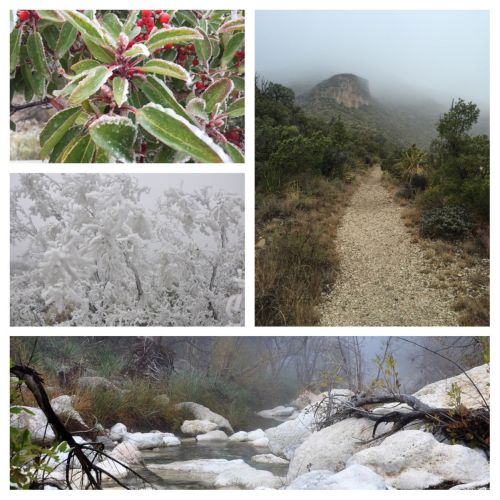
Saturday morning greeted us with 20-something degree temperatures and a world of ice. Through the night, the freezing rain had turned the plants and trees in the park into beautiful ice sculptures. We all felt privileged to see the park as few others have the opportunity to see it. After a breakfast that consisted of copious amounts of hot chocolate and coffee, we headed to McKittrick Canyon.

McKittrick Hike
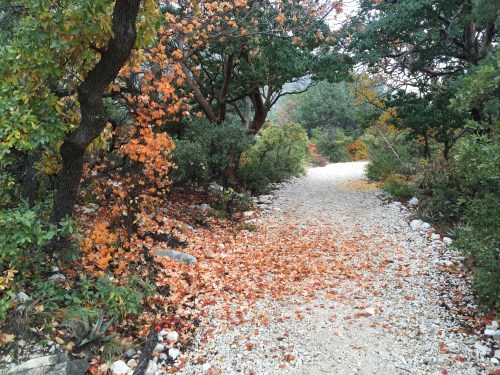
McKittrick Canyon has a beauty all its own. It did not take long for us to realize that we were indeed in one of the most beautiful spots in the Lone Star State. We hiked through a striking palette of Fall colors made even more dramatic by the cold, overcast skies. Colorful big-tooth maples, deep-green alligator juniper, bark-shedding manzanita trees, and other native plants each contributed to the beauty of the canyon.

Trail at McKittrick Canyon
After a day of hiking, we drove to Balmorhea State Park for a second night of cold-weather camping. We gathered around the campfire where we enjoyed delicious steaks provided by Taste of Texas along with all of the fixings and a delicious dutch-oven desert before it started to rain. Again, no complaints!

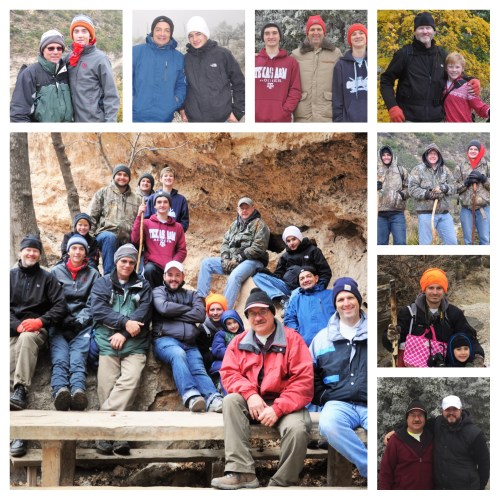
McKittrick Grotto Group
Our objective as a Band of Fathers is to grow in our relationship with our Heavenly Father and our sons through shared study, shared mission, and shared adventure. We believe that all three of these elements are important in building strong relationships with one another and with our sons.
McKittrick Canyon PicsI am grateful for our cold-weather shared adventure to Guadalupe Mountains National Park. This amazing place of natural beauty was the perfect setting for us to meaningfully connect with our Heavenly Father and with our sons.

Posted by: Omar C. Garcia | November 24, 2015

Across Antarctica Alone

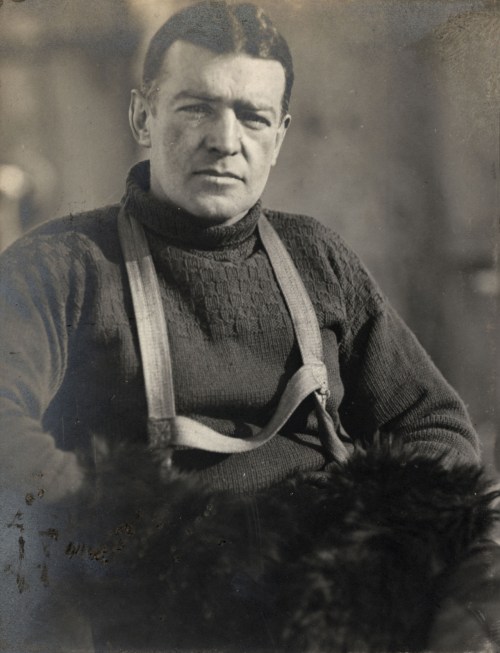
Ernest Shackleton is one of my historical mentors. He lived during the Heroic Age of Antarctic Exploration, the period from 1897–1922 during which sixteen major expeditions from eight countries focused on the Antarctic continent.

Shackleton
Shackleton first ventured to Antarctica in 1901 aboard the Discovery as a member of the well-financed National Antarctic Expedition under the command of Robert F. Scott. Although this was the best equipped scientific expedition to Antarctica to date, Scott and his team failed to reach the South Pole.

Shackleton returned to Antarctica in 1908 aboard the Nimrod as a member of the British Antarctic Expedition. By January 9, 1908, Shackleton and three companions had trudged to within 96 miles of the South Pole. However, finding themselves dangerously short of supplies, Shackleton made the most difficult decision of his life — he turned his men toward home.

In 1911, the Norwegian explorer Roald Amundsen and the British explorer Robert F. Scott led their respective expeditions to Antarctica in an attempt to reach the South Pole. On December 14 of that year, Amundsen arrived at the pole a month before Scott. Sadly, Scott and his four companions died on their return journey.

In 1914, with the prize of the pole already having been claimed by Amundsen, Shackleton set his sights on an ambitious new challenge — a trans-Antarctic expedition from the Wedell Sea to the Ross Sea. He hoped to be the first to cross the cold continent on foot. Shackleton described this expedition as “the last great polar journey that can be made.”

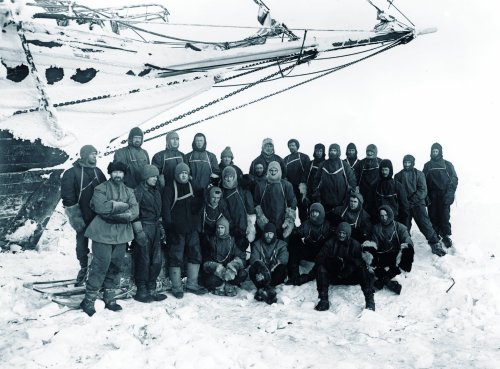
Endurance Crew
In December 1914, Shackleton set out with twenty-eight men on the Imperial Trans-Antarctic Expedition. However, once again, Shackleton encountered an unexpected and devastating setback when his ship, the Endurance, became trapped in an ice pack in the Wedell Sea. The ship was later crushed, leaving Shackleton and his men stranded.

Shackleton and his men endured a twenty-month ordeal — one of the greatest survival stories of all time. After finally reaching Elephant Island, Shackleton selected a few men and made a daring attempt to reach a whaling station on South Georgia Island in a small lifeboat. He promised the men he left behind that he would return for them. He did. And he did not lose a man.

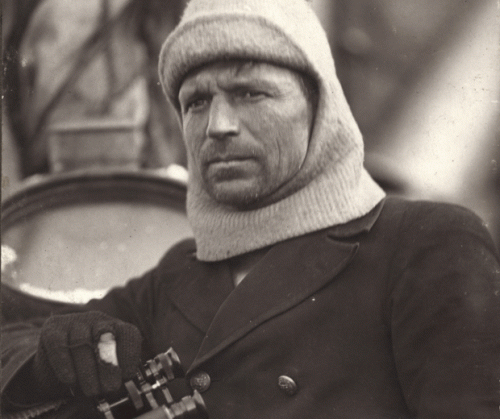
Frank Worsley
I first learned about Shackleton and the failed trans-Antarctic expedition by reading Alfred Lansing’s book, Endurance. The story is remarkable. I could not put the book down. One of my favorite characters in the story is Frank Worsley, captain of the Endurance. When Shackleton selected a small group of men to travel from Elephant Island across 800 miles of ocean to South Georgia Island to get help, Worsley accompanied Shackleton.

Shackleton reached South Georgia Island thanks to Worsley’s brilliant navigation skills. Sailing across the stormy South Atlantic Ocean from one tiny island to the other was no small feat. But Worsley got them to South Georgia where Shackelton was able to arrange for the rescue of his men.

Frank Worsley
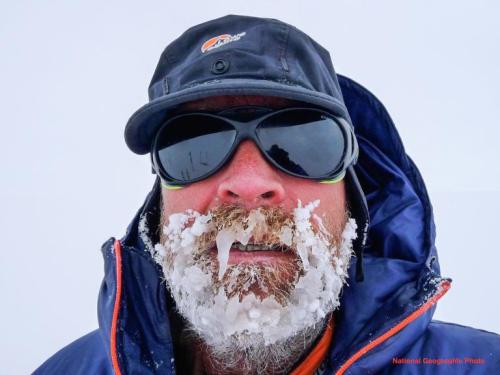
A couple of weeks ago, Henry Worsley, a distant cousin of Frank Worsley, set off on a remarkable journey. In his own words: “In this centenary year, to commemorate Sir Ernest Shackleton’s 1915 attempt to complete the first crossing of the Antarctic Continent, I will attempt the first ever solo crossing of the Antarctic landmass, unsupported and unassisted.”

Thanks to modern technology, Worsley is posting daily updates on his website, including oral logs sent by satellite phone. And, satellite tracking devices enable us to follow his adventure step-by-step. I am especially inspired by the fact that Worsley, who spent 36-years in the military, is attempting to do this solo crossing at the age of 55. Go Worsley!

In a day when most people seek comfort as they grow older, I have deep respect for guys like Worsley who pursue great adventures. In many ways he reminds me of Caleb, one of my favorite Old Testament characters. At 85 years-old, Caleb said, “I am still as strong today as the day Moses sent me out; I’m just as vigorous to go out to battle now as I was then” (Joshua 14:11).

Schakelton Solo Antarctica Map
I know that anything can happen to stop Worsley in his tracks as he walks across Antarctica alone. But I am rooting for him and I am praying that he is able to complete his great adventure. He is motivated by his own family’s history and his desire as a soldier to raise funds to help injured veterans. Frank Worsley and Ernest Shackleton would be proud!

Posted by: Omar C. Garcia | November 15, 2015

Praying for Paris

One of the distinguishing characteristics of Christ-followers is that they always move in the direction of people in need. You will find followers of Jesus compassionately serving wherever there are people who are hurting. Whether that hurt was created by social storms, natural catastrophes, unspeakable evils, injustice and oppression, or the challenges of living in a tough geographical context, you will find the followers of Jesus there — doing what Jesus would do!

One thing that a true follower of Christ should never do is to wantonly take the lives of others. To strap on a bomb, walk into a crowd, and kill yourself and those around you is not something that Jesus would do. Such a heinous act would be a direct violation of both the example and the teachings of Jesus.

Jesus never took a life. Instead He gave His own life as a ransom for many. And Jesus never instructed His followers to take a life. He was instead a servant-leader who showed the world what love looks like. Jesus told His disciples that love — not hate — would be the distinguishing hallmark of His followers.

Eiffel Tower
Those responsible for the bombings in Paris have once again shown the world what you can expect from a worldview that is devoid of a sound theology of the sanctity of human life. ISIS, of course, claimed responsibility for this tragedy that took the lives of 129 people and injured hundreds of others. Their impoverished worldview, like those of other terrorist organizations, has once again wreaked havoc and left a trail of wrecked lives.

Pundits and intelligence think tanks will connect countless dots as they analyze the Paris attack. As Steve Jobs once said, you can only connect the dots by looking back. Ultimately, those dots lead to the heart of a worldview that sanctions the killing of those who are not of like faith and practice — or infidels. Those dots will lead to teachings that speak of jihad, not all of which can be explained away or sanitized to define jihad as merely a spiritual struggle.

I applaud the many in the Islamic world who are crying out against the terrorist attacks in Paris. However, my Muslim friends are going to have to do more than hold candlelight vigils. They must ultimately address the exegesis of their own scriptures — especially those passages that sanction violence.

Our decisions are largely driven by our worldview. When Islamic terrorists feel justified in creating hell on earth because of how they interpret their own holy writings, then no one is safe. Islam must take greater measures to educate or reeducate their own youth in order to raise up a generation that thinks differently about the meaning of jihad.

As for me, I will remain an intentional follower of Jesus. There is no confusion with Him. He modeled well what it means to love others and instructed His followers to do the same. I am praying for Paris.

Posted by: Omar C. Garcia | November 13, 2015

Swahili Sayings

Every culture has their own sayings or proverbs — practical nuggets of wisdom passed down from generation to generation. Swahili, one of the most widely spoken languages in Africa, is rich in proverbs. While in Africa last month, I came across some interesting, enlightening, and entertaining Swahili proverbs. These thought-provoking proverbs are rich in wisdom. Here are a few of my favorites.

Terry and Kids in DRC
Swahili Saying: Mwenye njaa hana miiko.
Translation: A hungry man observes no dietary restrictions.

Proverbs 27:7 expresses a similar sentiment: “One who is full loathes honey, but to one who is hungry everything bitter is sweet.”

Swahili Saying: Siku utakaya kwenda uchi, ndiyo utakayokutana na mkweo.

Translation: The day you decide to go out naked is the day you will run into your in-laws.
Or into your preacher!

Swahili Saying: Manahodha wengi chombo huenda mrama.
Translation: With too many captains, the ship does not sail properly.
It is indeed true that “too many cooks spoil the broth.”

Swahili Saying: Mcheza na tope humrukia.
Translation: He who plays with mud will get splashed.
One popular expression warns, “If you play with fire, you get burned.”

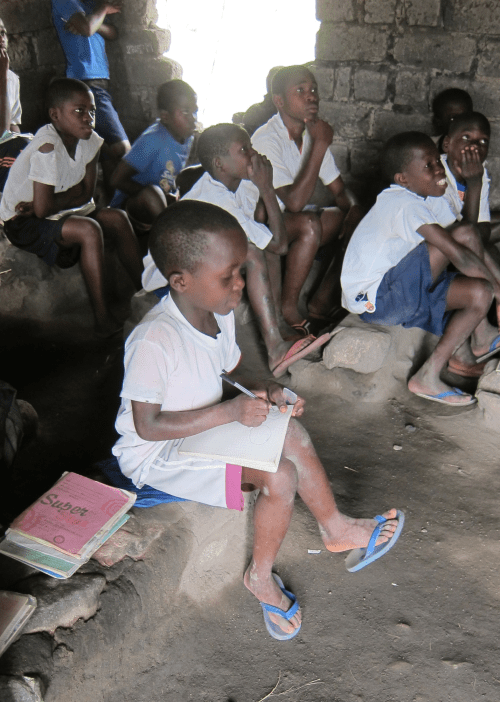
Studious Kids
Swahili Saying: Mwana umleavyondivyo akuavyo.
Translation: As you bring up a child, so he will be.
This saying sounds like Proverbs 22:6, “Train up a child in the way he should go; even when he is old he will not depart from it.”

Swahili Saying: Fadhila ya punda ni mateke.
Translation: The gratitude of a donkey is a kick.
We often caution against ingratitude by saying, “Don’t bite the hand that feeds you.”

Swahili Saying: Kuupanda mchongoma kuushuka ndio ngoma.
Translation: One who climbs a thorn tree may not be able to come down.
Cowboy wisdom warns against getting trapped in a box canyon.

Swahili Saying: Wawili sio mmoja.
Translation: Two is better than one.
The wise King Solomon would agree. He noted,“Two are better than one, because they have a good reward for their toil” (Ecclesiastes 4:9).

Swahili Saying: Anayefikiri amesimama, aangalie asianguke.
Translation: He who thinks he is standing should be on his guard not to fall down.
The Apostle Paul warned, “Therefore let anyone who thinks that he stands take heed lest he fall.” (1 Corinthians 10:12).

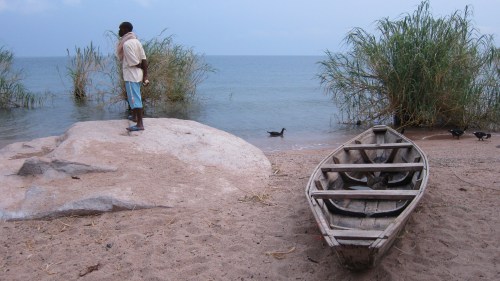
Edwardi Lake Tanganyika
Swahili Saying: Maji ya kifuu ni bahari ya chungu.
Translation: Water in a coconut shell is like an ocean to an ant.
We should always try to consider what things look like from the perspective of others.

Swahili Saying: Kila mlango na ufunguwo wake.
Translation: Every door has its own key.
A teacher might think of this saying in terms of how students learn.

Swahili Saying: Heri kujikwa kidole kuliko ulimi.
Translation: Better to stumble with a toe than a tongue.
Proverbs 18:21 warns that “Death and life are in the power of the tongue…”

Swahili Saying: Kulea mimba si kazi kazi kulea mwana.
Translation: It’s not hard to nurse a pregnancy, but it is hard to bring up a child.
The really hard work begins after a child comes into this world.

Swahili Saying: Mwenye kovu usidhani kapowa.
Translation: One with a scar, do not think him as healed.
Proverbs 14:13 shares a similar thought: “Even in laughter the heart may ache, and the end of joy may be grief.”

Swahili Saying: Methali kulenga si kufuma.
Translation: To aim is to not necessarily hit.
Anybody can aim. However, there is no Olympic medal for aiming!

Swahili Saying: Nyumba usiyolala ndani huijui ila yake.
Translation: You cannot know the defects of a house you have not slept in.
This saying is similar to the Native American proverb, “Never criticize a man until you’ve walked a mile in his moccasins.”

___________

For more on wise sayings, check out my posts on Cowboy Proverbs and Dichos Sabios.

Posted by: Omar C. Garcia | November 9, 2015

Praying for All Peoples

If you are a member of Kingsland or have recently visited, please check your mailbox for your copy of 40 Days of Prayer for the Nations — our missions ministry’s 2016 Prayer Guide. We are encouraging every family at Kingsland to pray through this guide starting the Sunday before Thanksgiving through the end of the year.

40 Days for Nations
Why pray for the nations?

Evidence of our passion is most often found in the language of our prayers. John Knox, the great Scottish Reformer, pleaded with God, “Give me Scotland or I die.” George Whitfield, probably the most famous evangelist in the eighteenth century, prayed, “O Lord, give me souls or take my soul.”

As a Christ-follower, I am passionately concerned about the spiritual welfare of the nations. Like Paul, I feel the weight of my debt or obligation to all peoples (Romans 1:14). Paul considered himself a debtor to all who did not know Christ. This obligation to share Jesus extends to all peoples.

Prayer is a key component in fulfilling our obligation to the nations. I am a Christ-follower because others prayed for me and moved in my direction with the good news about Jesus. I will be forever grateful for those who invited me to experience true fulfillment in Jesus Christ.

This prayer guide was born out of my concern for the spiritual welfare of the nations. At Kingsland, we have accepted the responsibility to invite all people to experience true fulfillment in Jesus Christ, one home at a time. The Great Commission uses the words panta ta ethne or “all peoples” — a reference to every people group on the planet.

Today, there are more than 6,600 remaining unreached people groups in the world. An unreached people group is one that lacks enough followers of Christ and resources to evangelize their own people. We have an obligation to pray for these people groups, to move in their direction, and to invite them to experience true fulfillment in Jesus Christ.

40 Days of Prayer
I invite you to pray for the nations over the next forty days and throughout the new year. The prayer prompts that I wrote for this guide are those that I personally pray daily for our work among the peoples of the world. As you pray, allow each prayer prompt to ascend to heaven in the language of your own prayers.

And, while you pray for the nations, please remember to look for opportunities daily to invite all people to experience true fulfillment in Jesus Christ, one home at a time.

Posted by: Omar C. Garcia | November 7, 2015

In The Company of Friends

Democratic Republic of the Congo | Tanzania | 27 October 15

We are finally back in Tanzania after a great adventure for the kingdom in the Democratic Republic of the Congo. Traveling with our small team has made this adventure all the better. Each of the guys on the team is a seasoned traveler, counted the cost of going to a difficult place, did an excellent job of storying the message, and displayed a rugged determination to take the gospel to the Congolese Taabwa.

Team in Tanzania
Traveling with guys who love venturing to the ragged edge is a privilege. Each of the guys on the team had a the-tougher-the-better attitude. Sleeping in tents, walking long distances, eating fish caught out of Lake Tanganyika, no showers — no problem for the guys on the team. These guys have what it takes to peel back each layer of difficulty involved in taking the good news to hard places.

Once we crossed Lake Tanganyika and returned to Tanzania, we traveled two days to spend time with our friends from the Safwa tribe. We had a season of prayer and study with the Safwa men and women who have become our valued partners in the gospel over the past eight years. There was no better way to end our time in Africa than by spending it in the company of friends.

Safwa Study Time
I had the privilege of leading a day-long study of 2 Corinthians 6 and facilitating discussion on what Paul experienced as a servant of Christ. The Safwa easily related to the hardships that the great apostle described in his second letter to the church at Corinth. Each of the Safwa men and women are familiar with hardships, challenges, difficulties, opposition, and push-back from the forces of darkness.

I am grateful for our partnership with the Safwa. Over the past eight years we have worked together to take the gospel to the Bungu and Taabwa tribes of southwestern Tanzania. Our journey to visit the Taabwa on the Congolese side of the lake was a first for them. These dear friends will continue to follow-up on those who came to faith in Christ in Kivubwe. They will ensure that others who live in villages along that side of the lake continue to have opportunities to hear about Jesus.

Safwa Door
Because God has opened a door of opportunity for us, we are committed to returning to the hard places we visited. Our hearts are strongly knitted together with the hearts of our Safwa friends. God has used our partnership over the years to strengthen the work in a place filled with challenges and hardships. We are grateful to call the Safwa our friends. They continue to teach us what it means to go beyond for the kingdom of God.

« Newer Posts - Older Posts »

Categories