Posted by: Omar C. Garcia | July 15, 2017

Geographical Literacy

Amman, Jordan

In spite of all the power at our disposal through our electronic devices, most people continue to suffer from insufficient geographical knowledge. Describing Africa as a country is an example of what it means to have a measure of geographical illiteracy.

If we are to better understand the world in which we live, then we need to foster greater understanding of geography. Everything that happens in the world, after all, happens in a geographical context.

Our time in Jordan this past week has given our students better insight into the movement of refugees from one place to another. They now understand a little more about the challenges refugees face in uprooting their families and traveling great distances in search of safety.

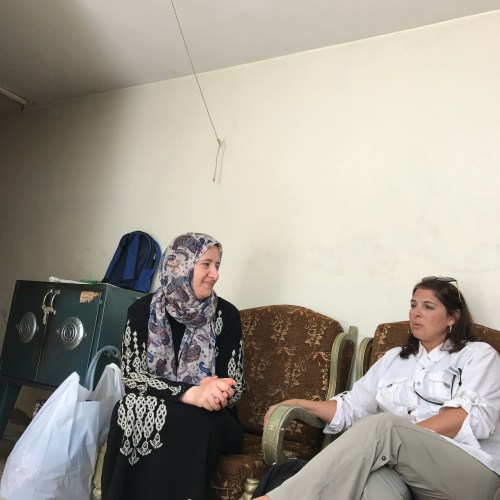
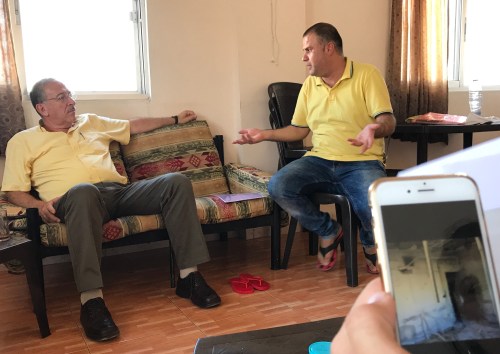
There is no doubt that being onsite can yield greater insight into people and places. Visiting with displaced Iraqi Christians this past week in their context has opened the eyes, minds, and hearts of our students. They are coming home with a more informed understanding of current events in the Middle East.

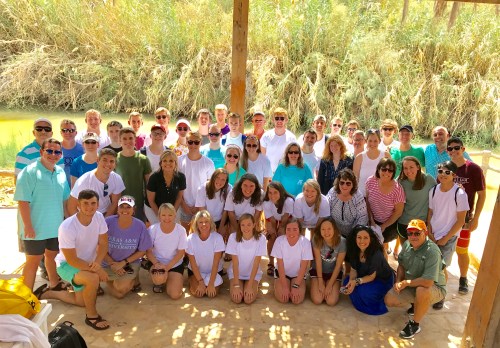
While in Jordan, our students also had the opportunity to visit the Dead Sea, the Jordan River, Mount Nebo, and several other fascinating places. They will never read their Bibles the same way again because they have a better understanding of the geographic context in which so many Bible stories happened.

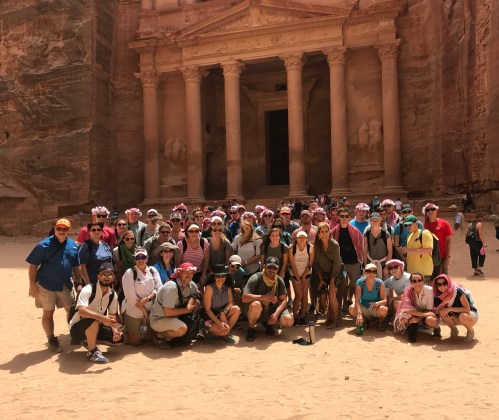
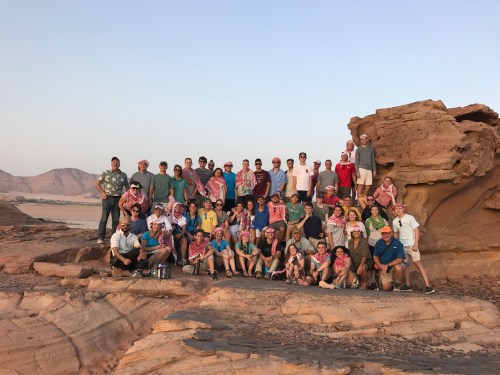
We concluded our time in Jordan by visiting Petra, a world heritage site, and then going on a safari in Wadi Rum. We talked about the ancient peoples who traversed this region in caravans and the challenges they faced. Spending a night in Wadi Rum helped our students understand just a little bit of what it must have been like for those trying to survive in this vast desert.

At one point I picked up a handful of sand and talked about Psalm 139:17-18, one of my favorite passages of scripture. David wrote these words to express how much God thinks about us. His thoughts about us exceed the number of grains of sand on the planet. David drew this analogy out of his geographic context.

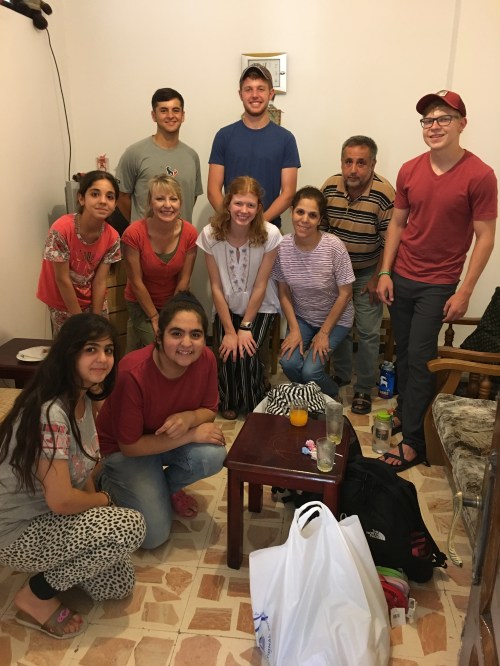
I am proud of our students and the compassionate way in which they served refugee families this past week. They did not hesitate to move in the direction of people in need to offer them “a little bit of balm and a little bit of honey.” In other words, their presence had both a healing and a refreshing impact on those they served.

We develop geographical literacy by doing what people have done for generations — leaving familiar surrounding for distant horizons in order to make new discoveries. In the process we not only learn about the places and people we visit, we also learn more about ourselves. This past week our students have done both. Therein lies the value of going beyond.


Posted by: Omar C. Garcia | July 12, 2017

What You Can’t Unsee

Amman, Jordan

The Iraqi refugee families we have visited over the past week are all haunted by the things they can’t unsee. Family members murdered. A father hung from a tree. Property destroyed. A beheading. The rape of a daughter. The distressed faces of others on the road out of town. Walls pockmarked by bullets. The looting of personal property. And more. Always more because the Islamic State has an insatiable appetite for destruction.

The toughest part of listening to these stories is the realization that, in each instance, children were present. Children witnessed the killings, the degradation of human life, and the destruction of property. These images are hard enough for adults to deal with much less kids. There is no way for a child of whatever age to unsee these horrors and atrocities that become the seeds of nightmares.

One of our teams met a talented young Iraqi girl who is a self-taught artist. Her artwork was amazing. In one piece, she sketched the horrors of her past in juxtaposition to her hopes for the future. Brilliant and moving stuff. She said that the only way she can cope with the mess of the past is by daily trusting God. She also asked that we not post her work online because of the personal and graphic nature of her work.

Another team met a fifteen year old boy whose right arm and right leg were blown off in an explosion three years ago. He had run for cover behind a phone pole only to have a rocket smash into the pole and blow it out of the ground along with him. He lives with the daily reality of what happened to him when the Islamic State rolled into town. His life is forever changed. He will never be able to unsee what happened to him.

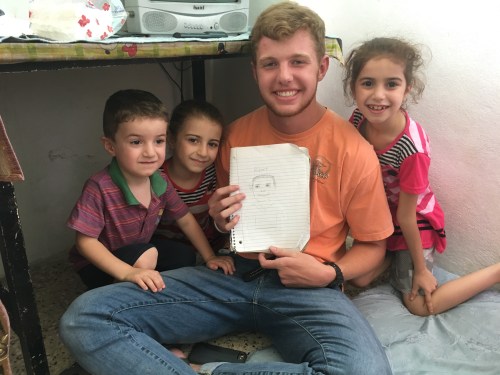
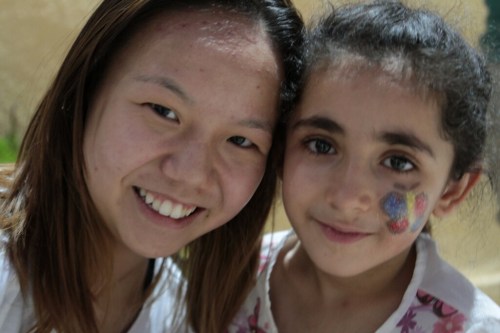
All of the children we met showed some measure of resilience. Kids will be kids. And even though they have seen things no one should ever have to see, they still manage to smile, play games, and sing songs. And they craved our attention. They were so happy to see us and wanted to be sure that we set aside time to interact with them and not just their parents.

The future will be much different for these kids. For the time being they are in a safe place. The movement of their lives will continue in a direction away from the Islamic State. They long for a brighter future and their parents know that the only way to give their kids a shot at it is by creating as much distance as possible between their families and the Islamic State.

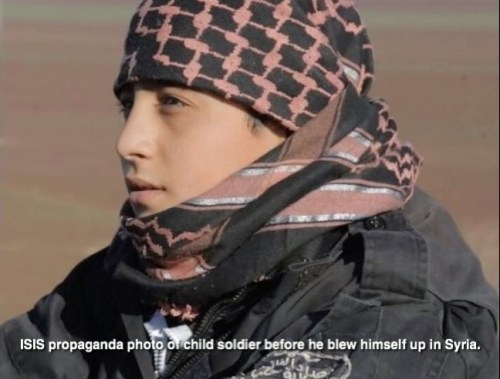
When the Islamic State is not killing and maiming kids it is recruiting kids into their ranks of child soldiers. Sending kids into harm’s way is normal operating procedure for jihadist groups. These things alone tell us much about the rotten and dark soul of the Islamic State. In the words of Nelson Mandela, “There can be no keener revelation of a society’s soul than the way it treats its children.”

Our teams cared for lots of displaced Iraqi families this week — and blessed a lot of kids in the process. As Christ-followers, we value the sanctity of human life and the sanctity of childhood. We will continue to do all that we can to protect children and the lives of the most innocent and vulnerable among us. Where the Islamic State destroys we will continue to sow seeds of hope and life so that people who suffer most will see the beauty of Christ.

Posted by: Omar C. Garcia | July 10, 2017

The Barber from Kirkuk

Amman, Jordan

The world has become the stage on which the sad stories of ISIS continue to play. The Islamic State is quick to take ownership of worldwide acts of terror — especially the kind that are so sensational they cannot be ignored. But, for every story that major media outlets cover, there are hundreds of others that the world will never hear about.

In the short period that the Islamic State has dominated the world stage, they have forever altered the lives of millions. Their ideology of violence is fueled by a theology of hate and intolerance. Their definition of infidel is so broad that even Muslims who are not like them are not safe. They have shown no regard for ancient sites that belong to the world or people who deserve to live without fear in the world.

This week I met a family of Iraqi Christians who had to flee their beautiful home in Kirkuk, a town in northern Iraq, when ISIS rolled into town. Their lives will never be the same. The UNHCR ultimately relocated some siblings to America and others to Australia while their aging and grieving parents are struggling to survive in Jordan. They will never again gather as a family in one place.

This month, more family members arrived from Kirkuk. The young father I met owned his own small business — a barber shop. He shared that as his business had grown he had hired two additional barbers to work in his shop. He made enough money to support his own family and to help two others support theirs. He and his family were happy.

And then, the Islamic State showed up and the threats started — convert, pay a burdensome tax, or leave under threat of death. To make sure the family understood the seriousness of their threats, ISIS left an envelope on their doorstep containing a bullet and a hand-scrawled message that simply read, “You are next.”

When the young barber showed up at his shop, he found that ISIS had trashed it. Everything was destroyed. His equipment, certificates, chairs, mirrors. He returned home, packed whatever belongings he could carry with him, and fled with his wife and young son and a small bag of barber supplies. He eventually found his parents who have temporarily resettled in Amman.

This young man was not looking for or expecting a handout. What he wants is a hand up to help him start his journey toward a new life. He has received some assurances from the UNHCR that they will be allowed to join a sister who resettled in Australia. He dreams of moving there soon and opening a new barbershop to support his family.

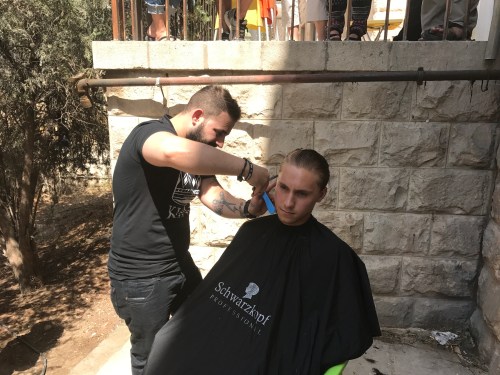
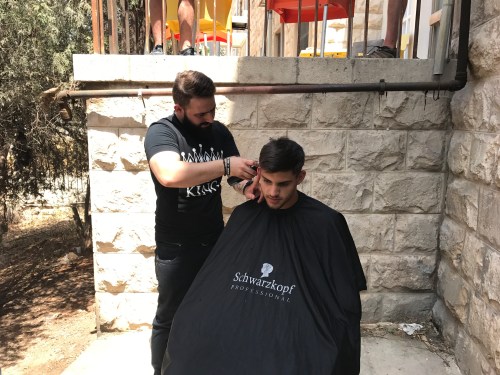
We invited him to join us at the place where we are staying in Amman to give haircuts to our team of fifty. This afternoon, half our team waited in line for haircuts and generously paid him for his services. He made enough money today to cover his rent for a month. Tomorrow, he will return to give haircuts to the rest of our team. He was so happy to work for his rent.

At the end of their day I met with him, thanked him for his services, and assured him of our prayers. I told him that my deepest hope is that God will open a door of opportunity for him to resettle in a place where he and his family can start anew — and where he can open a new barbershop. I have every expectation that God will indeed bless him and honor his desire to work and care for his family.

While the Islamic State continues its agenda of death and destruction, the barber from Kirkuk is charting a new course. What ISIS meant for evil God will turn into good for this man and his family. Of that I am confident.

Posted by: Omar C. Garcia | July 8, 2017

The Dynamics of Trouble

Amman, Jordan

Jesus understood the dynamics of trouble. On one occasion, He urged Peter and the disciples to stop being “troubled” (John 14:1). Jesus used a particular word that described an ocean caught in the teeth of a storm. Storms have a way of tearing our confidence to shreds and leaving us fearfully clinging to any scrap of hope that can keep us afloat.

The Scripture is clear that trouble is a part of the human condition. No one is exempt from facing troubles. Today, however, our students came face-to-face with Iraqi Christians who understand better than we do what it means to be in trouble — serious, frightening, life-altering trouble.

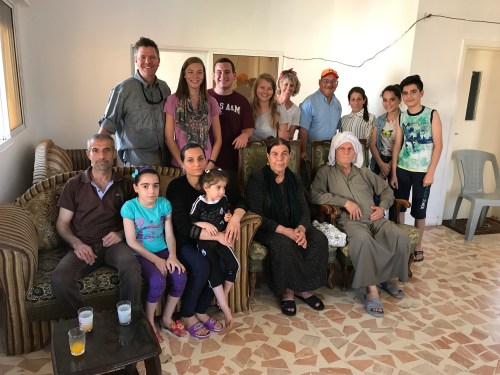
As we visited with Iraqi families displaced from their homes by ISIS, each of our teams heard the same recurring theme — when ISIS arrived, trouble arrived. Each family passionately and tearfully told us their respective stories about how their lives were turned upside down. We sat spellbound as we listened to incredible stories of escaping ISIS in the nick-of-time.

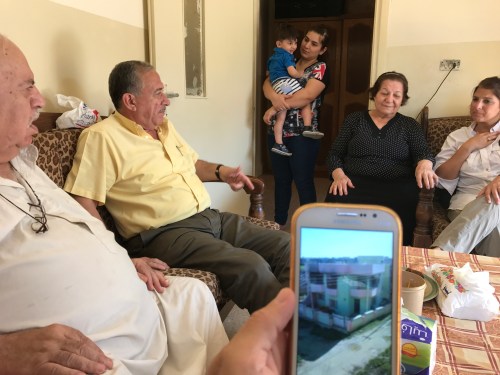
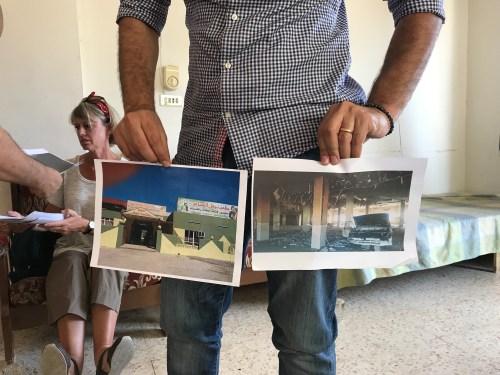
I have heard more of these stories over the years than I can count. But today, three of the families that my team visited showed us before and after photos of the damage and destruction caused by ISIS. Each of these families lived in large, comfortable homes in northern Iraq. ISIS ran them off, looted their homes, stole their automobiles, and then wantonly destroyed the structures.

Some of the families had photocopies of the damage and others had cell phone pics. In each case the damage was extensive. And in each case the families said they are happy to have escaped with their lives, unlike some of their neighbors, but want nothing more than to leave this troubled and dangerous region. They are fed up with the violence that makes life here dangerous and unbearable.

Who can argue with them. After all, they want for their families what we want for our own families — the relative safety and security that can ensure them of happiness, opportunities for their children, and the prospects of a long and happy life. ISIS makes these basic and fundamental human rights unattainable. And so, the greater the distance they can create between themselves and these radical Islamists, the better their chances of mitigating the kind of trouble that threatens to tear them to shreds.

Once again, our students witnessed the collision of competing world views. Our presence brought smiles, tears of joy, gratitude, and the reminder that God is aware of and acts on behalf of those caught in the teeth of a storm. While the storms of damage, destruction, and death continue to rage, these families demonstrated a contrasting inner calm. They know that moving forward will be hard but want nothing more than to move forward.

ISIS has robbed these families of possessions but cannot keep them from looking in a new direction — one that leads toward hope. You can count on ISIS to take the world backwards, to leave their signature of death and destruction wherever they go, and to bring an ominous darkness with them. But death and darkness are no match for the God of light, life, and love who alone can calm hearts and quiet storms and who makes new beginnings possible.

Posted by: Omar C. Garcia | July 7, 2017

When Hope Departed

Amman, Jordan

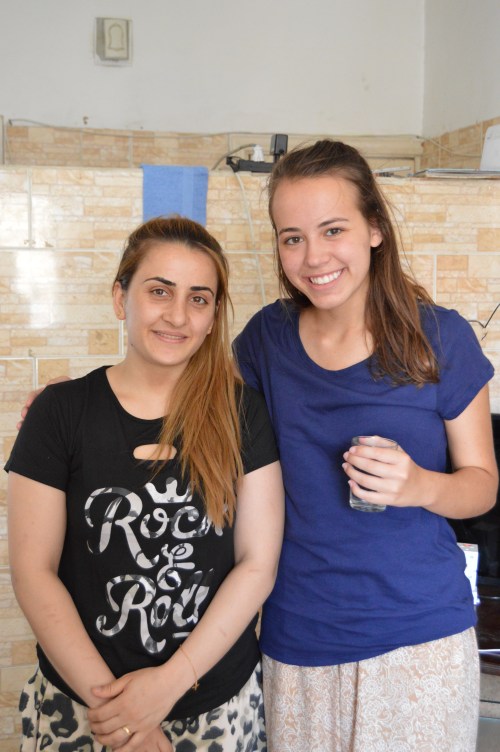
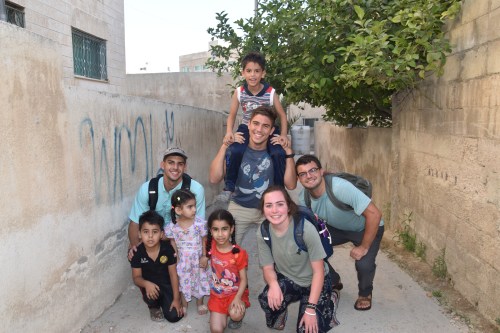
I am back in Jordan with an outstanding team of students. We are here to serve Iraqi Christians displaced by ISIS and Syrian Muslims displaced by civil conflict. For the fourth year in a row, our students have moved in the direction of people who have suffered unimaginable losses. The vast majority of these individuals fled for their lives with little more than the clothes on their backs.

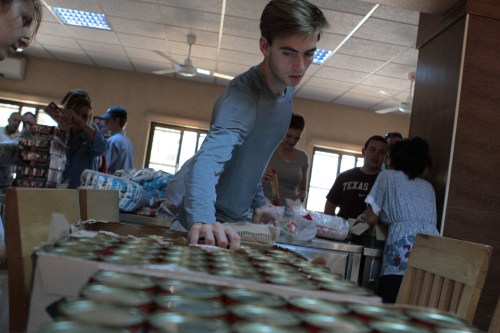
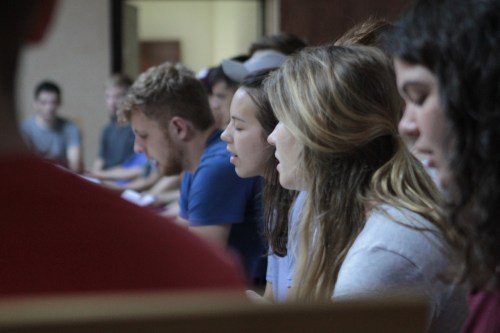
We started our morning with prayer and worship, enjoyed breakfast, and then divided into two teams to prepare for the day’s work. One team assembled humanitarian food packs while the other team sorted through clothing to distribute to Iraqi and Syrian families in need — no small task but one made easier by many hands.

After lunch we divided into smaller teams to visit Iraqi families who had fled their homes in order to escape ISIS. Each family shared their personal stories of leaving everything behind. And each story repeated a common theme — namely, when ISIS came to our town, hope departed. Those who finally made it to safety in Jordan did so by the skin of their teeth.


Starting over is never easy, especially without the benefit of resources. Even those who were wealthy in Iraq have had to make monumental adjustments in order to survive on the bare minimum. Pride is no longer a consideration when there are mouths to feed. These families are happy to see us move in their direction with enough groceries to help sustain them for another week or two.

Today we heard the same thing more than once — “you have brought us hope.” Those words have echoed through my soul all day because they represent a collision of two world views. When ISIS came near, even hope itself departed. However, when we came near, we brought with us more than groceries in our humanitarian aid bags. We brought hope.

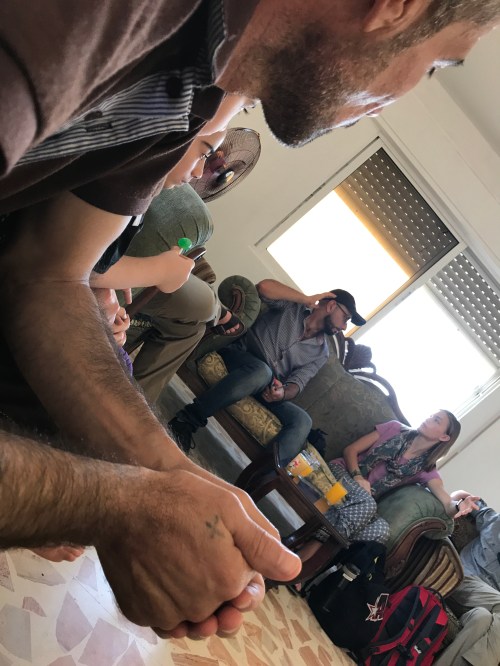
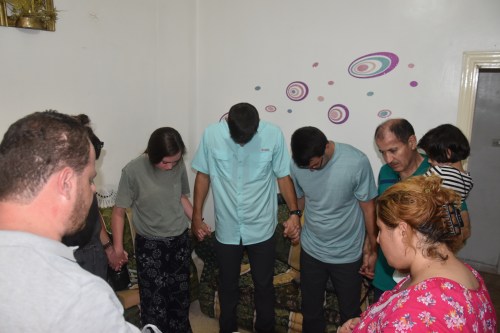
For all of the families we visited, our arrival was well-timed and a reminder that God had not forgotten them. Even though the future may look uncertain, our hour-long visits served as a reminder that God is very much aware of the plight of the suffering. Perhaps the greatest privilege we enjoyed today was praying with each family. Sometimes people need more than bread in order to survive. God used our prayers to nourish parched souls and as a vehicle through which to deliver hope.

Our evening worship and debrief was powerful as student after student shared how the events of the day impacted them. They understand better the importance of our world view that honors the sanctity of human life. And they understand that this week the world view that compels us to love and serve others without condition will continue to collide with a world view that seeks to steal, to kill, and to destroy. To those who feel that hope has departed, we have come to help pave the way for hope to return.

Posted by: Omar C. Garcia | July 4, 2017

The Four Hundred


Starting this week, more than four-hundred Kingsland students and sponsors will go beyond our campus to serve around the globe. For years, our student ministry has mobilized, equipped, and made it possible for our students to engage with a world in need. If there is one thing our children and students understand, it is that God is using them to make His name famous.

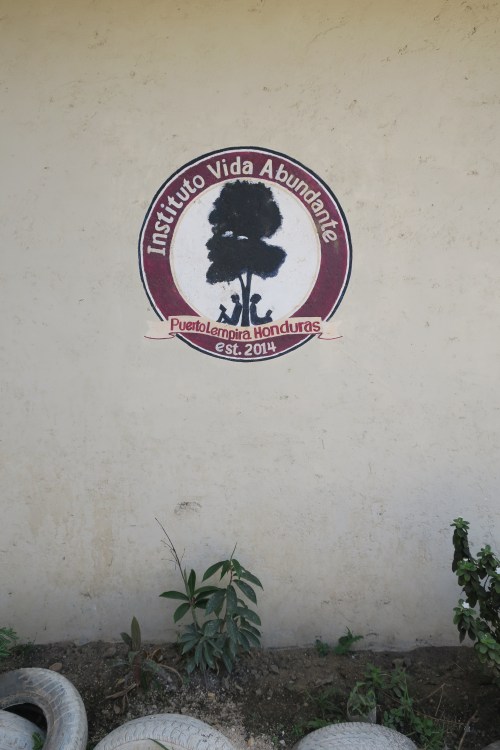
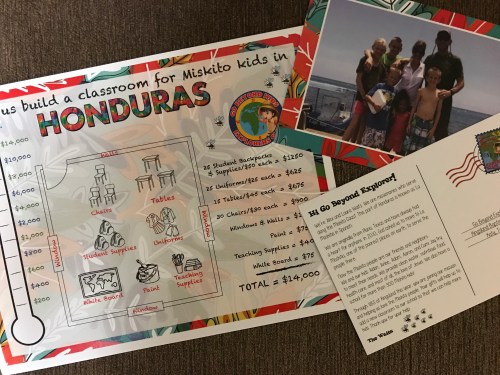
This past week we sent a gift of $20,000, raised largely by our kids in Vacation Bible School, to our partners in the Miskito Coast. These funds will be used to add a new and fully equipped classroom to Instituto Vida Abundante, a school started by Alex and Laura Waits of Reach Out Honduras. This school educates Miskito kids who otherwise would not have an opportunity to go to school.

On Wednesday, I will return to Jordan with a team of high school graduates to serve Syrian refugees and displaced Iraqi Christians. The humanitarian crisis created by the civil war in Syria and the encroachment of ISIS in northern Iraq continues to dominate world news. Our students will have a front row seat to history as they personally care for those who have suffered unimaginable losses.

Other Kingsland teams will engage with at-risk kids in Houston’s inner city wards, with people in need in several locations around the country, and with hurting women and children in Nicaragua. For the next two weeks, our students will experience God at work in and through their lives in dramatic ways.

We live in a troubled world — a world where continued acts of violence, terror, and war rip families apart and destroy human lives. These despicable acts are driven by worldviews that have no regard for the sanctity of human life. These world views stand in stark contrast to the biblical worldview that compels us to move in the direction of the suffering to be the hands and feet of Jesus.

As I continue to travel the world to demonstrate and to speak about the hope that is found only in Jesus, I hear a recurring theme. In the words of a Syrian Muslim refugee who witnessed the abuse and murder of loved ones, “You bring us love and you treat us with dignity even though we are not Christians. You have shown us the beauty and love of Jesus without conditions.”

Please pray for the four-hundred plus students and adults who will demonstrate the beauty and love of Jesus to a hurting world. Pray that the entrance of God’s Word will bring light and illuminate hearts suffering under ominous darkness. We go forth longing for the day when the whole earth will be filled with the knowledge of God as the waters cover the seas.

Posted by: Omar C. Garcia | June 19, 2017

Helping Miskito Kids

If there is one thing I want for every kid at Kingsland to know, it’s this: You don’t have to wait until you are a grown up to help make the world a better place.

Every year, we challenge the kids who attend our Vacation Bible School to help change the world for kids in need around the world. Over the years our kids have invested their VBS offering to help kids in Mongolia, India, Nicaragua, Eritrea, and the Democratic Republic of the Congo.


This year, we are challenging the 1900-plus kids in attendance at this week’s Vacation Bible School to help change the world for children in Honduras. More specifically, we are excited to help Miskito children who live in the Miskito Coast.

The Miskito Coast, or La Mosquitia, is an inhospitable swath of rainforest that spans the coasts of Nicaragua and Honduras. There are no roads in and out, which means that you can only get there by small plane or by boat.

Interestingly, the Miskito people refer to the Miskito Coast as The Land of the Forgotten People — and rightly, so. The Miskito are neglected and marginalized and don’t have the kinds of opportunities that are available in other parts of Honduras. They do indeed feel forgotten.


We are excited to come alongside Alex and Laura Waits of Reach Out Honduras, our new friends and ministry partners who have started a school for the children of the Miskito Indians. Their school is named Instituto Vida Abundante or Abundant Life Institute. They currently have a little more than 300 Miskito kids enrolled in the school.

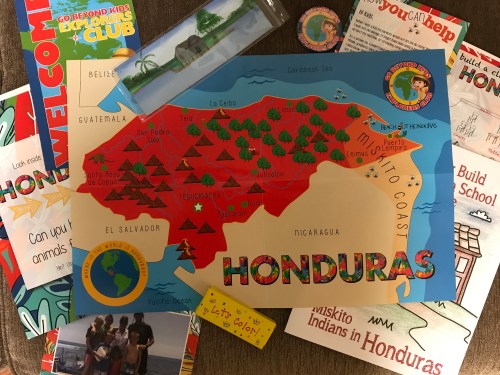
Our goal is to raise the funds to add one more classroom to the Waits’ school in Puerto Lempira. To help our kids understand what life is like for the Miskito kids, we have made The Miskito Coast the special focus of this year’s Go Beyond Kids Explorers Club packet.


Every kid who attends our VBS will receive a Go Beyond Kids Explorers Club case packed with all kinds of fun stuff that will help them learn about Alex and Laura and the good work that they are doing in the Miskito Coast. This is a cool way for our kids to learn about the nations and how they can make a difference.


Our goal this year is to raise enough funds to add a new classroom — completely stocked with desks and supplies — to the campus of Instituto Vida Abundante. This additional classroom will allow Alex and Laura to invite even more Miskito students to attend school.


By teaching our kids about the nations we hope to raise a generation that will continue to take the good news of Jesus Christ to the ends of the earth. In a world where many kids are raised to hate and to do violence to those whose world view is different from their own, we want to raise a generation that will live out the teachings of Christ, love and serve their fellow human beings, and bring glory to God.

Posted by: Omar C. Garcia | June 18, 2017

Thank You, Dad


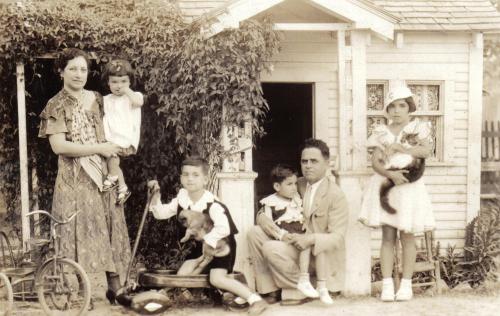
Among my favorite family photos is an old black and white pic of my Dad’s family — one that was taken in front of a playhouse that my grandparents had built for their kids. My Dad is sitting on my grandfather’s lap in the photo. I love this particular photo because it reminds me that my Dad enjoyed a really good childhood. Dad was the beneficiary of loving parents and a stable and secure home, gifts that he and my Mom passed on to me and my siblings.


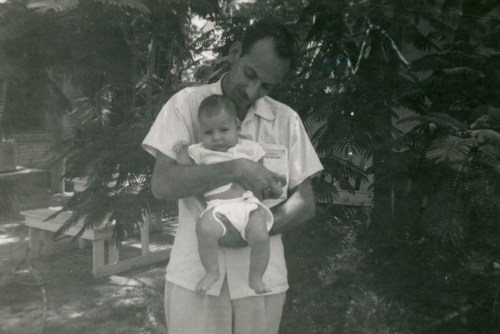
I also cherish an old photo of my Dad holding me in his arms. I have never doubted my Dad’s love for me. From the time I was a kid, my Dad has always called me “mijo” — a combination of the Spanish words for “my” and “son” or “mi hijo.” However, to those of us who speak Spanish, this is an affectionate term, a contraction that conveys more than the idea of “my son.” It more accurately conveys the idea of “my beloved son.” Mijo is a tender term of endearment. Dad still calls me his beloved son and I still love hearing him do so.


Of all of my Dad’s travel photos, my favorite is a photo of Dad sitting in a gondola on the canals of Venice. Dad was an avid photographer and took hundreds of slides and black and white prints. God would later use these pics to stir my curiosity about the nations. Dad’s travels opened his eyes and heart to the world, a gift that he unwittingly bestowed to me.


A few years ago Dad and I spent two weeks together on a road trip that took us from South Texas to Big Bend and on through New Mexico and Colorado. What an amazing trip that was. And what a treasure it was to spend so much time with my Dad. We later did a two-week road trip in Germany along with my brother-in-law. Again, what a blessing it was to spend time with my Dad.


Another of my favorite pics of Dad was taken at my son Jonathan’s wedding. Having Dad at the wedding was a blessing. He had a great time and was much better on the dance floor than me. I think it’s cool that Dad still enjoys engaging and having fun with family. That in itself is a gift for which we are all grateful.


But perhaps the pic that speaks the most to me is one taken at the cemetery where my beautiful Mom is buried. Dad and Mom were passionately in love — no doubt about that in our home. This was their greatest gift to me and my siblings and is what gave our home a rock-solid foundation. Ever since Mom unexpectedly passed away in 2009, Dad continues to go to the cemetery every morning to have his quiet time and to make sure Mom has fresh flowers on her grave. Amazing love.


So, on this Father’s day, I count myself one of the most fortunate people on the planet. I love my Dad and am grateful for his love, encouragement, laughter, prayers, and presence. Thank you Dad for giving me an amazing childhood and for loving Mom.

Posted by: Omar C. Garcia | May 28, 2017

Hope for the Captives

In January 2009, Kingsland moved toward the front lines of the fight against human trafficking — and we have not looked back. In recent years, the church at large has rediscovered justice, one of the forgotten passions of God. Even a cursory reading of the Scriptures will reveal God’s concern for the oppressed and those who are abused by the powerful. Sadly, the church has not always engaged in this fight.

For the past several years, we have mobilized the women of Kingsland to work with our justice partners in West Bengal, India. Kolkata, the epicenter of Mother Teresa’s work, is home to several initiatives that champion the cause of the oppressed and those who are trapped in a living hell as a result of human trafficking. We have come alongside these partners who are storming the gates of hell to rescue and care for the perishing.

Our missions ministry invests multiplied thousands of dollars and volunteer hours in local and international initiatives to champion the rights of the oppressed. This month, we have produced a special newsletter to specifically update you on our justice work in Kolkata and New Delhi. We are grateful for the generosity of the Kingsland family. Your gifts and prayers enable us to engage in and support our partners in their strategic work.

Only heaven will reveal the full impact of our investment and involvement in the battle against those who traffic in human lives and consequently ruin and destroy the lives of those who are weak and vulnerable. Watch for your copy of our latest newsletter to arrive in your mailbox or pick up a copy the next time you attend worship. Please read it from cover to cover and then pray for our partners, those for whom they care, and for our justice ministry teams.

Posted by: Omar C. Garcia | May 23, 2017

Land of the Forgotten

La Mosquitia, Honduras

La Mosquitia is one of the most beautiful and yet unforgiving slices of geography on the planet. Spanning the coastal regions of Nicaragua and Honduras, this thick rainforest forms a natural barrier between the Miskito Indians and the rest of the world. The Miskito know what it means to be marginalized and neglected and have come to refer to La Mosquitia as The Land of the Forgotten People.

Reaching the Miskito presents its own challenges. There are no roads in and out of this region. La Mosquitia is, therefore, best accessed by small planes that can land on dirt runways or by boat. We chose to travel from La Ceiba to Puerto Lempira by plane and arrived in the midst of a rainstorm.

We arrive safely in spite of the storm but our luggage did not. Because the airline sold two extra seats there was not enough room for our luggage. We received an apology and a promise that our luggage would arrive the following day. No problem. After more than a hundred trips around the world I have moved beyond being flexible to being fluid. We picked up our luggage the following sunny morning.

My team and I traveled to Puerto Lempira to visit with our friends at Reach Out Honduras, our newest ministry partner. Alex and Laura Waits left their comfortable lives in Texas and followed God’s call to Puerto Lempira to start a school for Miskito children. Believe me when I tell you that there is nothing comfortable about living in Puerto Lempira. Intense heat and humidity are only two of the challenges of living here. The devil himself might be tempted to move to a cooler place.

I have great admiration for Alex and Laura and their kids. They are serious about loving the Miskito people as Jesus would and making it possible for these kids to get a good education. What they have accomplished in such a short time is nothing short of amazing. They currently have an enrollment of three-hundred kids in grades seven through ten with plans to add more grades.

Today, we traveled by boat across Laguna de Caratasca, the largest lagoon in Central America, to the remote village of Uhí. Travel time was about an hour and a half one way. We traveled there with a single Miskito woman, a mother of four kids, to see her home and hear her story. I am so glad we did. Today was one of the best days I have spent on the field.

Ovendilia sat in the doorway of her home and shared her emotional story — basically the story of her dream of seeing her kids get an education. She wept as she spoke and we wept as we listened. This amazing woman became a champion for her kids and stormed heaven with her prayers for God to make it possible for her kids to go to school.

Through a series of divinely orchestrated connections, sacrifices, and provisions, her dream came true. And, to make matters even better, the Waits employed her as one of four cooks at the school. Her day begins at four in the morning everyday when she joins her team to prepare breakfast and later lunch for three-hundred students and faculty. She counts it the greatest honor to serve in this way and to be near her girls.

Ovendilia is beyond grateful to God for remembering her — something she treasures as she lives her life in the Land of the Forgotten People. She has become a friend and encourager to the Waits and to the students. And although she and her daughters live in a small rented room, she has opened her door to other girls from Uhí to come to Puerto Lempira to get an education.

In June, we will challenge the kids who attend our Vacation Bible School to raise funds so that the Waits can add another classroom to their Instituto Vida Abundante (Abundant Life Institute). We will share Ovendilia’s story as well as other stories to help our kids understand how they can help change the world for kids who live in a place so remote they feel forgotten.

« Newer Posts - Older Posts »

Categories