Posted by: Omar C. Garcia | January 27, 2009

Kolkata Lessons

Kolkata, India

We have one more day of service at Mother Teresa’s homes before we begin our journey home. The past week has been one of the most difficult yet one of the very best weeks of my life. The things I have experienced have challenged me in many ways. These are just a few of the lessons I have learned while serving in Mother Teresa’s homes for the least of these in Kolkata.

K = Kindness | Show kindness to others (Proverbs 3:3-4). People don’t expect it and don’t always deserve it, but show kindness anyway. I was very impressed by a couple of volunteers who showed great kindness to the poor within the walls of Prem Dan. However, when leaving Prem Dan (which means “gift of love”) they argued with a poor rickshaw driver because they felt he was asking ten cents more than they were willing to pay. They failed to show the same kindness to the poor in the marketplace. Mother Teresa said, “I prefer to make a mistake because I am too kind than to perform miracles without any kindness.”

O = Observation | We must learn to bring the blurry things in our peripheral vision into sharper focus. It’s easy for us to be so focused on where we are going that we forget to notice the things that are happening to the left and to the right of us. Our bus route to Prem Dan takes us past blocks of poor people who live on the sidewalks in makeshift shelters. Mother Teresa’s charge to the Missionaries of Charity was to look for Jesus in His distressing disguises. We must learn to look for Jesus among the least of these in the worst of places.

L = Love | I have enjoyed serving with volunteers from all over the world. I have made many new friends. However, I have been puzzled by one volunteer who never smiles and who is unkind to everyone. He rebuffs every attempt at conversation and often barks at others, yet he works very hard. Yesterday, at Nirmal Hriday, he stood near me with a scowl on his face. Ironically, he was standing next to a photo of Mother Teresa with these words inscribed beneath the photo: “It is not how much we do, but how much love we put into what we do that matters.” Mother Teresa said, “We can work until we drop. We can work excessively. If what we do is not connected to love, however, our work is useless in God’s eyes.”

K = Keeping | One of my African-American preacher friends from my seminary days observed, “Most people work to get all they can, then can all they get, and then sit on the can.” I have read statistics that say that most people spend ninety-seven cents of every dollar they earn on themselves. We must stop keeping so much for ourselves and learn to live on less so that we can give more to the least of these. Mother Teresa said, “Whoever is dependent on his or her money and worries about it, is truly a poor person. If that person places his or her money at the service of others, then the person becomes rich, very rich indeed.”

A = Act | My grandfather used to tell me, “It’s good to be good, but you should also be good for something.” It’s not enough to be moved by the plight of the poor, we must give practical expression to our concern. In the Parable of the Good Samaritan (Luke 10:25-37), the priest and the Levite both “saw” a man left for dead by the side of the road but did nothing to help. However, when a traveling Samaritan saw this same man, he felt compassion and was moved to help the man. Mother Teresa said, “It is very possible that you will find human beings, surely very near you, needing affection and love. Do not deny them these. Show them, above all, that you sincerely recognize that they are human beings, that they are important to you.”

T = Touch | It’s probably safe to say that we are all very selective in who and what we touch and in who and what we allow to touch us. This week I have learned to touch and to hold people who are broken and who long, above all, for the warmth of human contact. Mother Teresa said, “As far as I am concerned, the greatest suffering is to feel alone, unwanted, unloved. The greatest suffering is also having no one, forgetting what an intimate, truly human relationship is, not knowing what it means to be loved, not having family or friends.” Every touch I invested this week yielded great dividends, not only for the recipients but for me as well. Every person I have touched has touched me.

A = Attention | This week I have been challenged moment by moment to be attentive to the needs of others, especially those who cannot do the most basic things for themselves. I have shaved faces chiseled and eroded by years of hardships. I have fed people who cannot feed themselves. I have changed men who can no longer control their bodily functions. I have carried men who cannot walk and walked beside men who cannot walk unassisted. Mother Teresa observed, “There are thousands – millions – of people who die for lack of bread. There are thousands – millions – of human beings who grow weak for lack of a little love because they would like to be recognized, even if just a little.”
Posted by: Omar C. Garcia | January 26, 2009

Selfless Servants

   Kolkata, India

   Mother Teresa’s Missionaries of Charity are an amazing group of people. Serving the least of these all over the world, they continue the labor of love inspired by Mother Teresa. They do more than care for the obvious physical needs of the people they serve, they care for their spiritual and emotional needs as well. Mother Teresa said, “If our work were just to wash and feed and give medicines to the sick, the centers would have closed a long time ago. The most important thing in our centers is the opportunity we are offered to reach souls.” Here are some quick observations about these selfless servants for whom I have the deepest respect and admiration.

Selfless | I don’t know that I have met a more selfless group of individuals than the Missionaries of Charity nuns. They are an amazing group of women from all nations who are committed to serving the least of these while living with the least of things! It was Mother Teresa’s intention from the beginning that this order of nuns would live like the poor in order to better identify with them. While headed for our afternoon assignment at Nirmal Hriday, we stopped to buy soft drinks for the nuns there. They were touched by our thoughtfulness but said, “We will drink water and save these as a special treat for the residents.” As I have observed these women over the past few days, they have consistently modeled the attitude that Paul said Christ-followers should cultivate: “Do nothing out of selfish ambition or vain conceit, but in humility consider others better than yourselves. Each of you should look not only to your own interests, but also the interests of others” (Philippians 2:3-4).

Helpless | The Missionaries of Charity nuns understand that they are helpless to do anything apart from prayer and dependence on Christ. As prescribed by Mother Teresa, they begin each day with prayer and then pause to pray throughout the day. This is important because of the overwhelming needs that they face every day. A casual stroll through the streets of Kolkata could easily lead one to conclude that when Jesus said “the poor you will always have with you” (Mark 14:7) He was speaking about Kolkata. The work of continually caring for the thousands of poor, sick, and dying individuals cannot be done in dependence upon human strength. It takes people of prayer who ask God for the divine strength to accomplish His divine tasks.

Fearless | After all I have seen the past several days, I have concluded that the Missionaries of Charity nuns are fearless. Working in Prem Dan and Nirmal Hriday is definitely not for the squeamish. These sweet sisters of charity don’t have time to stop to put on rubber gloves every time someone vomits or does something worse. They handle the situation cheerfully, as they have hundreds of times before, and then move on to the next thing.

I am less squeamish today than when I started several days ago. Today, the man in bed number 46 motioned for me to help him. His clothes and bed were soaked with urine and covered with diarrhea. Holloway was massaging cream into another man’s calloused feet. So, Jon helped me carry the man to the bathroom to clean and change him. When we took him back to his bed he took my hand in is and placed it over his heart, a simple and beautiful gesture of gratitude. Sister Anila from Albania told us that the man’s wife and children had left him at the door of Nirmal Hriday. “He is suffering from the worst kind of sickness,” she said, “the sickness of being abandoned and unwanted.” Jon and I leaned over and told him that we loved him. We told him with our eyes and hands. He understood.

Tireless | I have done a lot of really tough travel to some really nasty and filthy places over the years. But, at the end of two weeks I get to return home to my comfortable home. Not so for the sisters who work in Mother Teresa’s homes in Kolkata and the hundreds of other homes around the world. You don’t get voted off of this island. These are the true survivors who labor hour after hour and day after day showing God’s love to the endless flow of hurting humanity who pass through Mother Teresa’s homes. Another man died at Prem Dan. He was carried out in a wooden coffin. Later, a frail, skeletal man was carried in to take his place. This is the cycle of life and death in Mother Teresa’s homes. Thank God that there is always a selfless servant waiting to welcome every new arrival and ready to work tirelessly to restore the dignity that every human being deserves.

Posted by: Omar C. Garcia | January 24, 2009

Family Resemblances

   Kolkata, India

   The residents of Prem Dan and Nirmal Hriday are a family. As with most families, the resemblance is unmistakable. Even the casual observer can easily identify them as the children of hardship and pain, raised in the ample home called the streets of Kolkata. Their family is so large that many of these siblings met for the first time when they arrived at Mother Teresa’s homes, each one bearing similar marks of abuse. Although they may look frightening at first glance, they are wonderful people once you get to know them. Here are a few things I have noticed as I have spent time with them in the compassionate communities they now call home.

   Longing Eyes | When we arrive at Prem Dan and Nirmal Hriday, the first thing I notice is the longing eyes of the residents. They know when the volunteers will arrive each morning and afternoon and eagerly watch for them. Although those of us who have come to Kolkata to volunteer speak many languages, we have somehow learned to understand the universal language of the eyes. A person in need can just look at us and somehow we know what to do next. So, I always look at the faces and into the eyes of the men when we arrive to serve.

   Outstretched Hands | I have been impressed by a certain blind man at Prem Dan. He always sits alone but when he hears approaching footsteps he extends his hands. He’s not begging for money. He’s longing for a connection with another human being. I have tried to stop each day to hold his hands or to put my hand on his shoulder. This small investment always registers in a smile and lights up his dark world.

   Broken Bodies | One of the residents of Prem Dan is grotesquely disfigured by large protruding warts all over his face and body. He never smiles. His expression is vacant and distant, as though his appearance has exiled him to some forgotten and inaccessible place. Others bear distinguishing deformities that I am certain played a part in alienating and consigning them to an existence in the filth and shadows of the streets. Today I watched and assisted as the nurse at Nirmal Hriday treated oozing sores, burns, and removed stitches from a leg that was ripped apart by some terrible blow.

   Faltering Steps | Part of our work is to come alongside and to assist those who walk with faltering steps. Many of the residents have limbs that were twisted at birth or that were broken and damaged by hard years on the streets. One man has feet that appear to have been eroded by leprosy. Others have suffered the loss of toes, feet, and legs to accidents or amputation. We have carried and assisted the lame to their beds and to the bathroom, massaged twisted limbs, and carried food to those whose broken bodies have conscripted them into the ranks of the immobile.

   Unexpected Smiles | One of the most amazing things I have found in Prem Dan and Nirmal Hriday is unexpected smiles. There is nothing more amazing in these places than to see a smile on the face of a man who owns nothing, not even the clothes he is wearing. Somehow these men who belong to the brotherhood of the broken have learned to appreciate even the smallest kindness extended to them. Their smiles are their Hallmark Card expressions of gratitude delivered directly to the hearts of those who have come to serve them.

   Final Breaths | A man was brought to Prem Dan yesterday at about 11:30 AM while we were serving lunch. This morning I watched him die. He took his final breaths in the comfort of a simple bed with a two-inch foam mattress. He wasn’t that old. He was just tired. I stood with a nun who turned to me and said, “He had no one, so he came here to die.” The nuns wrapped his body in a white sheet and placed a single flower atop his lifeless shell. The nun told me that one of Mother Teresa’s ambulances would later transport his body to Nirmal Hriday to be prepared for burial. I was doing laundry at Nirmal Hriday when his body arrived later in the afternoon. Death is always waiting at the gates at Prem Dan and Nirmal Hriday for those who have come to take their final breaths there.

Posted by: Omar C. Garcia | January 23, 2009

Bed Number 30

Kolkata, India

Today we closed any remaining distance that separated us from the poorest of the poor. Assigned to work at Prem Dan in the mornings and Nirmal Hriday (Kalighat) in the afternoons, Jon, Holloway, and I connected with the very ill and the dying. So that you will have an idea of what our days are like, I have summarized what we experienced on our first day.

Devotions | We joined the Missionaries of Charity nuns for morning devotions at 6:00 AM at Mother’s House. When we arrived, the nuns were kneeling and quietly praying. Mother Teresa continually stressed the importance of prayer. “My secret is a simple one,” she said. “I pray. To pray to Christ is to love Him.” I especially loved the songs of praise the nuns sang. The words of the song “O, bless the Lord, the God of our salvation … O bless the Lord, the God of every nation” were especially meaningful because of the number of nations represented in the chapel.

Following devotions we joined the nuns for a breakfast of tea, bread, and bananas. We enjoyed the opportunity to meet new friends from around the world. We concluded our time by reciting the following prayer: “Dear Lord, the great healer, I kneel before you, since every good and perfect gift must come from you. I pray, give skill to my hands, clear vision to my mind, kindness and meekness to my heart. Give me singleness of purpose, strength to lift up a part of the burden of my suffering fellow men and a true realization of the privilege that is mine. Take from my heart all guile and worldliness, that with the simple faith of a child I may rely on you. Amen.” We then concluded by singing: “We have our hope in Jesus that all things will be well in the Lord.”

The volunteers then made their way outside to take public transportation to their respective work assignments around the city. We took public bus 202 to Prem Dan and then walked the final distance through the adjacent slum. When we walked into Prem Dan I noticed a man whose leg was covered with gauze. He explained in broken English that he had a serious infection that continued to ooze out of his leg. Then he shook my hand! “That’s what closing the distance is about,” I thought to myself.

Detergent| Our first assignment at Prem Dan was to assist with the laundry. Jon, Holloway, and I joined a team of twenty-five and spent the next hour washing and rinsing a mountain of laundry by hand. We did the same thing at Nirmal Hriday in the afternoon. This is an important part of caring for the poor. We then used the wash water to clean and scrub the sidewalks. Nothing wasted.

Diarrhea | After doing laundry, we helped men to shave, massaged twisted limbs, and consoled the downcast. One man motioned to me to bring him a wheelchair. When I helped him onto the chair I noticed that he had already soiled his pants with an unbelievably bad case of diarrhea. One of the nuns instructed me to bathe and help the man into a change of clothes. I had no idea that one frail man could produce so much waste. It took me ten minutes to clean the floor and another ten minutes to clean the man. “Distance officially closed,” I said to myself.

Dishes| We assisted with feeding the men at both Prem Dan and Nirmal Hriday. Afterwards we washed dishes by hand. The poor have to eat and someone has to feed them. Mother Teresa’s operation is impressive. Things run quite smoothly and on schedule. The men had more than enough to eat — certainly a feast compared to what they ate while living on the streets.

Disease | Amputated limbs, oozing sores, coughs, colds, and more are a part of everyday life at Mother Teresa’s centers. The nuns distributed medications and with the help of volunteers cleaned wounds and changed dressings. This is a normal part of the daily routine. We assisted wherever needed. Jon and I commented on how much we appreciated Holloway as we watched him put ointment on a man with a serious skin disease. Holloway was Jesus with skin on to that man.

Death| The atmosphere at Nirmal Hriday (Kalighat) is somber at best. Concerned that people have the opportunity to die with dignity, Mother Teresa opened this free hospice for the poor in 1952. She wanted for “people who lived like animals to die like angels -– loved and wanted.”

When we arrived at Nirmal Hriday, we noticed that the man in Bed Number 30 was very ill. One of the nuns told me that someone found him in a hole and had brought him to Kalighat. He had suffered some kind of trauma and was unable to speak. While we were there, three women sat at his bedside. One gently stroked his hair while the other two held his hands. As they softly sang “Amazing Grace” to this poor man, he died. The nuns never knew his name or where he was from or if he had any family. “But,” said one of the nuns, “he did not die alone. He died surrounded by love and with dignity.” Tomorrow, another will occupy Bed Number 30 and, because of Mother Teresa’s legacy, that man will not have to die alone.

Posted by: Omar C. Garcia | January 21, 2009

Closing the Distance

   Kolkata, India

   As our plane made its descent, the sprawl of Kolkata became increasingly distinct. Houses and streets and buildings took on clearer definition. Distance always impacts perception. When we are too close to something, it helps to back away to get a better perspective. And, when we are too far, it helps to get closer in order to see things more clearly. Today is all about closing the distance and seeing things in a new light.

   As we left the airport terminal building, the houses and streets and buildings faded into the background as the faces of the people who call Kolkata home came into sharper focus. I looked into the face of our cab driver and noticed his concentration as he wrestled our bags into the small trunk of his yellow Ambassador cab. And then, as our cab plunged into the river of traffic, I looked out the window at the teeming humanity swimming up and down the sidewalks. Day to day existence is a challenge for many of these. We moved so slowly through Kolkata’s log-jammed streets that I could read the expressions written across the faces of its masses.

   After we settled into our guesthouse we walked the short distance to Mother’s House, the place where Mother Teresa died and that serves as the headquarters for the Missionaries of Charity. As we walked down the filthy sidewalks, two street kids took my hands and offered to escort us from Mother’s House to Shishu Bhavan, the place where we had to go for our orientation and work assignment. The eleven year-old holding my right hand said, “I am a Christian and so is my mother.” I smiled and asked, “What about your father?” I learned that her father had recently died and how his death had rudely shoved her and her mother from a secure home and into the streets. Getting closer to people not only helps us to see them more clearly, but also enables us to hear them more distinctly. At that moment I distinctly heard one of a million distressing stories because I was close and not far.

   When we arrived at Shishu Bhavan, I met Sister Sandwana, whose name means “comfort.” She has worked here since 1972. She spoke to me about Mother Teresa and what a beautiful woman she was, but her expression lit up when she talked about Jesus. “The Christ of Christianity is the only hope for those we help,” she said. Soon, volunteers from Korea, Japan, China, France, Spain, Switzerland, and America trickled in for orientation. Three times a week volunteers from all over the world travel to Kolkata to work at Mother Teresa’s homes. I also listened to their stories, each a testimony to Mother Teresa’s compelling life. Almost twelve years after Mother Teresa’s death, thousands of volunteers continue to travel great distances in order to serve Kolkata’s poor.

   You don’t have to travel to Kolkata to serve the poor, but you must be willing to close the distance that separates you from the poor in your own community. Distance is what keeps us from looking into the faces of those in need and hearing their own distressing stories. Distance is what keeps us from holding dirty hands and connecting with hurting humanity in a personal way. What will it take for you to close the distance between you and someone in need? Take the first step and then add another until you begin to see people clearly and to hear them distinctly.

• • • • •

Note | Jon and Holloway and I have been assigned to work at Prem Dan (home for the very ill) in the mornings and Nirmal Hriday (home for the dying) in the afternoons. Our days will start at 6:00 AM and end at about 7:30 PM. We appreciate your prayers.

Posted by: Omar C. Garcia | January 20, 2009

Unexpected Tears

   En Route to Kolkata via Dubai

   After several months of prayer and anticipation, I am finally en route to Kolkata. As our plane picked up speed on runway 33 North at Bush Intercontinental Airport, I reflected on when this trip really started. Several months ago while in Nigeria, I stopped by a bookstore and purchased a copy of Mother Teresa’s biography to read on my flight home. Like most people, I only knew Mother Teresa as the Catholic nun who had devoted her life to caring for the poorest of the poor in Kolkata. I didn’t know much more about her. However, as I read her biography I gained a profound respect and appreciation for this tiny woman who left a huge legacy to the world. I had to know more, so in the next two months I read six more books and a number of articles about her.

   I discovered that Mother Teresa was passionately in love with Jesus and had a profoundly intimate walk with Him. She desired nothing more than to please Him in all respects and accepted nothing less than total commitment to Him. She was especially moved by His concern for and identification with the least of these (Matthew 25:31-46). As a result, she walked the streets of Kolkata looking for Jesus in His many distressing disguises. She fed the hungry, clothed the naked, and cared for the sick as though she were doing it for Jesus Himself. She challenged those who worked with her to do the same.

   One day Mother Teresa came upon a woman dying on the streets. She took the woman with her and offered her a bed so that the poor woman could die with a measure of peace and human dignity. That act of compassion led her to open Nirmal Hriday, a home for the dying, in 1952. Later, she opened Shishu Bhavan, the first of a series of homes to care for abandoned children. Homes for lepers, people with AIDS, and unwed mothers soon followed. The Order of the Missionaries of Charity grew as more and more joined her in caring for the least of these. Today, thousands of volunteers from all over the world continue to serve the least of these through the many homes she started.

   I am no stranger to the sight of extreme poverty and suffering. Over the years, I have visited displacement camps in northern Darfur, crawled into the sewers of Ulan Bataar where throw-away kids struggle to survive, walked among lepers and the blind in Nigeria, looked with disbelief at beggars with grotesque deformities on the streets of Dhaka, and more. I have seen a lot of human suffering from a relatively sterile distance. And, I have always returned to my comfortable home. But, this trip will be different for me because its exclusive focus is the least of these. In a short while, my life will intersect with those who have lived a lifetime with nothing – the poorest of the poor. And, I will meet Mother Teresa’s nuns who have denied themselves the comforts I enjoy in order to better identify with the poor they serve. I have so much to learn.

   As we flew over the Atlantic I re-read one of Mother Teresa’s books and welcomed unexpected tears as I contemplated her life. Her love for Jesus led her to love people. She fed the hungry and clothed the naked and cared for the sick because she understood that even the least of these bear the image of God. And, because each person is created in the image of God, they possess the inherent dignity and value that accompanies it. Our world needs those who, like Mother Teresa, are willing to compassionately incarnate the gospel and affirm the worth of others through unconditional acts of love and kindness. Thanks for your prayers for me and for my friends Jon and Holloway as we continue our journey.

Posted by: Omar C. Garcia | January 19, 2009

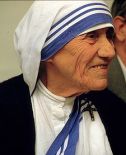
Meet Mother Teresa

Mother Teresa In his letter to the Philippians, Paul exhorted his readers to follow his example and to “observe those who walk according to the pattern you have in us” (Philippians 3:17). Paul set himself up as an example worthy of imitation. While his words seem to have a ring of alarming audacity, we must not overlook the fact that Paul’s exhortation is framed within the context of his confession that he was not perfect and continued to press on toward the goal.


In 1 Corinthians 11:1 Paul wrote these words: “Be imitators of me, just as I also am of Christ.” Paul wanted for others to follow his example only insofar as he followed the example of Christ. But, Paul did not claim to be the only one who followed Christ’s example. There were others whose lives were exemplary and worthy of imitation. That’s why he also exhorted the Philippians to “observe those who walk according to the pattern you have in us” (Philippians 3:17).

Christ-followers can and should learn from the examples set by those who faithfully follow Christ. For example, Billy Graham has set an example of the importance of proclaiming the gospel of Jesus Christ. And, Mother Teresa set an example of what it means to serve others, especially the least of these. Billy Graham and Mother Teresa are two Christ-followers whose lives are worthy of imitation. Below is a broad overview of Mother Teresa’s exemplary life.

Early Life | Agnes Gonxha Bojaxhiu — the child who would one day be known as Mother Teresa — was born on August 26, 1910 in Skopje, Albania. Her family lived next door to the church, where she spent much of her time. She was inspired by the example of her mother, a compassionate and generous woman who never allowed the poor who came to her door to leave empty-handed. As a young girl, Agnes had a special interest in missions and began to sense God’s call to the missionary life at the age of twelve.

Call to Missions | At the age of eighteen, Agnes applied for admission to the Order of the Sisters of Our Lady of Loreto because she was attracted by their missionary work in India. On December 1, 1928 she boarded a ship for India and arrived in Calcutta on January 6.

A New Name | In May 1931, Agnes changed her baptismal name to Teresa because she was impressed by the example set by Therese of Lisieux, a Catholic nun also known as “The Little Flower of Jesus.” Therese, who died at the age of twenty-four, understood the importance of serving God by doing little things well. She wrote, “Love proves itself by deeds, so how am I to show my love? Great deeds are forbidden me. The only way I can prove my love is by scattering flowers and these flowers are every little sacrifice, every glance and word, and the doing of the least actions for love.”

Call within a Call | On September 10, 1946, Sister Teresa felt a call within her call. She later wrote, “I was quietly praying when I clearly felt a call within my calling. The message was very clear. I had to leave the convent and consecrate myself to helping the poor by living among them. It was a command. I knew I had to go, but I did not know how to get there.”

The White Sari | Sister Teresa left the Sisters of Our Lady of Loreto on August 16, 1948. Setting aside the religious habit of the order, she put on a white sari (trimmed in blue), like the ones worn by the poorest women in India, and became an Indian citizen in 1949.

Her Work | Mother Teresa founded the Order of the Missionaries of Charity in 1950 and opened the first home for dying destitutes in Kalighat, a Hindu temple in the heart of Calcutta, in 1952. She named the home Nirmal Hriday which means “Home for the Pure Heart.” Mother Teresa and her nuns dedicated themselves to caring for abandoned street children and the sick and dying.

Recognitions | Mother Teresa was awarded the Nobel Peace Prize on October 17, 1979 and asked that the prize money be given to the poor in India. President Ronald Reagan presented her with the Presidential Medal of Freedom, the highest civilian award in the United States, in 1985. In October 1996, President Bill Clinton signed legislation making Mother Teresa an honorary United States Citizen. In June 1997 she received the Congressional Gold Medal of Honor.

Her Death | Mother Teresa passed away quietly at her home in Calcutta on September 5, 1997. Throughout the years she worked tirelessly on behalf of the poor. Many admonished her to slow down and rest. However, Mother Teresa always labored on, saying “I have all eternity to rest.” Mother Teresa lived a life worthy of imitation. At the time of her death, the Missionaries of Charity were operating 610 missions in 123 countries. She continues to inspire others by her example, challenging them to look beyond themselves and to consider the needs of the least of these.

• • • • •

Note I leave for India today with my friends Jon and Holloway to work at one of Mother Teresa’s homes for the least of these in Kolkata (Calcutta). I will post about my experiences as I have opportunity, so please check back often. And, if you are interested in reading more about Mother Teresa, please check out my book list.

Posted by: Omar C. Garcia | January 17, 2009

Expect Opposition

   I received e-mail from a missionary friend serving in South Asia. He wrote to inform me that two national believers had been arrested for sharing their faith. My friend wrote, “The police took [them] to their office. They beat them, electrocuted them, and threw them in a dark cell. The police told them that since they could not bring charges against them for making Christians, they would arrest them on false charges.” Unfortunately, this is not the first time these and other national evangelists in this country have suffered such abuse at the hands of local authorities.

   For many believers in our world today, actual physical persecution is part of the equation of following Christ. Many of these believers choose to stand firm in their faith knowing that they very likely will suffer some type of abuse. When threatened with opposition, we must choose whether to identify with Christ and suffer as a result or to permit that opposition to deter us from being faithful to Christ. Here is a broad-stroke summary of what Jesus shared with His disciples about persecution.

Hatred (John 15:18-20) | The world hates those who are identified with Christ. Jesus taught His disciples that they would experience the hatred and opposition of the world. He added that the world hated Him first and would not treat them any better.

Ignorance (John 15:21-24a) | Jesus explained that the world’s hatred is fueled by spiritual ignorance. Jesus’ life, words, and works made people uncomfortable about their sin. Those who refused to believe in Jesus were without excuse for their sin.

Rejection (John 15:24b-25) | In spite of evidence that indicated Jesus is the Christ and God’s Son, many refused to believe in Jesus. Instead, they hated Him, thus fulfilling what was written in their Law.

Persecution (John 16:1-4) | Jesus warned His disciples about persecution so that they would not be caught off guard when it came. He said that the hatred of the world would manifest itself in expulsion from the synagogue and even death.

   While in Lima, Peru, I had the opportunity to visit the Museum of the Tribunal of the Holy Inquisition. The instruments of torture displayed in this museum are a sobering reminder of what misguided religious zeal can do. Many believers in the world today still face the threat of death from misguided religious inquisitors. For example, my friends in Orissa, India have felt the full fury of the hatred of their Hindu neighbors over the past year. Most have suffered the loss of property and some have lost their lives.

   We will likely never experience the kind of suffering endured by the men my missionary friend e-mailed me about or that my friends in Orissa have suffered. But perhaps as a Christian you have been the target of some measure of ridicule, reproach, or insults (Luke 6:22; 2 Corinthians 12:10). Perhaps you have been taunted because of your godly lifestyle, because you refuse to participate in certain activities, or because your views are informed by a biblical worldview. Regardless of the form opposition takes, we should expect it because the world is hostile to the kingdom of God. And, expecting opposition can help us to stand firm in our faith in Christ.

Posted by: Omar C. Garcia | January 15, 2009

The Fallen Tree

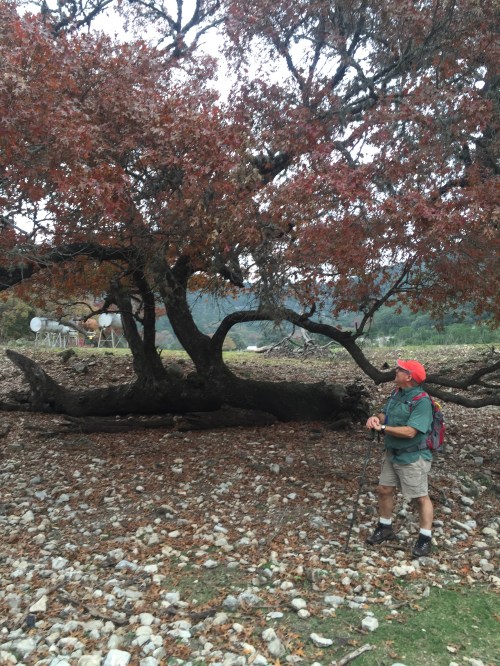
I first encountered the fallen tree on one of my treks into the Texas Hill Country in the early 1980’s. I had no way of knowing exactly when or how it had fallen. But there it was, lying on its side with its massive arms reaching up to heaven. I stood in silence before the fallen giant trying to imagine the great force that had weakened its grasp and brought it crashing to the rocky ground.

Fallen Tree A in 12-2015
This imposing tree that had once stood upright was determined to live. This was a tree to be admired and respected. It had experienced a calamity that altered its posture but it did not stop growing. The evidence was there before me — branches that defiantly reached skyward with leaves gently shimmering in the breeze. This tree refused to give up. Instead, it found new ways to grow.

Fallen Tree B in 12-2015
The Psalmist declared that all things are God’s servants (Psalm 119:91). And indeed, the fallen tree rendered a noble service to God as it silently taught me the meaning of perseverance. Over the ten years that I visited the tree my own life was struck by numerous storms.

Fallen Tree C in 12-2015
There were times when I wondered about my future and whether it was worth staying in the fight. There were times when I felt too weak to raise my arms and periods when I labored to exhaustion without the refreshment of an encouraging word. There were even moments when I actually entertained thoughts of doing something else, anything else. And, more than once I was the only guest at my own pity party! On those occasions God would remind me of the tree — and the tree’s upraised branches would point me to God.

Fallen Tree D in 12-2015
God used the fallen tree to remind me that giving up is not an option, regardless of how severe the blow. There are always new and creative ways to grow. The tree also reminded me that failure never has to be final and defeat never has to be devastating. Those who have experienced and survived failure can attest to the fact that some of life’s greatest lessons are learned when we are lying helplessly on our backs.

Fallen Tree E in 12-2015
A change in posture often gives us a new and uncommon perspective. The great thing about getting knocked down is that we are forced to look up. So, I am grateful that a hike through the Texas Hill Country introduced me to a new friend — the fallen tree. Of the countless trees I have hiked past in the Texas Hill Country, none stand taller than this tree. It’s been more than twenty years since I visited my fallen friend, but I’m confident that it’s still reaching skyward.

Fallen Tree F in 12-2015
Disappointments, defeats, and disasters are no respecters of persons. When we least expect it our lives can be struck hard by disastrous reverses that leave us disoriented or send us crashing to the ground. When we are struck and stunned by life’s blows we can either stay down or find new ways to grow. I prefer the latter. Here are a few things to keep in mind the next time you get knocked to the ground.

• Uncertainties will come. Be prepared!

• Life is not fair. Accept it!

• You will get knocked down. Deal with it!

• If you can get back up — do it!

• If you can’t get back up — find a new way to grow!

• Never give up. Dust yourself off and press on!

• • • • •

Note| When you get the wind knocked out of you or you get knocked to the ground, look to God’s Word for guidance. I have compiled helpful Bible verses for such times and posted them on my Bible Teaching Notes website under the heading Where to Look. Take a moment to go there and bookmark the page for future reference.

I returned to visit the fallen tree in December 2015. The tree was still there, lying on its side, only bigger than I remember. Seeing the tree again was like finding an old friend. The photos in this post are from that latest visit.

Posted by: Omar C. Garcia | January 13, 2009

Work Your Muscles

Just before I left town to spend some time with my family at Christmas, a friend at church told me about a single mom in desperate need of assistance. This single mother of two is a breast cancer survivor who most recently has battled brain cancer and the presence of cancer cells in her spinal cord fluid. “She is not a member of our church,” my friend added. “In fact, she is Catholic.” But, more important, she is a single mom in need of unconditional and practical expressions of love and support at a critical time in her life. Over the course of her illness, her home has fallen into serious disrepair. Throughout her home, lots of major and minor things have conspired together to add to her anxiety about an already uncertain future.

I felt deeply compelled to mobilize one of our Adult Bible Fellowship groups to do a one-day home makeover for this mom and her kids. Our Parents with Teens ABF accepted the challenge and set aside Saturday, January 10 to bless this mom (sadly, she was readmitted to the hospital on January 9). My daughter Gina and I arrived at the church to meet our volunteer army at 7:30 AM — almost the exact moment the cold front blew into Katy. In spite of the cold, almost sixty Parents with Teens class members and their children showed up eager and ready to help. After praying together, our caravan of care-givers traveled the short distance to her home in Spring Branch.

We assembled on the front lawn (ala extreme home makeover) to receive our work assignments. Then, over the course of the next eight hours, we worked shoulder to shoulder to bless a woman we had not personally met but whose story touched our hearts. Every person present joyfully worked with a sense of purpose. Two shared their personal cancer survival stories with me. Neighbors stopped by to thank us. One lady said she would make a contribution to our missions ministry because she was so impressed by what we were doing to help. Others remarked that they could not understand why a boat-load of Baptists would give up a Saturday to help a Catholic lady — with no strings attached.

By the end of the day the transformation was unmistakable. Paint and patches and fixtures and faucets can make a big difference. But, while we worked on the outside, God was at work on the inside. My old friend Paul Haas often wears a t-shirt to our service initiatives that is imprinted with this message: “Work the muscles. Build the heart.” I like that! After leading thousands of Kingsland volunteers to serve others throughout our community over the past three and a half years, I have learned that paint brushes and hammers are powerful tools for personal transformation. God can use a simple thing like a paint brush in your hand to do more than touch up a wall. He can use it to color your heart with compassion and to brighten your own outlook on life.

So, the next time you have an opportunity to serve others — do it. Allow God to use you to bless others with no strings attached. And, please involve your children so that they can learn that the universe does not exist to serve them. The last thing this world needs is another bratty, selfish kid who feels entitled to everything. Children should learn to serve others and to do hard things! Teach them by your example. Joyfully and eagerly serve others and do good things so that God will receive glory (Matthew 5:16). Work your muscles. It will do your heart a lot of good.

• • • • •

PS | Thank you Parents with Teens ABF for blessing this single mom and her children. And, thanks for modeling Christ-like service for your children and the people of the neighborhood. You guys rock! May God be glorified.

« Newer Posts - Older Posts »

Categories