Posted by: Omar C. Garcia | February 17, 2009

A Personal Life Alarm

   I finally got around to meeting the new neighbors. When I arrived home, I discovered that their shrill house alarm had been sounding for several hours. I knew that an older retired couple had moved into the house and I was worried something might have happened to them. So, I rushed over to the house and rang the doorbell as I simultaneously knocked on the door. No answer. Finally, my new silver-haired neighbor emerged from the house. He motioned for me to wait a moment and then went back into his house while his alarm continued to sound its earsplitting warning. After a minute or so he returned to the door with a pad and pencil in hand. He motioned to his ears and shook his head. He is deaf! His wife is deaf, too!

   He handed me the pad and pencil and motioned for me to write. So, I introduced myself on paper, welcomed him to the neighborhood, and informed him that his home’s alarm had been on all afternoon. He shook his head apologetically and invited me into his home to show him how to properly operate the alarm system. I did and he smiled. We then continued our conversation for a full four pages, passing the pad and pencil back and forth! I assured him that I would keep an eye on him and his wife. He smiled as he jotted down the word “Thanks.” Then he wrote that he was in the process of having his security alarm tied into the lights in his home, like his doorbell, so that they would blink on and off in conjunction with the sound. Blinking lights — a warning of danger to a couple living in a world of silence.

   As I walked back home I tried to imagine life without sound. No television. No music. No sounds of dogs barking at night or kids playing up and down the street. No loud lawn mowers on Saturday mornings. No thunder on stormy days. No sounds of birds singing or leaves gently rustling in the breeze. None of the usual and familiar neighborhood sounds that I take for granted. Not even the high-pitched sound of a home security alarm. No sounds at all. Only silence. And then I thought about the blinking lights that would serve as my deaf neighbor’s only warning in the event of danger. “Maybe I should get my home security alarm hooked into the house lights,” I thought. In case of an emergency I would like to have all the warning I can get! And since I can both see and hear such an arrangement would serve me just fine.

   And then I wondered, “What if God hooked each of us up to an alarm with blinking lights?” Imagine being wired with a personal life alarm designed to warn us and those around us of spiritual, moral, or ethical danger. Just imagine the salesman setting off his alarm with a little white lie to help him close the deal! Picture a spouse about to cross over the line into the region of infidelity having their illicit amorous rendezvous ruined by alarms and blinking lights! Imagine the student bent over his desk while taking mid-term exams setting off his alarm and blinking lights with a glance over the shoulder of the student in front of him. Yes, maybe God should hook each of us up to a personal life alarm triggered by our disobedience to His Word. But then again, He already has! Don’t be deaf and blind to the alarming conviction of the Holy Spirit. After all, He is watching out for us and has our best interests in mind!

• • • • •

Written in May 1991 | San Antonio, Texas
Posted by: Omar C. Garcia | February 15, 2009

Love Notes (Part 2)

In 1 Corinthians 13:4-7, we see the spectrum of love as it passes through the Apostle Paul’s inspired heart. Using a series of 15 verbs, Paul gives us a glimpse into the character and conduct of love.

Love is patient | Love is longsuffering — it takes a long time before fuming and breaking into flames. Love does not have a quick temper nor is it subject to outbursts of anger. The word “patient” is in the present tense in the Greek text, emphasizing that patience should be a continual and habitual state or action.

Love is kind | The word “kind” refers to one who renders gracious service to others. Love is useful and gracious and gentle in its behavior. It looks for ways to be constructive, is able to recognize needs, and contributes to the lives of others. Augustine wrote: “What does love look like? It has the hands to help others. It has the feet to hasten to the poor and needy. It has eyes to see misery and want. It has ears to hear the sighs and sorrows of men. That is what love looks like.”

Love is not jealous | This is the first of several references to love in terms of what it is not. Paul used these negative references to point out to the Corinthian believers that love did not manifest the kind of outlook on life that they were demonstrating toward one another. The word “jealous” means to boil with envy. It refers to a possessive and exclusive control that will not allow another to find fulfillment in life.

Love does not brag | Love does not play the braggart. Love doesn’t seek to make an impression or to create an image for personal gain. Ostentation, showiness, and pretension is the idea here.

Love is not arrogant | The word “arrogant” means to puff one’s self out like a pair of bellows. Love is not self-centered nor does it puff itself up with ideas about its own importance.

Love does not act unbecomingly | Love is not indecent. It doesn’t behave in a shameful manner. Instead, it is tactful and does nothing that would raise a blush. It has good manners. It has respect for others, exercises discretion, and knows what is proper and when.

Love does not seek its own | Love does not pursue selfish advantage. It has as its primary concern the needs of others. This is the kind of love Jesus referred to in John 15:13. Paul wrote about this aspect of love in Philippians 2:3-4.

Love is not provoked | The word “provoked” refers to irritation or sharpness of spirit. It means to irritate or promote to anger. Love is not touchy, hypersensitive, or easily hurt. It doesn’t take things too personally.

Love does not take into account a wrong suffered | To “take into account” means to count up or to make an entry into a ledger. It means to credit to someone’s account. Love does not register evil or wrongdoing. Love keeps no record of wrongs, stores up no resentment, bears no malice, and doesn’t review wrongs which have been forgiven. It doesn’t dwell on past evil or wrong. Instead, it destroys evidence of past mistakes when possible.

Love does not rejoice in unrighteousness, but rejoices with the truth | Love does not gloat over the wickedness of other people. It doesn’t compare itself with others for self-justification or use other people’s sins and shortcomings to excuse or justify personal weaknesses. It doesn’t say, “Everybody’s doing it!”

Love bears all things | Love keeps going in the face of everything that threatens to undo it. It never gives up.

Love believes all things | This is not to say that love is gullible, but rather that it has a trustful attitude toward others. It is willing to give others the benefit of the doubt. Love is always eager to believe the best. It believes in others and affirms their worth.

Love hopes all things | Love is hopeful because it is grounded in God and because Jesus, who is the manifestation of God’s love, gives meaning to hope. Love sees the bright side of things. When it is disappointed, it does not despair, but keeps on hoping and waiting (like the father of the prodigal son in Luke 15:11-32).

Love endures all things | Love perseveres. It is able to survive under hard and unfavorable circumstances. It possesses sturdy patience. It can endure the night because it is confident of the morning. It is able to outlast anything, endure all obstacles, and even love in the face of unreturned love.

Love never fails | Love never ends. It is eternal. It will never come to an end because it is grounded in God, and God is love. Love will last as long as God lasts — forever. Paul added that prophecy, tongues, and knowledge — all of which were very important to the Corinthians and all of which had caused their share of dissension — will be done away with. These are things that will not be necessary in the presence of God.

In summary…

• Love is indispensable — ministry, miracles, and martyrdom without love are empty and void of meaning.

• Love is invincible — when practiced, love can do more to change the world than anything else.

• Love is immortal — love will last on into eternity and, because of its permanence, must be our priority.

Posted by: Omar C. Garcia | February 14, 2009

Love Notes (Part 1)

   Nowhere else in all of literature, either sacred or secular, is the meaning of love more beautifully defined than in 1 Corinthians 13. This chapter of Scripture is like a prism. When a beam of light passes through a prism, it comes out on the opposite side broken up into its component colors — red, yellow, violet, orange, and all the colors of the rainbow. So it is with love when it passed through the Apostle Paul’s inspired heart — love emerged broken up into its component elements. Please keep in mind two very important things as we look at this chapter.

   First, Scripture was not written in a vacuum. This chapter on love is included in a serious letter to the church in Corinth. In this letter, Paul painted for the Corinthians a picture of themselves in their factions, their jealousies, their vanity, their carnality, their misuse of Christian liberty, and their bragging about their spiritual gifts. However, in the 13th Chapter, Paul momentarily turned aside from his direct counsels and rebukes to show the Corinthians an ideal Christian life, which was pretty much everything theirs was not.

   Second, unlike our language, the Greeks had several words for love. The word “eros” refers to love of deep desire, passionate and sensuous longing. It had a physical and sexual connotation. This word is not used in the New Testament. The word “storge” refers to the kind of affection found in a family. The word “philia” refers to brotherly love. Finally, the word “agape” expresses the unconditional kind of love that God demonstrates toward us through Christ. It implies loving when there is nothing worthy to evoke love. This is the word Paul used in 1 Corinthians 13.

   This beautiful love chapter begins with these words (verses 1-3):

“If I speak with the tongues of men and of angels, but do not have love, I have become a noisy gong or a clanging symbol. And if I have the gift of prophecy, and know all mysteries and all knowledge; and if I have all faith, so as to remove mountains, but do not have love, I am nothing. And if I give all my possessions to feed the poor, and if I deliver my body to be burned, but do not have love, it profits me nothing.”

   Notice the following three things in these verses.

   Ministry without Love is Meaningless | Paul said, “If I speak with the tongues of men and of angels [a rhetorical way of referring to all possible speech], but do not have love, I have become a noisy gong or a clanging symbol.” Since the time of Plato, superficial orators were referred to as gongs. Paul continued, “If I have the gift of prophesy, and know all mysteries and all knowledge … but do not have love, I am nothing.” A person may be straight doctrinally yet ineffective in ministry and service because of a lack of love. And, “If I give all my possessions to feed the poor, but do not have love, it profits me nothing.” It is possible to give without loving, but it is not possible to love without giving.

   Miracles without Love are Meaningless | Paul said, “If I have all faith, so as to remove mountains, but do not have love, it profits me nothing.” Even mountain-moving, miracle-working faith without love is nothing. Teresa of Avila, a Spanish nun who lived in the 16th Century said, “Our Lord does not care so much for the importance of our works as for the love with which they are done.”

   Martyrdom without Love is Meaningless | Paul said, “If I deliver my body to be burned, but do not have love, it profits me nothing.” It is possible to give our possessions, our freedom, even our very lives — but if these acts are done by one who does not love, it profits him nothing. Stephen, the first Christian martyr, demonstrated love in martyrdom (Acts 7). Just before he died he cried out, “Lord, do not hold this sin against them” (Acts 7:20). Stephen’s words of love and forgiveness pierced the heart of a young man standing in the crowd — Paul, the man who would later write the inspiring words of 1 Corinthians 13. We’ll take a look at what he wrote about love in Love Notes (Part 2).

Posted by: Omar C. Garcia | February 12, 2009

Intimacy with God

   As a Christ-follower, cultivating intimacy with God is one of the things that matters most to me. Encouraging others to know and love God is also a top priority. Here are a few thoughts about how you can develop intimacy with God.

   Intimacy: Soften Your Heart | The best way to get to know someone is by spending time alone with them. When Peter and John were arrested for healing a crippled beggar, they were called to give an account of their activities before the Sanhedrin (Acts 4:1-21). Peter offered an intelligent and impassioned explanation for their actions. His courageous response led the religious leaders to conclude that he and John had spent time with Jesus (Acts 4:13). The more time we spend with Jesus the more like Him we will become. Spending time alone with God in the study of His Word and in prayer can soften and make our hearts more tender and responsive to Him.

   Intellect: Sharpen Your Mind | Christ-followers today live under increasing pressure to compromise or abandon the exclusive claims of Christianity. Our postmodern society insists that there is no such thing as absolute, objective, or universal truth. We can become better equipped to face the challenges of worldviews and ideologies that are contrary to our faith as we spend time alone with God in the study of His Word. Jesus challenged us to love God with our minds (Mark 12:30). Consistently spending time alone with Him can help sharpen our minds and better equip us to articulate our Christian worldview (1 Pet. 3:15).

   Intentional: Deepen Your Resolve | Spending time alone with God can deepen our resolve to live in a way that pleases Him. The best way to understand what pleases and displeases God is by reading and studying His Word. Jesus said that no one can serve two masters (Matt. 6:24). He was right. Our attitude toward one master will determine our attitude toward the other. Cultivating intimacy with God will cause our love for the world to grow cold. Conversely, cultivating intimacy with the world will cause our love for God to grow cold. Intentionally cultivate a desire to please God by spending time in His Word and in prayer.

   Inspiration: Lift Your Spirit | Many people live in ways that quickly drain them of energy and resources. Building time alone with God into our busy schedules is vital to our spiritual, mental, and emotional health. Consistently spending time alone with God and reflecting on the wonderful truths of His Word can lift your spirit and fuel your resolve to please Him. These quiet moments can help you to reflect on the majesty and wonder of God. If you are experiencing difficulties, spending time alone with God can help you to sharpen your perspective.

   Interference: Stop the Flow | Identify and overcome the obstacles that can keep you from cultivating intimacy with God. Over-commitment is one of the biggest challenges we face. Taking on too many activities and involvements can extend our day beyond work and school hours, leaving us too tired to spend time alone with God. An addiction to noise is yet another obstacle that hinders some people from drawing near to God. Noise junkies must have the television or radio on at all times regardless of whether they are watching or listening. They feel uncomfortable with silence. God often can’t get a word in because His voice is drowned out by these competing cacophonies. Be prepared to turn off your television or radio in order to tune in to God. Determine to stop the flow of noise so that you can be “silent before the Sovereign Lord” (Zeph. 1:7a).

   Initiation: Start the Process | Make a decision to spend time alone with God. Set aside a specific day, time, and place. You must decide how much time is enough for you. Some people would not think twice about watching a half-hour sitcom but complain about spending fifteen minutes with God. Also make certain that you find a place free of distractions (see Mark 1:35). And, in addition to your Bible, check your local Christian bookstore for a daily devotional guide with suggested Scripture readings and challenging devotional thoughts. Record your insights and prayer concerns in a personal journal. This record can become a source of encouragement to you when you face difficulties or challenges in the future.

Posted by: Omar C. Garcia | February 10, 2009

When Life Pains You

   One of the most interesting prayers in the Bible is recorded in 1 Chronicles 4:10. It’s easy to overlook this little prayer because it is inconspicuously nestled in nine long chapters of genealogies. But, it’s a beautiful prayer that tells us what one man did when life pained him. Now Jabez called on the God of Israel saying, “Oh that Thou wouldst bless me indeed, and enlarge my border, and that Thy hand might be with me, and that Thou wouldst keep me from harm that it may not pain me!”

   Jabez belonged to a family from the tribe of Judah. He was probably the first-born in his family because his name is the one included in the genealogical lists of 1 Chronicles. We also know that “Jabez was more honorable than his brothers” (1 Chronicles 4:9). The word “honorable” suggests that he was more “weighty” than his brothers in terms of influence. His personal piety was reflected in his personal conduct and acknowledged by others.

   All children are brought forth in pain (see Genesis 3:16). However, the pain in child-bearing is usually replaced by an even greater joy after the child is born. Not so in the case of Jabez. The pain which his mother experienced while giving birth must have been so extraordinary that she felt compelled to commemorate it. So, when the time came for Jabez to be circumcised and given a name, his mother named him Jabez which means “pain.” Poor Jabez! His name was a constant reminder that his mother “bore him with pain.” Understanding what life must have been like for Jabez can help us to understand his prayer.

“Now Jabez called on the God of Israel” | Jabez called on the covenant God who keeps His word and never forgets His people. He had a right view of God, for the one who comes to God must believe that He is, and that He is a rewarder of those who seek Him (Hebrews 11:6). Jabez knew where to turn for help. He expressed his faith and confidence in God alone.

“Oh that Thou wouldst bless me indeed” | At first glance this appears to be a selfish request, but keep in mind that these are the words of the man named “pain.” Jabez had the courage to ask God to bless him. He refused to allow his name and the ridicule he had to endure to keep him down.

“and enlarge my border” | Jabez had the courage to pray for success in his undertakings. He was not content to let his little light shine in a little corner. He asked God for a big corner to brighten. Jabez was not content to have just a little responsibility. He asked God for greater responsibility.

“and that Thy hand might be with me” | This is a beautiful expression of Jabez’s dependence upon God. He wanted to see God’s all-powerful and all-sufficient hand at work in his life — leading, protecting, providing, and strengthening him.

“and that Thou wouldst keep me from harm” | Jabez acknowledged that God alone was capable of keeping him from harm — the harm caused by the stigma of his name as well as the harm caused by sin, trouble, and enemies. Jabez acknowledged his need for God’s protection.

“that it may not pain me!” | Jabez ended his prayer by alluding to his name. A paraphrase might read: “Dear God, grant that the pain implied in my name might not come upon me!”

“And God granted him what he requested.” | What a beautiful statement! We really don’t need any details regarding how God answered his prayer. It is enough to know that he answered it. God granted Jabez what he requested. That means that God blessed him indeed, gave him success in his undertakings, broadened the scope of his responsibilities, kept His mighty hand upon him, and kept him from harm.

   Jabez teaches us what to do when life pains us. First, we should turn to God in prayer, acknowledging our need for Him. Second, we should not allow the painful things in life to keep us down; rather we should use them as motivators for reaching higher and doing more. Third, we should ask God to allow us to see and understand more of the bigger picture and how that painful situation fits into the bigger scheme of things. Fourth, we should be courageous in our praying, making our hearts fully known to God. So, remember Jabez the next time life pains you and dare to pray with the kind of courage and confidence he demonstrated in prayer.

• • • • •

Written in 1985 | Corpus Christi, Texas

Posted by: Omar C. Garcia | February 8, 2009

The Malchus Incident

Last year, I attended a fellowship to celebrate the first anniversary of the sobriety of a young man living in a recovery community. The young man’s testimony was a woeful story of a childhood steeped in abuse, teenage years spent wandering the country as a runaway, and the eventual intersection of his broken life with a healing community. The young man’s expression bore the unmistakable signature of hardship. His body was stamped with an assortment of crude tattoos collected on his troubled journey.

As this young man related his story, he made a fist with his left hand and held it out for us to see. The letters c, t, e, and d were etched just below each of his four knuckles. Then he made a fist with his right hand and held it out. The letters r, e, j, e were tattooed on each of the knuckles on this hand. When he placed his left fist next to his right fist the message became clear — rejected.

Rejection is a terrible thing. No one likes rejection. Anne Murray spoke for all of us when she sang, “I was born to reject rejection. If only for today, Show me that you want me, Show me that you need me, Send a little love my way” (from her song “Send a Little Love My Way”).

The Bible certainly affirms the significance and worth of all human beings. In Psalm 8, David marveled at the fact that the God who created the universe considers us as more prized than the planets. Jesus also affirmed the worth of people. He spent time with those rejected by society and became known as “a friend of tax-collectors and sinners” (Matt. 11:19).


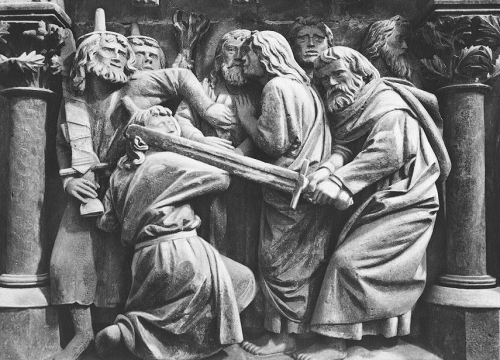
Malchus is one of my favorite Bible characters (Luke 22:50-51 and John 18:10-11). He was the slave of the high priest. As a slave, it’s safe to say that Malchus understood what it felt like to be considered less than important by others. Malchus had followed Judas and the crowd to the Garden of Gethsemane where Jesus and His disciples were praying. He stood in the crowd and watched as Judas betrayed Jesus with a kiss — the ultimate rejection. And then, when the soldiers stepped forward to arrest Jesus, Peter reached for a sword, took a wild swing, and cut off Malchus’ right ear. Here are three things that we can learn from the Malchus incident.

No Insignificant People | Jesus had spent a difficult night in prayer in the Garden (Luke 22:41-44). He knew that the excruciating agony of the cross was just hours away. Jesus felt the weight of things and certainly had valid reason for ignoring others. Yet, when Peter injured Malchus, Jesus forgot Himself and ministered to this bleeding slave. The Malchus incident reminds us that Jesus came to serve (Matt. 20:28 and John 13:14) and that there are no insignificant people in His eyes. Jesus always affirmed the worth of people, even publicans and sinners. We need to be like Jesus and affirm the worth and significance of others (see Phil. 2:3-4).

No Insignificant Problems | When Peter injured Malchus, Jesus did not walk away from the situation. Instead, He touched Malchus’ ear and healed him. The Malchus incident reminds us that Jesus cares about the problems of humanity. There are no insignificant problems in His eyes (read Matt. 9:35-36). Three invitations in Scripture remind us how much God cares about our problems. First, Jesus invites those who are weary and heavy-laden to come to Him (Matt. 11:28). Second, God invites us to cast all of our cares and anxieties upon Him (1 Peter 5:7). And third, God invites us to commit our way to Him (Ps. 37:5). We can confidently accept His invitations and lay our concerns at His feet. And, like Jesus, we should minister to others in their time of need.

No Insignificant Price | The Malchus incident reminds us that there are no insignificant people or problems because of the price Jesus paid for our salvation. Malchus was in the garden on the night before the crucifixion when Jesus was betrayed and arrested. Within hours of healing Malchus’ injured ear, Jesus paid the ultimate price to redeem us (1 Peter 1:18-19). The cross reminds us that sin is the most expensive thing in universe. Pardoned, the cost falls on Christ. Unpardoned, the cost falls on the sinner. Jesus affirmed our worth by giving His life on the cross. We must share the liberating message of the cross with those living under the burden of rejection.

Posted by: Omar C. Garcia | February 4, 2009

Be Still and Know

Psalm 46:10 is one of my favorite Bible verses — “Be still and know that I am God.” This verse encapsulates the secret to successfully dealing with the issues of life.

However, the advice the Psalmist gives in this verse runs contrary to our human nature. It’s our human nature to instinctively strive whenever we encounter difficulties in life — to wrestle and struggle and calculate and contrive to whatever extent we feel necessary in order to handle life’s difficulties. Such fruitless activity often leaves us feeling frustrated and robs us of the opportunity to see how God can deal with the same issue.

The words “be still” or “cease striving” mean “let your hands drop” or “let go” or “relax.” God will not put His hands on a difficulty until we take our hands off. When we take our hands off and get out of the way, God will put His hands on the situation and work in such a way that we come to understand that He is indeed God.

Here are four things to keep in mind the next time you find yourself dealing with one of life’s difficulties.


Release
| First, whenever we encounter a difficulty we must release it into the care of the Lord. Psalm 37:5a states, “Commit your way to the Lord.” Psalm 55:22 declares, “Cast your burden upon the Lord, and He will sustain you; He will never allow the righteous to be shaken.” We read in 1 Peter 5:7, “[cast] all your anxiety upon Him, because He cares for you.” Whenever we encounter a difficulty we should first take the matter to the Lord and entrust it into His care.

Rely | Second, we must rely upon the Lord. Psalm 37:5 declares that we must first “commit” and then, “Trust also in Him, and He will do it.” Proverbs 3:5 states, “Trust in the Lord with all your heart, And do not lean on your own understanding.” Whenever we encounter difficulties in life, the temptation to strive and to lean on our own understanding is great. However, we must act opposite of our own human nature, release the matter into the hands of the Lord, and then rely upon Him to guide us in the resolution of the matter. Such a resolution may require activity on our part or a great deal of patience. We must be prepared for both.

Relax | Third, we must relax. This is not a reference to inactivity or unconcern. Rather, it is a reference to waiting upon the Lord to work things out in His time. Psalm 27:14 declares, “Wait for the Lord; Be strong, and let your heart take courage; Yes, wait for the Lord.” Waiting is difficult for us to do. We do not like waiting. We abhor lines at the traffic light, at the grocery store, or wherever we have to queue up. Our society is geared to taking the wait out of life. Everything is becoming faster by virtue of automation and self-service and great technological advances. But in our spiritual lives waiting is important. We cannot hurry-up waiting! Waiting is a key ingredient in the development of character and spiritual maturity. And so, once we have released a matter into the hands of the Lord we must rely upon Him to work matters out in His time, which requires that we relax.

Receive | Fourth, receive God’s provision or solution or answer. God’s response to the matter will come in due time. If we will release (commit), rely (trust), and relax (wait), we will receive God’s response. Receiving God’s response to the matter we released into His care should serve to remind us that He is God and that He is faithful. We experience growth in our understanding of God when we commit our difficulties and impossibilities into His care and trust Him to faithfully deal with each of them.

Remember, there is absolutely no situation that we can release into His care that can baffle Him. God knows exactly what to do with every conceivable issue of life. Thus the secret to successfully dealing with the issues of life is to release (commit), rely (trust), relax (wait), and receive what God has for us. And then — remember to continue releasing everything into His hands. So, let your hands drop!

• • • • •

Note | I wrote this devotional in December 1990. Applying the truths of Psalm 46:10 is not always easy, but it’s the best thing to do. God is faithful.

Posted by: Omar C. Garcia | February 2, 2009

Beating Back the Jungle

   In 1998 I traveled by train from the ancient city of Cuzco, high in the Peruvian Andes, to Machu Picchu, the lost city of the Incas. The train journey was magnificent, offering breath-taking vistas as it made its way northwest along the Urubamba River to the town of Aguas Calientes. From Aguas Calientes I boarded a local bus for the final few kilometers up to the high mountain ridge where Machu Picchu lay hidden for centuries beneath a thick jungle canopy.

   Built around 1460 by Pachacuti, king of South America’s Inca civilization from A.D. 1438 to 1471, Machu Picchu was eventually abandoned and swallowed up by the jungle. In 1904, an engineer named Franklin caught a glimpse of Machu Picchu from a distant mountain. He told a missionary named Thomas Paine about what he had seen. Paine and a fellow missionary climbed to the ruins in 1906. In 1910, Yale’s Hiram Bingham heard of the discovery, journeyed to the site, and credited himself as the discoverer of Machu Picchu.

   I have visited many of the world’s premier sites, but Machu Picchu took my breath away. You can’t walk its ancient paths without wondering about the people who crafted this city out of precisely carved and placed stones, many weighing several tons. Our guide shared that Machu Picchu is the most expensive archeological site in the world to maintain because of the rapid growth of the surrounding jungle. “We have to beat back the jungle or Machu Picchu will be swallowed up,” he said.

   I have often thought about Machu Picchu as I have walked the streets of urban areas in our own city. These concrete jungles bear resemblances to ancient ruins with their abandoned row houses, trash-filled lots, dilapidated crack houses, and more. Life is hard and dangerous for those who live in these areas, especially children whose futures are constantly threatened by the encroaching jungle. I am thankful for those who have caught a glimpse of these areas and have ventured in to beat back the jungle so that the light of God’s love and opportunity can shine through.

   Our missions ministry has formed strategic alliances with those serving in Houston’s concrete jungles. We are committed to investing resources and mobilizing volunteers to help our partners beat back the jungle.

   Houston’s Fourth Ward | Pastor Elmo Johnson has served the Fourth Ward’s Rose of Sharon Baptist Church for twenty-five years. His influence reaches beyond Rose of Sharon to the surrounding community. He has shut down crack houses, provided safe housing for poor senior adults, and more in an effort to revitalize his neighborhood. Elmo is committed to winning the Fourth Ward to the kingdom, home by home.

   Generation One | Mike Malkemes beats back the jungle daily as he works to help children in Houston’s Third Ward to realize their God-given potential. Mike and his staff at Generation One help kids connect with Jesus, provide after-school tutoring, and get kids involved in sports leagues. They also provide food and clothing for these children and their families, clear hazardous lots and abandoned homes, and more. The Third Ward would be much more dangerous without his presence.

   Alpha House | Josh and Amy Wood work under the leadership of Jim Herington and the Harbor Church Network to provide a supportive environment for those addicted to alcohol and drugs. Alpha House is the only Christ-based residential recovery initiative in Houston’s Montrose district. Josh and Amy are committed to helping those recovering from alcohol and drug dependency to rebuild their lives in a supportive Christian environment.

   Something Blessed | Almost fifteen years ago Mary Lee sensed a call from God to provide care for a vulnerable segment of the homeless community — those with mental and physical challenges. Doing what she does day after day is hard, but Mary knows she is doing exactly what God has called her to do. Without people like Mary, the residents she cares for would be swallowed up by the concrete jungle and forgotten.

   God’s Will Word Ministries | Pastor Leonard Butler came to the Houston area to make a difference. He planted a church in Katy that is presently meeting in a building in Brookshire in the midst of a hurting community. He and his small congregation are working to connect with vulnerable kids and their families and to introduce them to the hope that is found only in Jesus.

Posted by: Omar C. Garcia | January 30, 2009

Home from Kolkata

   I am home from Kolkata and my heart will never be the same again. I already miss the men at Mother Teresa’s homes. My heart aches because I have seen their faces, touched their broken and fragile bodies, heard their cries, and watched them die. They are no longer the people I have read about, they are now the people among whom I have walked. I will think of them daily and look forward to returning to Kolkata to serve them again. In the meantime, I will continue to look for Jesus in His distressing disguise in my own community. Here are some final thoughts about serving in two of Mother Teresa’s homes in Kolkata.

   The Worst of Suffering | My time at Prem Dan (home for the destitute) and Nirmal Hriday (home for the dying) exposed me to the worst of human suffering. Throughout my years of travel I have seen terrible human suffering — much of it from a safe distance. This past week I saw human suffering up close and personal. I met and held the people who have lived lifetimes in social and emotional exile in dark and filthy places on the streets of Kolkata. Whether stripped of dignity by caste, deformities, or other vulnerabilities, each of the men I met wore the guise of distress. Death reduced their population daily at the homes where I served, but Suffering always sent in replacements. These men live each day with the awareness that Death may soon come to escort them away from their band of brothers.

   The Best of Service | This week I met dozens of volunteers from all nations and all walks of life who were drawn to Kolkata because of the enduring legacy of a diminutive nun named Mother Teresa. Even though language differences kept some of us from communicating with each other, we all understood the needs of the residents and worked together in perfect harmony to care for them. The Italian volunteers were my favorites. I looked forward to doing laundry with them each morning. They lifted our spirits by singing at the top of their lungs. Mother Teresa said, “I very often tell the Sisters to approach the poor with joy, knowing that they have plenty of reasons to be sad. They don’t need us to confirm their sadness for them.” The Italian volunteers filled the air with joy.

   Kali’s Devotees | Nirmal Hriday is located in a space adjacent to Kali’s Temple (Kalighat) in Kolkata. The name Calcutta (Kolkata) is believed to have been derived from Kalighat. Every afternoon we walked through a gauntlet of merchants hawking religious stuff, lots of it, on our way to Nirmal Hriday. The crowded street between the vendors’ shops was littered with the wreckage of suffering humanity – people with twisted or missing limbs, steeped in their own filth, crying out to passers-by for help. Kali’s devotees kept their distance from them, perhaps because they believed that karma had assigned these individuals to this wretched incarnation because of something amiss in a previous existence.

   Little Jesuses | I worked alongside Mother Teresa’s Missionaries of Charity as they tenderly ministered to the least of these. These women are like little Jesuses. As taught by Mother Teresa, they look for Jesus in the distressing disguise of the poor and suffering. And, when they find him, they do for that person what Jesus would do. Christ set the ultimate example of caring for others and calls His followers to do the same. Worldview does matter when it comes to caring for the least of these, including those from Hindu backgrounds. I am especially grateful to have shared this experience with Jon and Holloway. I saw Jesus in these faithful men, and so did the recipients of their kindness. I am blessed to call them my friends. The journey will continue for us here at home as we care for the least of these in our own community. Thanks to each of you who prayed for us daily.

• • • • •

PS | Please take a moment to read Jon’s reflections on our trip. You’ll enjoy his insights.

Posted by: Omar C. Garcia | January 28, 2009

Kolkata’s North Star

Kolkata, India

North Star | Navigating around Kolkata turned out to be much easier than I expected. Our guest house is located on the same street as Mother Teresa’s Mother House. So, whenever we needed to get back to our home base all we had to do was say “Mother Teresa’s Mother House” and cab and rickshaw drivers would give us the distinctive Indian head-bob to acknowledge they knew the way. Mother Teresa was unknown when she first arrived in Calcutta on January 6, 1929. Today, it seems that every cab driver in this bee-hive of incessant human activity knows her name and her reputation as the friend of the poor. She is the city’s North Star for those who have come to serve the poor. And, Mother’s House and all of the Missionaries of Charity homes form a constellation of compassion, beckoning travelers from all nations to come serve the poor.

Rock Star | Twelve years after her death, Mother Teresa is also something of a rock star among the young. Her example and reputation as a servant of the poor continues to attract volunteers from the nations, many of them young people. I have lost track of the number of nations represented in the volunteer ranks this week. The amazing thing is that they are not all Christ-followers. One young man from France has embraced Buddhism but said there is still something missing in his life. A young Jewish girl is seriously considering becoming a Catholic because of Mother Teresa’s example. A college student from South Korea told me that he is tired of consuming his resource on himself. “It’s time I did something for others,” he said. So, he saved his money to come serve the poor in Kolkata for three weeks. And so go the stories of why they come. Although each story is different, the common thread that runs through each is the little nun who made a vow in April 1942 to not refuse God anything and gave Him her all.

Guiding Star | Mother Teresa’s legacy is a guiding star for those seeking to serve Christ is His distressing disguises. David, the great king of Israel, complained, “What will you gain if I die, if I sink down into the grave? Can my dust praise you from the grave? Can it tell the world of your faithfulness?” (Psalm 30:9). The first half of David’s complaint can only be answered by God. However, the second half can be answered from earth’s side of the equation. Mother Teresa reminds us that our dust can praise God from the grave and can continue to tell the world of God’s faithfulness. Mother Teresa did what each of us should do – she wrote a great script for her dust by living a life well-lived. Her dust – or her legacy – continues to guide people of every tongue and tribe and nation to forsake selfish living and to care for the least of these as though caring for Jesus Himself.

Morning Star | Mother Teresa, although dead, continues to point others to Jesus, “the bright Morning Star” (Revelation 22:16). I was impressed by the fact that Jesus was repeatedly emphasized this week – in the prayer we recited every morning, in the team song that we sang before heading to our respective assignments, in the messages posted on the walls of her homes, and in the words and smiles of the Missionaries of Charity. Mother Teresa said, “I rely on one. There is only one: Jesus.”

Mother Teresa’s legacy remains stronger than ever. A legacy is simply the echo that carries the sound of our influence to succeeding generations. Here are some concluding thoughts on why I believe Mother Teresa’s life continues to inspire people of all nations and all faiths to serve the least of these.

L = Life | Mother Teresa lived what she believed. While traveling by train from Calcutta to Darjeeling on September 10, 1946, Mother Teresa received a “call within a call” to labor for “the salvation and sanctification of the poorest of the poor.” She lived her life to fulfill that calling and left a remarkable example of selfless and sacrificial service.

E = Enlist | Mother Teresa knew that she could not do the work God had called her to do apart from the help of others. She challenged, enlisted, and equipped others to join her in the task of living like the poor and devoting a lifetime to serving them. Our legacy endures in direct proportion to the people who are influenced by our life and deeds.

G = Guidelines | Mother Teresa established clear guidelines so that those interested in becoming Missionaries of Charity would know without question what they were committing to. The life of a Missionary of Charity is not an easy one and she wanted for those interested to commit with their eyes open. These faithful servants maintain the integrity of what Mother Teresa started.

A = Access | Mother Teresa kept an open door. I have spoken with several people this week who knew her personally. In spite of her worldwide reputation, she remained approachable and accessible. Awards and recognitions did not change her. She died in the same small room with stark furnishings that she had lived in since founding the Missionaries of Charity.

C = Communication | Mother Teresa wrote letters and notes to those who served with her. Many books have been published about her life and her inspirational quotes are posted in every one of her homes. I enjoyed reading daily quotes by Mother Teresa that are written on a small chalkboard every morning at Mother’s House. They are simple yet profound messages that urge us to live in a Christ-like way.

Y = Years | Mother Teresa looked beyond the years she had on earth to envision something that would outlast her and continue to touch hurting humanity through practical expressions of God’s love. She made careful provision for the sustainability of her vision. The poorest of the poor continue to be the beneficiaries of her compassionate vision years after her death.

« Newer Posts - Older Posts »

Categories