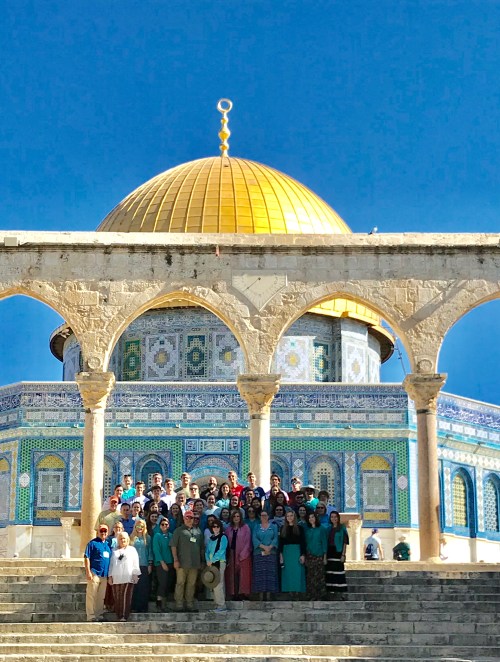
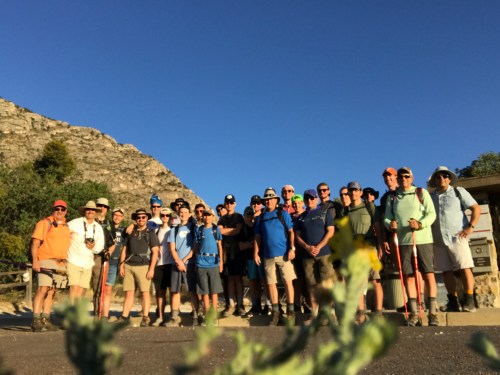
For the past year, Kingsland’s high school seniors have studied apologetics in their respective Sunday night Life Groups. This is part of our strategy to raise biblically literate students capable of intelligently articulating their biblical world view. These students are culminating their year of study on a pilgrimage to the Holy Land.
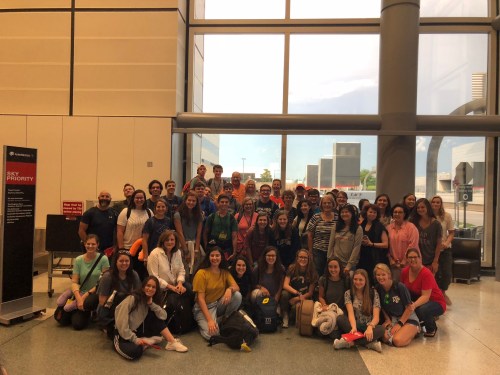
We arrived in Israel on Friday evening and have been on the move ever since. We’ve only got a few days so we are not wasting any time. Our students have already enjoyed two full days of touring and study. What I had hoped would happen in the lives of our students is indeed happening — they are gaining new insights into the biblical narrative as a result of being onsite.
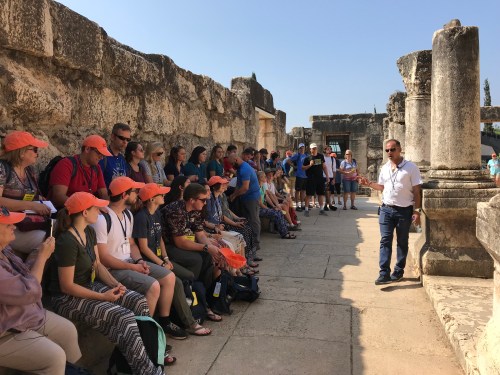
Capernaum | We started our tour in the place Jesus chose as His base of operations when He began His ministry. The ruins here tell a story. Homes were built around a common courtyard known as an insula. When a male child married, he added a room to the family insula. When the room was ready, his father gave him permission to bring his bride home.
Jesus used the image of the insula in John 14:2, “In my Father’s house are many rooms … I am going there to prepare a place for you.” And then one day, when the Father says all is ready (see Matt. 24:36), Jesus “will come back and take you to be with me that you also may be where I am” (John 14:3).
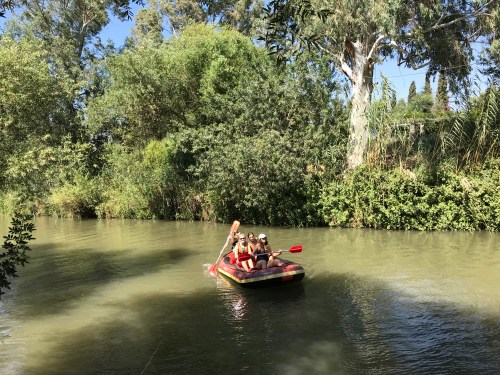
The Jordan River | The Jordan River figures prominently in the biblical narrative. Our students learned about the Jordan by rafting down the river. This gave them new insight into various biblical stories that happened around this renowned river. On our second day, many of our students and sponsors chose to reaffirm their commitment to Jesus by being baptized in the Jordan.

Sea of Galilee | We enjoyed two nights at kibbutz on the shores of the Sea of Galilee. Jesus performed the vast majority of His ministry in and around this well-known lake. We took a boat ride on the lake where we enjoyed a panoramic view of the places where Jesus taught and performed so many miracles. This geographical context gave our students insight into the movement of Jesus from place to place.
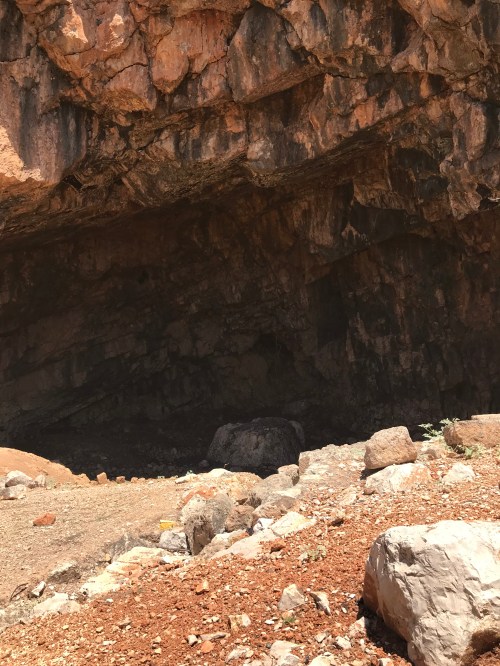
Caesarea Philippi | Caesarea Philippi was a pagan city built by Herod Phillip, a son of Herod the Great. This city was a religious center where people worshiped the Canaanite god Baal. Later, a shrine there was dedicated to the Greek half-man and half-goat god Pan. Worshipers expressed their devotion to Baal and later to Pan without moral restraint.
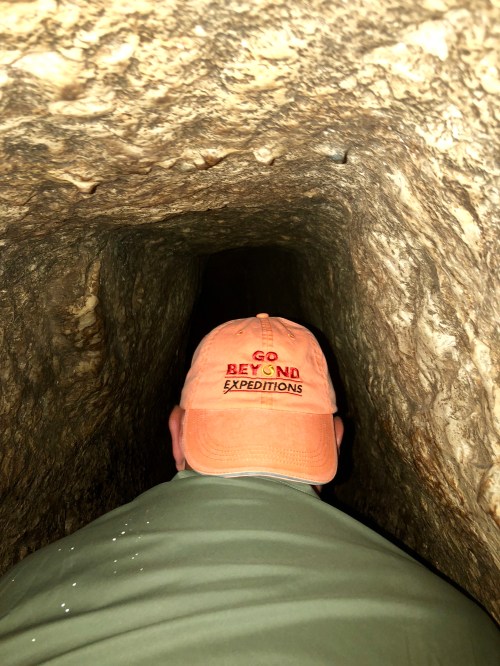
One of the most interesting things about Caesarea Philippi is the cave that is located there. At the time of Jesus, pagans believed that caves were a door to the underworld — or the gates of Hades. Jesus took His disciples to Caesarea Philippi, a place that represented the worst evils of the day. It was there that Peter acknowledged Jesus as the Messiah (Mat. 16:13-16). In this context Jesus said to His disciples, “…on this rock I will build my church, and the gates of Hades will not overcome it” (Matt. 16:18).
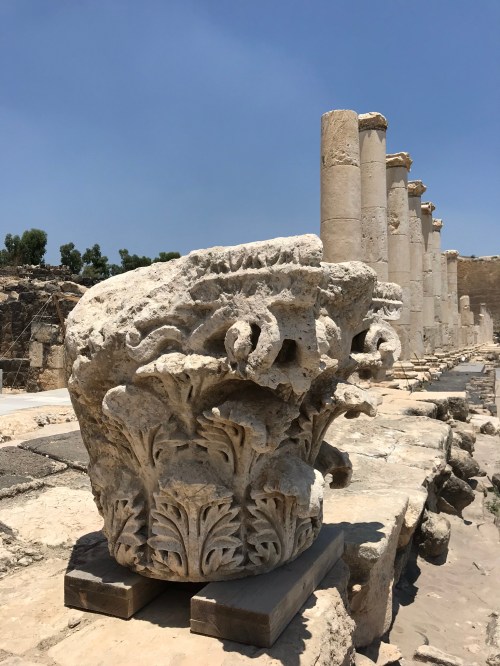
Beth Sh’ean | We visited the only city of the Decapolis located west of the Jordan River. The ruins of Beth She’an are a compelling advertisement for Hellenism — a people-centered worldview that glorified human knowledge, accomplishment, and experience. The heroes in Beth She’an were athletes, entertainers, and thinkers. So, it wasn’t too difficult to imagine what life must have been like in this impressive place. Sadly, God got edged out by all of the personalities and stuff that made life very comfortable in this ancient city.
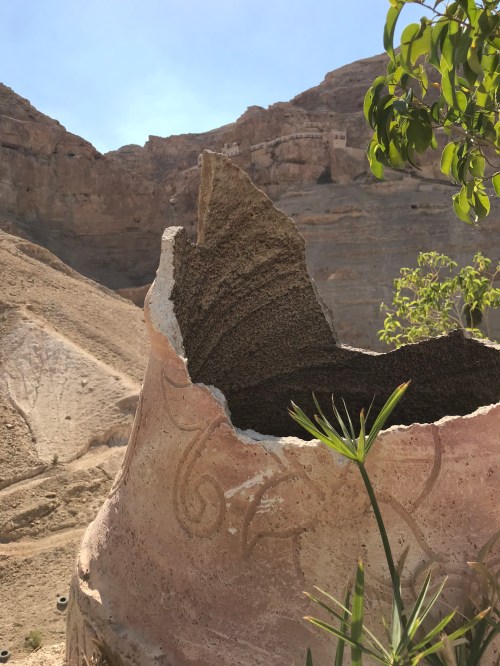
Mount of Temptation | The temptation of Jesus is one of the best know stories in the gospels. Actually seeing the arid and unbearably hard place where Jesus fasted and prayed put this story into eye-opening perspective. Temptation often comes when we are in a weakened or vulnerable state. Like Jesus, we can resist the evil one by properly understanding and applying the Scriptures.
Jericho | Jericho is the oldest continuously inhabited city on the planet. For 10,000 years, people have called Jericho home. Zaccheus, a citizen of Jericho, had a life-changing encounter with Jesus. Jesus did what no self-respecting religious leader of his day would ever do — He entered into the home of this tax-collector. As a result of this compelling act of grace, Zaccheus opened his heart to the truth and his life was changed. We too should be people filled with the grace that enables us to love people in need and ready to share the truth that transforms lives.
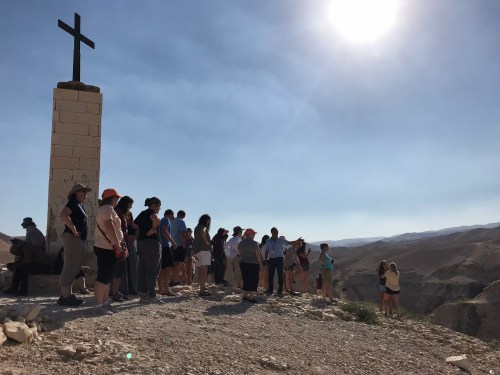
The Valley of the Shadow of Death | Not far from Jericho is a hard place known as the valley of the shadow of death. In that valley is the St. George Monastery. The monks who live there are deeply devoted to God but personally disconnected from a hurting world. This site provided us the opportunity to consider how to best engage the world as Christ-followers. Like the monks in the monastery, we must develop our inner spiritual life. But, we must go beyond that by being the hands and feet of Jesus in a messy world.
A Big Mitzvah | One final thing. As we were leaving the baptismal site at the Jordan River, a woman approached our guide and tearfully asked if he knew of a pastor who could baptize her and her children. She was from Colombia and had been planning her pilgrimage for six years only to face the prospect of not having anyone to baptize her and her two kids. Even though we were about to depart, I agreed to take the time to perform the baptism. She was beyond grateful.
Afterwards, another guide turned to me and said, “You have performed a big mitzvah” — referring to the charitable act I had performed. Although, the Hebrew word mitzvah does not mean “a good deed” in that sense, I understood what she was trying to say. This became a teachable moment to talk with our students about the people God puts in our path and to not see those people as interruptions but rather as divine appointments.
















 Go Beyond