Posted by: Omar C. Garcia | January 10, 2010

God is Holy | Isaiah 6

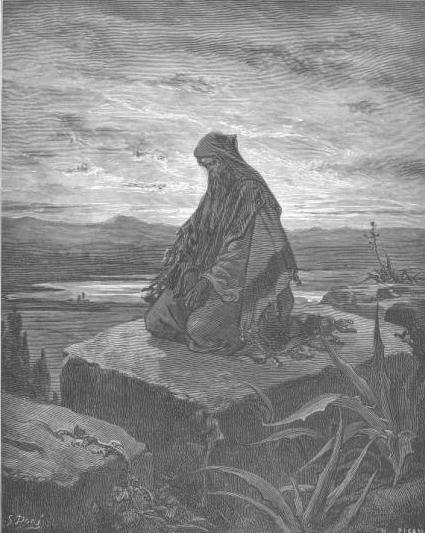
Isaiah the Prophet

   Kingsland’s Pastor, Alex Kennedy, is preparing our church family to observe a sacred (or solemn) assembly on Sunday, January 31. In Old Testament times, sacred assemblies were occasions when God’s people gathered to repent of personal and corporate sins, to renew their covenant relationship with the Lord, and to return to the Lord in faithful love and obedience. “There is a stirring in my heart,” said Pastor Alex, “for a fresh wind of the Holy Spirit to blow through Kingsland.” Today, Pastor Alex taught us about the holiness of God. His message prompted me to review Isaiah 6 which addresses God’s holiness and Isaiah’s commission to call God’s people to return to the Lord. Please read this chapter slowly and prayerfully, soak in the meaning of each word, and live with awareness of God’s holiness.  

6:1 In the year that King Uzziah [also known as Azariah; his 52-year reign was the longest reign of any of the kings of the Southern Kingdom of Judah; cf. 2 Kings 15:2; 2 Chron. 26:3; Uzziah brought peace, prosperity, and security to Judah] died [about 740 BC; Uzziah died after a long illness caused by his improper offering of incense in the temple (2 Chron. 26:16-23)], I saw the Lord seated on a throne [Judah’s throne was empty but the God of the universe who reigns forever occupied heaven’s throne], high and exalted [higher and more exalted than any earthly monarch], and the train of his robe [majesty] filled [length of robe signified the wealth and power of a king] the temple.  

6:2 Above him were seraphs [from Heb. word “to burn” (may indicate they had a fiery appearance); one of the highest orders of angels; their purpose is to magnify the Lord], each with six wings: With two wings they covered [because of God’s holiness; this act signified humility before God] their faces [so as not to look on God’s unveiled glory], with two they covered their feet [perhaps indicates ancient display of modesty], and with two they were flying [suggests their readiness to carry out the Lord’s commands].  

6:3 And they were calling to one another: “Holy [means “to separate;” primary meaning is “otherness” or “apartness”], holy [emphasizes that God does no wrong but always does right], holy [repetition of the word emphasized God’s holiness] is the LORD Almighty [or “Lord of Hosts”]; the whole earth is full of his glory.”  

6:4 At the sound of their voices the doorposts and thresholds shook [cf. Ex. 19:18] and the temple was filled with smoke [Moses’ tabernacle (Ex. 40:34-38) and Solomon’s temple (1 Kings 8:10-11) were filled with smoke (represented God’s presence) upon completion and dedication].  

6:5 “Woe to me [Isaiah expressed personal feelings of distress and sorrow after seeing God’s holiness]!” I cried [Isaiah cried out “Woe to me” first — he confessed his own sin before confronting others about theirs]. “I am ruined [word literally means “cut off” or “separated”]! For [note reasons why Isaiah felt he was ruined…] [1] I am a man of unclean lips [Isaiah confessed his own sinfulness and acknowledged that he was unworthy of the God he served], and I live among a people of unclean lips [Isaiah was part of a larger sinful community], and [2] my eyes have seen the King, the LORD Almighty.”  

6:6 Then one of the seraphs flew to me with a live coal in his hand, which he had taken with tongs from the altar [reference to the altar of incense that stood before the entrance to the holy of holies in the earthly tabernacle (Ex. 30:1-10)].  

6:7 With it he touched my mouth and said, “See, this has touched your lips; your guilt is taken away and your sin atoned for [not because of anything Isaiah had done but because of God’s grace; God cleansed Isaiah of whatever made him unable or reluctant to serve].”  

6:8 Then I heard the voice of the Lord saying, “Whom shall I send? And who will go for us? [these questions remind us that God works through people]” And I said [Isaiah responded immediately and affirmatively to God’s call], “Here am I. Send me! [when God asked for a volunteer to bear His message, Isaiah responded without hesitation, even before he knew the nature of the mission; our attitude should be, “The answer is ‘yes’ Lord, now, what’s the question?”]  

6:9 He said [God commissioned Isaiah for service], “Go and tell this people: ” ‘Be ever hearing [they would hear Isaiah’s unpopular message], but never understanding [sadly, the people would continue in their rebellion]; be ever seeing, but never perceiving.’  

6:10 [note description of how the people would respond to God’s message preached by Isaiah…] Make the heart of this people calloused; make their ears dull and close their eyes [Isaiah’s message would crystallize the Israelite’s rebellion; all of their senses would be shut off to Isaiah’s message of warning and salvation]. Otherwise they might see with their eyes, hear with their ears, understand with their hearts, and turn and be healed.”  

6:11 Then I said, “For how long [Isaiah asked how long he must proclaim God’s message of judgment on sin], O Lord?” And he [God] answered [note that Isaiah was to continue preaching until God’s judgment had fallen on the nation…]: “Until the cities lie ruined and without inhabitant, until the houses are left deserted and the fields ruined and ravaged,  

6:12 until the LORD has sent everyone far away [exile (Assyrians destroyed Northern Kingdom about 17 years after Isaiah’s visionary call; Southern Kingdom would fall to the Babylonians more than 150 years later); Isaiah was to continue preaching God’s message until there was no one left to hear it] and the land is utterly forsaken.  

6:13 And though a tenth remains in the land [a remnant of people], it will again be laid waste. But as the terebinth and oak leave stumps [signify the potential for new growth] when they are cut down, so the holy seed will be the stump in the land.”

Posted by: Omar C. Garcia | January 8, 2010

Kingsland’s Warmth

On Monday evening of this week I listened to my favorite weather forecaster announce that Houston would face the coldest days on record for the past fourteen years starting Thursday evening. I immediately thought about the homeless who live in Houston’s urban areas where we do so many of our service initiatives. So, on Tuesday morning, our missions ministry contacted our friend David Hill, founder of 1000 Hills Ministry, to ask what we could do to help the homeless survive the coming cold days. David is a compassionate guy who ministers to the homeless and hosts Church Under the Bridge. He told us that his ministry needed coats, blankets, gloves, and hats. On Tuesday afternoon, we contacted our church family with an e-mail blast and through Facebook and Twitter accounts. We had to act quickly in order to meet the need and, as one volunteer said, “the people of Kingsland did not disappoint.”

Unloading Coats

All day Wednesday and Thursday morning, Kingsland members brought coats, blankets, gloves, hats, thermal garments, flannel shirts, socks, and shoes to the church. On Thursday morning, volunteers sorted the items and packed them into large boxes. By 11:00 AM we had completely filled a twenty-four foot U-Haul truck with boxes bulging with warmth. And, we gave an additional ten boxes of coats and blankets to Bhutanese refugees and set aside several coats for local day laborers. We delivered the items to David’s home base in Houston’s Third Ward where a dozen men helped us unload the boxes. When all of the boxes were unloaded and stacked, we stood in a circle, held hands, and prayed together. We asked that no person would suffer and die in the cold. After we prayed, the men expressed their personal gratitude for Kingsland’s warmth. David’s men then met to discuss their distribution strategy.

I am deeply grateful to the people of Kingsland for their amazing response to this need. Our folks provided 394 blankets, 466 coats for men, and 546 coats for women. We also filled 8 large boxes with thermals, hats, socks, gloves, and scarves. So, because of the kindness of our Kingsland family, many people will be able to stay a little warmer through the coldest days Houston has seen in fourteen years. We have done for “the least of these” what Jesus would do.

I have received several encouraging e-mails about our “warmth initiative.” I love what one person wrote, “I am not able to take part in mission trips so I was thrilled that this was something I was able to do for those less fortunate than myself. Yesterday morning as I dropped off the coats and blankets, I thanked God for my warm coat and warm house that I have been blessed with. I truly felt like I was able to do what God asks us to do to help others.” This kind and thoughtful individual reminds us all that we don’t always have to travel far to do good. We just have to be willing to respond to the needs of others in a compassionate and intentional way. Thanks Kingsland, for being a warm and caring fellowship of Christ-followers who love God and love others.

Posted by: Omar C. Garcia | January 6, 2010

At the End of Slavery

   International Justice Mission is a Washington DC based human rights agency committed to bringing freedom and justice to victims of slavery, sexual exploitation, and other forms of violent oppression. With more than twenty-seven million human beings held as slaves in the world today, IJM is in a tough fight. I recently watched At the End of Slavery — IJM’s documentary that takes viewers into the dark and seedy world of children who are forced to work in filthy brothels and dangerous brick factories. In this video, Gary Haugen, President and CEO of IJM, notes that “those who are fighting against slavery have to be as committed to the struggle as the slave owner is.” He’s right. Those unprincipled individuals who seize opportunities to deceive, exploit, and abuse the weak are more than willing to do whatever it takes. We must be no less committed to the cause of justice.

   One of the interviews that troubled me the most in IJM’s convicting documentary is that of a young girl rescued from the forced commercial sex trade. Looking into the camera, she said, “Even when we cried or shouted, still no one could help us.” I paused the video at that point to look into this young girl’s eyes and to reflect on her words. While she was speaking about herself, she was also speaking for the millions who are currently living in the kind of hell from which she was recently rescued. We can’t possibly hope to make any advances on this difficult front if all we do is shake our heads in disgust or disbelief and then turn our attention to more pleasant things. We must not allow the distance that separates us from those who are suffering to keep us from hearing their desperate cries.

   Unless we hear the cries of the oppressed, they will continue to suffer abuse and to be treated like disposable Styrofoam cups. Unless we hear the sobs of children who are repeatedly raped behind brothel doors or whose little hands have been rubbed raw because of spending twelve-hour days making and moving bricks, we will not make any difference in our world. Jesus came to rescue us from the oppression of the evil one (Col. 1:13). We must join Him in rescuing those who are oppressed by evil people. Here are a few practical suggestions for tuning in to the frequency of the oppressed.

   First, find out why God hates injustice by reading His Word. Search your Bible using key words like “poor, oppress, cries, justice, groaning, weak, needy, rescue, orphan, widow, alien.” Read and meditate on these passages and then act on what you read. And, order a copy of IJM’s documentary video At the End of Slavery and host a screening. This is a great way to make others aware of atrocities in our world and to mobilize them to join the battle for justice.

   Second, align your priorities with God’s. In his book entitled “Just Courage,” Gary Haugen writes (p. 65), “Justice is not optional for Christians. It is central to God’s heart and thus critical to our relationship with God.” Because the cries of the oppressed are important to God, they must be important to us. And, because God hates injustice and wants it to stop, we must join Him in fighting injustice and rescuing the oppressed. We must allow the things that grieve Him to grieve us.

   Third, take a careful look at your spending. Your checkbook is a good indicator of what your priorities are. Reorder your priorities to enable you to do something to make a difference. Look for ways to save money and then invest your savings in supporting justice initiatives. Use social networks like Facebook, Twitter, and blogs to share with others about the plight of the oppressed. Write your elected members of Congress to be advocates for the poor and oppressed. IJM’s website has updates and alerts about various justice campaigns and how you can get involved. Determine that you will always do something to help put an end to slavery in our world today.

   Finally, pray. Don’t underestimate the power of prayer. Enlist others to pray with you. Pray for those who are enslaved, for families whose children have been kidnapped and trafficked across international borders, and that God will bring oppressors to justice. Pray for organizations like IJM and those who participate in rescuing those who are enslaved. Together and with God’s help, we can make a difference and help to end modern-day slavery.

Posted by: Omar C. Garcia | January 3, 2010

Forgiven | Psalm 51

The psalms have been called “a mirror of life” — a description that fits Psalm 51. This psalm grew out of the darkest experience in the life of King David — his adulterous relationship with Bathsheba and the orchestration of her husband Uriah’s death (read about these events in 2 Sam. 11–12). David tried to hide and keep silent about his sin but was confronted by Nathan the prophet. David consequently acknowledged his sin against the Lord. The words of this psalm certainly speak to and for every speechless sinner who has ever felt the agonizing pain of sin and struggled to find the way back to God, to forgiveness, to restoration, and to usefulness once again.

Nathan will come! | When we sin, God will convict us. If we fail to respond accordingly, God will send a Nathan to confront us. God will send Nathan when we shun correction and persist in concealing our sin. And even though Nathan’s message is painful, God sends him in the hope of redeeming and restoring us.

51:1 Be gracious to me, O God, according to Thy lovingkindness;
According to the greatness of Thy compassion blot out my transgressions.

David appealed for mercy even before he mentioned his sin. He asked God to blot out or wipe away his transgressions as one would erase the writing from a ledger (see also Isa. 43:25). The word transgression describes a willful and deliberate act of rebellion against the revealed commandment of God. It means to step beyond the boundary, to enter into a territory where one should not pass.

51:2 Wash me thoroughly from my iniquity,
And cleanse me from my sin.

Sin always leaves a stain, always defiles, and always makes us filthy on the inside. David asked God to wash him from his iniquity and cleanse him from his sin. The words wash and cleanse suggest repeated action to whatever extent it takes to make one clean, like repeatedly laundering a filthy garment. The word iniquity means crooked, perverse, or twisted conduct. It suggests a departure from the straight way. The word sin means to miss the mark. David did not ask God to remove the consequences or the punishment of his sin. His primary concern was the impact of his sin on his relationship with God.

We must go to God for cleansing. | God alone can cleanse us from sin. We cannot cleanse ourselves nor can others cleanse us. He alone can reach into every tiny and secret place where the filth of sin has seeped in and left its stain.

51:3 For I know my transgressions,
And my sin is ever before me.

The use of the personal pronoun my tells us that we must first own our sin before we can disown it. We must first acknowledge and then abandon our sin. We must first confess and then forsake our sin. David accepted responsibility for his sin. He did not blame others. He did not make excuses or try to rationalize his actions. He did not try to point out extenuating circumstances. He knew his transgressions. He knew where he had stepped beyond the boundary to engage in deliberate acts of rebellion against God. David’s sin was ever before him. He could not escape the guilt produced by unconfessed sin (see Ps. 32:3-4 and Prov. 28:13). It haunted and troubled him.

God never designed us to be garbage containers. | When we allow unconfessed sin to remain in our lives we endanger ourselves. In Psalm 32:3-5, David described the torment brought about by unconfessed sin. Unconfessed sin is like an infection that unsettles us spiritually, emotionally, psychologically, mentally, and physically. It robs us of peace, joy, strength, and security. Unconfessed sin has destructive power. God never designed us to bottle up garbage. We must confess our sin.

51:4 Against Thee, Thee only, I have sinned,
And done what is evil in Thy sight,
So that Thou art justified when Thou dost speak,
And blameless when Thou dost judge.

When Saul violated the Lord’s command and Samuel’s instructions he said, “I have sinned” (see 1 Samuel 15:24). When Judas tried to return the thirty pieces of silver to the chief priests and elders he said, “I have sinned by betraying innocent blood” (see Matt. 27:4). However, when David sinned he said, “Against Thee, Thee only, I have sinned, and done what is evil in Thy sight.” David’s sin was certainly against Bathsheba, Uriah, the nation, and himself. However, David understood and acknowledged that ultimately his sin was against the God who had created him. And because he had done what he knew was evil in God’s sight, he knew that he would not be able to find fault with God’s judgment.

Our sin is always against God. | We must understand that before we can say “yes” to sin we must first say “no” to God. And, when we say “yes” to sin we are, in essence, saying to God, “I do not honor (to give weight and consideration to) Your Word.” We must also understand that the sin we commit is always committed in God’s sight (see Ps. 139:1-6). No one ever sins behind God’s back.

51:5 Behold, I was brought forth in iniquity,
And in sin my mother conceived me.

This verse should not be taken to mean that David was the product of an illegitimate union, but rather that he was a sinner by birth as well as by choice. David understood that he had been born into a sinful world.

51:6 Behold, Thou dost desire truth in the innermost being,
And in the hidden part Thou wilt make me know wisdom.

God desires that we be sincere in the innermost being — the place where our priorities are established and our decisions are made.

51:7 Purify me with hyssop, and I shall be clean;
Wash me, and I shall be whiter than snow.

David asked God to use hyssop (a plant frequently used in ceremonies of cleansing and purification) to cleanse him inwardly.

51:8 Make me to hear joy and gladness,
Let the bones which Thou hast broken rejoice.

David longed to hear joy and gladness, two of the things we lose when we sin against God. The latter part of the verse probably refers to the manner in which shepherds dealt with a lamb given to straying. The shepherd would break its legs, wounding the lamb for its own good. The shepherd then set the broken bones and carried the lamb on his shoulders until its legs were healed. The experience kept the lamb from straying again.

God always disciplines us for our good. | The Lord’s discipline is never capricious or cruel. God’s disciplinary actions are always redemptive in nature. He always disciplines us for our good.

51:9 Hide Thy face from my sins,
And blot out all my iniquities.

David asked God to not look upon his sin but instead to blot out or erase everything recorded against him. He asked God to cleanse, cancel, and destroy every and any thing that testified of his sin.

51:10 Create in me a clean heart, O God,
And renew a steadfast spirit within me.

David asked God to create in him a clean heart, not to restore the old one. He asked God to radically change and transform him from the inside out.

51:11 Do not cast me away from Thy presence,
And do not take Thy Holy Spirit from me.

The background of this verse is probably 1 Samuel 16:14 which speaks of the Holy Spirit departing from Saul or Judges 16:20 regarding the Lord departing from Samson.

51:12 Restore to me the joy of Thy salvation,
And sustain me with a willing spirit.

David asked God to bring about the restoration of what sin had taken from him — the joy of Thy salvation. Sin always robs the believer of the joy, and sometimes even the assurance, of salvation.

51:13 Then I will teach transgressors Thy ways,
And sinners will be converted to Thee.
51:14 Deliver me from bloodguiltiness, O God, Thou God of my salvation;
Then my tongue will joyfully sing of Thy righteousness.
51:15 O Lord, open my lips,
That my mouth may declare Thy praise.

David vowed to demonstrate the sincerity of his confession by his service. The forgiven should seek to lead others to the source of forgiveness. David vowed to tell others about God’s grace and mercy. God’s pardon produced in him an irrepressible urge to tell others about God’s goodness. Gratitude would not let him remain silent. He had to shout for joy and celebrate God’s forgiveness

Those who have experienced God’s grace cannot keep silent. | David vowed to proclaim the message that God forgives. His heart overflowed with gratitude and praise to God for His forgiveness. We too, should proclaim the forgiveness of God.

51:16 For Thou dost not delight in sacrifice, otherwise I would give it;
Thou art not pleased with burnt offering.
51:17 The sacrifices of God are a broken spirit;
A broken and a contrite heart, O God, Thou wilt not despise.

God will not accept ritual as a substitute for repentance. David understood that God was interested in more than sacrifices. God was interested in a heart that was right with Him. Burnt offerings were not enough. God required a broken (torn or shattered) spirit and contrite (bruised or crushed) heart. These terms suggest that a forgiven individual must continue to have a deep sense of contrition for sin and its consequences even after being pardoned.

51:18 By Thy favor do good to Zion;
Build the walls of Jerusalem.
51:19 Then Thou wilt delight in righteous sacrifices,
In burnt offering and whole burnt offering;
Then young bulls will be offered on Thine altar.

David turned his attention to the city of Jerusalem. He did not want for his conduct to hinder God’s blessings or favor on the city. He asked God to bless the city with security and prayed that walls be built around Jerusalem. David closed the psalm by recognizing the value of sacrifices and ceremony in the religious life of the city.

Posted by: Omar C. Garcia | January 1, 2010

Valvano’s Sage Advice

Jimmy Valvano

   James Thomas Anthony Valvano (1946 – 1993), nicknamed Jimmy V, enjoyed a nineteen-year career as a head basketball coach. While serving as the head coach at North Carolina State University, his team defeated the University of Houston with a last-minute desperation shot and won the 1983 NCAA Basketball Tournament. The ever-enthusiastic Valvano ran around the court in stunned disbelief and celebration. After leaving NCSU, Valvano became an award-winning commentator at ESPN and ABC and also gave hundreds of motivational speeches across the country. In June 1992, Valvano was diagnosed with bone cancer and told he had a year to live.

   Two months before his death in 1993, Valvano was awarded the Arthur Ashe Courage and Humanitarian Award at the first ESPY Awards, an annual sports awards event created by ESPN. It was at that event that Valvano announced the creation of  the Jimmy V Foundation — a charitable organization dedicated to helping find a cure for cancer. During his speech, Valvano said the following: 

To me, there are three things we all should do every day. We should do this every day of our lives. Number one is laugh. You should laugh every day. Number two is think. You should spend some time in thought. And number three is, you should have your emotions moved to tears, could be happiness or joy. But think about it. If you laugh, you think, and you cry, that’s a full day. That’s a heck of a day. You do that seven days a week, you’re going to have something special. 

Jimmy Valvano died two months later. He is buried in the Oakwood Cemetery in Raleigh. North Carolina. His tombstone is engraved with the words he spoke at the ESPY Awards: Take time every day to laugh, to think, to cry. 

   I like Valvano’s simple but sage advice. As we prepare to take our first steps into the New Year, it would be good for each of us to consider how we will live each day. 

Laugh | The Bible teaches, “A cheerful heart is good medicine, but a crushed spirit dries up the bones” (Prov. 17:22). Modern medicine affirms that laughter is indeed good medicine. Among other things, laughter relieves tension, releases endorphins, increases blood flow, and relaxes the body. So, laugh and enjoy life. Look for opportunities to bring joy and laughter into the lives of others. Good humor is far more contagious than a bad cough and can bring people together. And, don’t take yourself too seriously. Remember that it’s ok to laugh at yourself. Spend time with those who know how to laugh at themselves and who can find humor in everyday events. I made a resolution several years ago to spend more time with friends who eat ice cream than with those who eat beans. 

Think | The Bible has much to say about thinking. The writer of Proverbs (14:15) observed, “A simple man believes anything, but a prudent man gives thought to his steps.” We should think deeply about our steps every day. Thinking deeply is a prerequisite to living wisely. One of the reasons I enjoy blogging on a regular basis is that it holds me accountable for thinking about various topics every day. Jesus said, “Love the Lord your God with all your heart and with all your soul and with all your mind and with all your strength” (Mark 12:30). You can’t love God “with all your mind” unless you think. So, think deeply, creatively, and critically. 

Cry | The Bible also addresses the matter of shedding tears. The Psalmist (126:5) said, “Those who sow with tears will reap with songs of joy.” What makes you cry? In addition to shedding tears of joy, we must also shed tears that spring forth from the things that make us angry or sad — issues like injustice, abuse, tragedies, and neglect. Many great things have been accomplished because someone wept over serious concerns and then acted to do something to address those concerns. I think that we do not weep as much as we should because our lives are relatively safe, comfortable, and secure. But, imagine what could happen this year if each of us wept and then intentionally acted on behalf of those who cannot speak for themselves, those who are destitute (Prov. 31:8). God can use our tears to change the world for others. 

I hope that you have a wonderful New Year and that throughout the year you will heed Valvano’s sage advice to laugh, to think, and to cry every day.

• • • • •

PS | Check out my website for two simple plans for reading through the Bible in 2010. Set aside a few minutes each day and in one year you will have read all 31,102 verses in the 1,189 chapters of the Bible.

Posted by: Omar C. Garcia | December 30, 2009

Looks for the New Year

   The month of January is named for Janus, the Roman god of gates and doorways. Janus was depicted with two faces looking in opposite directions — one to the past and one to the future. As you prepare to step across the threshold from the old year into the new, take time to look back at the previous year and to evaluate your steps. And then, look ahead to the opportunities of the New Year. But, don’t stop there. Take a moment to look in a few other directions as you begin your journey into the uncharted days of the New Year.

Look Back | As you prepare to step across the threshold into the new year, take a moment to look back. Remembering where you have come from and what you have experienced can be beneficial to you as you press ahead. When you look back you will undoubtedly see both your victories and defeats. Do not allow past victories to fill you with pride or past defeats to fill you with fear. Both can cause you to stumble! And, do take note of the many times and the many ways in which God cared for you and made provision for your welfare. Face the future with confidence that God cares about you.

Look In | As you prepare for the new year, take a moment to look in and to take inventory of any habits and attitudes that will hinder your progress in the coming year. Ask God to reveal to you all of the things that can trip you up — “the sin which so easily entangles us” (Heb. 12:1). Cast these hindrances aside like filthy rags. And then, leave them behind and avoid them like the plague as you press ahead.

Look Around | You have not made it this far all by yourself. Take a moment to look around at all who have journeyed with you this past year. Express your gratitude to those who helped you along the way and glean what you can from those who made your life difficult. Determine to do life in relationship with others in the year ahead. Don’t sail alone. Keep in mind that Satan is a pirate looking for a vessel without a fleet. Be willing to assist others who are having problems along the way and humbly receive help from others when you are in trouble or need.

Look Ahead | The most exciting thing about January is the opportunity for a fresh start, a second chance, and a new beginning. While it is not possible to go back and make a new beginning, it is possible to start now and make a new ending. As you look ahead, resolve to do better and go farther than you ever have. Press ahead with the determination to walk through new doors and gateways that will lead to exciting challenges and meaningful opportunities to love God and love people.

Look Out | Walk into the year ahead with your eyes open. Remember that Satan, our adversary, is “like a roaring lion, seeking someone to devour” (1 Pet. 5:8). His agenda is clearly spelled out in Scripture. Jesus said that Satan is determined “to steal, and kill, and destroy” (John 10:10). Make no mistake about it, he will do these things. So, be alert, make wise choices, guard your integrity, and pursue holiness.

Look Up | Remember to keep looking up throughout the New Year. The Psalmist declared, “To Thee I lift up my eyes, O Thou who art enthroned in the heavens!” (Ps. 123:1). You will encounter challenges, obstacles, troubles, and problems in the coming year. When you do, determine to make looking up the first thing you do instead of the last thing. God is ready and willing to help you. Look to Him for the strength, guidance, and wisdom to weather every storm, face every challenge, and overcome every obstacle.

“The Lord bless you, and keep you; The Lord make His face shine on you, and be gracious to you, and give you peace” (Num. 6:24-25) throughout the coming year.

Posted by: Omar C. Garcia | December 28, 2009

Great Expectations

The year 2010 is just a few days away. What will the New Year hold? Only God knows. However, we can glean some insight from Moses about what to expect in 2010. Before the Israelites crossed the Jordan River into the Promised Land, Moses told the people that they should expect three things — the promise of blessings, the prospect of battles, and the possibility of bereavement. We can expect to face these same things as we leave this year behind and cross the threshold into the New Year.

The Promise of Blessings | Moses encouraged the children of Israel with these words: “For the Lord your God is bringing you into a good land, a land of brooks of water, of fountains and springs, flowing forth in valleys and hills; a land of wheat and barley, of vines and fig trees and pomegranates, a land of olive oil and honey; a land where you shall eat food without scarcity, in which you shall not lack anything; a land whose stones are iron, and out of whose hills you can dig copper. When you have eaten and are satisfied, you shall bless the Lord your God for the good land which He has given you” (Deut. 8:7-10). We too can look forward to the promise of blessings in the New Year — those blessings that grow out of living in right relationship with God. Here are just some of the blessings we should expect.

• His peace when we are anxious and troubled.
• His love when we are hated and despised.
• His presence when we are alone and lonely.
• His hope when we feel the weight of despair.
• His strength when we are weak and vulnerable.
• His courage when we are immobilized by fear.
• His guidance when we are confused and frustrated.
• His provision when we are empty and in need.

The year ahead certainly holds the promise of blessings for those who follow God’s leadership and obey His Word.

The Prospect of Battles | Moses warned the Israelites to expect the prospect of battles in the Promised Land: “Hear, O Israel! You are crossing over the Jordan today to go in and dispossess nations greater and mightier than you, great cities fortified to heaven” (Deut. 9:1). The Israelites indeed fought many battles in the new land —military battles for territory and spiritual battles for the purity of their faith. God always gave His people specific instructions regarding how to fight their battles. They were victorious when they followed His strategy and defeated when they followed their own. God also provided His people with strength and stamina to fight their battles.

As we begin our journey into the New Year, we too, face the prospect of battles. Paul wrote about the nature of our battle in Ephesians 6:12 — “For our struggle is not against flesh and blood, but against the rulers, against the powers, against the world forces of this darkness, against the spiritual forces of wickedness in the heavenly places.” We are engaged in a spiritual battle with an adversary that prowls about like a roaring lion seeking someone to devour (1 Peter 5:8). Paul said that our flesh sets its desire against the Spirit and the Spirit against the flesh (Gal. 5:17). So, we can expect to fight battles against the world, the flesh, and the devil — battles that will have an impact upon our integrity, credibility, and our witness in this world.

The Possibility of Bereavement | The Promised Land also held the possibility of bereavement for the Israelites. Moses knew that they would encounter situations that would rob them of joy, peace, and progress. We too, face the possibility of bereavement during the New Year. There is a bereavement that is caused by disobedience to God’s Word. Disobedience to God’s Word will sooner or later result in a loss of joy and peace and lead to deep sorrow (read Ps. 32:3-5). There is also a bereavement caused by disappointment. When we or those whom we love choose our way over God’s, it will lead to problems. I counsel with many people every year who are bereaved because of sinful choices. Finally, there is a bereavement caused by death. Death is no respecter of persons and often comes unannounced. I have conducted many funerals over the years for people who did not expect to face the future with the absence of a loved one. We must be prepared for the bereavement that is caused by death. And, we must also be prepared to die should death come for us sometime this during the New Year.

It’s only natural for us to face new opportunities with great expectations. As you prepare for 2010, remember to walk with God, face life’s battles and difficulties in His strength, avoid the unnecessary sorrow caused by poor choices, and make certain that you are prepared to die should death call your name. I wish you the very best year you have ever experienced.

Posted by: Omar C. Garcia | December 25, 2009

Ghost of Christmas Past

Christmas 1968

   Over the past weeks leading up to Christmas day, I have been visited more than once by the Ghost of Christmas past — that same benevolent spirit that visited Ebenezer Scrooge in Dickens’ famous novel, A Christmas Carol. Now, don’t get me wrong. Unlike Scrooge, I actually love Christmas. And, don’t freak out about the “ghost” thing! For the first time in fifty-three years I am observing my favorite time of the year without my beautiful Mom. And so, I have allowed the Ghost of Christmas past to transport me back to my days of Christmases past — days made special and memorable by my Mom and Dad.

   My very earliest recollections of Christmas are still vivid, perhaps because they are bolstered by old family photos and my Dad’s home movies. My siblings and I are fortunate that Mom and Dad loved us and made a big deal about Christmas. We were taught that the most important thing about Christmas is that it is the day on which we observe the birth of Jesus — the Word made flesh. Growing up as a Catholic kid, midnight mass at Christmas was amazing. The whole experience filled me with awe of the majesty of God and gratitude for the demonstration of His great love for us.

   Our home was always filled with family, friends, and neighbors — a reminder that Christmas is also about others. When I close my eyes, I can still envision our home abuzz with activity on the days Mom hosted Christmas tamaladas — a South Texas tamale making party with family and friends. The best part for me was being one of the official taste-testers. And, I can still remember the delicious smells of the pan de polvo and empanadas that Mom and her guests would bake in biblical proportions so that lots could be given away. There was never a shortage of food to consume and to give to those in need at Christmas.

   Today, for the first time in my life, I woke up on Christmas morning knowing that Mom will not be here. This is her first Christmas in heaven. I miss her and everything about her. Christmas will never be the same again. Today I will take time to close my eyes and remember my beautiful Mom. I will give thanks for her and for all that she taught me about loving God, valuing family, and caring for others at Christmas and throughout the year. I am grateful for her unconditional love, her constant encouragement, her wise counsel, and for her godly example of serving others. Merry Christmas, Mom. I love you and miss you.

Posted by: Omar C. Garcia | December 22, 2009

By Life or By Death

   Betty Scott was born in 1906 to Charles and Clara Scott, a Presbyterian missionary couple serving in China. As a child, Betty showed spiritual maturity beyond her years — a maturity that prepared her for a life of devoted service to God. When Betty was ten years old she wrote these words.

I cannot live like Jesus
Example though He be
For He was strong and selfless
And I am tied to me.

I cannot live like Jesus
My soul is never free
My will is strong and stubborn
My love is weak and wee.
But I have asked my Jesus
To live His life in me.

I cannot look like Jesus
More beautiful is He
In soul and eye and stature
Than sunrise on the sea.
Behold His warm, His tangible
His dear humanity.
Behold His white perfection
Of purest deity.
Yet Jesus Christ has promised
That we like Him shall be.

   At the age of eighteen, Betty recorded some personal thoughts that later inspired a twelve year-old girl named Elisabeth Elliot. Elisabeth, who later followed God’s call to serve as a missionary, memorized and copied Betty’s words into her Bible at the age of twelve.

Lord, I give up all my own plans and purposes
All my own desires and hopes
And accept Thy will for my life.
I give myself, my life, my all
Utterly to Thee to be Thine forever.
Fill me and seal me with Thy Holy Spirit
Use me as Thou wilt, send me where Thou wilt
And work out Thy whole will in my life at any cost now and forever.

   Betty attended Moody Bible Institute where she met and fell in love with John Stam, a young man who shared her concern for the Chinese people. Betty and John were married in 1933 and began their service as missionaries with China Inland Mission in 1934. They made the arduous journey to the small eastern town of Tsingteh and settled there with their three month old daughter, Helen. Soon after arriving, the town’s magistrate warned them to flee because Communist soldiers were approaching the town. However, the warning came too late and John and Betty and Helen were arrested and held for ransom. John wrote a letter to China Inland Mission that stated, in part, “My wife, baby, and myself are today in the hands of Communist bandits. Whether we will be released or not no one knows. May God be magnified in our bodies, whether by life or by death. Philippians 1:20.”

   John and his family were briefly imprisoned and then forced to march twelve miles to the town of Miaosheo in Anhui Province where they spent one night. That night Betty hid Helen inside a sleeping bag. The following morning John and Betty were paraded to their deaths through the streets of Miaosheo. All but one onlooker remained silent. This lone Christian shopkeeper named Zhang Shuisheng tried in vain to persuade the soldiers to release the Stams but instead was arrested and led alongside them to be killed. John was ordered to kneel and was beheaded. Betty and the shopkeeper were killed moments later.

   Two days later, Reverend Lo Ke-chou, a Chinese pastor, found baby Helen. He cared for the child and returned her to her maternal grandparents. Helen’s grandparents returned with her to the United States where she was raised by an aunt and uncle. A group of Christians recovered and buried the remains of John and Betty. Their gravestones read as follows:

John Cornelius Stam, January 18, 1907
“That Christ may be glorified whether by life or by death.”
Philippians 1:20

Elizabeth Scott Stam, February 22, 1906
“For me to live is Christ and to die is gain.”
Philippians 1:21

December 8, 1934, Miaosheo, Anhui
“Be thou faithful unto death and I will give thee a crown of life.”
Revelation 2:10

   The story of John and Betty’s death was widely publicized at the time. As a result, many young men and women heeded God’s call to serve as missionaries and volunteered to serve as John and Betty’s replacements. This Christmas, please take a moment to pray for all who are working to advance God’s purposes in remote and dangerous fields around the globe. Remember these faithful servants as they “declare His glory among the nations” (Ps. 96:3).

Posted by: Omar C. Garcia | December 19, 2009

Living with Awareness

   One of the most important things I have learned from my travels around the world is to live with awareness. Awareness is the best antidote to the anesthetizing comforts of life in the suburbs. Awareness is what keeps my tendency to be selfish at bay and leads me to reorder my priorities to reflect global realities. Awareness is what bridges the gap between how I spend my days and how the least fortunate in forgotten places spend theirs. Awareness is what keeps me from shaking my head and thoughtlessly dismissing the suffering of others. Awareness will not let me look away, walk away, or turn away — at least not easily or without a fight.

   As I prepare for Christmas, awareness has transported me back to some of the places I have visited this past year and forced me to look again at faces I have seen. One face in particular is that of a man who died at the hands of Pol Pot’s Khmer Rouge in Cambodia. The only record of his existence is a black and white photograph taken on December 10, 1978. His photograph is on display at Security Office 21, located in the heart of Phnom Penh. Originally a school, the Khmer Rouge turned this campus into a place of torture. The date on the photograph reminds me that every day of the year, some unfortunate human being is suffering in some place on the planet. The man in the photograph on display at S-21 reminds me that I must live each day with greater awareness of atrocities that are happening in our world.

   Awareness also whispers in my ear at night. It speaks to me in the voice of a woman I met in Uganda who cares for young girls rescued from the unspeakable horrors and indignity of a life of forced prostitution. Awareness speaks to me in the voice of a man I met in India who choked back tears and could not speak about the violent deaths of young girls trafficked to work in filthy brothels. Awareness will not let me forget that for many in our world, December 25 will be no different than any other day of the year. They will not know its Christmas. And, very little of the 450 billion we will spend on Christmas this year will reach them. Christmas will be just another day of suffering, despair, danger, and death for these unfortunate individuals.

   Jesus came to make a difference — to rescue us from the domain of darkness and transfer us to His kingdom of light (Col. 1:13). As Christ-followers we must join Him in making a difference in our world. But we cannot hope to make a difference if we are unaware of the needs and the plight of others. Please join me in living with awareness and in allowing awareness to lead us to compassionate action on behalf of the least of these and the oppressed. This Christmas, let’s replace consumption with compassion and “Speak up for those who cannot speak for themselves, for the rights of all who are destitute. Speak up and judge fairly, defend the rights of the poor and needy” (Prov. 31:8-9).

« Newer Posts - Older Posts »

Categories