Posted by: Omar C. Garcia | February 15, 2010

Concern for All People

Reflections on Jonah 1:1-2

The Old Testament book of Jonah begins with a divine call. God spoke to a man named Jonah, a prophet who lived in the northern kingdom of Israel during the reign of King Jeroboam II (see 2 Kings 14:23-29). The northern kingdom of Israel was strong and prosperous during Jeroboam’s reign in the 8th century B.C. Jeroboam successfully expanded the borders of Israel in accordance with a prophecy of Jonah (see 2 Kings 14:25). Jonah was likely a well-respected prophet in Israel since what he had prophesied came to pass.

God commanded Jonah to “go to the great city of Nineveh,” a large Assyrian city (Jonah 3:3) with an estimated population of over six hundred thousand. The Assyrians, a people known for their cruelty (see Nahum 3:19), were enemies of the Israelites. God instructed Jonah to “preach against” the city of Nineveh. Jonah was to inform the Ninevites that their “wickedness” had come up before God (Jonah 1:2). God wanted Jonah to warn the Ninevites of impending judgment (Jonah 3:4).

God’s command to Jonah indicates His concern for all people — not just for the covenant people Israel. His love transcends all geographical and ethnic boundaries. God’s message of salvation is for all people everywhere, no matter who they are or where they are. Today, 97% of the world’s unreached people groups live in the 10/40 Window — a rectangular shaped region that stretches from North Africa to Asia. The 2,100+ ethnic and linguistic groups that live in this region are among the most isolated and hardest to reach in the world. Most of these people are kept in darkness by hostile cultures, governments, and religions. Most have never met a Christian, seen a Bible, or entered a church. Just as God cared about the welfare of the people of Nineveh, He cares about unreached peoples today.

God continues to call believers today to take His message to the millions of unreached people in our world. In years past, missions was something we left to career missionaries. The average person in the pew thought little about personally venturing to other countries to participate in missions. However, God calls all believers to take responsibility for sharing the gospel with all the people of the world. Today, many short-term and long-term mission opportunities are available for Christians to impact the world for Jesus Christ.

Just as God commanded Jonah to “Go” (Jonah 1:1), He commands us to “Go” (see Matt. 28:19-20). While leading a volunteer team to Mongolia years ago, one young woman said, “In heaven, many people will thank you, and I will be among them.” Her words reminded our team of why we had traveled so far. On the other end of God’s command to go we found people longing and searching for meaning in life. Unless believers today hear and heed God’s call to be involved, millions of people — in the 10/40 Window and in your neighborhood — will never hear and respond to the good news of Jesus Christ (see Rom. 10:14-15). So, share God’s concern for all people. Get involved in praying, giving, and going beyond!

Posted by: Omar C. Garcia | February 13, 2010

Drowning in Excess

   El Salvador en route to Katy, Texas

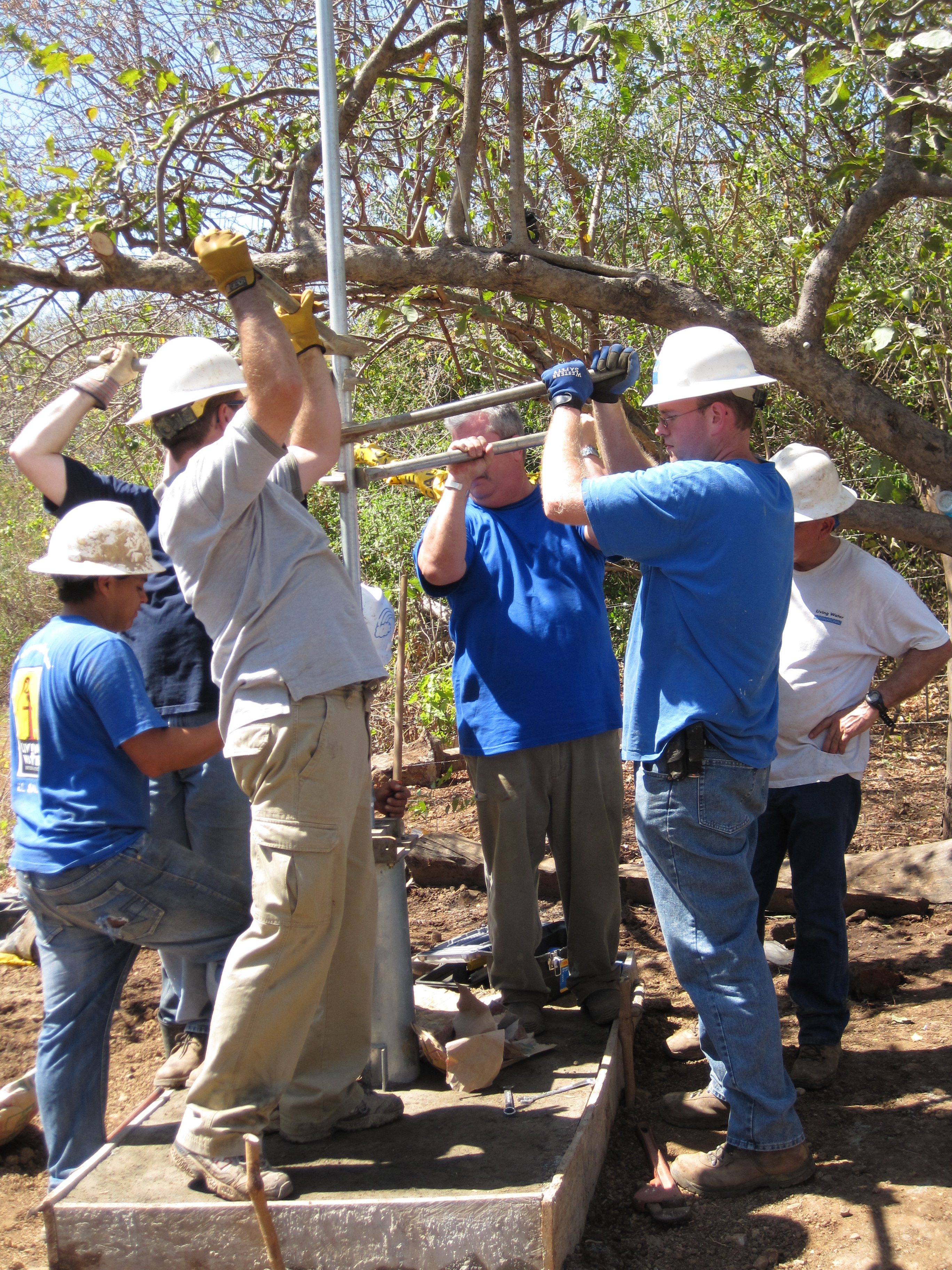
   I have enjoyed a great week serving with a Living Water International volunteer team in El Salvador. We spent the week working among the people of Monte Rico, a rural community where we drilled a water-well. One of the things I noticed while there is how much time people without access to a convenient source of water spend fetching water. The people of Monte Rico spend hours every day in the pursuit and acquisition of water for a variety of daily needs. They have no choice. It is a part of their daily routine. Every day, some member of the family must be engaged in the pursuit and acquisition of water.

   Those of us who enjoy unlimited and unrestricted access to clean and safe drinking water do not always appreciate how good we have it. We don’t worry about running out of water before the daily chores are completed. And, we enjoy the benefit of hot water to wash our dishes, clothes, and ourselves. If a family member suffers a bout of diarrhea, the thought never crosses our minds that they might die from it because we have more than sufficient water to help them rehydrate. If anything, we are drowning in excess. We have more than enough water to wash away lots of our worries. And, our excess is, in part, responsible for blinding us to what life is like for those without convenient access to water.

   On the day we completed the water well at Monte Rico I heard a woman say, “This is such a beautiful place. I wish that I had a little house right here because then I would be close to the water-well.” This woman did not say she wished she had a home with running water because she can’t conceive of that possibility. But she can dream about living in a home closer to a reliable source of clean and safe drinking water. We would be miserable if that were our only option. But, to this woman it would be a dream come true.

   Should we feel guilty because we live in homes with running water? No, absolutely not. But we must be careful lest our convenient access to excessive amounts of clean and safe drinking water lulls us into indifference. Jesus said that we are responsible for assisting those who are thirsty (Matt. 10:42). We can’t support every good cause, but Jesus did provide a guideline for causes worthy of our support. Among others, these include feeding the hungry, giving drink to the thirsty, offering shelter to the homeless, clothing the naked, and visiting the sick and the prisoner (Matt. 25:35-36).  Organizations like Living Water International are worthy of our support because they are making a life-saving difference. Please prayerfully consider giving some of your excess to bless those without access to clean and safe drinking water.

Posted by: Omar C. Garcia | February 12, 2010

Monte Rico Rejoices

   Monte Rico, El Salvador

   Six days ago I had never heard of Monte Rico, a small village of about three hundred close-knit neighbors. Hidden away in the lush green hills of western El Salvador, you have to be going there to see it because it’s off the beaten path. And, unless you know where you’re going you will miss it. There are no signs telling you that you have arrived. The homes of Monte Rico are scattered and nestled among the hills. Very few of these homes have electricity, none have running water, and most are in some state of disrepair. But, the great thing is that everybody knows everybody and kids are safe walking around the area. Because people are not hypnotized by television or other media, they actually spend time outside of their homes, talking and interacting with neighbors. The folks here know the meaning of community.

   Five days ago our water-well drilling team arrived in Monte Rico. Drilling equipment, an assortment of pipes and tools, and our group of volunteers from America have been the talk of the town. For five days they have watched us work from early morning to late in the afternoon. A cacophony produced by our drill rig, generators, and compressors have filled the air for hours at a time. Folks have stopped by the drill site to chat or to just sit and watch the activity. Every school kid in the vicinity has stopped by after classes to join us for Pringles, peanuts, and an assortment of other goodies. The folks here have made our time enjoyable and memorable.

   Two days ago we worked very late into the night. Motivated by the faces and smiles of our new friends, we didn’t mind the extra hours at all. Meeting the folks of Monte Rico has transformed this into more than a project for us. Shaking hands and learning names has transformed this into a purposeful mission to provide our new friends with clean drinking water – and, to share the story of Jesus, the living water, with them. We understand much better now than when we started how our work will impact the beautiful and gracious people of Monte Rico. Our team worked with determination, unwilling to allow anything to stop us from giving the gift of water and the Word to our friends here.

   A few hours ago we completed the water-well and the folks of Monte Rico showed up to help us dedicate it to God. What I witnessed earlier today was more than the completion of a project. I witnessed the beginning of something new in each of our hearts. Bonded by the experiences of the past few days, I watched the people of Monte Rico and the volunteers of our team sing and pray and cry together. As the first stream of water came up from the depths a man behind me whispered in Spanish, “Blessed be the name of our great God.” We have given more than the gift of clean water to this community. This water-well represents the redemption of time for those who spend several hours fetching water for their households every day – time that can now be invested in family and education and other pursuits.

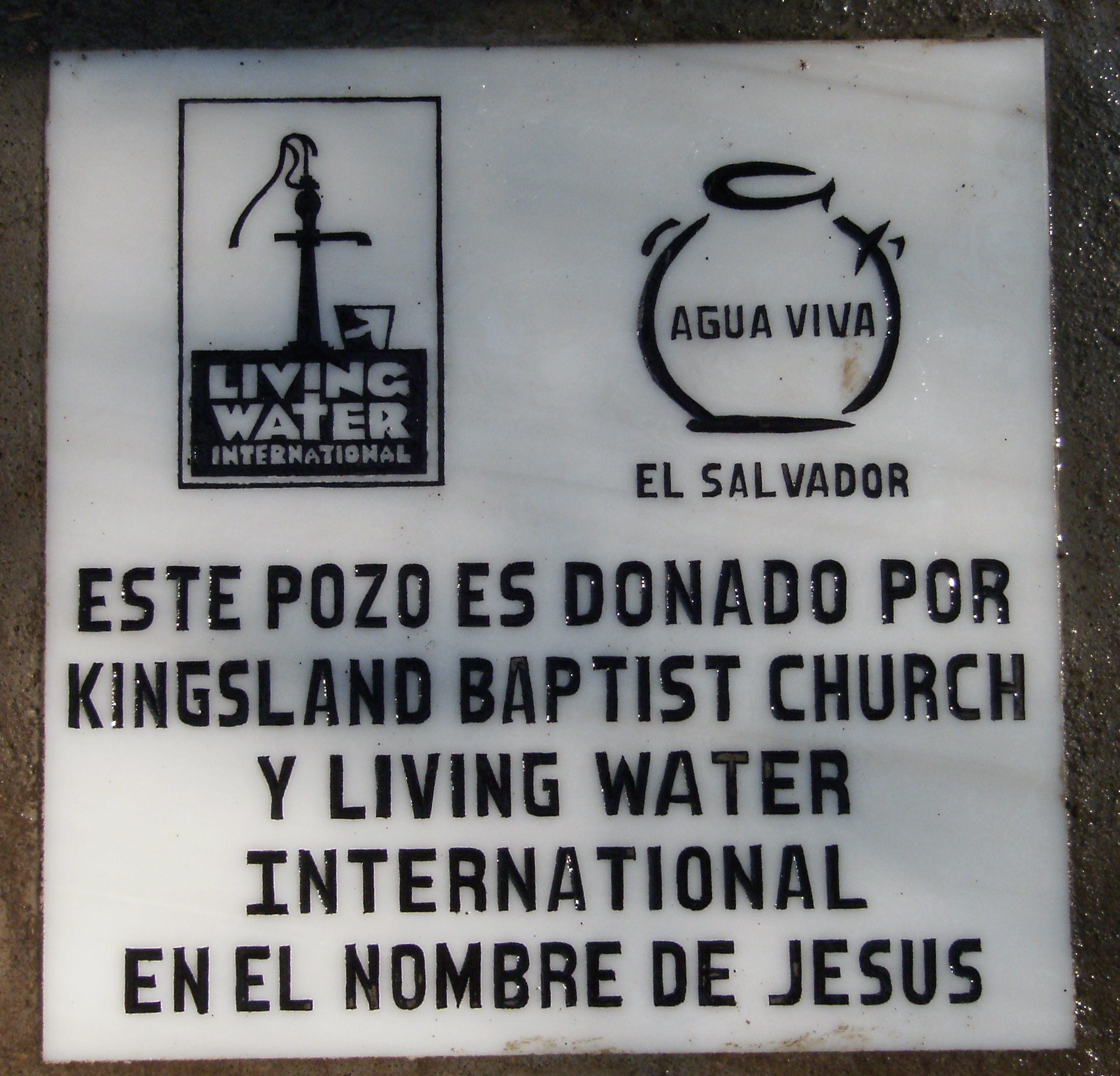
   In a few more hours our team will head for the airport in San Salvador to return to our respective homes. We are all physically tired, spiritually refreshed, and much more grateful for the access to clean water that we all enjoy. I am especially grateful for the Living Water staff and for the great time I have enjoyed with my fellow volunteers – most of whom I met only a week ago. And, I am thankful for the people of Kingsland who provided the funds for this water-well. That’s an investment that will yield dividends from now to eternity. It’s been a great week. I rejoice with and for the people of Monte Rico – people loved by God and deserving of a cup of clean water in Jesus’ name.

Posted by: Omar C. Garcia | February 11, 2010

El Faro del Pacifico

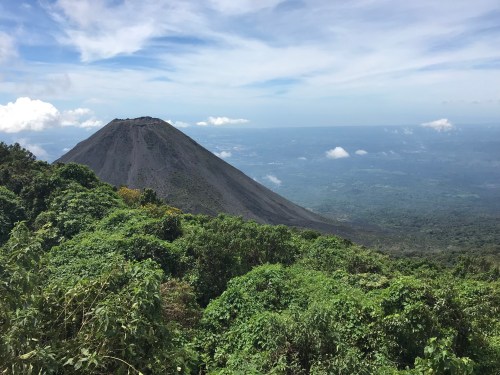
Every morning after breakfast, our team sets off toward the village of Monte Rico. Our drive takes us from Acajutla on the Pacific Coast toward Sonsonate. Looming in the distance is Volcan de Izalco, one of El Salvador’s most visually dramatic and youngest volcanoes.

Izalco formed in 1770 and erupted almost continuously until 1966. The eruptions were so violent that they could be seen by sailors at sea, hence earning the volcano the nickname “El Faro del Pacifico” or “The Lighthouse of the Pacific.”

Izalco’s barren summit stands in sharp contrast to the lushness of the surrounding hills. Although it no longer sends its Roman-candle sprays of fireworks into the sky, it is still an impressive landmark.

We have been working in the shadow of Izalco – in a small village nestled into the surrounding hills. Drilling a water-well for the people of Monte Rico has become a community event. The local folks enjoy hanging out with us throughout the day.

Kids have made our canopy tent, where we get a little relief from the hot sun, into their new playground. Young girls on the way to do their laundry at the nearby river watch with excitement. Men lend a hand and women prepare meals and goodies for our team. There is excitement in the air every day.

Yesterday, we reached a depth of 175 feet late in the afternoon and found water. Although it was getting late, our team decided to work into the night to insert the casing into the hole. This casing is what will bring the water to the surface.

The decision to work late generated even more excitement. The local men helped us connect a string of lights to a generator and the women provided the coffee. There were probably one-hundred villagers present. Our work site looked like an ant hill. We worked until past ten in the evening. It was a beautiful thing!

Izalco has been dormant for some time. It no longer provides light that can be seen for miles out to sea. But last night, a string of lights hooked up to a gas generator provided light that revealed the faces of folks beaming with gratitude.

Agua Viva El Salvador, part of Living Water International, is lighting things up in remote and forgotten places like Monte Rico, one of many villages nestled in the shadow of Izalco. I am grateful to be a part of the drill team that is bringing clean water to the people of Monte Rico while introducing them to Jesus, the Living Water.

Posted by: Omar C. Garcia | February 9, 2010

Water for Monte Rico

   Monte Rico, El Salvador

   Access to an abundant supply of clean and safe drinking water is one of the things we take most for granted. Our lives are easier and simpler because we have access to water on demand. We don’t give a second thought to leaving the water running while we brush our teeth or to talking long showers or baths. We wash our dishes and clothes in the comfort of our own homes. We use lots of water to keep our lawns and gardens green, to wash the grime off of our cars, and to carry away the waste in our toilets. And, as if that were not enough, we purchase and consume gallons of bottled water because we are convinced that the water from our taps is somehow not safe enough to drink.

   Life is different for the people of Monte Rico, a small community of fifty poor families in rural El Salvador. Located near the Pacific Ocean, the people of this humble community understand the lament of the ancient mariner: “Water, water everywhere but not a drop to drink.” The people of Monte Rico do not have water on demand. Women and young girls here still fetch water the old fashioned way – they walk to the nearest river or stream, fill their water jars, and carry them back to their homes. When you work that hard to get your water you are much more careful about how you use it. Wasting water is out of the question.

   Although I have seen so many impoverished places on the planet, my heart still aches when I see people living in poverty. The drive to our drill site takes us down a dusty, winding road sheltered by the lush canopies of old trees and occasionally accented by beautiful flowering bougainvilleas. Yesterday and today, I saw many women and young girls washing clothes in streams and carrying water jars on their heads. And, I also saw people at each of the wells that Living Water has previously provided for the people who live in the small villages along the way to Monte Rico.

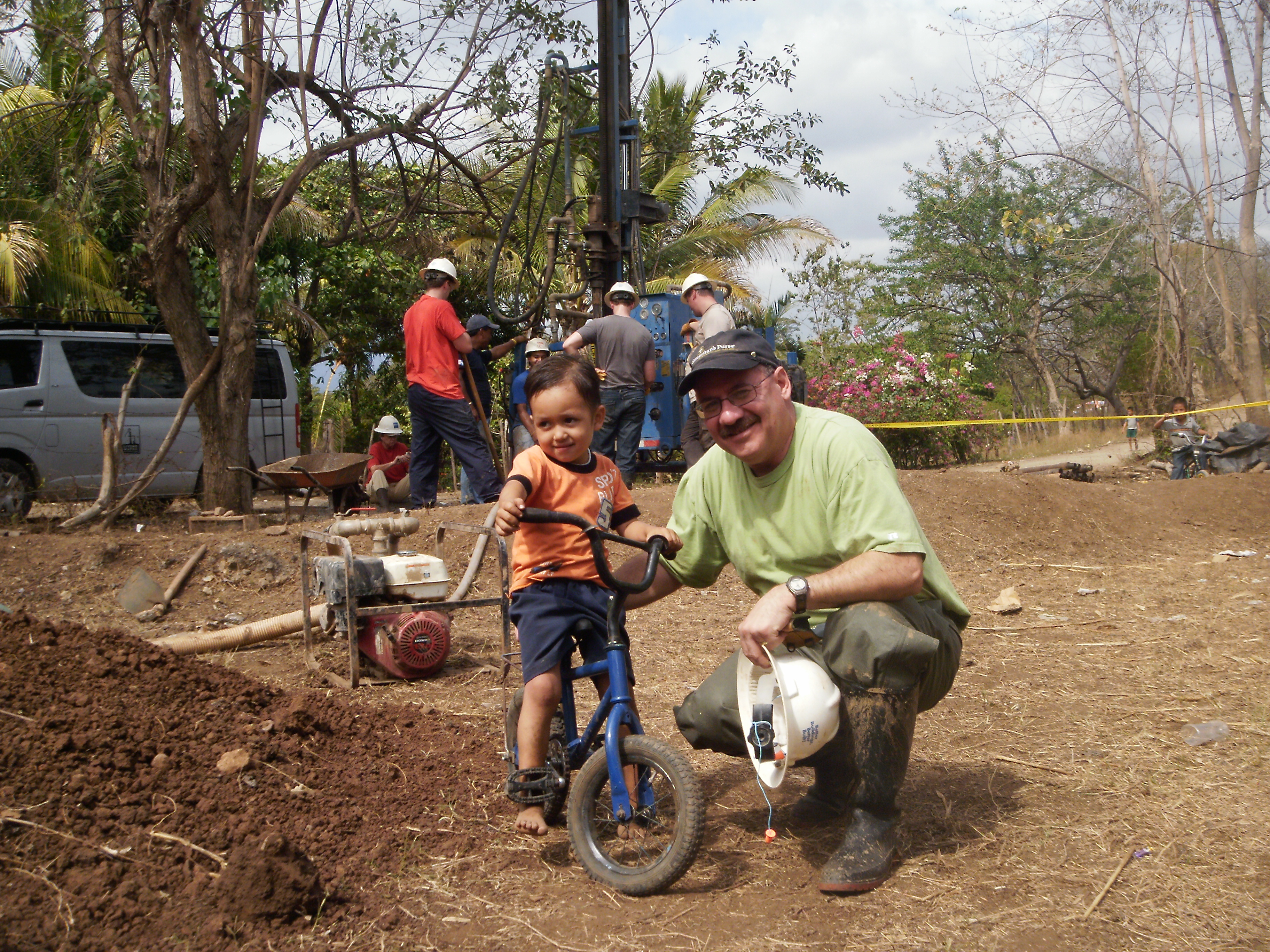
Omar with boy named Angel

   Our team is here to provide a source of clean and safe drinking water for the people of Monte Rico. Over the past two days we have interacted with the people of this tiny mountain village. They are now our friends. Adults and kids stop by throughout the day to check on our progress, to talk, and to express their gratitude. For the past couple of days the kind and gentle people of Monte Rico have prepared lunch for our team – a beautiful expression of their gratitude. For many of these folks, this water-well means that they will no longer walk long distances to rivers and streams to fetch water for their daily needs. This water-well will be the closest thing to indoor plumbing they will ever know. This is cause for excitement.

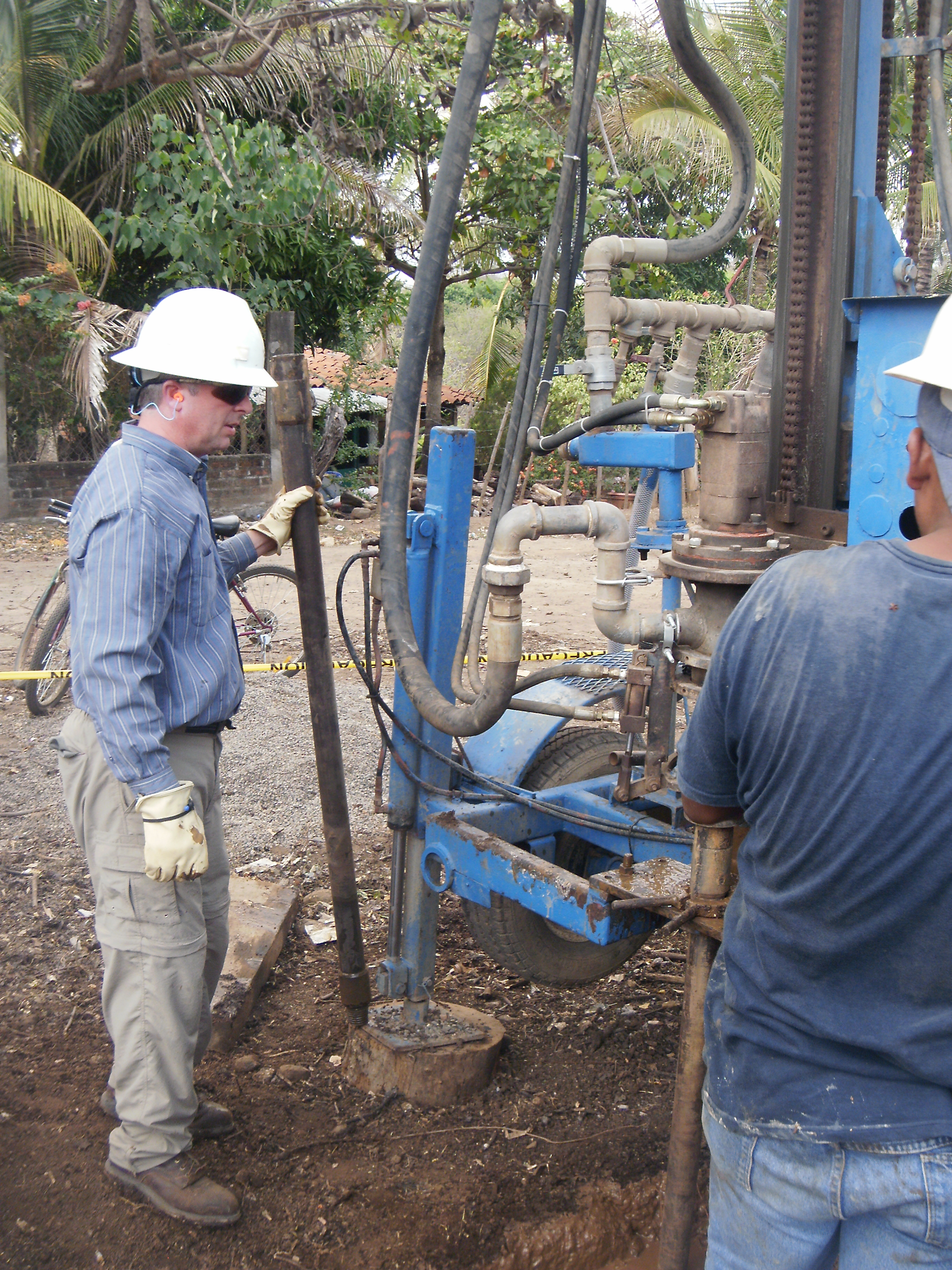
Jim Coleman at Drill Rig

   Living Water is making a big difference in lots places like Monte Rico. I am enjoying the hands-on experience of drilling a well. It’s hard, dirty, but very fulfilling work. The Living Water staff members are highly organized and great teachers. The mechanics of drilling make more sense with every passing hour as they patiently guide us through the tedious process of drilling for water. In the past two days we have drilled to a depth of 130 feet. Our team members are eager to do whatever they are asked to do because we have met the people who will benefit from our labor. When we look into the faces of the people here, we don’t mind the heat, the humidity, the mud, or the work. We can hardly wait for tomorrow and then the day after when we hope to complete the drilling process and bring water to the grateful people of Monte Rico.

Posted by: Omar C. Garcia | February 7, 2010

In El Salvador

   San Salvador en route to Playa Salinitas

   I can’t recall the last time I was on a flight that lasted less than three hours, but that’s all the time it took to make the trip from Houston to El Salvador. Same time zone – no jet lag! We encountered some turbulence as we descended below the clouds and then bounced onto the tarmac at Cuscatlan International Airport, located just south of San Salvador. Founded in 1525, San Salvador is a sprawling city of low-rise buildings surrounded by volcanoes and hills. The city is Central America’s second most populated city behind Guatemala City. This centuries-old city is no stranger to turbulence. It has been shaken by countless earthquakes, volcanic eruptions, political unrest, and civil strife. Yet every time, it shakes off the dust, rebuilds itself, and marches on.

   The sludge of El Salvador’s heat and humidity assaulted us as we disembarked and made our way into the terminal building. This is Central America. The passport officer was extremely nice and conversed with me in Spanish. He told me that he was delighted that I had come to visit his beautiful country and wished me a pleasant stay. Encouraged by his welcome, I officially walked into El Salvador. I am delighted to be here to serve alongside the Living Water International team made up of four Houstonians, three young men from St. Louis, and one young man from New Jersey. We are here because we believe in the vision of Living Water to change the world by providing clean drinking water and the living water that is found only in Jesus Christ.

   A young man named Carlos Molina picked us up at the airport to escort us to our lodgings located a little less than two hours away. Carlos is the country director of Agua Viva El Salvador and has hosted many volunteers who come here to drill wells in impoverished areas. With our luggage securely tied to the top of the van, we traveled along Highway 8 toward Sonsonate, then turned onto Highway 12 toward Acajutla, and then arrived at Playa Salinitas on the Pacific Coast. I do mean on the Pacific Coast. I am seated less than one-hundred yards from the Pacific Ocean as I write — cooled by a gentle ocean breeze as the sun begins its descent toward the distant horizon.

   Tomorrow we will venture to an impoverished community to drill a well, a process that will take several days. I am grateful to the people of Kingsland for underwriting the cost of the well and to the great team of folks who have come here to make it happen. Good things like drilling wells don’t happen by accident. They happen because of the compassionate vision and intentional action on the part of organizations like Living Water International. At the end of this week a few more people in El Salvador will have access to clean and safe drinking water – a beautiful and practical expression of God’s love. And, at the end of this week, those of us who came here to get our hands dirty will leave for home – tired but grateful for the privilege of having served the people of El Salvador.

Posted by: Omar C. Garcia | February 6, 2010

Off to El Salvador

   El Salvador is a tiny Central American country roughly the size of New Jersey. Tightly wedged against the Pacific Ocean by neighboring Guatemala and Honduras, it is the only country in Central America with no Atlantic Coast. Pedro de Alvarado brought the region under the Spanish flag in 1525 and named it El Salvador or “The Savior.” El Salvador remained under Spanish control until 1821 when it declared its independence from Spain. It is a beautiful country with over twenty-five volcanoes, rainforests, and breathtaking coasts. And, the Salvadorans are reputedly among the most hospitable and loving people in the world.

   I will travel to El Salvador on Sunday with my friend Jim Coleman and a team from Living Water International. Living Water International exists to demonstrate the love of God by helping communities acquire desperately needed clean water, and to experience “living water”—the gospel of Jesus Christ—which alone satisfies the deepest thirst. Living Water has had a presence in El Salvador since 1998. According to some optimistic estimates, only 59 percent of El Salvador’s population has access to safe drinking water. That number is much lower in rural areas where Living Water is working. Agua Viva El Salvador (Living Water El Salvador) has blessed nearly 300 communities with wells. Many more wells are needed in rural areas where people have little or no access to clean water.

   We are blessed to have access to unlimited clean water in our own homes. And, we want for others to enjoy the blessing of clean and safe drinking water. That’s why Kingsland’s missions ministry is underwriting the cost of two wells in El Salvador this year. And, in addition to these wells, we are working with another of our ministry partners to drill four wells in Bangladesh. I’m grateful to the Kingsland family for providing the funds to drill wells for the people of El Salvador and Bangladesh. The drilling of these wells will open doors for our partners in these countries to share the message of Jesus Christ, the living water. Please pray for our team as we give the gift of clean water to the people of El Salvador.

• • • • •

PS | Kingsland members Frank Bondurant and Robert Ellis returned earlier today from El Salvador where they served on a Living Water Drill team. Last month, David Welch and Gary Achenbach served on a Living Water team in Haiti. Thanks guys, for giving the gift of clean water to so many people. Photo above courtesy of Frank Bondurant.

Posted by: Omar C. Garcia | February 5, 2010

Just Change

   I recently visited the state of West Bengal in India where Kingsland supports a safe house for girls rescued from commercial sex exploitation. The girls in this aftercare facility did not choose prostitution, it chose them. They were unwillingly conscripted into a sisterhood of suffering. Most of the girls were lured away from their homes by the promise of honest labor to help support their families. Some were sold into prostitution by their families. All of them know what it means to be deceived and each of them has suffered abuse that defies our suburban sensibilities. The girls in the safe house are grateful to those who rescued them from danger and to those who give for their support.

   The safe house we support is a type of witness protection program where girls can begin the long journey from victim to survivor. At the safe house they have access to medical care, trauma counseling, legal representation, education, vocational training, and more. None of this comes free. There is a cost to providing these services for these young victims of sex trafficking and exploitation — and, that’s where Kingsland will make a difference. We are committed to underwriting the cost of caring for these girls. And, we will also take teams of women to work at the safe house as a part of our international initiatives. We will have opportunities to love and affirm these precious girls, even as Jesus would.

   Our Go Beyond missions ministry has formed a partnership with Kingsland’s Legacy Milestones family ministry to raise awareness and to raise funds to support the work of the safe house. Brian Haynes, our Associate Pastor, leads our Legacy Milestones ministry that teaches parents how to become the primary faith trainers in their homes. Brian and his team will prepare age-appropriate devotionals on why justice matters to God that parents can share with their children. In addition, we are providing each family at Kingsland with a house-shaped bank with the words “Just Change” printed on the roof. If each family will place their pocket change in the bank plus money they save by eating out less, we will raise enough funds to continue supporting the work of our safe house.

   Our hope is that this joint initiative for justice will help parents to teach their children to be less selfish, more thoughtful of others in need, and more willing to make personal sacrifices for the sake of others. We also hope that as a result of intentionally teaching our children about justice, some of our children will become champions for the oppressed and abused. We know that we will impact the lives of young girls by doing something as simple as collecting pocket change. And, we will do it — not just for a week or a month or a year, but for as long as it takes. We are committed to collecting “Just Change for a Just Cause.”

Posted by: Omar C. Garcia | February 3, 2010

The Beauty of the Poor

Kharma is the Hindu law of moral consequences that governs the process of reincarnation. To the Hindu, what a person was and did in a past life determines their place in the present life. Kharma is at the core of India’s caste system. The caste system developed into four social categories before the birth of Christ. Brahmins are at the top of the social order, followed by Kshatriyas, Vaishyas, and Shudras. Those without caste are called Dalits, or “untouchables.” No caste means no status. The caste system believes that God created people unequal — a belief contrary to the biblical view.

Kolkata’s streets are littered with the lowest and the least of these — the outcasts. These unfortunate individuals live a desperate and meager existence. Like Lazarus, they long to be fed with the crumbs from the rich man’s table and have only the dogs to lick their sores (Luke 16:19-30). Their bodies are like a canvas painted with brushstrokes of hardship, violence, and neglect. They are acquainted with physical pain as well as the emotional pain inflicted by the disdain of passersby. Many die in filthy and dark places with no one to acknowledge their passing. It was among these that Mother Teresa walked in search of Jesus in His distressing disguise.

Mother Teresa walked slowly among the lowest and the least. She touched untouchables, cradled children in her arms, cleaned and dressed wounds, provided food and clothing, and held the hands of the dying. She was repulsed by nothing and saw beauty in the faces of the poor. She affirmed the worth of others through her gentle embraces, reassuring looks, kind words, and practical assistance. She regarded no one as an outcaste but as persons of worth created in the image of God.

Distressing Disguise
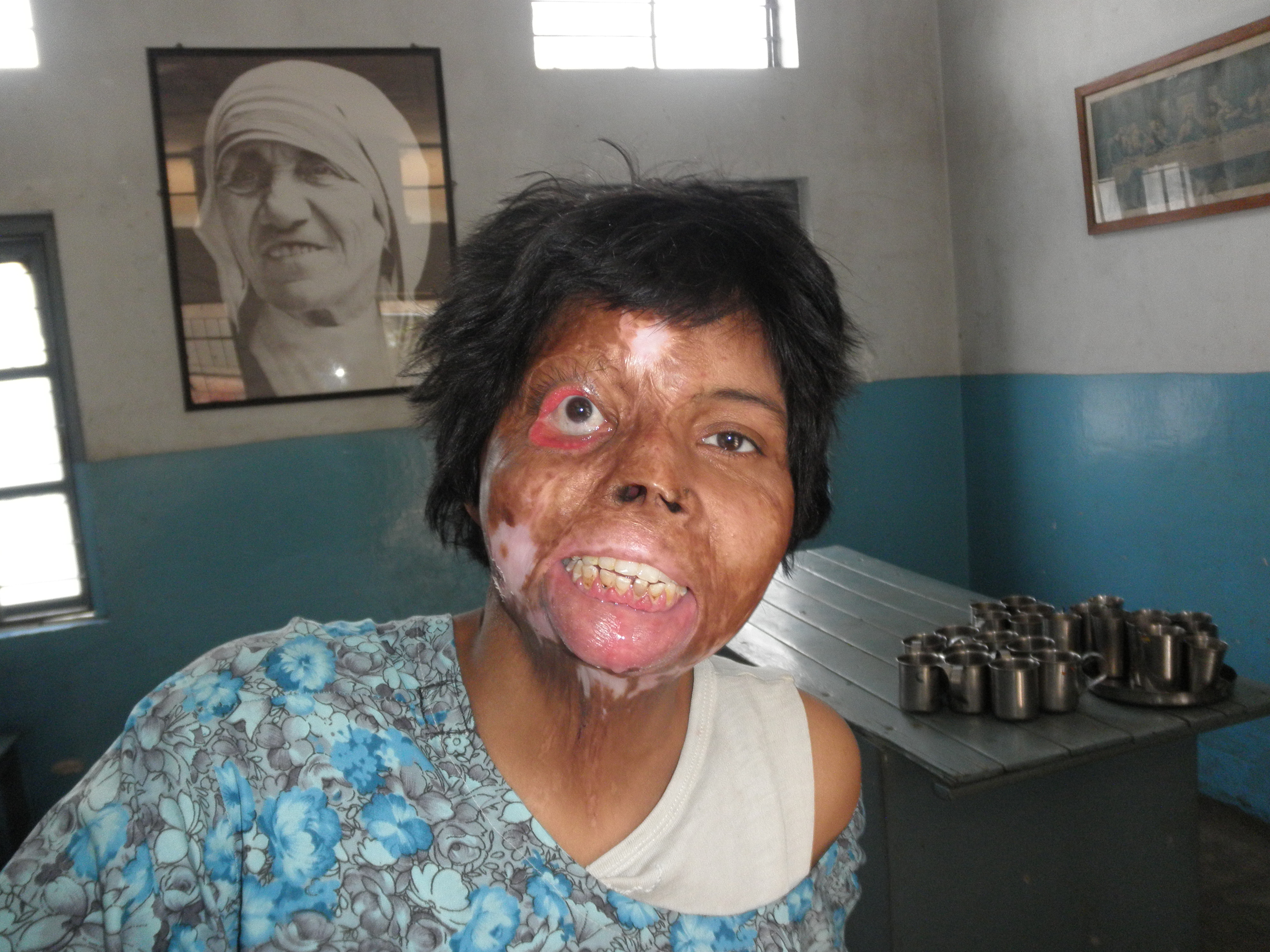
While serving at Mother Teresa’s homes in Kolkata last week, our team was given permission to take a few photos. Amy Granger, my assistant, took a photo that is worth a thousand words. In the background is a photo of Mother Teresa hanging on the wall. In the foreground is a woman with a disfigured face who represents the lowest and the least — the people to whom Mother Teresa ministered. Our team was privileged to touch, hold, feed, and care for this woman and hundreds of others like her. If you look closely at this woman, you will see what Mother Teresa saw — Jesus in the distressing disguise of the poor.

You don’t have to go to Kolkata to find Jesus in His distressing disguise. You can find Him in your own community among those who are hurting, despised, overlooked, lonely, hungry, abused, and neglected. We must not allow our Western caste system that exalts the beautiful and the wealthy to distance us from those in need. And, we must not allow the pain and disfigurement of broken lives to blind us to their beauty. Look at the world around you through the eyes of Jesus and then do for others what Jesus would do. That’s a beautiful thing!

Posted by: Omar C. Garcia | January 31, 2010

Katy to Haiti Report

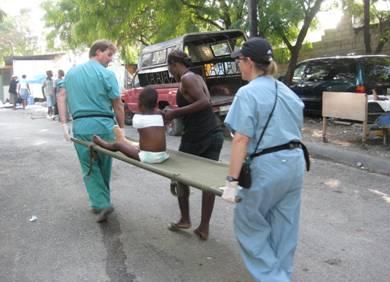
Child on Stretcher | Left Arm Amputated

Kingsland’s Missions Ministry always has several initiatives in play at any given time. On the Thursday before I left for India earlier this month, our missions office sent an e-mail to the Kingsland family asking for medical supplies for Haiti. By Friday evening, we had collected, boxed, and packed over one-thousand pounds of medical supplies. Four Kingsland members joined a larger medical team to Haiti. Kingsland member Wayne Fairley accompanied the team to aid with logistics. Here is a summary of that initiative and the impact it had on the people of Haiti. 

Omar | Wayne, we had to act quickly to mobilize medical staff and supplies for Haiti. Once we packed and loaded the supplies we collected at Kingsland, what happened next? 

Wayne | We worked with Angel Flight to find available planes and pilots willing to fly to Haiti. We located one, then two planes and, praise God, within a day after collecting supplies, we launched toward Haiti with four planes carrying a team of fifteen people and about one ton of supplies. 

Omar | Many organizations responded to the crisis in Haiti therefore limiting the available number of landing spots. What challenges did the team face in getting to Haiti and where did you land? 

Wayne | We faced weather delays, darkness, fuel availability, and air traffic and security restrictions. But, our Pilot and pilots found a creative route to get us to Jacmel on the southern coast. We arrived in Jacmel after stops in Miami and San Juan, Puerto Rico and a circle around the Dominican Republic. 

Omar | What were your first impressions and immediate challenges when you landed in Jacmel? What steps did the team take to set up a basic clinic and surgical environment? 

Wayne | Jacmel is a sleepy city with very limited medical resources. The hospital was mostly destroyed and the equipment was primitive. We rapidly assessed, among the chaos, what was needed and what medical procedures were possible with what we had brought with us and also found. We managed to pull together a minimalist operating environment. 

Omar | How did non-medical team members help? 

Wayne | We borrowed vehicles from the local Hands and Feet Mission and set out to scavenge for medical equipment in clinics outside of town. And, when some enormous US Navy helicopters started arriving, we helped transfer a few thousand meals to UN trucks. It was hot and heavy work. 

Omar | In addition to collecting and purchasing medical supplies, our missions ministry also purchased tents and other camping supplies. Were these items useful? 

Wayne | Medical supplies were scarce so the ton of bandages, supplies and meds were very well received. Since we camped at an unfinished building near the Jacmel airstrip, we didn’t have to use the tents. But, the local missionaries were elated to have them for victim families who had no other shelter. 

Omar | After a couple of days in Jacmel, the team relocated to Port au Prince. How did the team travel to Port au Prince and with whom did you connect when you arrived? 

Wayne | The US Navy was very flexible and very helpful. Our team traveled on helicopters returning to Port au Prince after the food drops. Upon landing at Port au Prince, we connected in a divine way with a woman who knew of immediate needs at the Haitian Community Hospital across town. 

Omar | How did medical team members assist at the Haitian Community Hospital? 

Wayne | Wow! Our team was a glove fit for the needs enumerated when we walked in the door. The most pressing needs included an anesthesiologist, a pediatric specialist, operating room specialists, generalist MDs, and muscle to move the hundreds of patients around. Our team went to work immediately. 

Omar | How were non-medical team members used? 

Wayne | We handled the flow of patients from the lawn and triage to X-ray and operating room staging areas and then from recovery areas back to the hallways and lawn. We were runners for supplies. We gathered a team of local teens to help ration and distribute water to keep patients, families, and care givers hydrated in the hot building and tents. 

Omar | How would you summarize the impact of our quick-response team? 

Wayne | It’s certain that our team saved lives and limbs, relieved much pain, and brought comfort to that small corner of Port au Prince for a few days. 

Omar | What’s next in regard to continuing medical help? 

Wayne | Our doctors emphasized that a critical factor during the coming days and weeks will be wound care and infection control. I will help our missions ministry in mobilizing continuing teams of care-givers and supplies to Haiti. Transportation is the greatest immediate need since there are no commercial services and identified transports are overwhelmed. 

Omar | I am grateful to Wayne for serving as our point man in Haiti and also to Dr. Cindy Anthis, Kim Parris, and Jim Rankin for their service to the people of Haiti. I am especially grateful to the Kingsland family for their generous donation of medical supplies and monetary donations to assist the people of Haiti. Thanks for going beyond! 

Kingsland’s Missions Ministry will continue to stay engaged in aspects of the continuing relief work. Please make monetary donations payable to Kingsland Baptist Church with the words “Haiti Relief” in the Memo line. To learn more about how you can help, please contact Wayne at projectmanager@gmail.com or 832.335.2292.

« Newer Posts - Older Posts »

Categories