Posted by: Omar C. Garcia | September 7, 2010

Isn’t Jesus Enough?

I have debated much about whether to post these thoughts because I appreciate what other churches are doing to demonstrate and share God’s love with the people who live in our community. Our missions ministry is certainly concerned about the welfare of those who live around us. That’s why, in addition to our international initiatives, we mobilize upwards of three thousand volunteers annually to serve people in need in our own community. We invest hundreds of thousands of dollars annually in local initiatives that include caring for widows and single moms and children at risk, feeding and clothing the homeless, supporting substance abuse and crisis pregnancy ministries, underwriting the cost of a community vegetable garden that provides fresh produce to hundreds, ministering to refugees from South Asia, supporting new church initiatives, refurbishing and furnishing a safe-house for girls rescued from sex trafficking in the Houston area, and much more.

In recent weeks I have become increasingly disturbed by some of the things that churches are doing in the name of the gospel. One church promises a free gift to every first-time guest. I’m not certain how many unbelievers will be swayed to get up, get dressed, and go to a church filled with people they don’t know just to get a free gift. And, if you can attract and keep a member from another church with a gift, then …! Enough said. This is just one more reason why I am not a fan of the attractional paradigm. I believe there is something better that can attract people to the gospel — namely a person who genuinely loves, cares, and befriends others who don’t know Christ.

Then, a friend showed me a mailer from another church in a neighboring community. This church is giving away a quarter of a million dollars of free electronic gadgets, vacation getaways, bikes for kids and even a motorcycle. That’s right, they are giving away a quarter of a million dollars of stuff to people whose homes are already overstuffed with stuff. All of this to illustrate that the best things in life are free! To make this campaign even more attractive they are advertising: “There’s no catch. No weird stuff. No commitment.” Sorry, but this is all a bit weird. Are these really the best things? Is this really the ultimate giveaway? It’s my understanding that the ultimate giveaway happened more than two-thousand years ago when Jesus paid the ultimate price for our sins.

As someone who is committed to mobilizing the church to be the church — to be Jesus with skin on in the community, I was stunned. Having mobilized thousands to leave the pews to engage with people in the community, I know what God can do in and through members who will give themselves away instead of trying to attract people to us by giving away stuff. My previous blog post was about asking God to break our heart for what breaks His. Is God’s heart really broken because someone does not have a high-definition television or other stuff like that? Or is His heart broken for widows and orphans and the oppressed that live among us? How is it possible to be so out of touch with the passions of God for the lost and hurting people in our workplaces and neighborhoods? The Houston area ranks at the top of the list of places in this country where young girls are trafficked and forced to work in the commercial sex trade. By some estimates there are less than one-hundred beds in safe-houses in this country for girls who are rescued from sex-trafficking. Imagine the lasting impact that a quarter of a million dollars could make in providing a safe haven for these rescued girls and in promoting justice. How can you justify giving more stuff to people who rent storage units to keep their extra stuff when we are surrounded by so much need? How can you justify that kind of stewardship?

When I was in India two months ago with more than forty of our students, I noticed that they talked only about Jesus and how wonderful He is. I told our students that at home, Christians tend to talk about everything but Jesus. However, working among the least of these and with the one-hundred-plus girls who reside at the safe-house we support in West Bengal, our students could only talk about Jesus and how wonderful He is and how He loves and cares about people and has the power to transform lives. It was all very much like the first-century when the church focused on Jesus and the importance of making a commitment to follow Him.

Something good happens when we focus on Jesus and exalt Him. Jesus said, “And I, when I am lifted up from the earth, will draw all people to myself” (John 12:32). He is the draw, not a drawing for door-prizes. Why do we think that Jesus isn’t enough and that we must bait people with stuff? I told our students in India that my prayer was that as they returned to their normal lives at home their default setting would be to talk about Jesus first and make Him the focus of their conversations. I challenged them to be Jesus with skin on and to earn the right to share the gospel by the way they love and care for others. There is something attractive about seeing Jesus with skin on — seeing someone who cares and who serves as He did.

I am not a member of the giving-away-stuff church. They are an autonomous body of believers who decide for themselves how they will relate to their community. They alone are responsible for their stewardship of funds. If they want to give away free stuff then they can give away free stuff. As for me, I will continue to challenge those under my influence to give themselves away, to look at our community as Jesus would, and to allow God to break their hearts for what breaks His. I will continue to challenge people to meet their neighbors and to meet needs. I believe that Jesus is enough and that when we exalt Him good things happen. I’d really rather have Jesus than stuff!


Posted by: Omar C. Garcia | September 5, 2010

A Dangerous Prayer

Unless our heart is broken for what breaks God’s heart, we will fail to make a difference in our world. A broken heart is essential to fixing broken things. If we want to make a difference, then we must discover what breaks God’s heart and get in sync with the rhythm of His divine heartbeat. But, we must understand that when we truly get our heart in sync with His, then we can no longer remain the same. We cannot remain passive or complacent or uninvolved. Instead we will be compelled to reorder our priorities to reflect God’s passions and to intentionally spend ourselves on His purposes. A heart that is in sync with God’s heart is reflected in a life that is willing to go beyond — to do more than talk a good game but to actually get in the game.

Asking God to break your heart for what breaks His is a dangerous prayer. When this prayer is answered it will change the way you look at and respond to what you see in the world. The answer to this prayer will turn your life upside down. But, that’s ok. God uses those whose lives have been turned upside down to turn the world upside down (Acts 17:6). A broken heart will cause you to dig deeper, work harder, pray longer, go farther, and reach higher. A broken heart will not allow you to live selfishly and to consume everything you make and every moment you have solely on yourself and your personal interests. A broken heart will lead you to close the distance between yourself and those who are lost, hurting, and in need.

The popular praise song “Hosanna” by Hillsong expresses the sentiment of what it means to ask God to break your heart:

Heal my heart and make it clean
Open up my eyes to the things unseen
Show me how to love like You have loved me

Break my heart for what breaks Yours
Everything I am for Your kingdom’s cause
As I walk from earth into eternity

Singing or saying these words is much easier than living them out. I read the words of one frustrated blogger who observed: “My issue is with my generation, who sings this song and songs like it, but then lives to no standard of holiness. My generation, who sings this song but doesn’t want to hate what God hates. In fact, they don’t even know what God hates. My generation wants God to save them, and to make them feel good. They don’t want Him as Lord and King over everything they do. They want to control their lives.”

Ouch! This person understands how easy it is for us to sing or to say words to God that do not result in any change in our lives. For some, asking God to break their heart for what breaks His is nothing more than an emotional or academic exercise. A person whose heart is truly broken for the things that break God’s heart cannot remain passive but instead is willing to be inconvenienced in order to engage with lost and hurting humanity. God is looking for people with broken hearts who are willing to do whatever it takes to connect with a hurting world and to make a difference. Are you willing to allow God to break your heart? If so, get ready for the adventure of a lifetime.

Posted by: Omar C. Garcia | August 31, 2010

Ordinary Servants

One thing that I enjoy most about traveling to so many places around the planet is the opportunity to meet people — ordinary people who are making a difference in their respective communities. Communities are made better or worse by the people who live in them. When people fail to care about their neighbors or to address corrupting influences or to meet the practical needs of those closest to them, then they unwittingly contribute to the deterioration of their respective communities. However, when even one ordinary person has the vision and courage and selfless determination to do something to help, then things begin to change for the better.

In March of this year I returned to Kampala, Uganda. While there I had the opportunity to visit my friend Robert Nabulere, pastor of Miracle Center Kawempe — my home church in Kampala. Miracle Center Church is located in one of the poorest and most densely populated communities in Kampala. Pastor Robert is no stranger to poverty. He grew up in a poor family and did not own his first pair of shoes until he was fourteen year old. He worked hard to get his education and was the beneficiary of the kindness of the Christian Children’s Fund — an international aid organization that paid his school fees. Pastor Robert has never forgotten his humble beginnings and the difference the kindness of others made in his life. He cares deeply for the people of his community, especially the children.

A few years ago, Robert and his wife Rose acted on a vision to provide quality education for poor kids and kids whose parents are HIV-positive or have AIDS. These are kids who otherwise would not have the opportunity to get an education. So, Pastor Robert and Rose started the Miracle Destiny School with little more than a vision and a whole lot of faith. While visiting this school in March, Robert took me to the home of a single mom whose two kids attend Miracle Destiny School. This mom is HIV-positive, lives with her two kids in a home that is roughly 100 square-feet, and earns about $2.00 per day. Pastor Robert and Rose and Miracle Center Church have given this young mother, and many more like her, hope for the future. They are making a difference in their community one child at a time.

Pastor Robert visited our community this past weekend. While in the States he wanted to visit Kingsland and to express his gratitude for the support we have given him and Miracle Destiny School. My friends Craig and Tonya LaTorre, who are in the process of adopting a child from Uganda, hosted Pastor Robert. We enjoyed an inspirational weekend and wonderful fellowship around the LaTorre family table. Pastor Robert will return to his own community in a few more days, refreshed by the love and kindness of the people of Kingsland. And, those of us who were privileged to spend time with Robert are more determined than ever to continue making our own community a better place by loving and serving others. Robert reminded us that God uses ordinary servants who love others to make the places where we live better for everyone.

Posted by: Omar C. Garcia | August 31, 2010

A Day for Justice

Our missions ministry supports justice initiatives in South Asia, East Africa, Central America, and in our own community. Sex trafficking is not just something that happens in other places, it is happening in our own community. The Department of Justice designated Interstate 10 as the number one route for human trafficking in the United States. Thousands of young girls trafficked to our country are transported along I-10 and many of these girls are forced to service clients in spas and cantinas in Houston. That’s why we are partnering with local ministries that are working to rescue and to provide aftercare services for the victims of sex trafficking.

This morning, Brian Stone and our single adults worked on the grounds of Home of Hope — Texas, a ministry poised to provide aftercare for those rescued from sex trafficking. We spent the morning improving walkways with crushed granite and spreading mulch in all of the flower beds on their campus. Our team also learned about how young girls are ensnared and forced to work in the seedy world of commercial sex. Next month we will begin work on refurbishing and furnishing a new aftercare facility in our community that will be operated by Redeemed Ministries. These two local ministries are addressing a pressing need to provide safe havens for girls who have been trafficked domestically. Currently there are few services available for domestic victims of sex trafficking.

This afternoon, several of our Justice Team members visited local spas that have been identified as fronts for prostitution. It was a sobering experience for our team to personally see the places where girls are enslaved and forced to submit themselves to a life of prostitution or rape for profit. Being on-site gave them greater insight into Satan’s intentions “to steal, and kill, and destroy” (John 10:10). The battle is real and precious lives are at stake. Vicki, one of our team members, called me this afternoon to share her heart about what she’d seen and experienced. Kelly, another team member who participated in our afternoon justice initiative sent me an e-mail. She said, in part:

I don’t think I will ever forget my first brothel experience. I walked in the door one person, and I walked out changed, hurt, appalled, and amazed. We came face to face with true darkness today, but God has reminded me that if we want to pierce the darkness, we have to go where it resides. He showed me a verse yesterday in the Psalms that says He is “resplendent with light.” What good is that light if we don’t use it?

Indeed, what good is the light if we don’t use it? We must pierce the darkness. We must not remain silent or detached from this kind of evil in our community. We must work to “loosen the bonds of wickedness, to undo the bands of the yoke, and to let the oppressed go free, and break every yoke” (Isaiah 58:6). We must champion the cause of the oppressed. Passion about justice must inevitably result in presence — in showing up to do something to help, in digging deep to support justice initiatives, and in kneeling long to intercede for the oppressed. Thanks to each of you who participated in this day for justice.

Posted by: Omar C. Garcia | August 26, 2010

Mother Teresa at 100

Agnes Gonxha Bojaxhiu — the child who would one day be known as Mother Teresa — was born on August 26, 1910 in Skopje, Albania. Her family lived next door to the church, where she spent much of her time. She was influenced by the example of her mother, a compassionate and generous woman who never allowed the poor who came to her door to leave empty-handed. Agnes developed a special interest in missions and began to sense God’s call to the missionary life at the age of twelve. At eighteen, she joined the Order of the Sisters of Our Lady of Loreto and served in India. In 1946, Sister Teresa sensed God’s call to leave the convent and consecrate herself to helping the poor by living among them. She left the Sisters of Our Lady of Loreto in 1948 and founded the Order of the Missionaries of Charity in 1950.

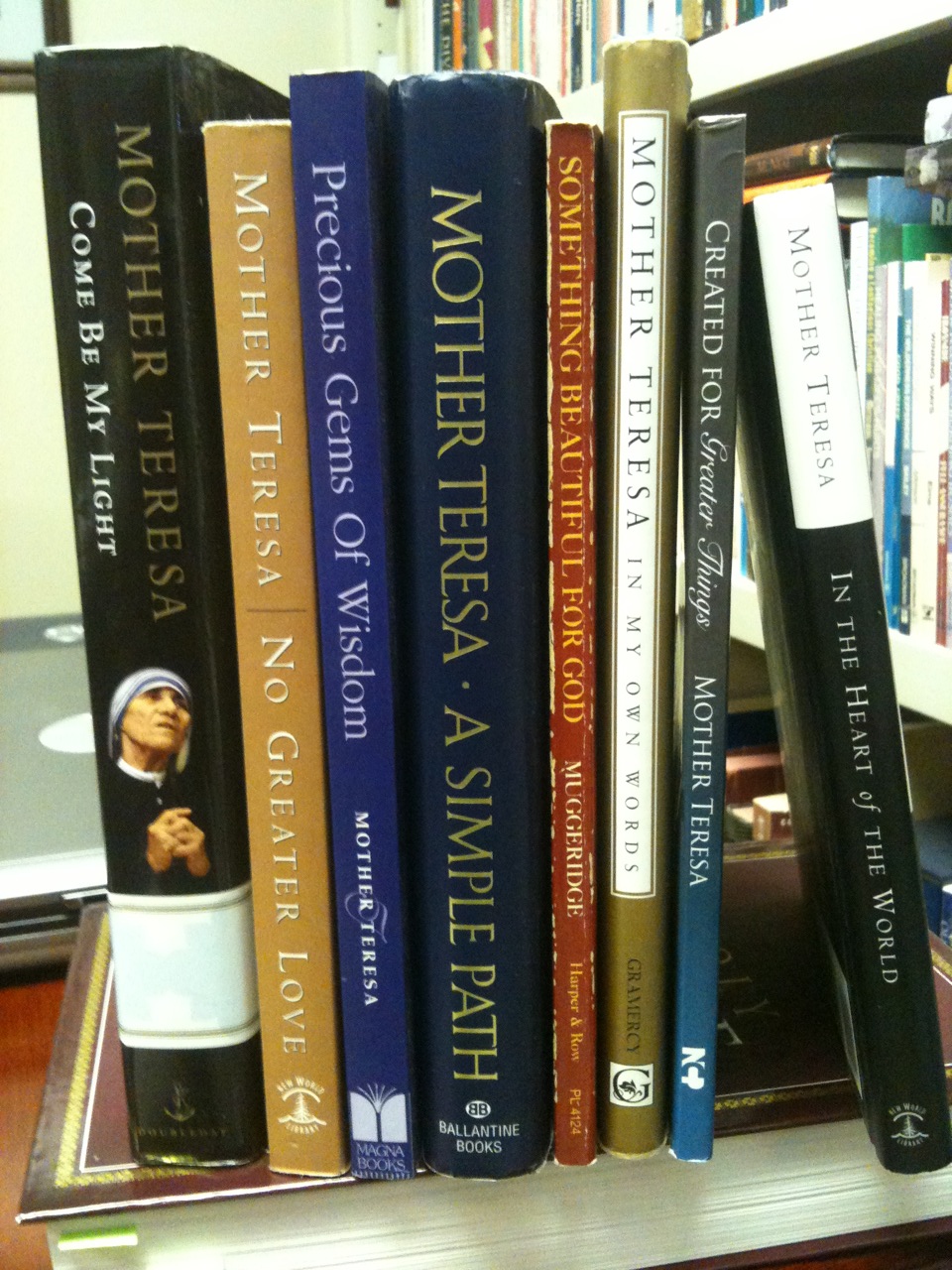
British journalist Malcolm Muggeridge introduced Mother Teresa to the world in an interview aired by the BBC in 1967. Muggeridge was deeply touched by the life and work of Mother Teresa. He later traveled to Calcutta to produce a documentary about her and wrote a best-selling book entitled Something Beautiful for God: Mother Teresa of Calcutta. One of Muggeridge’s most treasured possessions is a devotional manual that Mother Teresa gave to him. She wrote the following prayer in the flyleaf of this book: ”Make us worthy, Lord, to serve our fellow men throughout the world who live and die in poverty and hunger. Give them through our hands this day their daily bread, and by our understanding love, peace and joy.” Mother Teresa was always thinking about the least of these and encouraged others to do the same.

I first read about Mother Teresa in the December 29, 1975 issue of Time magazine. This issue was titled “Living Saints: Messengers of Love and Hope” and featured the image of Mother Teresa on the cover. I was so inspired by what I read that I saved that issue of the magazine and still have it. Over the subsequent years I watched Mother Teresa’s selfless life unfold on the world stage. While in Nigeria in 2008, I stopped at a bookstore to purchase something to read on the long flight home. The shelves of the bookstore were sparse but they did have a copy of Mother Teresa: Come Be My Light, a biography based on a collection of Mother Teresa’s letters. So, I purchased and read this book on the flight home. This was the first of several books about Mother Teresa that I purchased and read.

Soon after returning home from Nigeria, I read Dangerous Surrender: What Happens When You Say Yes to God by Kay Warren. In one chapter, Kay wrote about her visit to Kolkata to serve at Kalighat, Mother Teresa’s home for the dying. Her story touched my heart and got me to thinking deeply about the possibility of going to Kolkata to serve at Mother Teresa’s homes. After a short period of prayer and planning, I was on a flight to Kolkata. I did not know what to expect and was both anxious and excited. But, my time at Mother Teresa’s homes turned out to be one of the best and most enriching experiences of my life. As a volunteer, I could not just stand and observe from a safe and sterile distance. I had to physically touch the broken bodies of the lowest of the least of these — Jesus in the distressing disguise of the poor. This experience touched me deeply and challenged me to look for and respond to the needs of Jesus in the distressing disguise of the poor wherever I go.

Mother Teresa was born 100 years-ago on this day and died on September 5, 1997. Since my first visit to her homes in January 2009, I have returned to Kolkata to serve at her homes on three other occasions. On each of my visits I have worked alongside hundreds of volunteers who traveled to Kolkata from around the world to serve the poorest of the poor. Every volunteer I have spoken with has told me the same thing — they were inspired to travel to Kolkata to serve the poor at their own expense because of Mother Teresa’s Christ-like example of unconditional love and selfless service. One-hundred years after her birth, Mother Teresa’s influence and legacy continue to inspire and challenge the people of the world to love as Jesus loved.

Posted by: Omar C. Garcia | August 17, 2010

Stone’s 3:30 Alarm

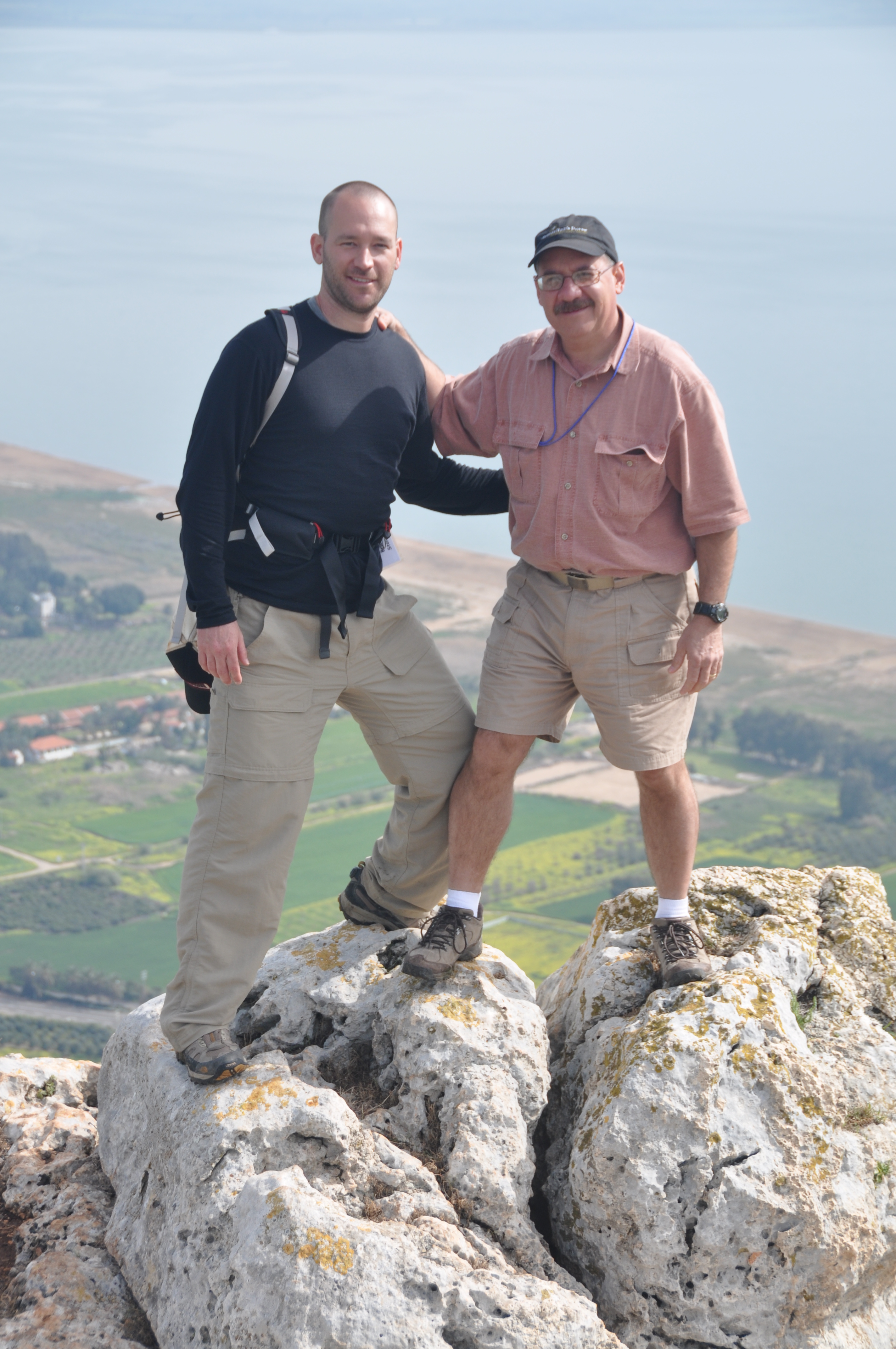
With Stone on Mt. Arbel in Israel

One of the things I enjoy most about getting older, and being one of the old guys on Kingsland’s staff, is the opportunity to spend time with some of our younger pastors. We are fortunate to have a great team of gifted young men and women who serve at Kingsland.

Last week Brian Stone, our Singles Pastor, and I had lunch at the local Mongolian grill. Having visited Mongolia eight times over the past few years, I can testify that there is nothing Mongolian about the food at the local grill. But it’s a great place to sit and chat.

Brian and I especially enjoy talking about how to properly exegete and apply Scripture to everyday life. One of the things Brian and I challenge each other to do is to think deeply about God’s Word that we might live wisely. Often when we see each other at the office one of us will ask, “Are you thinking deeply?” and the other will reply, “Yes, and I am trying to live wisely.”

So, back to our conversation at the Mongolian grill — Brian and I were talking about the way in which God leads and how He prepares us for what He has prepared for us. We chatted about one of my favorite books entitled, “The Red Sea Rules” by Robert J. Morgan. In this excellent little book Morgan reminds his readers — “I am here by God’s appointment, in His keeping, under His training, for His time.”

Brian and I reflected on the truth of Morgan’s observation by sharing how God shaped and equipped us at each of the places where we have previously served. God, we concluded, does not waste any experience in our lives. Brian spent two years serving as a chaplain at Union Gospel Mission in Dallas. He worked with the homeless, the desperate, and those trying to rebuild their broken lives. And, I started my ministry in an urban setting when Brian was only five years old. Like Brian, I loved being in the heart of the city where you can feel the pulse of hurting humanity.

Did I mention that Brian was five years old when I began my journey into full-time ministry? One of the best things about getting older is seeing how God has equipped and is using a younger generation of servants.

After two-years at Union Gospel Mission, Brian was called to serve a church in Stillwater, Oklahoma. While there, he taught a series of lessons on the Gospel of John. Brian told me that when he was preparing a lesson on the third chapter of John’s Gospel he became deeply convicted about verse 30 where John the Baptist is quoted as saying, “He (Jesus) must increase, but I must decrease.”

Brian wrestled with the meaning of the verse and how to incorporate its truth into his daily life. And, that’s when it hit him. He felt that he needed a daily reminder that it’s all about Jesus and that we should always seek to exalt Him and point others to Him. So, he set the alarm on his watch to chime every day at 3:30 PM. Since that time he has had the alarm on his watch set to the same time.

Don’t ever let anyone tell you that you can’t teach old dogs new tricks. As the old dog at the lunch table I was immediately impressed by Brian’s simple and yet very practical application of a truth we all need to remember. As a result of our conversation, I have set the alarm on my watch to chime daily at 3:30 PM. And, I am committed to leaving my alarm set that way for the rest of my life.

I need this simple and humbling daily reminder that it’s not about me. I need to be reminded that I must live my life in a way that magnifies and pleases Christ. I need the sound of my alarm to deflate me at those times when I get too inflated with pride or think that I am more important than others. It’s amazing how the sound of an alarm can instantly bring me back to reality and help me to make sure that I am properly aligned with God’s purposes rather than my own agenda. So, thanks Stone, for teaching something new to this old dog!

Posted by: Omar C. Garcia | August 13, 2010

Pushpa and the Lion

Like the devil, sex traffickers prowl about “like a roaring lion, seeking someone to devour” (1 Peter 5:8). The Psalmist said that the wicked “lurks in a hiding place as a lion in his lair; he lurks to catch the afflicted; he catches the afflicted when he draws him into his net” (Ps. 10:9). Like a lion, these unprincipled individuals use their cunning and power to catch and devour the weak. They drag their catch into their lair where others join them in tearing apart and consuming the innocence of their young victims. The people of Kingsland are committed to the pursuit of justice for the oppressed. We are working toward the day when God will shatter “the teeth of the wicked” (Ps. 3:7). That’s why we support the work of three aftercare homes for women and young girls rescued from sex trafficking in Central America, Africa, and South Asia. And, that’s why we are investing in the work of champions for justice who venture into the dens of lions to rescue the oppressed.

This week I received the story of a young Nepalese girl who was rescued from a lion’s den in South Asia and who now resides in the aftercare home we support there. Her name is Pushpa. She grew up in the family of a subsistence farmer and, like her siblings, started working in the fields at a young age. Because the family needed every child to work in their fields, Pushpa did not have the opportunity to go to school. Pushpa later married a farmer at a young age and left her home. However, as is common in villages in Nepal, her new husband and in-laws were unkind to her and did not take care of her. When Pushpa became pregnant and could no longer work in the fields, her husband left her.

Soon after leaving her father’s home, Pushpa found herself abandoned and pregnant — an easy prey for sex traffickers. Unable to support herself, someone approached her and promised her a good job in a big city in South Asia. Trusting this individual, she accompanied him to the city. However, after she gave birth to her baby, the sex traffickers who had deceived her took her child and forced her into prostitution in another town. They would not allow her to see her baby unless she did what they asked. So, she had no choice but to submit. Pushpa, the young daughter of a poor farmer, found herself trapped in a lion’s den. Several times a day, filthy men forced themselves on her and slowly ripped apart and consumed her remaining innocence and feelings of self-worth.

Pushpa was trapped in a living hell with no way out. Thoughts of her baby daughter sustained her as she was repeatedly raped day after day. And then, the unexpected happened. Some champions of justice stormed the lion’s den and pulled her to safety. Pushpa and her baby found a safe haven at the aftercare home we support. She received medical treatment, counseling, education, and vocational training. Pushpa’s dream is to return to Nepal and take care of her baby and herself. Pushpa and her baby will return home one day because of the champions who entered the lion’s den and rescued her. Please pray for Pushpa and the other girls who reside at the aftercare home we support in South Asia. And please pray for those champions who courageously storm lions’ dens to shatter the teeth of the wicked that they may “terrify no more” (Ps. 10:18).

Posted by: Omar C. Garcia | August 11, 2010

A Disastrous Start

I sometimes tell people, tongue in cheek, that I had a disastrous start at Kingsland. A month after I moved to Katy to serve as Kingsland’s Missions Pastor in July 2005, I invited Paul Cockrell, our student teaching pastor, to accompany me to Mexico’s rugged Copper Canyons. 2005 was a tough year for the Tarahumara Indians, the indigenous people group that inhabit the Copper Canyons. I wanted to learn what Kingsland could do to meet the practical needs of the Tarahumara who were suffering the effects of a long drought. While Paul and I were in Mexico, Hurricane Katrina made landfall in Louisiana and displaced thousands of people. Many of the displaced made their way to Texas and other neighboring states. Paul and I did not have cell-phone coverage in the Copper Canyons and were unaware of the damage that Katrina had caused. But, we found a pay phone in a small village and called Doyle Lowry, our Executive Pastor, to let him know about our progress. Doyle asked me to return home as quickly as possible to lead a shelter on our campus to assist people displaced by the hurricane. Two days later I returned home and spent the next five weeks at the shelter. We provided medical care, legal assistance, job placement, counseling services, housing, and gave away several cars. The weeks I spent at the shelter gave me the opportunity to work with hundreds of Kingsland volunteers and to see their compassion in action.

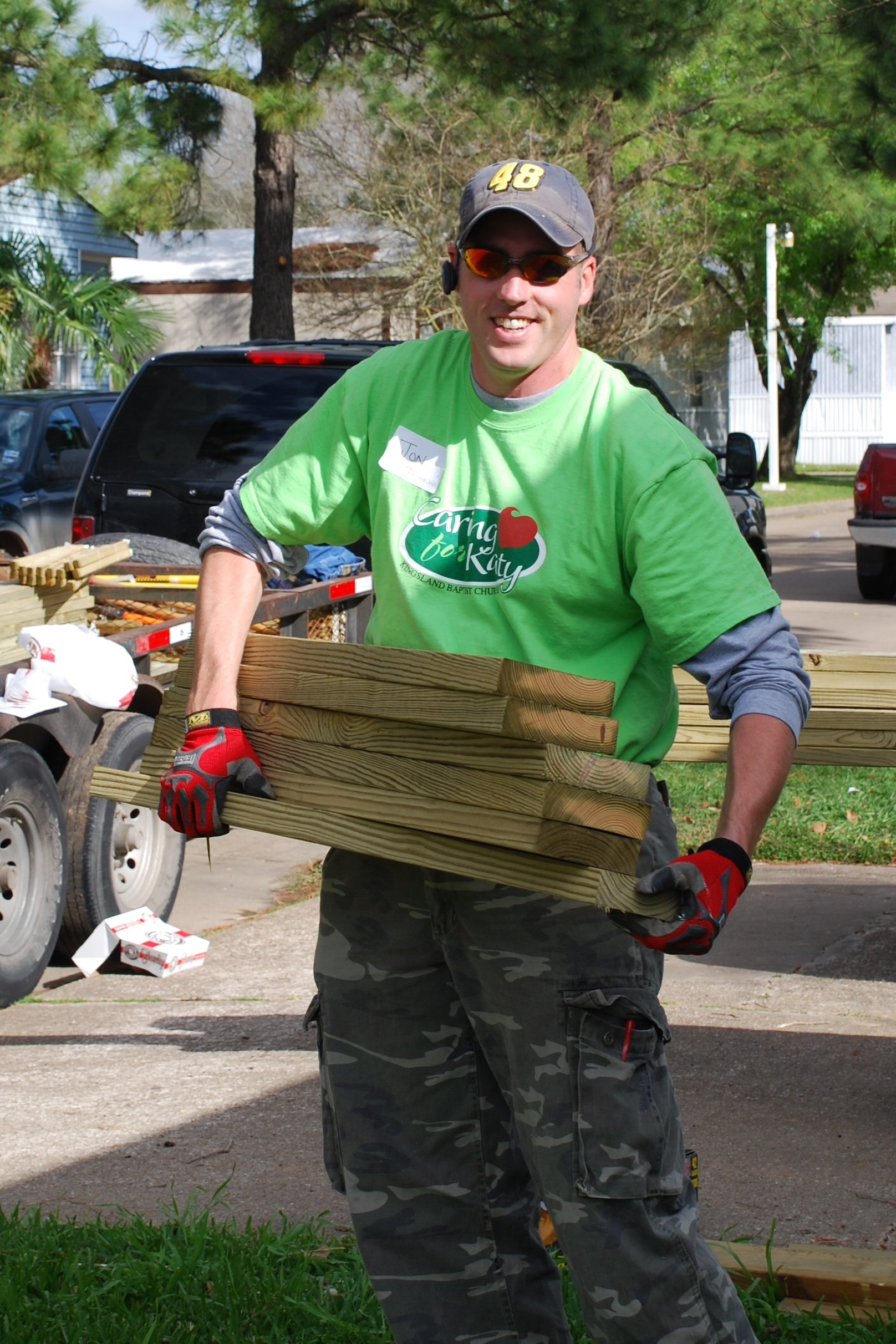
Since Hurricane Katrina, our missions ministry has continued to mobilize Kingsland volunteers to meet the needs of people who have suffered loss as a result of natural disasters. Our volunteers have helped people repair damaged homes, cut and removed fallen trees and debris, rebuilt fences, provided meals, and more. We believe that serving others is a practical way in which to demonstrate God’s love. That’s why I am happy to announce that our missions ministry has purchased and outfitted a new disaster response trailer. In the event of a hurricane or other emergency, we will use our Go Beyond van and our new Go Beyond Disaster Response trailer to serve the needs of people in our community. But, our trailer will not sit idle at other times of the year. Our trailer is equipped for use on our local service initiatives throughout the year.

I am also pleased to announce that Jon Davis, our Missions Ministry Associate, will serve as our Disaster Response Coordinator. Jon is a gifted and experienced logistics coordinator. If you are a member of Kingsland and interested in serving on our Go Beyond Disaster Response Team, then please contact Jon in our missions office. We’d love to have you on our team. But, please know that in order to serve on our response team, you must first complete training in the use of chain-saws and other gear that we will use during relief initiatives. Jon can tell you more about that. I hope that we do not have to use the trailer for disaster response anytime soon. But, we want to be prepared for the worst while hoping for the best. Looking back, I’m glad that I had a disastrous start at Kingsland because it helped me to appreciate how willing the people of Kingsland are to serve people in need during the worst of times.

Posted by: Omar C. Garcia | August 9, 2010

Power without Love

Dubai, UAE en route to Houston, Texas

My friend Gil and I spent the past few days visiting friends in northern Bangladesh where we stayed at a guesthouse that had electricity for only a few hours a day. While there, we had no television or internet or any other link to the world at large. So, it was not until Sunday morning that I was able to get a copy of the Khaleej Times in Dhaka to get caught up on world news. One of the first things to catch my eye was a sidebar quote by Martin Luther King, Jr. that said, “Power without love is reckless and abusive, and love without power is sentimental and anemic.” The newspaper carried two stories in particular that troubled me and yet illustrate the truth of Dr. King’s words.

The lead story on the front page of the newspaper was about eight foreign medical aid workers and two Afghan interpreters who were gunned down in northern Afghanistan. The Taliban claimed responsibility for this gruesome and shameless act of violence. The medics worked for International Assistance Mission, a non-profit Christian organization that has worked in Afghanistan since 1966. IAM works at the invitation of villages and serves people in some of the most remote and impoverished corners of the country. Because health services in Afghanistan are hopelessly lacking, medical aid organizations like International Assistance Mission fill a huge void by providing essential and life-saving services. Since 1966, IAM has provided medical care and other assistance to several million Afghans.

The Taliban justified their actions by alleging that these workers were “spying for the Americans” and “preaching Christianity” – charges that have yet to be proved. The murderers acted as judge, jury, and executioners. According to the testimony of an Afghan who escaped death because he quoted verses from the Quran, the unarmed medics were lined up and shot in a dense forest. These murders show that the Taliban does not care for the nation and people of Afghanistan. Blinded by hate and, according to some Muslims, a totally wrong interpretation of the Quran’s teachings about jihad, these extremists exercised power without love. The murdered aid workers showed selfless and unconditional love to the people of Afghanistan — and ultimately, doing so cost them their lives.

The second article that illustrated the truth of King’s words was entitled, “Mutilated Afghan Woman to Undergo Surgery in US.” The story was about a horrifically mutilated eighteen year-old girl named Aisha (her photo was featured on the 09 Aug 2010 cover of Time). This beautiful young girl’s nose and ears were hacked off by her husband as an act of Taliban justice because she had disgraced him by running away from home because he was violently abusive. It’s difficult for me to understand how a man can take a knife and overpower and mutilate a helpless teenage girl. This kind of reckless and abusive behavior illustrates what happens when power is not constrained by love. Thankfully for Aisha, some Westerners, the very people the Taliban hate, have stepped up to help her. Aisha will undergo reconstructive surgery at a non-profit humanitarian hospital in California – all expenses paid. That’s what love will do for a victim of senseless and reckless violence.

Dr. King was absolutely correct in observing that “power without love is reckless and abusive.” The stories in the Khaleej Times illustrate that the best that the Taliban has to offer the people of Afghanistan and those who selflessly serve them is power without love – the essential ingredient for a frightening and dark world. And, lest these Taliban murderers think they have sinned with impunity, they would do well to remember something else that Dr. King said — “The arc of the moral universe is long, but it bends toward justice.” The wheels of God’s justice may move slowly, but when they come they grind finely. These Taliban murderers and mutilators will have their day of reckoning.

Posted by: Omar C. Garcia | August 8, 2010

An Under-Rower’s Grave

Dinajpur District, Bangladesh | 06 August 2010

In his letter to the Corinthians, the Apostle Paul wrote that he wanted for others to regard him as “a servant of Christ” (1 Cor. 4:1). However, Paul selected a very particular Greek word to describe the kind of servant that he was referring to. Out of five Greek words for servant, Paul used the word “huperetes” – a word that is literally translated “under-rower.” An under-rower was an individual who served as a rower at the bottom of a trireme, a three-decked ship. Under-rowers were chained to the lower deck and rowed cooperatively with others to the cadence of a drum. Their lives served a purpose bigger than themselves and they received no recognition for their labor. And as slaves, their lives were expendable. Under-rowers generally died at their post.

This morning, my friend Gil and I met with forty-five men who are committed to advancing the purposes of God in difficult places. Packed into a room half the size of the garage at my home, these men eagerly participated in our time of study and soaked up every encouraging word that we offered. At the conclusion of our time together, they kindly acknowledged that we had indeed encouraged them. However, Gil and I were the ones who were most encouraged. It’s impossible to spend time with men who render their kind of service and not be convicted by the depth of their commitment to the gospel. These men, most of whom are subsistence farmers, know the dangers of sharing their faith with others in this Muslim country. Yet, in spite of the danger and threats, these faithful servants continue rowing to the cadence of our Captain.

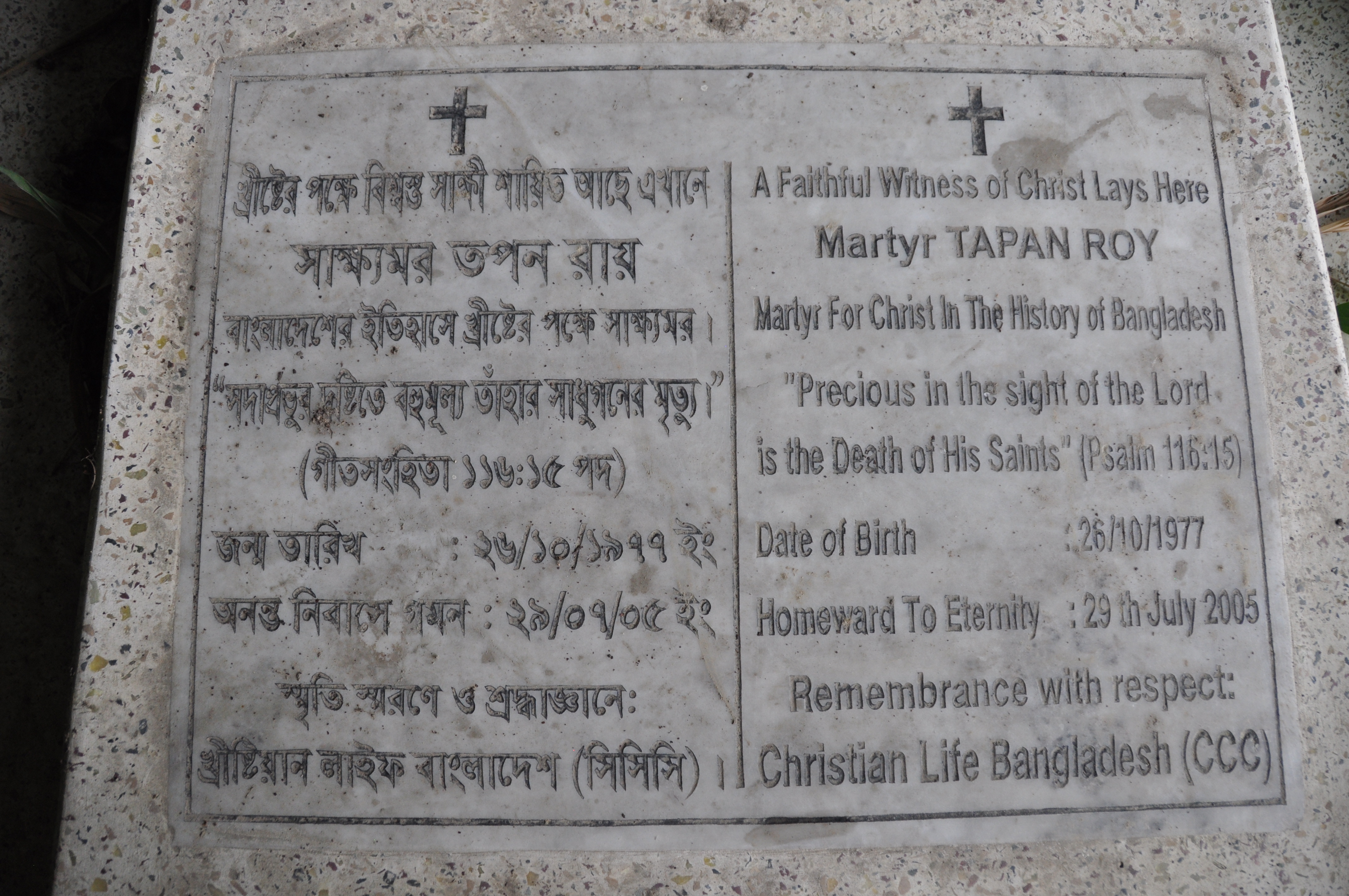
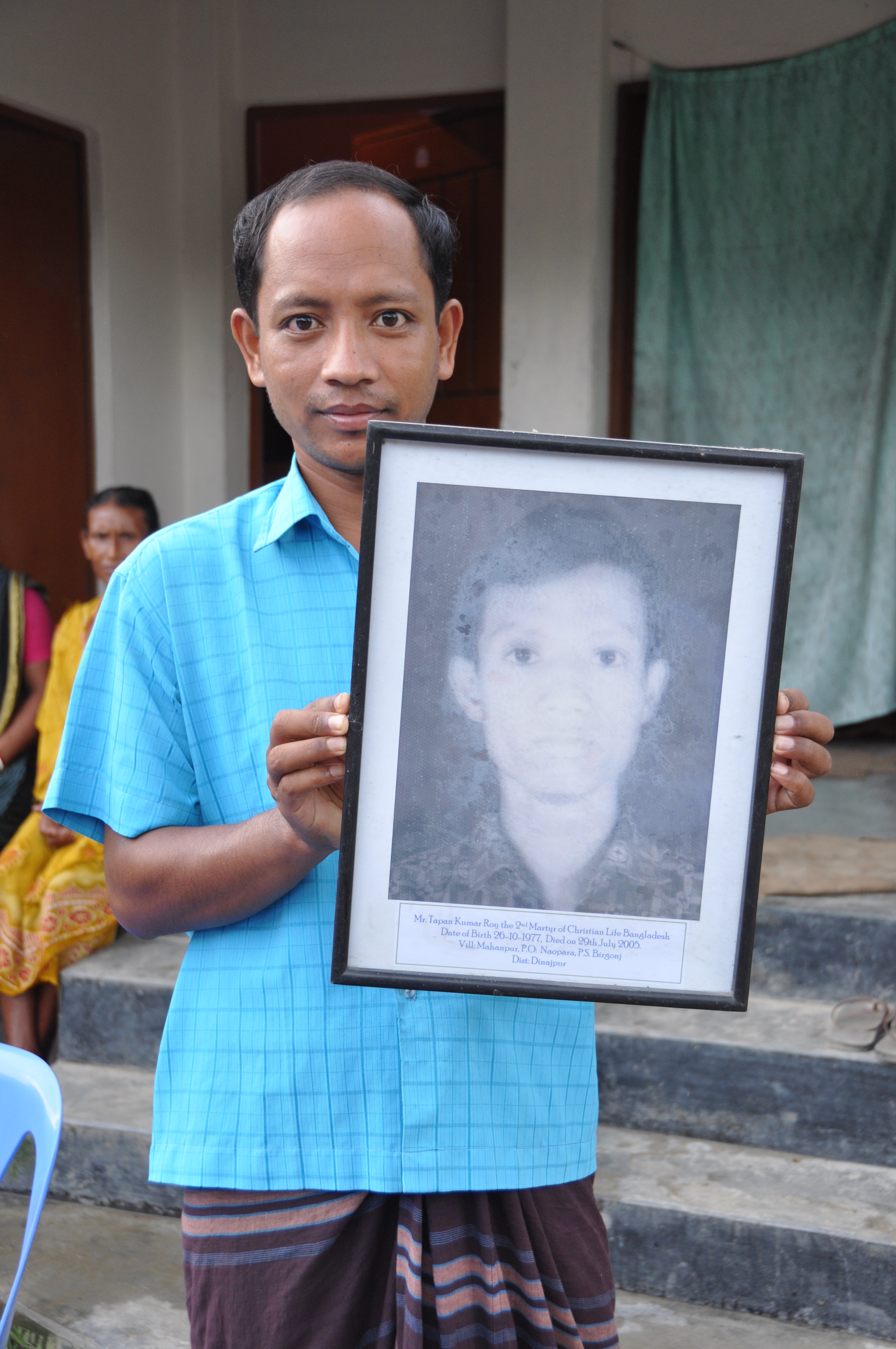
The most sobering experience of the day was visiting the grave of a young man named Tapan Roy. Tapan, a Hindu-background believer, and his friend Liflal Mardi worked on the staff of Christian Life Bangladesh and showed the Jesus Film in villages in the southern part of the country. Both of these men had received death threats from irate imams on more than one occasion. Yet, because they believed that everyone should have an opportunity to hear the story of Jesus and to decide for themselves how to respond, they continued showing the Jesus Film to hundreds of villagers at a time. And then one night, while they slept, someone quietly slipped into their room and cut their throats. News reports in Faridpur attributed their deaths to Muslims who were angry that they were telling people about Jesus.

Tapan’s family received the news of his death by a phone call. Someone in Faridpur called a man in their village and asked him to relay the news of Tapan’s death to his family. Tapan’s only surviving brother told us that although they knew that Tapan’s work was dangerous they never expected that he would be killed. As we sat on plastic chairs in the courtyard of his home, Tapan’s mother and sister brought out three photographs of Tapan. He was a man with a gentle countenance but who was firmly resolved to give his life to a purpose bigger than himself. And, ultimately, his commitment cost him his life. Like an under-rower, Tapan died at his post. His friend Liflal is buried in Pulbani, about ninety kilometers from the rice field where Tapan is buried. His family is not bitter but instead grateful for the service of a son and brother who loved God and loved the people of Bangladesh.

The task of reaching the world with the gospel of Jesus Christ will not be accomplished without the blood of the martyrs. More Christians have been martyred in the last one-hundred years than in the previous nineteen-centuries combined. But, as in Bangladesh, no act of terror will halt the advance of the gospel. Others have stepped in to take Tapan’s place, others willing to row at the bottom of the ship, others who believe in a purpose bigger than themselves. The blood of the martyrs is indeed the seed of the church. The work will go on. Acts 7:56 records the words of Stephen, the first Christian martyr: “Look, he said, ‘I see heaven open and the Son of Man standing at the right hand of God.’” This is the only time the Bible speaks of Jesus standing at the right hand of God. Perhaps He stood to welcome the first martyr into heaven. And, perhaps He stood to welcome Tapan home — the ultimate honor for an under-rower.

« Newer Posts - Older Posts »

Categories