Posted by: Omar C. Garcia | November 1, 2010

Seven Years of Darkness

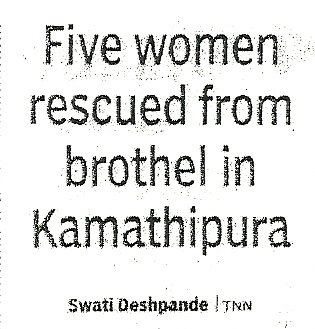
I received an e-mail this morning from a friend who is a champion for justice in South Asia. His e-mail rattled me. He attached a copy of a newspaper article featured in the Times of India entitled: Five women rescued from brothel in Kamathipura. But, that’s not what rattled me. The news story contained many of the same things I have read in other articles about women rescued from brothels. There are usually several common denominators in stories about women who are rescued. First: the use of deception. This news article said that the women who were rescued were “duped into coming to Mumbai” from poor villages. Traffickers often lure young girls away from their homes by promising them honest employment so that they can help support their poor families. These young girls then leave their homes with altruistic intentions only to discover too late that they have been duped by unscrupulous individuals whose “eyes are on the lookout for the helpless” (Ps. 10:8).

A second common denominator is the use of force. Injustice is essentially the abuse of power by those who are strong. Psalm 10:10 says of the wicked that “the helpless fall because of his strength.” The news article reported that one of the rescued women had been repeatedly beaten throughout her time in the brothel and another had been drugged in order to keep her compliant. These young girls “had been forced to serve between seven and thirteen customers every day” or between twenty-five hundred and forty-five hundred customers per year. Having sex with that many men multiplies each girl’s vulnerability to contracting and spreading sexually transmitted infections and diseases. These girls are robbed of more than their innocence, in many cases they are robbed of their futures.

A third common denominator is deprivation. The young girls who were rescued worked for payments ranging from 120 to 160 rupees per customer. At today’s exchange rate, these women earned the equivalent of between $2.50 to $3.50 dollars per customer per day. On a good day these girls earned their captors about $40.00 dollars by being raped for rupees. However, they were deprived of keeping any money at all. Instead all of the money they earned was kept by the three brothel keepers, all women. These girls who had left home with the intention of helping to support their families through honest employment ended up with nothing, including the inability to communicate with their families. Imagine the agony that the families of each of these girls experienced not knowing what had happened to their daughters.

But, the thing that rattled me the most about this article was that these girls had been forced to live in filthy 64 square-foot rooms “without access to sunlight for as many as seven years.” That is the ultimate expression of the cruelty that these girls were forced to endure. Wherever you find darkness you will find despair. Even criminals in the worst prisons are allowed access to sunlight. The three women who were arrested for running this brothel used darkness to keep their young victims tethered to despair. I have to be honest and confess that a part of me hopes that these cruel brothel keepers are sentenced to seven years of darkness for their treatment of and crimes against these young girls. That probably won’t happen. According to police sources in Mumbai, the conviction rate of traffickers is only about 2%. But, I pray that things will change and that the punishment of the three brothel keepers will send a strong message that will strike terror in the hearts of all those who are engaged in similar activity.

Please pray for the five rescued girls who now reside at a government-run aftercare home in Chembur. Pray that their hearts will readjust to the light and be filled with hope. And, pray for those champions of justice who are committed to delivering girls from darkness and bringing them into the light. Without the commitment of people who are willing to venture into depraved places, many young girls will continue to suffer all kinds of indignities in the dark. Those of us who enjoy the warmth of the sun every day must not forget those who suffer in the dark.
Posted by: Omar C. Garcia | October 30, 2010

Love’s Facial Tattoos

I love the nations — the peoples of the world. My interest in the nations started when I was a kid. There was no way to avoid it. I grew up in a family of travelers. My earliest childhood memories are of looking at travel slides and photos, asking questions about bric-a-brac from around the world, listening to stories about travels to exotic places, and perusing the pages of National Geographic. While other kids collected baseball cards I collected travel brochures and maps. I have fond memories of family gatherings to look at slides of far-away places and the peoples who live there. From those early years to today, I enjoy learning about other cultures and peoples. I am especially fascinated by faces. You can learn a lot about people by looking intentionally at the geography of their faces.

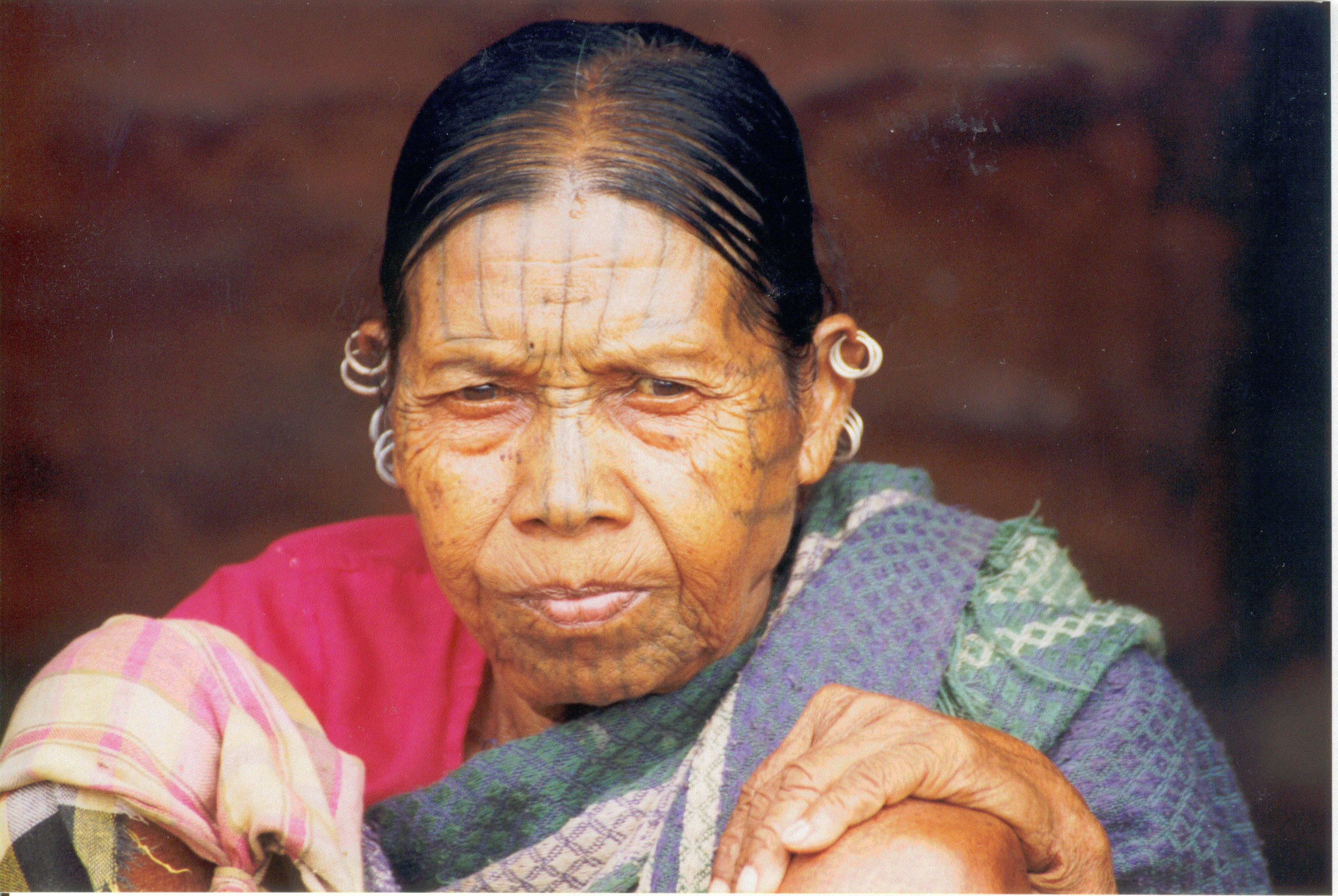
Earlier this month I returned to the Khondhamal Hills in the state of Orissa in India. For whatever reason, I love the faces of the tribal peoples in this area. When I first visited Orissa in 1998, my friend Calvin Fox, a Christian agriculturalist, talked to me and my friends about the tribal peoples who live in the thickly forested hills. Calvin loved these people and was committed to teaching them how to increase the yield on their sloping fields. We were fortunate to have Calvin as our guide as we walked slowly through the villages. The experience was like entering the glossy pages of a National Geographic magazine. While walking through one village, I noticed an old woman with a tattooed face and asked her for permission to take her photograph. She consented. Her photo is one of my favorites among the twenty-plus thousand photos I have taken on my travels.

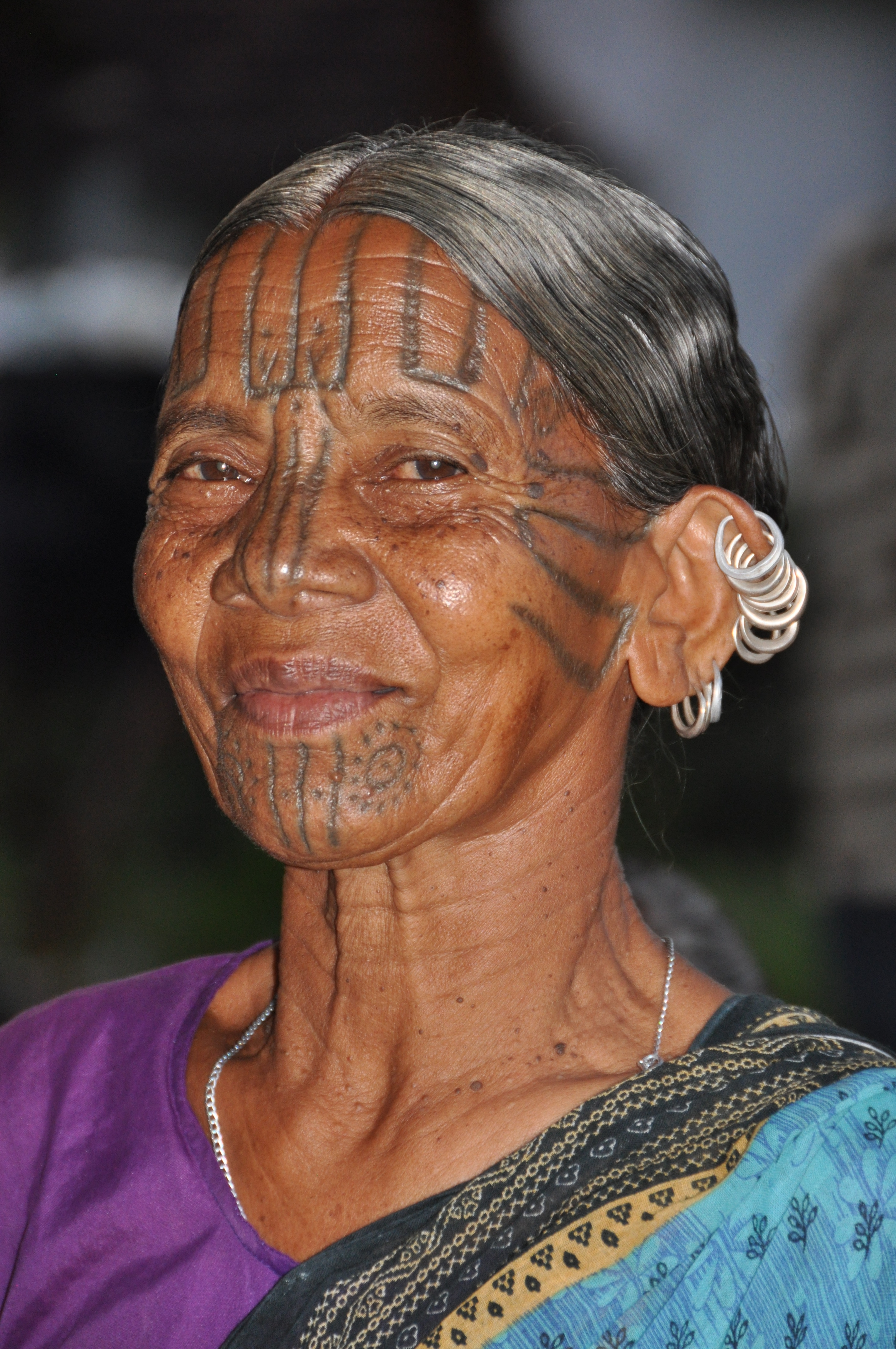
One thing that makes the faces of the tribal peoples of the Khondhamal Hills so interesting are the tattoos on the faces of the women. Although the practice is dying out, these tattoos have an interesting history. Calvin explained that one reason parents tattooed their daughters was to frustrate the plans of those who kidnapped and took their girls to other areas. The tattoos made these Kondh girls readily identifiable. The tribal peoples also believe that the identification value of the tattoos extends to the afterlife, making it easier for them to identify each other in the spirit world. Others believe that the tattoos are a symbol of chastity or a means to protect their daughters from malevolent deities.

In a world where so many girls are treated with little or no dignity and respect, the faces of Kondh women tell a different story. These women bear visible marks of love, meant to identify and to protect them from those who would do them harm. We can learn from this practice among Orissa’s tribal peoples. While we do not have to mark the faces of our daughters with tattoos, we should indelibly mark their hearts with our love, concern, and determination to protect them from harm. These inner markings can serve our daughters for a lifetime — protecting them from those who would seek to take advantage of them and making them readily identifiable as those made in God’s image and worthy of respect.

Posted by: Omar C. Garcia | October 27, 2010

When Justice is Done

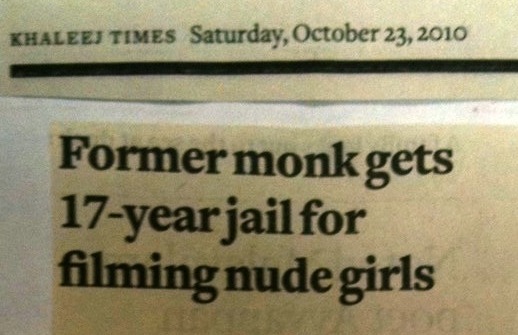
Before boarding my flight home from Dubai last Saturday, I picked up a copy of the Khaleej Times — the English language newspaper published in the UAE. As I leafed through the pages of the newspaper, I came across an article that caught my attention: Former monk gets 17-year jail for filming nude girls. The story was about a thirty-seven year-old Buddhist monk from Cambodia who had secretly filmed two teenage girls as they bathed naked at a temple and more than six-hundred women doing the same. This high-tech monk then shared the footage with others via mobile phones. I have seen lots of Buddhist monks on my travels throughout Asia, many of whom had mobile phones. It is somewhat ironic to see these ochre-clad mendicants chatting on mobile phones — a questionable practice for those who are not supposed to own anything.

As for the peeping-monk, a Phnom Penh court handed him a stiff sentence for producing and distributing pornography. The court also ordered him to pay compensation to his young victims. The prosecutor said, “This sentence will serve as a key message to educate both ordinary and religious people in our society to stay away from such activities.” I applaud the Cambodian court for their decision and pray that they will go after some bigger game as well. Cambodia is a source, transit, and destination country for modern-day slaves — men, women and children sold into the sex trade. Some non-government organizations estimate that as many as 50,000 to 100,000 women and children are at risk in Cambodia, a popular destination for those seeking sex with children.

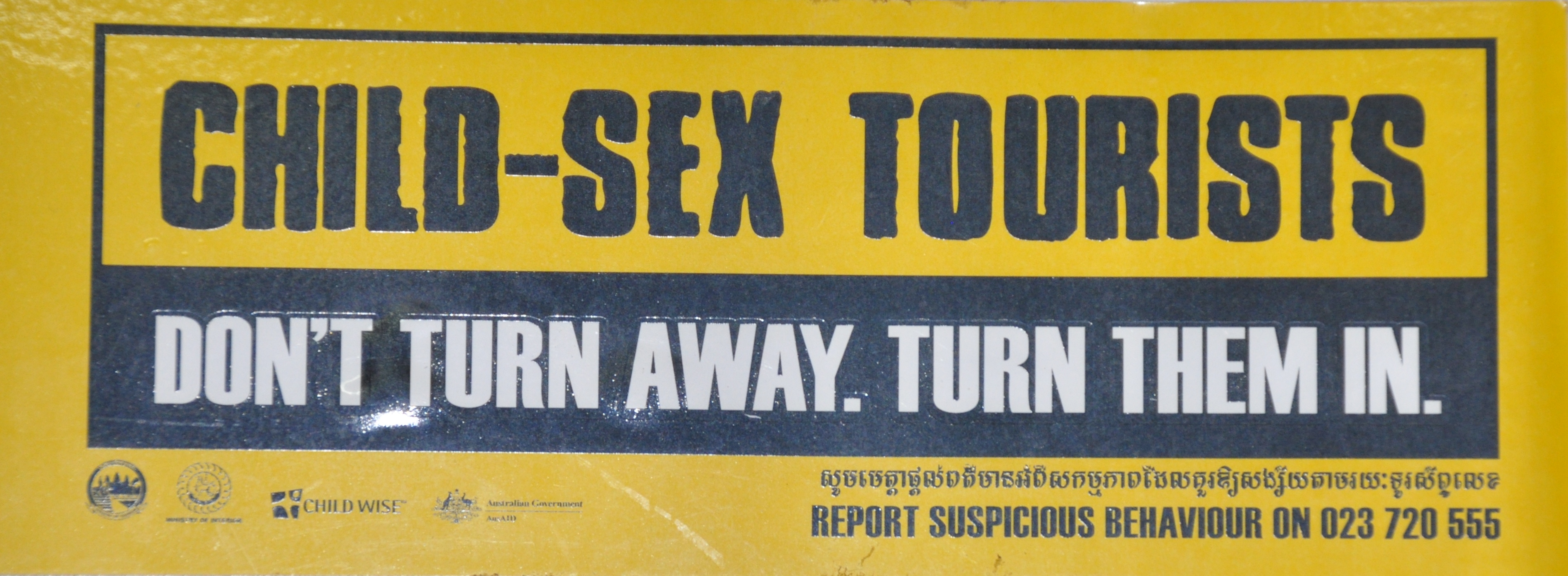
Cambodia has a long way to go in the fight against human trafficking. Corruption among some law enforcement and government officials make this fight even more difficult. In recent years the government has successfully prosecuted several police officials for trafficking-related corruption charges. Each victory is a step in the right direction. While traveling from Siem Reap to Phnom Penh last year, I spent one night in a modest little hotel and was pleased to see a bright yellow bumper sticker affixed to the wall next to the door: Child-Sex Tourists | Don’t Turn Away. Turn Them In. I don’t underestimate what good may result from someone seeing a message like this and reporting suspicious activity. When it comes to the fight against human trafficking, every small step in the right direction can lead to more victories for justice.

With more than half the population of Cambodia below the age of twenty, this Buddhist country faces some serious challenges to protect its young population from the dangers of human trafficking. Laws in Cambodia must be strengthened in order to protect victims and punish slaveholders. And, provision must be made to protect those who are the most vulnerable to being kidnapped and trafficked for sex and labor. No child should suffer the indignity of having their privacy violated by voyeurs or having their innocence stolen by sex-tourists.  I hope that the story of the peeping-monk and other victories for justice send a message to evildoers and cause them to think twice. “When justice is done, it is a joy for the righteous but terror to evildoers” (Prov. 21:15).

Posted by: Omar C. Garcia | October 22, 2010

Many Grateful Smiles

Khondhamal Hills | Orissa, India | 19-20 October 2010

Late yesterday morning, we hauled our footlockers laden with dental supplies to the Moorshead Memorial Christian Hospital. British missionaries built this hospital in 1936 to provide medical care for the tribal peoples of the Khondhamal Hills. I first visited this hospital in 1998 with my late friend Calvin Fox, a Christian agriculturalist who loved the tribal peoples of Orissa. The hospital showed its age back then and shows it a bit more today. But, it’s the go-to place for folks in need of medical care. Despite the challenges of working in an old facility with limited resources, the medical staff here is dedicated to providing their patients with the best care possible.

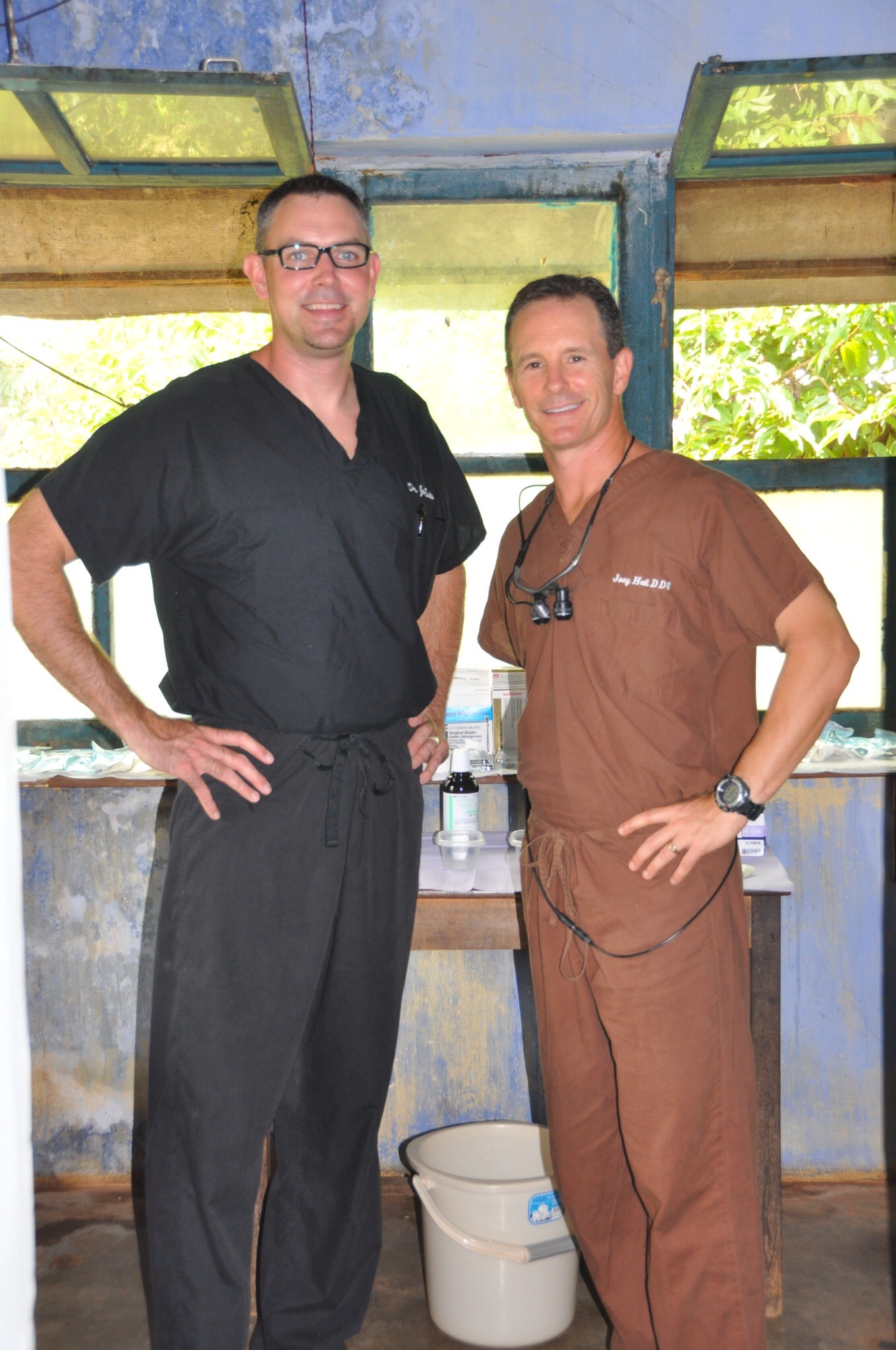
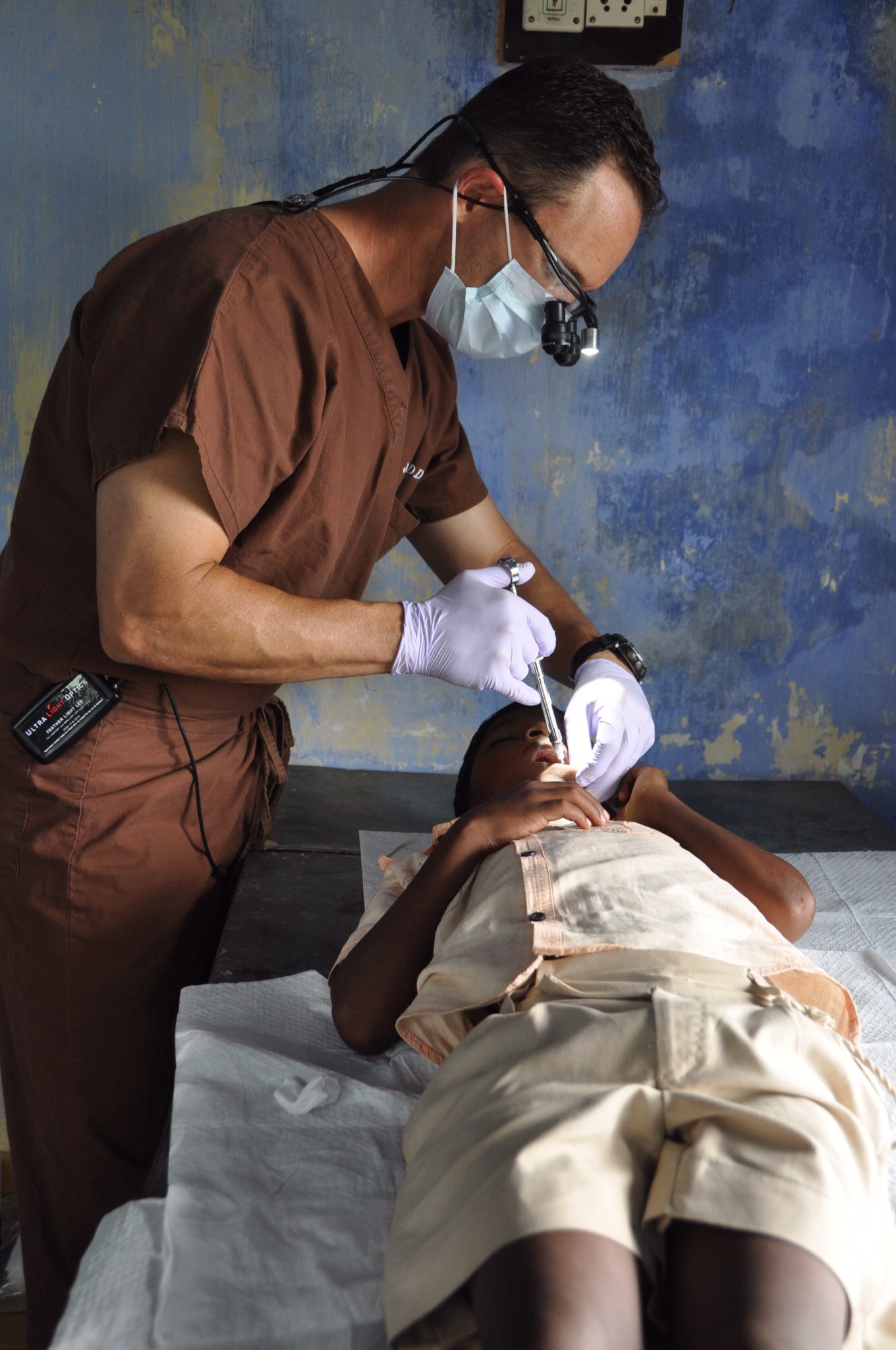
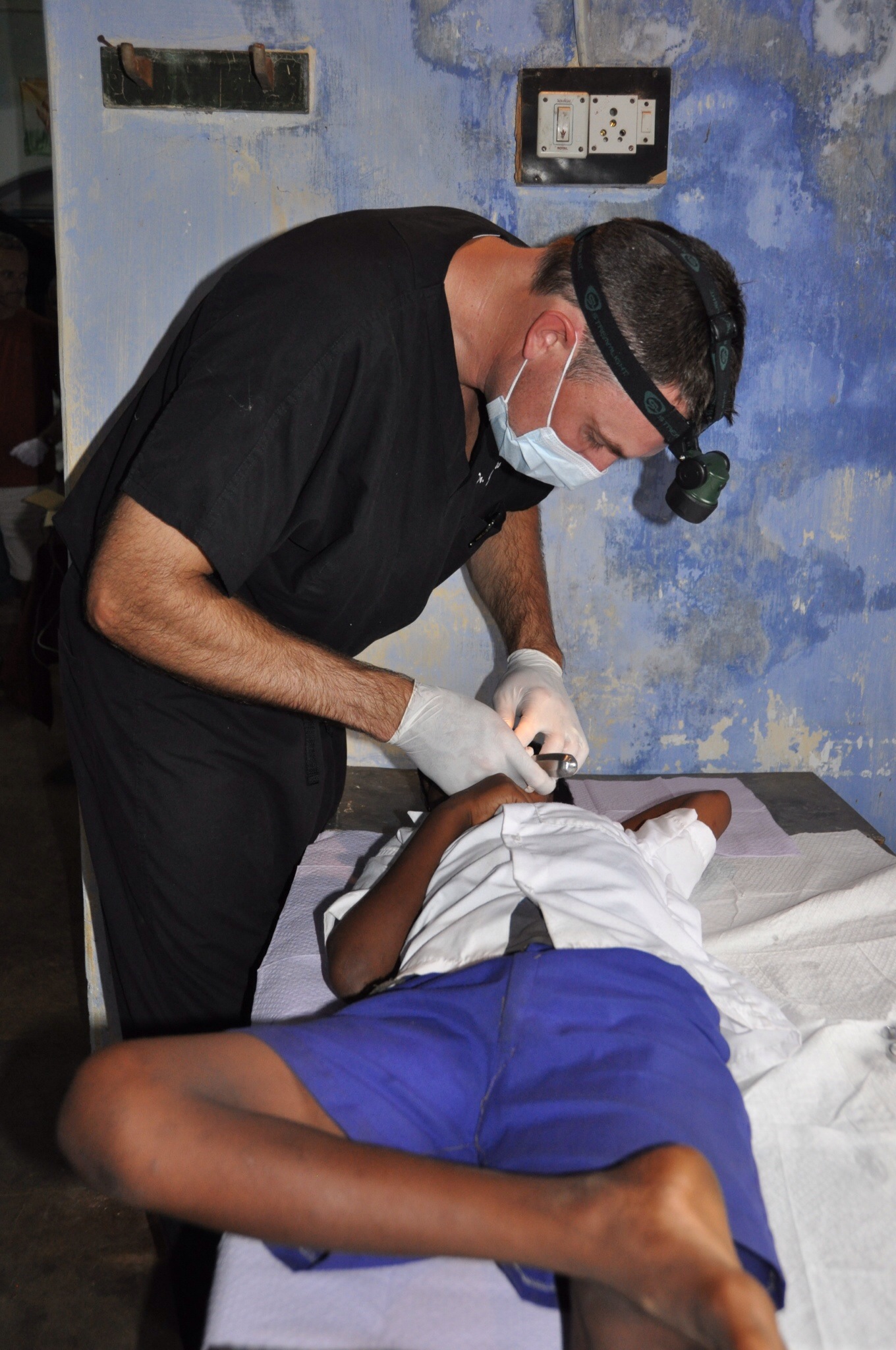
Dr. Estes & Dr. HallThe hospital administrators and staff welcomed us with open arms — presenting each of us with flowers and a beautiful welcome song. Following the greeting ceremony, we worked together to set up our dental clinic. We had to improvise and come up with some creative solutions in order to get some things done, but within an hour we were ready to see the first patient. Dr. Hall and Dr. Estes set up a dental triage system and then started receiving patients. Ironically, our first patient was the first boy that Mr. Naik enrolled in our boarding school several years ago. This young man was in quite a bit of pain and had three of his wisdom teeth extracted. Once the procedure was over he hopped off the table, nodded his head in appreciation, and went out to join the other boys — all eager to hear every detail about the procedure.

Doyle and I served as dental assistants, sterilized the dental instruments, and acted as gate-keepers. The rest of the day was non-stop. After addressing the needs of the boys, we welcomed the people of the surrounding villages. Our team worked until darkness prevented us from seeing another patient. The rolling blackouts in the area plus the absence of working light fixtures made it a challenge for our doctors to work. So, we called it a day and put things in order for an early start on Wednesday morning, satisfied that we had helped almost thirty people suffering discomfort from broken, infected, and diseased teeth.

Dr. Joey Hall

Wednesday morning came early. By the time we reached the hospital, word about the dental clinic had spread to the surrounding areas. People arrived early in the hope of seeing one of our dentists. Once again, Dr. Hall and Dr. Estes examined those waiting and proceeded to tackle the worst cases. These two men worked on their feet all day, seeing patient after patient. They never took a break. Our final patient was a woman who had walked more than thirty-miles to the clinic with her baby. She had an abscessed tooth that had formed a protruding pocket of pus in her jaw. As soon as the infected tooth was extracted the poison in her jaw seeped out, giving her immediate relief and very possibly saving her life. With no remaining light to continue working, we had to turn away almost eighty-people.

Dr. Joe Estes

Dr. Hall and Dr. Estes worked in less than ideal conditions and helped more than seventy people in a great deal of pain. The most difficult part of this kind of initiative is dealing with constraints of time. We had only so much time in which to care for the boys of our boarding school and the people of the area. But, even those who were turned away did not complain. Our doctors gave antibiotics to as many as needed medicine and also gave toothbrushes to all. We hope to return again to offer the people of the Khondhamal Hills dental care — a practical expression of God’s love. It was great to tell folks that we had come to help because we love God and love people. Over the past couple of days, we enjoyed seeing the smiles of those we helped, even if many of those smiles were missing a tooth or two and filled with gauze. No problem. Gratitude always has a way of shining through.

Posted by: Omar C. Garcia | October 20, 2010

Expecting Great Things

Khondhamal Hills | Orissa, India | 19 October 2010

A couple of days ago I flew from Cambodia to India to meet Doyle Lowry, our executive pastor, and Kingsland members Dr. Hall and Dr. Estes. Yesterday, we flew from Kolkata to Bhubaneswar and then drove several hours into the Khondhamal Hills of Orissa. Our drive took us from the coastal plain into hills hidden beneath lush green comforters of vegetation. When we arrived at our destination, the boys at our boarding school welcomed us with garlands of flowers – a common gesture of hospitality in this region. We have come to offer dental care for our boys and the folks of the area and to check on the progress of construction of the school campus that we are underwriting

Dormitory Under Construction

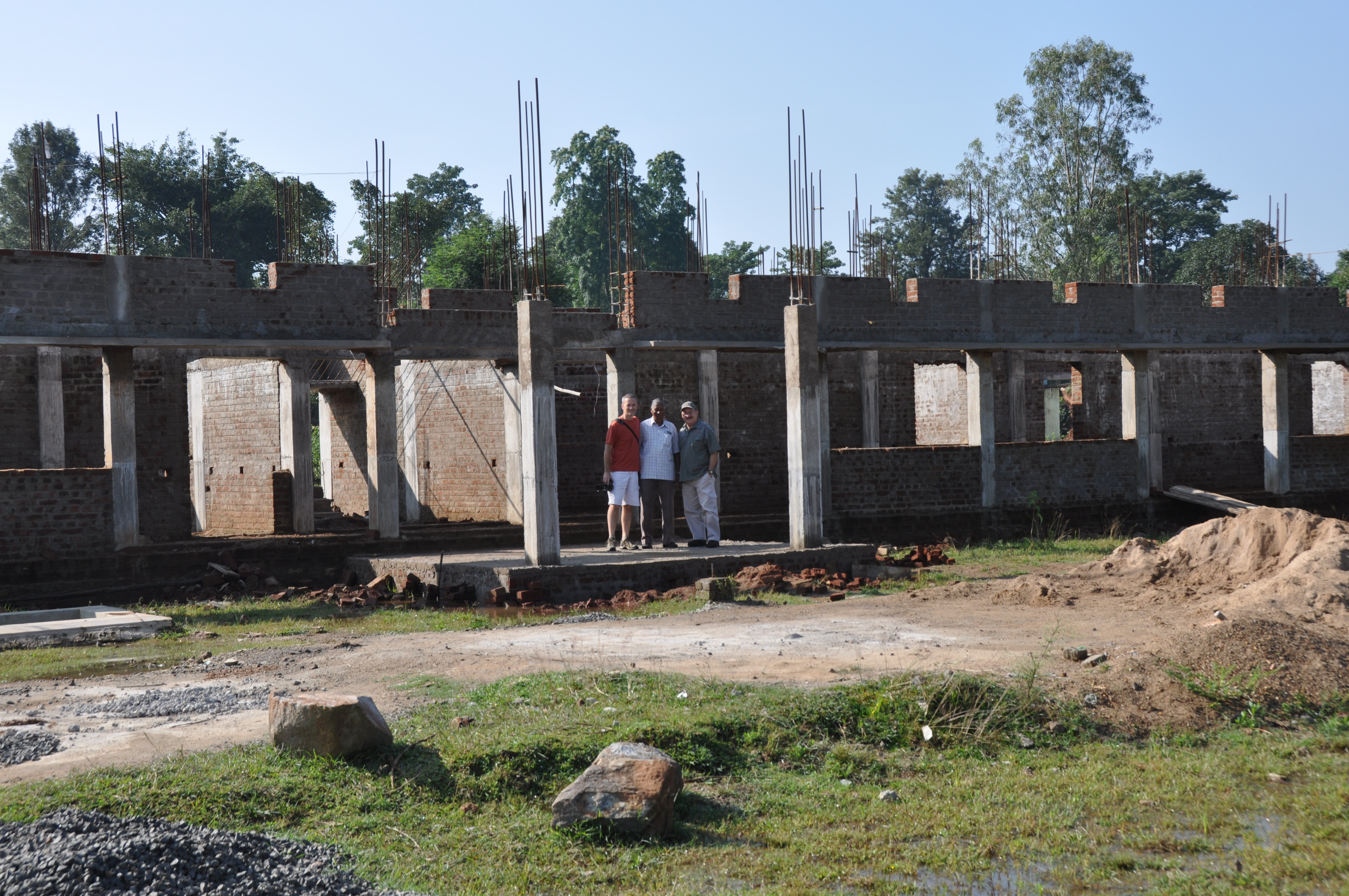
Our first order of business on Tuesday morning was to visit the campus where we are constructing a 6300 square foot dormitory plus a kitchen and dining hall. The last time that Doyle and I were here, we broke ground for the start of construction and dedicated the campus to the glory of God. I have tracked the progress of construction via e-mail and photos sent by Reverend Naik, the director of our school. Over the past several months I have been anxious to see the progress for myself. I was not disappointed when we drove to the site. Here in the middle of a region where Christians have suffered the worst persecution in India in recent years stood a symbol of hope – a place where young boys will be educated to love God and to unconditionally love and serve people.

We walked slowly around the campus and talked about how God has already used this initiative to provide employment for so many people in the area. And, standing in the unfinished dorm rooms, we envisioned what it will be like for our boys to sleep in their own bed for the very first time. Some of our boys are orphans and others are from very poor families. None have ever slept in a bed of their own. Our boys currently sleep on a concrete floor – two to a blanket. We also looked at the room that will serve as the computer room and library and where our boys will gather for their evening devotions and prayer time. This campus will be a place where young boys will be equipped to become godly men who will be able to articulate and to live according to a biblical worldview.

Our school director told us that the construction of the campus has people in the area talking. “They are expecting great things,” he said. Folks can already see that this initiative is marked by a commitment to excellence and a determination to equip a generation of young men to stand firm for their faith and to treat others with dignity and respect. The school also represents something that will have permanence in this area for generations to come. Many of the initiatives launched by British missionaries more than a hundred years ago continue to benefit the people of the area. Tomorrow we will set up our dental clinic in a hospital built by British missionaries in 1936. My personal prayer and great expectation is that our school will be a place where future generations will continue to be equipped to love God and to unconditionally love and serve others.

Posted by: Omar C. Garcia | October 17, 2010

Imparting Smiles

Poipet, Cambodia | 14 October 2010

I first visited Poipet on a dreary, overcast day in the Fall of last year. The dark gray clouds and misting rain deepened the sense of despair that seems to have this place in a death-grip. Located on the border between Cambodia and Thailand, Poipet is strategically poised to become a major gateway between these two Buddhist nations. This once backwater town has seen exponential growth in recent years. A major attraction to the area is the Las Vegas-styled casinos that have been built in the no-man’s land between border check-points. However, these casinos have attracted more than gamblers, they have also attracted those who traffic in sex and drugs. And, as many as 100,000 poor Cambodians have come to Poipet in search of a better future.

The deluge of poor people who have poured into Poipet have strained the already inadequate infrastructure of the town beyond capacity. Multiplied thousands of these people live in a makeshift slum community that stretches for miles. As many as 40,000 of those who have come here in search of employment cross the border into Thailand daily in search of day-labor. Because no child-care is available, these mothers and fathers leave their children unattended during the day and sometimes for days at a time. In some cases, parents never return. The unattended children are vulnerable to being kidnapped and trafficked for sex and labor or to abuse at the hands of unscrupulous individuals in the slum community.

For lack of a better term, Poipet has become the Devil’s toilet. There are more reasons to avoid this place than there are to compel people to come here. One travel guide said that if you spend ten minutes in Poipet you have stayed five minutes too long. But, my friend Steve Hyde, the Director of Asia for Jesus, is prepared to invest a lifetime of minutes here. Where others see danger, Steve sees opportunity for the kingdom of God. The Buddhist governor of Bantaey Meancheay Province heard of Steve’s work with orphans and at-risk kids and invited him to care for the children of Poipet. He even provided the land for Steve to build on.

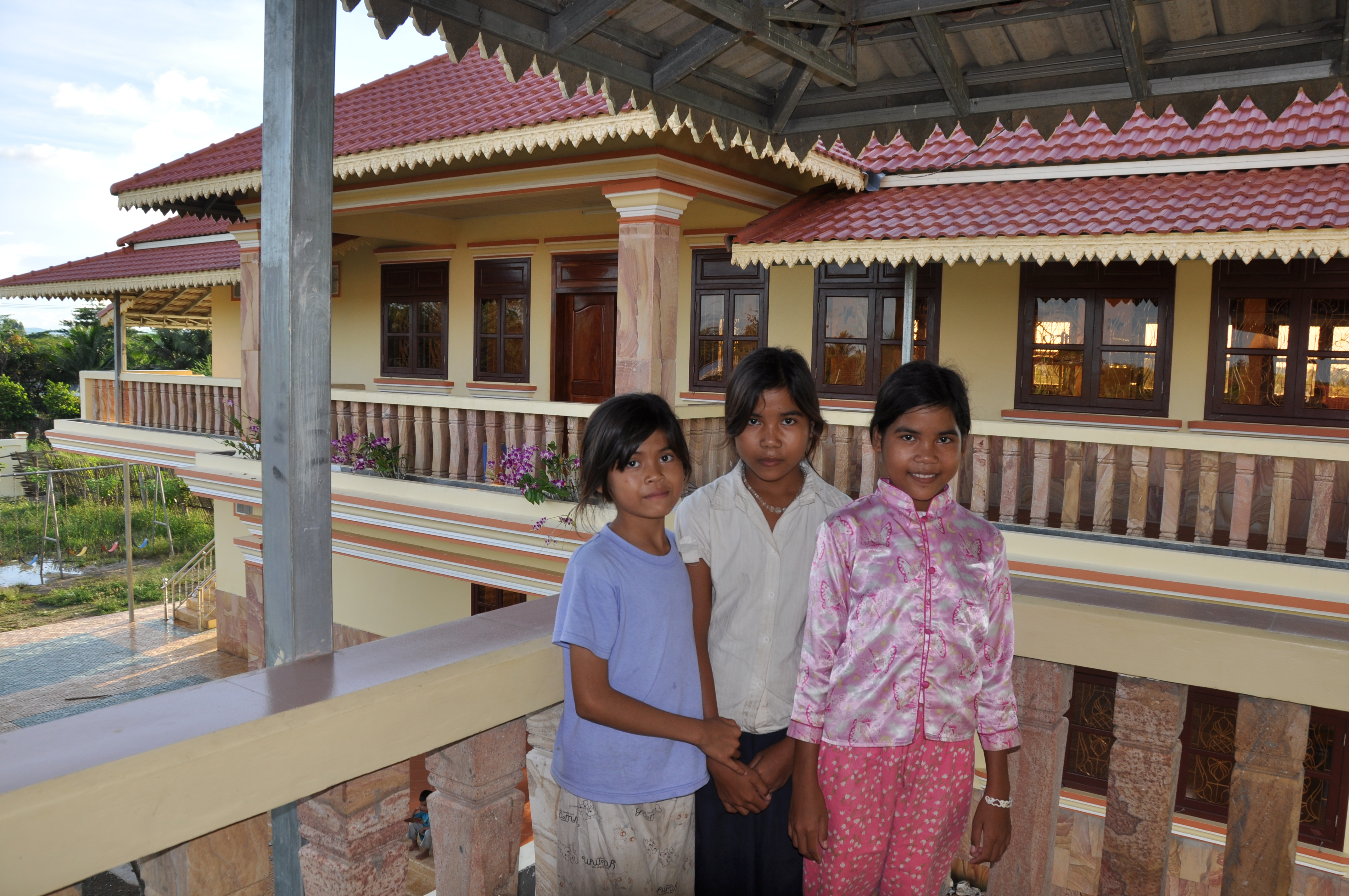
Steve recently completed the first two buildings to house orphans and at-risk kids in the area. The buildings are large and spacious and built in a beautiful Cambodian-style architecture. There are almost fifty kids in residence and under the care of some wonderful house-parents. These kids have a safe and clean home to live in, are receiving a good education from a full-time teacher, and are learning about Jesus. The name of this children’s center is “Imparting Smiles” — a perfect name for this island of hope located in Poipet’s sea of despair.

Through a generous gift from a Kingsland member, Steve hopes to purchase additional land to build a larger facility that will specifically care for the children of Poipet’s day-laborers. These children will have a safe place to stay while their parents look for work. And, they will also have an opportunity to receive an education. Steve has a big vision for these children and is determined to see it become a reality. We need more guys like Steve Hyde working to bring the hope of Jesus to people who live in places like Poipet — difficult and dangerous places. God is using Steve and his wife Noit to change the faces of Poipet, one smile at a time. To learn more about how you can help Steve to impart smiles, visit the Imparting Smiles website.

Posted by: Omar C. Garcia | October 14, 2010

Chum Mey’s Mission

Tuol Sleng Genocide Museum | Phnom Penh, Cambodia | 13 October 2010

Chum Mey was in his late forties when the ultra-communist Khmer Rouge arrested and detained him and his family at Security Office 21 — a school converted into a center for the detention, interrogation, and torture of those deemed a threat to Democratic Kampuchea. By some estimates, as many as 20,000 men, women, and children were killed at S-21. Those who entered through the gates of S-21 found themselves in a lose-lose situation. The Khmer Rouge’s regulations made hope of survival impossible. Today, these regulations are posted at Tuol Sleng or S-21. Imagine yourself having to abide by the following regulations (as posted at Tuol Sleng, unedited):

1. You must answer accordingly to my questions. You must not turn them away.

2.
Don’t try to hide the facts by making pretexts this and that. You are strictly prohibited to contest me.

3. Don’t be fool for you are a chap who dare to thwart the revolution.

4. You must immediately answer my questions without wasting time to reelect.

5.
Don’t tell me either about your immoralities or the essence of the revolution.


6.
While getting lashes or electrification you must not cry at all.


7.
Do nothing, sit still and wait for my orders. If there is no order, keep quiet,when I ask you to do something, you must do it right away without protesting.


8.
Don’t make pretext about Kamouchea Krom in order to hide your secret or traitor.


9.
If you don’t follow all the above rules, you shall get many lashes of electric wire.


10.
If you disobey any point of my regulations you shall get either ten lashes or five shocks of electric discharge.

The interrogation process was slanted toward the side of death. The Khmer Rouge needed little excuse to torture or to kill detainees. A friend who survived imprisonment at another location spoke to me about the capricious nature of the interrogators. He told me that even a “right” answer was no guarantee that you would be released. And so, in a period of three years, more than two-million Cambodians were brutally tortured and killed at the hands of other Cambodians. Of the thousands who were detained at S-21, only seven survived. Today, Chum Mey is one of only three remaining survivors.

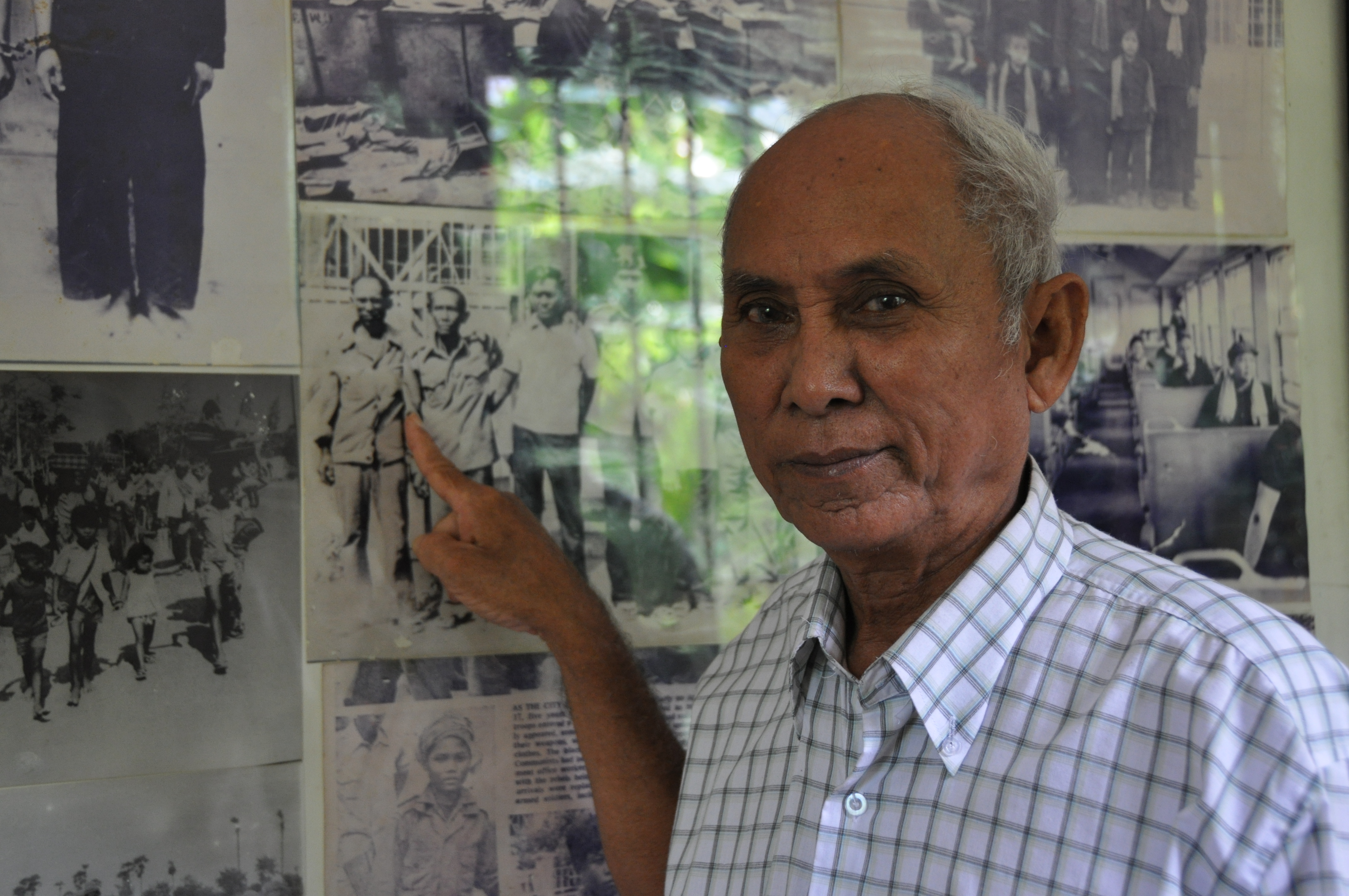
I met Chum Mey when I visited S-21 in August of last year. He is a quiet men with a gentle but sad countenance. He lives in Phnom Penh and returns to S-21 several times a week to tell his story. He speaks just above a whisper in one of the rooms where an old black and white photograph of him and the other survivors is on display. I had an opportunity to meet him again this week. With the assistance of Karony, my interpreter, I learned a little more of Chum Mey’s story. Standing in a corner of the room, he shared that his wife and four children died at the hands of the Khmer Rouge. As he spoke, I looked over at a young British girl who was listening to our conversation. She was weeping.

My heart sank when Chum Mey talked about his family. Because of the brutality of the Khmer Rouge, Chum Mey is an 89-year old orphan in every sense of the word. He has been alone for the past forty years, robbed of the opportunity to grow old with his wife and to bounce grandchildren on his knee. He has no one. For the past forty years he has returned to the place where he was tortured and where he lost his family. He returns to this sad place in order to tell his personal story to visitors from around the world. This has been his consuming mission, passion, and purpose in life. As we said our good-byes he said one final thing— “Please tell others what happened here so that it will not happen again.” I promised him that I would.

Chum Mey has been on a mission for the past forty years — a mission to promote the sanctity of human life. He personally knows what can happen when you live in a place where those in power have no regard for the value of life. He has thought about it for forty-years of lonely nights and eating meals alone in a quiet house. He is motivated to get up every morning to use his voice to tell a story that must be told again and again. Speaking to audiences of one and two or a few at a time, he has repeated his story countless times. As Christ-followers, we too have a story to tell — the story that life is a precious gift from God and should be handled with love and care. May we be as intentional and faithful to tell our story as Chum Mey has been to tell his.

Posted by: Omar C. Garcia | October 11, 2010

The Killing Tree

Phnom Penh, Cambodia

I am in Cambodia with a team from Life International to assist in training church leaders about the sanctity of human life. Five years ago, Kingsland’s missions ministry worked with Life International to start a pregnancy help center in Kampala, Uganda. This center has played a key role in working with churches in Uganda to spread the message of life. Over the past five years, more than nine-hundred women who have visited the center have chosen to keep their babies. We are working with Life International once again and Steve Hyde of Asia for Jesus to start a pregnancy help center and to spread the message of life in Cambodia.

Cambodia’s recent history is saturated with the blood of more than two-million of its own people who died at the hands of Pol Pot’s Khmer Rouge. The evidence of this heinous crime is still here — preserved at places like Security Office 21 and killing fields around the country. However, the evidence is also preserved in the memories of those who survived that terrible period or lost family and friends during the Pol Pot years. This morning, as I was teaching about why world-view is important, I talked about Pol Pot’s world-view. Pol Pot and the Khmer Rouge had no regard for the sanctity of human life. As a result many Cambodians suffered and died at the hands of the Khmer Rouge. By a show of hands, I learned that almost everyone in the room had been personally impacted by the nightmare that Pol Pot unleashed on Cambodia more than thirty-years ago.

During a teaching break this afternoon, I took my friends Mary and Sandy to Security Office 21, located just ten-minutes from where we are teaching. I gave them a quick tour of this interrogation center where many people were sentenced to death and where many of those who were tortured died. It was a sobering experience. Because the Khmer Rouge took so many photographs of the people they tortured and killed, there is ample evidence of what can happen when those in power have no respect for the sanctity of human life.

Today was my third visit to S-21 but the first time that I noticed two small paintings on display in one of the rooms. These paintings depict the fate of the babies whose mothers were tortured and killed by the Khmer Rouge. One painting depicts the infamous killing tree located at the Choeung Ek Genocidal Center, one of the many killing fields in the country. There is a sign in front of this tree with these sobering words: “Killing Tree Against Which Executioners Beat Children.” Pol Pot’s henchmen took small children from their mothers and smashed them against the killing tree. The other painting depicts the Khmer Rouge tossing babies up in the air and then shooting them. To save ammunition, they also tossed babies in the air and impaled them on the bayonets on their rifles. This is the ultimate depraved expression of where disrespect for human life can lead.

These two sobering paintings offer a glimpse into what was a horrific period for Cambodians and illustrate why what we believe about the sanctity of human life matters. When it comes to the sanctity of human life, Christ-followers must side with life, stand against death, and fight for justice. It is not enough to say that we are passionate about matters of injustice and then do nothing. Passion must lead to action on behalf of the weak and oppressed. We must continue to work toward the day when the womb is no longer a killing field. Anything less is a betrayal of our Christian worldview.

Posted by: Omar C. Garcia | October 10, 2010

Simple Worship

Phnom Penh, Cambodia

Cambodian Worship

One thing I enjoy most about traveling around the world is the opportunity to worship with Christ-followers in other countries. Over the years I have experienced worship on the steppes of Mongolia, in the African bush, in house churches in China, with persecuted believers in India, in small groups in Kashmir, with Muslim-background believers in Bangladesh, near displacement camps in Darfur, with Spanish-speakers in Mexico and Central and South America, on the island of Trinidad, with the international community in Dubai, among the Kurds in northern Iraq, with prisoners in Cambodia, quietly and in secret in Morocco, in old buildings in Ukraine, and a few other places.

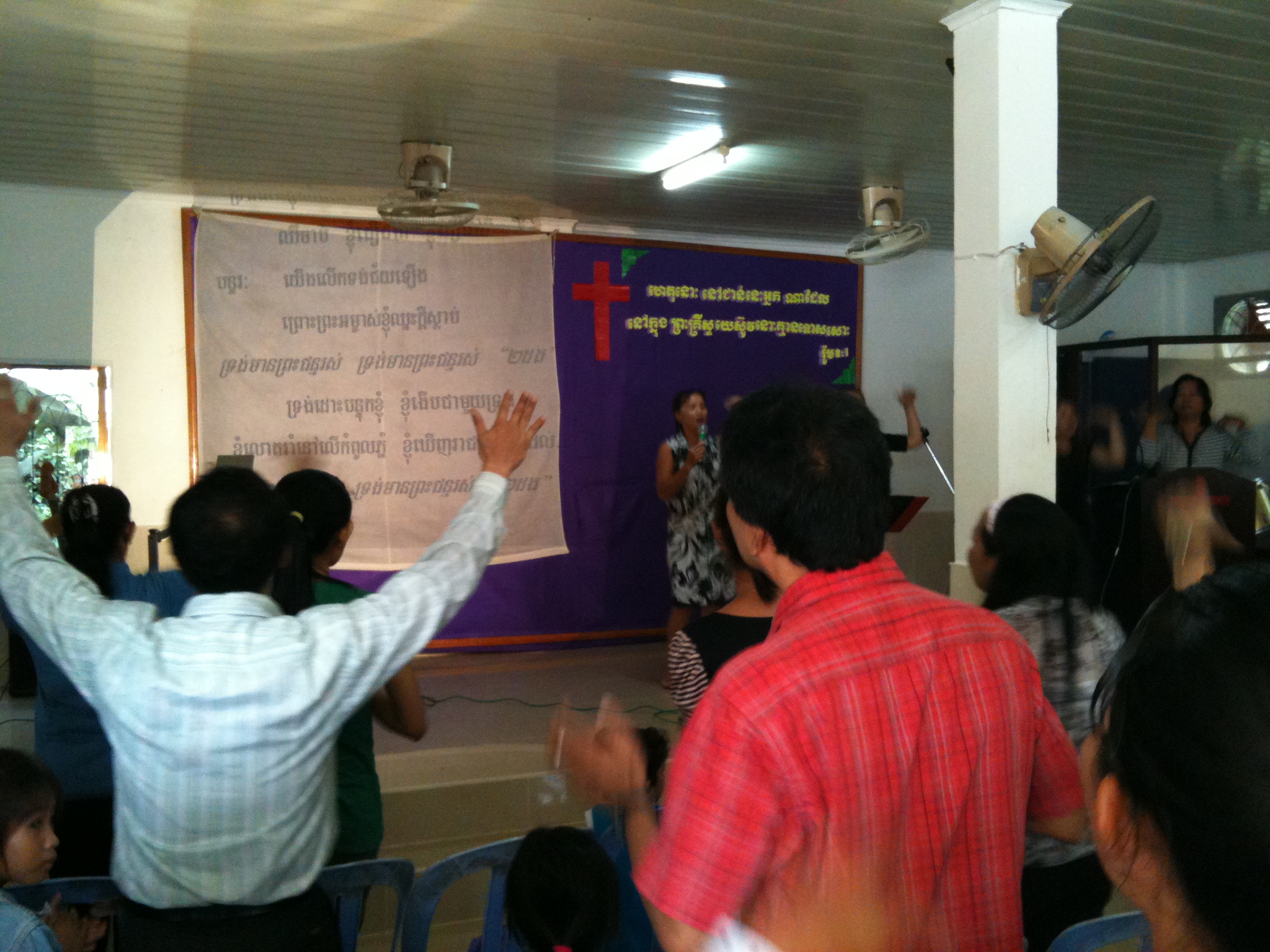
This morning, I had the opportunity to worship with believers in Phnom Penh. There is a simplicity and purity that characterizes worship in so many of the places I visit, including Cambodia. Here are a few observations about today’s worship experience.

W = The Word of God plays a central role in worship here. Scripture passages and sermon outlines are not conveniently displayed on large screens. The absence of technology and PowerPoint means that people must actually use their Bibles. And, nobody seems to mind long Scripture readings or long sermons. Years ago I preached for more than an hour (two-hours with translation) in a church in Ukraine. When I finished, the pastor thanked me but said that the people had walked long distances and had come for more than a one-hour sermon. So, he preached for another two hours. The Cambodians must be related to the Ukrainians because they don’t seem to mind long sermons and lots of Scripture readings.

O = There is an openness in worship here. This morning, one lady left the comfort of her hard plastic chair during a worship song and began to praise God in the aisle. Soon, everyone was in the aisles with outstretched hands. No embarrassment because everyone was focused on praising God.

R = The order of worship here is flexible and the leaders are responsive to the leading of the Holy Spirit. This morning, things changed when the church leaders noticed many unbelievers seated in the congregation. Instead of proceeding with Plan A, they adjusted and abandoned the sermon for a simple presentation of the gospel. As a result, some of those in attendance came to faith in Christ.

S = I love to hear people sing songs of praise. Even though I can’t always understand the words, I can understand the heart. It’s inspiring to look at the faces of those who are singing, knowing that they are expressing their praise to the same God who loves us and sent His Son to redeem us.

H = People come to worship with the expectation that they will receive mercy and find grace to help them in their time of need. This morning a woman who was deaf in one ear asked for prayer. And, this morning she was healed. No fanfare. Folks here have no health benefits, no steady income, and no bank accounts. When they have a need they turn to God first and then watch expectantly for Him to answer. The once partially deaf lady was not disappointed this morning.

I = Worship here is an interactive experience. There is lots of interaction during worship. Nobody is bothered or distracted by the children playing in the aisles or beneath the hard plastic chairs. At the conclusion of the message, everyone is encouraged to ask those seated around them if they know Jesus. And, when folks walk forward to make a decision, others come forward to pray for them. There are many opportunities to interact with others in meaningful, helpful, and encouraging ways.

P = There is a freedom and openness in prayer during worship. When it is time to pray everyone prays aloud at the same time. What sounded like a cacophony to those of us in the room this morning was a symphony to God. He is able to sort out each request with no problem.

I enjoyed worshiping with Cambodian Christ-followers this morning. Experiences like this remind me that God is not an American. He is God and He loves the worship and praises of His people from every nation, tongue, and tribe.

Posted by: Omar C. Garcia | October 8, 2010

Champions of Light

Bangkok, Thailand

Earlier this year, I met one of the co-founders of NightLight International — a ministry that enables women and children to escape sexual exploitation by empowering them to live and work in community. NightLight’s mission is to build relationships with people involved in the sex industry, offer alternative employment and vocational and life-skills training, and provide physical, emotional and spiritual development to women seeking a way out of the commercial sex trade. Today, I visited NightLight in Bangkok along with Kingsland members Mary and Sandy. NightLight is located exactly where it should be located — the place where light is needed the most — in the heart of darkness. Although prostitution is not legal in Thailand, it is accepted by local authorities because of the billions of dollars it generates for the local economy.

NightLight’s offices are within walking distance of the sex tourism areas of Bangkok. By some estimates, 7 out of every 10 foreign men who travel to Thailand do so to engage in sex tourism. Men of all ages from all over the world travel to Bangkok to satisfy their every sexual fantasy. And, they are not disappointed. According to NightLight, there are services in some countries that offer sex tours to Thailand. Those who are not travel savvy can actually hire someone to guide them in their adventure into depravity. Experienced guides lead sex tourists to engage with women in beer bars (sports bar type of environment), Go-Go and show bars which feature nude dancers, massage parlors, hotels, escort services, and other venues. There is provision for every pocketbook from the wealthiest to the poorest.

There is high demand for prostitution and sexual services in Thailand. In addition to sex tourism, Thai men also contribute to the demand side of the equation. By some estimates, 80% of prostitution caters to them. With the demand as great as it is, there are never-ending opportunities for poor women to find employment as prostitutes in Bangkok and other cities in Thailand. And, the demand has created an opportunity for sex traffickers to lure women here from other countries. Many of the women who come here from other countries are immediately saddled with huge debt. They are kept locked up during the day and forced to work at night. Most of the money they make services their debt. These women are abused by their agents and some are killed. This is the world in which NightLight works to bring hope and to offer women a way out.

One of the practical way in which NightLight helps women to leave the commercial sex trade is by offering them employment. The women of NightLight make beautiful jewelry which is sold around the world. The women earn a modest income and enjoy benefits such as medical insurance and child care services. They work in a loving environment that enables them to heal and to make a new start. All of the women that we met today were polite, welcomed us with smiles, and thanked us for our interest in their welfare. Many of the women at NightLight have found new hope in Jesus Christ and are determined to never return to a life of abuse and exploitation. As we toured the facilities, we could hear one group of women singing praise songs, a beautiful reminder of the transforming power of the gospel — new creatures singing a new song.

The ministry of NightLight is much more extensive than what I have described here. To learn more about NightLight and how you can pray for and support their life-changing work, please visit their website. Sign up to receive their prayer letters and determine to pray faithfully for the girls and for the staff who care for them. You can also purchase NightLight jewelry or make a donation that can help them to continue their work as champions of light in the dark work of prostitution.

« Newer Posts - Older Posts »

Categories