Posted by: Omar C. Garcia | April 3, 2011

On Cleaning Toilets

Islamabad, Pakistan

The day after I arrived in Islamabad last week I visited with the president of the Zarephath Bible Institute in Rawalpindi. Over the past twenty-five years, this institution has equipped hundreds of Pakistani nationals to advance God’s purposes in Pakistan. Theological education of national workers is essential to advancing the interests of God’s kingdom throughout the 10/40 Window. I am a firm believer that sound doctrine is the best antidote to false doctrine. Over the coming months, Kingsland’s missions ministry will invest funds to add two-thousand volumes to ZBI’s theological library. These volumes, along with those they already own, will make the theological library at ZBI one of the largest in South Asia. While at the institute I also had the privilege of speaking to the faculty and students at their chapel service. As a result I received an invitation to speak on Sunday at the fastest growing Pentecostal church in Pakistan.

Later in the week I received a phone call informing me that the church where I would speak was celebrating their sixth anniversary on Sunday. “You should be prepared to say something about this when you speak,” said the caller. No problem. I learned a long time ago to be prepared for things like this. An ex-pat friend who is visiting Islamabad accompanied me to the service. I really did not know what to expect in terms of numbers but was pleasantly surprised to find a packed house when we arrived. The service started at 10:00 AM and ended sometime after 2:00 PM. Wow! What an incredible high-energy service. I love opportunities like this because they remind me of what it will be like when the redeemed “from every tribe and language and people and nation” (Rev. 5:9) are assembled around the throne of God.

Immediately after the service, I was approached by several people who asked for prayer for healing. These are individuals who either do not have access to medical care or cannot afford it but who know that they can rely upon God to help and heal them. It was a privilege to intercede for each of these precious souls. The pastor and his staff then invited us to join them for lunch. This gave us an opportunity to hear more of the remarkable story of the growth of this six-year old church. My ex-pat friend asked the senior pastor this question: “How do you stay humble in light of the fact that you are experiencing remarkable growth at a time when Christians are persecuted and churches burned in Pakistan?” The pastor smiled and replied that he and his staff do three things to keep things in proper perspective and to not think more highly of themselves than they ought. First, they pray together. Second, they observe periods of fasting together. And third, they clean the toilets at the church in preparation for each service. This is a task that the pastor has reserved for himself and his staff.

Three years ago I met with a young minister from another church in our community. In the course of our conversation he said, “I know I will experience lots of failures in ministry and in life. But, I want to know how to handle the successes. How can a person remain humble when things are going great?” My reply — “Write lots of thank you notes!” I write thank you notes almost every week because I never want to forget the people who make it possible for our missions ministry to do so many wonderful things around the world. But, writing thank you notes somewhat pales by comparison to cleaning toilets as a means to remain humble and focused on God. I was both inspired and convicted by the pastor’s answer. Pardon the pun, but cleaning toilets is an excellent way to flush away the pride that can easily accumulate in our hearts. Those of us who serve churches in America can learn something from our Pakistani brethren. In a day when people with titles feel entitled we need more people willing to clean toilets.
Posted by: Omar C. Garcia | April 2, 2011

I Choose the Hard Way

North West Frontier Province | Pakistan

Today, a friend and I ventured by motorcycle into the foothills of the Himalayas to see his work among Hindko-speaking Muslims in Pakistan’s North West Frontier Province. The scenery in this part of Pakistan is absolutely spectacular, offering magnificent and breath-taking vistas that seem to go on forever. We stopped along the way to enjoy some conversation, cups of hot chai, and deep fried potatoes. Our chai break was interrupted by sudden gusts of high winds and rain that forced us to briefly huddle for warmth, along with a few locals, near the chai-maker’s fire. The sudden drop in temperature gave me a slight hint of what it must be like here in winter. As soon as the rain stopped we continued our journey higher into the hills until we finally arrived at our remote destination.

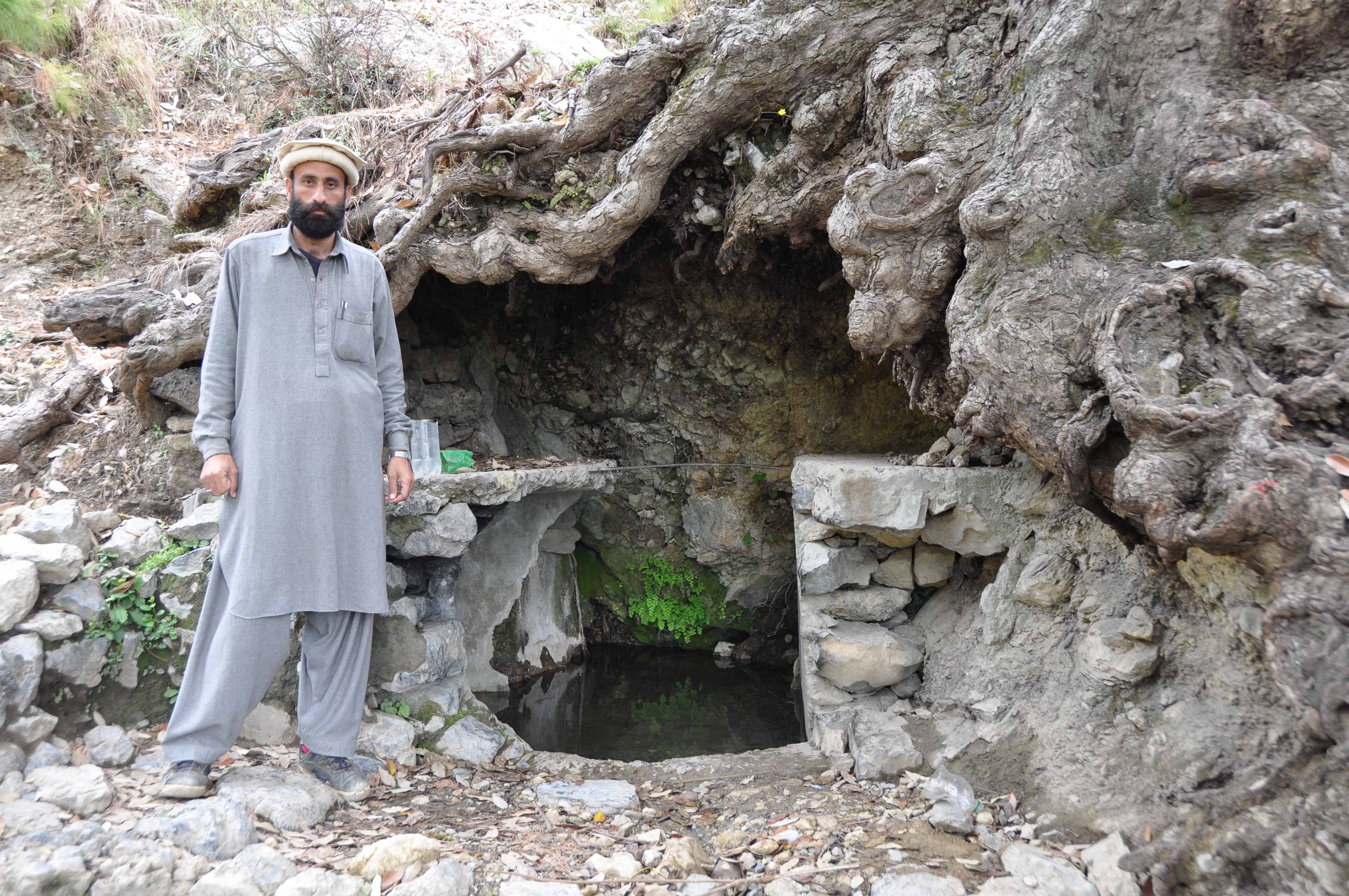
Our Hindko friend at the site of the mountain spring.

Our Hindko host, a slender man dressed in a gray shalwar kameez, smiled when he saw us coming. He greeted us with a handshake and a kindly-spoken As-Salaam Alaaikum. Weeks earlier, my friend had arranged for a water-well to be drilled into the steep slope behind this man’s home. Access to clean drinking water is a problem for the people who live in these hills, resulting in various health and malnutrition problems. Prior to the drilling of the new water well, the only source of water for the people of this area was a slow, seeping spring located higher up the mountain at the base of the gnarled roots of a massive tree. My friend told me that this spring is unreliable and that local families had an assigned hour to get their water from the spring. Each family was responsible for only accessing water at their assigned time, regardless of how inconvenient the hour. This was to ensure that each family could at least meet their basic water needs.

Things are different now. Families no longer need to queue up at certain hours of the day or night in order to get their water. They can now fill their water jugs as often and whenever they like at the new well. And, because they no longer need to make the long hike up the mountain to the spring, they have more discretionary time for other things. Our mountain-dwelling Muslim friend was overflowing with gratitude. At a time when Florida Pastor Terry Jones chose to burn a Qur’an, a profoundly stupid act that has resulted in the deaths of innocent people in Afghanistan and the persecution of Christians in Pakistan, my friend found favor among Muslims in the foothills of the Himalayas because he chose to demonstrate God’s love to them through a practical act of kindness. The people who live in this mountain village will always remember the kindness of this Christ-follower and will always welcome him into their homes to share a cup of chai and conversation.

Less than 1% of the Hindko are followers of Christ. Men like Terry Jones will never compel gentle people like the Hindko to come to Christ. His actions will only make it harder for them to do so. I find it ironic that a gun-toting man who has excelled at building walls of hate is the pastor of a church called the Dove World Outreach Center — a total oxymoron. Burning Qur’ans is what ignorant and lazy people do. It takes a person filled with the love of Christ to build the kinds of relationships over which the gospel can travel in order to transform the lives of those, like the Hindko, who have little or no access to the gospel. That’s hard work! But, if taking the time to build relationships with Muslims is what it will take to open doors for the gospel, then I choose to do things the hard way. After all, what is at stake here is the eternal welfare of men and women and children created in the image of God and deserving of the opportunity to hear and respond to the gospel of Jesus Christ.

____
Note: For the record, I find the actions of the Muslim clerics who incited persecution of Christians and the rioting that resulted in the deaths of innocent people to be contemptible. Like Jones, their actions hurt rather than help to promote understanding. Desperate people generally resort to argumentum ad baculum when their heads and hearts are empty.

Posted by: Omar C. Garcia | April 1, 2011

Hope in a Laundry Basket

Rawalpindi, Pakistan

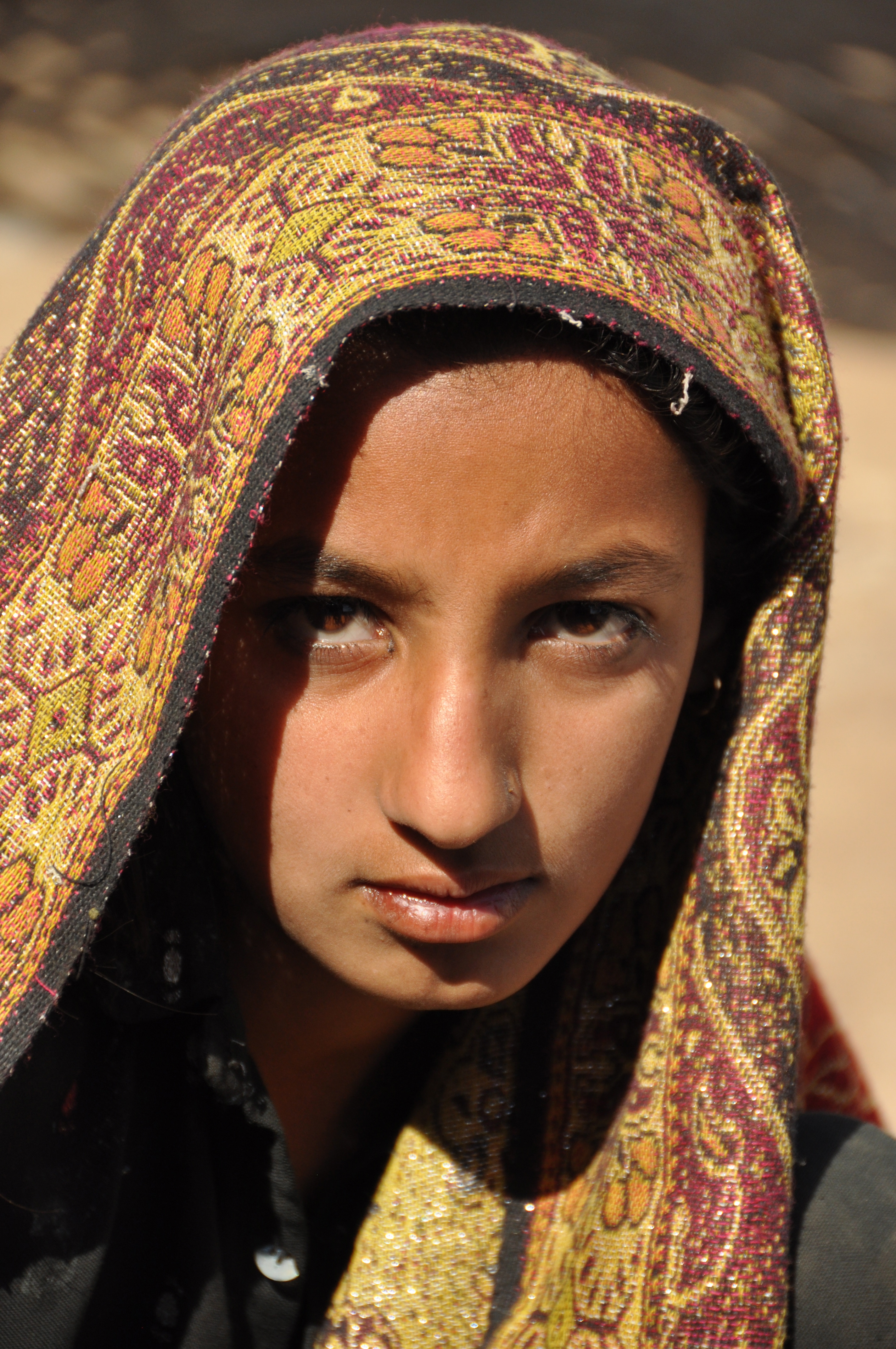
A young Gujjar girl.

Today, I accompanied my Peruvian friend Emily, and two young ladies who assist her, to see her literacy work among the Gujjars. The Gujjars are a gypsy-like people group that are scattered from the Himalayas to regions in Afghanistan and Pakistan. They practice Islam and there are few, if any, followers of Christ among them. Fifteen months ago, Emily connected with a group of Gujjars squatting on government land on the outskirts of Rawalpindi. They live in crudely constructed houses without electricity or running water and eke out a subsistence living. Life is hard for these Gujjar squatters and for their children. Emily discovered that they do not send their children to school. Instead, the Gujjars depend on their children to assist with chores and to help tend animals. However, without an education not much will change for these children.

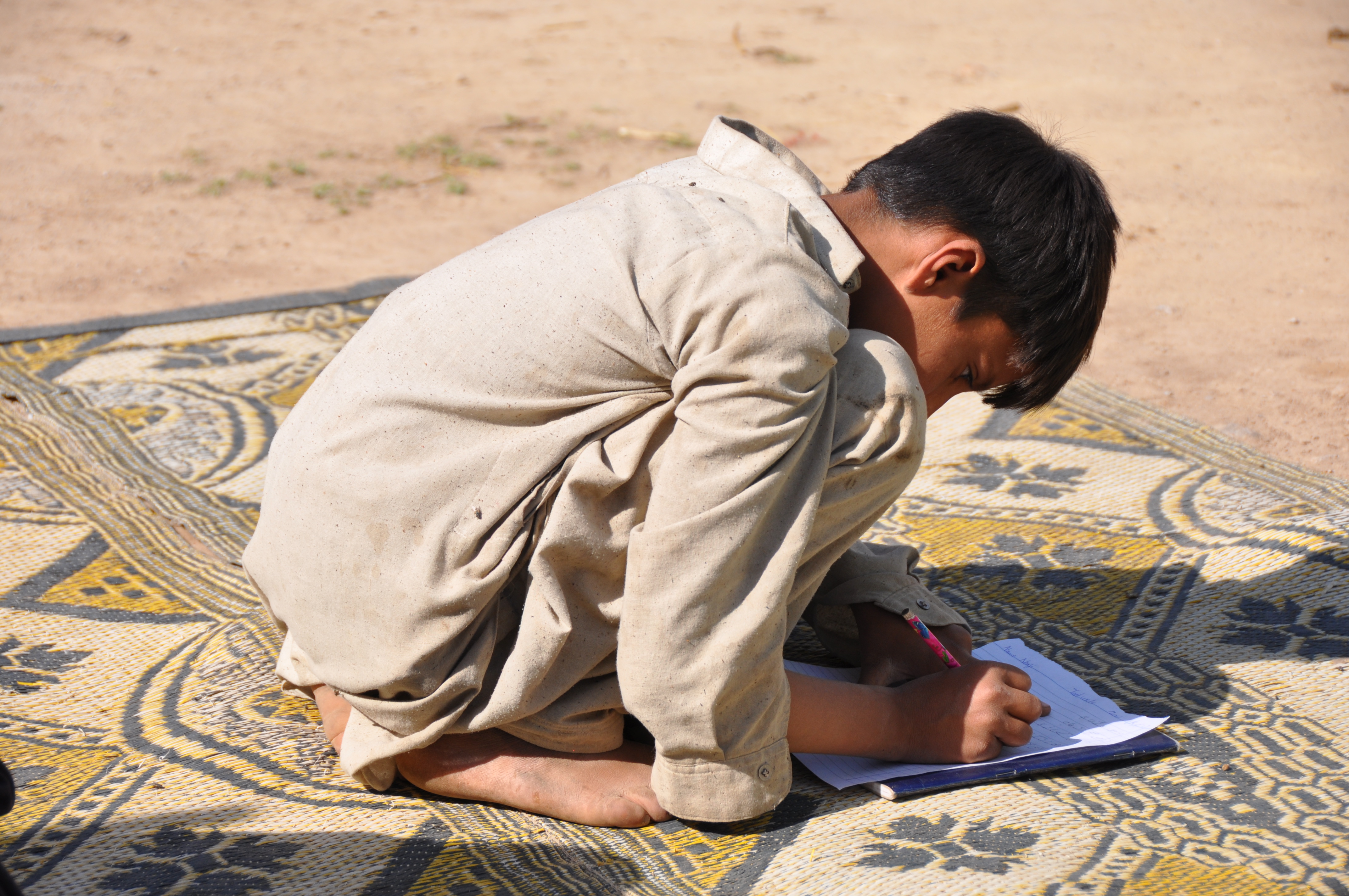
Emily encountered numerous challenges when she started her work among the Gujjars. Initially, the Gujjar leaders objected to their children receiving instruction from a Christian woman. Then, she found that many families discouraged their kids from learning how to read and write, choosing instead to have their kids help with numerous daily chores. However, Emily did not lose heart and her persistence eventually paid off. Five days a week for the past fifteen months she has patiently taught her Gujjar students how to do math and how to read and write Urdu. She carries all of her school supplies in a red laundry basket and sets up her outdoor classroom every morning. When she arrives, the Gujjar kids flock to embrace her and sit with legs crossed on a large woven mat as she begins the day’s lesson.

Gujjar boy doing his math lesson.

This morning was Emily’s last day among the Gujjars before she returns to the States. It was an emotional day for her because she has made incredible progress with the kids but there is no one to replace her. I watched with amazement as her kids did their math and writing lessons. Fifteen months ago most of these kids had never held a pencil in their hands or ever written their own names. They are smart kids. All they lacked was opportunity. As I watched the interaction between Emily and the kids I prayed that God would send another teacher to continue the good work that she started here. The folks in this little village no longer fear having a Christ-follower working among them because of the example and kindness of Emily. I don’t know who will replace her, but I believe that they will never forget her. Emily brought more than school supplies in her red laundry basket — she brought hope to children who are living for a season on the outskirts of Rawalpindi near the foothills of the Himalayas.

Posted by: Omar C. Garcia | March 31, 2011

Lofty Thoughts

Islamabad, Pakistan

Yesterday I joined some friends who are working among the poor in a squatters’ village called Muskeen. This particular village is comprised of approximately four-hundred Christian families who live huddled together in piecemeal squalor. Raw sewage finds paths of least resistance in the narrow and littered paths between squalid hovels. Children caked with dirt entertain themselves on these paths or on top of the crudely constructed houses. Because these squatters do not own the land, they live with the ever-impending possibility that they will be forced out by the local government. But, in spite of that, they stubbornly cling to this tiny piece of geography called Muskeen. This is home to them, at least for a season.

One of my friends invited me to walk with him to a neighboring high rise apartment building in order for me to get a bird’s-eye view of Muskeen. So, we made our way through the maze of narrow paths until we emerged on the side opposite of the Margalla Hills. Then we trudged up ten flights of stairs to the parapet-ringed rooftop of the building. From there we could see the entire squatters’ village and the people who live there. Toward the Margalla Hills are the skeletal frames of three incomplete high-rise luxury apartment buildings. It seems that the Dubai-based builder failed to count the cost of constructing three buildings at the same time. And, from our lofty perch we could also identify the location of schools, parks, and other districts in Islamabad. Muskeen was visibly the blight (not bright) spot in the area.

While talking with my friend on the rooftop, a young man approached us with two cold glasses or orange Fanta. He identified himself as a resident of the building. “I am Muslim,” he said, “and I know several Christians in the squatters’ village.” He went on to tell us that as a Muslim he was concerned that many of the Christian children were not attending school. He also affirmed that he cared about the welfare of his Christian neighbors in the village. He asked us to not believe all that we hear and see in the media regarding Muslims in Pakistan. “We are not all like that,” he said in a soft but serious tone. “Christians and Muslims in Pakistan can and should live peacefully side by side.” Sadly, his idealism is betrayed by the recent assassination of Shahbaz Bhatti, the minority Christian cabinet member, and by the persecution and killing of Christians in protest of the actions of the looney Qu’ran-burning pastor in Florida.

In spite of how Christians have suffered in Pakistan, I appreciate the kindness and hospitality of our rooftop host. And, I appreciate his lofty thoughts about Muslims and Christians treating one another with respect. Idealism aside, looking at one another in the face is a good starting place toward understanding our neighbors and those whose worldview differs from our own. It’s hard to make progress toward understanding others when we build walls by burning Qu’rans (and Bibles) and killing people just because they happen to embrace a different faith. As a Christ-follower I choose to follow the example of Jesus who never took the life of another, who was always concerned about the welfare of others, and who issued this charge: “love your neighbor as yourself” (Mark. 12:31). These are indeed lofty thoughts and ideals worth pursuing, whether you are a Christian or a Muslim.

Posted by: Omar C. Garcia | March 30, 2011

Wordless Wednesday

Observing the Lord's Supper | 30 March 2011 | Pakistan

Note: Photo cropped to protect identity of believers.

Posted by: Omar C. Garcia | March 29, 2011

Until All Are Free

Houston en route to Dubai | 28 March 2011

Today’s issue of the Khaleej Times, Dubai’s English language newspaper, featured a story that caught my attention: “Woman Jailed for Human Trafficking.” I am always happy to see stories like this in print because they help to raise awareness about the issue of human trafficking and because they help to educate people about how traffickers operate. There are common denominators in every story about human trafficking. The 21 year-old victim in today’s story, a Moldavian national, summed it up best. She was lured to work in Dubai by the promise of honest employment. However, once she arrived in Dubai, she was forced into the flesh trade “by coercion, beating and confinement” — the methods most commonly used by sex traffickers to trap and subdue their victims.

Deception | Many of the stories of sex trafficking victims begin with an account of how they were deceived and lured away from their homes by people they trusted. Jesus said that the devil “is a liar and the father of lies” (John8:44). And, those in league with the devil know how to cleverly use lies and deception. Isaiah 32:7 states, “As for the scoundrel—his devices are evil; he plans wicked schemes to ruin the poor with lying words, even when the plea of the needy is right.”

Coercion | Coercion by definition refers to making someone do something by force or intimidation without regard to that individual’s personal will or desire. The young victim told police that the 38 year-old Uzbek woman that lured her to Dubai “forced her to work as a prostitute.” The young woman said, “When she told me I would work as a prostitute I was shocked.” But, trapped and far from home, the young woman saw “no way out.”

Beating | The young victim told police that the Uzbek woman, the brothel madam, “had hit her when she reused to work.” Sex traffickers often beat their victims into submission or threaten to beat and kill their family members if they refuse to service clients. These young women are psychologically and emotionally manipulated and live under constant threat of physical harm.

Confinement | The young Moldavian national reported that she was confined to a room with eight other women, all Moldavians, that had also been lured away from their homes and forced to work as prostitutes. She said that she and the other girls were locked up in an apartment where they serviced clients or were taken to other locations to have sex with clients.

Ironically, the young woman was able to escape because a client gave her the phone number to the police. And, in time, she found a way to call the police who were able to rescue her and place her in the care of the Human Trafficking Section of the police department. The Uzbek madam was arrested, tried, and convicted on charges of human trafficking and was sentenced to five years imprisonment. However it happens, I am always glad when the plans of the wicked are frustrated and they are held accountable for the harm they have caused others. Job 5:12 says that it is God who “frustrates the devices of the crafty, so that their hands achieve no success.”

The young Moldavian woman’s escape from her captors is another small victory in the on-going battle for justice. Every victory matters because it represents another captive set free. Psalm 82:3-4 charge us to “Give justice to the weak and the fatherless; maintain the right of the afflicted and the destitute. Rescue the weak and the needy; deliver them from the hand of the wicked.” May we indeed pray for and work on behalf of those held captive by the wicked until all are free.

Posted by: Omar C. Garcia | March 28, 2011

Strategic Prayer

Pakistan 2005

In a few hours I will travel to Pakistan, the country with the second largest Muslim population on the planet. Over the years, my travels have taken me to several other nations with large Muslim populations. As a follower of Christ I take seriously Paul’s words in Romans 1:14 where he declared, “I am obligated both to Greeks and non-Greeks, both to the wise and the foolish.” Paul considered himself a debtor to all who do not know Christ. In other words, he believed that those who know Christ owe Him to all who do not know Him. This obligation extends to all peoples, not just to people who live in safe places and pose no danger, whether real or perceived. Prayer is a key component to fulfilling our obligation to the nations. The following are my top ten strategic prayer points for unreached peoples, including Muslims.

10. Dreams | Best-selling author Joel C. Rosenberg points out: “One of the most dramatic developments is that many Muslims — including Shiites in Iran and Iraq — are seeing dreams and visions of Jesus and thus coming into churches explaining that they have already converted and now need a Bible and guidance on how to follow Jesus.” I can confirm the truth of these words, having met many Muslims who have had such dreams. I pray that Muslims and unreached peoples will have dreams that point them to Jesus.

9. Scripture | Psalm 119:130 states: “The entrance of your words gives light; it gives understanding to the simple.” Samuel Zwemer, known as the Apostle to Islam, wrote, “No agency can penetrate Islam so deeply, abide so persistently, witness so daringly and influence so irresistibly as the printed page.” The only thing that stopped Zwemer from distributing Arabic leaflets and Bibles was confiscation. I pray that copies of God’s Word will reach the hands of those who have never read it.

8. Resourcefulness | Both ex-pats and nationals that work among unreached and unengaged people groups must be resourceful. I met a Christ-follower in Morocco who personally wrote hundreds of hand-written letters to encourage people in his country to consider the claims of Christ. This is just one of many examples of the kind of resourcefulness that God can use to advance His purposes in countries that are closed to or that restrict access to the gospel. I pray for Christ-followers whose love for Christ compels them to find creative ways to share His message.

7. Kindness | Proverbs 3:3-4 is one of my favorite passages of Scripture: “Do not let kindness and truth leave you; bind them around your neck, write them on the tablet of your heart. So you will find favor and good repute in the sight of God and man.” Jesus was a servant-leader who demonstrated kindness to others. John 1:14 describes Him as being “full of grace and truth.” I pray that Christ-followers will be kind and gracious like Jesus because kindness can open many doors for the truth.

6. Pain | C.S. Lewis wrote, “God whispers to us in our pleasures, speaks to us in our conscience, but shouts in our pains: it is His megaphone to rouse a deaf world.” I spoke with many people in pain in Pakistan while doing relief work there after the 2005 earthquake. Many where thinking deeply about what they had experienced and were asking important questions about God. The recent earthquakes in Haiti and Japan forced many people who had otherwise ignored God to think seriously about life and death and the existence of God. I pray that people in pain will think deeply about the brevity of life and the existence of God.

5. Miracles | I met a man in a remote village in Bangladesh in 2000 who had been waiting for years to speak to a Christian. Four years earlier some Christ-followers from another nation had visited his village and prayed in Jesus name for his dying daughter. His daughter was healed and he wanted to know more about Jesus. He was receptive to the message we shared with him and he and his family became followers of Christ. I pray for God to demonstrate His presence and power through miracles among the nations.

4. Persecution | Jesus told His followers to expect persecution: “But I say to you, love your enemies, and pray for those who persecute you” (Matt. 5:44). In 1999 I met with a small group of Muslim-background believers in South Asia. One man showed me the scars on his body as he described how the people of his village had physically abused him because he had become a Christ-follower. The others in the group all came to faith in Christ because this man had chosen to love those who persecuted him. I pray that those who suffer persecution will demonstrate the transforming power of Christ’s love to those that hate them.

3. Safety | I have met many Christ-followers in other nations who live under constant threat of persecution. Some have been forced to leave their homes and have found refuge in displacement camps. Others live daily in fear and deal with insults and intimidation. I pray for the safety of those who live in dark places and among people who are hostile to the gospel.

2. Relationships | It is important for Christ-followers to build relationships with unreached peoples and to show God’s love to them in practical ways. Many unreached people have never met a Christian or had an opportunity to develop a close friendship with a Christian. The gospel travels best over the road of personal relationships. I pray that Christ-followers will develop meaningful friendships with their neighbors.

1. Workers | Jesus said, “The harvest is plentiful, but the workers are few. Therefore beseech the Lord of the harvest to send out workers into His harvest” (Matt. 9:37-38). Ultimately, the kingdom of God advances when Christ-followers are willing to go beyond — to step across the line that delineates the farthest they’ve ever been and the most they’ve ever done for God and His purposes. I pray that more Christ-followers will be willing to forsake comforts and security in order to advance God’s purposes in the world today.

Posted by: Omar C. Garcia | March 25, 2011

Global Glimpses

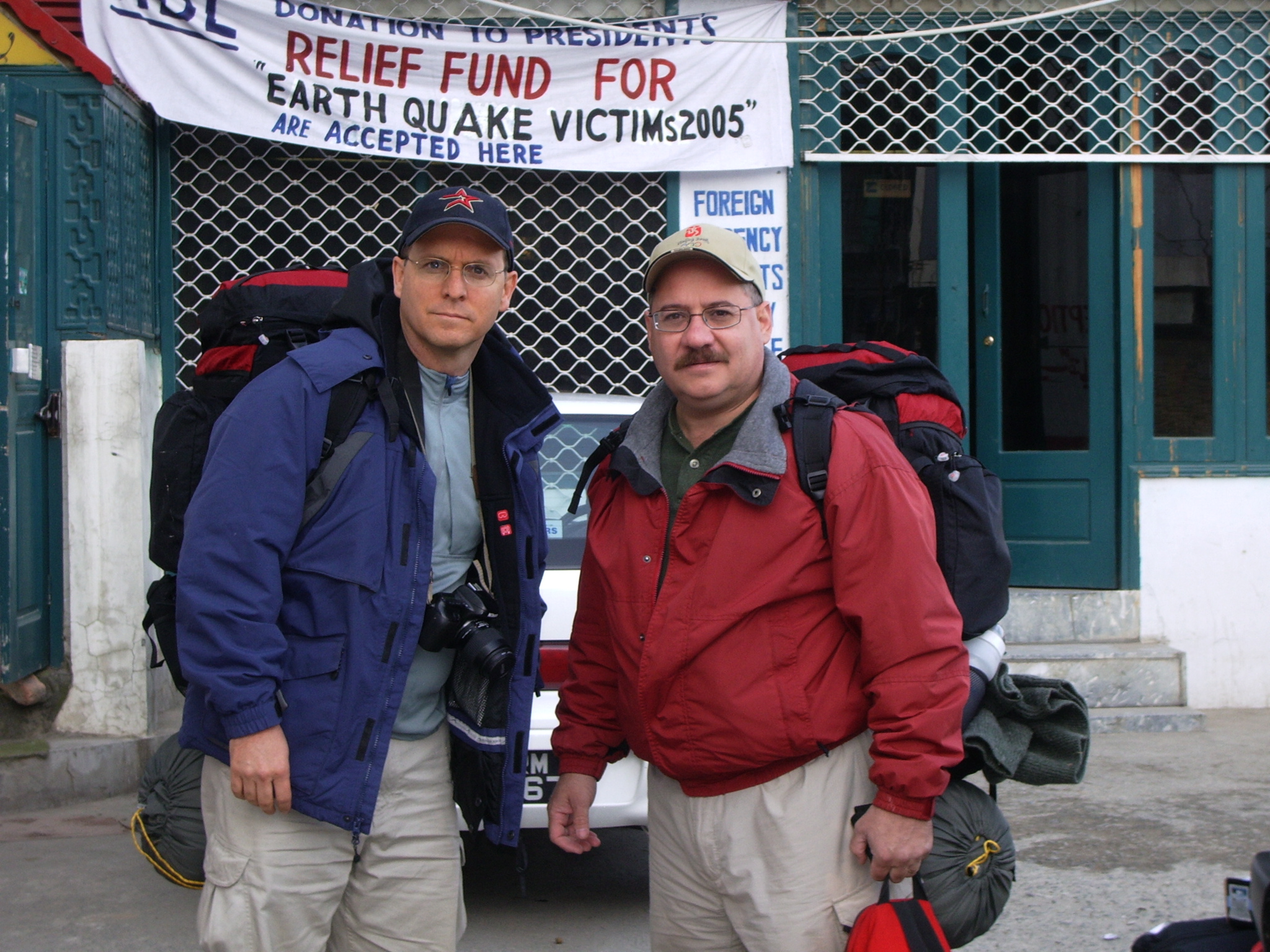
Lee and Omar | 2005 | Pakistan

Who | Lee Pullin

Where I Have Traveled | I have traveled to Ukraine, China, India, Mongolia, Bangladesh, Darfur, Pakistan, and Kashmir, the disputed area between India and Pakistan. I have traveled numerous times to most of these countries.

Going to Unreached and Unengaged Peoples | The main thing that helps me decide where I will go is whether I will have an opportunity to engage with an unreached people group. Unreached and unengaged people groups almost always live in places that are far from comforts and safety — places where people die daily without ever having heard the good news of Jesus Christ. These are the people groups I am interested in and the places where I desire to go.

My First Visit to Pakistan | Omar and I traveled to Pakistan after the 2005 earthquake. We were able to help two villages build temporary shelters to help get them through the brutal winter that was weeks away. We were not able to share as much as we would have liked because our conversations would always turn to how the people would survive the winter. As a result, I decided to return five months later. It was then that I was able to sit down with village leaders to talk more freely about Christ.

Why Our Presence Matters | It is so important for us to reach out to the unreached because everyone deserves the chance to hear about Jesus at least once in their lifetime. I also believe it is very important to reach out to people in times of crisis because it shows that Christ-followers care and follow the teachings of Christ. Helping others during a crisis opens doors to share about Christ and to show what it means to be a follower of Christ.

How You Can Help | Prayer is key. I encourage others to research a people group so that they can pray more specifically for that people. Giving to organizations that reach out to unreached peoples is also important. Because so little money actually goes to reaching unreached and unengaged people groups, our financial gifts make a huge difference. Going is also important. Going is sometimes a challenge but always rewarding. It will change your life forever. I know because my life has been changed.

Posted by: Omar C. Garcia | March 24, 2011

Aim at Heaven

Knowing and understanding the passions of God is important if we are going to make a difference in our world. It’s far too easy for us to get engaged in pursuits that we think are good but that can keep us from investing ourselves in what is beyond good — the things that will last into eternity. That’s why it’s important that we connect with what matters most to God — things like the spiritual welfare of those who have yet to hear the gospel, speaking up for those who have no voice (Prov. 31:8-9), and caring for widows and orphans in their distress (James 1:27). Essentially, we should care about the same things that Jesus cared about. He came “to seek and to save that which was lost” (Luke 19:10), He felt compassion for the multitudes “because they were distressed and downcast like sheep without a shepherd” (Matt. 9:36), and He willingly laid down His life for His friends (John 15:13).

Connecting with what matters most to God begins by seeking “the things that are above, where Christ is, seated at the right hand of God” (Col. 3:1). The Apostle Paul wrote those words to Christ-followers in the city of Colossae. To their credit, these Christ-followers were relating properly to both God and man. They had a faith that was solidly grounded in Christ and they demonstrated the reality of that faith by having an all-embracing love. True Christian love must be willing to embrace those outside of our fellowship. Paul encouraged the Colossian believers to continuously seek “the things that are above” — in other words, to make Christ’s interests their own and to allow those interests to govern their daily living. What we do on this earth should reflect the values and interests of heaven. We must intentionally focus our thinking on the things above or on God’s passions and interests and then order our steps accordingly.

Seeking the things that are above is easier said than done, especially in light of all of the distractions in our world. But, doing so is essential to making a difference in the present world. C.S. Lewis wrote: “If you read history, you’ll find that the Christians who did the most for the present world were just those who thought most of the next. The Apostles themselves, who set on foot the conversion of the Roman Empire, the great men who built up the Middle Ages, the English Evangelicals who abolished the Slave Trade, all left their mark on Earth, precisely because their minds were occupied with Heaven. It is since Christians have largely ceased to think of the other world that they have become so ineffective in this. Aim at Heaven and you will get earth ‘thrown in’; aim at earth and you will get neither.” (Mere Christianity, p. 134). May we always aim at heaven and allow God to use us to make a difference in our world.

Posted by: Omar C. Garcia | March 23, 2011

Wordless Wednesday

Hindu cremation along the Brahmaputra River. | 2003 | Bangladesh

« Newer Posts - Older Posts »

Categories