Posted by: Omar C. Garcia | April 17, 2011

Sonu Mia of the Slum

Mother and child at train station. | 2006 | Bangladesh

While visiting Bangladesh earlier this month, I picked up a copy of the April 7 issue of The Daily Star, an English language newspaper published in Dhaka. As I read through the paper, a brief article tucked away on page 9 caught my attention — “Woman crushed under train.” The incident happened in the district of Kushtia, an area I visited years ago. The unfortunate victim was “crushed under the wheels of a train at Sukhnagar slum.” The woman “was identified as Zarina Khatun, wife of Sonu Mia of the slum.” According to witnesses, “the incident took place when Zarina was trying to cross the railway track.” Sadly, and for whatever reason, Zarina never made it across the tracks. The article did not state her age, which caused me to wonder if she was an elderly woman with a faltering gait. Nor did the article say anything about whether Zarina had any children. She was simply identified as “wife of Sonu Mia of the slum.”

The words “of the slum” caused me to pause, perhaps because I have walked through so many slum areas in South Asia. The slums in Bangladesh are difficult and dirty places where people like Sonu Mia barely eke out a living and reside in piecemeal shanties. The people who live in these slums can never relax. Instead, they live under the constant pressure of where their next meal will come from. In addition to lacking food, those who live in the slums lack access to clean water, adequate sanitation, and basic health care. They have little protection from weather extremes and are often the first to die when flood waters rise or temperatures plunge. Trying to raise children in slum environments compounds the challenges of day to day survival. But, somehow, people like Sonu Mia manage to do what seems impossible. They learn to adapt and to survive.

On April 6 at 10:20 AM, life in the slum ended for Zarina Khatun as she tried to cross the railway tracks near Kushtia Court station. The police recovered her body “and sent it to Kushtia general hospital for autopsy.” This should be an open and shut case for the medical examiner. But, there is something that the autopsy will not reveal about the wife of Sonu Mia of the slum. However precise the instruments used by the medical examiner, the autopsy will not reveal the condition of Zarina’s soul. Nor will the autopsy reveal the bruises on her heart inflicted by blow after blow of daily hardships in the slums. Life is extremely hard for many people. Reflecting on Zarina’s life and death has reminded me that each of us have the opportunity to leave either the marks of hurt or healing in the lives of others, the kinds of things that an autopsy can never reveal. May we always be sensitive to the least of these who are struggling to survive from day to day and offer them the healing and refreshing balm of our love and kindness.
Posted by: Omar C. Garcia | April 15, 2011

Global Glimpses

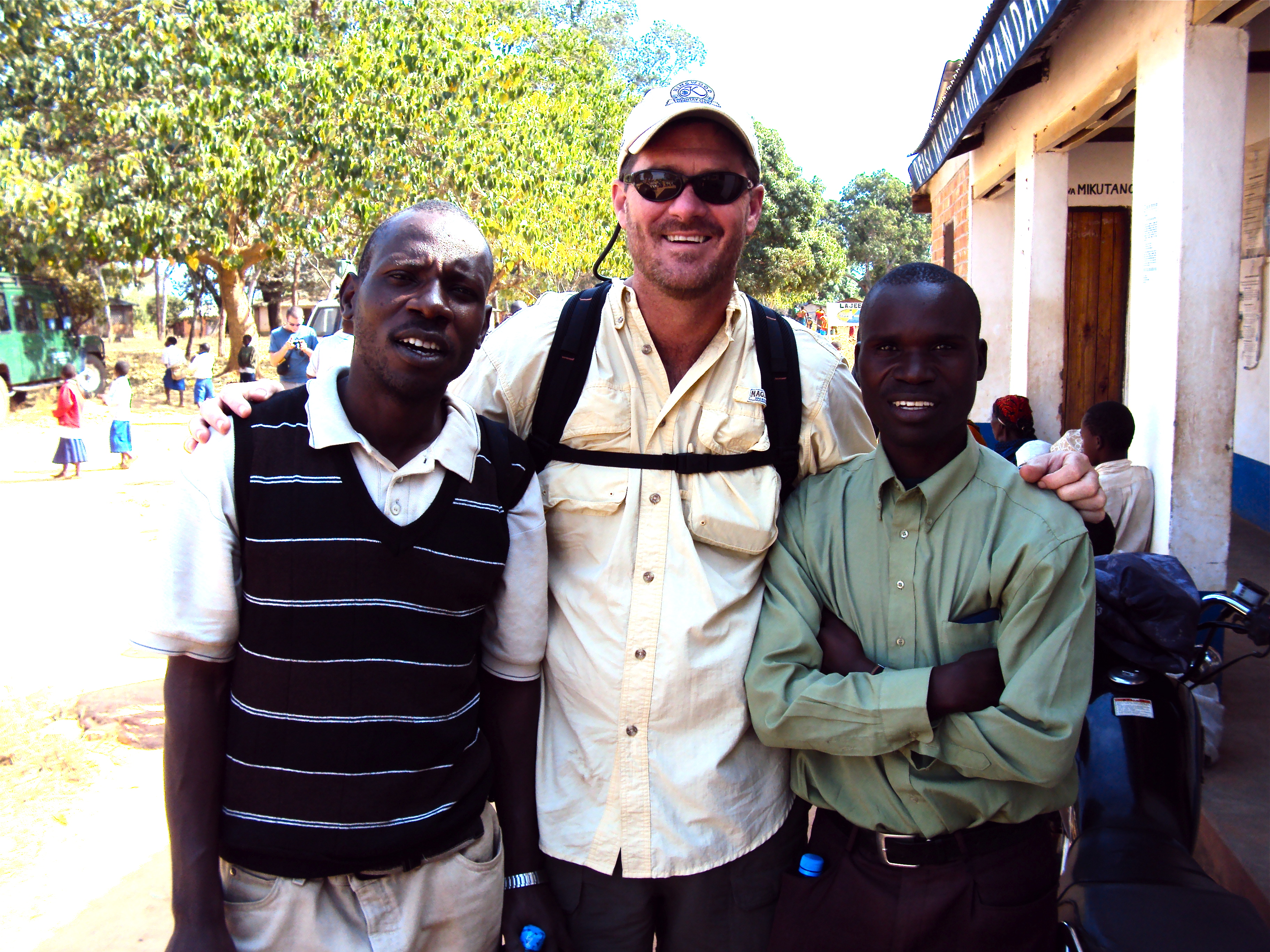
Bill with national workers in Tanzania.

Who | Bill Crenshaw

Where I’ve Traveled with Kingsland | I have participated in mission trips to Tanzania, India, Cambodia, Trinidad, Nicaragua, Mexico, and Montana.

My Current Assignment | I currently serve as our missions ministry’s point man for our annual trip to the African bush in Tanzania where we work with the Safwa, our national partners, to take the gospel to unreached tribes. I also serve as the chairman of our Justice Leadership Team and as a member of Kingsland’s Missions Council.

How I See God Moving in Tanzania | People really have open hearts, churches are being planted and growing, and God is calling new Safwa missionaries into service to expand ministry and outreach.

What I Have Learned from the Safwa | The Safwa tribesmen have taught me how to better serve the Lord with joy in my heart and a smile on my face and that a happy life is not about our stuff.

Why I Will Continue to Go Beyond | Well, I love “Going Beyond” — seeing smiles on faces and hearts and lives changed for His glory. It’s just a critical part of who I am, what I value, and how I prioritize my time and energy.

Posted by: Omar C. Garcia | April 14, 2011

The Old Men and the Sea

Smith (second from left) and An-Tiki crew.

On Wednesday, April 6, Anthony Smith of London fulfilled his boyhood dream of crossing the Atlantic Ocean on a raft. The interesting thing is that the intrepid Smith celebrated his 85th birthday on the 2800-mile trans-Atlantic crossing. Smith, an adventurer and former science correspondent for the BBC, never gave up on his dream but could never have anticipated the event that would set it in motion. He was hit by a van, suffered a broken hip, and decided to use the compensation money he received to finance his adventure. In a fashion reminiscent of Sir Ernest Shackleton, Smith placed an ad in The Daily Telegraph that read: “Fancy crossing the Atlantic? Famous traveller requires 3 crew. Must be OAP. Serious adventurers only.” Smith intentionally recruited a crew of Old Age Pensioners that included John Russell, Andrew Bainbridge (his physician), and a civil engineer named David Hildred — all between the ages of 56 and 61.

Smith and his companions started their journey at the Canary Islands off the coast of Africa. Prior to their departure, Smith delivered a farewell speech in Spanish to a crowd of well-wishers. And then, they set off on their raft dubbed the An-Tiki, a name adapted from Thor Heyerdahl’s famous Kon-Tiki, the raft that the Norwegian explorer used in his 1947 expedition from South America to the Polynesian Islands. Heyerdahl’s book by the same name was one of my favorites when I was a kid. The purpose of Heyerdahl’s  expedition was to demonstrate that people from South America could have settled Polynesia in pre-Columbian times. The purpose of Smith’s expedition was to raise awareness about the environment and to raise funds for WaterAid, a British non-profit group that provides potable water to impoverished communities. Oh, and also “to show that older persons are capable of undertaking what are considered dangerous … and adventurous projects that are normally left to younger persons to fulfill.” Having just turned 55 years of age on April 7, I have lots of admiration for Smith and his crew of old age pensioners.

Smith’s raft traveled at an average speed of 4 knots or about 4.5 miles per hour. Sixty-six days after setting off from the Canary Islands, the An-Tiki arrived at the Caribbean Island of St. Maarten. Kudos to Smith and his crew for their daring adventure and for demonstrating that you are never too old to go beyond — to lose sight of the shore in search of far horizons. We can learn a few things from Smith. First, never stop dreaming. The quickest way to get old is by having more memories than dreams. You may not be as quick as you used to be, but as long as you have breath, keep striving forward. Second, don’t die with regrets. It is better to have tried to accomplish great things and failed than to never have tried at all. Third, be willing to forsake everything secure and familiar in order to pursue your dreams. Smith set sail without any guarantee that he would arrive at his destination, but he set off anyway. Life does not come with guarantees. Finally, don’t forget that God is always in search of adventurous individuals willing to risk it all to advance His purposes and declare His glory among the nations. Make yourself available to Him and set off on the adventure of a lifetime!

Posted by: Omar C. Garcia | April 13, 2011

Wordless Wednesday

Selling produce outside of a slum village. | March 2011 | Kolkata, India

Posted by: Omar C. Garcia | April 11, 2011

Against Their Wills

While in Dhaka last week, I read a disturbing article in the April 6th issue of The Daily Star, a Bangladeshi newspaper. The article was entitled: “About half of a brothel’s sex workers are children.” It seems that every time I pick up a news publication in Asia I can always find at least one article on the exploitation of children or the trafficking of human beings. This particular story about the exploitation of children at a brothel called Tangail was especially unsettling. Of Bangladesh’s fourteen registered brothels, Tangail, located a short distance outside of Dhaka, is the oldest. According to another source I read, the women who work in Bangladesh’s registered brothels must have notarized documents that state they are over eighteen years-old. So, in light of this, how is it possible that 300 of the 820 sex workers at Tangail are children as young as twelve years-old? The correspondent who wrote the article for The Daily Star offers some answers.

Deception | Because the demand for child sex workers is high, the number of children at Tangail has steadily increased. The children working there were lured away from their homes “through deceitful techniques,” are “forced to do the work against their wills,” and are kept compliant though the use of “brutal torture.” I read a separate report that said a pre-pubescent girl who had been forced to work at Tangail suffered a broken hip when the customer who was raping her violently penetrated her small body.

Corruption | The children who are forced to work as sex slaves at Tangail are registered as adults. Corrupt police officials turn a blind eye to the ages of the children and approve the requisite affidavits in exchange for brides ranging from $150.00 to $200.00 USD per girl. And, the police officials who visit and monitor activity at Tangail “hardly try to know whether a girl has come to this profession willingly or not.”

Observation | Because sex with children is in such high demand at brothels like Tangail, children are a valuable commodity to their captors and are therefore “kept under strict watch all the time.” These children fetch a higher price and are kept in bondage by sardanis (brothel madams) who act with impunity because they are in league with corrupt police officials who are paid to look the other way. Children are completely vulnerable to abuses and have no way of escape.

When the correspondent who wrote the article for The Daily Star contacted the local acting superintendent of police, he was told that the department will investigate the allegations of police corruption and review the affidavits on file. Hopefully this will happen. And hopefully it will result in judicial action against those who have robbed children of their innocence. But, that remains to be seen. Tangail has been around for one and a half centuries and has survived more than one season of scrutiny. And no one really knows the scope of the corruption that has made it possible for 300 children to be repeatedly raped for profit there. It’s unlikely that all of the wicked individuals will be rooted out. But, in spite of this, let’s pray that God will frustrate the plans of the wicked so that the children held captive at Tangail will no longer be forced to do horrible things against their wills.

Posted by: Omar C. Garcia | April 10, 2011

Toward the Setting Sun

Reflections on Cox’s Bazar, Bangladesh

Last Wednesday, my companions and I ventured to Cox’s Bazar, the longest sea beach in the world. Cox’s Bazar is located about one-hundred miles south of Chittagong on the eastern coast of the Bay of Bengal. This narrow stretch of Bangladesh was named after Captain James Cox of the East India Company who was in charge of a naval base here in the late 18th century. I previously had visited this area en route to Teknaf, a city on the southern tip of Bangladesh at the mouth of the Naf River. Teknaf is the launching point for reaching St. Martin’s island.

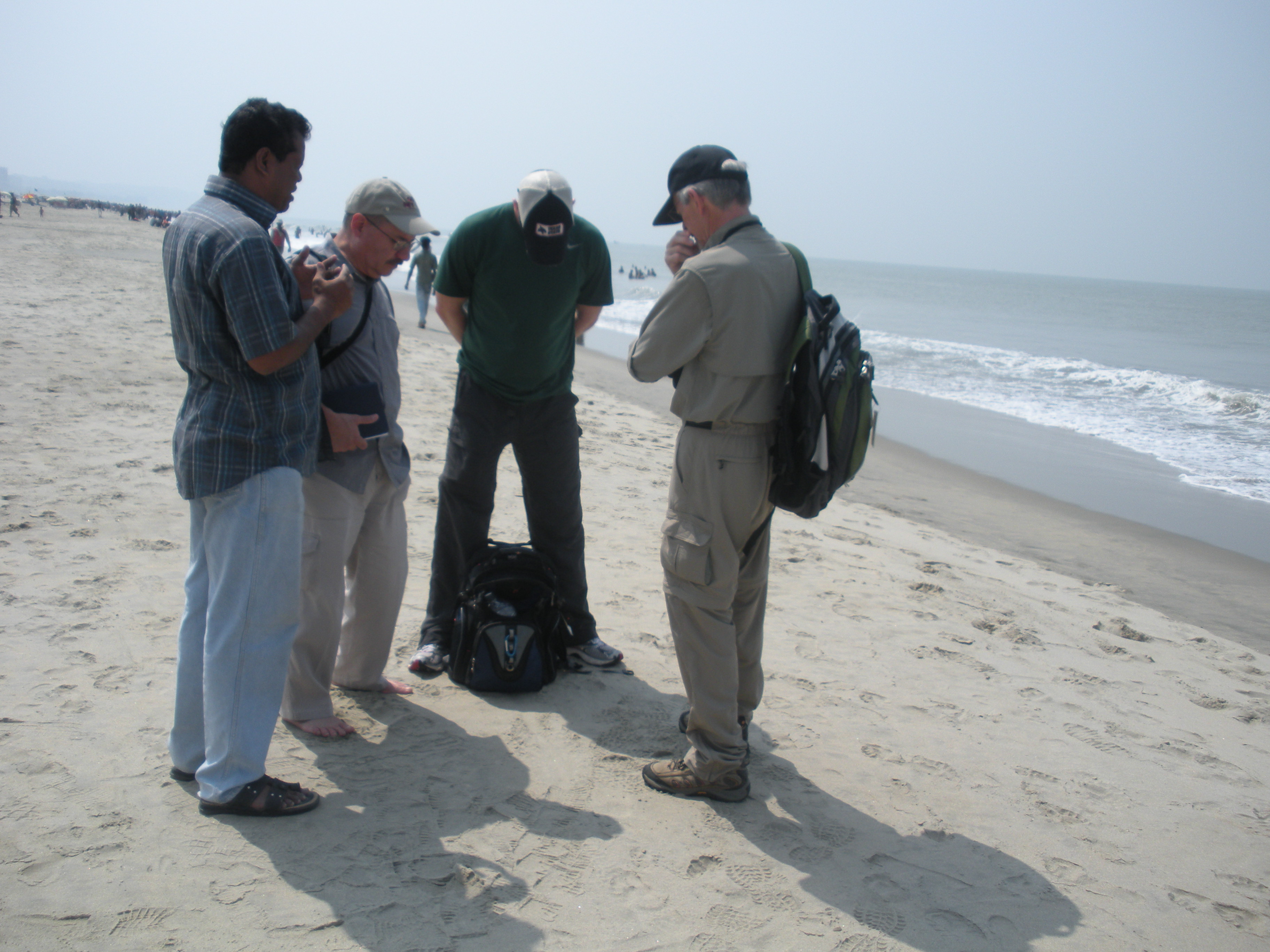
Praying at Cox's Bazar

One of our most meaningful experiences was walking slowly along the beach and stopping occasionally to look toward the western horizon. Under that canopy are unengaged islands that ring the coast of Bangladesh. We took some time to read the Scripture and to pray onsite with insight. As we looked toward the west, we read God’s promise to give Joshua the land “toward the going down of the sun” (Joshua 1:3) and interceded on behalf of the islanders. And, as we watched the waves lap onto the shore we prayed that our initiatives to reach the people of these islands would hasten the day when “the earth shall be full of the knowledge of the Lord as the waters cover the sea” (Isa. 11:9).

While in Cox’s Bazar we also met with our national partners to discuss our next steps in engaging the people of the islands. We are privileged to work with nationals I have known for a dozen years and who have a passion for sharing the gospel with their own people. These men are committed to reaching their homeland from shore to shore and border to border. God is doing some great things in Bangladesh because of Bengali men and women who are willing to endure persecution and even death for the sake of the gospel. Among the martyrs in heaven will be many Bengali believers who paid the ultimate price for being followers of Christ in a place that is hostile to the gospel. These are not individuals who took the lives of others in an attempt to spread their faith. That would be contrary to the teaching and example of Jesus. Instead, these are individuals who were tortured and killed because they were followers of Christ. I visited the grave of one of these martyrs in August of last year.

Standing on the beach at Cox’s Bazar reminded me once again that the kingdom of God always advances at our inconvenience. And, standing on the beach also reminded me that we must be willing to lose sight of the shore in order to take the light of the gospel to those who live toward the setting sun. This is the ongoing story of the book of Acts — going beyond comfort and convenience to tell the story of God’s love to those who have never heard it. I am thankful for those who brought the gospel to where I live — for the generations of individuals who carried the message toward the setting sun. We must do no less for those who live beyond our shores. May we always be willing to press on toward the setting sun.

Posted by: Omar C. Garcia | April 8, 2011

Global Glimpses

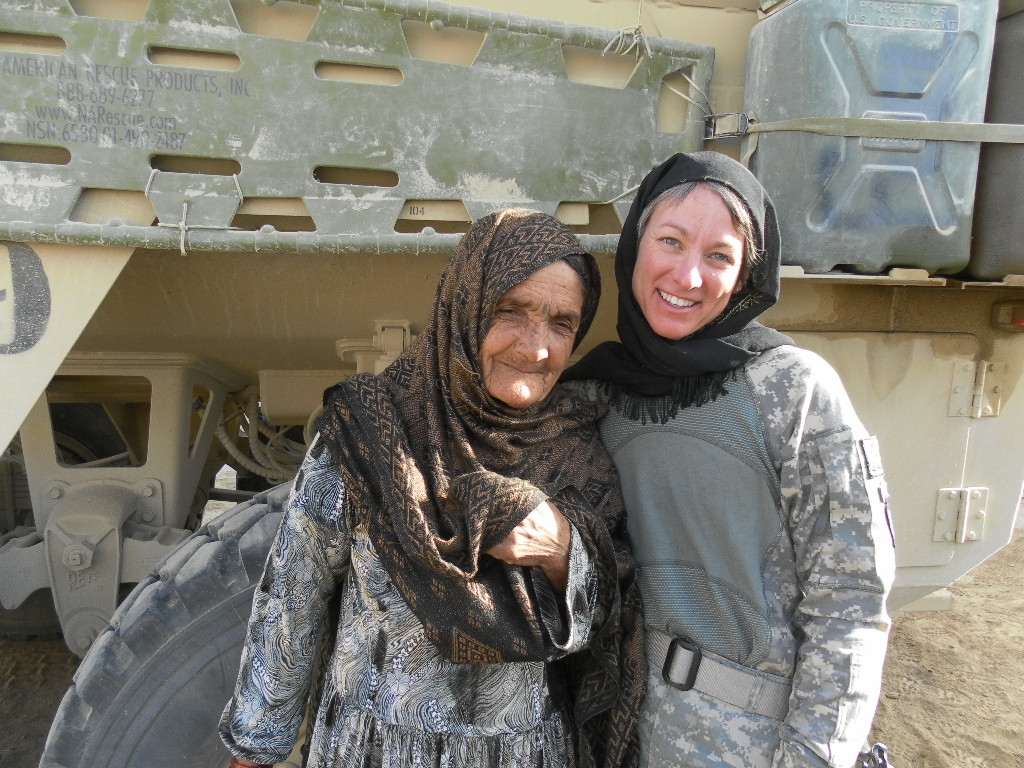
Laura Childs in Afghanistan

Who | Laura Childs

Where I’ve Traveled with Kingsland | I have had the privilege of traveling with Kingsland short-term mission teams to Nicaragua, Bangladesh, Pakistan, Northern Iraq, and Tanzania. I have also been able to go on some of the student mission trips to a few places in the states. Traveling overseas is always fun, but hanging out with the students is always a blast and an adventure.

My Most Memorable Experience | This is a tough one. There are so many memories from my travels. One of my most favorite memories is listening to my good friend, Leah Pullin, share her story again and again about how the Lord cured her of her cancer.  We traveled to Pakistan last year to do some breast cancer awareness education. We visited several hospitals to teach the nursing students, we visited a home for girls to teach the young ladies who lived there, and we stopped by several apartments where some women the missionaries were trying to reach lived.

Time and time again I heard the miraculous story of Leah’s healing while watching the faces of the women who listened so intently. Even though she was speaking to followers of Islam, the story of how Jesus visited Leah in a dream always invoked a look of wonder. I loved to see the smiles on their faces and would watch to see how they would invariably flock around Leah after her testimony to hear more of her story. The power of Jesus spoke clearly though Leah and it was awesome to see.

Why I Encourage Others to Go Beyond | The journeys that take you outside your comfort zone, the ones that carry you over that line that marks the farthest you have ever gone…those are the ones that change you the most. Sometimes it’s a simple change of realizing that people who look different aren’t really that different after all. But other times, it changes you so radically that you come home a different person, with a new perspective and a new passion.

Where I Am Serving Now | My “service” now is a bit different from my trips in the past. I still get the opportunity to meet with poor widows in villages, I still get surrounded by young children who are fascinated with foreigners, I still get the opportunity to enjoy the hospitality that is so common in countries like this and share tea with new friends, and I still have the opportunity to walk through captivating bazaars and crowded streets lined with litter and streams of urine. Only now I wear body armor and carry a pistol, a rifle and a whole bunch of ammo (which thankfully has yet to be needed!).

I’m currently deployed to Afghanistan in support of Operation Enduring Freedom on an Agribusiness Development Team. I also lead our Female Engagement Team which offers me the opportunity to work to improve the state of women’s rights here in Afghanistan.

My mission trips trained me well to understand the culture of an Islamic country, how to effective communicate through an interpreter, and how to see past the dirt, the poverty, and seemingly hopeless state of life.  I can see the hope of the women I meet instead of being distracted and uncomfortable with the unfamiliar environment that is so different from home.

While we are unable to share our faith with those we meet here, I strive to act in such a way that those I come in contact with can see Jesus through me. I also have great hope that our efforts here will set the stage for a safer environment so that others can follow and share the love of Christ with a country filled with some lovely people who share a painful and violent history.

Our team and the work we do is chronicled on our unit blog: Texas Agribusiness Development Team–IV.

Posted by: Omar C. Garcia | April 7, 2011

Happy Birthday, Bonnie

Bonnie and Me on our Birthday | 07 April

I am observing my 55th birthday today in Bangladesh. My sister Bonnie (Yvonne) is observing her 54th birthday in Texas. While I was celebrating my first birthday with my grandparents, my sister Bonnie was making her entrance into the world. I met her a few days later and we’ve been great friends ever since. Bonnie and I shared birthday parties until we became teenagers. Throughout those years, Mom baked two cakes — one with blue-colored frosting and the other with pink. We also were fortunate to live close to our grandparents who were always present for our birthday parties. My parents made every one of our birthdays a special occasion. Dad, the family photographer, always took lots of photos and movies. This is the second birthday that Bonnie and I are observing without our beautiful Mom who passed away two years ago. We still miss her, think of her everyday, and are grateful for all that she and Dad did to make our childhood absolutely magical. Happy Birthday, Bonnie. I love you.

Posted by: Omar C. Garcia | April 6, 2011

Wordless Wednesday

Coconut vendor. | 06 April 2011 | Cox's Bazar, Bangladesh

Posted by: Omar C. Garcia | April 5, 2011

Last Places First

Cox’s Bazar, Bangladesh

In 1993, Greg Mortensen set out to climb K2, the world’s second tallest mountain. K2 is located in the Karakoram range that spans the northern borders of Pakistan, India, and China. However, Mortensen’s participation in the rescue of another climber prevented him from making his summit bid. On his descent, Mortensen became disoriented and took a wrong turn and ended up in Korphe, a village of subsistence farmers located in northeastern Pakistan. Exhausted and ill, the residents of this mountain village nursed Mortensen back to health. Moretnsen promised to repay their kindness by returning to build a school in their village. He made good on that promise and has since helped to build schools in some of the most remote and rugged locations in Pakistan and Afghanistan. You can read more about Mortensen’s remarkable story in his best-selling books, Three Cups of Tea: One Man’s Mission to Fight Terrorism and Build Nations … One School at a Time, and the sequel, Stones Into Schools: Promoting Peace with Books, Not Bombs, in Afghanistan and Pakistan.

Mortensen founded the Central Asia Institute, a non-government organization dedicated to building schools in Pakistan and Afghanistan. What I love best about the CAI is that they are committed to building schools in “last places first” — in villages located in areas that present enormous logistical challenges. To date, Mortensen has had a hand in establishing or supporting more than 170 schools which provide an education to more than 64,000 children, including 54,000 girls. All of this started with a single promise he made when he took a wrong turn coming down a mountain! I have great admiration for the work of Greg Mortensen and great respect for his “last places first” philosophy.

In recent years, missiologists have called Christ-followers to turn their attention to “last places first” — to the unreached and unengaged people groups that live in what has become known as the 10/40 Window. This rectangular-shaped geographical  area is located between 10 and 40 degrees latitude north of the equator and stretches from North Africa all the way to the Pacific Rim. The people groups that live in this region of the world have the little or no access to the gospel. Many are kept in darkness by hostile cultures and governments. These people groups live in what are “last places” for the kingdom of God.

Bangladesh is in the heart of the 10/40 Window. I first visited this over-crowded nation in 1999 and have returned to visit almost annually. In 2004, a national Christian leader here told me of his concern for the unengaged islands in the Bay of Bengal. So, I made plans to visit one of those islands the following year. When I arrived, an island resident told me that no Westerner had visited their island since 1991. This man of peace arranged for me to speak to several hundred of the island’s Muslim inhabitants about why I had come. I was given complete freedom to share the story of Jesus. The following year I led a team to visit another island in the Bay of Bengal. However, our Bibles were confiscated and we were assigned a police escort throughout our stay.

Last night, my companions and I arrived at Cox’s Bazar after a fourteen-hour drive from Dhaka. Cox’s Bazar is the longest natural sea beach in the world. It borders the Bay of Bengal to the east and provides a vista of the far western horizon. In between horizons are small pockets of people who inhabit the islands in the Bay of Bengal. These are some of the “last places” on earth that are still waiting to hear the gospel of Jesus Christ for the first time. Kingsland’s missions ministry currently supports two Bengali nationals who have moved to one of the islands to share the story of Jesus. Over the next day we are meeting with our national partner to strategize on how we can take the gospel to more islands. Our focus in Bangladesh, and other places where we are involved, is to go to the “last places first.” Please pray that those who live in last places will soon have their first opportunity to hear the story of Jesus.

« Newer Posts - Older Posts »

Categories