Posted by: Omar C. Garcia | July 23, 2011

Strategic Urban Alliances

Kingsland’s missions ministry has several strategic urban alliances with partners who serve in some of the most difficult neighborhoods in our community. Mike and Kenzie Malkemes of Generation One are among our favorite urban ministry partners. I met Mike almost six years ago through the recommendation of my friend Jim Herrington of Mission Houston. Mike is an ex-Marine who is committed to making a difference in the lives of at-risk kids in Houston’s Third Ward. Our missions ministry helped Mike to rebuild and refurbish a building in the heart of this tough inner-city neighborhood — an initiative that took us a little more than a year to complete. Generation One uses this building as the base of operations for reaching out to children who face uncertain futures. And now, we are assisting Generation One to get their new volunteer center and dormitory up and running.

Kingsland's College Students

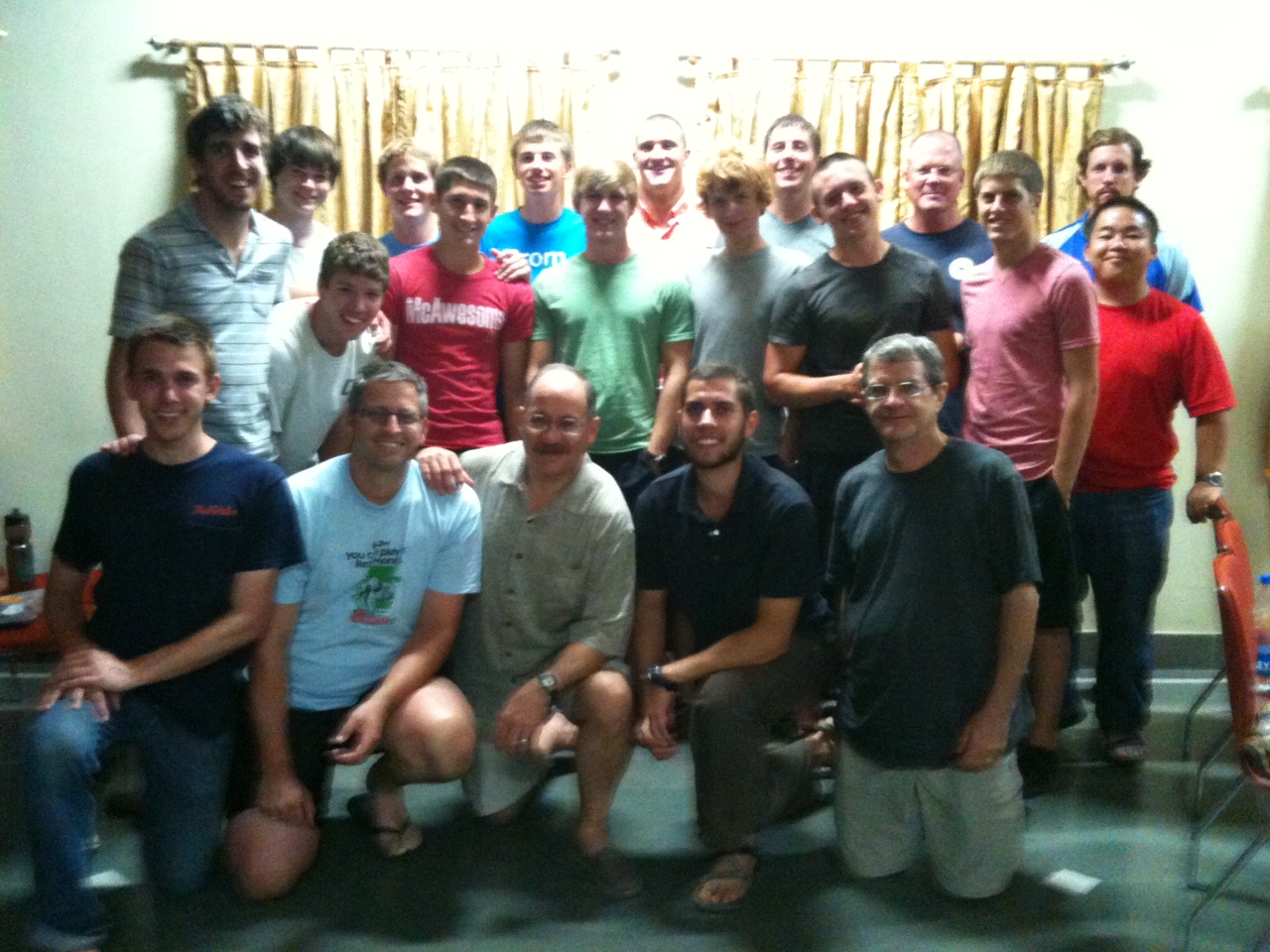
Yesterday, Mike and several volunteers came to Kingsland to pick up a load of furnishings that we have had in storage. We worked for over an hour to load a large U-Haul truck and also a trailer with desks and other items that will be used in their new volunteer center. And this morning, Brian Stone and I took several of our college students to work at the volunteer center. We constructed and installed utility shelving, painted car stops, trimmed hedges, pulled weeds, and sorted and folded donated clothing. Our team of college students did a great job today. Because Mike mobilizes thousands of volunteers annually, it’s important that he get this new volunteer center operational as quickly as possible. Our work today helped Mike to get one step closer to opening the center. And, our labor of love will have a lasting impact as Mike utilizes this center to host the thousands of volunteers who come from around the nation to work with the at-risk kids he serves in the Third Ward.

I am grateful for guys like Mike who serve in tough places and who mobilize Christ-followers to invest in the poorest children in our community. And I am grateful to all that Kingsland has done and will continue to do to strengthen our urban alliance with Mike and Kenzie and their staff. On Wednesday, August 3, we will fill 300 school backpacks with school supplies that Mike and Kenzie will give to the children they serve. And on Wednesday, August 10, we will collect new and gently used children’s books to help stock the Generation One children’s library. These are two of our final three Wednesday night Summer of Service initiatives at Kingsland. I hope that you will include these dates on your calendar and help make a difference in the lives of the kids who call the Third Ward home.
Posted by: Omar C. Garcia | July 21, 2011

Still Learning from Dad

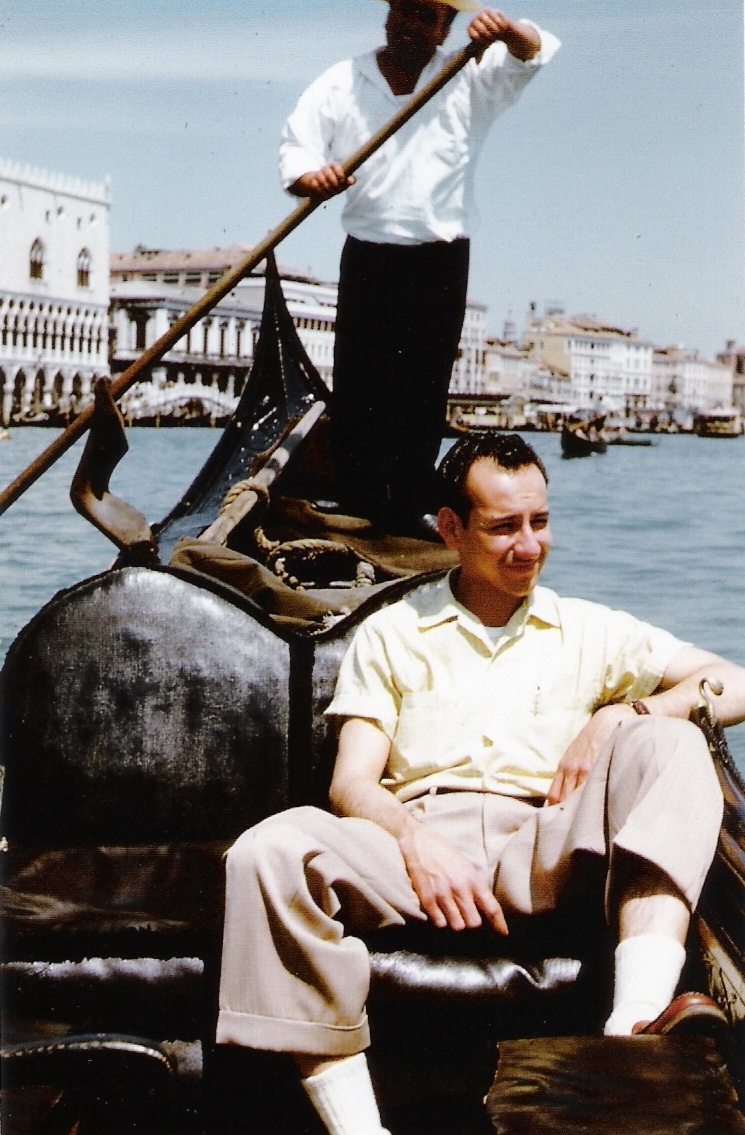
Dad in Venice | June 1954

I often tell others that I credit my Dad for giving me a love for the nations. As a young man, Dad traveled extensively throughout Europe. Dad traveled light with only a spare change of clothes. However, he had to have a suit made when he ventured into Francoist Spain because men were required to wear suits in public at that time. He also sharpened his language skills by learning some conversational Portuguese, German, and a little Russian along the way. But perhaps best of all, Dad was an avid photographer and took hundreds of slides and black and white prints. The first camera I used when I ventured away from home was my Dad’s Zeiss Ikon Contessa camera that he had purchased in Germany. He taught me about f-stops and film speed and all sorts of technical things I needed to know in the days before point and shoot cameras. I took hundreds of photos (mostly slides) with that camera in the years before I purchased my own camera.

Looking back on my childhood, Dad did several things that made me curious about the nations. He planted the seeds that later blossomed into a love for those who live beyond our borders. I have tried to do the same things my Dad did in order to help my own kids love and respect others, regardless of who they are or where they are from. Here are some of the ways in which God used my Dad to shape my love for the nations.

Photos | One of my fondest childhood memories is of the nights Dad would set up his slide projector to show us his black and white slides and early color slides of places he had visited and people he had met. These family night sessions generated lots of questions and lots of conversation about the people and places beyond our hometown. We also enjoyed looking through Dad’s photo albums where he had carefully categorized his travels and included a little written commentary beneath the photos.

Books | Although there were not many travel books and guides available when I was a kid, Dad had some interesting books about other countries. I especially enjoyed looking at the maps in the atlases we had at home. Dad also subscribed to Life and Look, two popular magazines that were filled with great photos of current happenings at home and abroad.

Stories | Dad’s stories stirred my imagination. One of my favorite stories is of a journey that he and a friend took from France to Spain. Because they did not have a map, they used a world atlas to plot their route. They followed a particular road through the Pyrenees but it turned out to be a dead-end. Eventually they found an alternate route near the Bay of Biscay and made their way to Madrid.

Explorers Club | When I was in Elementary School, Dad paid the monthly fee for me to join Commander Whitehall’s Explorers Club. Every month, Commander Whitehall would send a package from some far-away place. Each package contained a map and information sheet, a small souvenir item from the country he was visiting, and a floppy record with his narrative about that particular country. I looked forward to receiving my package each month so that I could learn about people who live in other countries.

These are just a few of the things that Dad did to keep me curious about the nations. Dad has never lost his curiosity about the nations. Even as an octogenarian, he has an insatiable appetite for learning about people and the places where they live. Every time we visit, Dad and I spend hours watching and conversing about travel programs that he has recorded for us. I am still learning about the nations from Dad and grateful that he continues to encourage me to go beyond.

Posted by: Omar C. Garcia | July 20, 2011

Wordless Wednesday

Muslim man reading the morning newspaper in his village. | 2000 | Bangladesh

Posted by: Omar C. Garcia | July 18, 2011

Raja’s Cries for Help

While in Kolkata earlier this month, I picked up a copy of the July 7 edition of The Times of India. One of the front page stories immediately caught my attention: “School bully beats classmate to death.” Raja, the victim, was beaten to death at his school in south Kolkata on the day that I arrived in India with our team of students. According to the news report, Raja was an excellent student who dreamed of becoming a doctor. According to his uncle, Raja had no other interest in life. But now, Raja will never realize his dream. This young boy loaded with potential and motivated by a noble dream lost his life at the hands of a sixteen year-old boy who had once been one of his best friends.

How does a guy who was once a good friend kill a classmate? Raja’s killer, a marginal student, was jealous because Raja was the smarter student. When I read this I was reminded of an old Cowboy Proverb that says, “Don’t get mad at somebody who knows more’n you do. It ain’t their fault” — advice that Raja’s killer should have heeded. The bullying started after Raja refused to let his friend copy his answers on a major school examination. The bullying progressively escalated until finally, on Wednesday, July 6, Raja stood up to the bully. The bully, whose name was withheld by The Times of India, became so angry that “he started kicking and punching” Raja “in the chest and banged his head repeatedly against the wall.” But, the worst part of it all is that Raja screamed for help, “but no student or teacher came to his rescue.”

The final words of the story are perhaps the saddest of all, “… no student or teacher came to his rescue.” Raja did not lose his life in some dark alley but instead at the school gates in broad daylight. For whatever reason, students and teachers who heard his cries for help failed to act. No one was willing to lift a finger or lend a hand to help stop the violence. Had anyone taken any initiative to intervene, they might have saved the lives of both boys. But now, one is dead and the other faces an uncertain future to be decided by India’s judicial system. And Raja’s mother, pictured in the article, now faces a grief-filled future without her son.

Irish statesman Edmund Burke once said, “All that is necessary for the triumph of evil is that good men do nothing.” He was right. A reader left this interesting comment on a blog I posted from Kolkata: “Don’t leave it up to someone else. You are someone else.” Simple but brilliant observation. It’s not until we realize that we are the someone else who can make a difference and then act accordingly that we will make a difference. We must do more than avoid evil, we must actively oppose it and stand up against it, even at personal risk. There is no virtue in remaining passive or ignoring the cries for help from those suffering abuse. We must act with courage and intention lest the bullies of the world triumph.

Posted by: Omar C. Garcia | July 17, 2011

On Returning Home

As much as I enjoy leading teams to serve around the world, there is nothing quite as good as returning home. In a post entitled “Living with Risk,” I wrote: For years, I have lived with the sobering realization that the Great Commission (Matt. 28:19-20) says, “Go” — but says nothing about returning. While I am not comfortable with that thought, I have accepted it because I am committed to something bigger than myself — something worth living and dying for. For me, God’s purposes are worth the risk; even if that means that someday I don’t make it home. Perhaps that is one reason why I enjoy every homecoming. However, this most recent homecoming from Kolkata was different from the previous sixty homecomings from various locations around the globe for two reasons. First, because my youngest daughter Gina was not here to greet me and, second, because my son Jonathan is also away.

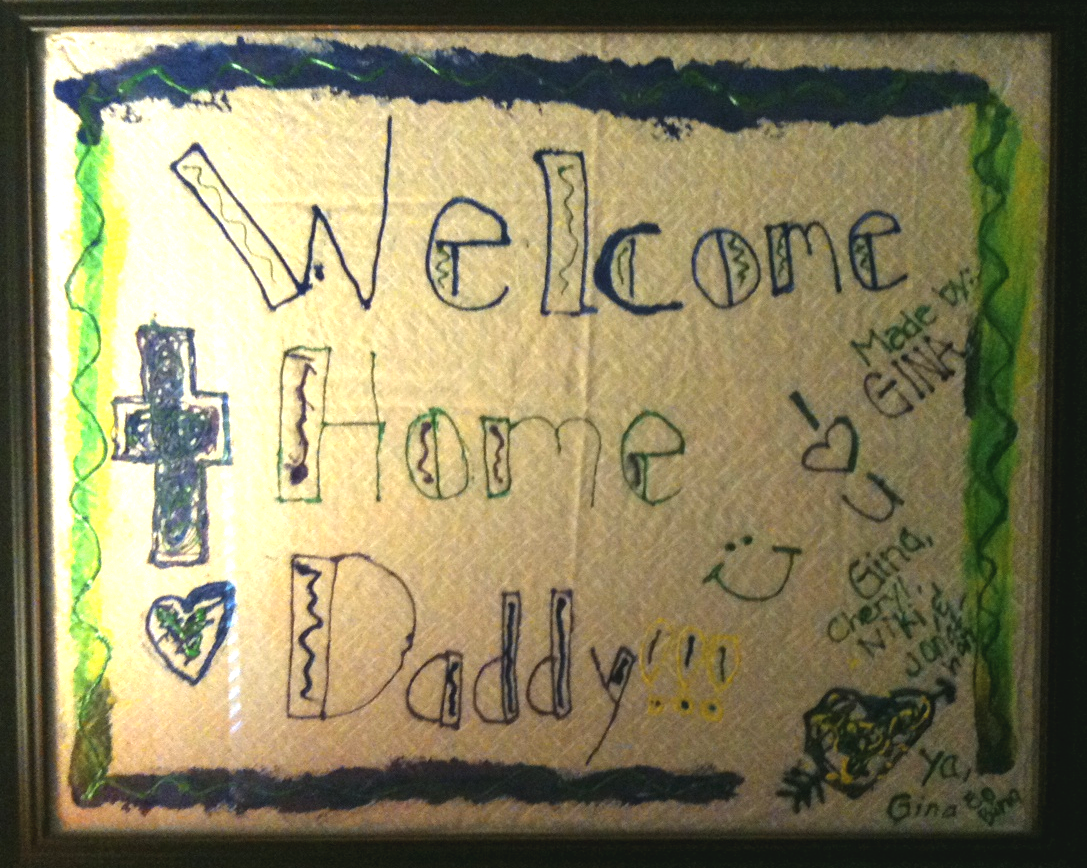
In the early years of travel, Cheryl and our three kids would accompany me and my teams to our departure gate at the airport to say goodbye. And, they would also be at the gate to meet us when we returned home. That was in pre-9/11 years. Today’s airport security protocol does not allow anyone without a ticket beyond the security area. So now we say our goodbyes and welcome homes at the curb in front of the terminal building. Through the years my kids have made all kinds of Welcome Home banners and prepared special meals and all kinds of fun stuff. Years ago Gina made a banner that I had framed and that hangs on the wall above my desk at home. It is a sweet little reminder of how blessed I am to have folks at home who are glad that I made it back safely. And now, Gina is away for the next five and a half months, living and serving in (undisclosed location) in Southeast Asia and my son Jonathan is serving with our team in Tanzania.

Niki, Jonathan, and Gina have all traveled with me in the past. But now, my kids are venturing out on their own and it’s my turn to meet them at the airport to welcome them home. Gina called me this morning before I stepped into the pulpit to preach to wish me well and to tell me about her worship experience in Asia. After church, Jonathan called me from Tanzania to tell me that he had been teaching in Tanzania at the same time that I was preaching at Kingsland. “Pretty cool,” he said. I agreed. It is indeed pretty cool to see God at work in the lives of my kids. We are just an imperfect family committed to each other and grateful for the opportunities God has given us to serve Him. Cheryl and I are really glad to see God using our kids to help advance His purposes.

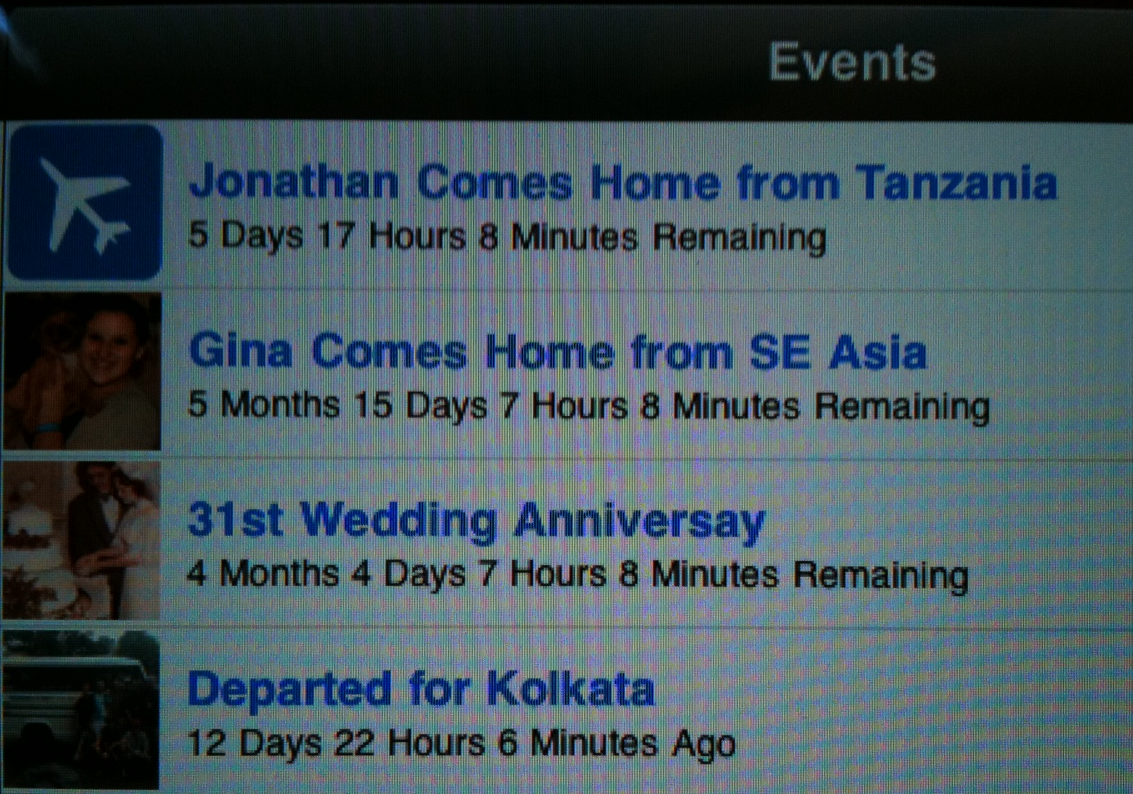
So, returning home from Kolkata this past Friday was a little different. But that’s ok. I look forward to welcoming my kids home in the days and months to come. I have a Countdown App on my iPad that is marking the months, days, hours, and minutes to their return. That’s also pretty cool. It reminds me that while my kids are away I need to continue supporting them in prayer and with encouraging texts and emails and Skype calls until the day I meet them at the airport to welcome them home.

Posted by: Omar C. Garcia | July 13, 2011

A Slice of Time

Kolkata, India

Our time in Kolkata comes to an end today. We will head to the airport in a few hours to begin the long journey home. Our suitcases are stuffed with dirty laundry, muddy shoes, and a souvenir or two to remind us of our time of serving the least of these in muggy Kolkata. More importantly, we are returning home with hearts filled with precious memories. While some of these memories may get lost under the accumulated stacks of memories yet to come, they will always be a permanent part of our respective stories. And, through the years to come, we will see or hear things that will send us rushing into the attic of our personal history to rifle through faded stacks until we find that particular memory of something that we experienced here. Then, when we find what we’re looking for, we’ll blow the dust off of the yellowed pages and smile and say to ourselves or someone else, “I remember when I went to Kolkata and …”

In my case, many of my memories live here in Kolkata. Every time I return to the City of Joy I manage to bump into memories who, like old friends, come running out to embrace me and to welcome me back. I find them riding along with me in cabs and rickshaws, reminding me of good times we shared. They follow me through the crowded streets and stand beside me as I serve at familiar places like Mother Teresa’s homes. And when I try to go to bed at night, they often keep me up. In many ways I find security in their company when I am so far away from home. I know that the next time I come I will be reunited with even more memories created during my time here with our great team of students.

Last night we said our goodbyes to six of my friends who joined us here to help with our logistics. It’s always a bittersweet thing to say goodbye, knowing that we have shared a slice of time that can never again be repeated in exactly the same way. God used this combination of us — students and adults and friends — who met in this particular place at this particular time to touch the lives of people we never thought we’d meet — hurting and poor and damaged people who have been blessed by the work of our hands and who blessed us in ways we could never have imagined. We are all returning home a little different than when we arrived here last week. God has used our experiences here to shape us a little more into the image of Christ (Rom. 8:29). I am grateful to have had the privilege to share this brief slice of time with our students and chaperones and friends. And, I look forward to lots of great reunions with the many new memories we made while serving together in the City of Joy.

Posted by: Omar C. Garcia | July 13, 2011

The Language of Love

Kolkata, India

Every time I volunteer at Mother Teresa’s homes I make it a point to look for familiar faces — men I have cared for on previous visits. Because so many of these men are in frail health, I know that many of them will die before I have an opportunity to visit again. That’s one reason I want to do all that I can to comfort these men while I am here. My biggest wish is that I had the language skills to communicate with them in either Hindi or Bangla. And although a handful of these men speak a little English, most do not and some are so ill that they cannot speak at all. However, all of these men understand the common language of love expressed through a caring touch or a warm smile.

Yesterday afternoon, I watched a frail old man getting ready for bed. This man is among those who has lost the ability to speak. As he sat on the edge of his bed, he folded his trembling and wrinkled hands and began to move his lips in prayer. I could not help but smile as one of our guys walked over to pray with him. After the “Amen” the elderly man looked into the eyes of our volunteer and smiled. I don’t know if this man will still be alive when I visit again, but I am glad for the way in which our team members have taken the initiative to do small things with great love for this man and the others at Prem Dan.

This week, two of the men that we have cared for at Prem Dan died quietly in the night. It was sad to walk past their empty beds where in previous days we had massaged their limbs and helped to feed them. Because of the Missionaries of Charity and the volunteers who come to serve beside them, these men died with dignity. Mother Teresa said that she wanted for “people who lived like animals to die like angels — loved and wanted.” These men, neither of whom could speak, were fortunate that they did not have to die alone on the streets but instead died in a place steeped in love.

Whenever I volunteer at Mother Teresa’s homes I also make it a point to visit with some of the Missionaries of Charity that I have befriended on previous visits. One of my favorite nuns was Sister Olinda, an Indian lady from Darjeeling, who served at Kalighat (home for the dying). She spoke several languages, including Spanish. We always enjoyed sitting and conversing in Spanish about Jesus and about the beauty of serving the poor. I inquired about her yesterday and learned that she died on March 28 at about ten in the morning at Mother’s House. My heart was saddened by this news. In addition to the many languages that she spoke, Sister Olinda was fluent in the language of love, a requirement for caring for the least of these. I will miss her but am grateful for the time we were privileged to spend together serving the least of these at Kalighat.

Today is our last day to serve at Mother Teresa’s homes. Our team will head back to the United States tomorrow. Each of our students and adult sponsors will return home much more fluent in the language of love because of their service here. Thanks for your prayers for our team as we have served the least of these and the oppressed in Kolkata.

Posted by: Omar C. Garcia | July 11, 2011

Little Pencils

Kolkata, India

I have absolutely enjoyed my time in Kolkata with our high school graduates. Our students have demonstrated a maturity beyond their years as they have compassionately ministered to others. Every evening, we conclude our day with a time of worship and debriefing. This is my favorite time of the day because I get to hear about what our students experienced in their own words. Last night was especially moving as our students prayed for particular individuals they have served this week. A few wept as they prayed. It’s obvious that our students have been deeply moved by all they have seen and experienced here. Afterwards we took a few minutes to share humorous stories about something that has happened this week. Lots of healthy laughter! And finally, we took time to pray for our fellow Kingsland students who are serving in six other locations around the world.

As our students shared their personal stories last night, I thought about one of my favorite Mother Teresa quotes: “I am a little pencil in the hand of a writing God who is sending a love letter to the world.” I am proud of our students for allowing God to use them to write a legible message of love through their lives this week. They have communicated a clear message by loving and serving others in the name of Jesus without any conditions and without expecting anything in return. This week they have joyfully served those who possess nothing or who have very little at best. In some cases we have only been able to offer a smile, but as Mother Teresa said, “Every time you smile at someone, it is an action of love, a gift to that person, a beautiful thing.” So, even a smile is not wasted but serves a purpose in the story that God is writing through each of our lives.

When I consider the example of Mother Teresa and her continuing influence long after her death, I am challenged to consider what God is writing through my life. In order for Him to write a clear and legible message through my life I have to yield control of each stroke of the pencil to Him. If I try to wrestle control away from Him then the message becomes garbled and confused. As a young Christ-follower I learned a little poem that expresses the importance of writing a clear message by the way that we live:

You are writing a gospel,
a chapter a day,
by the deeds that you do
and the words that you say.
Others read what you write,
distorted or true,
So, what is the gospel,
according to you?

In order to write a message that others understand, we need to place ourselves in the hands of the Author of love. Only then will we become a letter of recommendation for Christ (2 Cor. 3:2-3). Our students have allowed God to use them to write a message of love on the parchment of service this week. And, the best part is that this message does not require a translator. Anybody can understand it. The poor children we have served, the residents in Mother Teresa’s homes, and the girls in the aftercare have all understood every loving word that God has written with our little pencils. But what about you? Have you placed yourself in the hand of the only one who can write a legible message of love through your life? Allow God, the Author of love, to write a love letter through your life, today.

Posted by: Omar C. Garcia | July 10, 2011

Thank You, Brother

Kolkata, India

In my prayer time this morning, I asked the Lord to help me see the world and the people around me a little more clearly. Because I am so accustomed to the sights and sounds of Kolkata, it’s easy for me to look past the things that I more readily noticed on my first visits here. For the past several years I have tried to be more intentional about developing peripheral compassion by looking more carefully to my right and to my left. I have learned that needs tend to lurk and live in these blurry and shadowy peripheral places. It’s not difficult for me to miss what should be obvious needs when I become too focused on where I am headed or what I happen to be doing at the moment. That’s why I often remind myself to walk slowly among the people and to see and listen to them carefully. I’m certainly not where I need to be in this regard but I am making progress.

This afternoon, our student teams headed for their respective assignments at Mother Teresa’s homes. As we walked to our bus in the misting rain, I noticed the beggars on the street whose meager possessions were covered with scraps of plastic and who sought shelter under any available cover. Rain is refreshing but certainly makes life even more inconvenient for those who live on the streets. Later, as my team and I walked through the slum outside of Prem Dan, our assigned home, I looked at and into the shanties that line the street and was again overwhelmed by the extreme poverty. Everything that is convenient to me, from clean water to a pantry full of groceries, is alien to these street dwellers. I also looked at the faces of our students as they walked through the current of beggars that live outside of Prem Dan. They are seeing things they have never seen before and, as a result, are beginning to sharpen their peripheral vision and compassion.

As my team and I served the residents at Prem Dan I made it a point to linger a little longer with each person I helped and to look at them a little more intently. I looked more carefully into each face and tried to notice their every expression. I was blessed by how each of them express their gratitude for our service. Even those who can’t speak are able to deliver a Hallmark card with a hint of a smile or a faint nod of the head. The most surprising experience today happened after I rubbed lotion into the hands, legs, feet, and back of a man lying in a fetal position. He was mumbling incoherently the entire time as his body twitched involuntarily. He was not able to fix his eyes on anything and had a far away and blank look on his face. When I finished caring for him I patted him twice on the back and began to walk toward the resident in the next bed. That’s when I heard him stop mumbling and clearly but faintly say, “Thank you, brother.” And then he went into the same mumbling cadence as when I had first helped him.

Could this have been Jesus in the distressing disguise of the poor? I think so. And, I wonder what Jesus will say when I see Him face to face. Perhaps He will say, “I was naked and poor and sick and you cared for me. Thank you, brother.”

Posted by: Omar C. Garcia | July 9, 2011

A Theology of Feet

Kolkata, India

In addition to serving at New Hope School in the slums and at the aftercare home that we fund for young girls rescued from sex trafficking, our students have spent the last two afternoons serving at three of Mother Teresa’s homes. Mother Teresa’s influence and example continues to draw thousands of volunteers annually from around the world. They come here to serve the least of these for a variety of reasons. Many who come are searching for greater significance in life and are realizing that the path to significance is paved with service. Others come because, like Mother Teresa, they want to follow the example of Jesus and obey His words to care for the least of these. Some come out of curiosity and leave convicted about selfish living. But regardless of the reason why people come … they come by the thousands to serve and to care for the poorest of the poor, Kolkata’s outcasts.

I have been deeply moved by the tender and compassionate hearts of our students. On their first day at their assigned home, several silently wept at what they saw. But, within minutes, our students fell into the rhythm of serving and caring for the physical needs of the residents. It’s amazing to watch kids who may not take the initiative to clean their rooms at home so quickly take the initiative to help a broken man or woman to make their way to the toilet or to bring them a cup of water. But, what always amazes me most when I bring volunteers to serve at Mother Teresa’s homes is how they react when I hand them a bottle of lotion and then ask them to rub lotion into the dry, calloused, and broken feet of those we have come to serve. Our students did not hesitate for a second. It’s hard to find the words to describe what I felt as I watched our students tenderly massage the tired feet of the least of these, many of whom have never owned a pair of shoes.

Touching and washing the feet of the least of these is a profound and humbling experience. You cannot touch or wash the feet of others unless you are willing to bend low — both inside and out. When Jesus and His disciples gathered to eat the Passover meal in the upper room, Jesus got up from the table and washed His disciples’ feet (John 13:1-17). Jesus then explained to them that He had set an example of service He expected them to follow. Jesus did not institute foot washing as a church ordinance but rather set an example of the kind of humble service His followers should show to others. No other world view has a theology of feet or a leader who stooped to wash the feet of his disciples. We are most like Jesus when we compassionately and humbly bend low to serve others, expecting nothing in return. When I look at the hands of our students, I see beautiful hands — the hands of Jesus. They have used their hands to do for the least of these what Jesus would do.

« Newer Posts - Older Posts »

Categories