Posted by: Omar C. Garcia | January 4, 2012

New Hope for Monguli

Kolkata, India

Monguli with Kingsland volunteer Kaytlin Smith.

There is absolutely nothing boring about Kolkata. This city is a sensory smorgasbord. Whether you look to the right or to the left, it’s impossible to escape the sights, sounds, and smells of Kolkata — all mixing and wafting out of a cauldron of ceaseless human activity. And when you take a moment to scratch beneath the surface you’ll find that there is nothing boring about the people. All you have to do is squeeze them gently with a question or two and their personal stories begin to seep to the surface, providing context and clues to their existence, frustrations, hopes, and aspirations. Today, I met a twelve year-old girl, just a face in the crowd of young students attending the only school in the slum of Udayan Pally, a school founded by my friend Pastor Rudra. Her name is Monguli, the oldest daughter of a Bengali cobbler and a maid trying to support their three children on the edge of existence in a hovel crammed among thousands along a foul-smelling canal.

Monguli’s family survives on the equivalent of less than two US dollars a day. Struggling to make ends meet, Monguli’s mother withdrew her from Pastor Rudra’s New Hope School last May and sent her to work as a live-in maid for a family of means. It was a tough choice but the family needed the extra forty-cents a day that Monguli earned by cleaning floors and toilets and dishes and silverware and clothes. At every opportunity, Monguli begged her mother to allow her to return to their home and to school. Pastor Rudra’s wife, Mita, repeatedly begged and reasoned with Monguli’s mother, trying to get her to understand the value of a good education for her daughter. Finally, in October of last year, Monguli’s mother admitted that she had made a mistake by taking her daughter out of school and forcing her to work as a maid. Monguli returned to New Hope School where she continues to excel in her studies. She is a beautiful little girl who truly has new hope.

The slum village of Udayan Pally is crowded with poor Bengali Hindus for whom hope is something elusive and out of reach. The concept of “the future” doesn’t exist here — only surviving today. But, Pastor Rudra wants to change that by educating the children of these refugees and squatters who have staked out a tenuous claim on life on the outskirts of Kolkata. Having visited and served at this school over the past couple of years, I can see remarkable progress in the education of the children who attend. Our ladies team is serving at New Hope School this week. Already they are impressed by Pastor Rudra’s huge vision and even bigger heart for the welfare of a village that is not even on the newest maps of Kolkata and its environs. But what is quietly happening at this little school with more than one-hundred students is indeed bringing new hope to many families. Perhaps one day in the future somebody else will ask Monguli to share her story. I know that it will be a more beautiful narrative because of the work of one man and his wife who did not forget about her when her mother sent her to work as a maid.
Posted by: Omar C. Garcia | January 3, 2012

The Joy of Familiar Faces

Kolkata, India

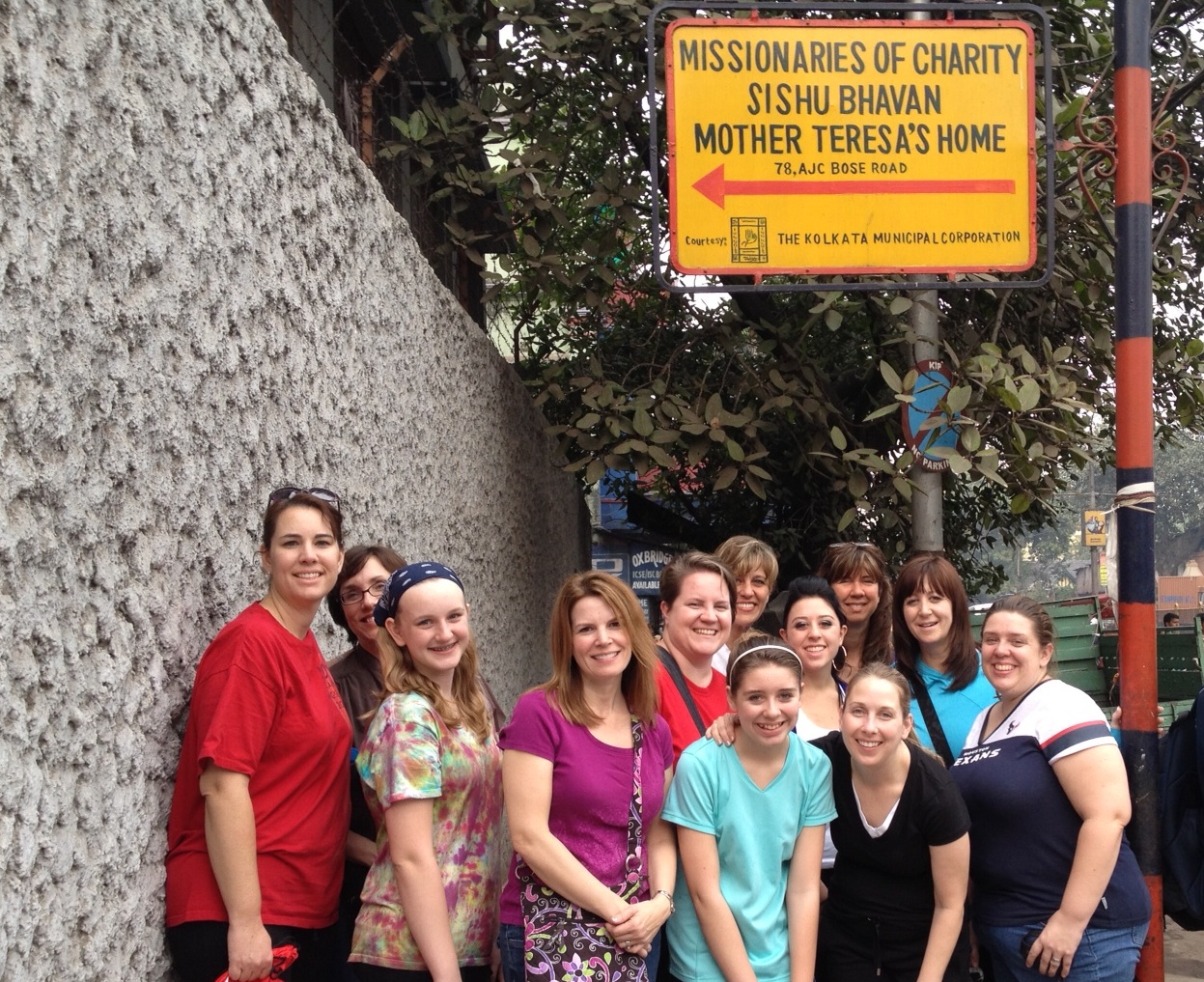
I find both joy and comfort in seeing familiar faces when I am away from home. One of the first things I did after arriving in Kolkata was to visit the folks I know along AJC Bose Road. Over the past years I have become friends with beggars, shop keepers, a waiter at a hotel restaurant, a barber, a Muslim laundryman, several nuns at Mother House (headquarters of Mother Teresa’s Missionaries of Charity), and the staff and security guards at the Baptist Missionary Society guesthouse. I have visited each of these folks over the past day and enjoyed smiles, hugs, hearty handshakes, and lots of conversations. And today, I made a new friend — a young Muslim man who runs a cell phone store next to Mother House. I was able to spend more than an hour conversing with him in his shop. We have agreed to stay in touch via email.

This morning, my old friend Don, the guy who handles the logistics for our trips here, and I went to the airport to meet Kay Smith and our Kingsland ladies. Once again, it was wonderful to see their familiar faces as they walked out of the terminal building pushing their luggage carts. Even though most of us see each other every week at church, seeing one another in Kolkata was like a mini family reunion with hugs and smiles and excited conversation. And, although tired from travel, we spent a few hours together getting oriented to life and landmarks on AJC Bose Road and the surrounding area. We visited Mother House, played with the kids at Sishu Bhavan (Mother Teresa’s home for orphans), and traveled by motor-rickshaws and trolley cars to get a quick bite to eat before going to bed. Over the coming days our ladies will work at the slum school we support, with the ladies in a vocational training sewing center we helped to finance, spend time with girls rescued from brothels, visit our justice partners in the city, and visit a ministry to kids rescued near the railroad station that handles a million passengers a day.

There is something really good about returning to the places where we have worked to build relationships and partnerships that are helping to advance God’s interests. Like me, the folks we work with and those we serve are always happy to see our familiar faces. Every time we return someone will say, “You’ve come back!” It means a lot to the folks here to know that we are committed to a long-term relationship with them and the people of Kolkata. I’m glad that they enjoy seeing our faces as much as we enjoy seeing theirs. Whether in Kolkata, India or Katy, Texas, it’s worth taking the time to get to know people and to bring a little joy into their lives. Every time we leave home we should make it a point to carry “a little balm and a little honey” (Gen. 43:11) with us in order to bring both healing and happiness to those we meet along our journey. May we live in such a way that others will smile and be filled with joy when they see our familiar faces.

Posted by: Omar C. Garcia | January 2, 2012

As Sisters Should

Kolkata, India

Cindie and Cheryl at age 16.

My wife Cheryl and her sister Cindie are eight months apart. They were providentially brought together under one roof to be raised by a loving couple who could not have children of their own. Cindie was adopted first, and then eight months later when Cheryl was born, she was adopted into the same family. Their adoptive parents, Gene and Frances Crane, provided a wonderful Christian home for these girls. Cindie and Cheryl have always believed that God brought them together because it was His special plan for them to be sisters and to have Gene and Frances as their parents. God gave them to Gene and Frances — but He also gave them to each another. As sisters, they have shared a lifetime of experiences from childhood to their respective marriages to having kids of their own in the same hospital where they were born and given up for adoption. They share a bond with and a love for one another that is rock solid — one that has become even stronger as they have cared for Cindie’s husband Craig in the final days of his life.

I have called Cheryl a few times from India to get updates on Craig. Every time I have called, Cheryl has broken down and wept. She has wept because of Craig’s intense suffering and obvious decline. And she has wept for her sister whom she loves. She knows that she must return home and then back to work this week but doesn’t want to leave Cindie’s side. As I have prayed for Craig and also for Cindie and Cheryl, I have been especially thankful that Cheryl has had the opportunity to be by Cindie’s side to help care for Craig through the holidays. Sisters were made for times like this. And as I have reflected on the more than thirty-years that I have known Cheryl and Cindie, I am impressed by how they have loved and respected and supported each other throughout those years. I have never known them to be unkind to one another or to fight or argue. I always know when Cindie calls because Cheryl lights up. I can hear the delight in her voice — the kind of genuine joy that you can’t manufacture but that is the product of a lifetime of gratitude for what God did when He brought them together as sisters. Cindie and Cheryl have always treated each other as sisters should — with mutual love, admiration, and respect.

The Psalmist wrote, “Behold, how good and pleasant it is when brothers dwell in unity!” (Ps. 133:1) — and indeed God is also pleased when sisters dwell in unity! Over the past thirty-three years of ministry I have learned that tough times do not always bring siblings together. And I have also learned that siblings who are together are better equipped to face the toughest of times. Watching and listening to Cheryl and Cindie through these difficult days of Craig’s imminent death has reminded me of how blessed Craig and I are to be the husbands of these remarkable sisters. Although the days ahead will be difficult as Craig takes his final breaths, I know that Cindie will be able to take another breath and another step because of the love and support of her family and of her sister who loves her as a sister should.

Posted by: Omar C. Garcia | January 1, 2012

Totus Tuus

Kolkata, India

I am back in Kolkata on this first day of the New Year. I have said before that I feel strangely at home in this city of teeming masses. I first visited Kolkata three years ago to serve the least of these at Mother Teresa’s homes. I think that is when it happened and why it happened that I feel drawn to return here. I feel connected to those I have served at Mother Teresa’s homes. Every time I return I am anxious to see them again. Jesus said, “For the poor you always have with you…” (John 12:8). When I read those words I often think that Jesus must have been thinking of Kolkata because it seems the poor have all gathered here. This city is over-saturated with people who live and die on the streets. And this is the city where Mother Teresa unwittingly captured the imagination and respect of the world because of her service to the poor.

Mother Teresa made a difference in the lives of the poor because she made herself totally available to God. It’s amazing what God can accomplish through those whose heart is completely His. Reading several books about the life of Mother Teresa got me interested in learning more about Pope John Paul II, one of the most universally respected leaders in the history of the Catholic Church. Although I am not a Catholic, I was fascinated by the life of this pope. While reading about him I came across the words “Totus Tuus” — a Latin expression that means “totally yours.” Totus Tuus was Pope John Paul II’s apostolic motto, one that he borrowed from a prayer-book by Saint Louis de Montfort. He chose these words to express his devotion to Mary. I do not agree with my Catholic friends about the veneration of Mary, but I do like the expression totus tuus. In its larger context the text that inspired the Pope is this: Totus Tuus ego sum, et omnia mea tua sunt. Accipio te in mea omnia. The translation of these words is, “I belong entirely to you, and all that I have is yours. I take you for my all.”

As I think about the year ahead I have decided to borrow Pope John Paul II’s motto but to apply it to my relationship with Jesus Christ. I am not big on making New Year’s resolutions, but I do like the idea of taking ownership of something that will challenge me to grow in my relationship with Christ in the New Year. I can think of no better challenge than to say to Christ, “I belong entirely to you, and all that I have is yours. I take you for my all.” I have a choice regarding who owns me and who I will serve. I choose to renew my commitment to Christ, to make myself His servant, to live out my faith in practical ways, and to share the life-transforming gospel message with others. And, lest I forget, I am determined to start each day of the New Year by saying to Christ — Totus Tuus.

Happy New Year! Live this year in such a way that if it is your last, then even your dust will praise God and tell the world of His faithfulness (Ps. 30:9).

Posted by: Omar C. Garcia | December 30, 2011

A Significant Day

Khondhamal Hills | Orissa, India

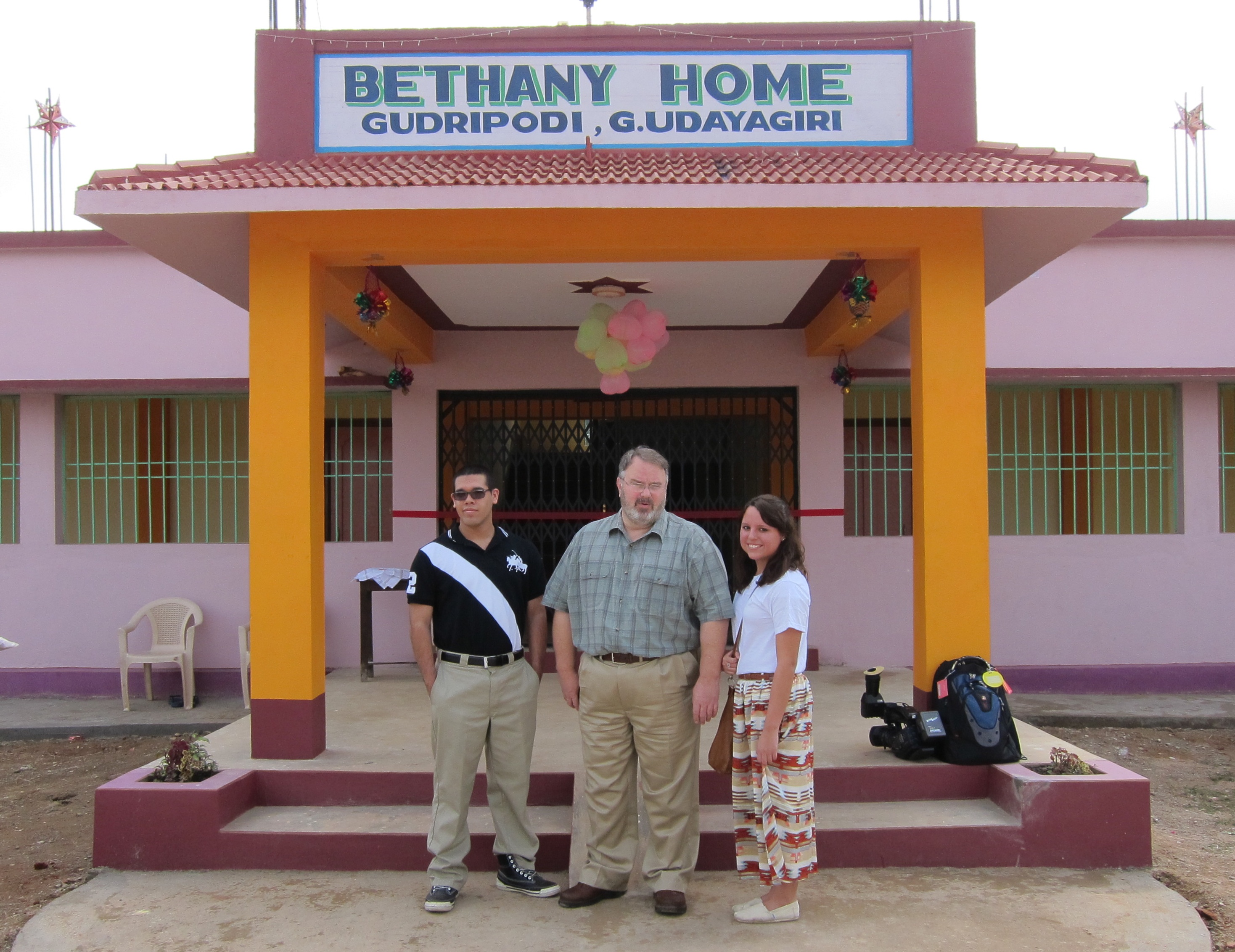
Today was a significant day in the Khondhamal Hills in Orissa, India — one of those days in which one can see how God has woven many threads together to make something beautiful. My part of the story here started with what I thought would be a one-time visit in the Winter of 1998. Little did I realize when I left these hills to return to my home that one of the threads of my heart had become entangled here and would unwittingly keep me connected to a man named Sudhansu. Years later, when persecution of Christians intensified, Sudhansu opened his home to boys from poor Christian families to ensure that they had a safe place to live and received a good education. When he started this initiative, my friend Jeff Hastings, a Houston attorney who had traveled with me to Orissa, agreed to personally support the work. Later, my friend Jerry Smith, who cares for orphans in Mongolia, agreed to take over support and to help Sudhansu care for an additional 45 boys. And then, finally, after the death of Kingsland member Diane Patterson, I felt a tug on that thread that had kept me connected to Sudhansu.

Because of the generosity of the people of Kingsland and those who loved Diane, a significant amount of money was entrusted to our missions ministry to honor Diane’s love for the nations and especially for the people of India whom she loved. I felt a heavy weight of responsibility as the steward of these funds but God gave me great peace about leading our missions ministry to invest in Sudhansu’s work in the Khondhamal Hills. Within a short period we saw the need to purchase land and to build a campus for the one-hundred boys in Sudhansu’s care. And so, we worked with Sudhansu to purchase a hectare of land on which to build a dormitory and dining facility. For the past two years we have worked to see the construction of this campus through to completion — not an easy task because of the resistance of Hindus in the area who would not sell us building materials and supplies. But, by the grace of God and in spite of opposition, the facilities are built and ready for the boys to occupy.

Today, Marcus Patterson and his children Daniel and Danae had the opportunity to see the campus built in loving memory of Diane. It was an emotional day for all of us as we stood in the midst of what is a part of Diane’s legacy — a home for the boys of the poorest Christian families in the Khondhamal Hills. Many of these boys come from homes that were completely destroyed by Hindu extremists and others have lost parents in the outbreaks of persecution in the area. But because of the concern of Sudhansu and the generosity of the people of Kingsland who gave memorial gifts after Diane’s death, these boys have a new home complete with new beds. The beds are a pretty big deal because these boys have slept on the floor, two to a blanket, for the past seven years. But today, everything changed because God wove something beautiful with the threads of several lives, including all who gave generous gifts. Only heaven will reveal the rest of the story as the boys in Sudhansu’s care serve the purposes of God in their generation.

Posted by: Omar C. Garcia | December 29, 2011

A Monument to Love

Agra, India | 28 December 2011

Casting its reflection on the still waters of the Yamuna River, the Taj Mahal is regarded as one of the seven new wonders of the world and a must-see travel destination. This meticulously engineered epochal monument was built by the Mughal emperor Shah Jahan in memory of his beloved wife Mumtaz Mahal who died while giving birth to their fourteenth child. Construction began in 1632 and took 22,000 workers a total of 22 years to complete. The beauty, symmetry, and detail of the monument is nothing short of amazing. But what is even more amazing is the love that inspired Shah Jahan to build this mausoleum for his favorite wife who lies entombed under the canopy of the central dome. Hundreds of thousands of visitors from all over the world travel to Agra annually to see Shah Jahan’s marble ode to his beloved wife Mumtaz — a monument that is arguably the most recognized icon of the Indian subcontinent.

When planning this trip to India for Marcus Patterson and his children to dedicate the boys home that our missions ministry constructed in memory of his late wife Diane, I asked Marcus if there was anything else he wanted to see during the few days allotted for our trip. He immediately said that he wanted to take his children to see the Taj Mahal. Having previously visited the Taj Mahal on two occasions, this was an easy request to fulfill, even on our tight schedule. As I watched Marcus and Daniel and Danae at the Taj Mahal, my thoughts turned from Mumtaz Mahal to Diane Patterson, a loving wife and mother who spent two years of her life serving the people of India. Not many people know that Diane had earned two masters degrees from New Orleans Baptist Theological Seminary. Diane devoted herself to equipping her family to love God and modeled passionate devotion to the purposes of God at home and among the nations.

The school we have dedicated in Diane’s memory is not a Taj Mahal but instead an ordinary and functional building. However, those who gave the funds given to construct it were inspired by Diane’s love for God. The building we have constructed may not last for centuries or will never become a must-see destination visited by thousands, but it will last for at least the next generation or two and will be a place where orphans and the children of the poorest Christian families in Orissa will find refuge and receive a good education. I can hardly wait to see the expressions on the faces of Patterson family as they visit the home for the first time — a place that will be something more memorable and meaningful to them than their visit to the Taj Mahal. In many ways, the home we have constructed in Diane’s memory is itself something of a monument to love — to the kind of love that will equip children to love God, love people, and serve His purposes in spite of the hate and persecution that Christ-followers in Orissa have experienced in recent years.

Posted by: Omar C. Garcia | December 27, 2011

Gold and Silver Threads

Houston, Texas en route to New Delhi, India

Everything changed for the Patterson family on June 15, 2006, the day that Diane, wife and mother of two, was killed in a tragic auto accident on Interstate 10 in Houston. Nothing can prepare a family to receive that kind of news — the worst kind of news that forces one to live with the reality of the unexpected and unexplained loss of a loved one. The years since Diane’s death have been difficult for her husband Marcus and their children Daniel and Danae. Not a day goes by that they do not miss Diane and wish that the events of June 15 had been as normal as those of any other day. And because we are human and try to make sense of the things we will never understand on this side of heaven, it’s easy to have those “If only” type of thoughts — “If only Diane had left the house five minutes earlier or five minutes later, she might still be with us.” Fortunately, we have a sympathetic Savior who understands. After the death of Lazarus, Martha approached Jesus and said, “Lord, if you had been here, my brother would not have died” (John 11:21).

The fact of the matter is that we will not fully understand things like the tragic death of a loved one until we see God face to face. In 1996, I visited the home of Corrie ten Boom in Harlem, Holland. Corrie and her family provided a hiding place for Jews during the Second World War. In her home, our guide showed us a needlepoint that Corrie had stitched and later framed. “It was her favorite piece,” our guide said as he pointed to what appeared to be a chaos of threads behind the glass of the frame. But then he turned it over to reveal what, to my surprise, were the words to “The Weaver,” a poem I had memorized years earlier. The words of this poem assure us that one day we will fully understand.

My life is but a weaving,
Between my Lord and me.
I cannot choose the colors
He worketh steadily.

Oft times He weaveth sorrow
And I, in foolish pride,
Forget He sees the upper,
And I the underside.

Not till the loom is silent
And the shuttles cease to fly,
Shall God unroll the canvas
And explain the reasons why

The dark threads are as needful
In the Weaver’s skillful hands,
As the threads of gold and silver
In the pattern He has planned.

Although Diane’s death was tragic, it is not a tragedy because she was a deeply devoted follower of Jesus. And because we believe the promises of God are true, we grieve with hope. In the months following Diane’s death, our missions ministry received several generous memorial gifts. Because Diane had spent two years of her life in India as a journeyman with the International Mission Board of the Southern Baptist Convention, it seemed right to invest in building a boarding home for the children of persecuted Christian families in Orissa, the Indian state with the worst record of persecution of Christians in recent history. After two years, the initial phase of our campus is complete. The boys in the Diane Patterson Bethany Home will not only have a safe place to live, but will continue to receive the very best Christian education. This home is just one of those “threads of gold and silver” in the tapestry of Diane’s life and legacy.

I am privileged to be escorting Marcus, Daniel, and Danae to India to dedicate the boys home in Diane’s memory and to help move in the almost one-hundred boys in our care. Our friend Sean Cunningham who serves on Kingsland’s Media Staff is with us to document the occasion on video that we will show to the Kingsland family in the coming weeks. Please pray for the Patterson family as they honor the memory of Diane by officially dedicating and opening the boys home in her honor. And pray for the boys who will one day become godly husbands, fathers, leaders, and evangelists and who will represent the interests of God’s kingdom in one of the toughest places for Christians to live. When God finally unrolls the tapestries of the lives of each of these boys He will also explain to them the beautiful threads of gold and silver He included after the death of Diane, a woman they never knew but who loved the people of India.

Posted by: Omar C. Garcia | December 22, 2011

A Malaysian Tamalada

Earlier this month I posted a blog about the history of the humble tamale and about my wife Cheryl’s tamalada or tamale-making party. My memories of Christmas are not only anchored to the people and places of my childhood, they are also connected to the foods that we enjoyed during the holidays. The tamalada was always a fun social event that was about more than making tamales, it was about bringing people together. That’s why my memories of Christmas are not only about delicious food, but about the laughter and conversation that mixed with the aroma of freshly steamed tamales and all kinds of baked goodies. Cheryl and I continue to keep traditions like the tamalada in our home because this is one tradition that gives us one more opportunity to stay meaningfully connected to others.

Tamales wrapped in banana leaves.

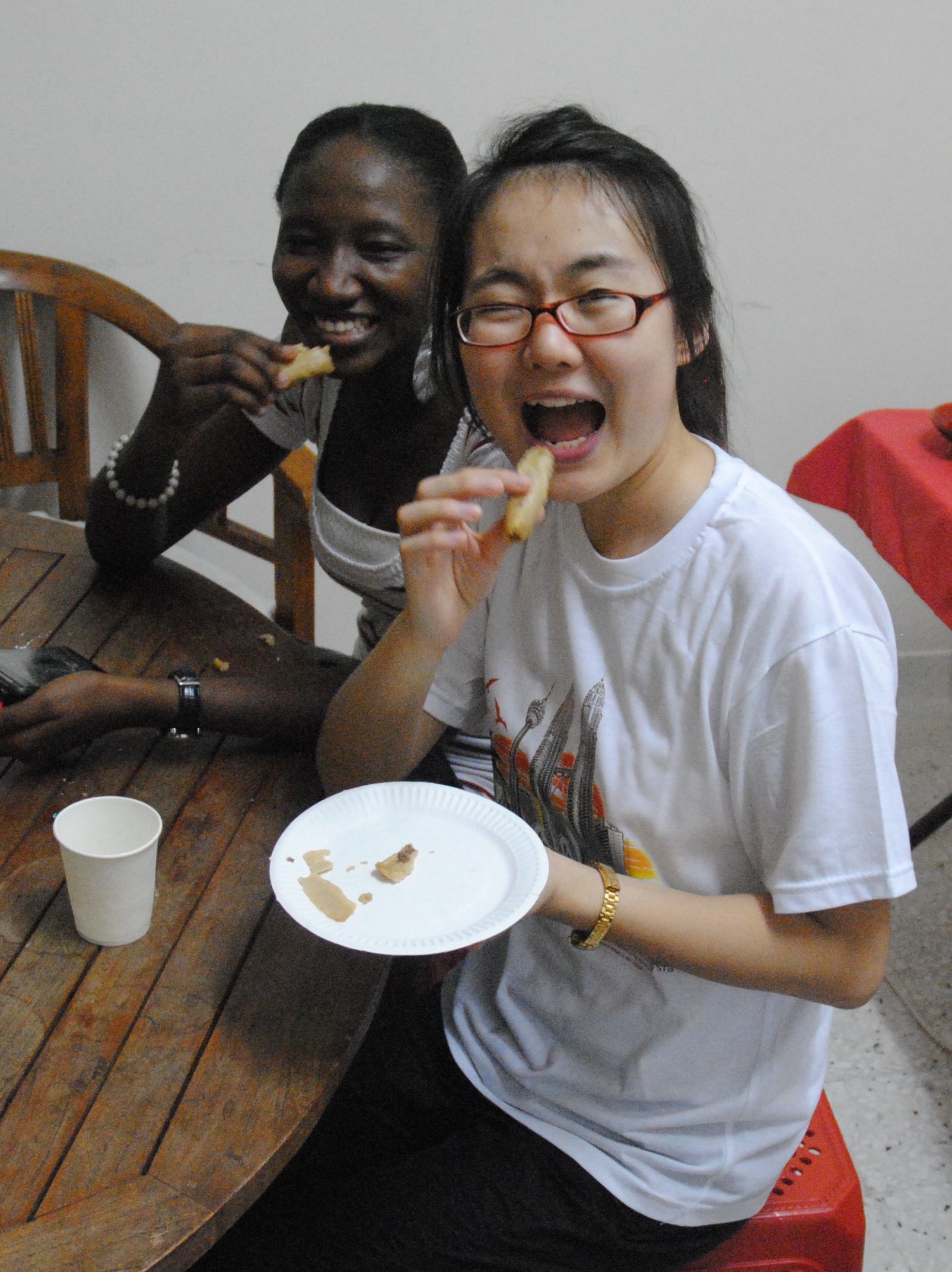
Yesterday, our youngest daughter Gina, who is currently living in Malaysia, hosted her own tamalada. Using a combination of Skype and email with Cheryl, Gina made a list of all of the ingredients she would need. She and Cheryl talked about how long to cook the meat, how to prepare the masa, and all of the other intricacies of tamale making. Gina then invited friends from the nations over to her home to make tamales. When we spoke via Skype, Gina told me that she and her friends had the best time together. That makes me happy because that is what a tamalada is supposed to do. Gina also said that the most challenging thing was substituting banana leaves for corn husks, but they managed to make the leaves work and cooked several dozen tamales. The tasty treats are in the freezer and will be served this week at a Christmas party for students. How cool to think that many international students will get to taste a tamale for the first time and learn a little about another culture as they listen to the Christmas story.

Friends from Nigeria and China.

Food can bring people together and open doors to share the story about Jesus. In Acts 10, Peter had a vision in which God basically nullified the Jewish dietary laws and prepared Peter to meet a Gentile named Cornelius. By removing the obstacle created by dietary laws, God opened the door for Jews and Gentiles to have fellowship around the same table. That’s a good thing and a good starting place for sharing the gospel. Christmas is a great time to connect with others around the table or by taking a plate of cookies to co-workers or neighbors. It’s also a great time for keeping the traditions that keep us connected to others. There are plenty of things in our world that keep us distanced from others. I believe that the world would be better served by the goodwill and fellowship generated by a few more tamaladas.

Posted by: Omar C. Garcia | December 21, 2011

Wordless Wednesday

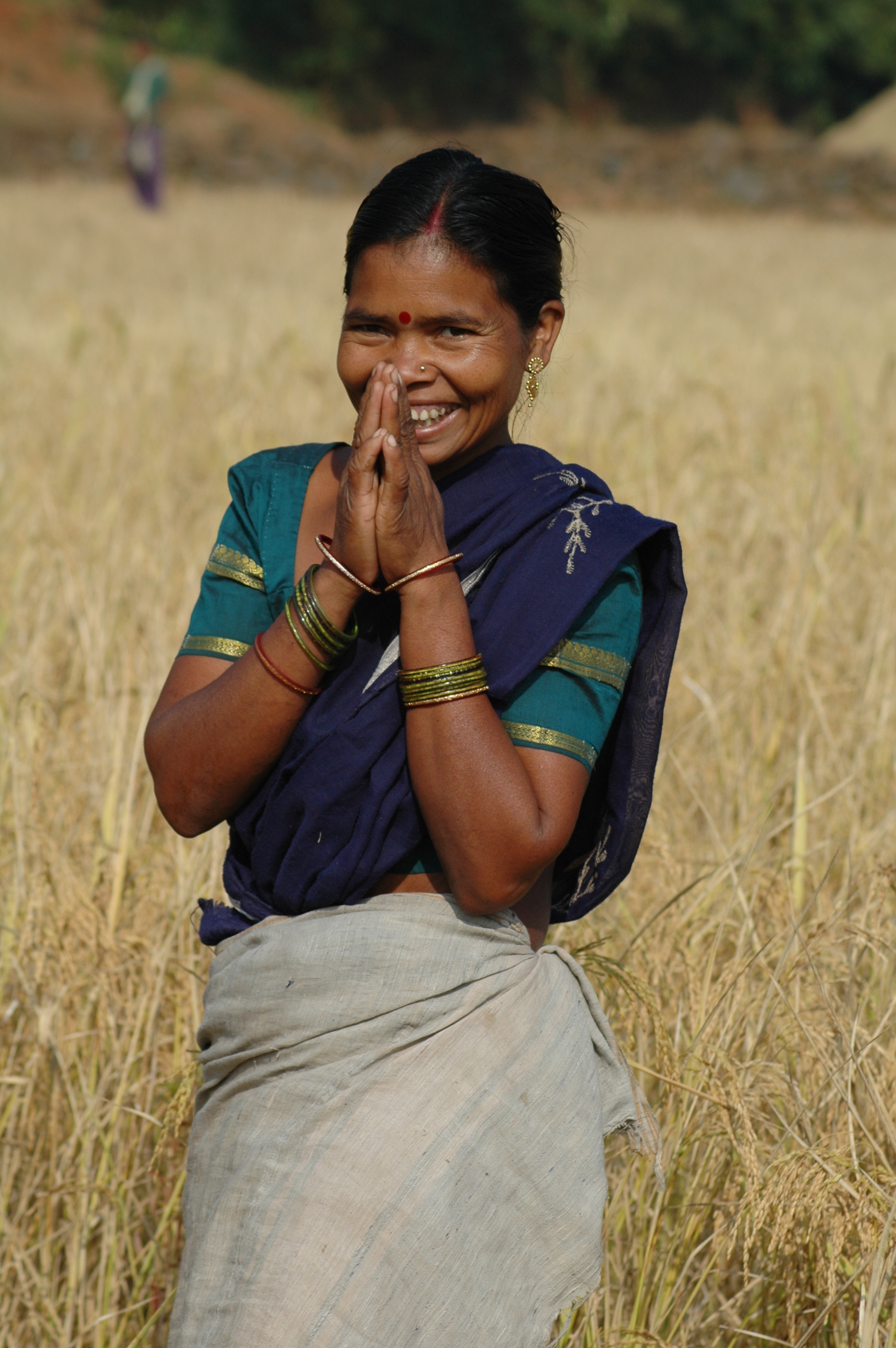
Kui Woman | 2007 | Khondhamal Hills | Orissa, India

Posted by: Omar C. Garcia | December 19, 2011

What Cancer Cannot Do

Corpus Christi, Texas

My brother-in-law Craig Reynolds knows that death is very likely weeks away. Over the past year his battle against stage four cancer has intensified.

Craig knows firsthand what cancer can do. He has lost weight, he must be nourished through a feeding tube, he is now at the chronic pain stage, and he is growing progressively weaker.

However, although this dread disease has exacted a heavy physical toll from Craig, cancer has not been able to penetrate the stronghold of faith in his heart — the flag is still flying — nor has it diminished his determination to continue telling others about the gift of salvation that God offers through Jesus Christ.

Knowing that his days are numbered, Craig has been working on a video project — something that will enable him to share the hope that is found only in Christ with friends, co-workers, and family after his death. He doesn’t have to do this. He wants to do this.

Like the Apostle Paul (Rom. 1:14), Craig understands that those of us who know Christ are indebted to those who do not know Him — in other words, we owe Christ to all who do not know Christ. So, even death will not keep Craig from telling his story.

Just like Craig, we will all face death one day. Death may come for us slowly or it may take us without warning. But, regardless of how it comes, even death cannot rob us of the opportunity to be an influence for Christ.

I have often written about the complaint of David in the 30th Psalm: “What will you gain if I die, if I sink down into the grave? Can my dust praise you from the grave? Can it tell the world of your faithfulness?”  (30:9).

God alone can answer the first question. However, those who remain behind after the death of a loved one can answer the other questions. The fact of the matter is that our dust will speak for us after we die.

In addition to his video project, Craig has intentionally written a good script for his dust, one day at a time. Those who will one day reflect on his life will have to acknowledge that he was a man who loved God deeply and never wavered in his faith, even when battling cancer.

Job once said, “Though He slay me, I will hope in Him” (Job 13:15a). Job understood that God has a bigger purpose that is not always clear to us, a purpose that we may not understand until we see Him face to face. That’s the kind of unwavering faith that will continue to tell the world of God’s faithfulness — the kind of faith that even cancer cannot diminish. And, that’s the kind of faith I see in Craig.

« Newer Posts - Older Posts »

Categories