Posted by: Omar C. Garcia | April 16, 2012

It’s Raining in Houston

Houston, Texas en route to Doha, Qatar

It’s raining in Houston today — a welcome sight, especially because we saw so little rain last year. Had it not been for my trip to Cambodia during the rainy season last year, I might have forgotten altogether what rain looks, sounds, and feels like. I struggled to keep my landscape alive and watched the flowers in my beds slowly wither away in spite of nocturnal waterings. But now, things are different. My grass is green, the flowers in my beds are dressed in brilliant color, and my wife’s little tomato and herb garden is thriving. When I arrived at the Emirates Airlines counter an hour ago, the familiar face there asked me if I was enjoying the rain. When I answered affirmatively she smiled and said that I am the first to say so. “Everybody else is complaining,” she continued. I asked if she had ever heard the old saying: “All sunshine makes the desert.” Again she smiled and said, “Yes, we have lots of desert in the UAE.”

It has also been raining on me. It happens often that just as I am getting ready to leave the country stuff happens that has me scrambling to stay dry. Yesterday, just after I picked up one vehicle from the repair shop, my son was driving down the street when out of nowhere a golf ball lobbed by a backyard golfer hit and shattered the windshield on his vehicle. None of the folks in the neighborhood ‘fessed up, not even the guy watching the golf channel when Jonathan knocked on his door. These are just a couple of the several last minute challenges that have rained down and caused me concern. But, that’s life. Things always break down or get broken at inconvenient times. God never guaranteed that we would live trouble-free lives if we serve Him. In fact, He actually uses these kinds of unexpected and seemingly ill-timed challenges to do good things in the lives of His followers.

So, I am on my way to Qatar, a little wet from the current rain in my life but confident that God knows exactly what He is doing. I am always encouraged at times like this when I reflect on His goodness over the years. I can look back and see how He has used the rains to make my faith a little greener, to make my life more vibrant, and to bring forth a little more of the fruit He wants to see in my life — “love, joy, peace, patience, kindness, goodness, faithfulness, gentleness, self-control” (Gal. 5:22-23). So, let it rain and let it pour. It’s all a part of what it takes to become more of the person God wants me to become. I have learned to see His hand at work in both the sunshine and the rain. He is unquestionably faithful and good and kind.
Posted by: Omar C. Garcia | April 13, 2012

Portaging Dams

Paddling down the San Marcos and Guadalupe Rivers

My training for the Texas Water Safari has intensified. The Texas Water Safari is billed as the world’s toughest canoe race, which is why my son Jonathan is trying hard to toughen me up. Having completed his first water safari last year, he knows what to expect and what it will take for me to finish the 260-mile course with him. Because of my work and travel schedule, I have to take advantage of any opening to spend time on the river with Jonathan. Fortunately, I was able to take a couple of days off this week to devote to training on the San Marcos and Guadalupe Rivers before I leave for Qatar on Monday. These training runs are absolutely essential, especially for me. On our last training run, our instructor said to Jonathan, “I see that your paddling stroke is much stronger than your dad’s.” Yikes! I know he is a stronger paddler, but did she have to use the word “much”? Jonathan and I had a good laugh but her words reminded me that I have a lot of work to do before the big race.

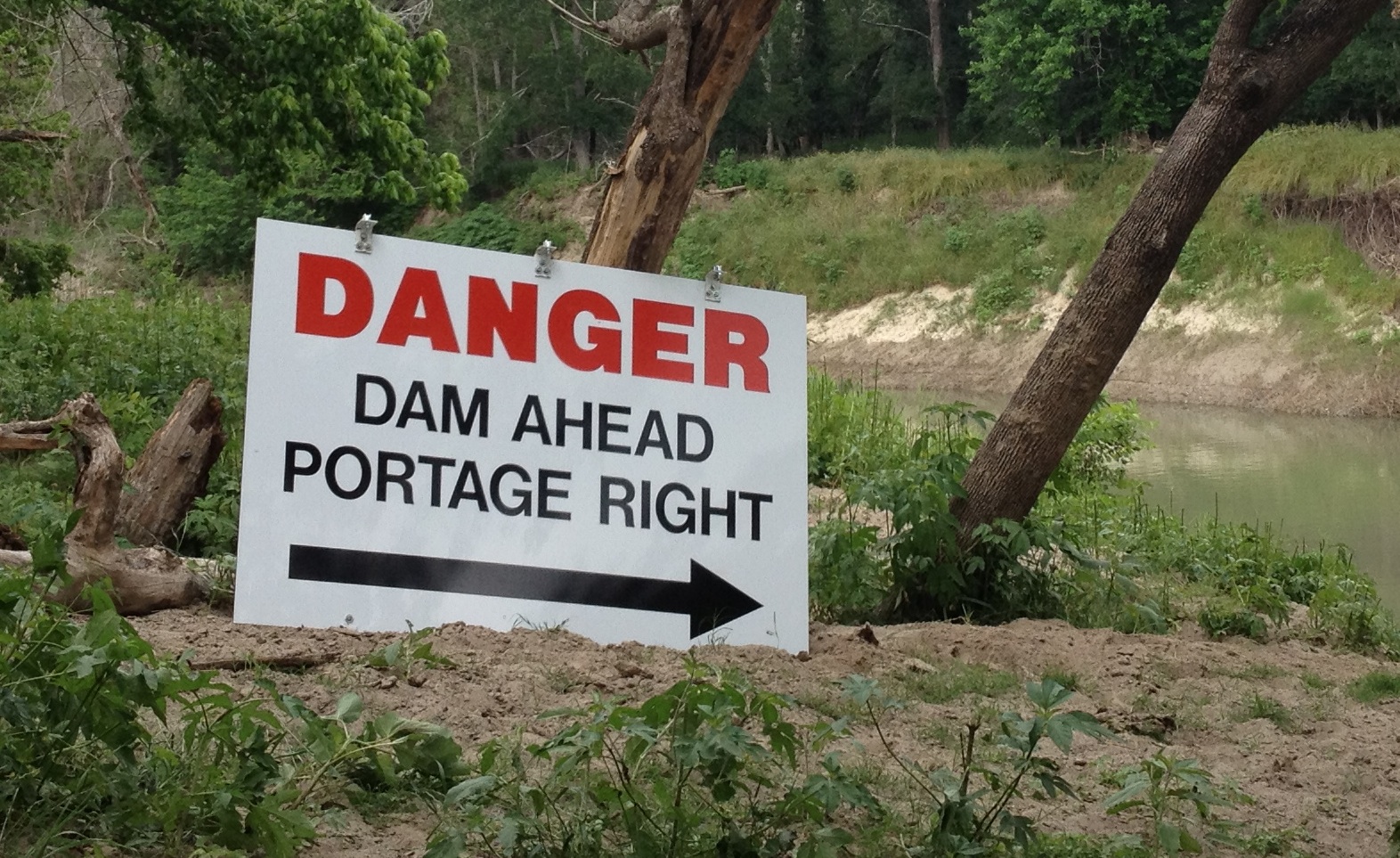
Warning sign to be installed before Ottine Dam.

On Thursday morning, Jonathan and I drove toward Luling, Texas to set up our base camp at the nearby Palmetto State Park, a beautiful setting. We spent Thursday on a section of the San Marcos River that we will likely see on the afternoon of the first day of the race. The most important thing that Jonathan wanted for me to see was Ottine Dam, a required portage point. A few years ago the San Marcos Police Chief died there while practicing for the safari. As Jonathan and I approached Ottine Dam, we met some men who were in the process of replacing a sign warning canoeists of danger. We spent a few minutes talking with them and made it a point to thank them for replacing the previous sign that was washed away by flood waters. And, we were able to get familiar with the portage route around the dam, a distance of about one-hundred yards.

As Jonathan and I paddled safely away from Ottine Dam, I could not help but think about the value of warning signs. All warning signs have at least one thing in common: they were put in place by others who came before us, recognized a particular danger, and took intentional steps to warn those who would come after them. Those who ignore these signs do so at their own peril. Earlier today, Jonathan and I paddled past the confluence of the San Marcos and Guadalupe Rivers toward Gonzales Dam, another place where several folks have died. The approach to this dam is also marked with a warning sign. It was important to Jonathan that I see this portage point in the daytime because we will actually arrive at this location at night on the first day of the race. He took the time to talk me through exactly where and how we will portage. We have to get this one right on race day, in the dark.

I certainly have lots to think about as the date of the water safari draws near. Our next scheduled training run is set for the first week in May when Jonathan will take me to the lower parts of the Guadalupe River that are closer to the finish line. I am looking forward to learning about the obstacles and portages along this section of the river. As I get ready for bed I am going to be sure to give thanks for the men we met yesterday who replaced the warning sign at Ottine Dam. And, while I am at it, I am also going to give thanks for the guys that put up the warning sign at Gonzales Dam. Guys like this do a great service for people they will never meet.

Posted by: Omar C. Garcia | April 11, 2012

Wordless Wednesday

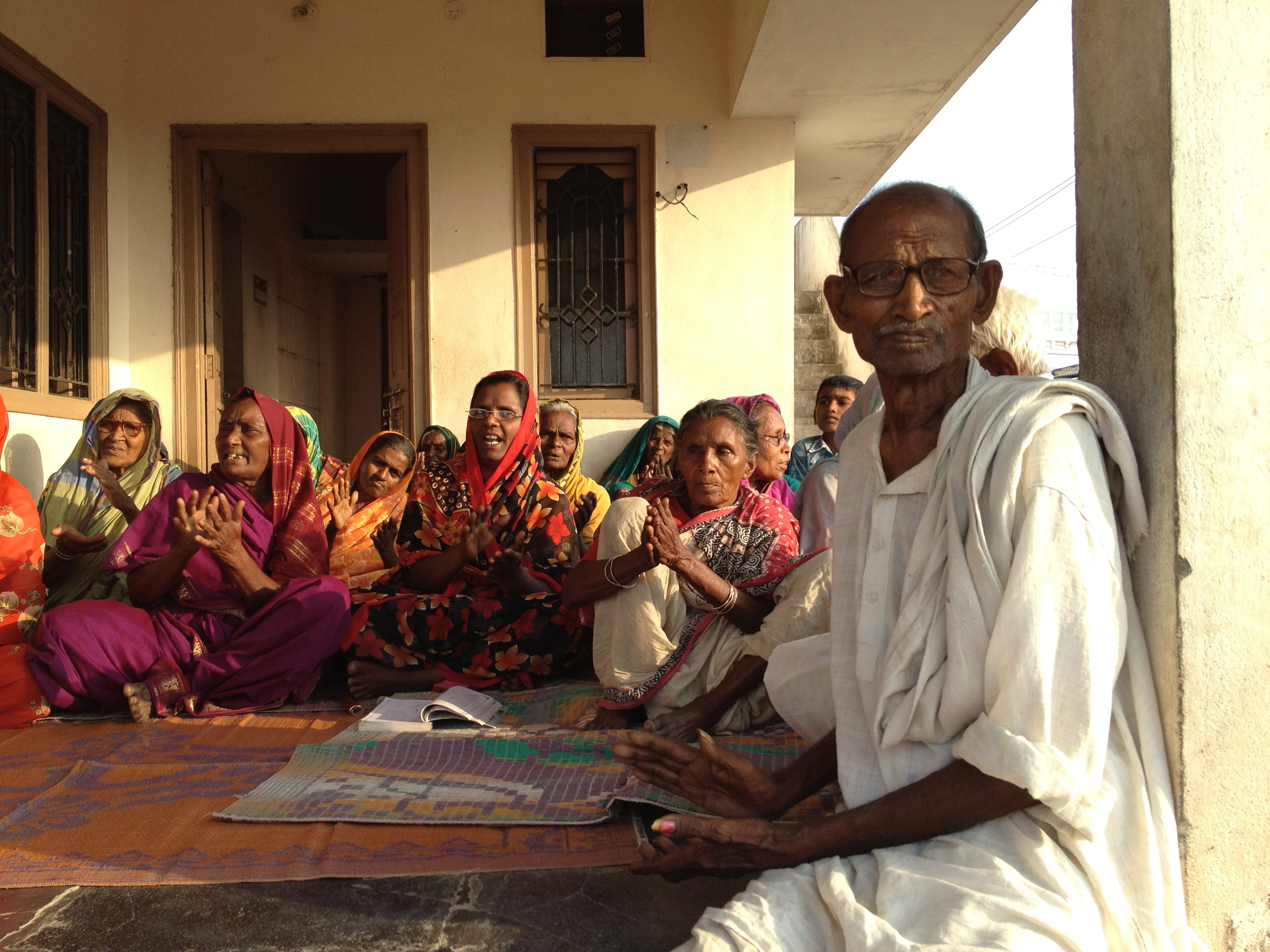
The elderly singing. Harvest India elder care home. | 2012 | Andhra Pradesh, India

Posted by: Omar C. Garcia | April 9, 2012

8 Reasons to Read

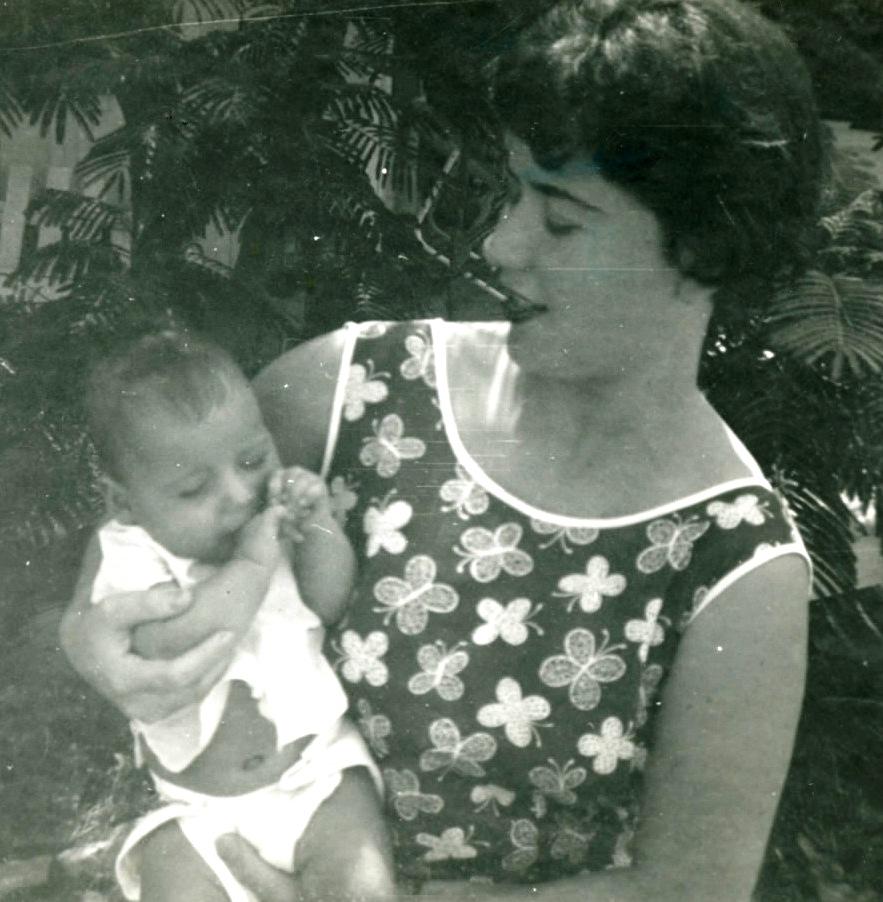
As far back as I can remember, books have been a part of my life. The evidence of their presence is there, not only in my most faded memories but in old serrated-edged family photos as well. Looking beyond the faces and smiles captured in candid moments are fuzzy images of books on a shelf or magazines on a table — volumes and issues that I befriended when I was a kid. In many ways, these tomes were an important part of our family. Just holding one of these old volumes today can transport me back to a simpler time when my curiosity nudged me to form a friendship with books. My grandfather in particular taught me to treat books with respect and to find nourishment in the written word. That, in part, is why I was a bit disappointed this week when I heard a news report about the number of people ages 18 and up who did not read a single book over the past year (in spite of the technology that makes books even more accessible than ever before).

I believe in the importance of owning books and in the value of reading. I have about 2,000 volumes in my personal library and an increasing number of e-books on my Kindle. I can’t imagine going a single week without reading a book, or some part of a book, much less an entire year. I recently ordered a couple of used copies of travel books by two of the world’s greatest travel writers to add to my reading queue. I have just started reading “In Patagonia” by Bruce Chatwin. As soon as I finish Chatwin’s book I will read “A Visit to Don Otavio” by Sybille Bedford. Sometime between these volumes I will order a copy of “A Short Walk in the Hindu Kush” by Eric Newby, another great travel writer. I absolutely love the way books like these stir my imagination and teach about places beyond my home. In thinking about the folks who did not read a single book this past year, I decided to compile a short list of reasons why I love to read.

Imagination | There is nothing like a good story to stir the imagination of a reader. I can still hear my grandfather’s voice reading “Androcles and the Lion” to me and remember how the story stirred my imagination. I had dreams about Androcles and the Lion.

Inspiration | I enjoy books that challenge me to do something meaningful or creative to help make a difference in our world. After reading several books about Mother Teresa, I was inspired to actually go to Kolkata to serve the destitute and dying in her homes.

Curiosity | Curiosity is an itch that the right book can scratch. I still have “The Golden Treasury of Knowledge” volumes that my parents bought for me when I was a kid. These books answered my questions about a variety of topics and became a springboard for further reading and investigation.

Vision | Books can enlarge our view of the world and help us to understand other cultures. Mark Twain said, “Travel is fatal to prejudice, bigotry, and narrow-mindedness — all foes to real understanding. Likewise, tolerance, or broad, wholesome charitable views of men and things cannot be acquired by vegetating in our little corner of the earth all one’s lifetime.” We can’t all travel but we can all read — something that is also fatal to prejudice and a myopic view of the world.

Knowledge | Reading can make you smarter. The more you read the more knowledge and understanding you can gain about the world around you. An added bonus to reading is that you will always have something to talk about with others.

Vocabulary | Increasing your vocabulary is one of the best benefits of reading. I always keep a dictionary handy when I read. I especially enjoy reading on my Kindle because it has a built-in dictionary feature that allows me to see the definition of a word at the tap of my finger.

Concentration | Reading can help build your capacity to concentrate. Although I prefer to read in a quiet place or places with few distractions, I can read just about anywhere. A good book has a way of helping me to tune out the noise.

Relaxation | Reading is a relaxing exercise that reduces my stress, even if only for a short while. Reading is much cheaper than a therapist or a prescription and can do you a world of good.

I hope you are not among the folks who did not read a single book last year. But if you are, you can do something to change that. Start by reading about a topic that interests you. Don’t get in a hurry. Reading is not a race. Read at your own pace, even if only a few pages a day. Stay with it and then, when you finish, find another book and begin the journey toward building a library of books that you can enjoy for a lifetime. Happy reading!

Posted by: Omar C. Garcia | April 7, 2012

My Beddian Bucket List

Today is my 56th birthday. The cool thing about this birthday is that this is the year that my age matches the last two digits of my birth year! I was born 56 years ago in 1956. This occurrence is called the Beddian Birthday, named after Bobby Beddia, a New York City firefighter who inspired some mathematicians to develop a theorem about this once-in-a-lifetime occurrence. Perhaps for that reason my kids asked me lots of questions at my pre-birthday dinner last night about what I am going to do on this “special” year. They fired off a litany of ideas like reading 56 books or paddling 560 miles in a canoe or doing this or that 56 times — something of a Beddian Bucket List.

Others this past week have asked me similar questions about my plans for my Beddian year of life. I have replied tongue-in-cheek that I am going to climb Mt. Everest without oxygen, swim across the Pacific because it’s much wider than the Atlantic, and then end the year by walking across Antarctica with only a pocket-full of granola bars. I have to confess that all of the questions about what I am going to do throughout this year that matches my birth year started me thinking about what I am going to do on this year that matches my birth year! After all, this is a once-in-a-lifetime occurrence and I really should make the most of the year, or at least do something new or memorable.

After much thought and consideration, I have decided to abandon the idea of a Beddian To-Do Bucket List. I am already privileged to have lots of really great adventures on any given year, so another list of places to go or adventures to have does not really appeal to me. Instead, I recently read something that convinced me to develop a different kind of list — a To-Be list instead of another To-Do list. A To-Be list is about the things I need to do in order to become more of the person that God desires for me to be. For example…

• In order for me to be a better husband I need to do specific things to continue to show my bride of thirty-plus years that I love her.
• In order for me to relate better to my grown children, I need to find intentional ways to spend time with them doing something they enjoy.
• In order to be a healthier person, I need to exercise and eat right.


• And, in order to develop deeper intimacy with God, I need to spend time daily in prayer and reading the scripture.

Each of the above, and the other things on my list, can only be done by me. Nobody can exercise to lose weight on my behalf or spend time with God in order to draw me closer to Him. Only I can do these things. So, my to-do list will have a new twist this year. I am going to work hard to make sure that the things I do are things that will help me to be a better husband, father, friend, servant, and follower of Christ. As much as I look forward to the year ahead, I am especially excited about my new Beddian To-Be Bucket List.

Posted by: Omar C. Garcia | April 6, 2012

Godspeed, Isenbergers

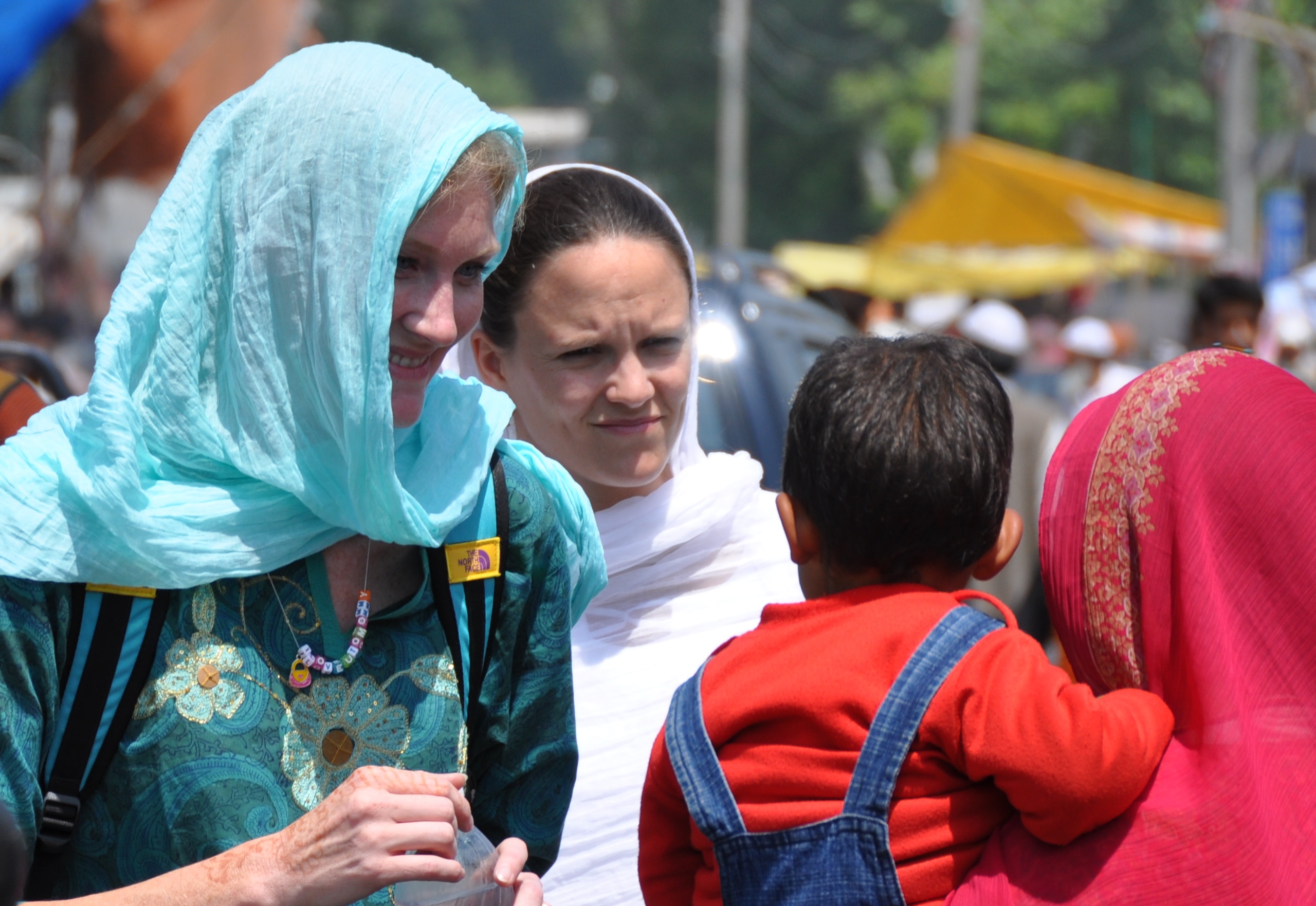
A few weeks ago my friend Kelly Isenberger told me that she and her family will be moving to Norway. It was one of those moments that caused my heart to sink a bit because I love the Isenberger family. I had the opportunity to get to know Kelly on a trip to Kashmir. God did a wonderful work in her life on that trip, affirming her love for the nations. When I led our missions ministry to enter the justice arena in 2009 to help champion the rights of human trafficking victims, Kelly was among the first I recruited to serve on our justice ministry team. She coordinated our prayer initiatives and kept our team abreast of the most urgent prayer requests from our justice partners. Kelly also suggested to me that we consider hosting a Just Run for a Just Cause. Chris and Kelly are runners and participate in a number of local running events, so it made sense to consider using a run as a platform for making our community aware of the plight of the oppressed.

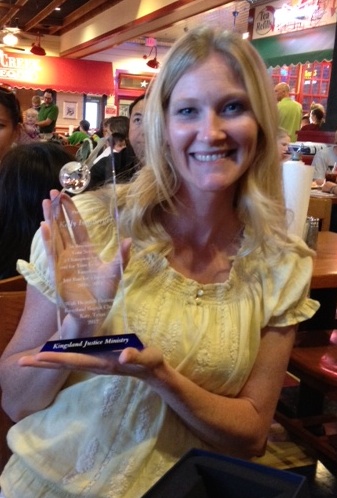
Kelly did a great job of mobilizing our team and numerous volunteers to offer our community a Just Run. Our first event in 2010 attracted more than four-hundred runners and walkers from throughout our community. Almost one-thousands participated in our 2011 run. Kelly also led us to add a new educational component last year — a justice wall that uses a timeline to tell the story of how victims are trafficked and abused and how some are rescued and restored. It is a compelling visual that has also been used by others in our community at their justice ministry events. I am grateful for Kelly’s vision and involvement on our justice ministry team. We will all miss her. Yesterday evening, we presented Kelly with a token of our appreciation for her work on behalf of justice, something that we hope will remind her that she served the purposes of God well while living in Katy, Texas.

One important thing we have stressed at Kingsland since promoting God’s passion for justice is the importance of educating the next generation. Many of our families have used our Just Change “piggy-banks” to save money to invest in the support of our aftercare home in South Asia. Kids have also invested birthday money, their allowances, or money raised from special projects. Last June, Chloe and Morgan, the Isenberger’s daughters, set up a lemonade stand at the pool where their swim team practices and raised $56.00 that they brought to my office in a zip lock bag. Chris and Kelly and other parents at Kingsland have done a really good job of speaking to their kids about a tough issue in age-appropriate ways. I am confident that many of the champions for justice in the next generation will come from the ranks of Kingsland kids like Chloe and Morgan.

So, although I hate to say goodbye to the Isenberger family, I am confident that God has new adventures for them on the Scandinavian Peninsula and that they will spread the message of justice among their new friends and neighbors there. Thank you Kelly, for championing the rights of the oppressed. Godspeed to you and your family. I will miss you.

Posted by: Omar C. Garcia | April 3, 2012

The Death of Fakhra Younus

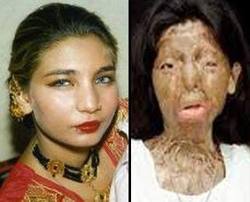
The death of Fakhra Younus last month reignited international outcry concerning the plight of Pakistani women who are the victims of an unbelievably brutal practice — acid attacks on women. Younus, a once beautiful woman, was allegedly attacked by her then-husband Bilal Khar, in May 2000. The attack left Younus horribly disfigured.

Younus’ caretaker reported that she often feared that Younus would die in the night because she could not breathe. “We used to put a straw in the little bit of her mouth that was left,” she said, “because the rest was all melted together.”

After the attack, the Italian government offered Younus asylum, paid for her treatment, and provided money for her to live. Younus endured more than three dozen surgeries and hoped to one day return to Pakistan to reopen her case and fight for justice. However, on March 17, the horribly disfigured Younus decided life was no longer worth living and jumped to her death from her sixth-story apartment. She was laid to rest in Karachi, Pakistan on March 25.

The story of Fakhra Younus is only one among the thousands of similar stories that emerge from Pakistan annually. According to The Aurat Foundation, a women’s rights organization, more than 8,500 acid attacks and other forms of violence against women were reported n Pakistan in 2011. This foundation also reported an increase of 37.5 percent in the number of acid throwing incidents in the country.

Acid is a weapon of choice for revenge against women by their husbands, by suitors whose marriage proposals or sexual advances are rejected, or in cases of unmet demands for dowry. In many cases, the attackers often appear to operate with impunity and are not brought to justice. In the case of Bilal Khar, Younus’ ex-husband, many believe the he used his powerful political connections to escape accountability.

Time will tell what impact the outcry over Younus’ death will have on the Pakistani government to do more to prevent acid attacks and other forms of inhumane acts of violence and brutality against women. The Pakistani government should be embarrassed that Younus was embraced by and found help in the arms of the Italians rather than in their own arms.

The Aurat Foundation reported that Younus believed that “the system in Pakistan was never going to provide her with relief or remedy” and that she “was totally disappointed that there was no justice available to her.” These beliefs became the breeding ground for the despair that eventually led Younus to take her own life. However, just because Younus did not see justice in her lifetime does not mean that justice will not be served. As Martin Luther King, Jr. once stated, “The arc of the moral universe is long but it bends toward justice.” Impunity is a temporary condition.

On a deeper level, the kind of violent attacks that women in Pakistan, and in other places around the world, suffer are the result of an impoverished or nonexistent understanding of the sanctity of human life. It is unquestionably dangerous to be a woman in certain geographical contexts. A 2011 poll conducted by TrustLaw, a Thomas Reuters Foundation Service, identified Afghanistan, the Democratic Republic of Congo, Pakistan, India, and Somalia as the most dangerous places for women. Shame on these countries!

Fakhra Younus did not deserve to have acid poured on her face and she did not deserve to die. Tehmina Durrani, the woman who cared for Younus following the attack, said of Younus, “Her life was a parched stretch of hard rock on which nothing bloomed.” My prayer is that something good will bloom and that her death will not be in vain. Perhaps Younus’ blood mingled with the blood of other victims will become the seed of justice that will blossom in places where the powerful treat the weak with indignity. Time will tell.

Posted by: Omar C. Garcia | April 1, 2012

It Takes Two Hands

Over the years I have kept a mental list of things that look easy to do on television but are actually harder to do in real life. While in Mongolia in the winter of 1998, the vehicle I was in broke down and my Mongolian friends and I had to walk about a mile through knee-deep snow. It was one of the most exhausting things I have ever experienced. One of my Mongol friends saw that this South Texas boy was having more than a little difficulty so he prompted me to follow him and to step into his tracks — a small thing that made a huge difference.

Climbing a rock wall is another one of those things that look easy to do on television. However, my first experience proved otherwise. Thank God for the patient fellow who was belaying me. I finally made it to the top but only because he coached me on how to position myself to get out of a bind and because he patiently kept both hands on the rope, thus giving me the time to figure things out.

Paddling a canoe also looks easier to do on television. However, after participating in three canoe races and several training runs with my son this year, I can confess that it is not as easy as it looks. While training on the San Marcos River on Friday, Jonathan and I were privileged to get some coaching from Holly Orr (what an appropriate name), a US Canoe Association certified instructor. Holly noticed things and made suggestions that made a big difference in our paddling. Jonathan and I spent Saturday tweaking our paddling technique and were amazed at how much more efficiently we were able to track and maneuver our canoe.

There are a number of strokes that are important to master in order to navigate a canoe efficiently and effectively down a river — like the forward or power stroke, the back stroke, the J-stroke, and the draw stroke. When executed properly, each of these strokes enable you to navigate a canoe down flat water and through rapids. However, each of these strokes have one thing in common — they require that you keep both hands on the paddle. It’s impossible to execute any of these strokes with only a single hand on the paddle.

While paddling down the San Marcos River yesterday, I had some time to think about the placement of my hands on my new 10-ounce carbon fiber Zaveral paddle. Looking at my hands reminded me of a Scripture passage I had studied earlier this month in my quiet time. The story of the consecration of Aaron and his sons is recorded in Leviticus 8. After slaying a ram, God instructed Moses to take some of the blood and put it on the lobe of the right ear of Aaron and his sons, on the thumb of their right hand, and the big toe of their right foot. This action signified that they were to only listen to God’s voice, do His will, and walk in His ways.

Moses then took various parts of the slain animal and put them into the hands of Aaron and his sons. The Hebrew word “consecration” actually means “to fill the hands.” Aaron’s hands were so full that he could hold nothing else. His hands were fully occupied with the things of God, which is essentially what it means to be consecrated. Our hands are, perhaps, the highest representation of service. Along with our entire bodies (Rom. 12:1-2), as Christ-followers we should make certain that our hands are fully occupied with the purposes and passions of God — something guaranteed to make our journey through life more meaningful. I won’t be able to look at my canoe paddle without being reminded that it takes two hands to hold the paddle and that I must also make both of my hands available to serve the purposes of God in my generation. That’s a good thing to remember!

Posted by: Omar C. Garcia | March 31, 2012

Jetlag in a Canoe

The dictionary defines jetlag as the temporary disruption of the body’s normal biological rhythms after high-speed air travel through several time zones. I am no stranger to jetlag. In fact, because I travel out of the country every few weeks, I seem to always be in some state of jetlag. Just about the time my body gets back to some state of normalcy, I get back on an airplane and start the process all over again. Among other things, jetlag resets my body clock so that I am awake at, for example, three o’clock in the morning and then feel the urge to go to bed at three or four o’clock in the afternoon. Although I have learned to force my body clock to get back to normal as quickly as possible after returning home from the other side of the planet, it still means I have to push past that feeling of exhaustion in order to readjust to my normal time zone. So, what does all of this have to do with canoeing?

Just before leaving for India a couple of weeks ago, my son Jonathan and I sat down to look at our training schedule for the Texas Water Safari in June, billed as the world’s toughest marathon canoe race. I noticed that Jonathan had scheduled two days of training along the San Marcos River only two days after my return from India. I reminded Jonathan that this would be difficult for me because that is when my jetlag would be at its worst. He told me that this would be the best time to train because I had to learn to how to continue paddling in a state of exhaustion along the 260-mile race course from Central Texas all the way to the Gulf of Mexico. It was hard to argue with his logic so, roughly 36-hours after returning home from India, we packed our gear and headed for the river.

Yesterday, Jonathan took me down the first 16-miles of the race route to get me familiar with the first four of the eight portage points along the 260-mile course. He talked to me about how we would manage these portage points quickly and then we sprung into action to practice getting our canoe around the obstacles. The toughest of the four was getting our canoe around Cummings Dam. I had to jump out of the canoe and run around the dam while Jonathan wrestled the canoe into a position where he could lower it to me. One slip here could mean disaster — a serious fall, a broken bone, or a damaged boat. Once we lowered the boat, then we had to pick it up and scramble across the rocky shore to the water. Jonathan also talked me through how we would navigate certain sections of this part of the course, like Cottonseed Rapids where there is always the possibility of capsizing.

At the end of the day we enjoyed a private lesson from Holly Orr, a multi-Safari veteran and a USCA certified instructor who specializes in racing techniques. This was time well spent. Jonathan and I will spend our second day on the river applying and practicing the things we learned from Holly. We will also return to every portage point to try to improve our time by getting past these obstacles a little quicker. Although jet lag added a layer of exhaustion to my training, it also gave me a better idea of just how hard this race is going to be. In many ways, paddling down the river is a metaphor for the journey each of us are on, a journey filled with challenges that can exhaust and frustrate us as well as those unexpected things hidden beneath the surface that have the potential to capsize us. Good instruction can make a big difference in helping us on our journey. So, now that I have finished writing this post at three o’clock in the morning, I am going to force myself to get a few hours of rest before Jonathan and I head back to the river to apply what we learned from our instructor yesterday.

Posted by: Omar C. Garcia | March 28, 2012

I Dream of the Nations

Andhra Pradesh, India en route to Houston, Texas

When I was a child I dreamed of the nations. My imagination was fueled by stories, photos, books and magazines, and assorted bric-a-brac that had found its way to the shelves and walls of my grandparents home from dozens of faraway places. As a result I developed a hungry curiosity that was always asking questions and feeding on answers from those in my family who had traveled to this or that place. And, in those pre-computer days when Googling meant actually finding and turning the pages of a particular book, I learned to dig for answers on my own. The world in those days seemed absolutely immense to me as a small town boy. Photos in books and magazines became my own private windows to the world, allowing me to peek at slices of life in other places.

Knowing of my interest in the nations, my grandfather encouraged me to collect stamps. This was an especially good idea because we had so much correspondence from family members who had traveled the world. He taught me how to carefully remove stamps from envelopes and then categorize them on the pages in my stamp-collection binder. As I grew a little older I developed yet another nerdy hobby of writing to chambers of commerce around the country to ask for travel brochures. It wasn’t long before I had amassed an impressive collection of saddle-stitched brochures and tri-folded leaflets that I carefully catalogued in the top drawer of my dresser. These became one more way for me to learn and to dream about the world beyond the city limits of Mission, Texas.

Today, I have been privileged to see much of the world that I had dreamed about as a kid — a world of places and people even more fascinating than I had imagined when I sat on the floor of my grandparents home looking at photos in magazines. This latest trip to India has broadened my understanding of how difficult life is for some of the people who live beyond the kinds of glamorous photos you see in travel brochures — in this case lepers, those suffering from HIV-AIDS, women trying to find a way out of the commercial sex trade, and Dalit children. In some ways, ease of travel and our new connectivity has made our world a little smaller, making it easier for us to learn about and to help those who are suffering in places beyond our city limits. This is important because I believe that awareness is the first step on the road to a compassionate response.

I am no longer a child but I still dream of the nations. My understanding of the world today is enriched because of my experiences among the people groups that I first learned about when I was a curious little kid. However, my dreams have changed to consider what I can do to help and how I can mobilize others to help change the world for someone in desperate need or danger. As I make my way home from India, my head and my heart are conversing about the lepers and others living in desperation that I met this past week. I can’t ignore their plight because they are more than people in photographs, they are also my neighbors in our ever-shrinking global community. As I travel home I am also enjoying sweet memories of days spent with my grandfather. I don’t think my grandfather could have imagined where my dreams of the nations would lead me, but I know he would approve.

« Newer Posts - Older Posts »

Categories