Posted by: Omar C. Garcia | May 3, 2012

To Walk Humbly with God

Today is the National Day of Prayer — a tradition that predates the founding of the United States of America. In 1775, the Continental Congress issued a proclamation setting aside a day of prayer and asking the colonies to pray for divine wisdom in forming a nation. In 1952, President Harry Truman signed a joint resolution of Congress to establish a National Day of Prayer. In 1988, this law was amended and signed by President Ronald Reagan to officially designate the first Thursday in May as the National Day of Prayer. Each year, the President signs a proclamation, inviting all Americans to take part. President Obama signed this year’s proclamation officially recognizing Thursday, May 3, as the 61st Annual National Day of Prayer, calling our nation “ to pray for guidance, grace, and protection for our great Nation as we address the challenges of our time.”

As for me, I am thankful for the National Day of Prayer initiative. Although prayer is a key spiritual discipline in my personal life and I pray every day, I applaud any effort that reminds us that we need divine guidance and wisdom to face the challenges of our day. Throughout our nation today, people will pray personally and corporately, asking God to “shed His grace on thee and crown thy good with brotherhood from sea to shining sea.” That’s a good thing. I would rather pray for our nation than to not pray. And I am happy to take advantage of this day to form a bond with others in my community to pray for the welfare of our families, our community, and our nation. It’s always good to be reminded that there are many others who care about what is happening around us and who long to see God do a good work among us.

In reflecting on the National Day of Prayer this morning, my thoughts turned to Micah, the eighth century BC prophet who was concerned about what he saw happening in the southern kingdom of Judah. Micah addressed many of the political and national crises of his day. He was deeply burdened about the injustice, corruption, and deception he witnessed in the marketplace and about the compromises he observed in the holy place. He warned of impending judgment on God’s people for their disobedience and at the same time proclaimed messages of hope. Micah 6:8 is my favorite passage from this Old Testament book: “He has told you, O man, what is good; and what does the Lord require of you but to do justice, and to love kindness, and to walk humbly with your God?”

To walk humbly with God means more than having a modest, lowly, or self-effacing attitude. It also means to be attentive — to pay attention to or to keep our eyes on God as we journey with Him. To walk humbly with God means to live according to His Word rather than our own. It means paying attention to His will rather than following our own desires and to turn our eyes to Him as a child looking to a parent for guidance and correction. It is the kind of walk that makes it possible for us to do justice and to love kindness. I pray that on this National Day of Prayer each of us will take inventory of our own lives and make whatever course corrections are necessary in order to walk humbly with God. Just as in Micah’s day, there is much at stake.

Posted by: Omar C. Garcia | May 2, 2012

Wordless Wednesday

2009 | Srinagar, Kashmir

Posted by: Omar C. Garcia | April 30, 2012

When We Can’t Be There

Last July, just one month after her twentieth birthday, our youngest daughter embarked on a great adventure. Gina boarded a flight from Houston to Kuala Lumpur for a six-month assignment of making connections with university students. Within weeks of her arrival, her six-month assignment became a one-year assignment. Cheryl and I knew that Gina would face challenges that would help her to grow in so many ways — and we have seen that growth. We also understood that there might be occasions when we would want to be with her to offer coaching or comfort, something that we have been able to do through Skype. However, when we received a phone call from Malaysia a little after 2:00 AM today, we wanted to do more than Skype with our daughter, we wanted to be with her. One of Gina’s teammates called to tell us that she had been admitted to the hospital with severe abdominal pain. Tests indicated that she either had an inflamed appendix or a ruptured ovarian cyst.

This was the kind of moment that we had hoped we would not have to face when we waved good-bye to Gina months ago. Our first response was to pray for our daughter. Over the next couple of hours we exchanged several more phone calls until Gina called to tell us that she was about to go into surgery. We prayed with Gina over the phone and then hung up, knowing that the only thing we could do was to entrust her into God’s care — a reminder that Gina’s great adventure was also an opportunity for us to grow as parents. We knew that although we could not be with Gina, we could rest in the assurance that the distance that separates us from her is not a factor with our Heavenly Father. He is capable of being where we cannot be and doing what we cannot do in order to care for our loved ones. And, we are grateful that Gina experienced His comfort through the presence of fellow Christ-followers who were at her bedside.

No matter where I go in the world, I always feel at home when I am with other Christ-followers. Over the years that I have traveled around the globe, I have been the beneficiary of the hospitality, generosity, and kindness of so many members of the family of God. And now that my daughter is hospitalized half-way around the world, she too has experienced the kindness and concern of other Christ-followers who are at her side. Although we can’t be with Gina, we are comforted by the fact that God has led others to embrace her, watch over her, and to assist her. God has reminded us that when we can’t be there, He is always there doing what we cannot do through the presence and kindness of other members of the family of faith. For that we are deeply grateful. Gina is out of surgery now. The doctors removed her appendix (and showed it to her). Thanks to each of you who prayed for Gina and for those of you who were at her bedside. You have blessed our family.

Posted by: Omar C. Garcia | April 28, 2012

From My Economy Seat

Doha, Qatar en route to Houston, Texas

I am finally en route home from Doha via Dubai aboard Emirates, my favorite airline. Those of you who follow my blog regularly know that I try to write something several times a week that will either encourage you or prompt you to think a bit more deeply about a particular topic or current event. Well, this post will have a bit of a lighter tone as I reflect on the hundreds of flights I have been on over the years. As I write, I am seated in a packed economy cabin with the hoi polloi (while I have lots of frequent flyer miles I can’t upgrade on every flight). Over the years of flying I have observed lots of things from my economy seat, many of which occur with predictable regularity.

First, there is the matter of the pre-flight safety sermon. I admit that I often yawn and sometimes nap through this object-lesson-driven oratory. It’s not that I don’t respect the flight attendants but I know how to buckle and unbuckle a seat belt. And even though I know where my life jacket is stowed, I don’t have a lot of confidence that the folks who could not get their carry-on bags into overhead bins will actually be very successful in donning their life jackets as we all scream and claw our way to emergency exits in the event of an emergency landing on water. We’re all toast if that ever happens. Having said that, I have had occasion to help people who did not know how to buckle a seat belt because they had never seen or used one. I hope I never have to do the same with a life jacket or oxygen mask.

Then there is the simple matter of how to operate the bi-fold door to the lavatory. To use a Texas idiom, I have watched people stand in front of these doors “like a calf staring at a new gate.” Even though this is not rocket science, many people can’t figure it out because they have never seen a hinged bi-fold door. That’s ok. What’s not ok is what happens inside the lavatory. Oh my soul, is it really that hard to hit that wide-mouthed target called a toilet? I have walked in and immediately walked out of some lavatories just because I don’t want the next guy to think I was the one responsible for the mess. While there are more things that amuse me than annoy me on flights, a filthy lavatory is the worst. Perhaps the airlines should put signs in each lavatory: “Our aim is to keep this lavatory clean. Your aim will help, too!” But then again, if it is that hard for some folks just to get in to the lavatory then the sign would probably be useless.

Every airline has carry-on luggage allowances. However, there is a way around that. Duty free bags are allowed as carry-ons and do not count against your allowance. I watched a guy today who managed to get on our flight with his carry-on plus five or six bulging Duty Free bags that were bigger than his carry-on. Honestly, if you start collecting duty-free bags and use those instead of luggage, you will never have to check another bag again. After all, I have never ever seen a flight attendant actually inspect the contents of a duty-free bag. My strangest carry-on experience happened in London as I was boarding a flight to Pakistan. The security attendant on the jetway took one look at my bag and told me it was too heavy. “Really?” I replied with amazement. Here was a person with some kind of bionic capability to look at my bag and determine its weight. Long story short, she made me take things out of my backpack to make it lighter and then told me to proceed on to the plane as she warned me to not put those things back into my bag. Truth really is stranger than fiction.

I have observed a few other things from my economy seat. There are always folks that do not realize that they have actually been assigned a specific seat. I watched one guy take a seat and refuse to give it up when the person assigned to that seat arrived. Even the flight attendant could not get him to budge. And then there is the matter of turning off all electronic mobile devices and the time I thought a petite flight attendant on Air India was going to stuff an electronic device down the throat of a big guy who refused to comply after several warnings. She won! Once while leaving Beijing some guy dropped off his carry-on in the seat next to mine and disappeared. When the plane started to move I told the flight attendant about it and she phoned the pilot who stopped the plane while they searched for the guy. They eventually found him in another seat and mercilessly lectured him while everyone looked on. Even though it’s better to err on the side of caution, I felt sorry for the poor guy.

There are so many other stories I could tell about what I have observed from my economy seat. But what about you? What have you observed? What amuses or annoys you on a flight? In spite of the goofy stuff that happens on flights, I enjoy observing humanity in motion and I love sitting among the hoi polloi. It’s all a part of the grand adventure and I have met some great people along the way. Perhaps we will have an opportunity to meet in the air sometime. You will probably recognize me as the guy seated next to the dude carrying the kitchen sink in a duty-free bag. And now that I am done writing this post, I am headed to the lavatory with my fingers crossed!

Posted by: Omar C. Garcia | April 26, 2012

The Anguished Lyrics of Pain

Amman, Jordan

Syria has been embroiled in conflict and increasing bloodshed since March of last year when people from the southern city of Deraa took to the streets. These peaceful demonstrators demanded the release of fourteen schoolchildren that had been arrested and allegedly tortured because they had written some graffiti on a wall that was sympathetic to Arab Spring protestors in Tunisia and Egypt. President Assad’s security forces opened fire on the peaceful demonstrators, killing four people. The following day, a mourner at one of the funerals was also shot and killed. Within days things started to spiral out of control and resulted in even more deaths as government forces raided neighborhoods in search of those who had participated in the demonstrations. This crackdown triggered more anti-government protests across the country and by mid-May the death toll had reached 1,000. Since then, the tension and violence and killing has progressively escalated, leading many Syrians to seek refuge in neighboring counties in order to protect their families.

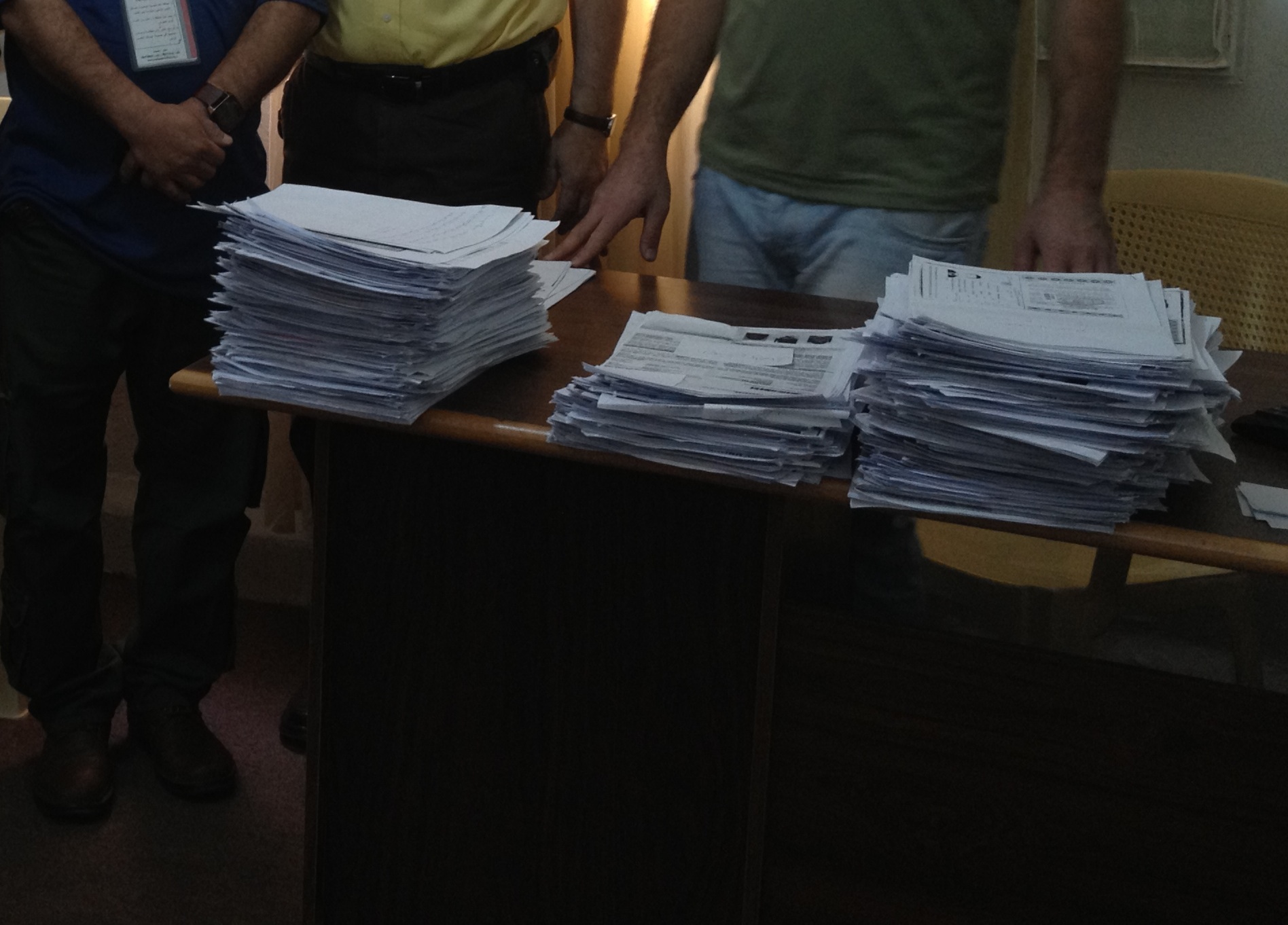
Syrian refugee files.

I had the opportunity yesterday to visit some of the documented Syrian refugees that are temporarily living in Amman. These families have sought shelter wherever they can find it, are not permitted to work, have no school for their children, and spend long days and nights with nothing to do but grieve over the situation that forced them to leave their native land. Their despair is palpable. One father we visited shared the heartbreaking story of the loss of twenty-seven members of his extended family, an unimaginably horrible loss. He witnessed bodies torn apart and others mangled under the treads of army tanks. “How can a government treat its own people this way,” he lamented. “If my own son disagrees with me I do not tear him apart.” After a pause, he shook his head and continued, “I do not understand this inhumanity.” This poor man did the only thing he felt he could do in order to protect his family — he fled his country. His is only one among thousands of similar stories.

Only time will tell how things in Syria will be resolved. In the meantime, tens of thousands of documented and undocumented refugees will have to find a way to survive outside their native borders. I am thankful for the work of my friends at the Global Hope Network for their efforts to adopt as many families as they can in order to help them make it through the difficult challenges they are facing during this interim period when they do not know what the future holds or when they might be able to return to their homes. The actions of Global Hope are introducing the sweet melody of God’s love into places where people only know the anguished lyrics of pain. The father we met was grateful for our presence, our concern, and the small bags of food that will keep hunger at bay for a few more days. He and his family will continue to serve out their painful sentence one day at a time until it’s safe for them to return to their home. In the meantime, I pray that they will learn the lyrics to a new melody of love and kindness, one compassionate and healing note at a time. Learn about what you can do to help bring relief to Syrian refugees by visiting the Global Hope Network website.

Posted by: Omar C. Garcia | April 24, 2012

The Music of My Life

Doha, Qatar to Amman, Jordan

I arrived in Jordan, the ancient land of Moab, earlier this afternoon after a flight delay of more than an hour. The flight was relatively uneventful with the exception of a rough landing that slammed us onto the tarmac. I have come to Jordan at the invitation of my hosts in Doha to meet with a Christ-follower who heads Global Hope Network Jordan, a development organization that reaches out to refugees from neighboring countries. Because I am here for only twenty-four hours, we wasted no time in heading toward one of the refugee camps near Madaba, also known as the City of Mosaics. We took a few minutes to stop at the Greek Orthodox Basilica of Saint George in Madaba to look at one of the oldest maps in the world — a floor mosaic of what the Mediterranean world looked like during biblical times. Absolutely amazing.

As my new friend and I talked, he described the scope of his work and how God is using it to change the lives of refugees who live on only a few dollars a month and even less hope. It was apparent to me as we talked that God has given him a compassionate heart for the least of these. He works tirelessly to give the people in the camps a hand up rather than a hand out. His organization demonstrates God’s love to others in the most practical of ways and then trusts Him to open doors to share with them about that love. As he was explaining the nature of their work, he said, “If you will allow people to listen to and enjoy the music of your life, then sooner or later they will want to know the words.” I love that description of how a Christ-follower should live and serve. The way in which we demonstrate God’s love to others should be more like a symphony than a cacophony and should prompt others to ask, “Why are you doing this for (or with) me?”

It’s almost midnight as I write this blog. I’m a bit road weary and want to go to bed. But, I can’t stop thinking about the music of my life and whether or not those who hear it are even interested in wanting to learn the lyrics. John described Jesus as being “full of grace and truth” (John 1:14). Grace is the music that prompts people to ask questions about the lyrics, or the truth. Do others hear the music of grace and kindness flowing from our lives or do they hear the dissonant sounds of self-absorbed living? How long has it been since anyone asked you about the lyrics? As for me, I am more determined than ever to allow God to write the score for the music of my life and to teach me to play it well for others — after all, people are listening whether we realize it or not. I want to give others something worth listening to and then be prepared to teach them the lyrics.

Posted by: Omar C. Garcia | April 22, 2012

My Current Location

Doha, Qatar

In addition to collecting coins and stamps and other stuff when I was a kid, I also collected maps. When I was in elementary school, my parents thought it would be a good idea for me to join Commander Whitehall’s Explorers Club. For a fee of $5.00 per month, which was a lot of money in the 1960’s, I received a monthly package from Commander Whitehall. Each package contained a fast-facts information sheet about the country of the month, a small souvenir, a floppy vinyl record with Commander Whitehall’s narrative about that particular country and, most important of all, a map. The maps were important because they helped me to see the locations of the places mentioned in Commander Whitehall’s recorded narrative. Over a period of time these maps, and others in my collection, helped me to develop a sense of geographical context. In those early years I learned to match certain landmarks with countries and I also began to formulate a broad understanding about other people groups that share our planet.

I never lost my interest in maps and could never have imagined the day when a global positioning system  would help me to pinpoint my current location anywhere in the world. I purchased my first handheld GPS in the Fall of 2005 just prior to my trip to Darfur, Sudan. Two of my team members were retired airline pilots. They gave me a crash course in navigation and in understanding the basics of longitude and latitude. We had some good conversations along the way as we used the GPS to track our location among the displacement camps in Darfur. The dots on the map became even more meaningful because I could associate them with the desperate and heartbreaking realities I had witnessed at each location. Last year my son purchased a SPOT Tracker for his canoeing adventures along Texas Rivers. This little device sends a signal to a satellite that is then sent to an online map that tracks his progress in near-real time. When he is off canoeing and camping on his own I can always know where he is. The device also has a panic button that he can press if he is in distress that allows rescuers to pinpoint his location and send help. This is definitely a don’t leave home without it gadget for anyone who ventures afield and afar.

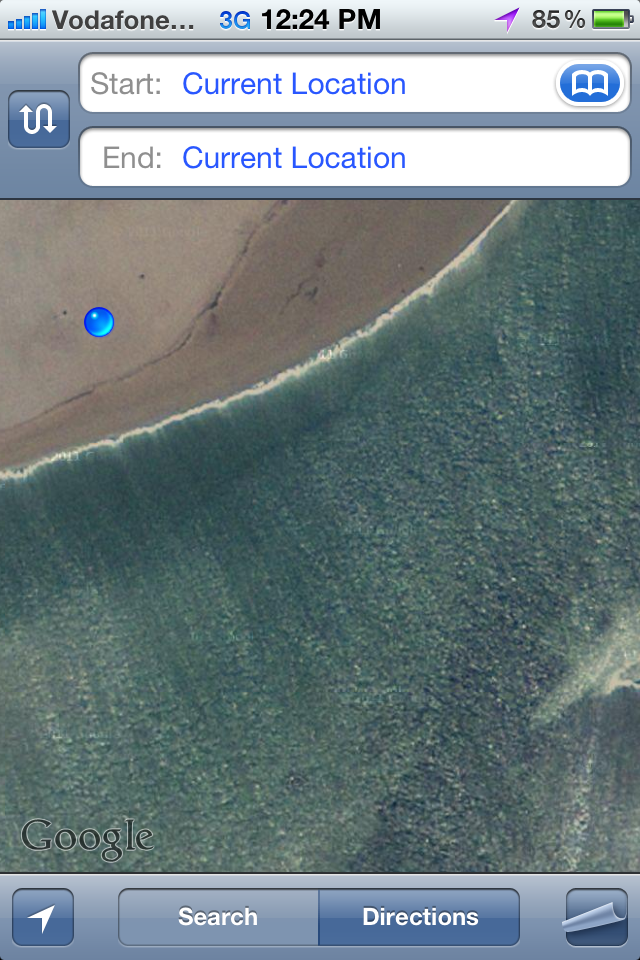
Maps have certainly reached a remarkable level of accuracy and sophistication. On Saturday, I had the opportunity to spend a few hours along the shores of the Persian Gulf with some friends. I used the GPS feature on my iPhone while en route to our destination and then used it to pinpoint our exact location once we arrived. It’s beyond cool to look at the satellite image on Google Maps and to know that, in the words of some philosopher, “no matter where you go, there you are.” It’s also pretty cool that the pictures that I take with my iPhone are linked to a map. Now when I look back at my photos I can see exactly where I was when I took them, giving geographical context a whole new meaning. Looking at my current location on a map has also challenged me to consider whether I did anything more than just visit or live in a particular place. I always want to look back and to know that wherever I ventured I made the most of my time there. I want to ensure that I was kind to others, asked the kind of questions that helped me to learn more about them, and that I made the most of every opportunity to encourage and to be a blessing to those I met along the way. Mark Twain once said that travel is fatal to prejudice and bigotry and can help us to develop charitable views of others. He was right. Today when I look at my current location on a map, I want to do all that I can to make my time there meaningful, to continue to develop charitable views of others, and to leave with as few regrets as possible.

Posted by: Omar C. Garcia | April 20, 2012

At Souk Waqif

Doha, Qatar

I love markets — those places where people gather to buy and sell the stuff of daily life. My fascination with markets was sparked when my parents took me across the Texas-Mexico border for the first time to visit a partially open-air market in Reynosa, Mexico. It’s a wonder I did not get separated from my parents as I wandered wide-eyed through the narrow and crowded aisles under the hypnotic spell of sights, sounds, and smells I had never before experienced. Every segment of the market was a new world begging to be explored. I still have vivid memories of the places where flies orbited around chunks of meat suspended on hooks, of the smell of freshly ground corn being slapped and shaped into tortillas, and of colorful displays of candies in assorted and unusual shapes. I returned home with the feeling of an intrepid explorer who had discovered something fascinating, something that beckoned me to return.

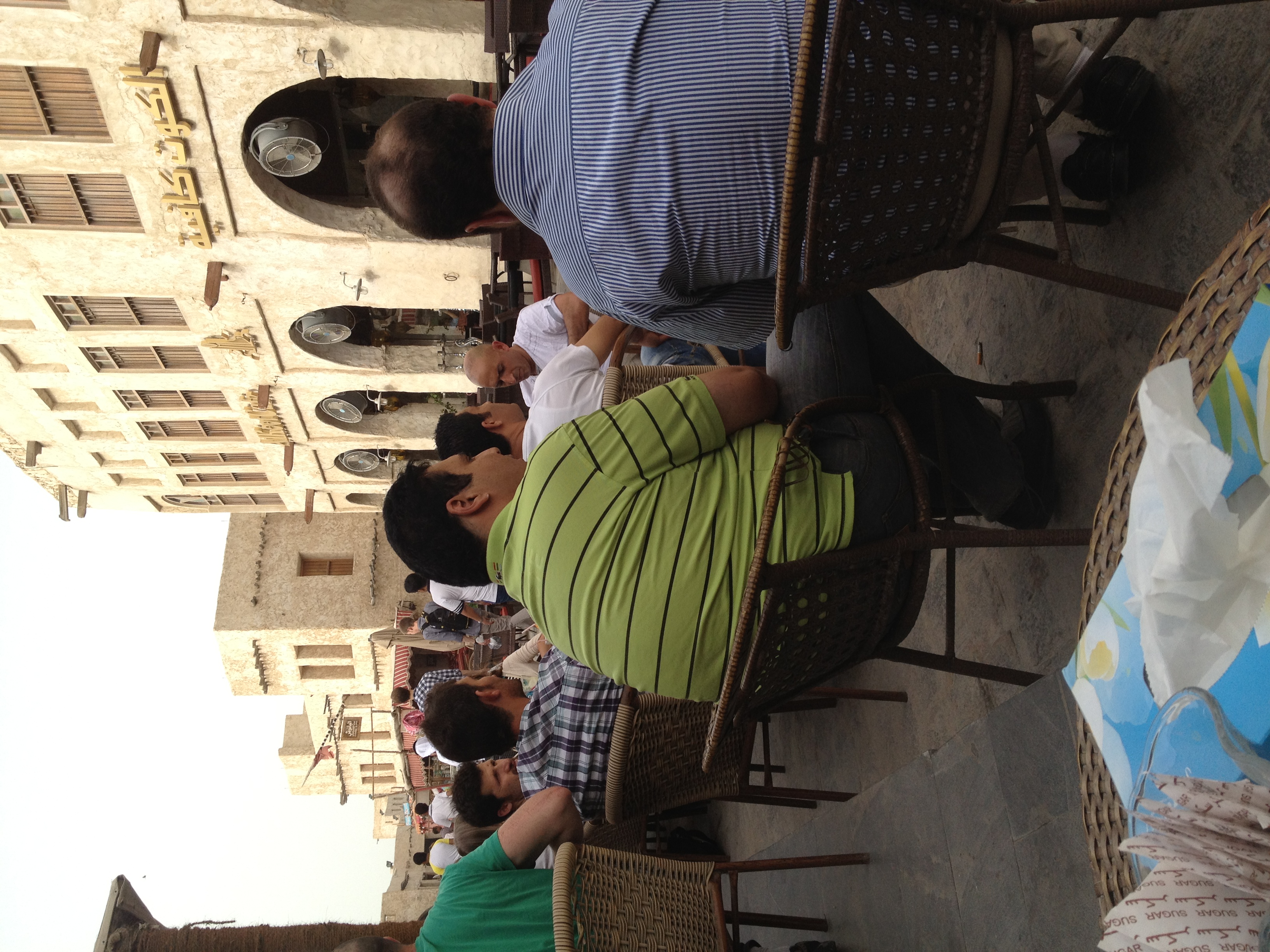
I still love the markets of the world — those places that vibrate with activity and where you can feel the pulse of the hoi-polloi. From ancient times to today, marketplaces have endured and will continue to do so. They meet more than our need to resupply provisions, they also scratch our itch for social interaction, for conversation, and for connection with other human beings. After speaking three times this morning to a local gathering of Christ-followers, my host took me to Souk Waqif, an open-air market that dates back to when Doha was a tiny village and the Bedouin would bring their animals to trade for essentials. The cobblestone alleyways lead to shops that sell everything from falcons to furniture as well as places where you can sit and sip strong coffee as you watch humanity slowly stream by. Souk Waqif is the kind of place that draws locals out of their homes and beckons tourists out of their hotel rooms to become a part of the warp and woof of the tapestry that makes market places interesting.

As my host and I wandered through the labyrinth of shops at Souk Waqif, I reflected on the significance of markets and why Christ-followers must have a presence in these very public places. I think that the Scottish clergyman George MacLeod may have put it best when he wrote:

I simply argue that the cross be raised again
at the center of the market place
as well as on the steeple of the church,
I am recovering the claim that
Jesus was not crucified in a cathedral
between two candles:
But on a cross between two thieves;
on a town garbage heap;
At a crossroad of politics so cosmopolitan
that they had to write His title
in Hebrew and in Latin and in Greek…
At the kind of place where cynics talk smut,
and thieves curse and soldiers gamble.
Because that is where He died,
and that is what He died about.
And that is where Christ’s men ought to be,
and what church people ought to shout.

Posted by: Omar C. Garcia | April 19, 2012

Defining Landmarks

Doha, Qatar

Like many of you, I can identify many locations on the planet just by looking at particular and, in most cases, popular natural or man-made landmarks. The dictionary defines “landmark” as “an object or feature of a landscape or town that is easily seen and recognized from a distance, especially one that enables someone to establish their location.” Over the years I have visited many of the sugar-stick landmarks in the United States and various locations abroad — from the Grand Canyon to the Great Wall and the faces on Mount Rushmore to the faces on the Bayon temple in Angkor. Last week I stopped at a convenience store and asked the clerk where he was from. “I am from India,” he replied. “Ah”, I said, “I love your country and your people and have visited the Taj Mahal.” With that he smiled as he proudly bobbed his head from side to side in typical Indian fashion and replied, “You are most fortunate to have seen the jewel of my country. I have not yet seen the Taj Mahal but I hope to see it one day.”

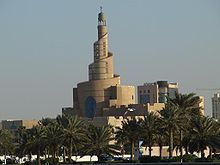
When I arrived in Doha late in the night, the first thing I noticed was the Dubaiesque feel of the city. The landscape of this capital city was accentuated by the soft glow of lights from the attractive high-rise buildings overlooking the Corniche around Doha Bay. It was indeed a beautiful and welcoming site and a testimony to the wealth of Qatar. Driving around town the following morning revealed a whole new landscape, including the beautiful Spiral Mosque and the Souk Waqif, the oldest Arabian-style market in Qatar. When I looked at my friend’s map in the car, all of the popular landmarks were circled because they form the constellation that makes it easier to navigate around town (one of the advantages of landmarks). And, Qatar is certainly sparing no expense in adding new stars to this constellation of buildings and towers and enhancements to natural features. It is indeed a beautiful oasis on the Arabian subcontinent.

As I lay in bed last night my thoughts turned to the importance of landmarks. Each of us have landmarks on the geography of our own lives — erected during those defining moments of accomplishments and defeats, births and deaths, celebrations and evaluations. These are the places that can be seen and recognized from a distance and enable us to establish our location. These are the places where reflection enables us to consider how far we have come or how far we need to go. I know some who are satisfied with the landscape of their lives and have comfortably settled in with no desire to venture toward the next horizon. And I know others who continue to press on, slowly redefining the geography of their lives by erecting new landmarks of accomplishments and even defeats, both of which are a part of the journey.

Regardless of who we are or where we are, we need to determine whether we are satisfied with the geography of our lives. Those who attend our funeral will review the map of our lives and visit the landmarks that we leave behind. Will they conclude that we loved well and served others or that we were we so self-absorbed that we ignored the needs of those around us? What will they learn from our accomplishments and defeats? What landmarks will we leave behind that will inspire others or serve as a cautionary tale of poor choices? While there is still time, make it a point to erect the kind of defining landmarks that will help and encourage and bless those who come after you. Leave the kind of map that will inspire others to study and circle your landmarks so that they can safely find their way on their own journey.

Posted by: Omar C. Garcia | April 18, 2012

Come At Once

Doha, Qatar

I have come to regard the fifteen-hour flight from Houston to Dubai as my somewhat-regular commute to work. Over the years I have enjoyed getting to know many of the folks who work for Emirates Airlines. On my latest Emirates flight to Doha via Dubai, I was upgraded to Business Class. Because there were so few of us in the front of the plane, I had the opportunity to have extended conversations with the flight attendants about our work around the world. One flight attendant told me that God has been speaking to her about being more involved in helping others. After hearing about our work with human trafficking victims and orphans and the poor, she asked if she could join us on a future trip. I told her that we would be delighted to have her. No matter where I go, I always meet good people like her who are interested in doing something to help the least of these.

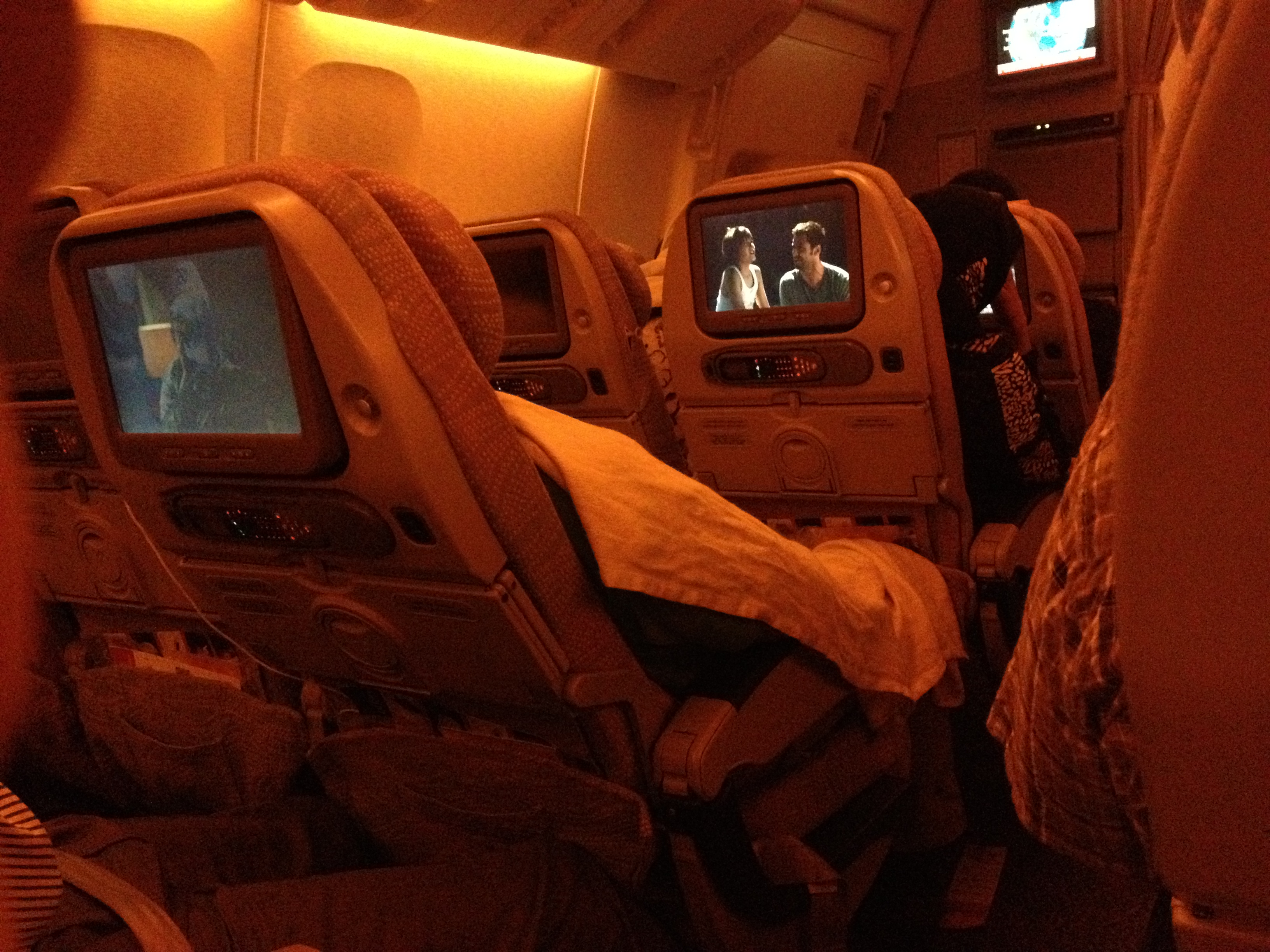
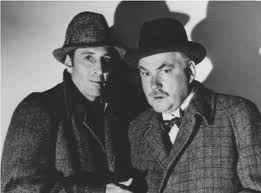
I have also come to regard the long flight from Houston to Dubai as an opportunity to decompress a bit by getting away from my email and phone. On every trip I download books on my Kindle that I can read from cover to cover without interruption. I also look forward to watching a good movie or two since I don’t go to the movies very often at home. As I perused the movie list on this latest flight, I decided to watch “Sherlock Holmes — Game of Shadows.” I have been a big Sherlock Holmes fan since I was a kid. I especially love the old black and white made for television Sherlock Holmes episodes featuring Basil Rathbone as the intrepid and always-brilliant detective and Nigel Bruce as Dr. Watson. So, I was curious about how Robert Downy Jr. and Jude Law would interpret the roles of the famous crime-solving duo. I have to confess that I did enjoy the movie although I still prefer the old black and white episodes.

One of my favorite scenes in the movie came near the end when Holmes and Watson were in hot-pursuit of the evil Professor Moriarty. As they sat in the shadows, Holmes and Watson split up but agreed to meet at a specified location. When Watson returned, Holmes was nowhere to be found because he had already left to pursue Moriarty. Holmes did, however, leave instructions for Watson on a hand-written note. On one side of that note Holmes had written, “Come at once if convenient.” On the opposite side of the paper Holmes had added, “If inconvenient, come all the same.” Holmes anticipated that he would need Watson’s help no matter what. And, it was a good thing he left that note because Watson was able to give Holmes the timely help he needed.

I like the message that Holmes left for Watson. It reminded me of a similar message that the Apostle Paul received in a vision of a Macedonian man who was standing and appealing to him, “Come over to Macedonia and help us” (Acts 16:9). Paul and his companions recognized the urgency of the message and departed for Macedonia at once, concluding that God had called them to preach the gospel there (Acts 16:10). They did not allow themselves to be swayed by whether this venture would be convenient or inconvenient, only by the fact that they needed to get to Macedonia quickly. We must have the same attitude when it comes to sharing and living out the gospel. We must do so when it is convenient and when it is inconvenient as well. Who is waiting for your help and will you go regardless of whether it is convenient or not?

« Newer Posts - Older Posts »

Categories