Posted by: Omar C. Garcia | July 20, 2012

A Child’s Special Offering

I had one of those unexpected heartwarming moments this week. A few days ago my friend Leslee, our Children’s Ministry Associate, stopped by my office to share something that happened during our Vacation Bible School in June. Every year we select one of our international partners to be the recipient of our VBS offering. This year we chose the Imparting Smiles orphanage in Cambodia. My key responsibility during VBS is to share a daily word about the recipient of our offering in order to motivate our kids to give to the cause. Because I knew that I would be away on sabbatical during VBS, I had pre-taped my daily talks while I was in Cambodia late last year. These short videos were a great way to help our kids understand what life is like for kids at the Imparting Smiles orphanage.

Charlize Reyes, one of the younger grade school kids in attendance at VBS, became especially concerned that kids in Cambodia do not have Bibles. So, she decided to do something practical in order to help. Charlize decided to write a Bible story every day and put it in the offering plate as her special offering to God. These stories ended up in Leslee’s office and when I returned home from India, Leslee brought the stories to me. To say that I was impressed would be an understatement. In simple (and phonetically-spelled) words, Charlize had paraphrased six of her favorite Bible stories in the hope that they would make their way to the kids in Cambodia who do not have a Bible. Here is just one of her stories told in the language of a child entering third grade:

Jonah was a profit of God. A profit is something that helps pepole learn about God. Well God wanted Jonah to go to Nineveh. Jonah disobeyed God so he ran away on a boat. When Jonah got on that boat he was sleeping. While the storm was going on the captain said “Wack up Jonah.” And Jonah said back “If you throw me outside the sea the storm will stop.” They said “ok” so they throw him out into the sea then a few seconds “Gulp!” A big fish swolld him then Jonah prayed inside of the fish and God anserw the prayer so it threw up. Then Jonah went to Nineveh then he told about God. This is about you can run but can’t hide. Please Lord let us follow God.

I am so proud of Charlize. She learned about a need and found a way to do something to help meet that need. She did not tell her parents what she was doing, she just quietly wrote out her Bible stories (some with illustrations) and quietly placed them in the offering plate in the hope that they would help kids in Cambodia who do not have Bibles. I am headed to Cambodia in September and I am going to deliver Charlize’s stories to the kids at the Imparting Smiles orphanage. I know that the kids there will be encouraged to know that a child their age who lives in America cared enough to do something to help them.

What Charlize did reminds me of one of my favorite Mother Teresa quotes, “In this life we cannot do great things. We can only do small things with great love.” It’s so easy for us to tune out or to overlook the need around us or to talk ourselves out of doing anything to meet the needs of others or to give a dollar and walk away. Charlize did not do any of that. Instead, she chose to quietly do something to help — something that required a thoughtful investment of time. She never questioned whether her handwritten Bible stories would reach the kids in Cambodia. With the confidence of a child mailing a letter to the North Pole, Charlize placed her stories in the offering plate and, by so doing, unwittingly gave a precious gift to the kids in Cambodia. Thank you, Charlize, for your thoughtful and special offering.

Posted by: Omar C. Garcia | July 18, 2012

Go Beyond | Kolkata

Incredible India! is the current slogan of India’s tourism industry. India first captured my heart and imagination in the Fall of 1998 when I journeyed to the subcontinent to lead a prayer initiative in the Khondhamal Hills in the state of Orissa. Traveling for hours toward this remote region engaged every one of my senses. Every mile of the way introduced me to fascinating sights, cacophonous sounds, unusual smells, interesting textures, and savory tastes. I returned home two weeks later convinced that India was indeed incredible! I was hooked and knew that I would return to this fascinating land again and again.

Over the years, God has progressively drawn me deeper into the heart of India and put India deeper into my own heart. Through these intervening years God has opened doors of opportunity for our missions ministry to construct a boarding school for one-hundred boys from among the persecuted Christians of Orissa, to mobilize volunteers to serve the least of these at Mother Teresa’s homes, to teach on the sanctity of human life, to engage with a slum school, to support an aftercare home for one-hundred fifty girls rescued from brothels, and to engage with various justice initiatives in Kolkata.

Because of the scope of our work in India, I asked my friend and Kingsland member Kay Smith to serve as our missions ministry’s point person for a specific slice of our work on the subcontinent — women’s justice ministry initiatives in Kolkata. Kay has a compassionate heart for young girls and women who have been rescued from brothels and who are longing for a new start. She led our first team of women to work with our justice partners in January 2012 and will lead a women’s team to India annually to serve the victims of human trafficking.

Since starting this blog in September 2008, I have written many stories about our work in the justice arena in India. I am happy to announce that we have just launched the second of our missions ministry’s country-specific blogs: GoBeyond | Kolkata. We have started this blog to specifically post information and reports about our women’s justice ministry initiatives in Kolkata. I encourage you to visit our new blog site often to read about our work, to pray, and to help champion the rights of the oppressed in Kolkata and beyond.

Posted by: Omar C. Garcia | July 15, 2012

The Absence of Grace

Just before boarding my flight from Kolkata to Dubai last Thursday, I picked up a copy of the July 12 issue of The Gulf Times and read a disturbing story entitled: Women Protest Over Afghan Execution. The story reported the public execution of a 22 year-old woman for alleged adultery. This latest episode of violence against women in Afghanistan took place in a village about 100-kilometers outside of Kabul, the capital of this Islamic nation. The execution of this woman named Najiba was captured on video. The disturbing video shows the young woman seated on the ground while a group of Taliban militants prayed before pronouncing her sentence and shooting her in the back several times at close range — all this as dozens of men cheered from the adjacent hillside. Najiba’s execution sparked both local and international outrage, calling for Karzai’s government to bring the culprits to justice.

Afghanistan is a very dangerous place for women. According to the country’s Independent Human Rights Commission, there has been a sharp increase of violence against women in the past year. Earlier this month a woman and two of her children were beheaded in eastern Afghanistan by her own husband. This was just one more in a series of so-called honor killings. And, what makes Najiba’s execution even more abominable is the revelation by Basir Salangi, the governor of Parwan Province. According to Salangi, two Taliban commanders were sexually involved with Najiba, either through rape or romantically. These two men decided to settle their dispute by torturing and killing the young woman. The double-standard is evident. The honor is not. Is it any wonder why Afghanistan is a dangerous place for women? The hypocritical and self-righteous Taliban have once again demonstrated what the world would look like with the absence of grace. When power is not tempered by grace, things can get ugly in a hurry.

The Bible speaks of an occasion when some religious leaders brought a woman to Jesus — a woman caught in the very act of adultery (John 8:1-12). The man, of course, was nowhere to be found. The religious leaders reminded Jesus that the law allowed for the stoning of such a woman. Jesus invited any among the woman’s accusers who was himself without sin to cast the first stone. That’s all it took to remind these hyper-pious men that their lives were as covered by the filth of sin as that of the woman they had publicly humiliated. And then, after the woman’s accusers had all left, Jesus forgave the woman and told her to change her ways. This simple act of grace gave this woman an opportunity to make a new start. And who among us has not longed for a new start?

The answer to making Afghanistan a safer place for woman and children goes much deeper than anything that Karzai’s government can do. What is broken or missing is a fundamental respect for the sanctity of human life and the capacity to exercise mercy and grace — all of which are not a part of the Taliban worldview. Without the presence of grace and love to temper power, we can expect to read more stories about woman and children who are the victims of hypocritical and brutal men who have no regard for the value of life and who are unwilling to come to terms with their own sinfulness. The Taliban and others like them have turned Afghanistan into an ugly and unsafe place. And there is certainly no honor in that. May Najiba’s executioners be brought to justice.

Posted by: Omar C. Garcia | July 12, 2012

Mother Teresa’s ABCs

Kolkata, India

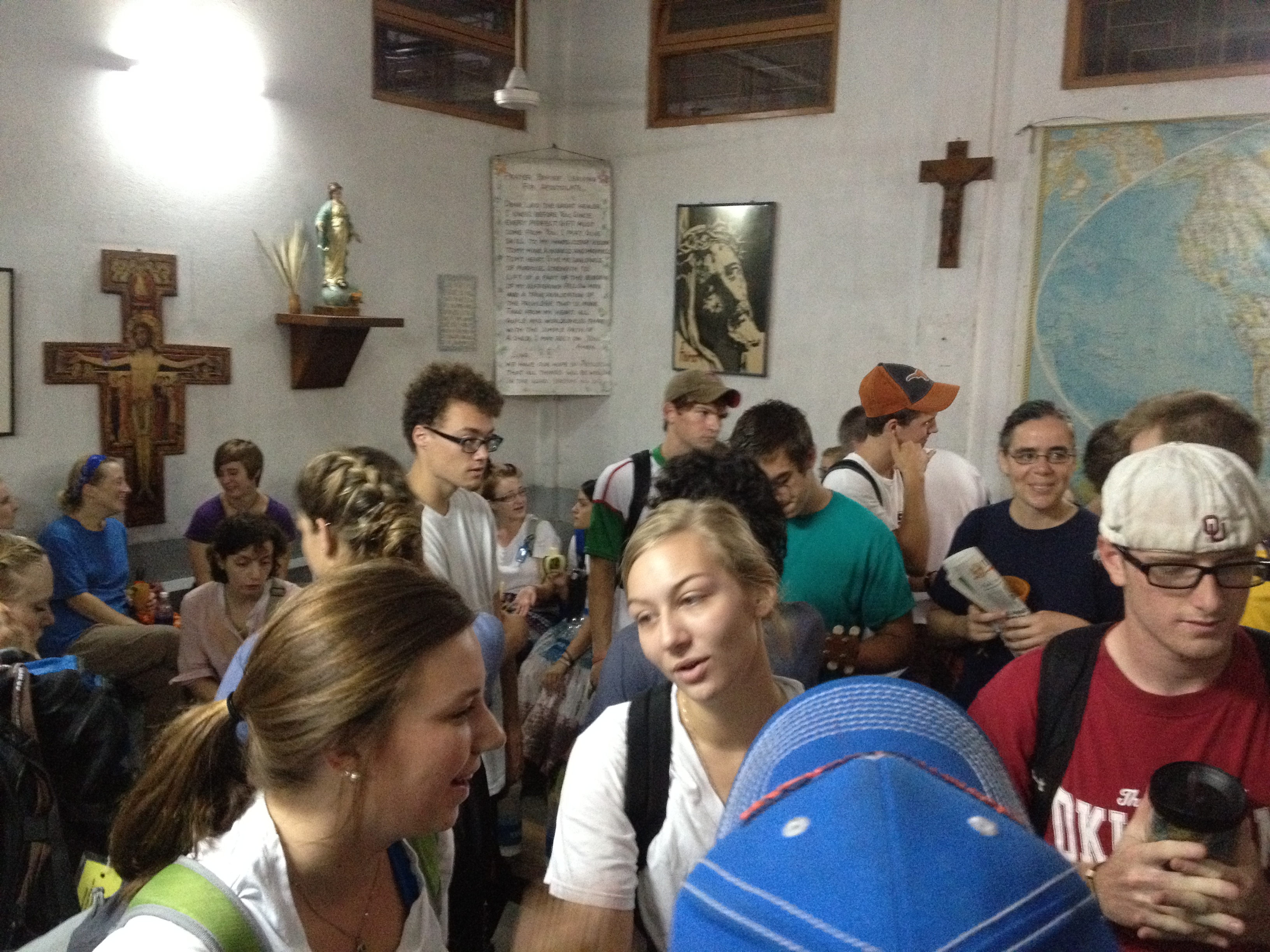
Yesterday was our final day of service at Mother Teresa’s homes. In just a few hours, we will begin the long journey back to Texas. Our students have experienced so much as they have compassionately served the least of these at Prem Dan and Shanti Dan. Among the lessons they have learned is the importance of closing the distance that separates us from those who are hurting and in great pain. They have learned that being the hands and feet of Jesus ultimately means drawing near to others, taking a personal interest in them, noticing the color of their eyes, and serving them without expecting anything in return. They have learned how fragile life can be and how much joy a smile and a touch can bring to those who have lived a lifetime in the shadows and filth of Kolkata’s streets. They have also learned that one person who is willing to serve others can make a difference.

On our final morning, we joined the other volunteers from around the world for breakfast at Mother’s House, the headquarters of the Missionaries of Charity. I always enjoy this opportunity to meet others who have come here to serve. I also enjoy listening to their stories about why they came to serve. Yesterday morning, an Italian man approached me and asked me if I remembered him. “My friend and I met you at Kalighat (Mother Teresa’s home for the dying) in 2009,” he reminded me. How could I forget. As I reflected on that trip, I wrote the following on my blog on January 30, 2009:


The Italian volunteers were my favorites. I looked forward to doing laundry with them each morning. They lifted our spirits by singing at the top of their lungs. Mother Teresa said, “I very often tell the Sisters to approach the poor with joy, knowing that they have plenty of reasons to be sad. They don’t need us to confirm their sadness for them.” The Italian volunteers filled the air with joy.

My Italian friend still radiated the joy that had so impressed me in 2009. I was so happy to know that he had returned to serve. This time, we exchanged contact information.

After all of the volunteers left for their respective assignments, I stayed behind to chat with Sister Margaret and Sister Mercy Marie. Because I was scheduled to speak at International Justice Mission later in the morning, I was unable to return to Prem Dan yesterday and was therefore able to stay a little longer at Mother’s House. These two Missionaries of Charity who have become good friends thanked me for returning to serve with our students. They also gave me a tiny piece of one of Mother Teresa’s saris as a token of their appreciation — a gesture of kindness that I will always remember.

Mother Teresa was not a complicated person. She just fell in love with Jesus and gave her life without reservation to serve Him. And, by so doing, she unwittingly captured the attention of the world. I think that Mother Teresa’s ABCs (something that the Missionaries of Charity distribute to volunteers) sums up much of what made her such a beautiful person. Each of us should certainly make it our aim to learn Mother Teresa’s ABCs.

Always have the courage to say sorry.
Be kind, be compassionate.
Control your judgments.
Don’t let yourself get discouraged.
Every minute is precious — don’t waste your time.
Find out what is nice in each other.
Give until it hurts.
Have deep respect for each other.
If you really want to love God, love one another.
Just do small things with great love.
Keep your heart clean.
Learn to pray, love to pray, and pray often.
Make time for each other in your family.
Never tell lies.
Only believe — you are precious to God.
Put love in whatever you do.
Quite a lot of people have forgotten what love is, so begin to give the joy of loving.
Refrain from prejudice.
Smile at each other.
Take the trouble to listen.
Use your talents for the glory of God.
Very often, we look but we don’t see. Let us look and see.
When humiliation comes, accept it and offer it.
eXcuse rather than accuse.
You must learn to forgive.
Zeal is a second name for love. Do not lose that zeal!

Posted by: Omar C. Garcia | July 11, 2012

Wordless Wednesday

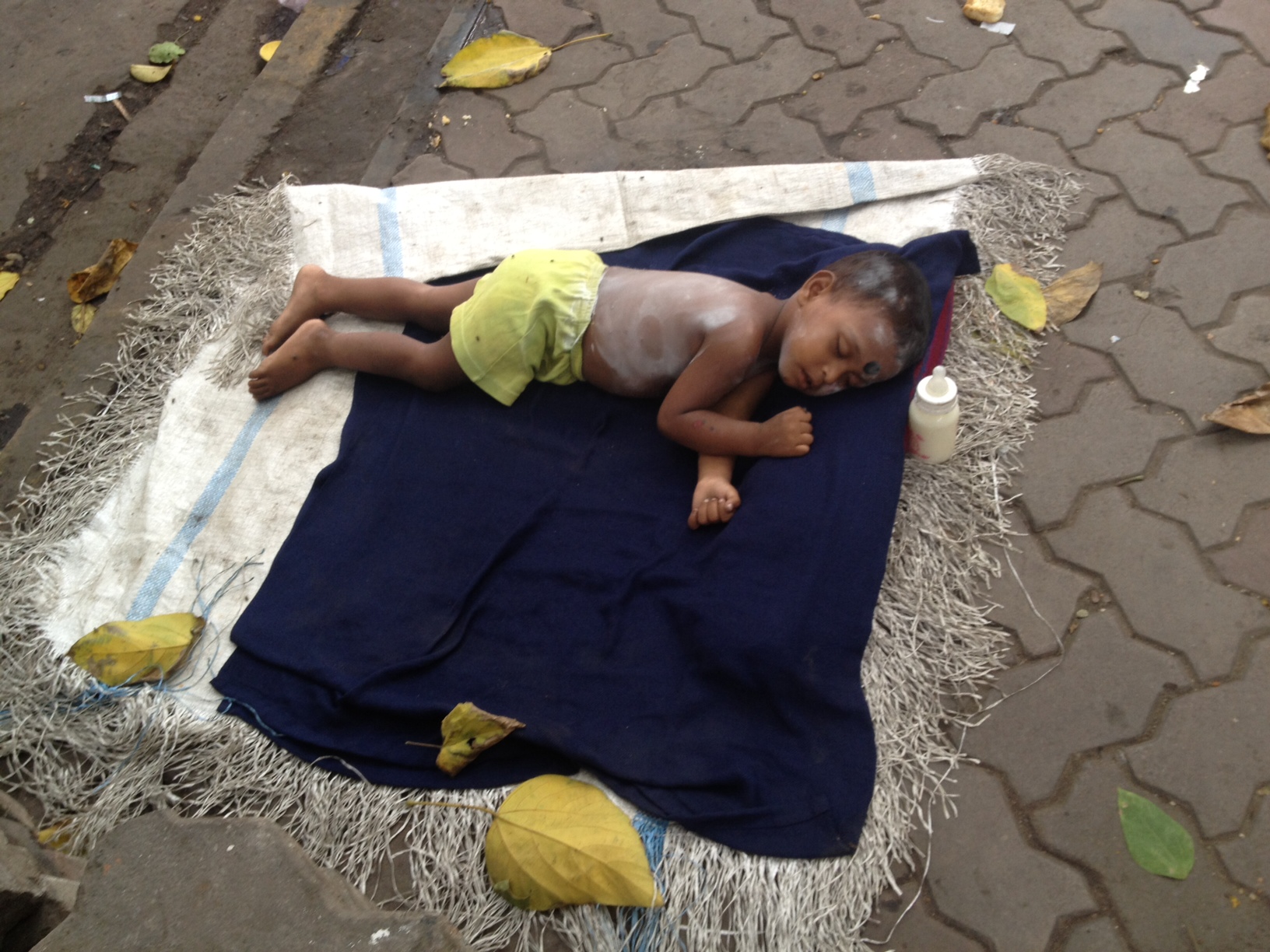
Homeless child. | 05 July 2012 | Kolkata, India

Posted by: Omar C. Garcia | July 10, 2012

A Beautiful Thing

Kolkata, India

One of the most important things I have learned by serving at Mother Teresa’s homes is that you don’t have to speak the same language in order to communicate with others. Volunteers from all over the world come to Kolkata to serve in Mother Teresa’s homes. However, not all of these volunteers speak English and even less speak Hindi or Bangla, the two languages spoken by those who reside in Mother Teresa’s homes. What makes the process of communication work is that those who come here to serve have a measure of fluency in the language of smiles. I have once again enjoyed my time with the men at Prem Dan. Whether I walk through the courtyard or the dormitories, I make it a point to stop and engage with the men and make every effort to make them smile. Mother Teresa said, “Every time you smile at someone, it is an action of love, a gift to that person, a beautiful thing.”

I appreciate how our students have embraced and cared for the least of these. By so doing they have unwittingly become ambassadors of smiles, not only at Mother Teresa’s homes but also at the aftercare homes and other places where they have interacted with others. They have generated lots of laughter and brought smiles to the faces of those they have met. This afternoon Devon, one of the young ladies on our team, told me about a woman at Prem Dan who refused to smile. Devon told me that she made it her aim to bring a smile to this woman’s face but to no apparent avail. However, when we returned to Prem Dan this morning, the woman not only smiled when she saw Devon, she embraced her — a reminder that you can make a difference in the lives of others if you will just keep trying no matter what.

We should never underestimate the value of making others smile. Doing so may not seem like something that is particularly deep or spiritual, but it is. We can never know the kind of pain, hurt, or despair that others may be dealing with and how God can use something as simple as a smile to bring a measure of relief or to remind others that He has not forgotten them. The great thing about being an ambassador of smiles is that you do not need any money to purchase your inventory. You just have to be intentional about noticing others around you and then delivering your smile to them free of charge. They may not necessarily acknowledge your gift but do not lose heart — trust that God will use it. It may take time, as in the case of the woman that Devon spoke to me about, but it’s worth the wait to see the results. And, as Mother Teresa said, that’s a beautiful thing!

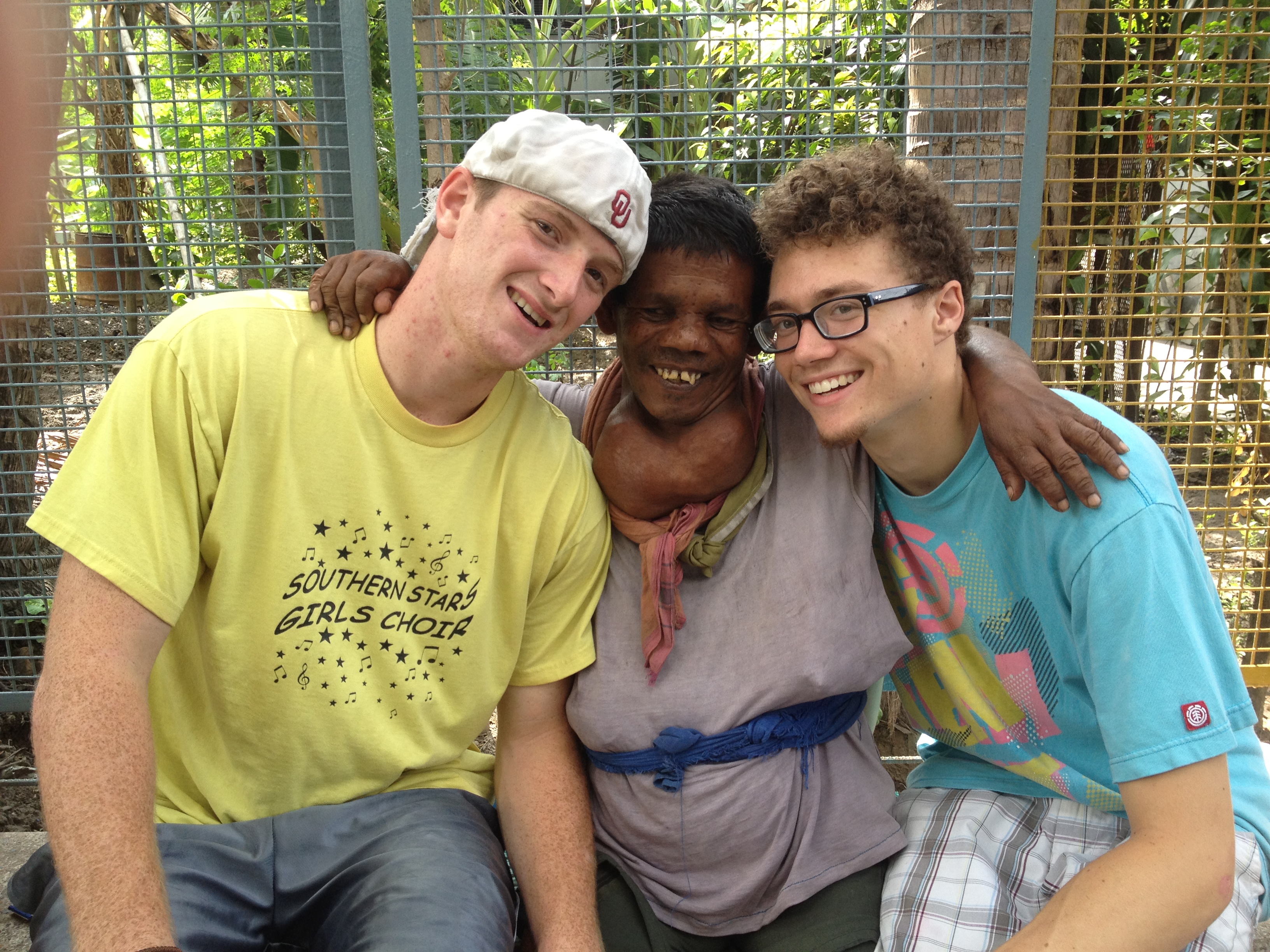
Nate and Jon bringing a smile to a resident at Prem Dan.

Posted by: Omar C. Garcia | July 9, 2012

A Death at Prem Dan

Kolkata, India

I will always remember the man who died in Bed Number 30 on January 23, 2009 at Kalighat, Mother Teresa’s hospice for the poor. When I arrived to serve at Kalighat that afternoon, one of the nuns told me about the man in Bed Number 30. Someone had found him in a hole and carried him to Kalighat. The man had suffered some kind of terrible physical trauma. His body was broken and he was barely conscious. Three women sat at his bedside all afternoon and ministered to him. Late in the afternoon, as they softly sang “Amazing Grace” to him, the man died. The Missionaries of Charity never knew his name or where he was from or if he had any family. One of the nuns told me that she was thankful that this man was able to die with dignity at Kalighat and not alone on the streets. Mother Teresa once said that she wanted for “people who had lived like animals to die like angels — loved and wanted.”

As we were getting ready to leave Prem Dan this morning, I noticed that Devon, one of the girls on our team, was weeping in the courtyard. When I asked her what had happened she told me that one of the women at Prem Dan had just died. Several of our girls witnessed this woman’s death. I later learned that Kay and Lisa, two of our adult sponsors, had sat with this woman in the final hours of her life. And, as they sang to her, the woman drew her final breath. When she died, the girls noticed that the mute woman in the adjacent bed was weeping. She too had witnessed the death of the woman who had occupied the bed next to her own. Although this was a difficult thing for our girls to experience, I am so proud of them for never leaving the dying woman’s side and for helping her to die with dignity. That’s what Mother Teresa would have wanted. She would be pleased to know that the volunteers who come to Kolkata to serve in her homes continue to help the least of these to die with dignity and respect.

This afternoon, we took the guys on our team to meet my friend Navin, a soft-spoken man who runs a ministry that rescues at-risk kids. He is a great example of the power of one, or in this case the power of two since Navin’s wife is also involved in this ministry. Years ago, Navin and his wife stepped out in faith to start a ministry to rescue kids from Kolkata’s rail yards and rehabilitate them. Our guys had the opportunity to hear the personal stories of three of the boys under Navin’s care. Amazing does not begin to describe what has happened in the lives of these kids since coming to live under the care of Navin and his wife. They are a great reminder of what it means to go beyond — to step across the line that defines the most we’ve ever done for God and His purposes. Navin and his wife have given up a lot of things in order to do what they do. But they have also gained some things that are beyond value. My friend Ashok Andrews, the pastor of Kolkata Christian Fellowship, sums it up best: “My life is a single candle. I therefore prefer to burn it in a place filled with darkness than in a place flooded with light.” Navin and Matilda are indeed lighting up some of Kolkata’s darkest places.

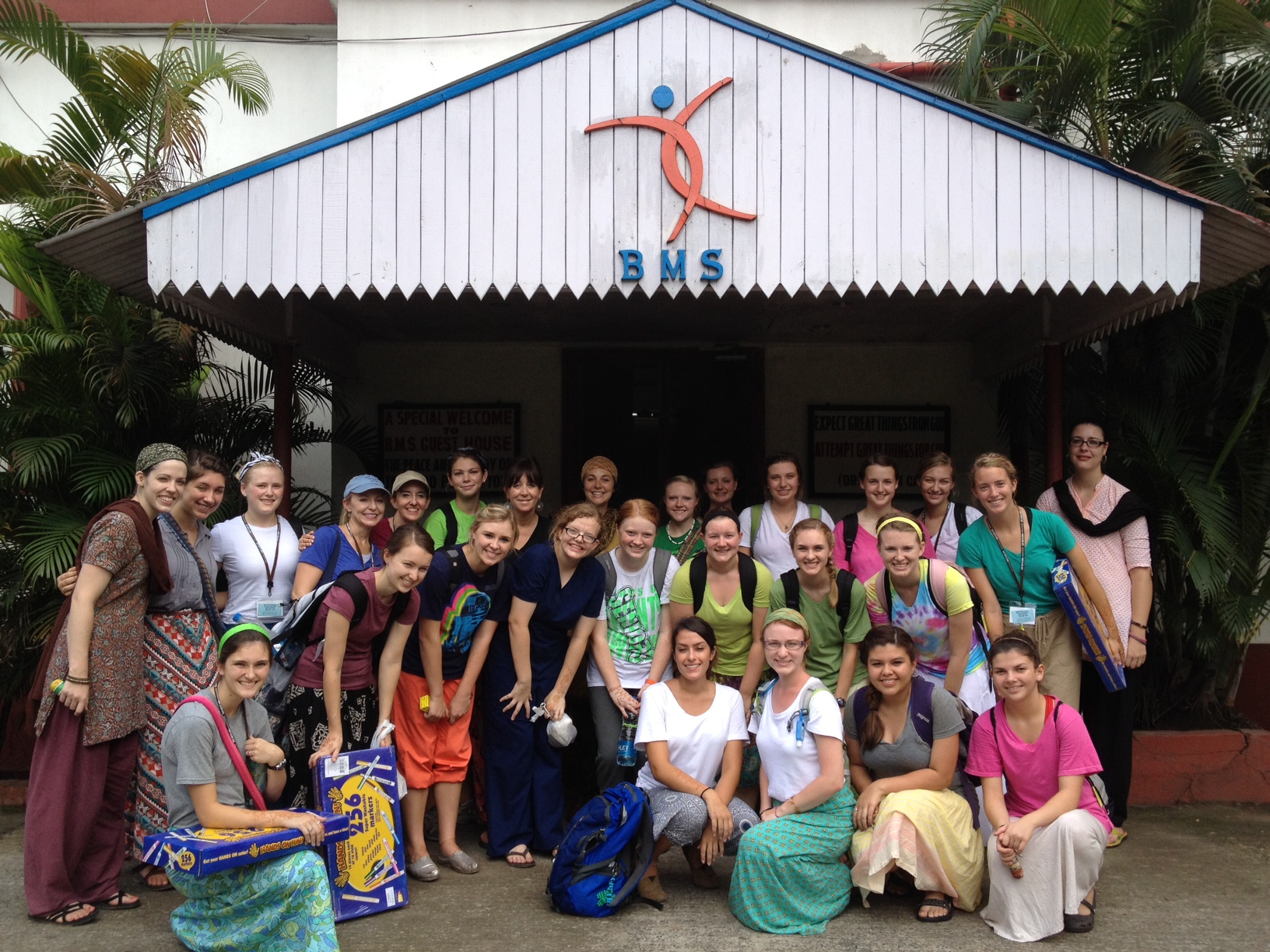
Our girls as they prepare to leave for their afternoon assignment at the aftercare home.

Our guys at Navin’s ministry to at-risk kids rescued from Kolkata’s train stations.

Posted by: Omar C. Garcia | July 8, 2012

The World is a Book

Kolkata, India

Over the years of mobilizing volunteers to serve God’s purposes around the globe, I have watched God use ordinary people to make a difference. And, I have watched Him make them different by doing things in their lives that can only happen in the context of going beyond their comforts and conveniences. Going beyond opens a whole new world of understanding. St. Augustine said, “The world is a book. He who does not travel reads only a single page.” Those who go beyond read another page, broaden their vocabulary, become better informed, and see the world through new eyes. You don’t have to go far, you just have to go somewhere — perhaps across the room, across the hall, across the street, or across the globe. One of the best things about travel is the insight that is gained by being on site. For example, it’s one thing to read about poverty but quite another to walk through it and to smell it and to get it all over your shoes and clothing.

Our students have seen and experienced things this past week in Kolkata that have caused them to think deeply. They have touched the least of these in Mother Teresa’s homes. They have learned about the plight of those trapped in the unimaginable hell created by those who traffic in people. They have interacted with young girls rescued from brothels and children from the lowest caste. They have met and talked with other young people who have come to serve here from among the nations. They have lost some fears and, in some cases, gained new ones. They have seen how difficult life can be for others and perhaps will become more thankful for every convenience they have taken for granted. Traveling the streets of Kolkata has caused them to look to their right and to their left in order to see life as it happens here and, by so doing, they are learning to develop a sense of peripheral compassion.

Today, our students turned and read more pages in the book that St. Augustine referred to. All of our students served at their respective assignments at Mother Teresa’s homes — something that has become much easier for them on this third day of service. It was great to see them take the initiative to serve and to help new volunteers from other countries to get oriented. This afternoon, our girls once again served girls their age and younger at a Christian aftercare home for those rescued from Kolkata’s brothels. And our guys met with other teens at an after-school ministry. They participated in a cross-cultural panel discussion and led some students to faith in Christ. All of our students also experienced their first cab rides in India with their adult leaders and family groups. Every one of these experiences is a part of the narrative that St. Augustine talked about. Our students have been enriched by what they have read today!

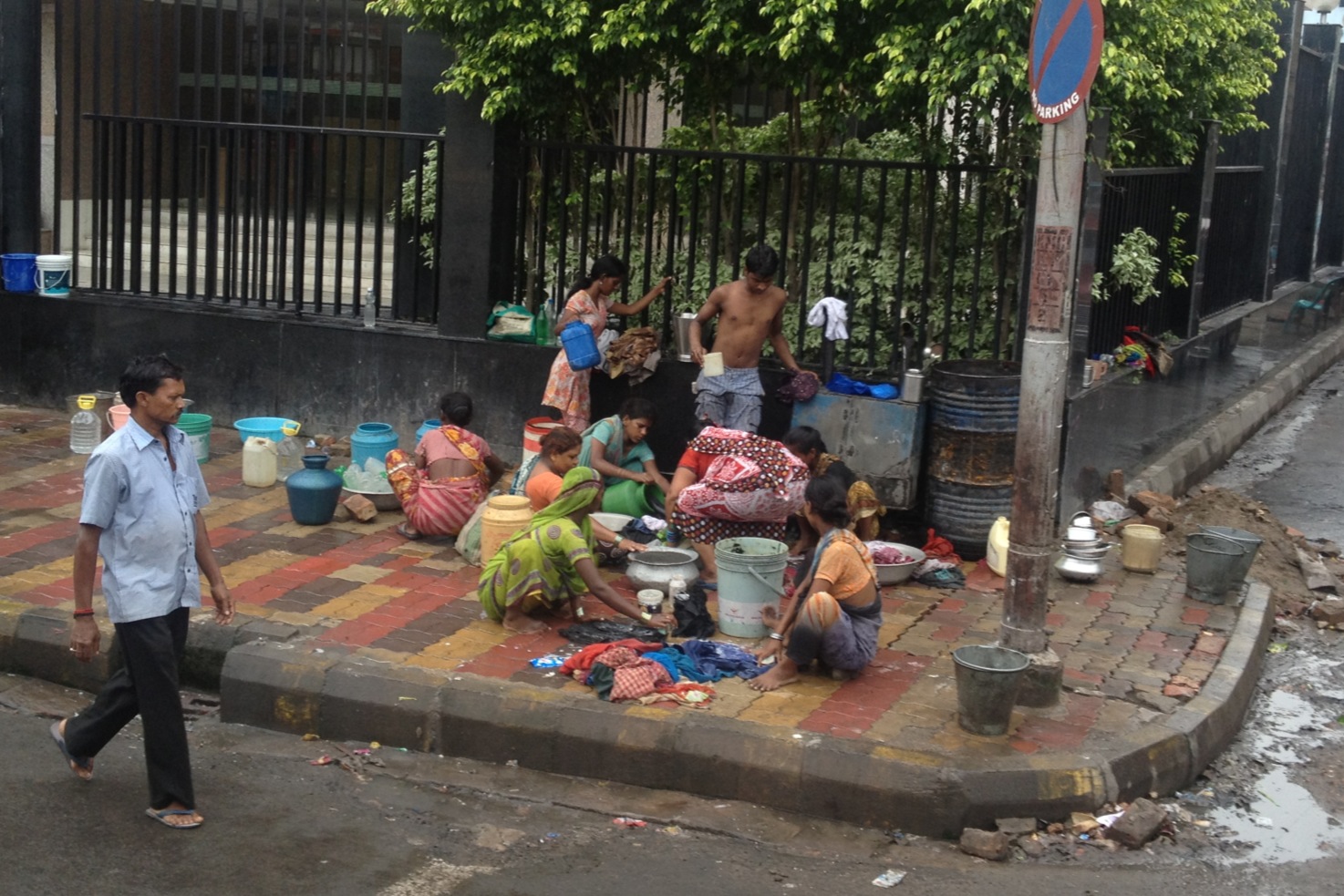
Women doing laundry on street corner. View from our bus.

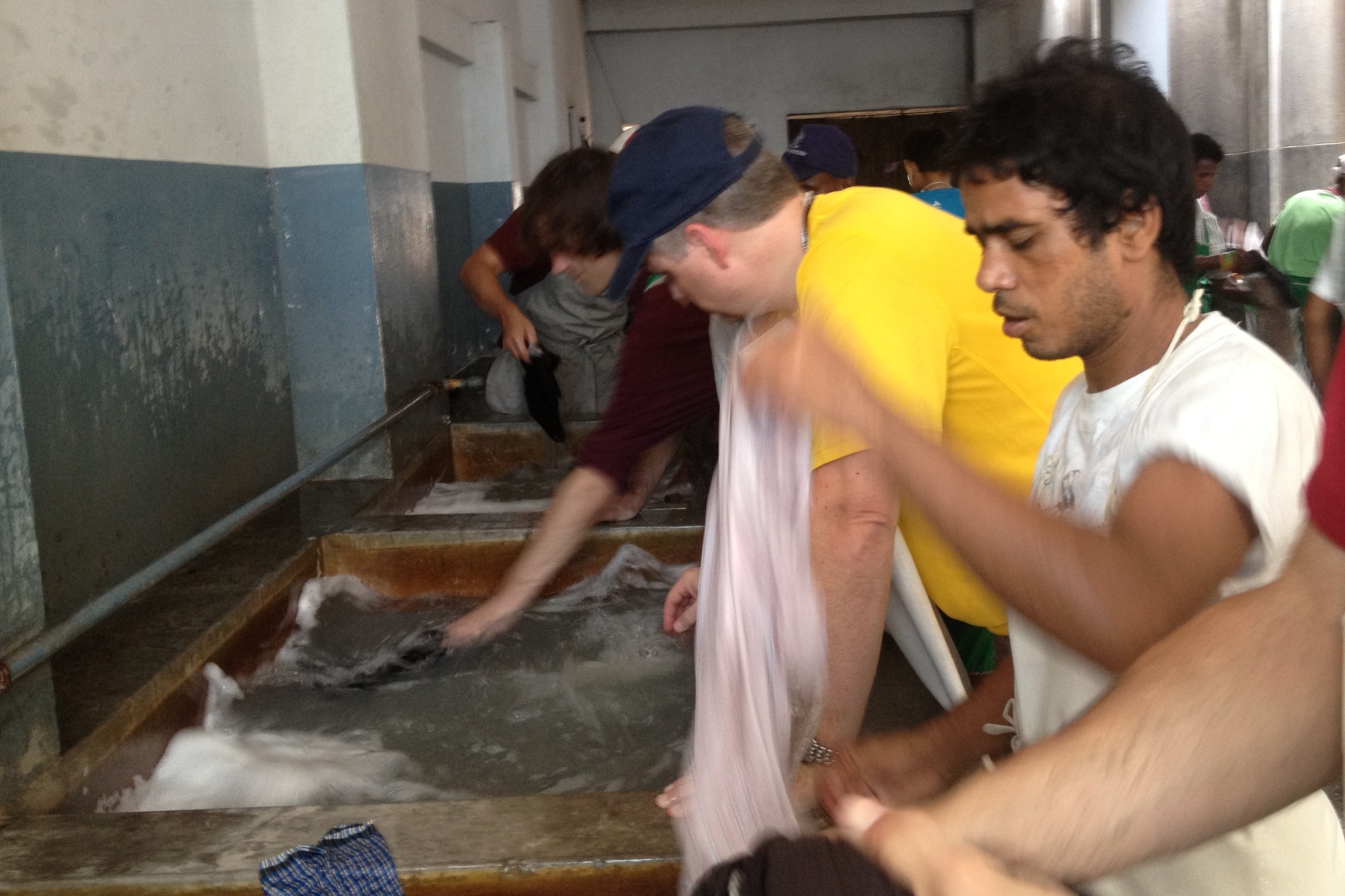
Doing laundry at Prem Dan, Mother Teresa’s home for the destitute.

Our girls giving gifts of pajamas to girls in aftercare home.

Students singing at after school teen ministry.

A too-common sight on the streets of Kolkata.

Posted by: Omar C. Garcia | July 7, 2012

Befriending the Hurting

Kolkata, India

Jesus was known as “a friend of tax collectors and sinners” (Matt. 11:19). Although meant as a criticism against Jesus, I personally like this designation. Jesus made it a point to make meaningful connections with those despised by polite society — something that set Him distinctly apart from the religious leaders of His day. The religious leaders were so starched in self-righteousness that they avoided the wrinkles that result from contact with sinful humanity. Jesus, however, was “full of grace” (John 1:14) — something that allowed him to interact with sinful and hurting people in a way that the religious leaders did not understand nor comprehend. He knew that “those who are well have no need of a physician, but those who are sick” (Matt. 9:12). As a follower of Jesus, I want to befriend the disenfranchised and desperate, the poor and the oppressed, and those who are easily overlooked, avoided, and despised.

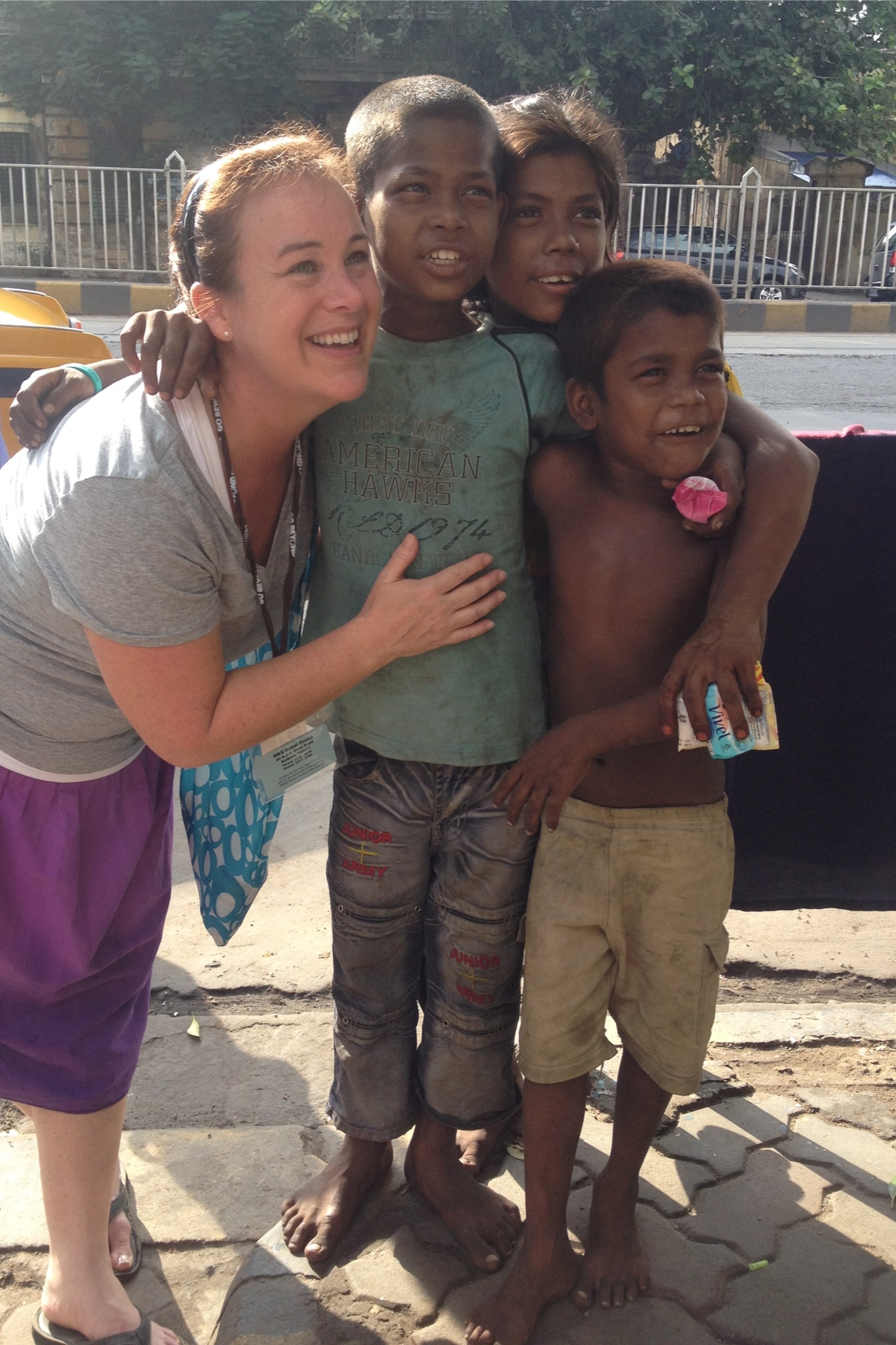
Among other things, Kolkata is a place known for its homeless masses. Estimates of homelessness in Kolkata range from the hundreds of thousands up to a million. Over the past several years I have come to know most of the homeless people who live on the sidewalks near the guesthouse where I always stay on my visits here. One family in particular has several children, one of which was kidnapped a couple of years ago. This family has staked out its little slice of sidewalk to call their own. When I am here I always make it a point to buy them meals or give them snacks. This afternoon, I watched as a couple of our girls walked over to this family and gave them the sack lunches we provide for our students at noon. They not only gave them their lunches, they embraced them — something that does not often happen. More often these children are pushed out of the way or scolded by passers-by for getting in their way. I was able to snap a quick photo of Amy, my assistant, with these homeless kids. One look at their faces is all it takes to realize that they too long for the same love and acceptance that we all want.

This afternoon our students also interacted with kids who live at the bottom of the caste system and young girls who are stigmatized because of unfortunate events in their lives. Our guys visited a tutoring center for the children of the poorest of the poor. Our girls worked with 25 young girls rescued from Kolkata’s brothels and now reside at the Mahima aftercare home. The best words I can use to describe what I witnessed are compassion and tenderness. Our students never hesitated to reach out to those they met. They truly were the hands and feet of Jesus and demonstrated what it means to be full of grace and kindness. We will visit these same groups again tomorrow afternoon after we finish our work at Mother Teresa’s homes. I can already feel the excitement and anticipation among our students. They don’t seem to mind getting their clothes a little dirty and wrinkled as a result of interacting with hurting humanity. I am confident that God Himself is pleased by the selfless service and unconditional love that our students are expressing to the least of these and the oppressed in Kolkata in the name of the one who was “full of grace.”

Posted by: Omar C. Garcia | July 6, 2012

Familiar Faces

Kolkata, India

One of the advantages of serving often at Prem Dan, one of Mother Teresa’s homes, is getting to know the men who are living out their last days there. Every time I return to Kolkata I can hardly wait to see these men whose faces are now permanently etched in my memory. I felt no different this morning as we started our day by worshiping with the Missionaries of Charity at 6:00 AM. After worship, I could hardly wait to get on the bus with our team of students for the drive to Prem Dan. When we finally arrived, I was amazed by how much the squatters’ slum outside of Prem Dan had grown. I am talking about a Slum Dog-looking collection of hovels occupied by the poorest of the poor who are trying to eke out a living along one of Kolkata’s busiest streets. It’s a depressing sight but also a reminder of what Jesus told His disciples in the final hours of His life, “For you always have the poor with you, and whenever you want, you can do good for them” (Mark 14:7a).

Walking through the front gate at Prem Dan was a kind of homecoming for me. As we walked toward the commons area I began to scan the faces of the men there, looking for the familiar faces of those who are still living since my last visit in January of this year. I can’t tell you what a joy it was to make eye-contact and to see the smiles on the faces of these men. Several came to me and welcomed me back. I turned to one of our guys and told him that the men here do not forget those who come to serve them. They too, scan the faces of the volunteers, looking for the familiar faces of those who have been here before. Once you have served here, you are forever bound to these men by your acts of kindness.

One of the first things any volunteer to a place like Prem Dan must deal with is their own squeamishness. It can be a bit overwhelming when you first see the men and women here whose bodies are in various stages of brokenness. But, I was more than impressed by how quickly our students cleared that hurdle. They did not even hesitate to take the initiative to begin providing the most basic of care for the residents. I had asked our guys to bring razors, shave cream, and lotion. Half our guys started shaving the men while the others massaged lotion into holocaust-looking limbs. Within minutes I saw residents smiling as our guys served and embraced them. A human touch means so much to these Dalits (members of the lowest caste) who have known so little of tender touches and embraces. It was a beautiful sight. I mentioned to several of our guys as they massaged the tired feet of these men that they were doing the very thing that Jesus would do if He was here. They were being Jesus with skin on to these men.

I also heard an encouraging report from our students that served at Shanti Dan, Mother Teresa’s home for mentally challenged women. And also from those that visited and served the 160 young girls that reside at the aftercare home that we support for girls rescued from sex trafficking. I am proud of our students and grateful for what God is doing through them and also in them as they serve the least of these and the oppressed. Those they have served will likely not remember their names, but they will remember their faces and the acts of kindness associated with each one. May we always seize opportunities to do for others what Jesus would do for them and may we also care for others in such a way that they see Jesus in us.

•••••
My friend James Roberts, Student Minister at Bay Area First Baptist Church in League City, Texas, has come to India with our team. Please take a moment to watch his video blogs posted at his 518Ministries blog site.

« Newer Posts - Older Posts »

Categories