Posted by: Omar C. Garcia | September 27, 2012

From Here to There

Singapore en route to Indonesia

I arrived in Singapore a few hours ago after two long flights separated by an eight-hour layover in Dubai. I have lost track of exactly how many times I have found myself crammed into an Economy Class seat since I started traveling so many years ago. With the exception of the occasional freebie upgrade to Business Class because of my frequent flyer status, all of my travel is in Economy Class with the rest of the world’s budget-minded travelers. But, that’s ok because I believe the journey from here to there is a big part of the adventure. Although I do get weary when I travel, I never get weary of meeting and conversing with people along the way. Besides that, something amusing always happens in the back of the plane — from the person who can’t figure out how to open the lavatory door to the person who has not figured out that the meals are part of the deal! A lot of the funny stuff in life happens along the way from here to there.

When you think about it, life is about getting from here to there. Whether we are traveling from one place to another or trying to figure out how to put food in the pantry, life is about getting from one point to another. And if we are not careful, we can miss a whole lot of life if we focus so intently on where we are going that the journey from here to there becomes a blur. That’s happened to me before on road trips when I concentrated so much on where I was headed and what I was going to do when I got there that I completely missed the sights along the way. It’s almost as though I was driving in a hypnotic trance. I spend a big percentage of my time traveling from home to locations on the other side of the planet. The best way for me to redeem that time is by making the most of every opportunity to enjoy the journey and the interesting people I meet along the way. In 99.9% of the cases, my life will intersect with theirs only once and only for a very brief time.

The late Dr. Rudy Hernandez, one of my mentors, taught me the importance of making the most of those once-in-a-lifetime intersections along the way from here to there. One day when he and I were driving out of the parking lot at DFW airport he told me to encourage the lady working at the pay booth. I replied that I did not have time because there was a line of cars behind us and we would have less than thirty-seconds. When we stopped to pay, he leaned over and said, “Young lady, has anyone today told you how much God loves you?” Her eyes widened as she replied, “No sir.” Dr. Rudy said, “Then, let me be the first.” Dr. Rudy taught me that there is always time to be kind to others and to encourage them when we are en route from here to there.

Stephen Grellet (1773-1855), a prominent Quaker missionary, probably said it best: “I shall pass this way but once; any good that I can do or any kindness I can show to any human being; let me do it now. Let me not defer nor neglect it, for I shall not pass this way again.” That’s great advice for each of us to heed because we are all on a journey from here to there. And the truth of the matter is that, in most cases, we “shall pass this way but once” and never again come in contact with those we meet along the way. So, make the most of every opportunity to enjoy the journey and to be kind to those you meet along the way as you go from here to there.

Posted by: Omar C. Garcia | September 24, 2012

Cultural Etiquette

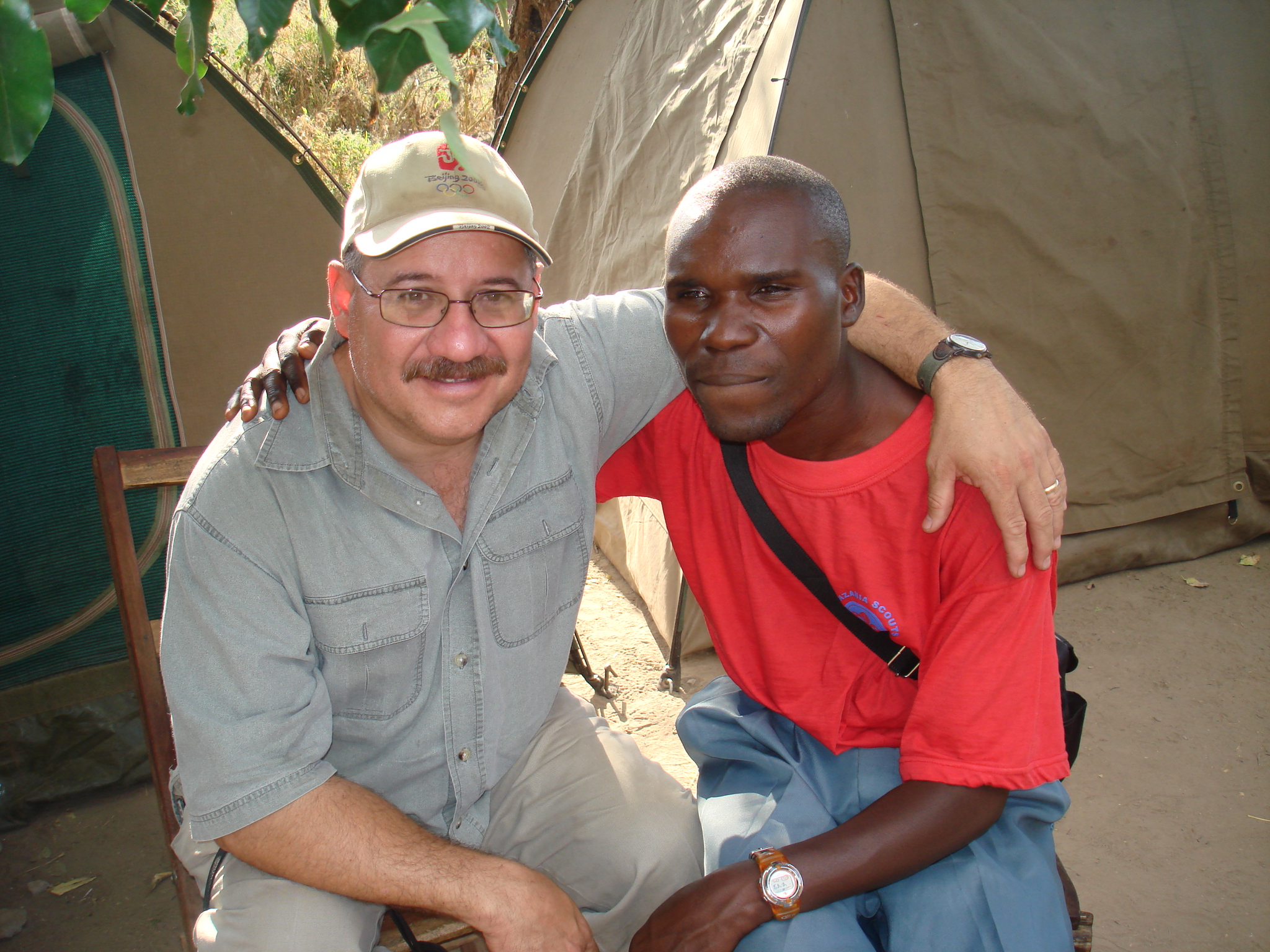
Tanzania 2008

As a seasoned traveler, I am an advocate of responsible travel — the kind of travel that respects cultural traditions and fosters greater understanding between peoples. Responsible travel is no accident but rather the result of intentional efforts to learn and practice country-specific cultural etiquette. While we can learn many of these cultural considerations from books and other sources, the best classroom is the world itself. St. Augustine said, “The world is a book. He who does not travel reads only a single page.” However, those who venture beyond familiar borders have the opportunity to read another page, broaden their cultural vocabulary, become better informed, and see the world through new eyes.

Travel affects our understanding and perspective. One of the best things about travel is the insight that comes only from being on site. While we will not always get it right, we should make every effort to make certain that as we travel we avoid offensive behavior, respect and honor differences, and treat others with dignity. The following are a few guidelines for improving your cultural etiquette quotient as you travel.

Do your homework. | Before you leave the country, take time to learn all that you can about the people who live in the places where you will travel. There is no shortage of helpful resources available — everything from country guides to web-based instruction to smart phone apps that cover a range of topics from greeting to eating to taking photos and more. I like to download country guides to my Kindle device (that I can also access on my iPhone). This makes it easy to review them en route to my destination and during my stay.

Be observant. | When you arrive at your destination, consider it your new classroom. This is where learning is fun. Observe and learn from locals. Take note of how they greet one another, how they treat personal space, what and how they eat, how men and women interact, how they treat their children, and more. What you see will prompt you to ask lots of questions.

Ask questions. | Don’t be afraid to ask questions. I have found that nationals appreciate sincere questions from guests to their country. “Why do you greet one another in this particular way?” or “What is the meaning of this gesture?” or whatever question you may have. Ask it. Asking questions gives nationals an opportunity to teach us and to help us better understand what we can do to foster meaningful interaction and deeper understanding during our stay.

Watch your tongue. | Remember that you are a guest and should therefore refrain from saying anything disparaging about the way others live or how they do things. A helpful rule of thumb is to speak as though everyone around you understands what you are saying. So, don’t say anything that might make others feel that you are being critical of their foods, roads, toilets, homes, or way of life.

Resist the urge to be a hero. | As you travel you will see all sorts of things that will make you want to rip off your shirt to reveal that big letter “S” on your super hero outfit. Resist the urge and remember that Superman and Stupid both begin with the letter “S”. You can actually do more harm than good by emotionally stuffing money into a need or making promises of future help. If you want to do something to help, consult a local ministry or organization that can take your funds and apply them to the need in responsible ways after you leave.

Keep your ideas to yourself. | Remember that you are a guest, not a consultant. So, resist the temptation to tell nationals how to do things better or how they should drive or reform their traffic laws, etc. Our ideas may sound great to us, but may be totally unrealistic and unsustainable in the geographical context you’re in. Instead, rest in the assurance that those you are visiting have somehow managed to survive from day-to-day and to keep things running without your advice.

Receive their smell. | Travel to some places will introduce you to the world of unusual and unpleasant human smells — villainous odors forged in the furnace of human filth that you will find indescribably repulsive. I learned a great lesson from friends who lived among the Ayizo people in Benin, West Africa. They taught me that among the Ayizo, the most intimate way to say that you love someone is “I receive your smell.” Travel is about learning to receive other people’s smell.

Swallow anyway. | Travel will inevitably introduce you to a variety of unusual foods and beverages. Over the years I have eaten everything from dog meat to intestine scrapings to stuff that I could not identify. I have moistened my lips with everything from delicious Ukrainian compote to fermented Mongolian mare’s milk, a drink that laughs in the face of Imodium. I have swallowed stuff that I thought would kill me. Looking back on it all, I’m glad I did because, in many cases, doing so nurtured a meaningful connection with my hosts.

Be gracious. | Perhaps the most important thing to remember when it comes to cultural etiquette is to be gracious and to behave as you would want for guests to your own home to behave. Travelers often have an uphill climb because of the cultural faux pas of those who came before them. However, by demonstrating gracious behavior that respects and honors differences and treats people with dignity, we can help to foster greater understanding between cultures and make things easier for those who come after us.

Posted by: Omar C. Garcia | September 22, 2012

Just Run 2012

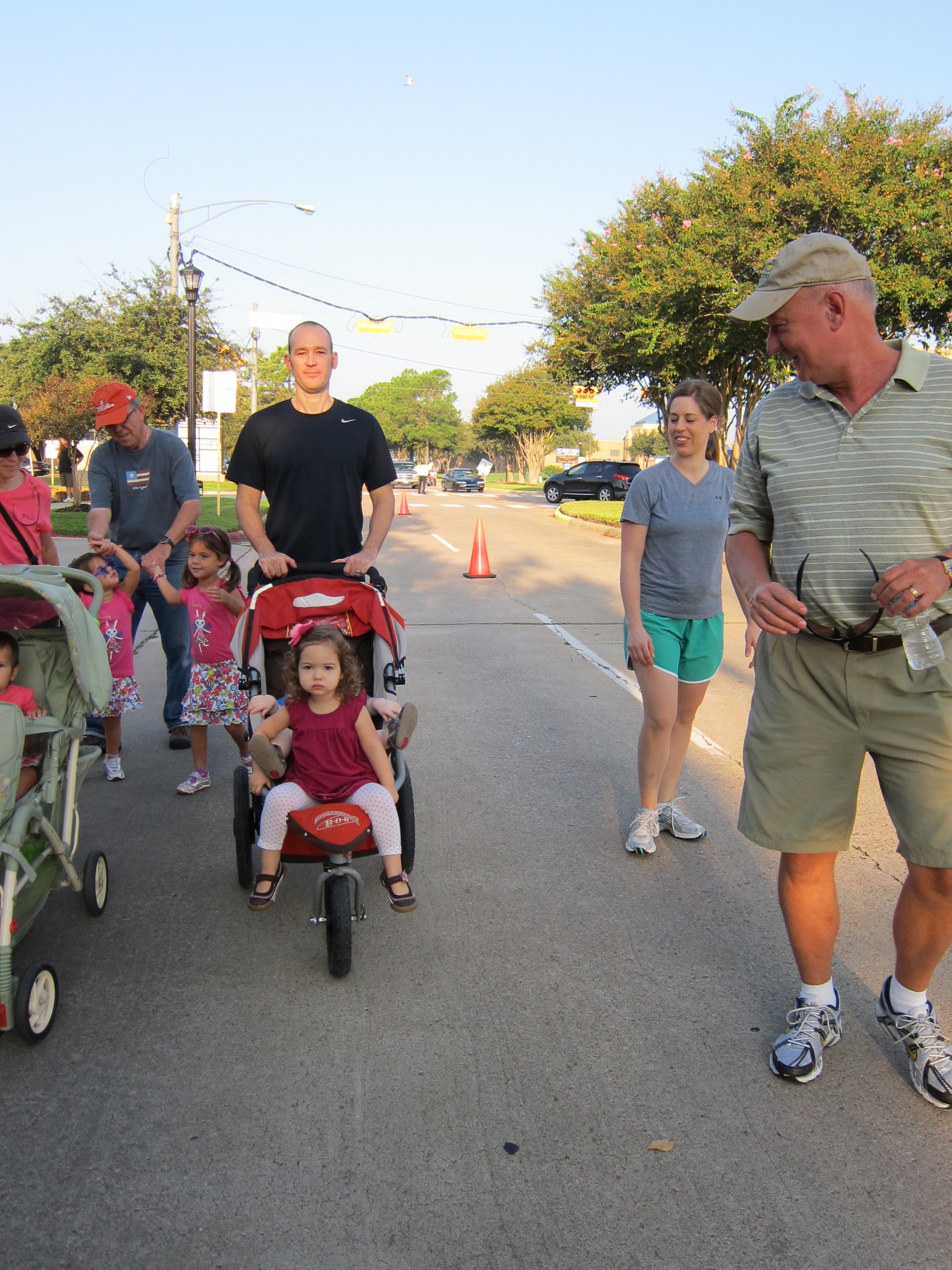
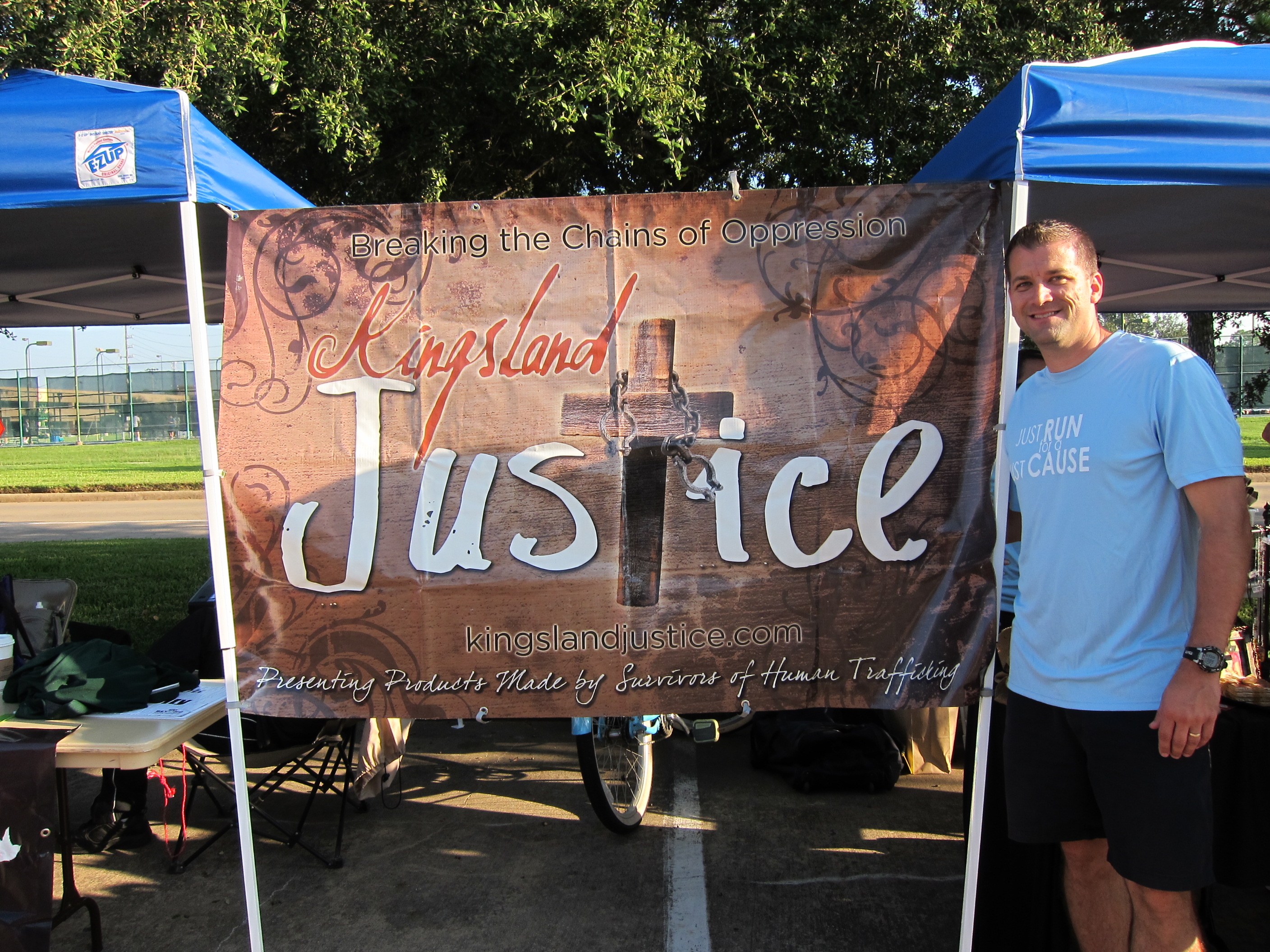
Kingsland’s Third Annual Just Run for a Just Cause is now history. This morning, 875 participants pounded the pavement in this annual run and family walk designed to raise awareness about human trafficking. Making people aware of the scope and magnitude of modern-day slavery is the first step toward making a difference. Those who are aware are more likely to pray, to speak on behalf of those who have no voice, and to financially support initiatives that result in the rescue and care of the oppressed. As for those who choose to do nothing, William Wilberforce said it best: “You may choose to look the other way but you can never say again that you did not know.” This year we again featured our sixty-foot long justice wall made up of panels that sequentially illustrate the story of how young girls are trafficked and how those who champion justice come to their aid. I stood at a distance, watching and praying as folks carefully read and studied the contents of each panel. For many, this was their first exposure to the dark world of modern-day slavery and what they can do to help.

I am especially grateful to Paul Crandall, Kingsland’s Recreation Pastor, who served as this year’s race coordinator. Paul and his assistant Becky and a team of dozens of volunteers did a fabulous job of planning every detail and ensuring that the race/walk was a success. I am happy to say that their hard work paid off. I spoke with lots of folks this morning who expressed their gratitude to Kingsland for sponsoring this race and for giving them an opportunity to invest in supporting our justice initiatives from Katy to Kolkata. The proceeds from this year’s race will help us to continue our support of local and international justice initiatives — including caring for more than 150 girls rescued from brothels in South Asia who now live in the aftercare home we support. Although the race is now history, I pray that what happened today will help to change the future for victims of human trafficking as we continue our efforts to speak on behalf of those who have no voice and work to free the captives.

The start of the race at 8:00 AM.

Brian Stone (Kingsland Pastoral Staff member) and family enjoying 1 mile walk.

Helpers at Kingsland’s Justice Merchandise booth.

Patrick McCrory and Josh Allen | Kingsland Pastoral Staff

Our justice wall illustrates what life is like for a modern-day slave.

Paul Crandall, Kingsland’s Recreation Pastor and Just Run race coordinator.

Posted by: Omar C. Garcia | September 19, 2012

Wordless Wednesday

Fruit vendors. | 12 September 12 | Poipet, Cambodia

Posted by: Omar C. Garcia | September 17, 2012

The Last Kid I Hugged

Siem Reap, Cambodia en route to Houston, Texas

It’s only been a few days since our team said good-bye to the kids who call the Imparting Smiles children’s center their home. Located in the city of Poipet along the border between Cambodia and Thailand, Imparting Smiles is a safe place for kids. Most but not all of the kids who call Imparting Smiles home are orphans. A few are there for other reasons. One little girl in particular captured my heart during our visit last week. She was placed at the orphanage because her own father raped her when she was just seven years old. Her father is currently serving time in prison — only three years for his horrible crime against his daughter. Not enough time if you ask me. As a father, it’s hard for me to imagine how any father could do something so terrible to any helpless little child much less his own daughter.

When Steve Hyde, founder of Imparting Smiles, told me this little girl’s story, my heart sank. Knowing her story helped me to understand the faraway look in her eyes, her quiet disposition, and why I never saw her smile. It also motivated me to look for opportunities to affirm her throughout the week and to tell her that I love her. Although I took some photos of this precious little girl, I do not want to include them or her name in this post. Somehow I feel that if I did then I would be robbing her of another slice of her already fragile dignity. Instead I have committed to pray for her and to inquire about her welfare until I see her again when I return to Cambodia in a few months.

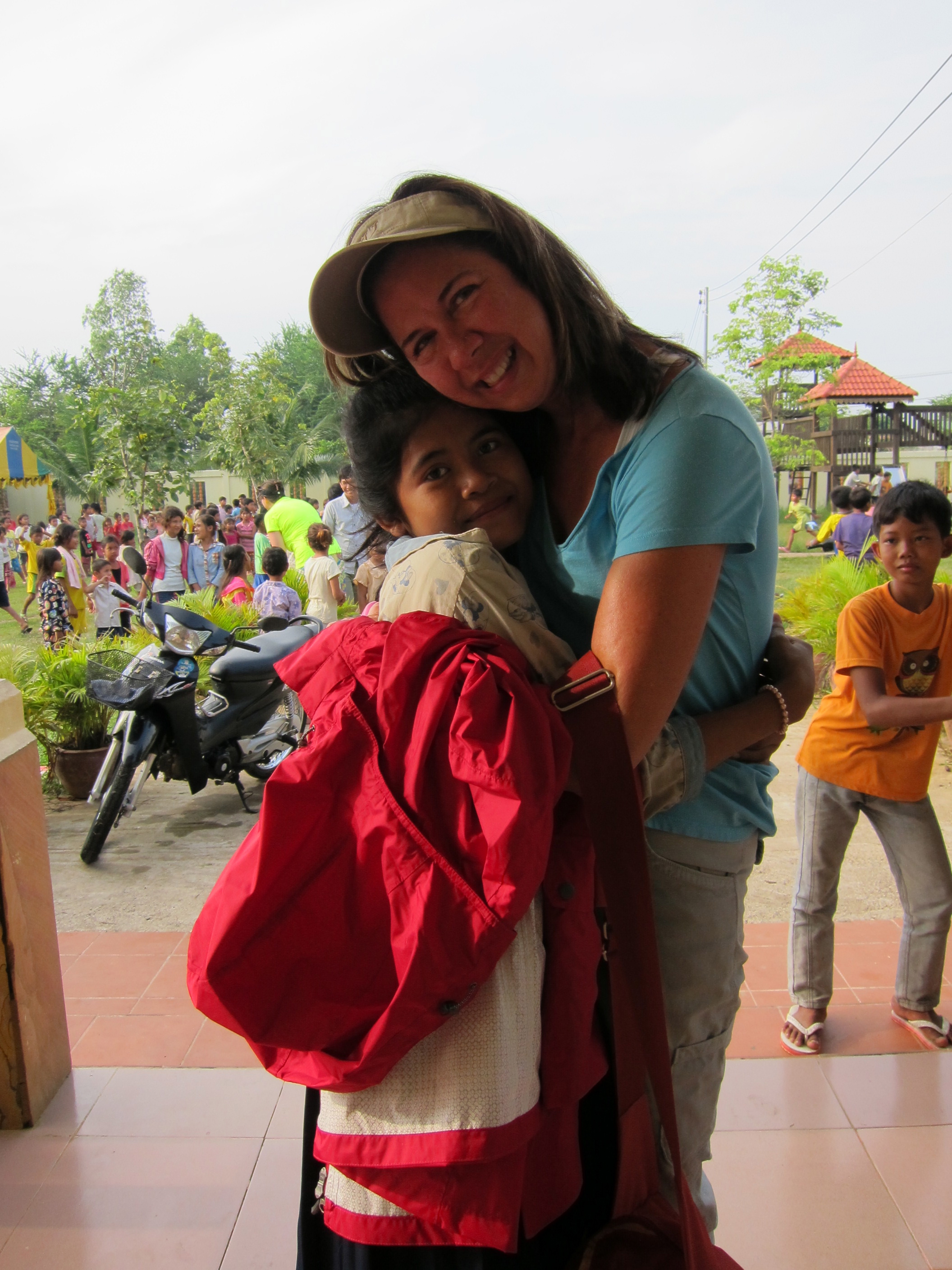
When our team said our good-byes to the kids at Imparting Smiles, I noticed this little girl in the crowd. When we made eye contact I was not sure if she would accept a hug from any man but I opened my arms anyway. She hurried over and I held her in my arms and told her that I loved her. She was the last kid I hugged before we drove away to start our journey home. And, I was encouraged by what I saw as we slowly drove down the driveway to leave the center. I noticed a faint smile as she stood off by herself, raised her hand, and waved good-bye. Her little smile warmed my heart. I whispered a prayer of thanksgiving that she now has a safe place to call home — a place where she is protected from her earthly father who hurt her but also a place where she is learning about a heavenly Father who loves and values her. I am confident that, in time, His love will heal her wounds and restore her smile.

Posted by: Omar C. Garcia | September 15, 2012

In Their Own Words

Siem Reap, Cambodia

Our time in Cambodia is drawing to a close. Our team will begin the long journey home on Sunday. Our ladies did an amazing job of leading a Vacation Bible School for the children at the Imparting Smiles orphanage and children from the surrounding slum neighborhoods. Daily attendance grew from seven-hundred to almost one-thousand children over the course of the week. And, although it is the rainy season, the skies remained clear all week. I am proud of our team of ladies for the can-do attitude that they displayed all week as they taught the children about Jesus and His love. Here are some of their reflections on our time in Cambodia.

Janet Caldwell | After reading Steve Hyde’s book about the T’moan people, I had a yearning to come and see for myself the work that he is doing in Cambodia. His passion to love and encourage the people of Cambodia is inspiring. And, once you come, you are drawn to every aspect of what is going on here. The children’s smiles and hugs consume your thoughts and you can’t help but fall in love with all there is. It becomes your heart to return and experience more and more.

Kim Heston | My prayers for Cambodia include the new church that Steve Hyde is launching on Sunday, September 16 in Poipet at the Imparting Smiles campus. I know this new church will be life-changing for the people of Popiet. It was also wonderful to return to Cambodia and to see the kids again at Imparting Smiles and how much they’ve grown. It was also great to see the familiar faces of the children who live in the surrounding village. These children and their families live in desperate and unbelievably difficult conditions. The smiles of all the children at the end of the week was extremely rewarding.

Lisa Quiring | When you hear the stories of what some of these children have been through and you have an opportunity to pour love into them, you feel as if maybe just because you came and showed compassion and love that you have made a difference in their lives. When you return, you can see the transformation that has taken place over the year in the lives of the children because people like Steve and Noit have provided a safe haven for them at Imparting Smiles. You may not be able to change their circumstances but you can show these precious little ones that there are people who care and love them for who they are.

Leslie Joyce | I returned to Cambodia because I truly love the children at Imparting Smiles. When I am with the children at the orphanage, I experience love in its truest form. The smiles and hugs of the children always strengthen and encourage me. I truly believe that God has big plans for these kids and I hope to encourage them to pursue God’s plan for their lives. They are the true future of Cambodia.

Mary Quin | What I will remember most from my time in Cambodia is Steve Hyde’s wife, Noit. She is an amazing woman. Noit suffered the loss of her entire family during the reign of the Khmer Rouge. She understands the suffering of children who are abandoned, forced to fend for themselves, and are defenseless against human trafficking. Through following the Lord, she has become a mother to hundreds of children in their ministry, taking special care to remember the detail of each child’s story. She understands and lives out a responsibility to build a legacy in Cambodia of loving God, loving people and equipping this generation one child at a time.

Wendy Duncan | The thing I will remember most about my time at Imparting Smiles is four of the village children’s moms who sat through three sessions of the same Bible story on the last day of our Vacation Bible School. All the other days they had rotated with their children to the different stations. Maybe they stayed at the story session because it was the coolest place or maybe they stayed because they wanted to rest. But my hope is that they listened three times to the salvation message of Jesus’ death and resurrection because they have a hunger and thirst to know Jesus as their own Lord and Savior.

Tara Tschritter | The thing I will always remember about my time at the Imparting Smiles orphanage is the feeling of complete love for the kids — the feeling of not caring if they are naked, dirty, snotty. Just wanting to love on them. Ignoring the lice-filled hair. The smiles of the kids loving on us, just happy for food. And the kids asking me to pray for them. That is what I will always remember about my time in Cambodia!

VBS 2012 | Imparting Smiles Center | Poipet, Cambodia

Team at the ancient Ta Prohm temple outside of Siem Reap, Cambodia.

Posted by: Omar C. Garcia | September 13, 2012

One Piece At A Time

Poipet, Cambodia

I spent the first twenty-seven years of my ministry in Christian education. During those years I learned to love, appreciate, and respect those who teach preschool and grade school age kids. These unsung heroes do more for the cause of Christ than most people ever realize. I’ve often referred to those who teach children as under-painters. I learned about underpainting from my mother-in-law who is an artist. She explained to me that an artist must envision what a painting will look like and then begin by applying an initial layer of paint to the canvas that will accentuate and more clearly define the colors that are applied later. Like an artist, those who teach children brush the foundational truths of God’s story across young lives. Their work makes it easier for parents and other teachers to add their brush strokes to the canvas — specifically those brush strokes that add the detail that helps children develop a more complete picture of God.

Our team of ladies have done quite a bit of underpainting this week in Cambodia. For the past several days they have lovingly brushed basic truths about God and His love across blank canvases that have the potential of becoming great masterpieces. Steve Hyde and his staff are doing a fantastic job of helping the children at the Imparting Smiles orphanage to gain an increasingly clearer understanding of Jesus and His love — one careful brush stroke at a time. They are also teaching the children in the surrounding slum neighborhoods the story of Jesus. This week approximately one-thousand kids attended the Vacation Bible School we hosted at the Imparting Smiles orphanage. Almost nine-hundred of these kids came from the surrounding neighborhoods and are from Buddhist families. For many of these kids, events like this are their only opportunity to hear about Jesus.

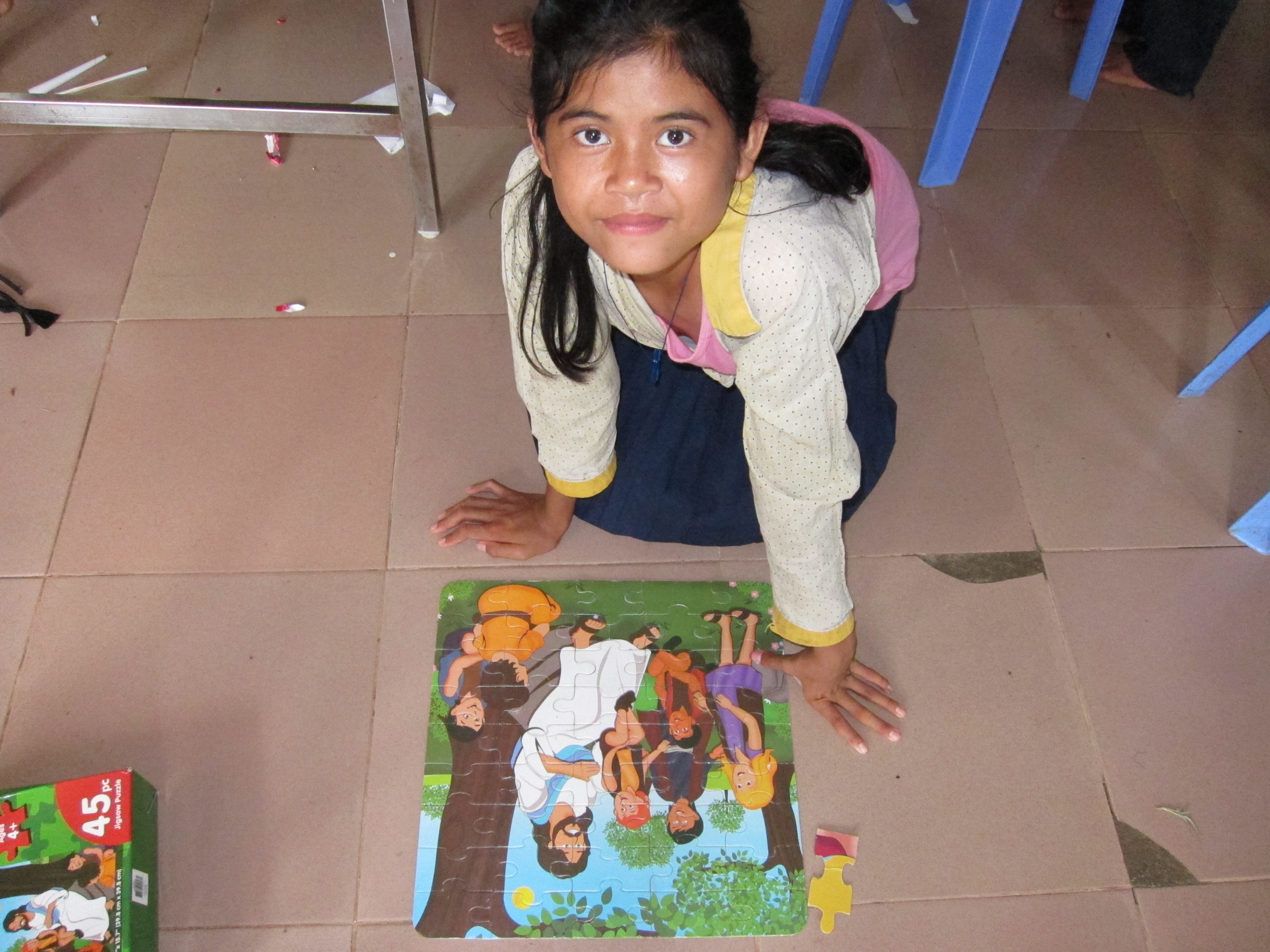
This afternoon I watched as several kids worked together to complete a puzzle of Jesus surrounded by children. As the kids added each piece to the puzzle the image of Jesus became increasingly clearer until it was finally complete. As I watched the kids work on the puzzle, I thought about what we have done here this week. Our team essentially added another piece to the puzzle. The kids who attended our Vacation Bible School this week understand a little more about Jesus than when they first arrived. And, as Steve and his staff and other short-term teams work with these kids, more pieces of the puzzle will be added until the kids understand the truth about Jesus and why He came. These kids are learning about God’s love for them one piece at a time. Steve and his staff understand that it will take lots of time and patience for the picture to become clearer for these kids — and they are committed to adding the detail one piece at a time.


Posted by: Omar C. Garcia | September 12, 2012

What Children Fear

Poipet, Cambodia

It’s probably safe to say that most of us had similar childhood fears. I remember going through the “being afraid of the dark and there might be monsters under my bed” stages of fear. More than once I turned off the lights in my room and jumped into my bed in a single bound in order to avoid a hairy and clawed monster hand grabbing me by the ankle and dragging me under my bed. Disney’s award-winning animated film Monsters, Inc., one of my favorite movies, explored this particular fear in humorous fashion. I also remember being a little frightened by thunderstorms. However, Julie Andrews was never around to calm me by singing “My Favorite Things” like she did for those well-dressed Von Trapp kids. I had to muddle through on my own. And then there was the fear of ghosts fueled by more than a few stories told around summer campfires. These were and are typical childhood fears that tend to become less and less ominous the older we become.

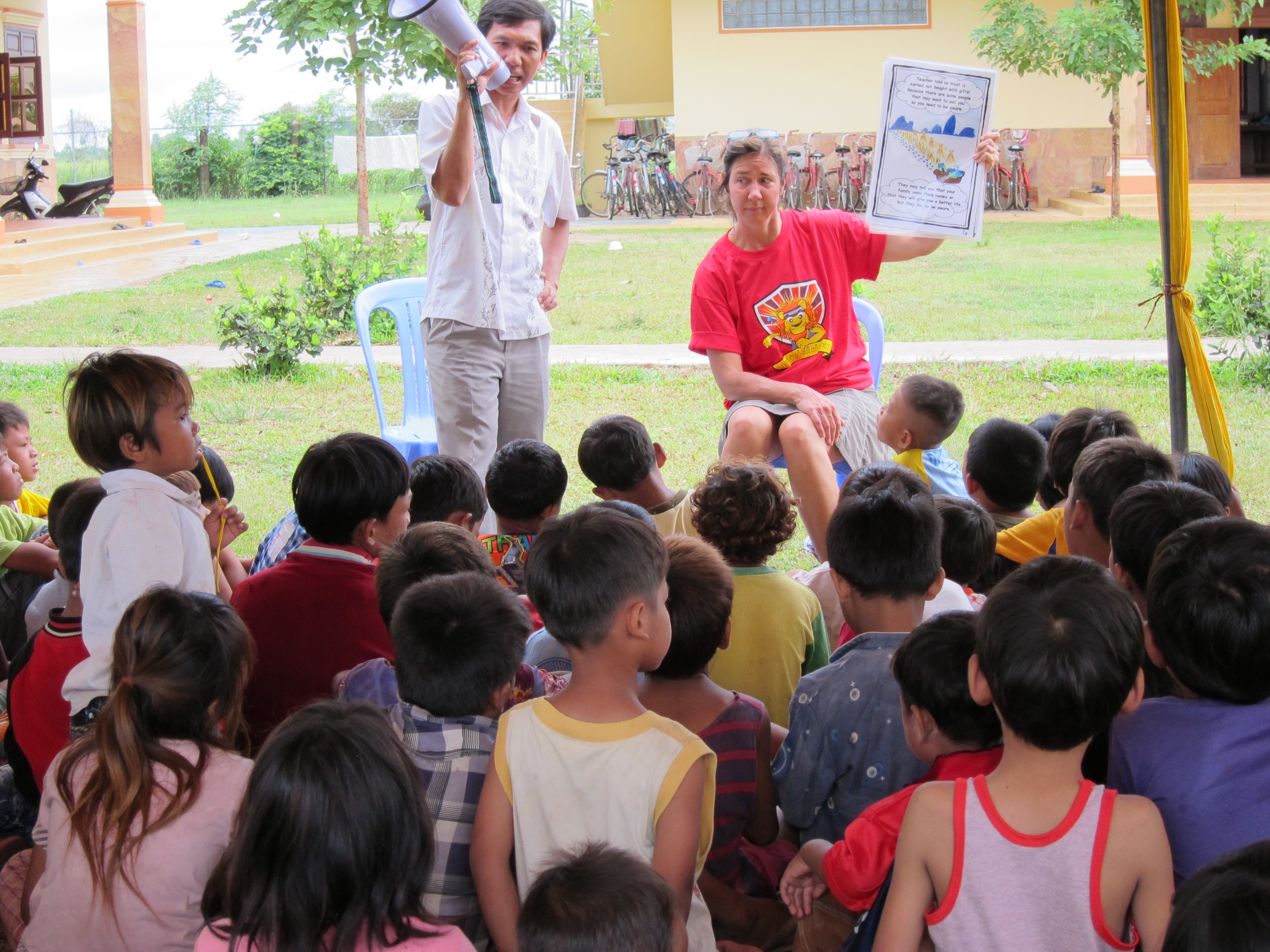
This morning, we shared a special lesson with the kids at the Imparting Smiles orphanage — a lesson about how to guard against those who traffic in human beings. This is not a lesson we have ever taught at any of our Vacation Bible Schools in America. However, because Poipet is such a high-risk area for kids, Imparting Smiles founder Steve Hyde asked us to teach the kids here about this particular kind of stranger danger. As my friend Janet introduced this lesson, she asked the kids to tell her the kinds of things they feared. The initial responses were typical as kids talked about being afraid of snakes and ghosts and storms and the floods that are so common in this area. But then, kids began to share about another kind of fear — the fear that someone would take them away from their homes and do bad things to them. This particular fear is very real to these kids because they have heard stories of what has happened to other kids who disappeared and never returned home. They know that bad people in this area try to lure kids away from their homes.

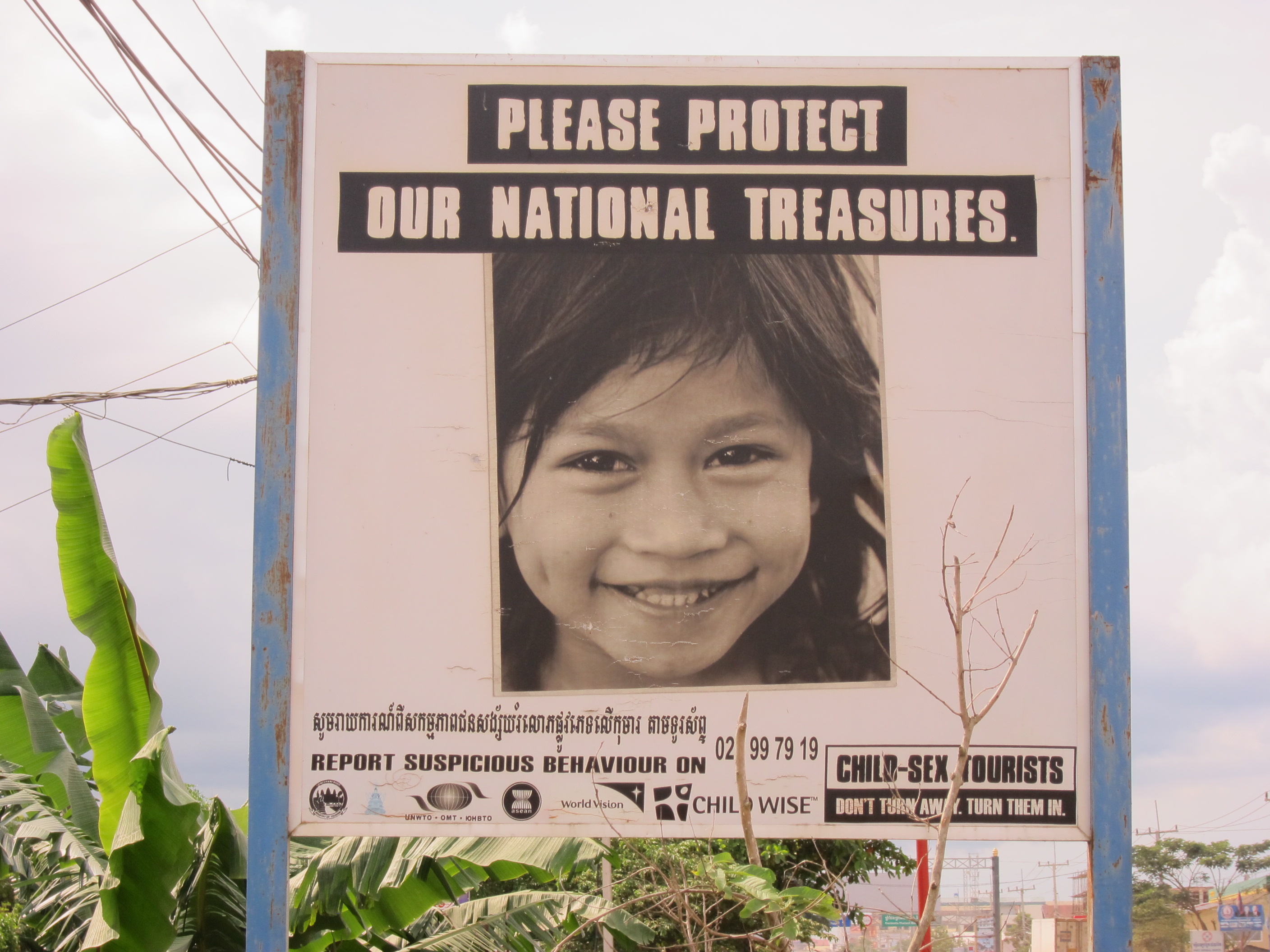
The danger to kids in Poipet and the entire Bantey Meanchey border province is real. The government has placed several billboards throughout the town of Poipet and the province advertising a hotline number to call if child sexual abuse is suspected. There are also signs from the older “Please Protect Our National Treasures” campaign encouraging people to turn in suspected child sex tourists. I have also seen the same information in hotel rooms in other parts of Cambodia. These are indications that the problem of trafficking and abusing children is real. The kids in Poipet certainly know that the danger is real. Kids in every small group that we taught today shared the same fear of being kidnapped and taken far from home by bad people. It should be enough that kids here have to wrestle with the common and usual childhood fears of monsters under the bed and thunderstorms. It’s a shame that they have to fear unscrupulous individuals who traffic in humans.

Cambodia is a source, transit, and destination country for modern-day slaves — men, women and children sold into the sex trade. Some non-government organizations estimate that as many as 50,000 to 100,000 women and children are at risk in Cambodia, a popular destination for those seeking sex with children. Cambodia has a long way to go in the fight against human trafficking. I am thankful that the government is taking some responsible measures to protect children. I don’t underestimate the good that may result from someone seeing one of the billboards and reporting suspicious activity. When it comes to the fight against human trafficking, every small step in the right direction can lead to more victories for the cause of justice. I pray and long for the day when God will “do justice to the fatherless and the oppressed, so that man who is of the earth may strike terror no more” (Ps. 10:18) and children who live in dangerous places like Poipet can sleep in peace with one less fear to worry about.

Posted by: Omar C. Garcia | September 11, 2012

Quiet Desperation

Poipet, Cambodia

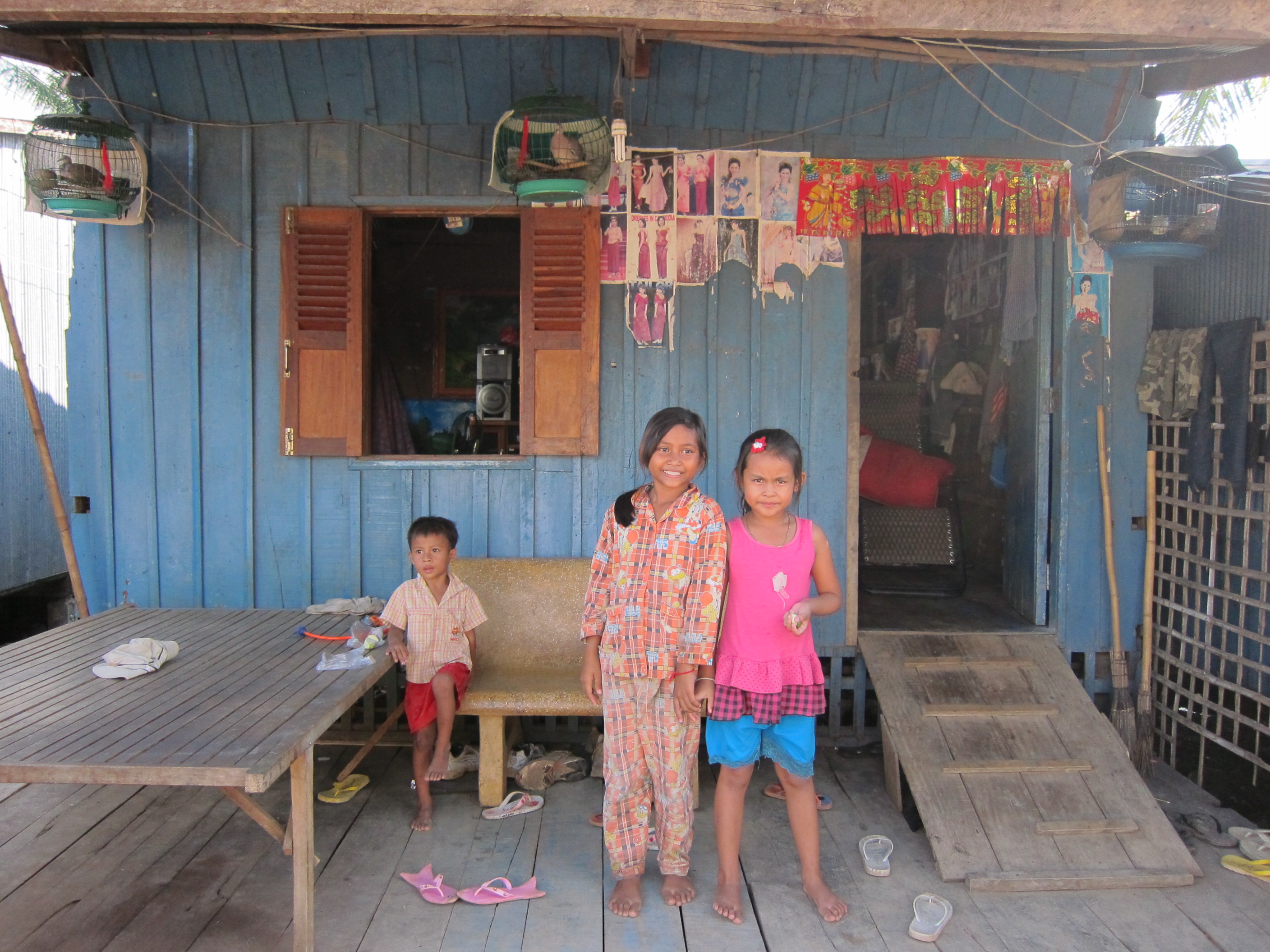
Desperation is a specter that lurks in the slums of Poipet and haunts the poor who live there. The population of this once small border town has swelled exponentially because of the influx of poor families hoping to find work. These newcomers cannot afford land and therefore live in squatter communities out of sight of the main roads. Using found items and materials that they have been able to purchase, they have constructed their tiny hovels on stilts to keep them above rising flood waters during the rainy season. Every day, thousands of these poor individuals cross the border into Thailand to work as day-laborers, leaving behind their children. This morning I watched the masses leave Poipet on their exodus to Thailand like tide waters returning to the sea. And this evening I watched them walk back across the border, some as if on a death march.

Many of these workers suffer all kinds of abuses in their efforts to support their families. Today I saw two Thai government trucks transport dozens of these poor Cambodians back to Poipet. My friend Steve Hyde explained that unscrupulous employers will hire dozens of these Cambodian squatters to work at construction sites or other enterprises and then anonymously call the immigration police before they have to pay them. The authorities haul them back across the border and then these heartless employers repeat the process, essentially getting free laborers. As if that were not enough to contend with, the children that these workers leave behind have no opportunities to go to school. They wander the muddy streets of their slum neighborhoods and are easy prey to those who traffic in humans. Places like Poipet are a showcase of injustice.

The injustices that people in places like Poipet suffer are driven by world views that have little or no regard for the sanctity of human life. The poor who live here have a tough time trying to claw their way out of the hole they are in because the walls have been greased by the greed of those who care only about their own welfare and do not believe in paying fair wages for an honest days work. And so, the poor in Poipet live lives of quiet desperation. Life here is hard, but it’s the only life they know. And because they are resilient, they have learned to survive from day-to-day. Some have set up their own little businesses in the slums and have managed to hire others — as in the case of a woman we met today who has several sewing machines and hires women to sew an assortment of fanny-packs and messenger bags to sell in the markets. Others make a living by selling meats and vegetables and other goods to those who live in the slums.

My friend Steve is investing his life here to make a difference, especially in the lives of children. Beyond his Imparting Smiles orphanage, Steve is working with the poor to give them a hand-up and to help them find ways to support their families. And, for those children whose parents cross the border in search of work and never return, Steve is always on the look-out to rescue those kids and give them a home. Our missions ministry is also working with Steve on other enterprises to protect children and to give hope to those who live desperate lives in the slums of Poipet. What Steve is doing here may seem like just a small drop in the ocean but, as Mother Teresa once said, “the ocean would be less because of that missing drop.” It’s easy for us to look at great need and do nothing, especially when what we do appears so small. But if each of us will do one small thing, then all of those drops put together can become an ocean of blessing and turn the tide for those who live lives of quiet desperation. I am determined to add my drop to the ocean.

Posted by: Omar C. Garcia | September 10, 2012

Imparting Hope

Poipet, Cambodia

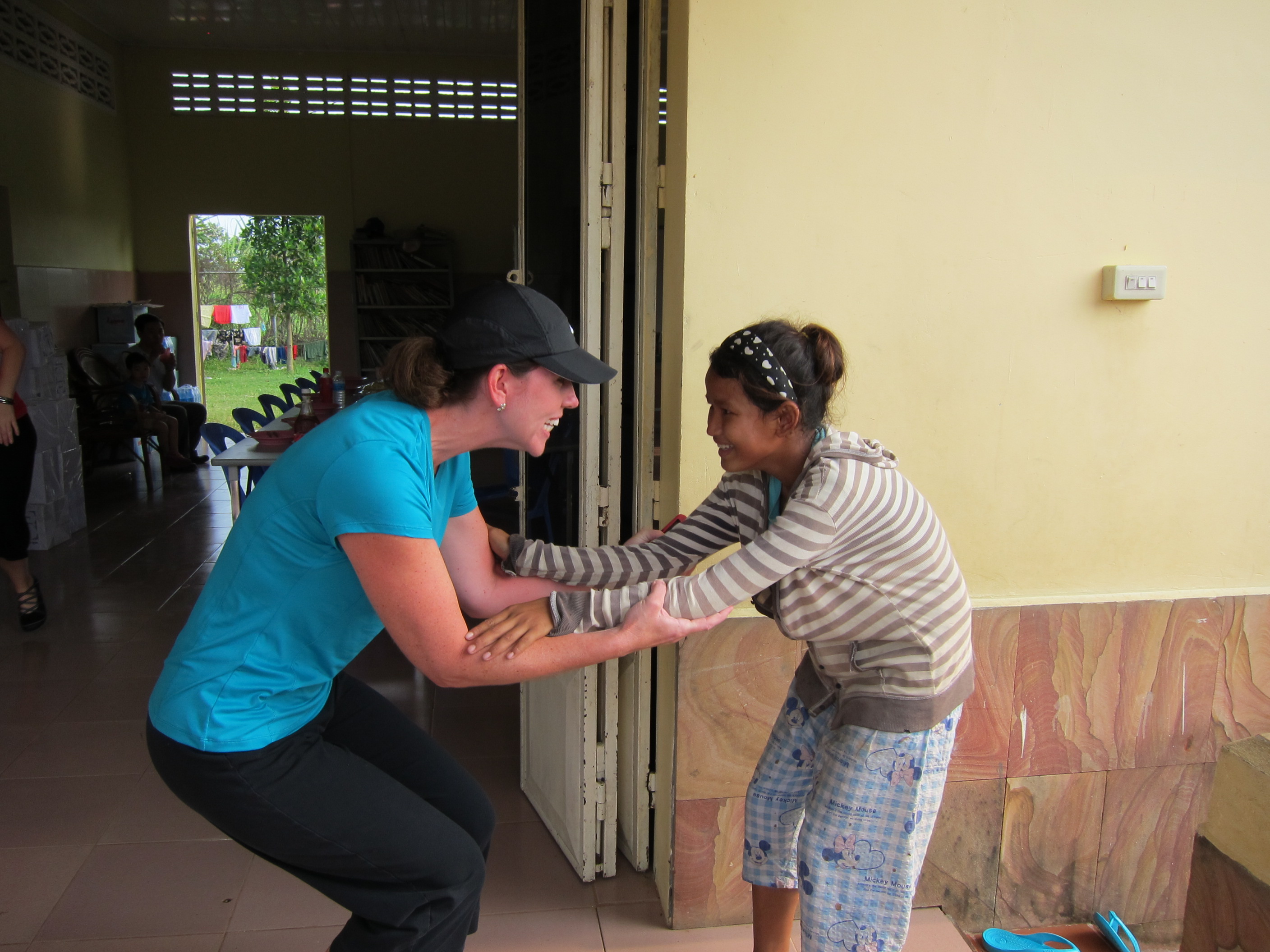
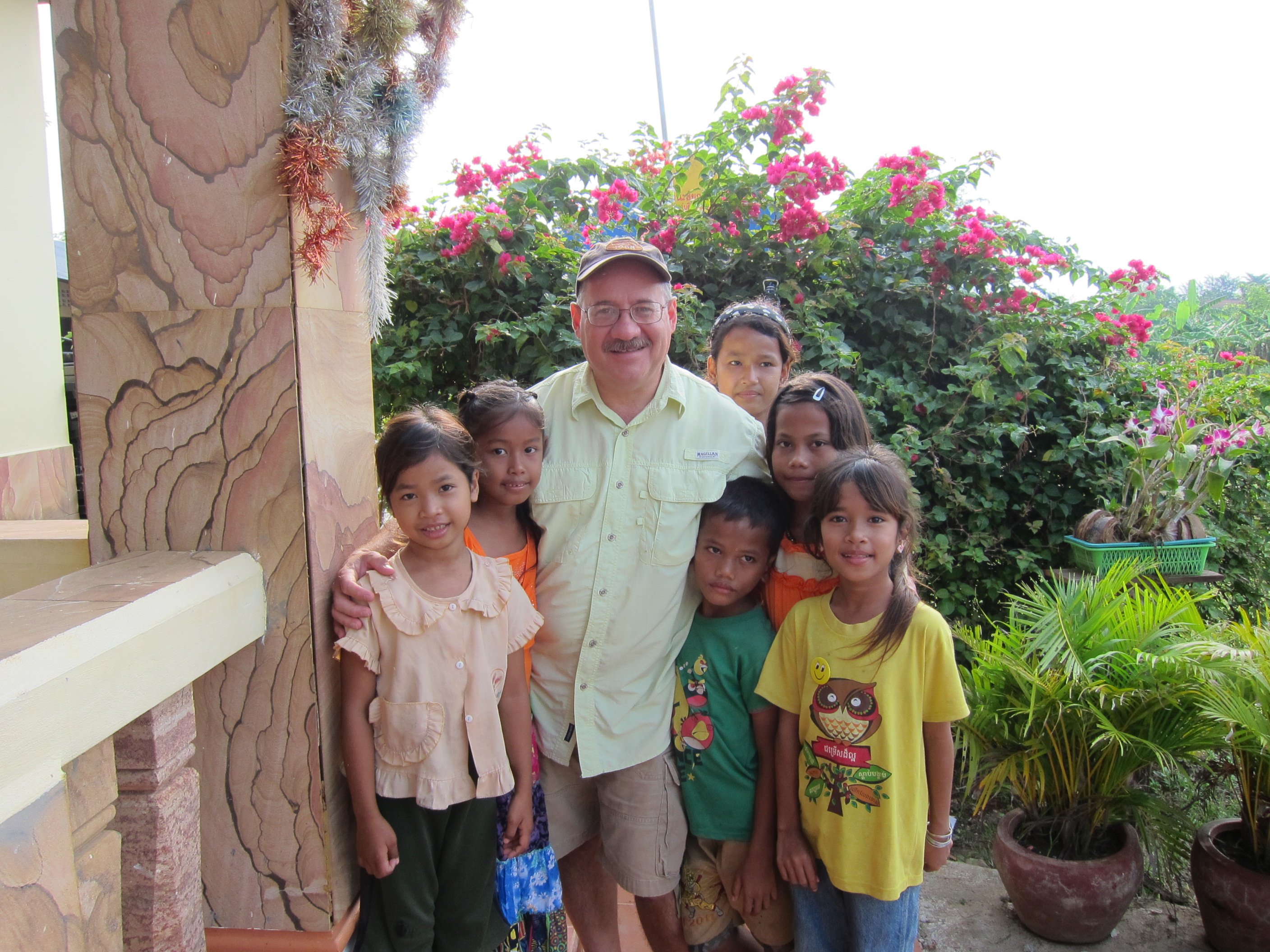
Today was all about imparting smiles and lots of hugs to the kids at the Imparting Smiles orphanage. When we arrived at the Imparting Smiles campus on the outskirts of Poipet early this morning, the kids were waiting to greet us. I absolutely love returning to Cambodia just to see the kids I have come to know over the past three years. And, I enjoy bringing team members to serve these precious kids. Those returning for the second time could hardly wait to get out of the van to reconnect with the kids they had met last year. And, as soon as they did they did the hugging and cheers and tears started. The excitement and joy of reunion was intense and beautiful. However, our first-time team members were not about to be left out. They wasted no time in meeting and hugging the kids. There is no better way to start the day than by being surrounded by the laughter and smiles of kids who have been rescued from terrible circumstances and who now have a future and a hope.

Our first day of Vacation Bible School went well with approximately seven-hundred kids in attendance. Our team members did an exceptional job of leading in their respective areas of responsibility — music, Bible stories, crafts, and recreation. The kids at Imparting Smiles are fortunate to be in a place where they are learning about God and His love for them. However, the only opportunity to learn about God that the kids in the surrounding slum neighborhoods have is when teams like ours come to conduct a special event like VBS. In addition to Kingsland, Imparting Smiles founder Steve Hyde hosts teams from a couple of other churches who are willing to make the long trek to Cambodia to invest in kids. Through the daily work of Steve and his staff and visiting teams like ours, the kids in the area are learning that there is a God who loves and cares for them.

What teams like ours are doing is having an impact beyond the Imparting Smiles campus and beyond the muddy streets of the surrounding slum neighborhoods. Last year, the mayor of Poipet attended our closing VBS ceremony. This Buddhist man spoke to the kids and encouraged them to continue learning about Jesus. A representative from the governor’s office also attended and publicly said to Steve, “Your God is bringing hope to our region.” And then he turned to the kids and told them to keep coming to the Imparting Smiles campus any time they offer community events like this and encouraged them to learn more about this God who gives hope to all people. We do indeed serve and represent the God of all hope. We trust that the seeds we plant this week will grow and blossom to bring life and hope to those who live on the edge of despair in a place steeped in darkness, difficulty, and death. We are imparting more than smiles and hugs this week. We are also imparting hope.


« Newer Posts - Older Posts »

Categories