Posted by: Omar C. Garcia | October 11, 2012

Free Flowing Gratitude

Tonalá, El Salvador

A few days ago, our team arrived in El Salvador to work with our friends at Agua Viva El Salvador to drill a water well for the people of Tonalá, a small village located in the verdant hills just a few miles from the Pacific Coast. El Salvador is just one of the many countries where Living Water International works to drill water wells for those who have little or no access to clean water. Over the past few days we have worked in the heat, in the mud, and in the rain — motivated by the smiles of those anxiously awaiting a reliable source of clean water. I am happy to report that a little after noon today, we finished the well. It was fun to see the people of the community gather for the dedication ceremony as we tightened the final bolt and then pumped the first few gallons of cool water.

As much as I enjoy the drilling process and getting really dirty, my favorite part of the experience is when we dedicate the well and present it to the community. Today was no exception. We had a formal dedication service in which we presented the well to the people and the people, in turn, expressed their gratitude. And today, the gratitude flowed as freely as the water. Both the village leader and the principal of the local school gave speeches while the village folk listened and applauded. The school principal made it a point to say that he was both inspired and encouraged when he saw us working in the rain yesterday. Seeing us work in spite of the weather gave him the assurance that we were determined to finish the well. Both leaders emphasized what this well will mean to their little community.

The only way for those of us who have access to unlimited water on demand to truly understand the depth of gratitude felt by the people of Tonalá would be for us to spend just one day without convenient access to water. Twenty-four hours without convenient access to water would be like an eternity for most of us. Although people who live in places like Tonalá are accustomed to the inconvenience of having to fetch water daily, the new water well in their community will make life much easier as well as lessen the likelihood of people getting sick because of water-related diseases. We have made many new friends in Tonalá. At least for the immediate future, they are likely to remember us when they go to their new water well to fetch their water. But that will fade with time, and that’s ok. We are just happy to know that we have helped to make a difference in the lives of a few hundred people because we gave them the gift of water and the Word.
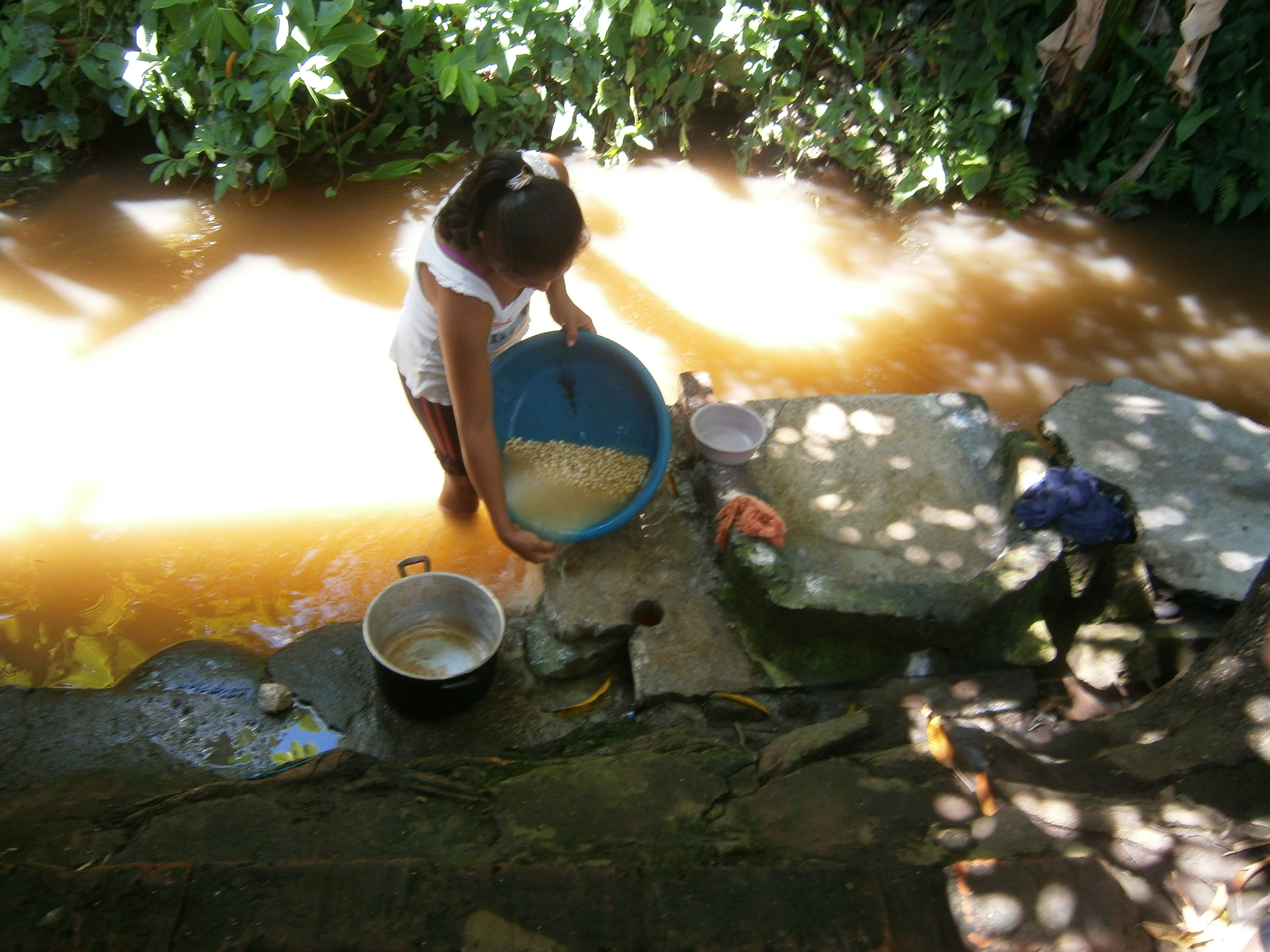
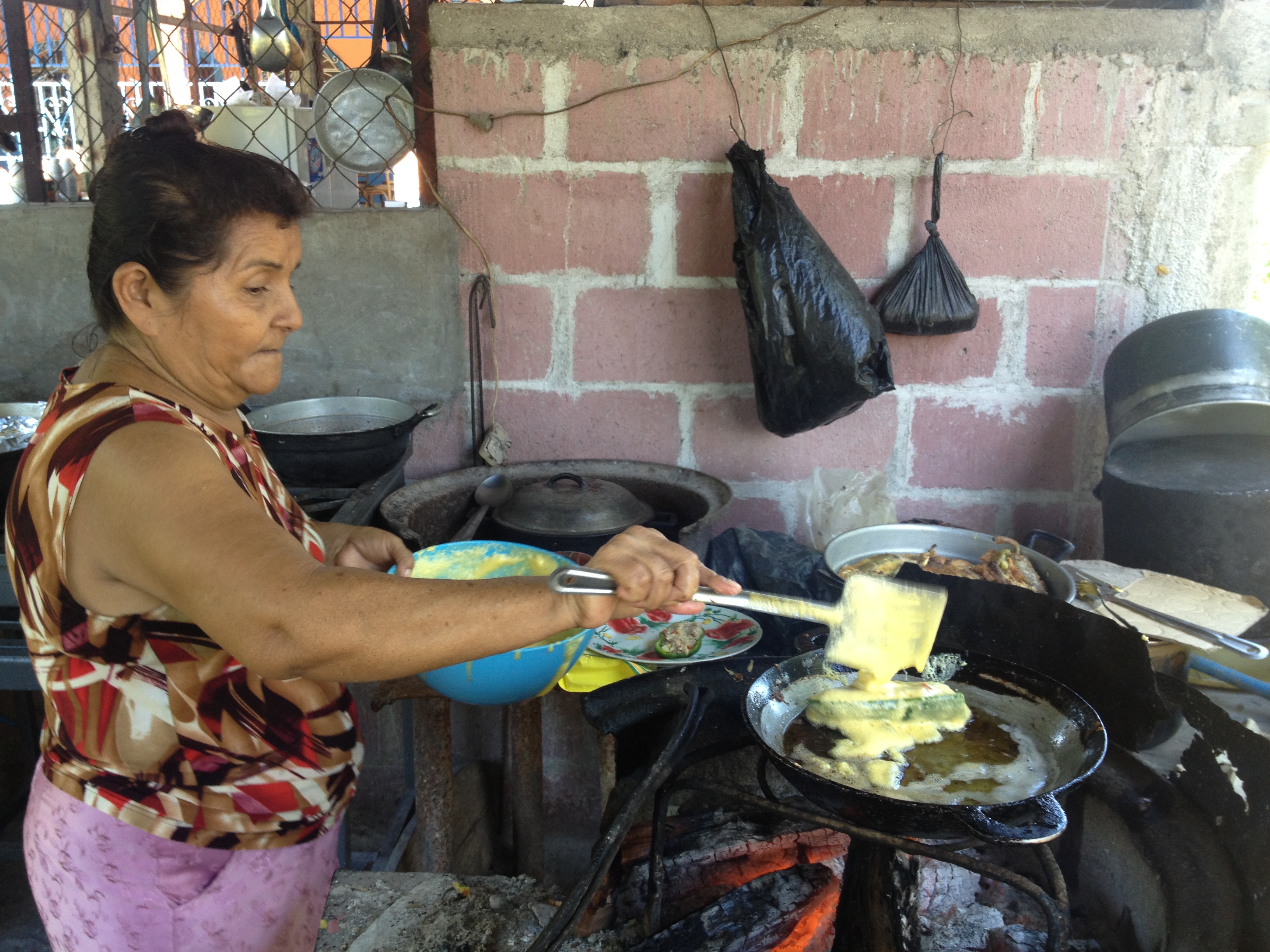
Preparing a meal is just one of the challenges of having limited access to clean water.
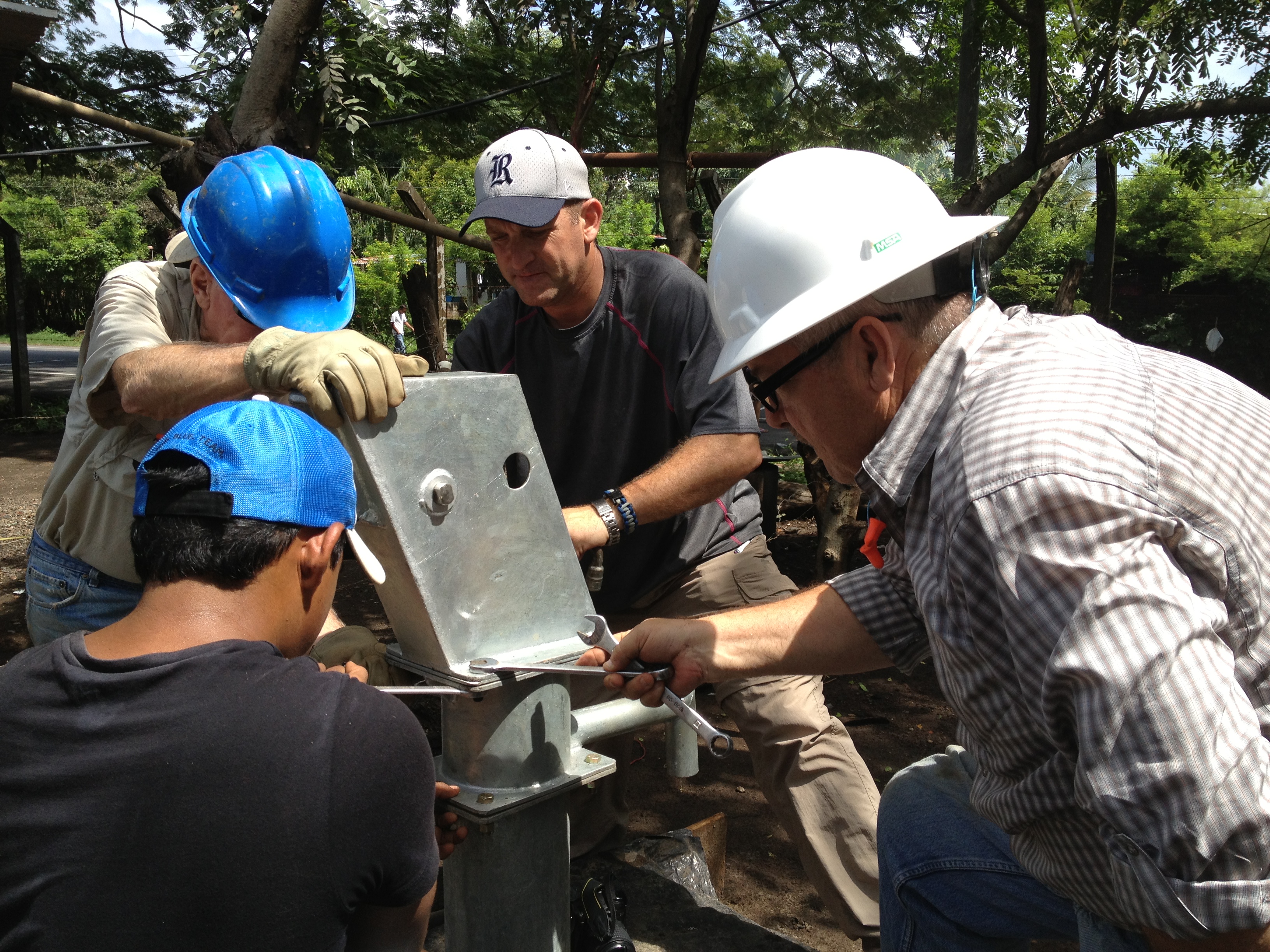
Tightening the bolts on the pump head.
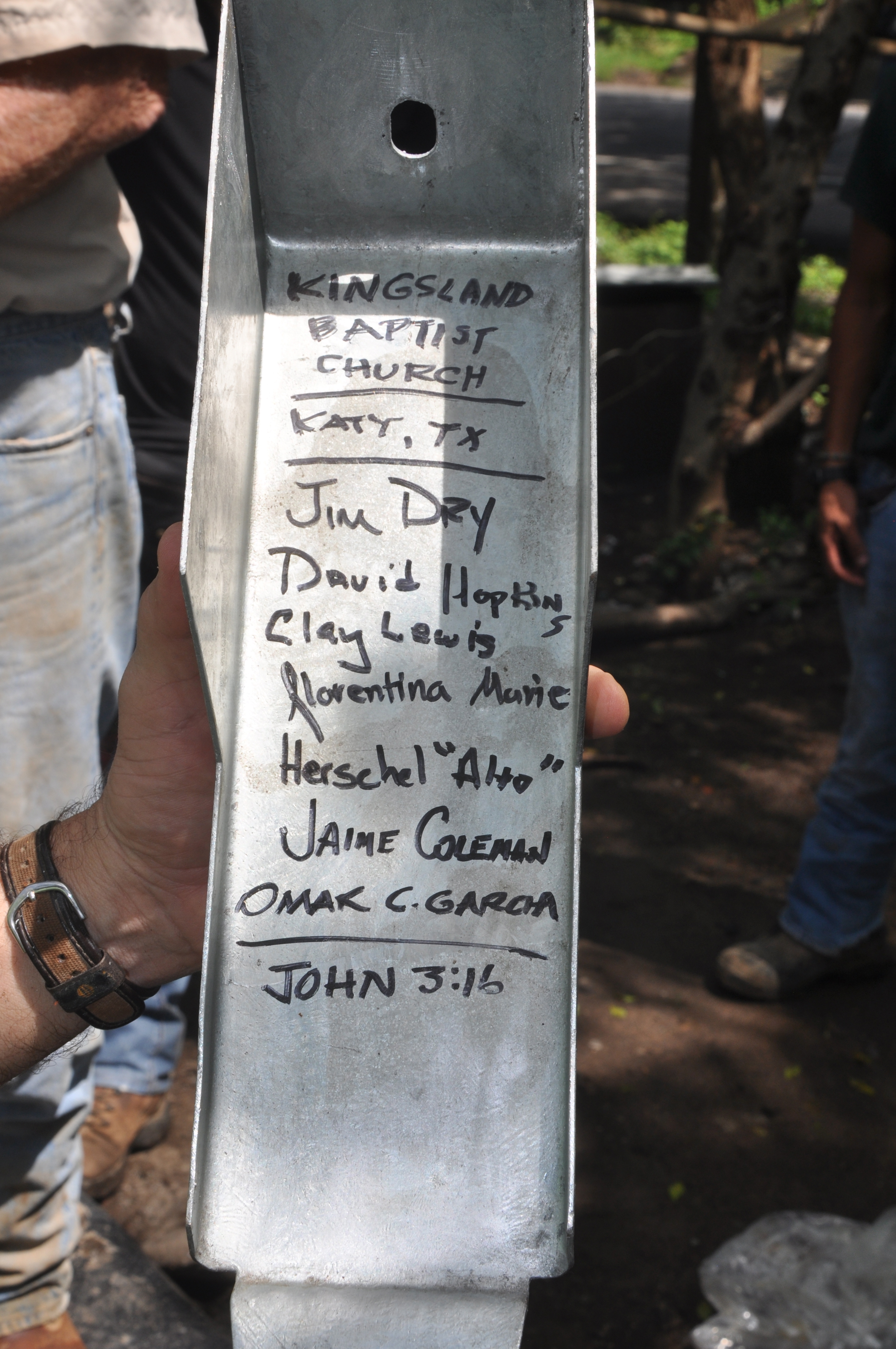
We signed our names on the inside of the pump head cover.
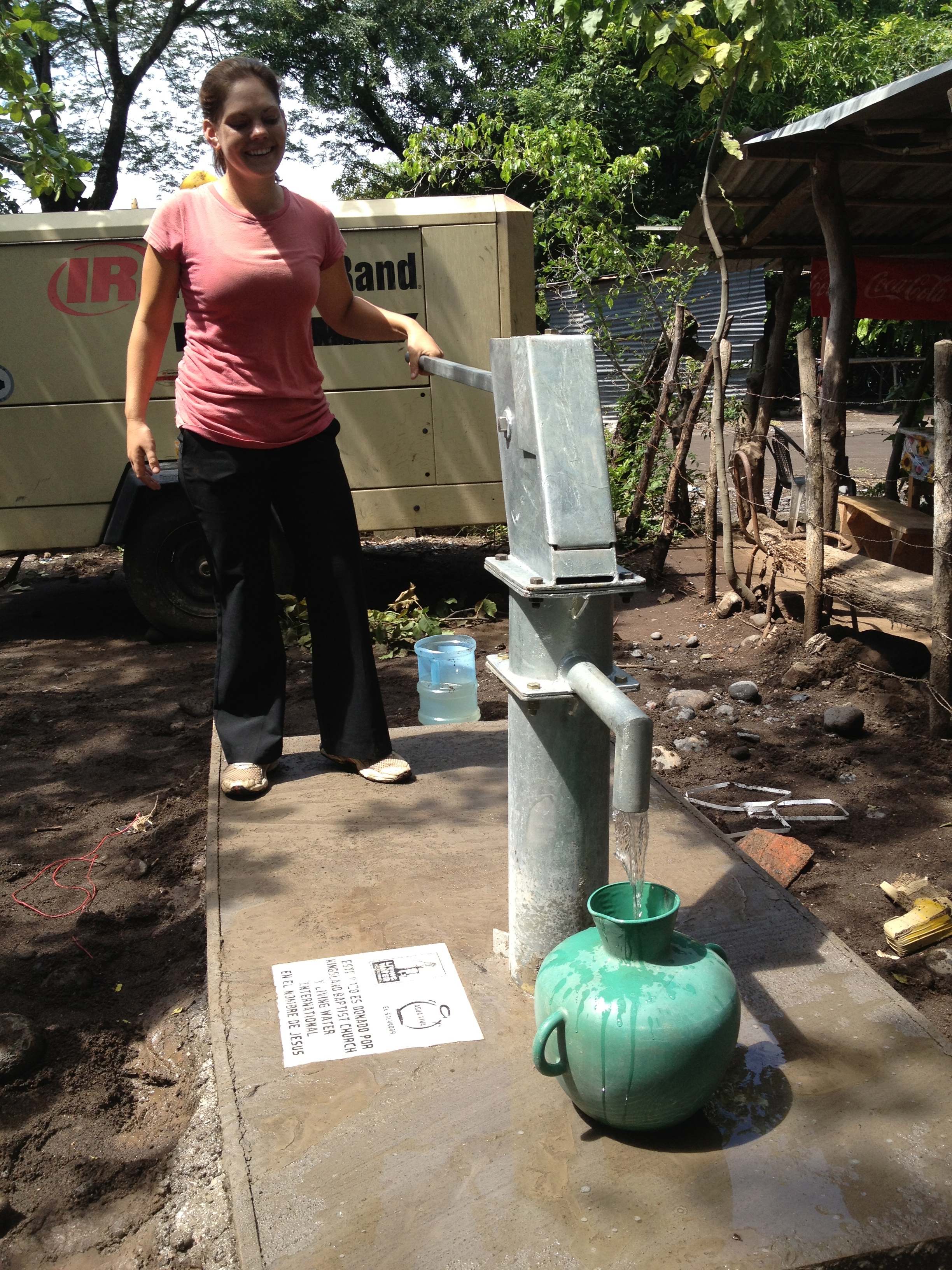
Marie, the only girl on our team, pumped the first gallon of water.
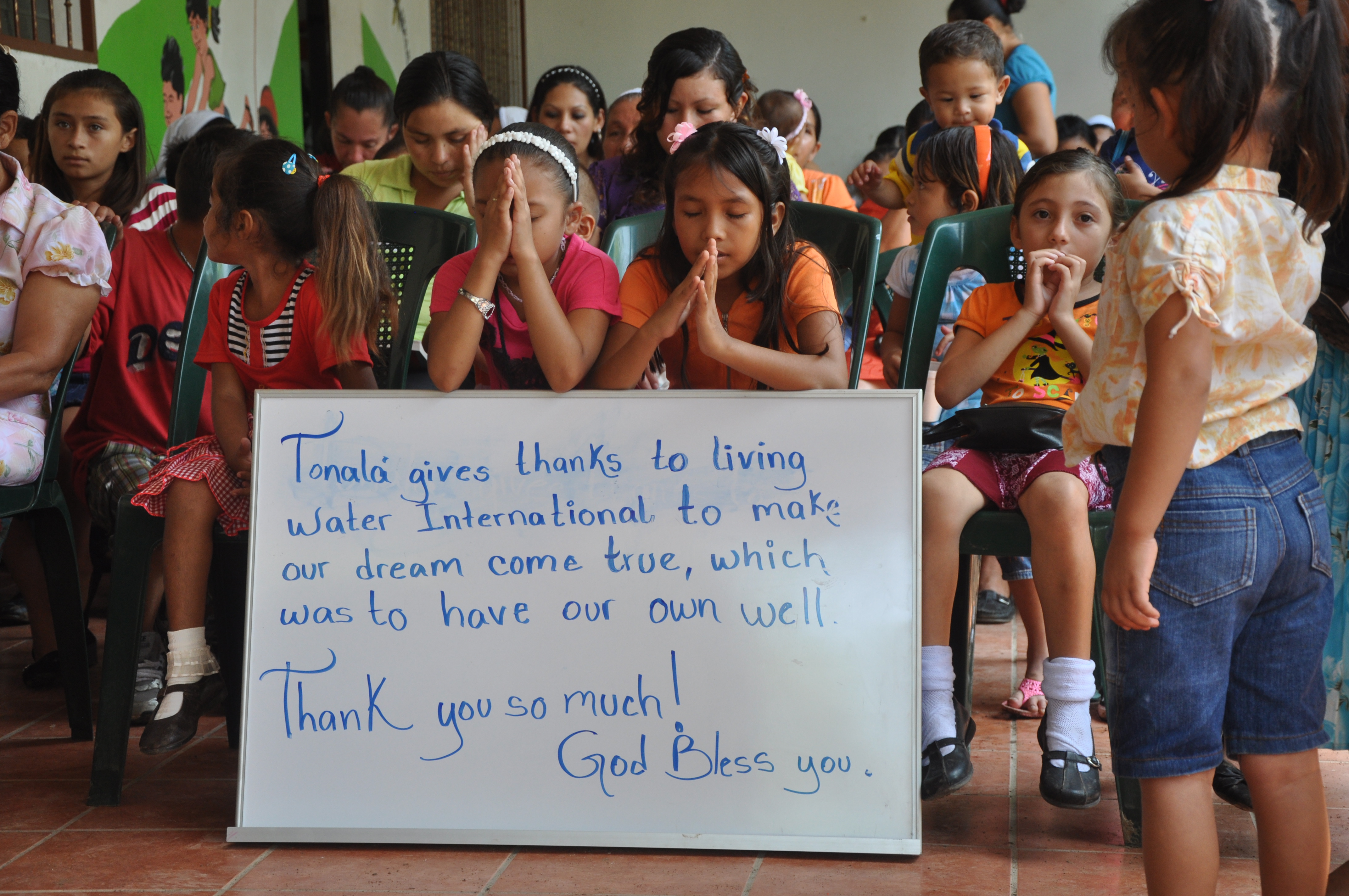
Girls praying at dedication ceremony.
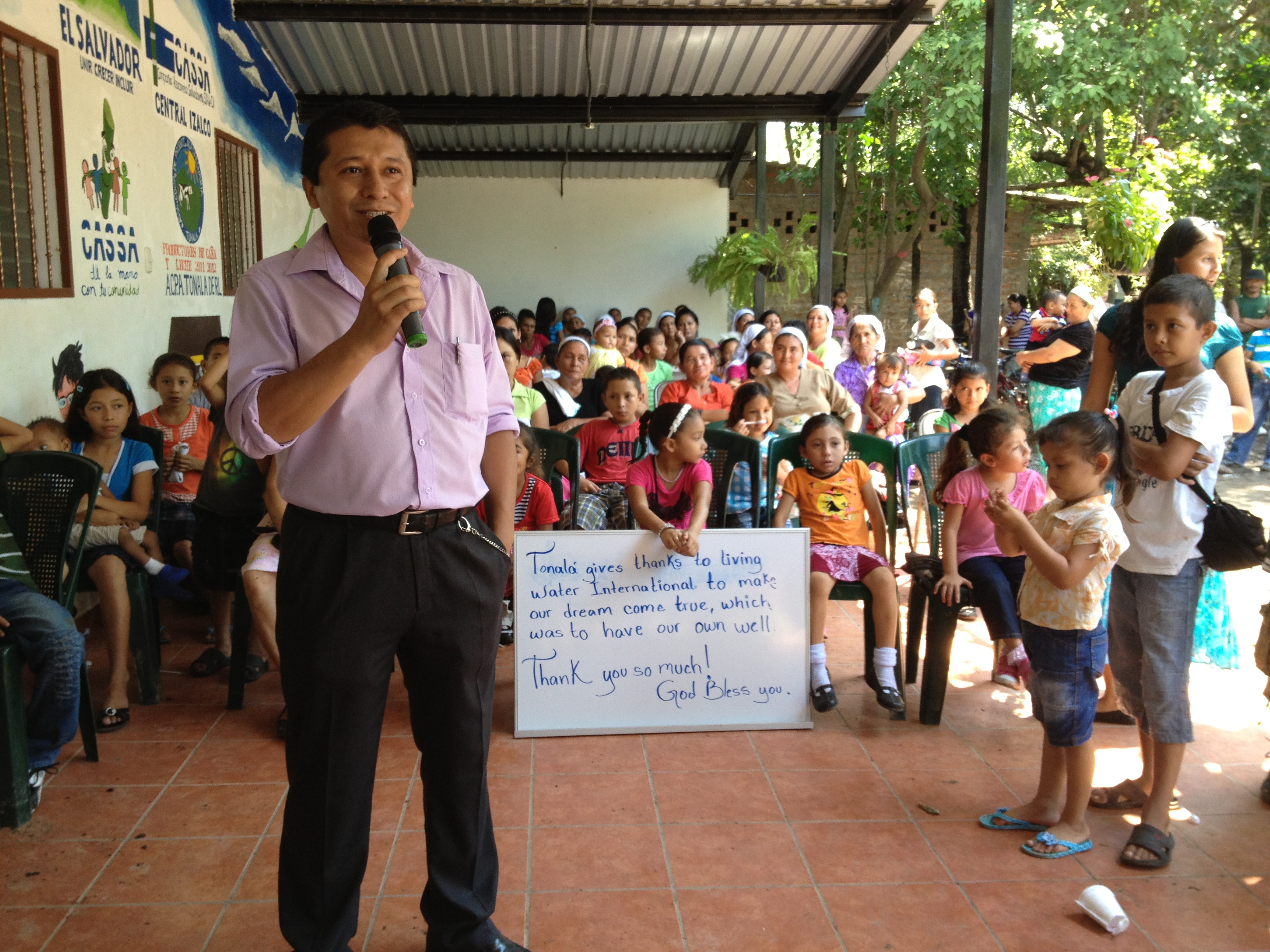
The Tonalá school principal expressed gratitude on behalf of the community.
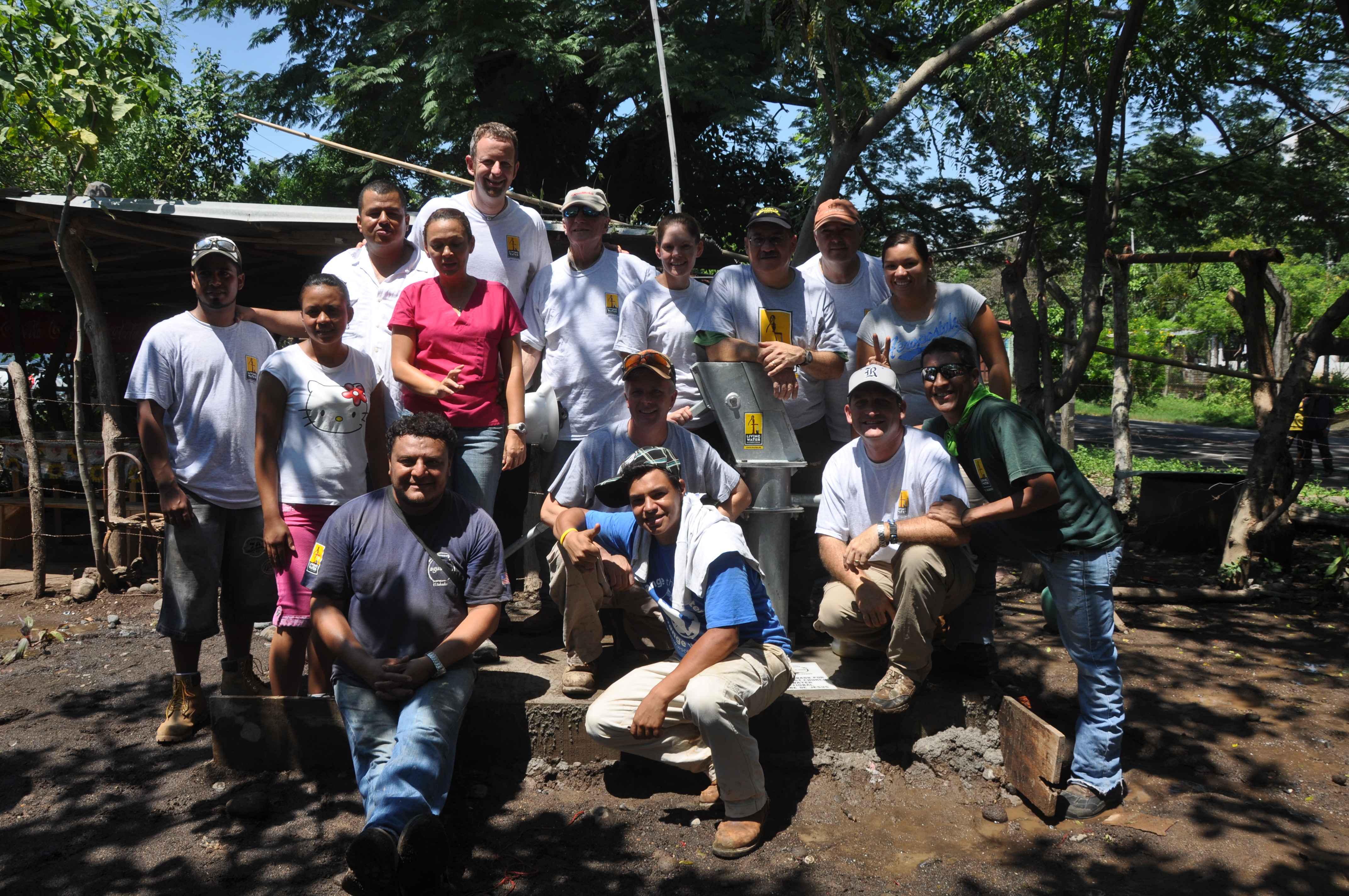
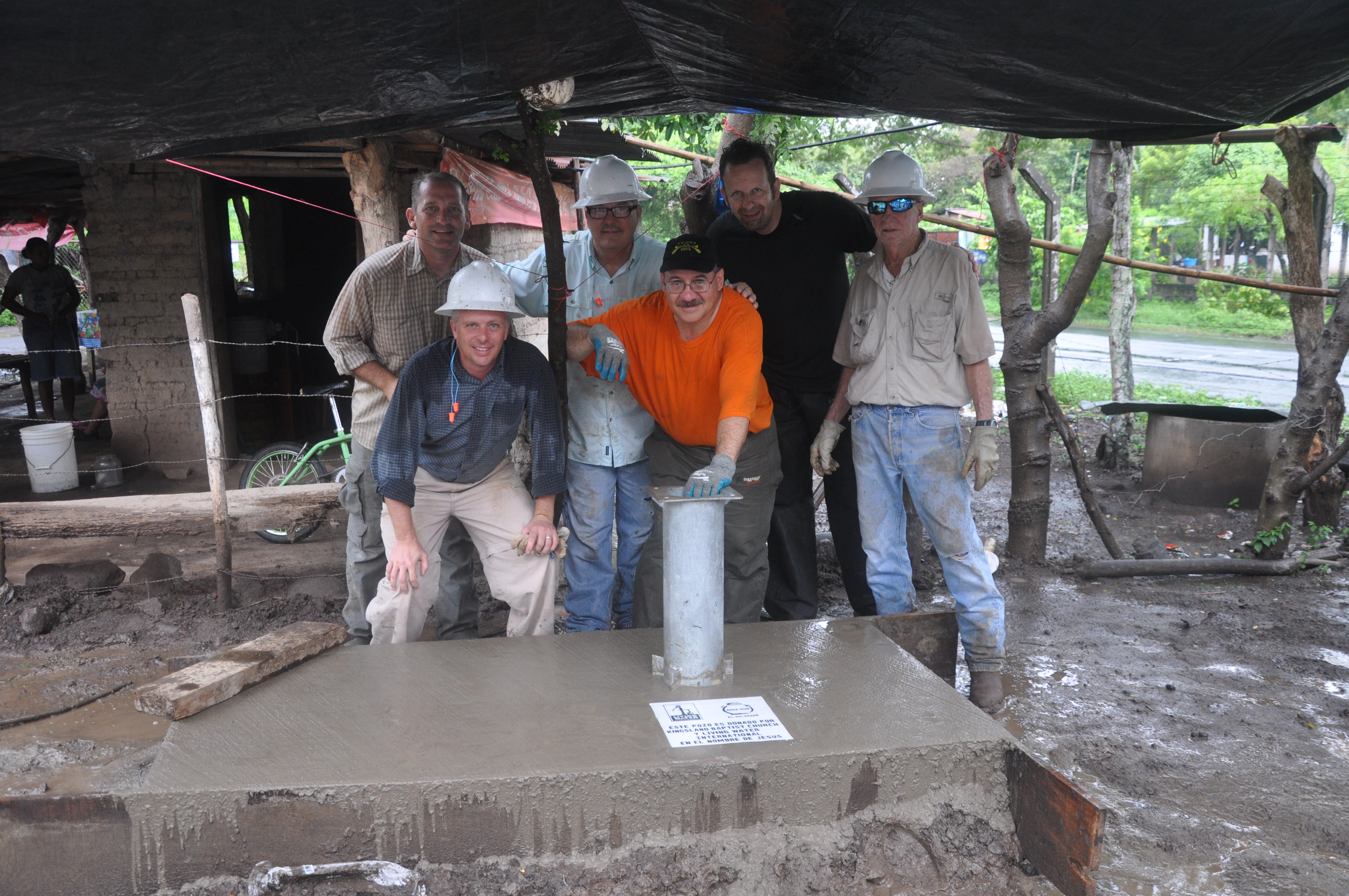
Kingsland team with the Agua Viva El Salvador staff.
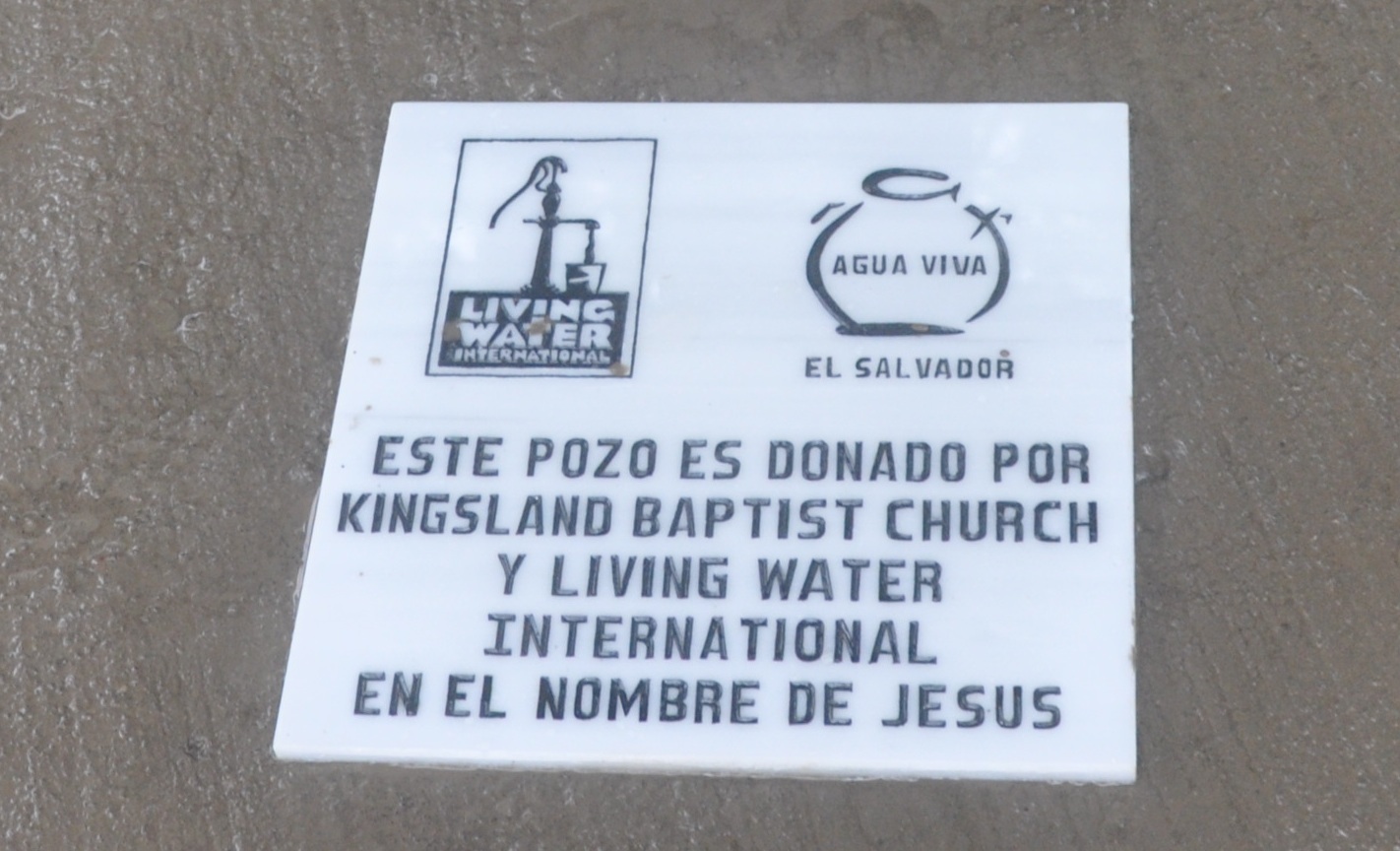
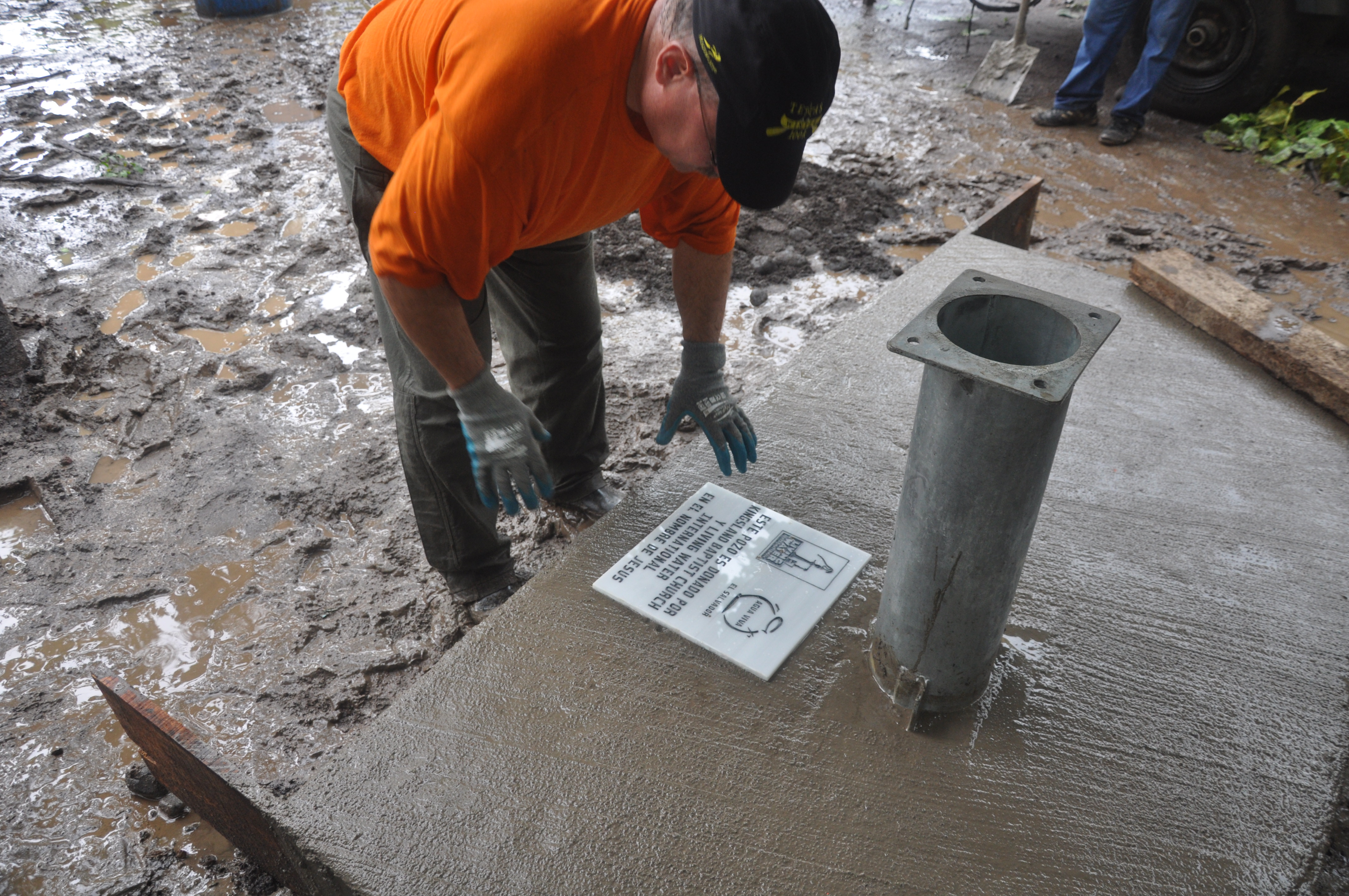
The dedication plaque on Kingsland’s seventh water well in El Salvador.
Posted by: Omar C. Garcia | October 10, 2012

And the Rain Came Down

Tonalá, El Salvador

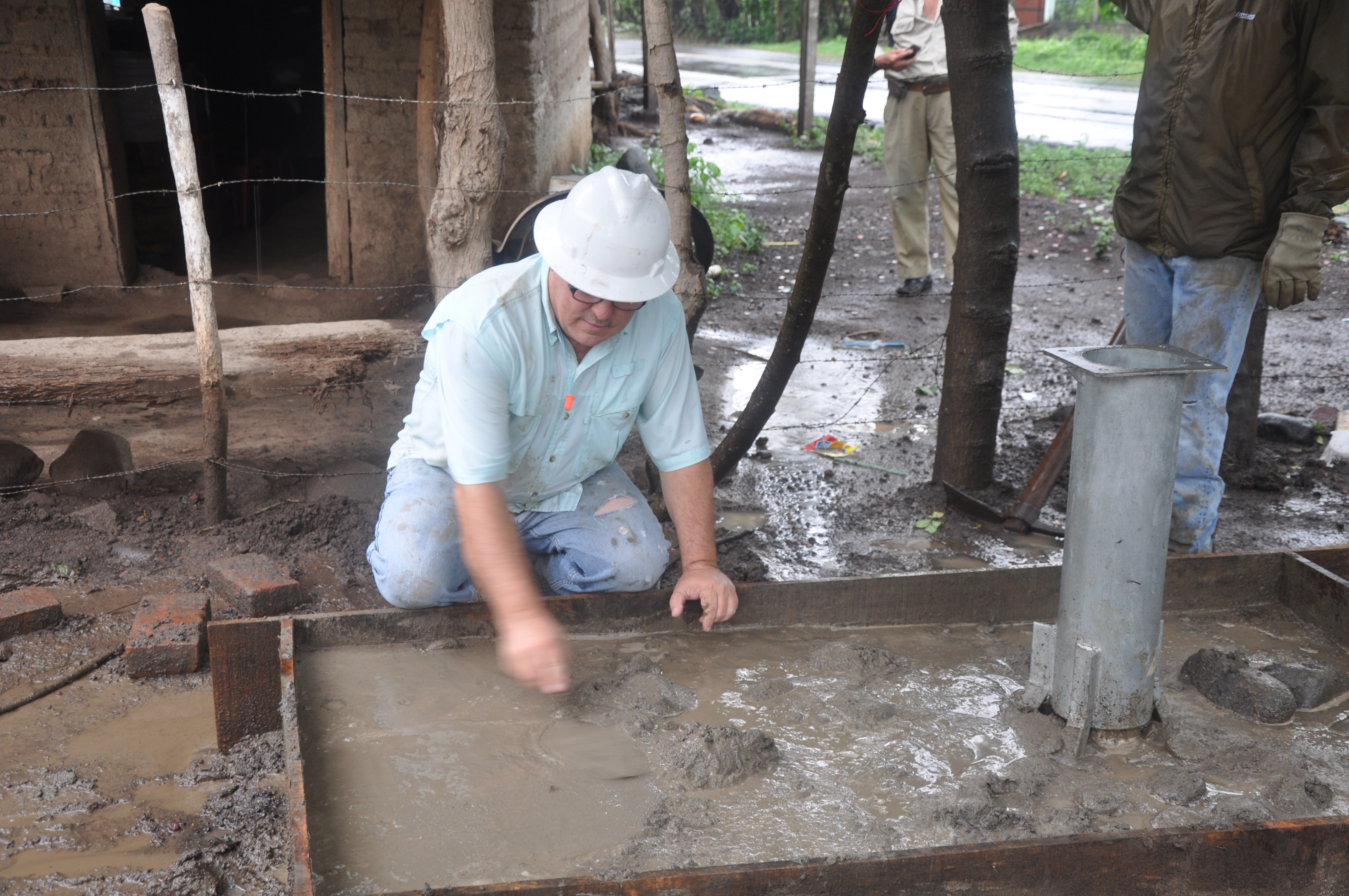
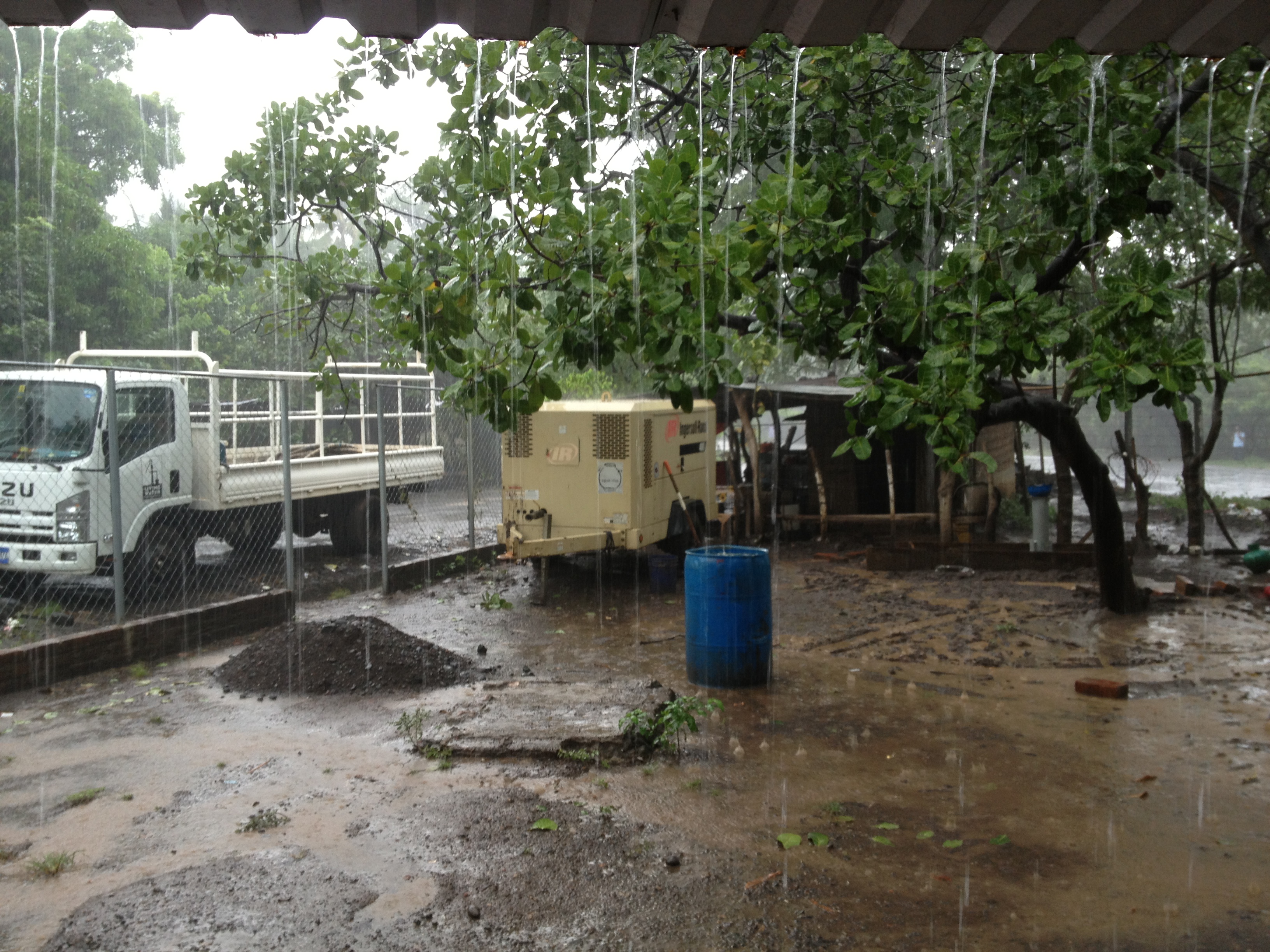
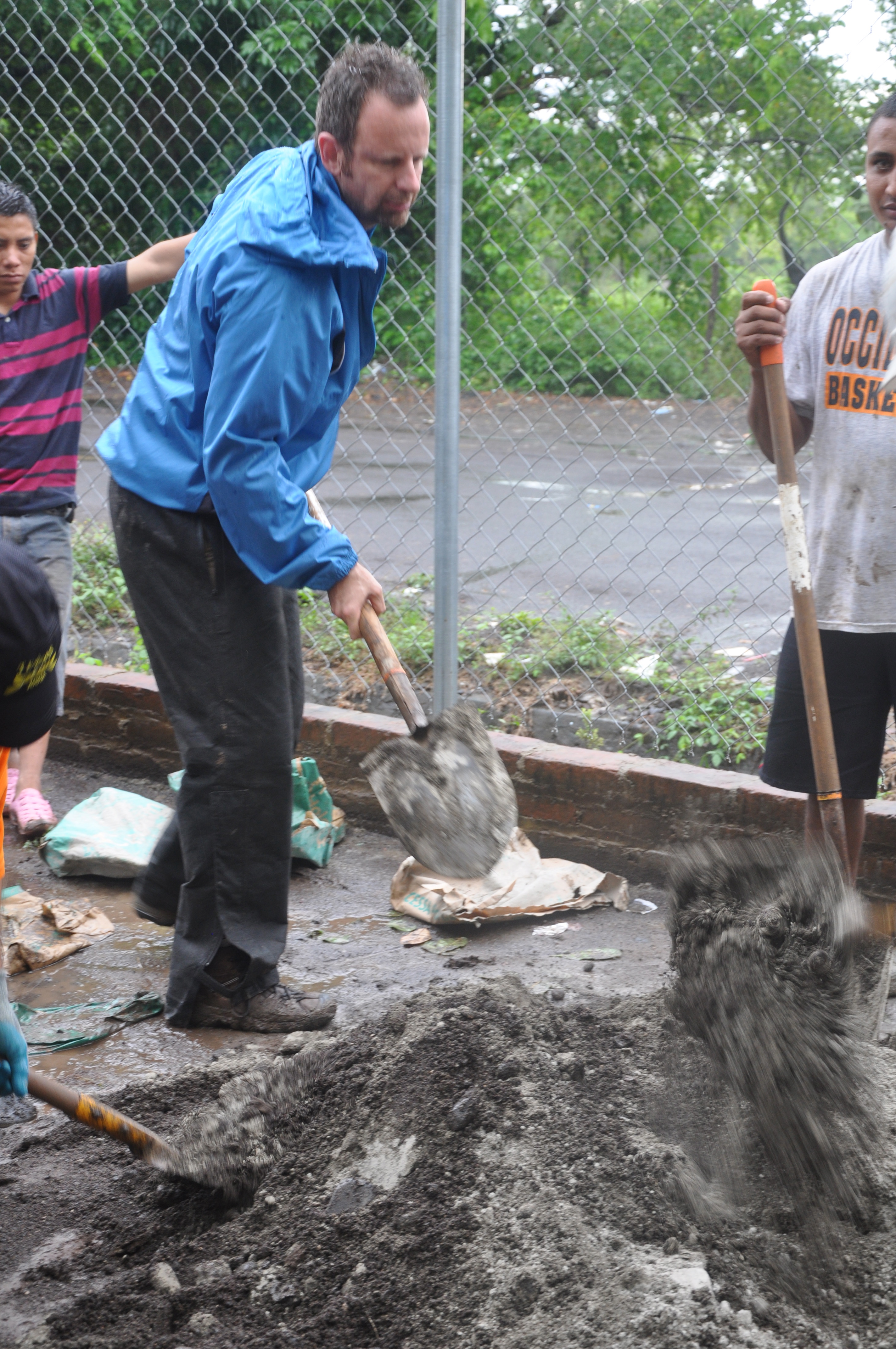
Rain has a way of complicating things, especially when working outside. Today, the rain came down in frog-strangling proportions, making our work site a soggy and muddy mess. Even Gene Kelly might have thought twice before singing and dancing in this downpour. Fortunately, we moved the drilling rig to a new location before it started to rain and we were able to prepare the site for the concrete pad that will hold the pump apparatus. When the rain started, the Agua Viva El Salvador staff and our team elected to keep working in spite of the rain. That’s when things got really exciting. These are a few of the best things that happened as we worked in the rain.

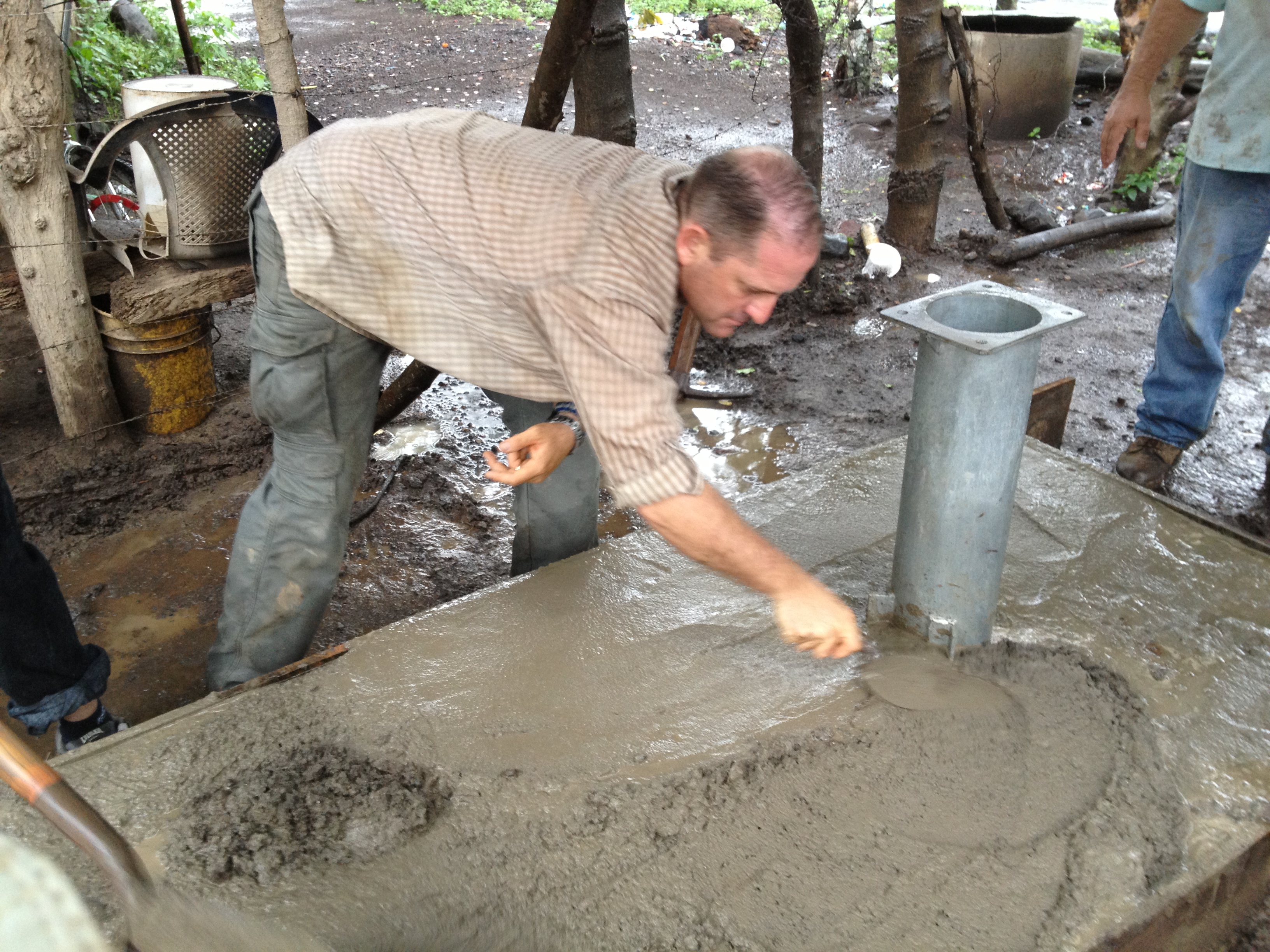
Resourcefulness | Our team had to think creatively in order to mix and pour concrete in the rain. Because we mixed the concrete and sand on the ground, we had factor in exactly how much water to add to what the rain was contributing. And then we had to find plastic to cover the area where we needed to pour the mix. It all worked out!

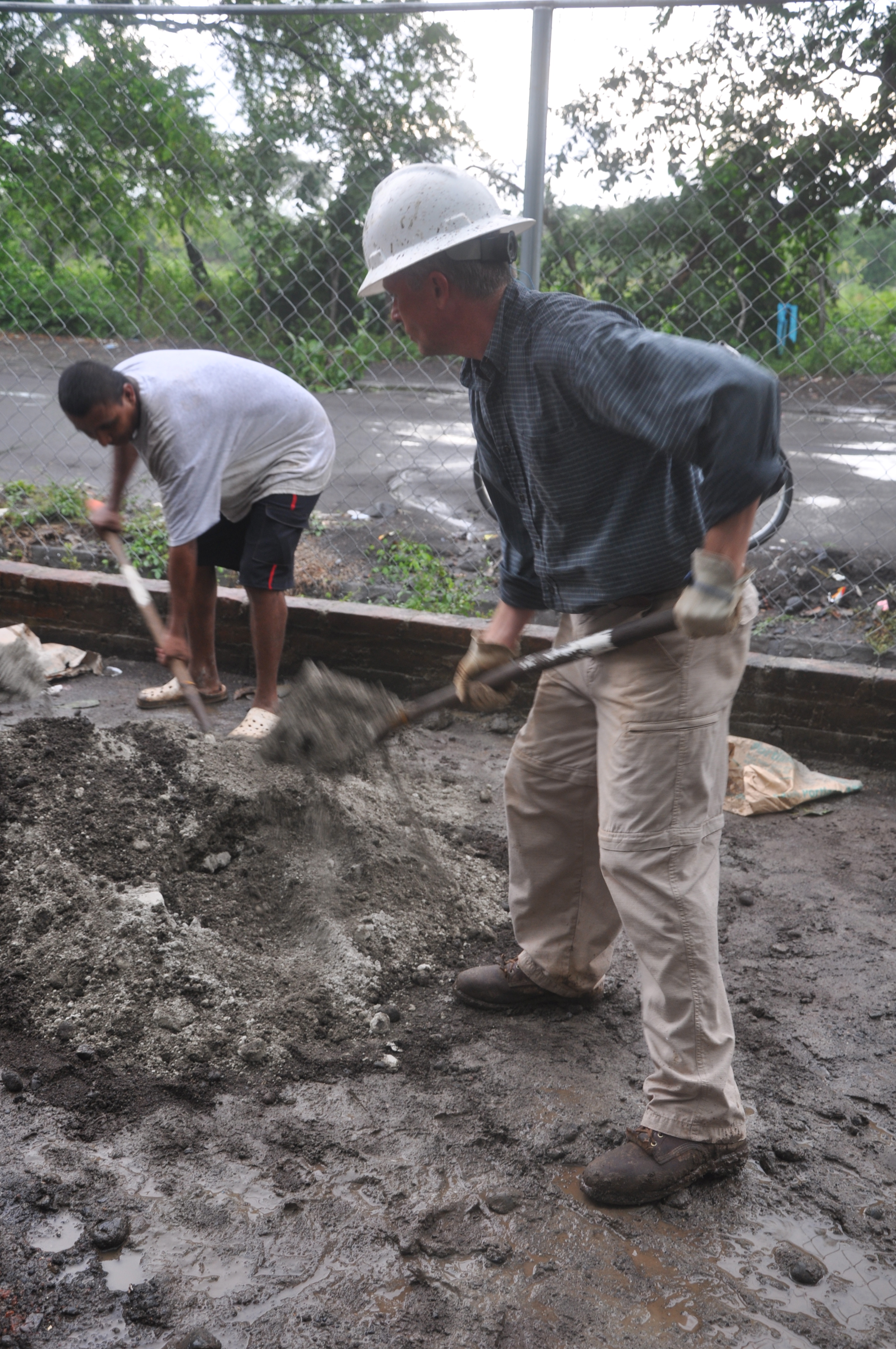
Neighborliness | When the men in the village saw us working in the rain, they stepped up to help. One man contributed the plastic we needed, another provided the twine to make our makeshift tent, others helped shovel and move the sand to where we needed it and then helped us to move the concrete to the pad site.

Joyfulness | The rain did not dampen our spirits. Instead, there was lots of laughter and good humor as we worked cooperatively to get the job done. Many willing hands helped us to finish the task faster in the rain than if we had done the same task in the sunshine.

Because we continued to work in the rain, we are still on track to complete the water well by tomorrow and to present it to the people of Tonalá. We can already feel the excitement in the air. The location of this well will make it accessible to all of the people of the village. The well will also save lots of folks lots of time because they will not have to walk as far to fetch water. It’s possible that it may rain again tomorrow but it really doesn’t matter. Come rain or shine, we are determined to get the job done for the people of Tonalá and to present them with their new well in the name of Jesus, the One who quenches deeper thirsts.

And the rain came down, making our work site a muddy mess.

Herschel Rothchild mixing concrete.

Jim Coleman mixing concrete.

David Hopkins working on the pump pad.

Jim Dry putting finishing touch on the pump pad.

Setting the water well dedication plaque in place.

Our team of guys after a hard day of work.

Posted by: Omar C. Garcia | October 9, 2012

The Excess Jar

Tonalá, El Salvador

We had a successful second day of drilling today. Early this morning we hit water at a depth of a little more than ninety-feet. It’s always exciting when we reach water and then begin preparing the well, a process that starts with casing the hole and then blowing out all of the silt and gunk until the water runs clear. Although the steady spray of water shooting out of the hole creates a muddy mess, it really is a beautiful sight. We are on schedule to present the completed well to the people of Tonalá in a couple of days. This well will provide clean water to the people of this community for years to come. It’s hard for those of us who have access to water on demand to fully appreciate what a water well means to people who live in places like Tonalá.

This morning as our team gathered for our morning devotional, I received an email from my friend Kara Potts. She wrote to tell me how much she appreciated our recent issue of Go Beyond Just for Kids magazine entitled “All About Water.” Kara meets with four other women for a weekly Bible study. She wrote, “When we talked about our excess we talked about not just feeling guilty about it, but doing something about it! Then along came the magazine.” The magazine arrived at just the right time. As a result of reading about our water initiatives, Kara and her friends decided they could lead their families to engage with being a part of the solution. “Each family now has a jar in their kitchen where every time we make a decision to live with less or buy less than we want, we put the excess in the jar.” That’s something that even kids can understand and participate in.

Kara outlined several ways in which she and her family are cutting back on expenses and then putting their savings in their excess jar. But, here is the really exiting news. Kara continued, “We are doing this to take our excess and purchase a well for a community without water. We know that our five families have enough excess in our lives that we can turn it into a real, concrete, tangible blessing for the ‘least of these.’ Our goal is to have $5,000 by Christmas and give the well as a Christmas gift from our families.” Kara’s email could not have arrived at a better time to encourage our team. Being on the drilling end of this equation is made possible only because of the kind and generous gifts of people at home — folks like Kara and her friends.

The excess jar is a great way for any family to help provide clean water for people who live in places like Tonalá. Every dollar counts and can make a huge difference in the lives of those in need of access to clean water. Why not give jars to family and friends this Christmas and encourage them to join you in blessing people with the gift of clean water and the Living Water. All it takes is filling the jar with your excess.

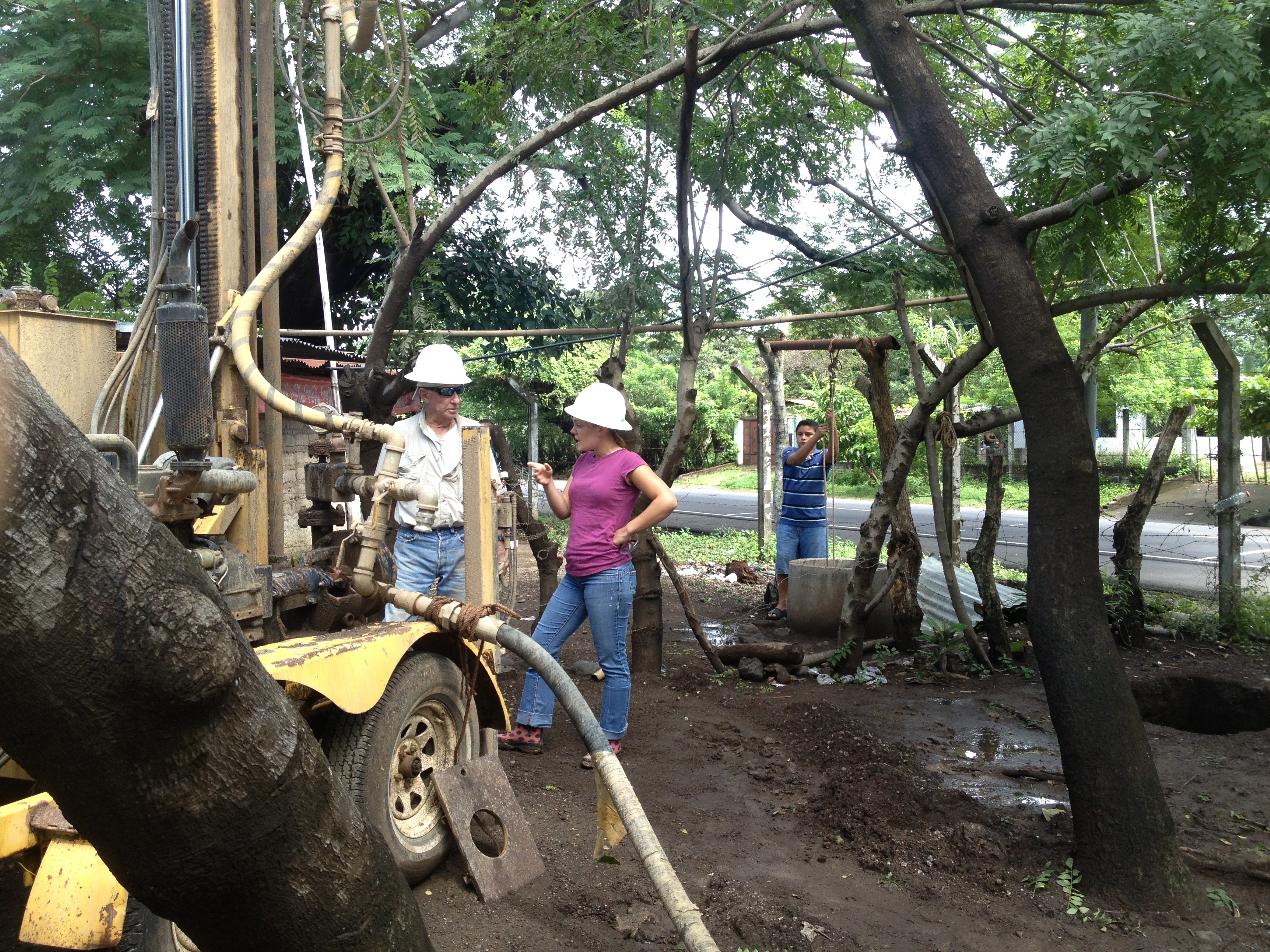
Notice the boy (right) drawing water from a shallow hand-dug well next to site of new well.

Our friend Clay Lewis and his granddaughter, Marie. Marie was first driller today.

Poster on wall at Agua Viva El Salvador headquarters.

Posted by: Omar C. Garcia | October 8, 2012

Get Dirty for God

Tonalá, El Salvador

Pig-Pen is one of the most well-known characters in Charles Schulz’s Peanuts comic strip. This overall-clad kid was always depicted as a disheveled dust magnet. Once when Pig-Pen was caught in a rainstorm, he lamented that “in one minute the rain has washed away what took me all day to accomplish.” Charlie Brown, the only character to unconditionally befriend Pig-Pen, had a more philosophical view about the filth that covered his friend. In one strip, Charlie Brown said, “Don’t think of it as dust. Just think of it as the dirt and dust of far-off lands blowing over here and settling on “Pig-Pen!” It staggers the imagination! He may be carrying the soil that was trod upon by Solomon or Nebuchadnezzar or Genghis Khan!” I love that. We all need a friend like Charlie Brown.

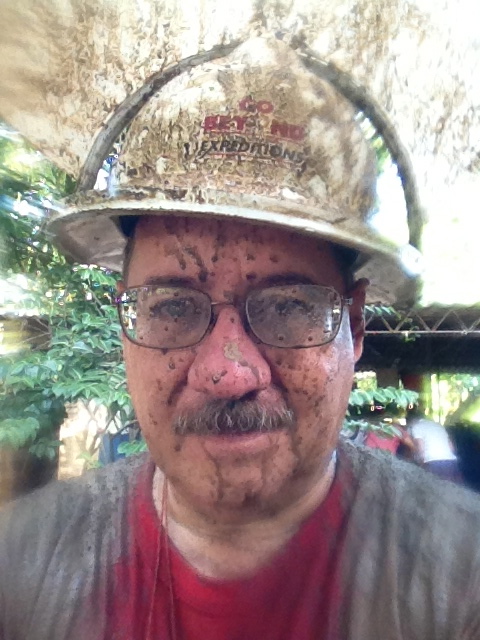
Pig-Pen was much in my thoughts today as our team started drilling a water well in the village of Tonalá. We are drilling with compressed air, a process that stirs up unbelievable clouds of dust that hover and then cover everything in sight. It did not take long for us to feel Pig-Penesque. However, when we drilled through the first aquifer, clouds of dust became showers of mud. For the person operating the controls on the drilling rig, there is no escape. You will get dirty — very dirty. Once the dust and the mud  have covered your clothing, they will find their way inside your clothing. When I finished my turn at the controls, the face shield on my hard hat was so covered with mud that I could no longer see. But, that’s ok. This is one of the parts of drilling that I like because it’s a sign of making progress.

Drilling a water well is just plain messy. There is no way to drill and to stay clean. Sooner or later, everyone involved in the process gets covered in dirt, grime, and mud. Today, one by one, our team members got dirty for God. It was not a matter of if but when it would happen. And when it did, no one complained. We understand that some things will not happen unless we are willing to get dirty. In a few more days we will present the people of Tonalá with a clean and reliable source of water — a gift that will mean better health and less time walking long distances to fetch water. Just thinking about the joy of that day makes getting dirty for God worth it all. We really don’t mind the mess or the mud. At the end of the day we had drilled to a depth of 90-feet. Tomorrow we will get dirty all over again as we drill a little deeper.

Waiting for lunch before we start drilling.

Fidelia, a village woman, preparing our lunch of chili rellenos and rice.

Team member Jim Dry takes his turn as driller.

There is no way to stay clean when drilling a water well.

Posted by: Omar C. Garcia | October 7, 2012

At the Edge of the World

Playa Salinitas, El Salvador

Coastlines fascinate me. My earliest memory of standing on a coastline was when my parents took my sister and me on vacation to the beach at Corpus Christi, Texas. I remember being a bit frightened by the waves and the vast expanse of water beyond the safety of the sandy shore. As I stared at the distant horizon, it felt as though I was standing at the edge of the world. And in a way, I was. I have had that same feeling every time I have visited one of the coastlines of the world — from white sand beaches in Florida to black sand beaches in Nicaragua to the murky waters lapping the coastline at Cox’s Bazar in the Bay of Bengal to many other coastlines around the world.

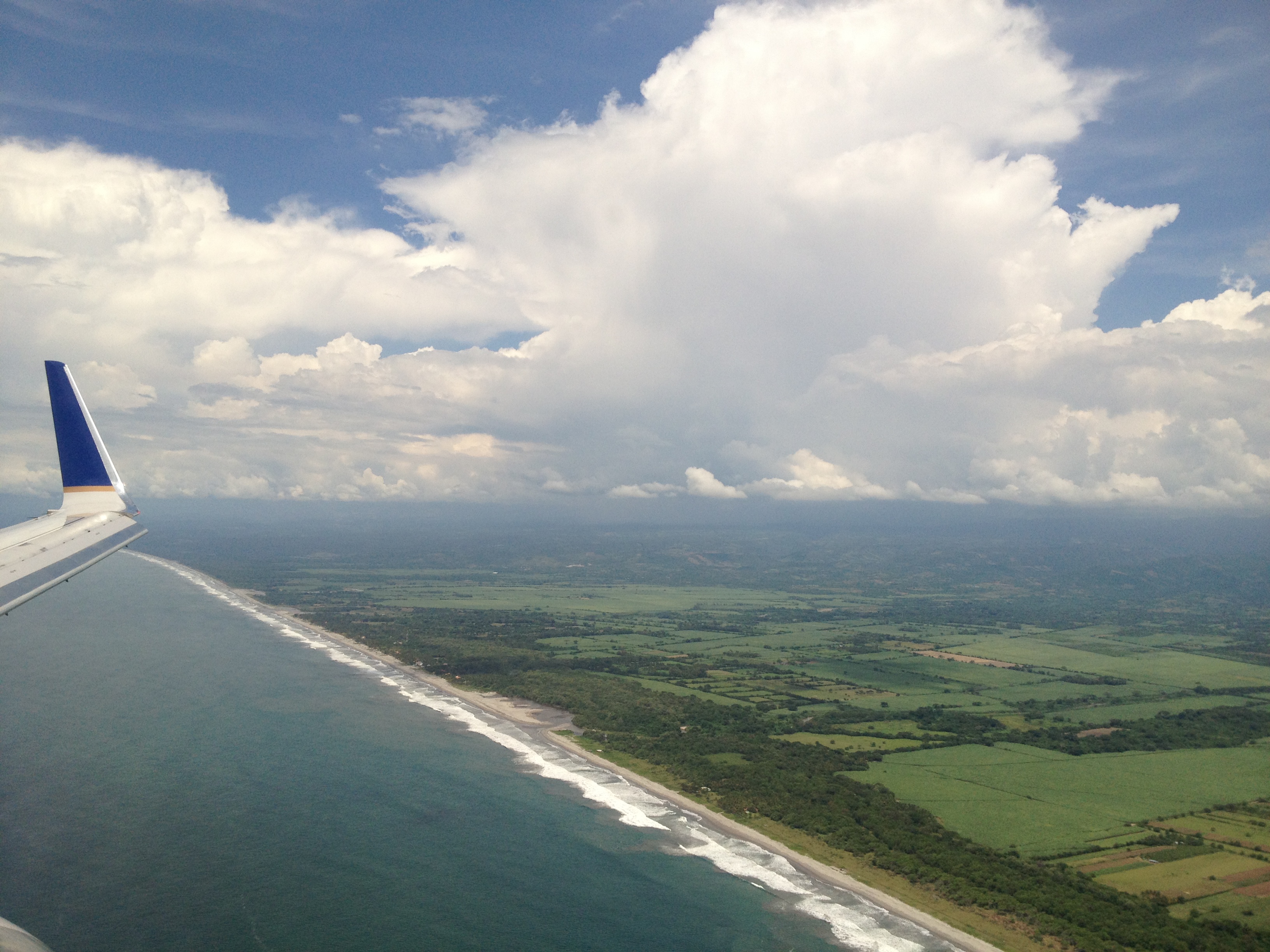
El Salvador’s Pacific Coast

As our flight approached El Salvador earlier today, I looked out my window to see the long stretch of coastline that defines this country’s unique shape. Later, I stood with friends looking out over the Pacific Ocean, having those same feelings I had when I was a kid filling my pail with sand on the beach at Corpus Christi. I am once again at the edge of the world. Before our evening meal and briefing, I stood for a moment and looked toward the distant horizon to the West, mesmerized by the rhythm of the waves. The map on my iPhone verified that I was indeed standing, once again, at the edge of the world.

My current location. | Playa Salinitas along El Salvador’s Pacific Coast

At our briefing this evening, we learned that we will be drilling a water well for the people who live in a village called Tonalá. The folks who live in this tiny village of some forty homes are mostly people who work in the adjacent sugar cane fields. These people work hard to earn $8.00 per day. As bad as $8.00 per day sounds, it’s a little bit better pay than many folks in the area will ever see. The children of these workers attend school to the sixth grade and then drop out to help support their families, adding their wages to the meager daily earnings of their parents. As I listened to my friend Carlos Molina, the country director for Agua Viva El Salvador, I was reminded of why God brought our team to the edge of the world along the Pacific Coast of El Salvador. It was so that we could connect with those who are living “on the edge” — barely able to eke out a living and in need of a source of clean water.
I am looking forward to a great week as we begin the process of drilling tomorrow. I pray that our efforts will help to improve the lives of those who live on the edge at the edge of the world along the Pacific coast of El Salvador.

Posted by: Omar C. Garcia | October 6, 2012

Farewell, Pastor Alex

Dear Pastor,

In just a few hours, you will preach your final sermon at Kingsland and I will be on my way to El Salvador. I regret that I will not be present for your final day in the pulpit but know that you understand. My heart and mind have wrestled with every emotion since you announced that you will return to North Carolina to serve as Senior Pastor of Carmel Baptist Church. I know that you have earnestly sought God’s direction in this matter and that you feel deeply convicted that you must go where He has called. I understand and respect your decision even though it has not been an easy one for me to accept. I guess I thought that when I am 100 and you are 90 I would be pushing your wheel chair at the old pastors’ home (or you would be pushing my wheel chair).

I will never be able to thank you enough for having confidence in me to serve as Kingsland’s first missions pastor. From my first day at Kingsland to today, you have faithfully encouraged me and supported our various missions initiatives from our own community to the ends of the earth. You have given me the latitude to dream and to lead our church family to engage in so many time zones that we can safely say that the sun does not set on our work among the nations. And, when you cast the vision that we should spend our debt free dollars on building the kingdom rather than building buildings I told you then that you had cast a vision worth living and dying for. I still feel that way. Thanks for having the courage to cast such a bold and inspiring vision.
I am thankful for every adventure we shared together among the nations — from almost getting arrested in South Asia and having our Bibles confiscated to trekking through the bush in Tanzania. I will treasure each of our adventures for a lifetime. And now, you are embarking on another great adventure. Please know that I will pray for you, for Christy of the Nile (that’s a story from yet another adventure), and for your family. You are a good and godly man. It has been an honor for me to call you my Pastor and my friend. I love you. I will miss you. And I promise to pray for you as you go beyond in North Carolina.

Respectfully and With Deep Gratitude,
Omar~

Visiting a poor family. | 2005 | Darkhan, Mongolia

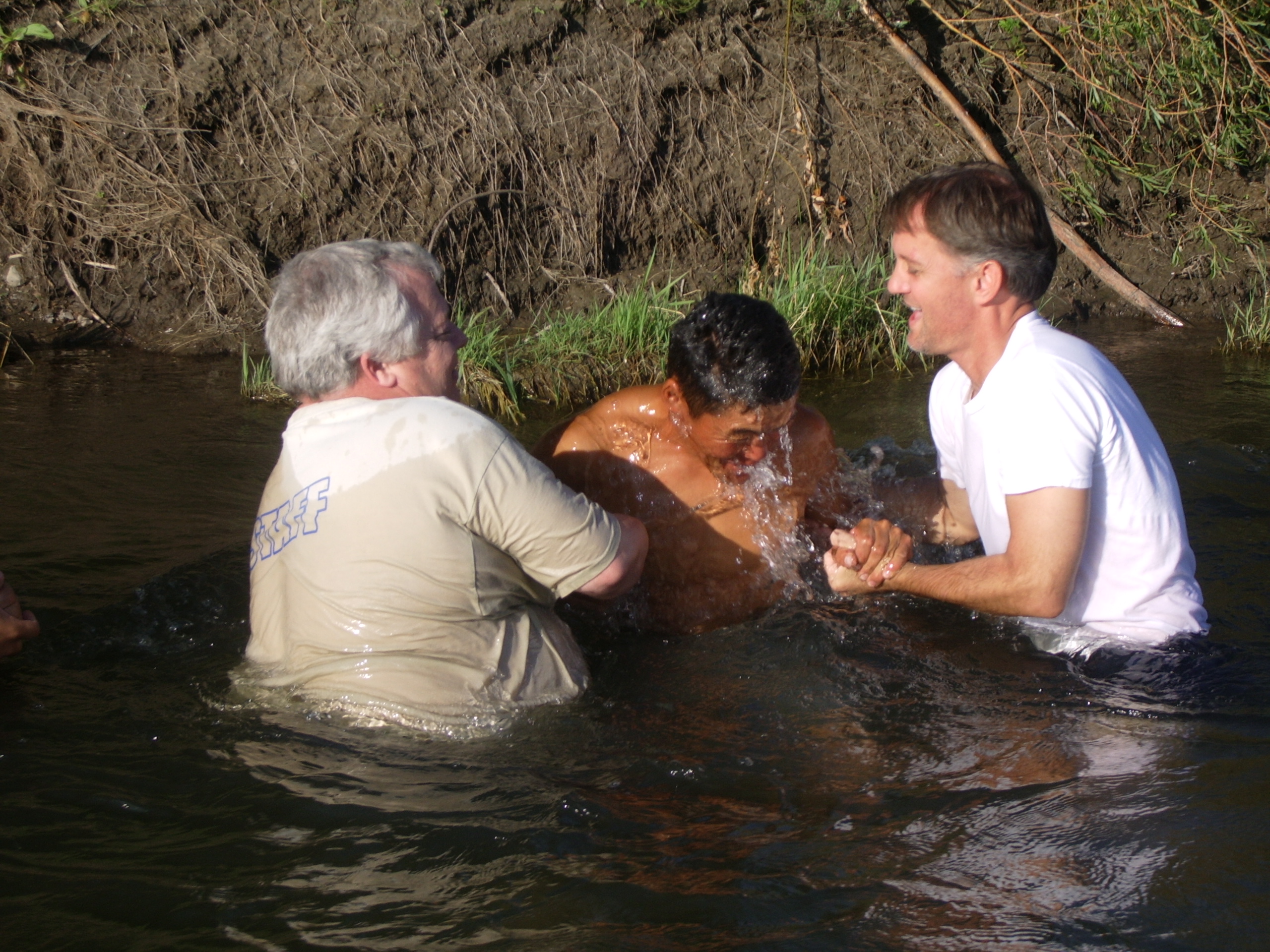
With Jerry Smith, baptizing a new Mongol believer. | 2005 | Darkhan, Mongolia

At the Great Wall of China. | 2005 | Outside of Beijing, China

On St. Martin’s Island | 2007 | Bangladesh

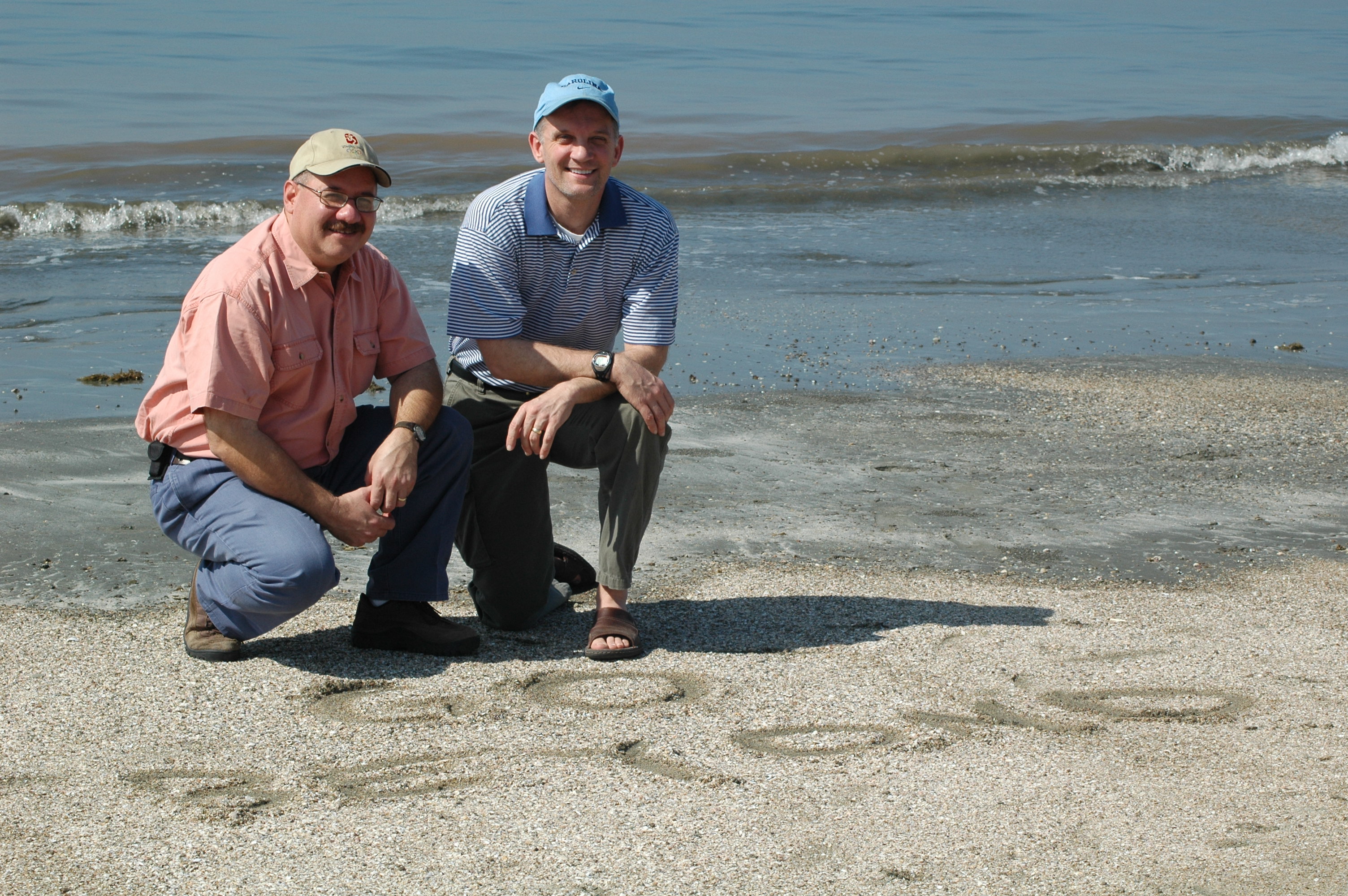
On the beach at St. Martin’s Island | 2007 | Bangladesh

St. Martin’s Island | 2007 | Bangladesh

First Annual Caring for Katy church-wide service initiative. | 2008 | Katy, Texas

With village children. | 2008 | Orissa, India

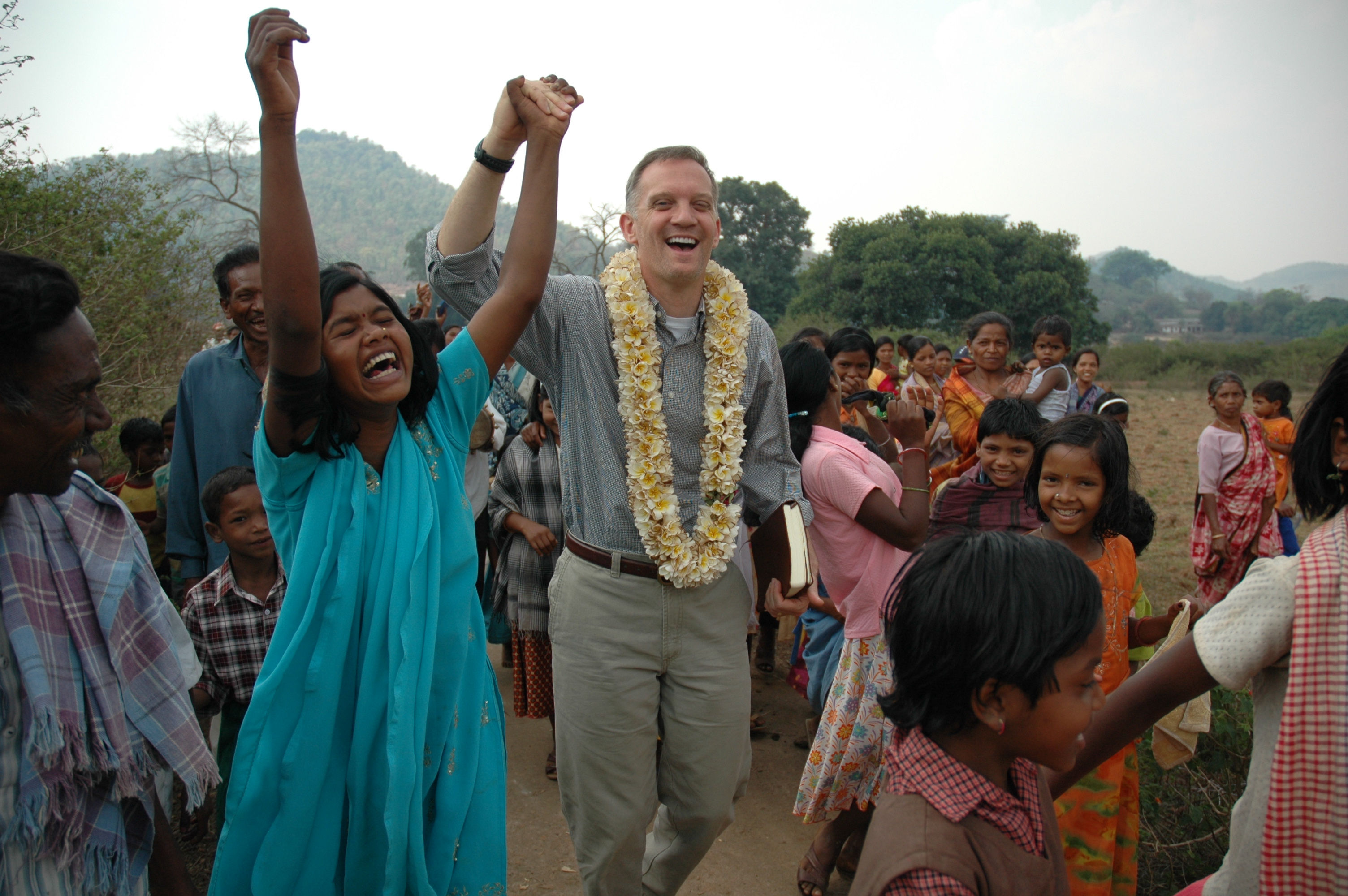
Post persecution village celebration. | 2008 | Orissa, India

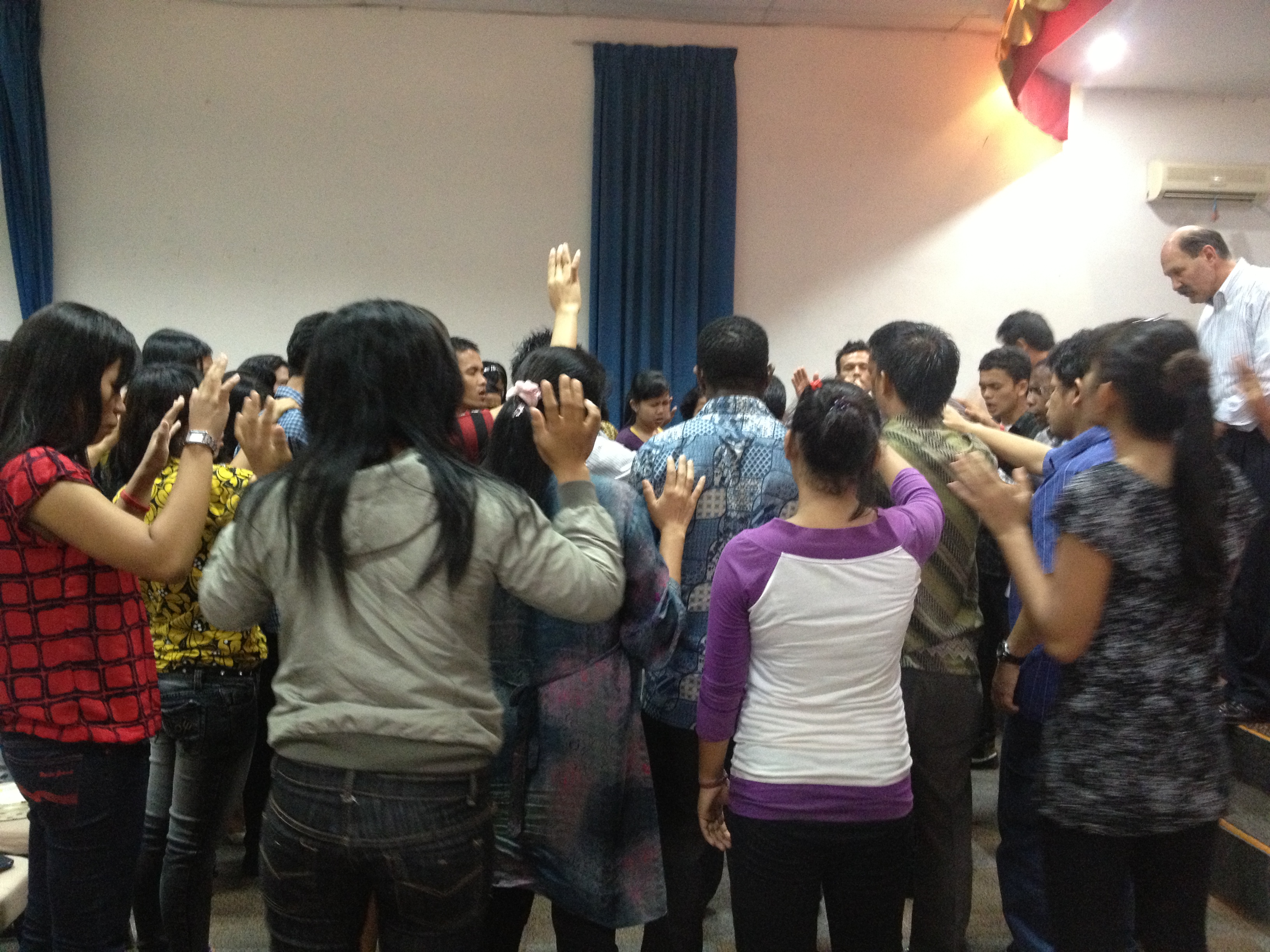
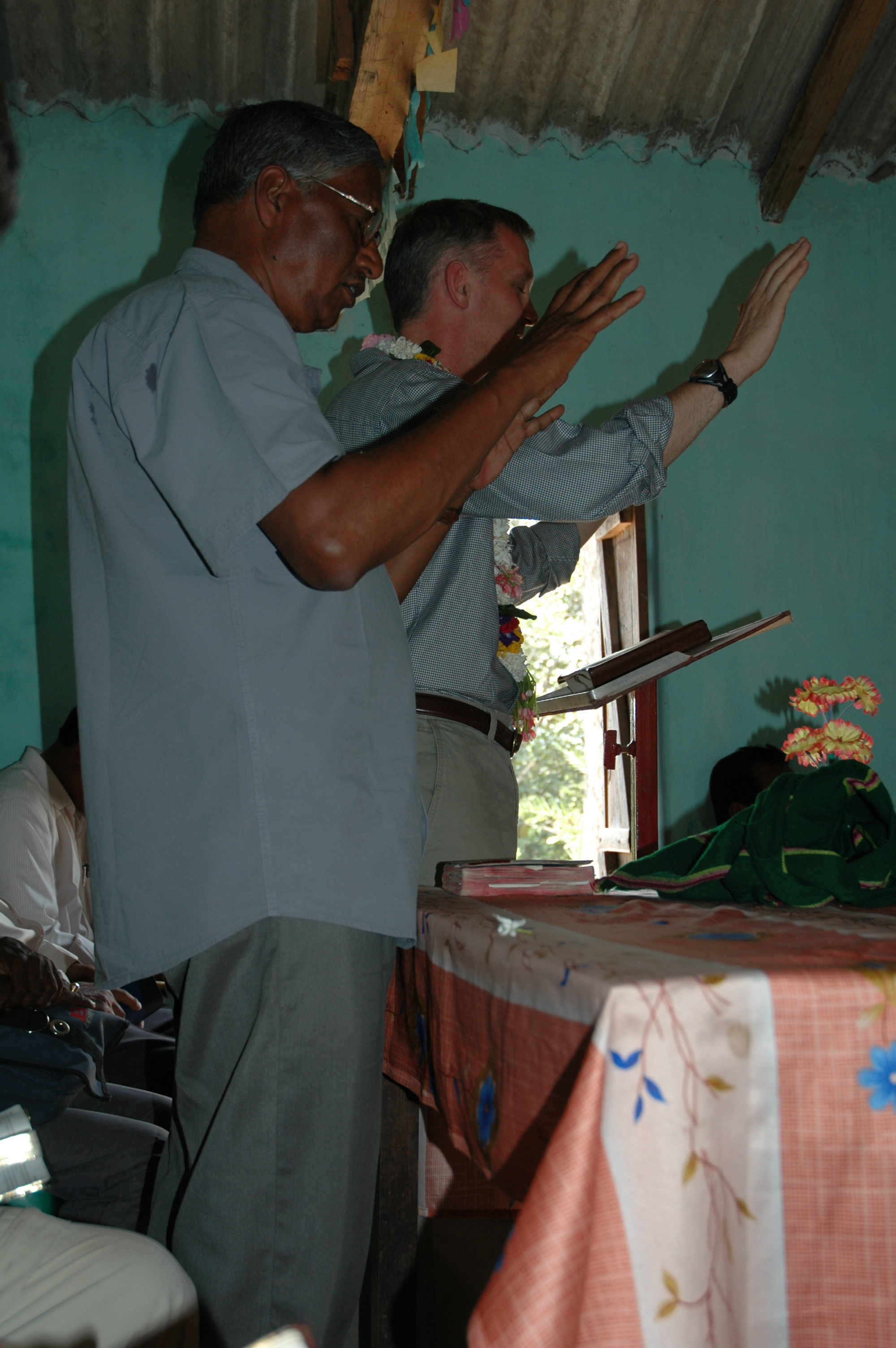
Praying after worship service. | 2008 | Orissa, India

Tired, dirty, and hungry. | 2008 | Tanzania

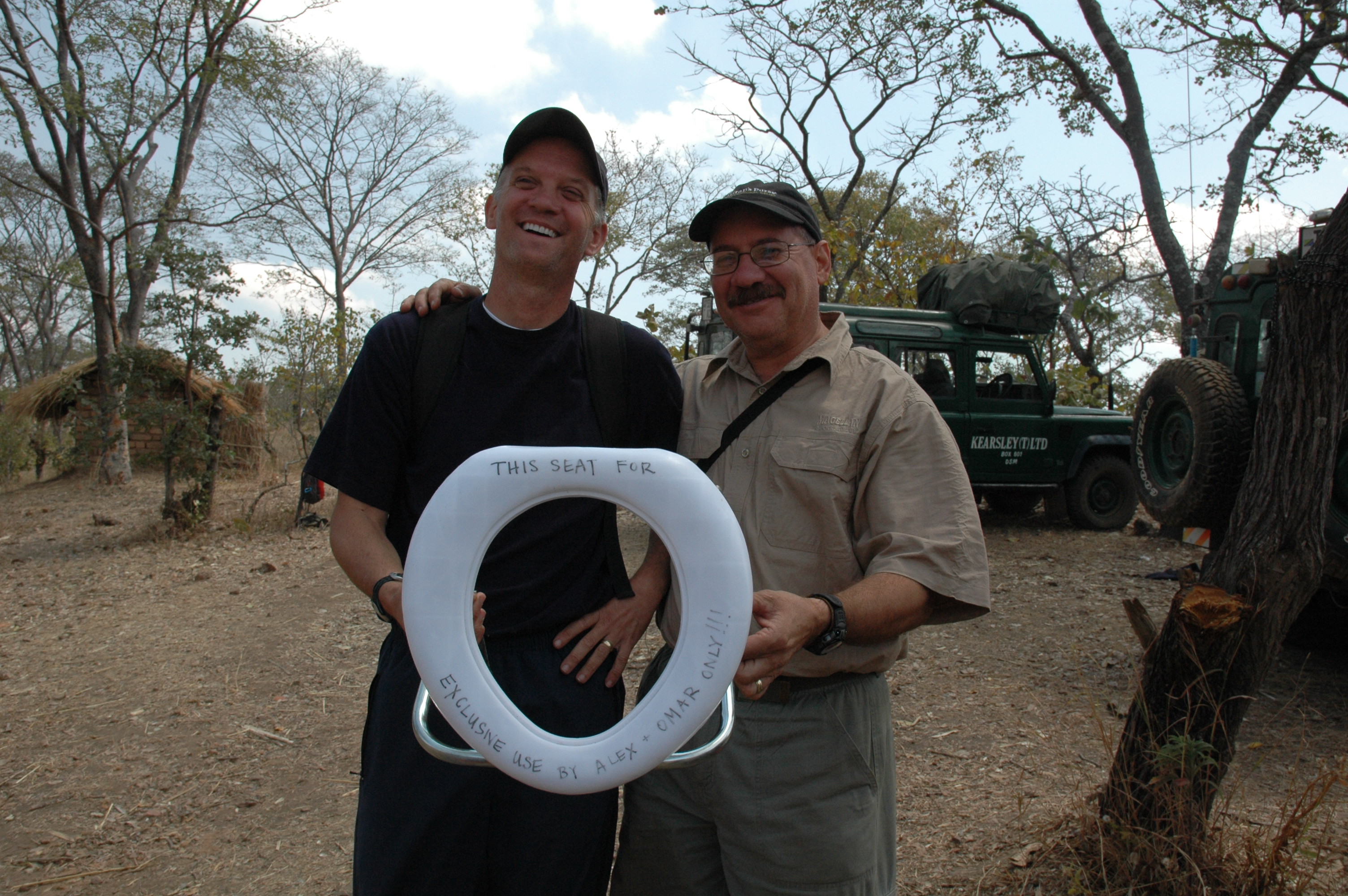
A father and son adventure. | 2008 | Tanzania

A gift from our team. | 2008 | Tanzania

Teaching on the sanctity of human life. | 2008 | Kampala, Uganda

With Veronica, Director of The Comforter’s Center | 2008 | Kampala, Uganda

Dedication of The Comforter’s Center | 2008 | Kampala, Uganda

At the entrance to Angkor Wat. | 2010 | Siem Reap, Cambodia

At Ta Prohm Temple, Angkor complex. | 2010 | Siem Reap, Cambodia

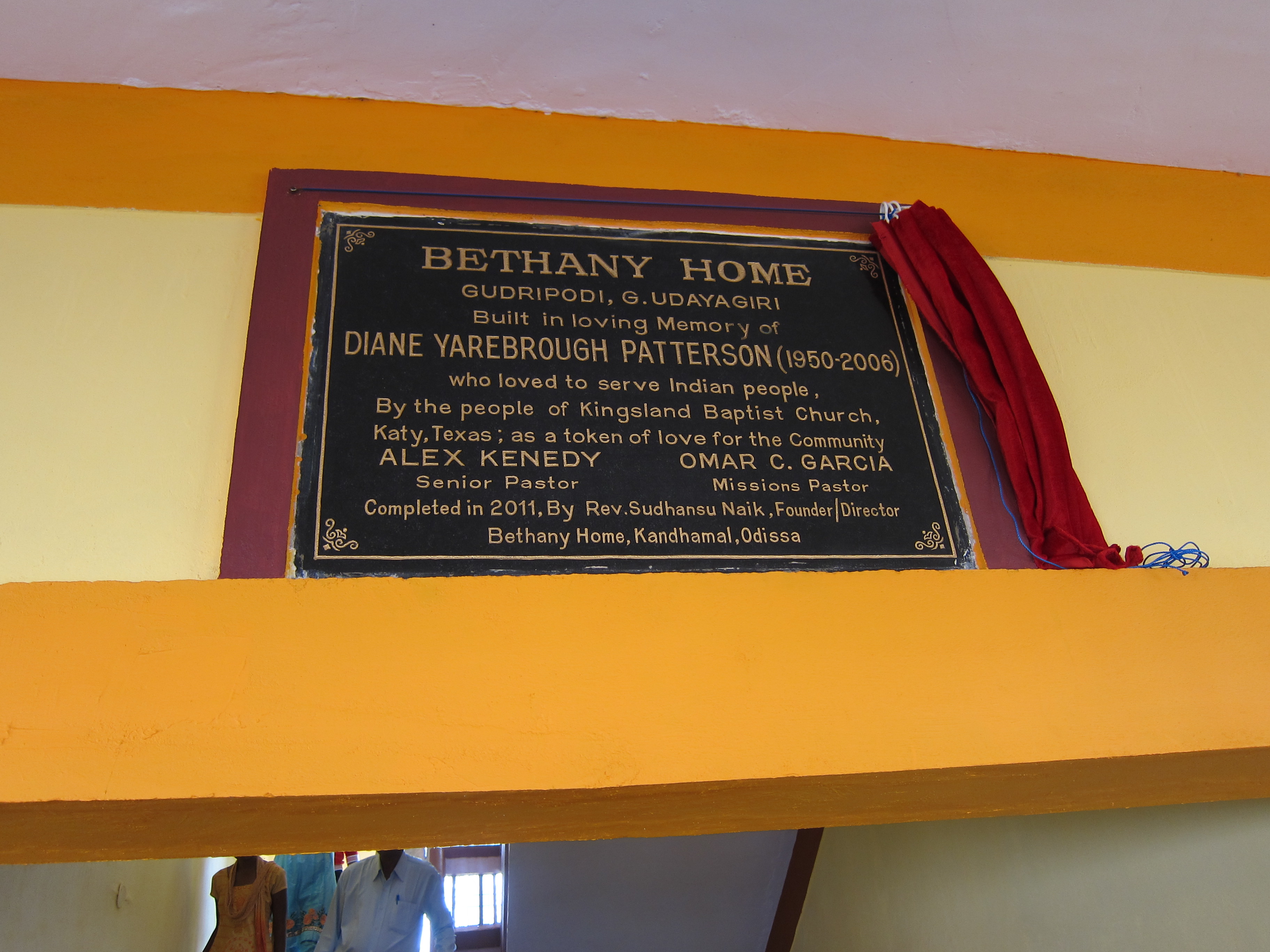
Boys Home Dedication plaque. | 2011 | Orissa, India

Posted by: Omar C. Garcia | October 2, 2012

Leaving Indonesia

Riau Islands en route to Houston, Texas

I have long been curious about Indonesia — the island nation sandwiched between Southeast Asia and Australia. Until my arrival in Batam a few days ago, my knowledge of Indonesia was limited to what I have read and heard over the years. The past few days, however, have been like a richly illustrated open book, each page beckoning me to read the next. I found nothing boring about Indonesia. The archipelago is blessed with dramatic natural beauty and fascinating people. Although the people who inhabit these islands speak more than 300 languages, almost everyone speaks Bahasa Indonesia, the common and unifying language of the islands. And, from fishermen dragging their nets in the azure waters surrounding jungled islands to the hordes of shoppers in glitzy malls, Indonesia is a fascinating study in contrasts. I thoroughly enjoyed my time among the people of Indonesia.

My friend Bill Velker of Life International and I had the opportunity to speak to Christ-followers from various parts of Indonesia about the sanctity of human life. We discussed abortion and other ways in which the sanctity of human life is diminished in Indonesia and beyond. What we discovered was a deep concern and determination on the part of these young church leaders to champion the rights of the pre-born. Although the majority of those we spoke to said that they know someone who has had an abortion, they had little or no idea that more than two million babies are aborted annually throughout Indonesia. Many told us that now that they have a better understanding of God’s passion for the welfare of the pre-born and others who are vulnerable to abuses, they will not remain passive or silent. Awareness always precedes and fuels action.

On our final day, those we met with worked together to develop a strategy to pray for the church leader training initiative on the sanctity of human life that Life International will offer in a few weeks. I was personally encouraged by the willingness of these young Christ-followers to pray and prepare for the upcoming training. They are determined to be the generation that will be a light to their nation and that will champion life-giving initiatives. And, after spending these days with them, I am convinced that they have the audacity and courage to do so. Today, they are a mustard seed sized group. But, like the mustard seed, they have the potential to grow exponentially and to champion God’s passion for life and justice throughout their nation. Although I am leaving Indonesia, Indonesia will not leave me — it now has a place in my heart. I will have a lifetime connection to this nation of islands because of the passionate Christ-followers that I met there.

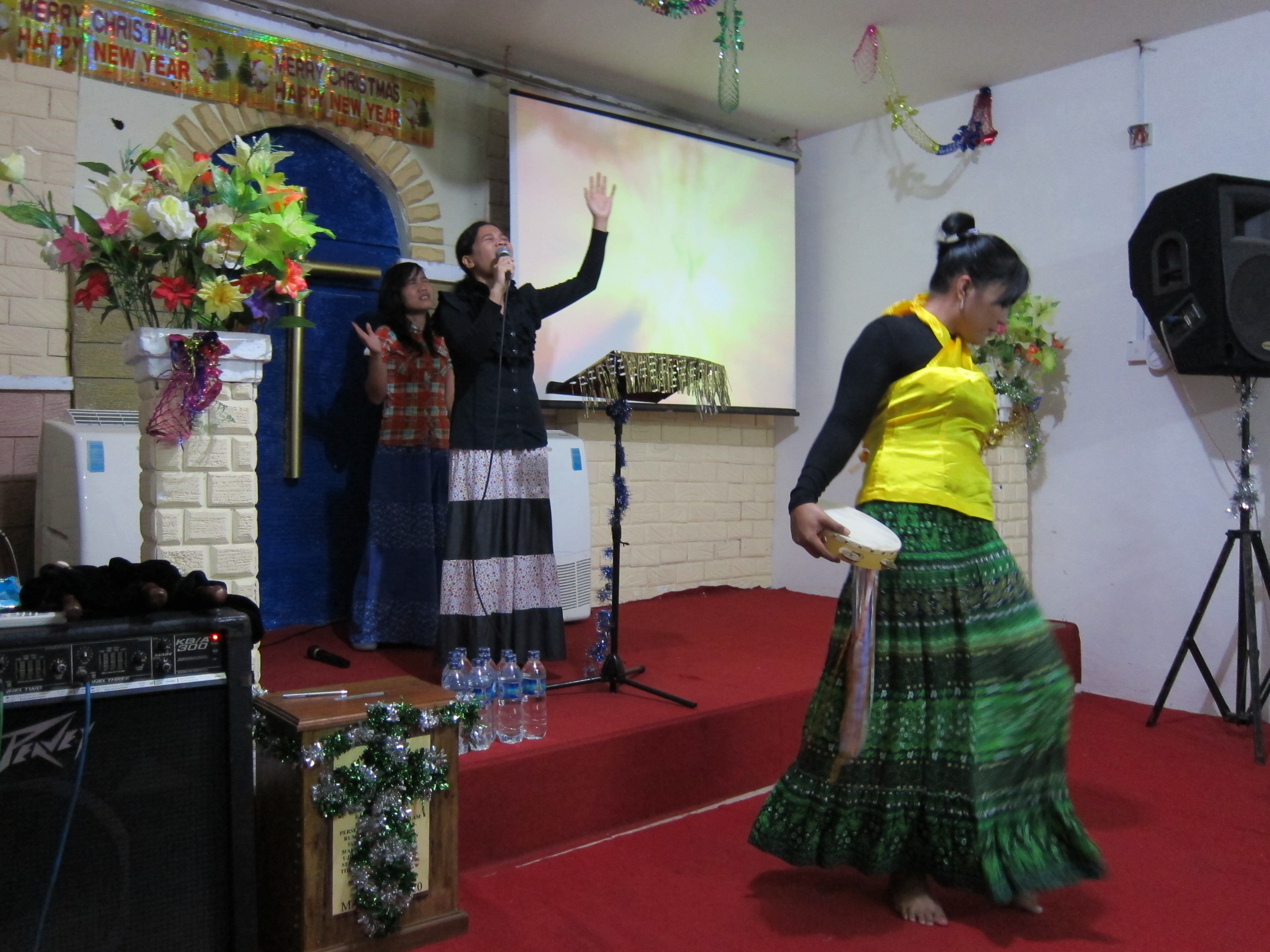
Evening praise and worship celebration.

Indonesian praise and worship band. I loved all of the music!

One of several small groups discussing strategies to promote prayer for life.

Posted by: Omar C. Garcia | September 30, 2012

The Beauty of Bridges

Riau Islands, Indonesia

The Indonesian Archipelago consists of more than 17,000 islands stretching from the western tip of Sumatra to the eastern edge of Papua. An estimated 8,000 of these islands are inhabited by people groups that speak more than 300 languages — making Indonesia a land as diverse and unusual as those who call this island nation home.

The Riau Islands Province of Indonesia is a smaller archipelago of 3,200 islands. For centuries, boats have served as the major form of transportation between these thousands of islands. However, because of a government initiative to connect three of the major islands and several small ones in Riau, the people of this province can now travel over six beautiful bridges.

This afternoon, we traveled over the Barelang Bridge which is a recognized symbol of the island of Batam and a popular local site. No one seems to mind that vendors occupy one lane on each side of the bridge. Somehow people and cars manage to share the scenic space that spans two islands and offers amazing vistas in every direction.

There is something inherently beautiful about bridges. The word itself has become a part of our vocabulary. It’s the word we use when talking about making connections or working toward reconciliation with others. We’ve all heard the admonition to “not burn our bridges.” Building bridges is the antithesis of building walls. Walls tend to separate and protect. The Chinese built the Great Wall to keep the Mongol hordes and other invaders at bay. Bridges, on the other hand, are designed to provide access between people and places.

Our world needs more bridges — the kind of bridges that can connect us to those who are different than us and that span the deep chasms of prejudice that divide and separate people. Travel is important because it can be a bridge-builder that connects people who are separated by the geographical and cultural distances that can lead to prejudice. Mark Twain wrote: “Travel is fatal to prejudice, bigotry, and narrow-mindedness — all foes to real understanding. Likewise, tolerance, or broad, wholesome charitable views of men and things cannot be acquired by vegetating in our little corner of the earth all one’s lifetime.”

Traveling and interacting with people in other places not only helps those who travel, it can also help those they meet to abandon their own prejudices or misinformation about others. However, you do not have to travel around the world to build bridges of understanding. All we have to do is span the chasms that separate us from others. Whether that means walking across the street to meet a neighbor from another nation or connecting with a parent at school whose ethnicity is different than our own, we can build bridges right where we are.

Like the various and diverse people groups that call Indonesia home, we should look for ways to connect with the diverse people who inhabit our respective archipelagos. Building bridges is worth the effort. In the long run, building bridges will do more to promote understanding than building walls.

Posted by: Omar C. Garcia | September 29, 2012

The Price of Silence

Riau Islands, Indonesia


“I was silent,” she confessed. “Every time a friend or co-worker told me they were going to abort their baby, I was silent. I said nothing. I did nothing.” And then, wiping the tears from her eyes, this young woman made a commitment in front of her peers that she would never again remain silent. That was the dramatic ending to our day of sharing with church leaders about the sanctity of human life. Those in attendance today were shocked and disturbed to learn that although abortion is illegal in Indonesia, an estimated two-million babies are aborted here annually. My friend Bill Velker, a Vice President at Life International and Director of their International Prayer Center for Life, gave a sweeping overview of the many ways in which the sanctity of human life is violated around the world. At the end of the day, Bill challenged those in attendance to become champions for life and then led us in an intense prayer time.

Teaching about the sanctity of human life.

I was deeply touched by the confession of the young woman who remained silent while her friends and co-workers opted to abort their babies. Her confession reminded me of Edmund Burke’s oft-quoted statement: “All that is necessary for the triumph of evil is that good men do nothing.” But, are we really good if we do nothing? Are we good merely because we do not participate in evil or avoid doing that which is wrong? When I was a kid, my grandfather once told me that it’s ok to be good but that it’s better to be good for something. I agree. Good people must actively engage in the battle against evil. 1 Peter 3:11 tells us to “turn away from evil and do good.” James 4:17 adds, “So whoever knows the right thing to do and fails to do it, for him it is sin.”

Remaining silent is among the worst things that any of us can do in the face of wrong. Martin Niemöller (1892-1984), a German anti-Nazi theologian and Lutheran pastor, summarized the price of remaining silent in the face of evil. He wrote:

When the Nazis came for the communists,
I remained silent;
I was not a communist.

When they locked up the social democrats,
I remained silent;
I was not a social democrat.

When they came for the trade unionists,
I did not speak out;
I was not a trade unionist.


When they came for the Jews,
I remained silent;
I wasn’t a Jew.

When they came for me,
there was no one left to speak out.

Through her tears, the brave young lady who publicly confessed her silence today also said that from this day forward she will use her voice and influence on behalf of preserving and protecting life both in and out of the womb. Today, she joined the ranks of life-givers — those who are committed to protecting and advancing the sanctity of human life. Today, she took an intentional step toward doing good.

Our concluding prayer session.

Posted by: Omar C. Garcia | September 28, 2012

Leaving the Harbor

Singapore en route to Indonesia

I had plenty of inspiration and time to think about boats today as my friends and I crossed the Straights of Singapore by ferry on our way to Indonesia. The Straights of Singapore is a busy super-highway for all sorts of ocean-bound vessels. Last week a ferry carrying more than 200 people collided with a cargo tanker in the waters off Indonesia’s Sumatra island. Eight people were killed — not exactly the kind of news you want to hear when you are getting on a ferry. It’s hard to imagine how something like that could happen until you make a ferry crossing. Our journey to the Riau Islands took us past dozens of intimidating behemoths that towered above our humble little ferry-boat. One wrong move and … well, you know!

Boarding our ferry boat in Singapore.

My earliest memories of boats date back to my preschool days when my parents took my sister and me on a family vacation to Corpus Christi, Texas. Dad took 8mm home movies of us feeding sea gulls from the top of a tourist vessel in Corpus Christi Bay and visiting with shrimpers on the T-Heads at the marina. Over the years I have done a good bit of travel on various kinds of boats. I have traveled aboard a big ocean-bound ship as well as an assortment of motorized crafts on the Bay of Bengal. In 2003 I spent a week on a leaky wooden boat while visiting remote villages along the Brahmaputra River. My friends and I christened that boat “A River Runs Through It.” A few years ago I stayed on a houseboat on Dal Lake in Kashmir and traveled to and from shore on a shakira boat (a water taxi). And of course, over the past couple of years I have logged lots of hours in a canoe on Texas rivers with my son Jonathan.

Traffic in the Straights of Singapore.

As our ferry-boat started to move today I tracked our progress on my iPhone. I love this technology that enables us to see our progress in real-time. As I watched the little blue tracking dot on the map approach the mouth of the harbor, I thought about something that Mark Twain said: “Twenty years from now you will be more disappointed by the things you didn’t do than by the ones you did do. So throw off the bowlines. Sail away from the safe harbor. Catch the trade winds in your sails. Explore. Dream. Discover.” German author Johann Wolfgang von Goethe offers a complimentary warning: “Hell begins the day God grants you the vision to see all that you could have done, should have done, and would have done, but did not do.” The truth of the matter is that, in any endeavor or enterprise, we cannot make progress unless we are willing to leave the security of the harbor and lose sight of the shore.

Leaving the harbor.

Last week’s ferry boat collision reminds us that leaving the harbor certainly has its risks. Any vessel or individual that leaves the harbor is always exposed to greater risk. Risk is about exposure to the chance of injury or loss. However, we must not allow the fear of injury or loss to keep us anchored to the docks. John A. Shedd said, “A ship in the harbor is safe but that is not what ships are built for.” God did not design us to stay in the harbor or to always sail within sight of the shore. He designed us for greater things. We can only discover the fulness of what He has in store for us when we are willing to lose sight of the shore and head into open waters. So, be willing to take some risks for purposes greater than yourself and discover what God built you for. Leave your harbor. Anchors aweigh!

Crossing the Straights of Singapore.

« Newer Posts - Older Posts »

Categories