
A Zabbaleen girl in Garbage City. | 13 April 2013 | Cairo, Egypt
A Zabbaleen girl in Garbage City. | 13 April 2013 | Cairo, Egypt
Posted in Egypt, Wordless Wednesday | Tags: Photography, Travel
Amman, Jordan en route to Dubai, UAE
Not all heroes wear capes and leap tall buildings in a single bound. I have found that the greatest heroes are ordinary people who live obscure lives and receive little, if any, recognition for the things that they do. These individuals are heroes in my book not because they have done great deeds that are known far and wide. I consider these particular individuals heroes because of the little things they do that matter to the people around them.
Yesterday, my friends and I visited Zaatari Refugee Camp along the northern border of Jordan, just a few miles south of the Syrian border. On our way back to Amman, we stopped to visit with a lady named Maleeha. She lives in a small and scantily furnished cinder block house in an out-of-the-way little village, the kind of place that is hardly noticeable from the main road. Certainly not the kind of place where you would expect to find a hero.
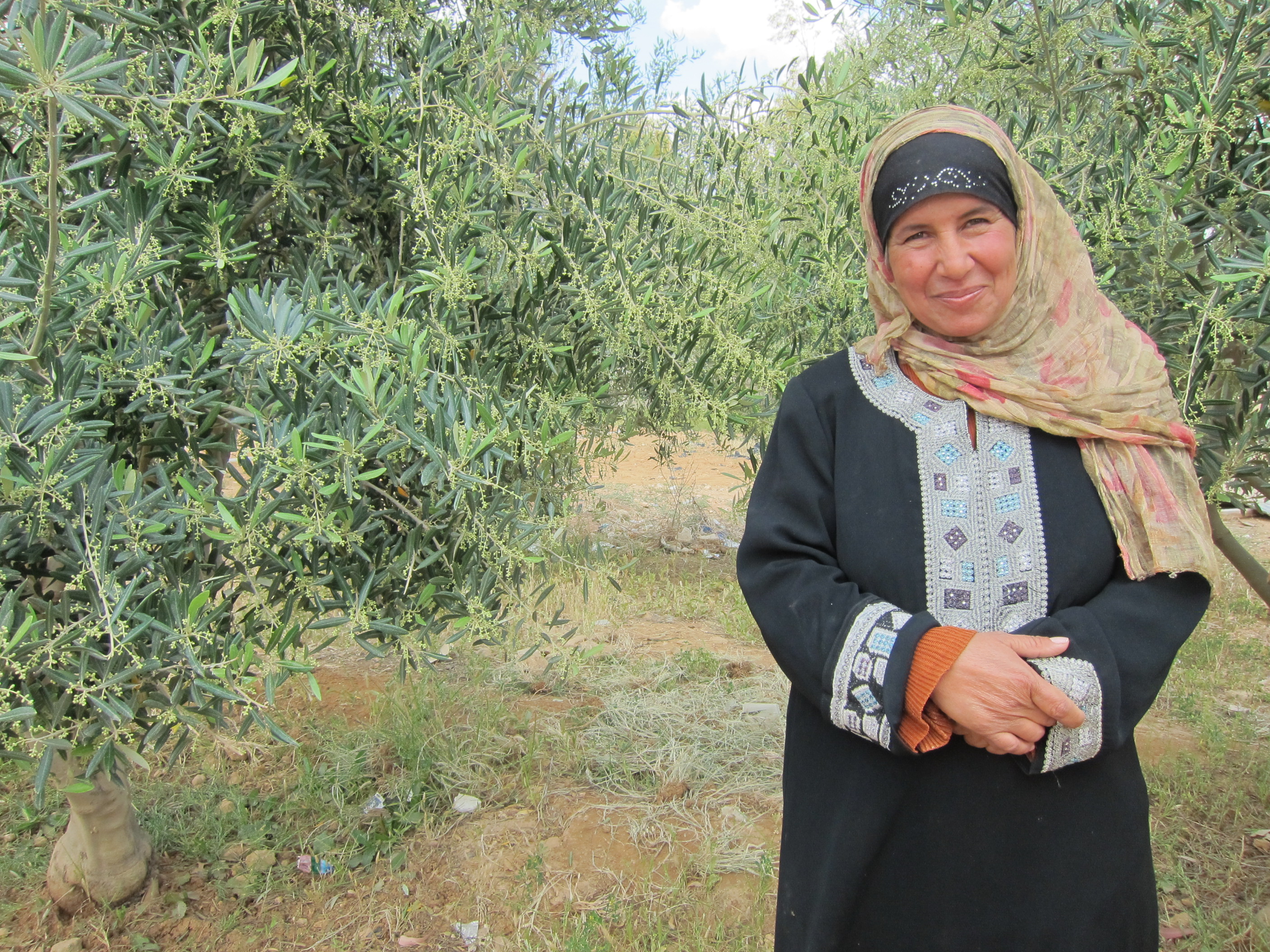
I could not wait to meet Maleeha after learning her story from our partners at Global Hope Network. When she was 40-years-old, Maleeha’s husband left her for another women. He not only abandoned her, he abandoned their seven children as well, one of which has special needs. And to make matters worse, her selfish jerk of a husband has not given her or the children a single Jordanian dollar to help them. When he abandoned the family he did not look back.
Maleeha could have thrown up her hands in despair and given up. How could she possibly support herself and seven children? But, she was determined to do everything possible to survive. Her oldest daughter desperately wanted to attend college so that she could get a job to help her mother support the family. Maleeha took all she had and invested it in her daughter’s college education. The young girl excelled in her studies. But then, in her third year of college, she was tragically killed in a car accident.
Once again, Maleeha’s world turned dark. That’s about the time she met our partners at Global Hope Network. Maleeha was still grieving and could not smile. She struggled daily to put one foot in front of the other. And then Global Hope offered to help her second daughter attend college. She is also excelling in her studies. This young lady recently gave a speech at her school and told her painful story of being abandoned by her father and losing her sister and about her mother’s valiant efforts to support the family.
In that speech she said that her life changed when some Christians visited her home and gave her an opportunity to go to school. “They showed more love and concern for me,” she said, “than my father ever did.” She is scheduled to graduate soon with a degree in nursing and is determined to help her mother care for their family.

As for Maleeha, she is smiling again. Although life is still a struggle, hope now keeps despair at bay. Maleeha’s son expects to be accepted into the military in the coming weeks. As for the other kids, Maleeha knows that she faces a tough road with her special needs daughter. But, this resilient little woman is not about to give up. She is a hero and an inspiration to her kids. They absolutely lover her. And she is a hero in every sense of the word in my book. She is an inspiration to me.
As we drove away I thought about a favorite little poem that I learned years ago. It’s entitled “The Cork and The Whale” and perfectly sums up Maleeha’s attitude.
A little brown cork fell in the path of a whale
who lashed it down with his angry tail.
But, in spite of the blows, it quickly arose,
and floated serenely before his nose.
Said the cork to the whale,
“You may flap and sputter and frown,
but you never, never will keep me down.
For I’m made of the stuff that is buoyant enough
to float instead of to drown.”
Posted in Jordan | Tags: family, home, Inspiration, Travel
Zaatari Refugee Camp, Northern Jordan
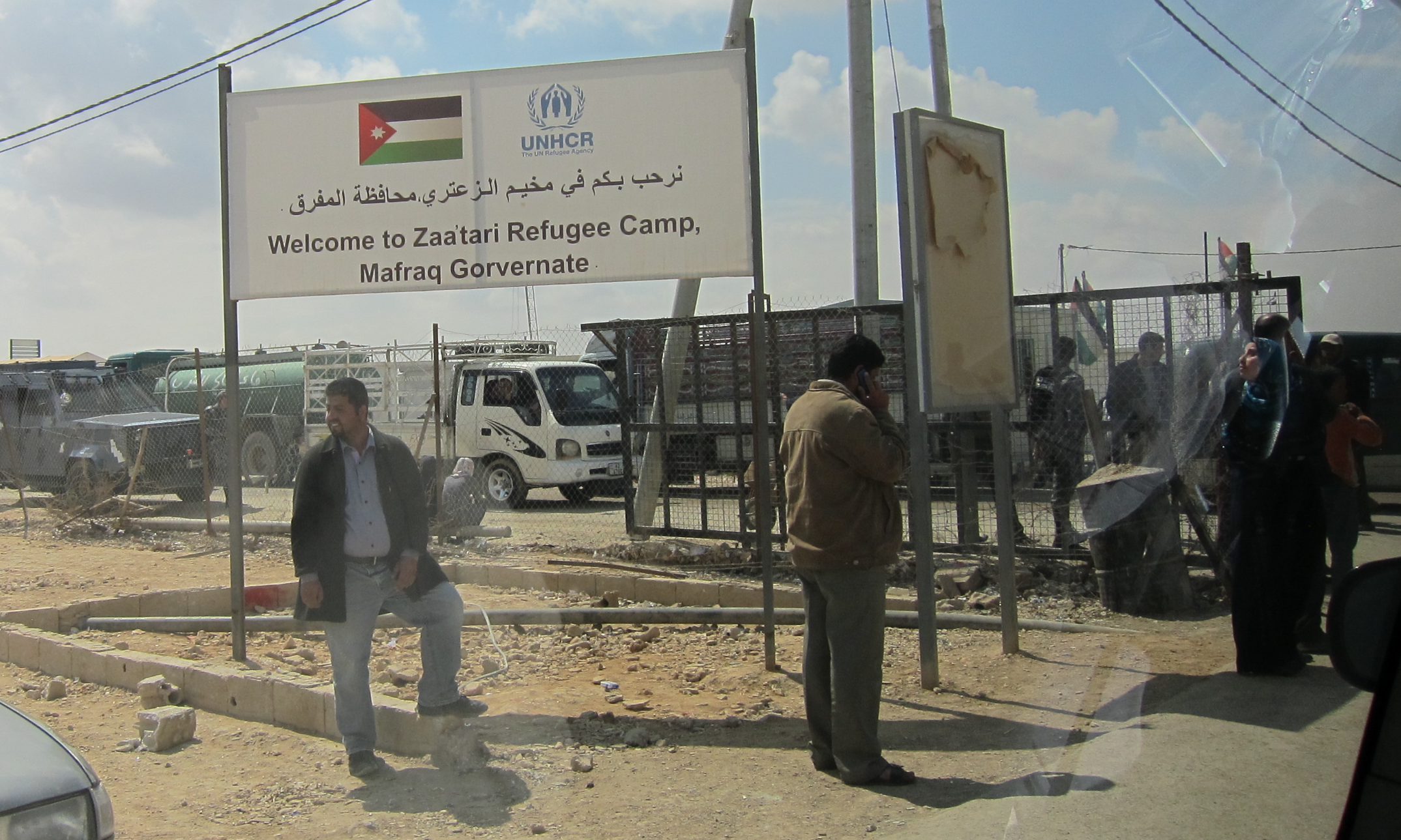
Today we visited Zaatari Refugee Camp along the Jordanian-Syrian border. Our partners at Global Hope Network secured permission for us to visit this camp that has become the fourth largest “city” in Jordan. More than 150,000 Syrians fleeing the civil conflict that is tearing their country apart currently reside at Zaatari. Yesterday, exactly 4,121 people arrived at the camp. That number represents the largest influx of refugees in a single day since the start of the camp.
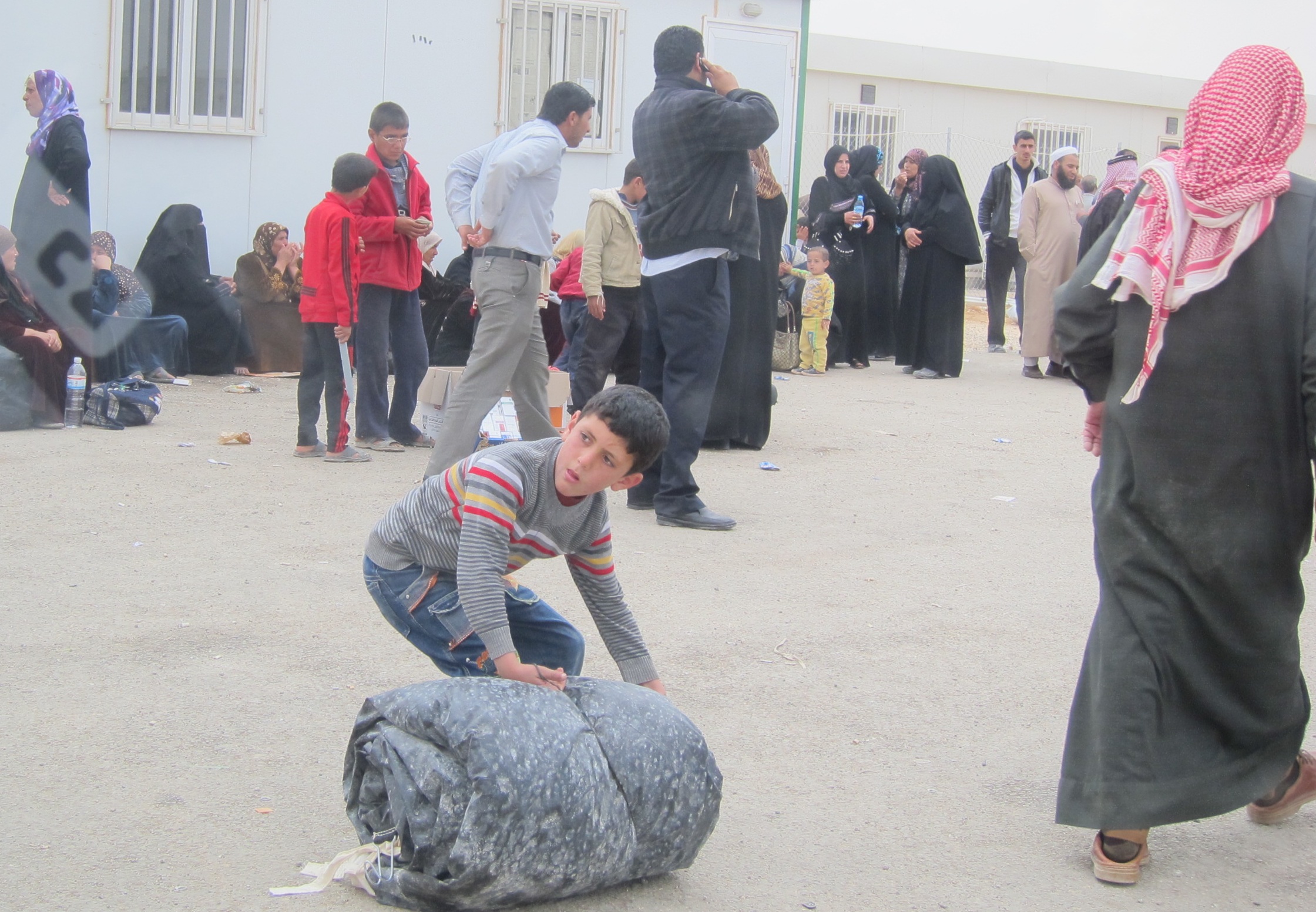
Those responsible for caring for children at Zaatari face a huge challenge. There are an estimated 60,000 children in the camp, 25% of which are school-age. There are, however, only two schools. That means a lot of kids will not be able to attend classes and will get behind on their education. Workers also face the difficult challenge of identifying the children who arrive at Zaatari without their parents or family members. They must also care for the 15,000 special needs individuals in the camp, many of whom are children.
We had the privilege of meeting with the interim international mayor of the camp, a German man who has only been at Zaatari a few weeks. Although he has served in similar roles in tough places like Mogadishu, he told us that Zaatari has been his toughest assignment. Just a few days prior he was attacked by angry kids wielding tent poles and rocks. It takes a lot to rattle a guy who has survived attacks by two suicide bombers, but Zaatari has him very concerned. Nevertheless, he has a positive outlook and is determined to bring order and better security to this boiling pot of restless people.

We also visited one of the hospitals in the camp. The medical personnel serving in these canvas-clad hospitals address a gamut of medical issues in less than ideal conditions. But, they are doing a great job. They help to deliver up to 20 babies per day, do all kinds of surgical procedures, dispense medications, and so much more. One Syrian woman told me how grateful she was for the medial team. Their kindness has given her hope that she can survive the undetermined number of days she must live at Zaatari.
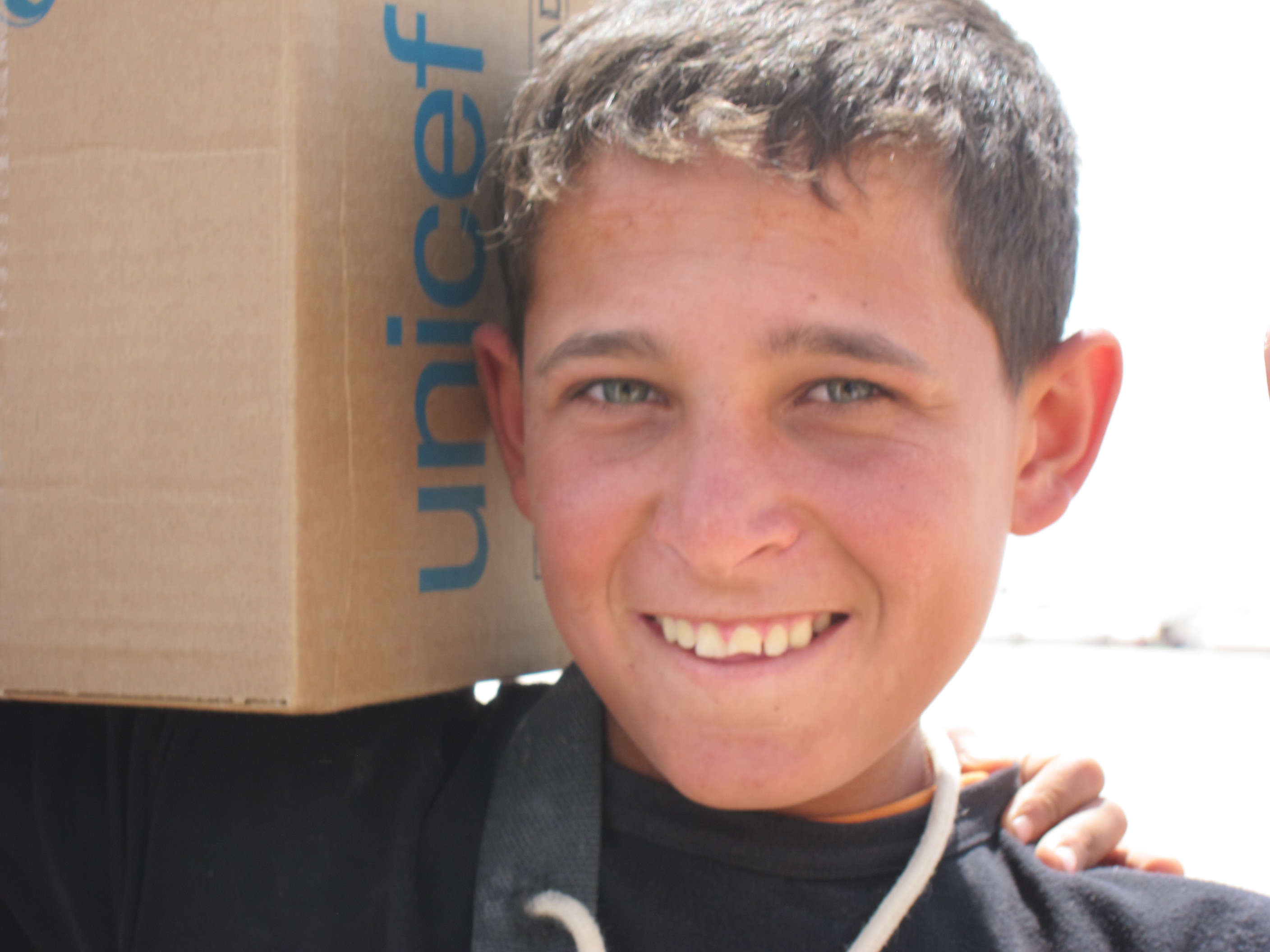
Many of the refugees living at Zaatari are restless. Crime and desperation have found a home among the vulnerable who live in this makeshift community of tents and trailers. The local mafia already has its hands in the commerce of the camp and also fuels the buying and selling of young girls. It never takes long for the strong to exert their power over the weak. All of this presents a special challenge to the security forces. It’s sad that many of the people who lived in fear in Syria must now live in fear at Zaatari.

Zaatari exists because of the kindness of the Jordanian government and the willingness of hundreds of workers and volunteers to serve Syria’s displaced people. We need to keep all those who lead and who live at Zaatari in our prayers. And we need to pray for Syria. There are no easy solutions, even if President Bashar al-Assad is ultimately removed from power. The damage has been done. An estimated 70,000 people have died in Syria and hundreds of thousands more have fled their homes in order to protect their families. Let’s pray that the day will soon come when “man who is of the earth may strike terror no more” (Ps. 10:18) so that Syria’s displaced people can return to their homeland to begin the long process of rebuilding their lives.
Posted in Current Events, Emergency Relief, Jordan | Tags: Current Events, human-rights
Amman, Jordan
After years of travel and visiting hundreds of people in their homes in almost forty countries, I have come to the conclusion that the people of the Middle East are among the world’s best at the art of hospitality. Hospitality is a matter of the heart — of extending to others the kind of care we would want for others to extend to us, especially when in difficult circumstances or hostile places.
The Greek word for hospitality is “philoxenos” — from the words “philo” meaning love and “xenos” meaning stranger or guest. This word means “lover of strangers or guests” and conveys the idea of enjoying being a host. It’s not difficult to identify the people who truly enjoy being a host and who will drop everything they are doing in order to make sure their guests are properly cared for.
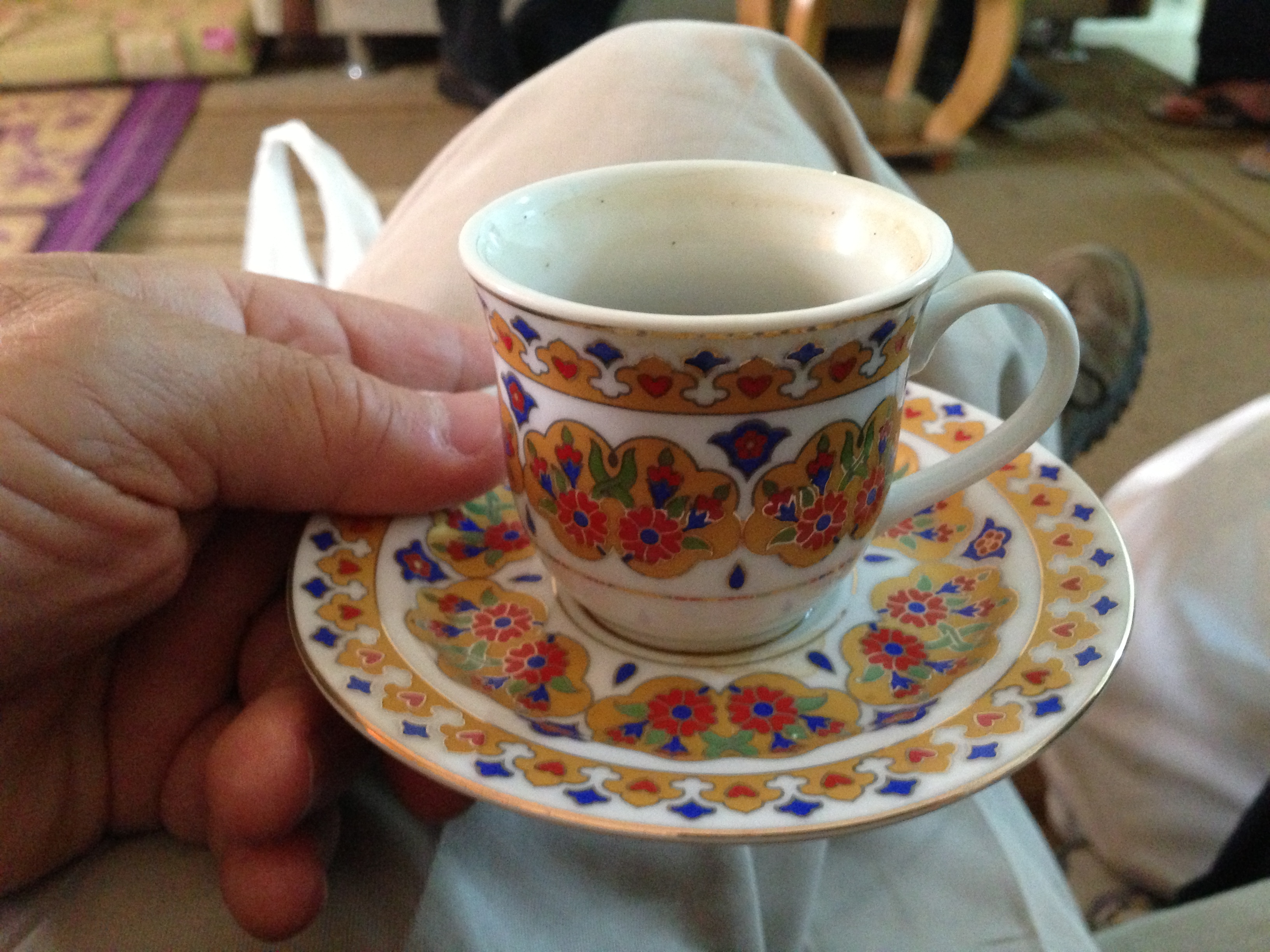
Last week, my friends and I visited three slum areas in Cairo that are home to the Zabbaleen, Cairo’s garbage people. These are the folks who collect garbage from door-to-door and then pick through it to find items they can recycle or sell. They barely make enough money to survive from day-to-day. And yet, when we visited the Zabbaleen, they did not hesitate to offer us a cup of tea or coffee. Hospitality is somehow engrained in their DNA, even if it means offering you the last of their food or drink.
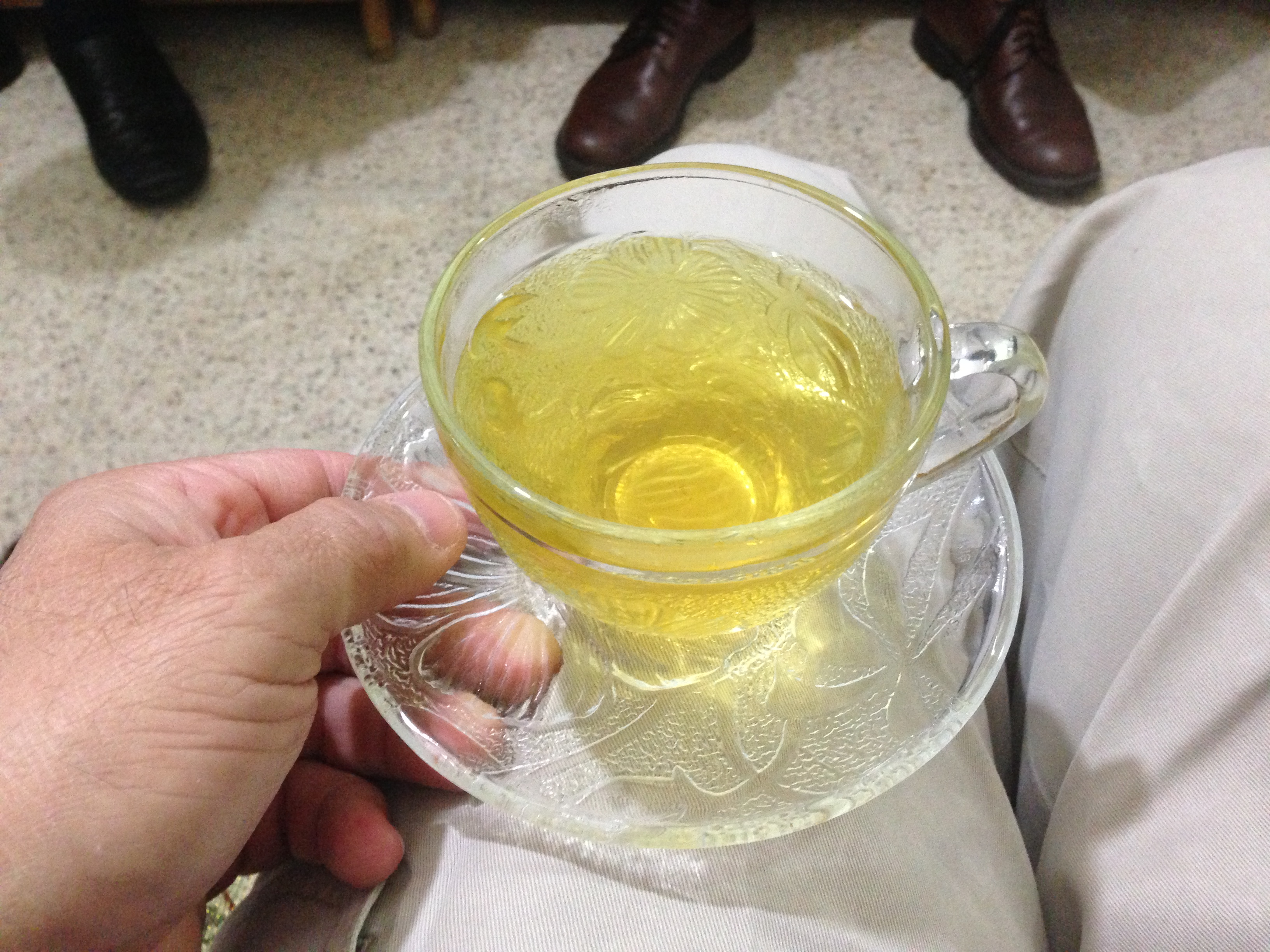
This week we are visiting Syrian refugees in Jordan. Today we met several families who have suffered the loss of everything — material possessions and beloved family members and friends. Most of these people fled to Jordan with little more than the clothes on their back. They are struggling to make ends meet. And yet, when we stopped by for a visit, they welcomed us with open arms and offered us either tea or coffee.

Accepting the hospitality of those we visited today meant a lot to them. They were so happy that we were not in a hurry but had the time to sip tea and to listen to their stories. The theme of today was coffee, tea, and tears. I think I managed to drink what seemed like two gallons of tea, some very strong Syrian coffee, and one delicious dessert. But, that’s ok because we made lots of meaningful connections with hurting families and offered them some very timely help.
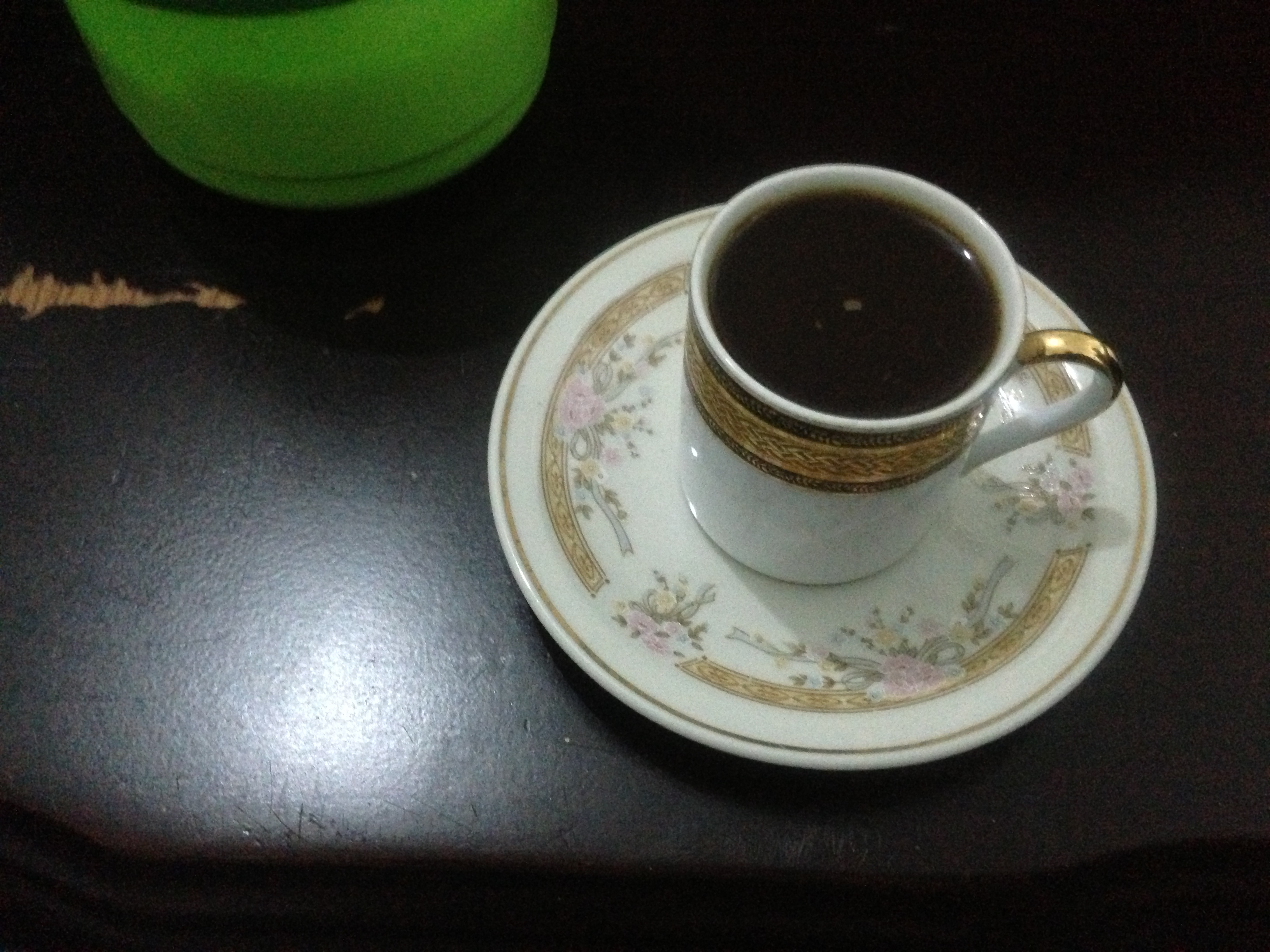
I really do like the way in which accepting a simple cup of tea can open the doors of understanding between people. When offered tea, you cannot drink it in a hurry. Instead, you have to slow down and sip it slowly while conversing with your host. Drinking tea and listening to people who are hurting is like a soothing balm to them. It conveys that you care about them and want to be a friend.
Our final visit of the day was with a mother and her 19-year-old son. This young man had been imprisoned and abused by government forces in Syria. When he was released from jail, his father sent him and his mother to Jordan and promised to join them as soon as possible. Unfortunately, the border closed before he could cross into Jordan. He has been trapped in Syria ever since. We spent a long time with this family and offered them some much-needed assistance. After we prayed with them and were saying our good-byes, the young man said to me in his faltering English, “I … wish for you … to be … my … best friend.” Hearing those words made it worth drinking another cup of tea.
Posted in Egypt, Jordan | Tags: Friends, Friendship, Hospitality, Travel
From Cairo, Egypt and Amman, Jordan
One of the things I am most thankful for is the opportunity to worship with Christ-followers all over the world. Over the years, I have been privileged to worship in a variety of contexts among the nations — from the steppes of Mongolia to the savannas of Africa. And while I am not always able to understand the words that I hear, I nevertheless know when I am listening to the song of the redeemed.
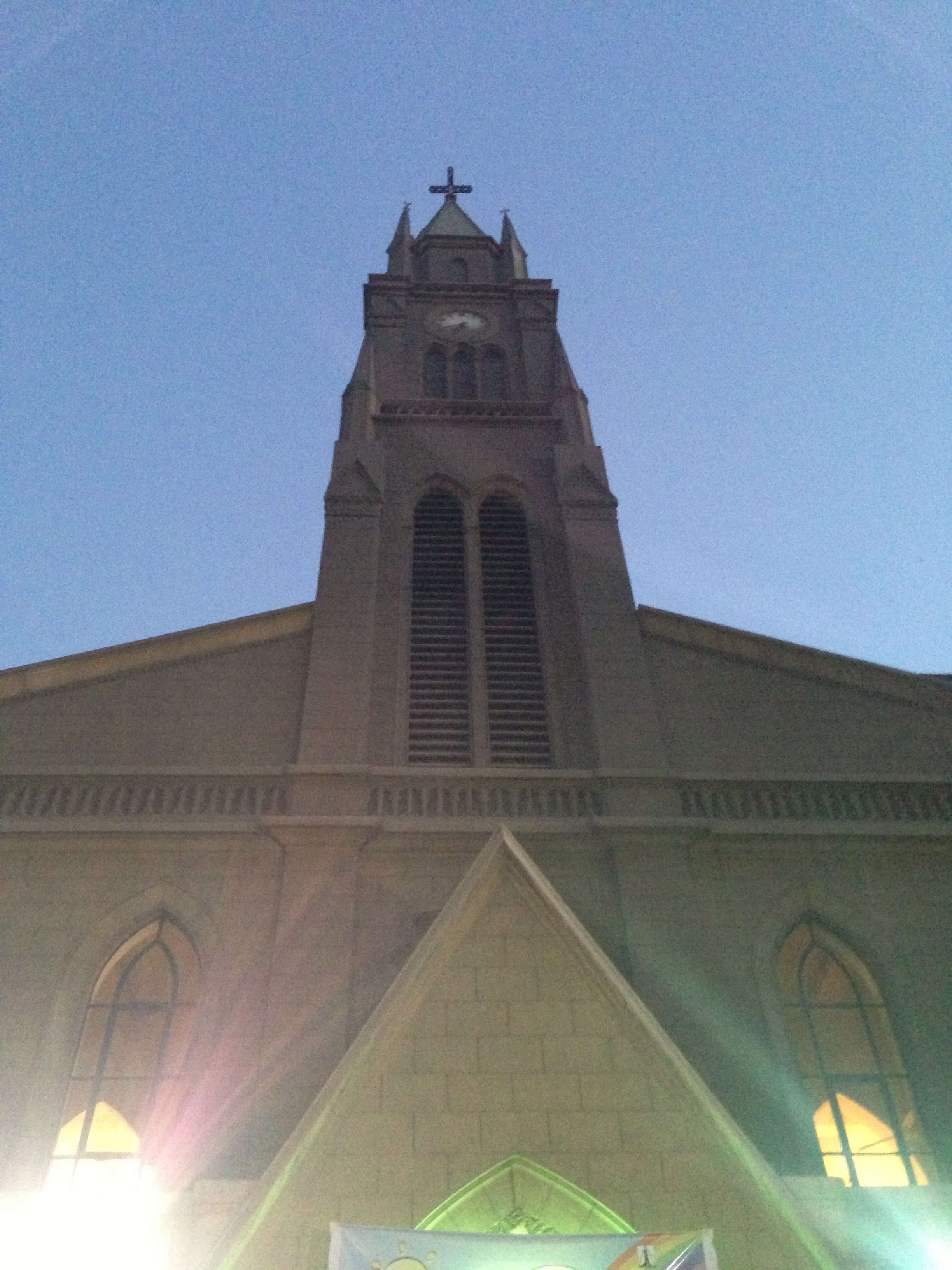
Yesterday evening, I had the privilege of speaking at the Monday night prayer meeting at Kasr El Dobara — the largest evangelical church in the Middle East. What I found so inspiring was the almost two-thousand people, including hundreds of students, in attendance at a prayer meeting on a Monday night. And, this prayer meeting is televised throughout the Arab-speaking world. The worship was amazing and the prayer was intense. The people of Kasr El Dobara are making a difference because they are advancing on their knees.
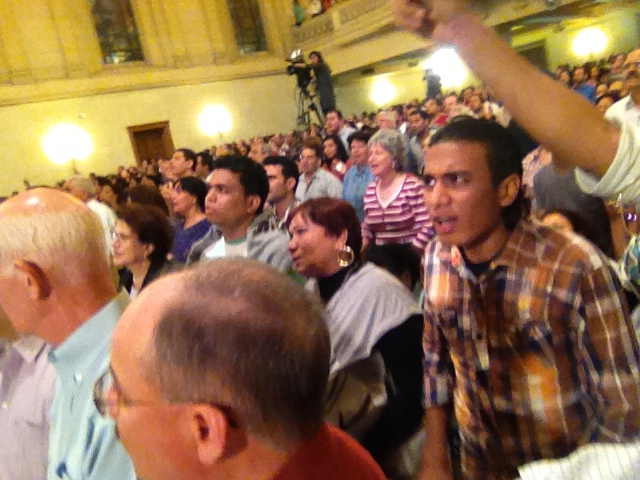
As I stood and listened to the praise and worship, I thought about the lyrics to the song “He Reigns” by the Newsboys. Once again, I found myself in the middle of those lyrics. The first stanza of the song says:
It’s the song of the redeemed
Rising from the African plain
It’s the song of the forgiven
Drowning out the Amazon rain
The song of Asian believers
Filled with God’s holy fire
It’s every tribe, every tongue, every nation
A love song born of a grateful choir

I appreciate my new friend Fayez who served as my translator. He is a gracious gentleman whose position at the church is akin to my own at Kingsland. He was a fantastic translator. I felt as though we were speaking as one. Later in the service, Pastor Sameh Maurice, the senior pastor, offered his flock words of encouragement. These are difficult days in Cairo and it was wonderful to see a pastor shepherd his people the way in which Pastor Sameh did.
Tonight, I had the privilege of speaking for the second time at the Iraqi Church in Amman, Jordan. I first spoke to these Christ-followers a couple of months ago. It was so good to see them and my friend Pastor Hannah again and to offer them words of encouragement. Once again, although I did not understand the words of the songs they sang, I was refreshed by the way in which they sang the song of the redeemed. As I stood in worship I just closed my eyes, smiled, and reflected on a line from Twila Paris’ song entitled “How Beautiful.” Twila’s words summed up what I felt in my heart: “How beautiful, how beautiful, how beautiful is the body of Christ.”
Posted in Egypt, Jordan | Tags: Christianity, Inspiration
Cairo, Egypt
There is something about the very mention of Egypt that seems to stir the imagination and that conjures up images of explorers in pith helmets — uncovering secrets long-buried beneath ancient sands. Perhaps Egypt owes some of its mystique to all of those mummy movies that have been around almost since the dawn of television. I confess that I am a big fan of the mummy movie genre.

Before we ever studied Egypt in elementary school, I had already learned about the country from my Uncle Phil. He sent me a really cool leather wallet embossed with colorful hieroglyphs that he had bought for me when he visited Egypt in the 1960’s. That gift prompted me to read about Egypt and the pyramids in the encyclopedia. For my younger readers, those of us who are almost as old as mummies had to Google information in actual books like encyclopedias.

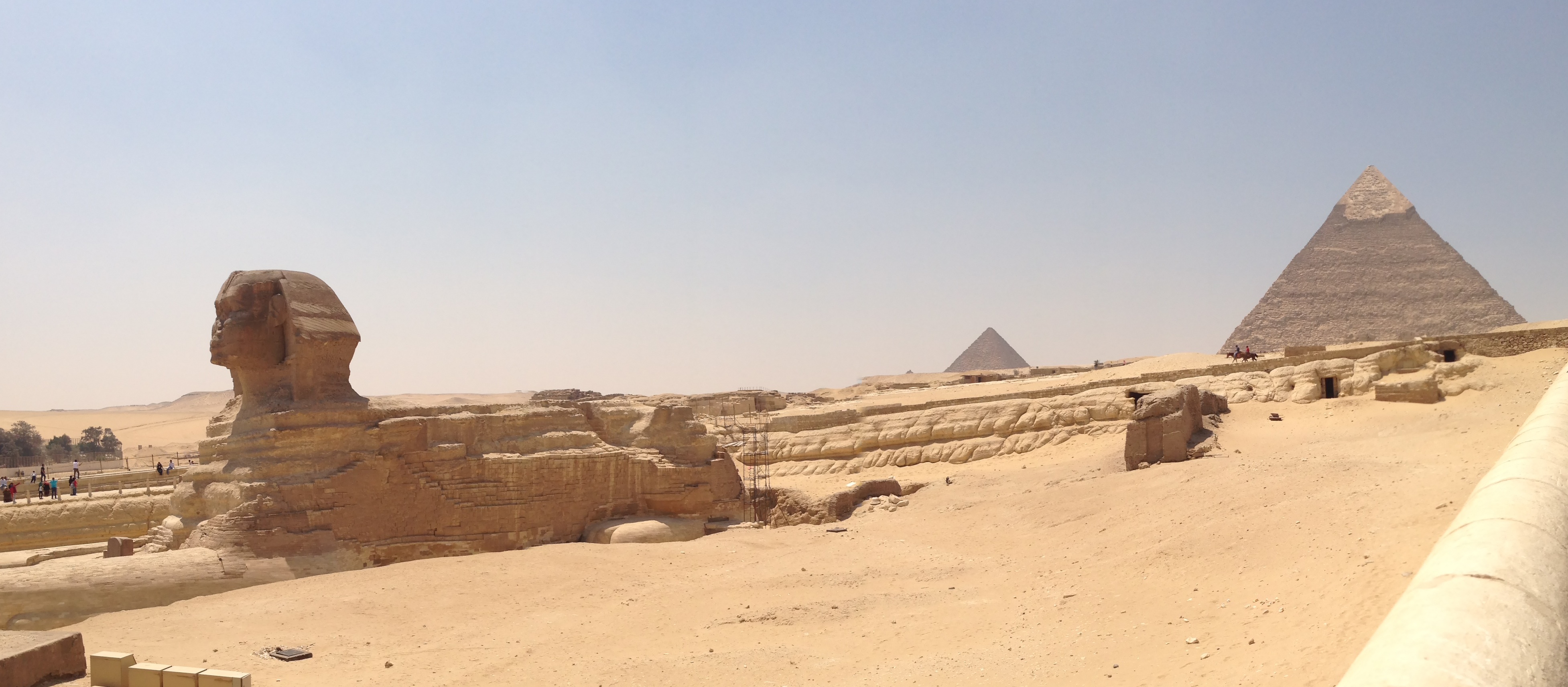
While en route to the Zabbaleen slum village of Helwan yesterday morning, we stopped to visit the pyramids of Giza. These ancient monuments are easily visible above the cityscape from most of the roads in the area. I am glad that we took the time to visit the pyramids. They are very impressive and a good reminder that ancient peoples were smarter than we think. These world-renowned monuments built by and for the Pharaohs of Egypt stirred my imagination but they did not stir my heart.
After our visit to the Zabbaleen slum village, we headed back toward Cairo. I wanted to make one more stop before the end of the day. For years, I have wanted to visit the grave of William Borden, one of my heroes. He is buried in the American Cemetery in Cairo. If you don’t know the story of William Borden and the three things that he wrote in the fly-leaf of his Bible before his death, then I encourage you to read my blog post about him. It‘s the most-read blog I have posted since I started blogging.

When we arrived at the cemetery I was disappointed to see that the gates were locked. Fortunately, a man seated outside the walls called for the caretaker who came and unlocked the gates for us. I told him that we had come to visit the grave of William Borden. I had a photo of the grave site and was able to find it in less than a minute.
As I approached Borden’s grave I could feel my heart beating faster. I could hardly believe that I was standing at the grave of the selfless young man who had renounced his family fortune to become a missionary. Borden died in Cairo before reaching the mission field. Some would consider this a tragic loss. But because of his inspiring example and the three things that he recorded in his Bible, untold numbers of people have left the comforts of home in order to serve the interests of God’s kingdom among the nations.
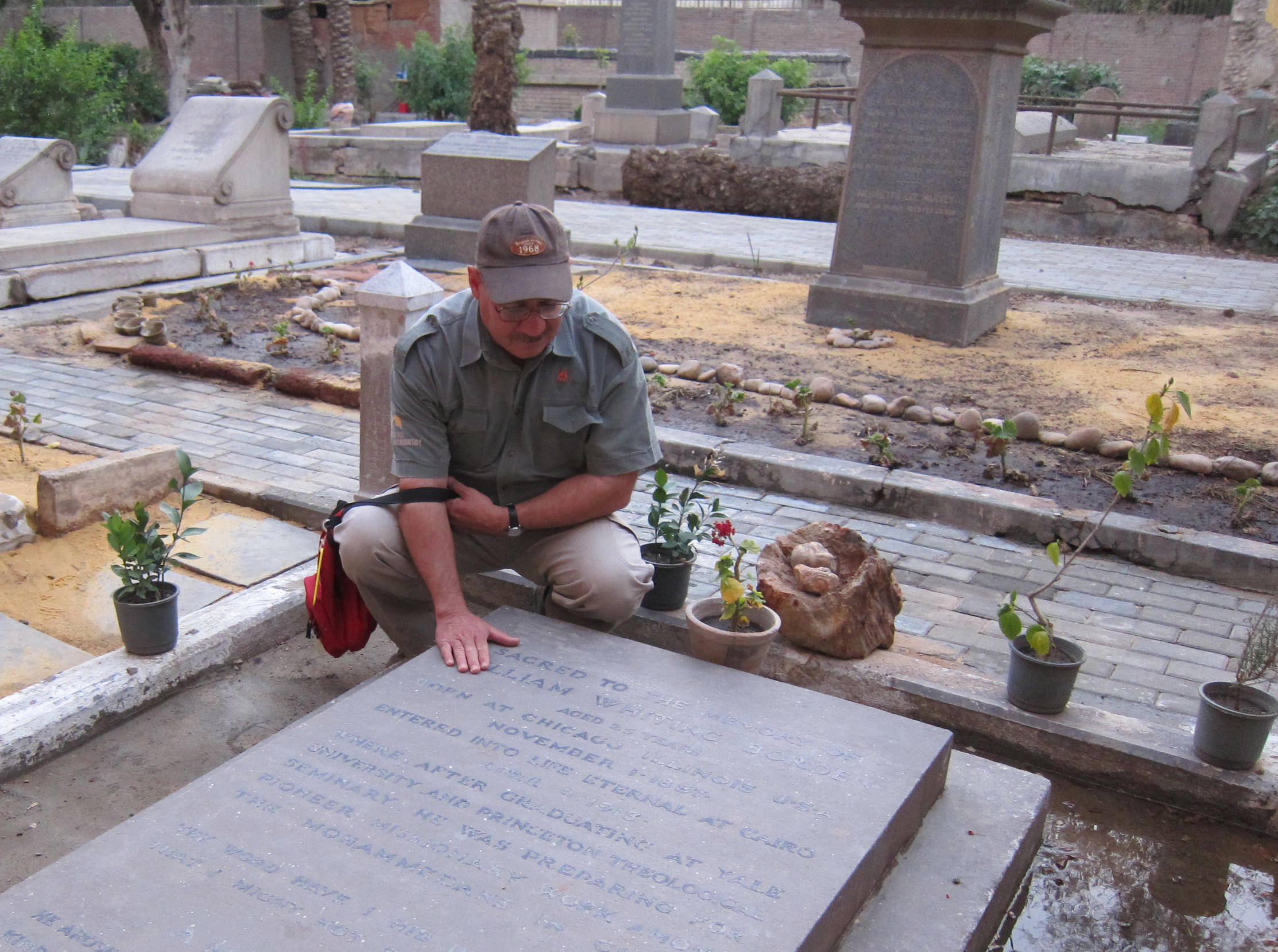
As we stood around Borden’s grave, I shared the story of his life with our team of four Americans, one Jordanian, four Egyptians, as well as the cemetery caretaker. And then we circled Borden’s grave and I led us in a prayer of thanksgiving for his remarkable life and example. It was an emotional experience and of greater significance to me than our brief visit to the famous pyramids of Giza. William Borden’s story not only stirs my imagination, it continues to stir my heart.
The stone on his grave reads as follows:
Sacred to the memory of William Whiting Borden aged 25 years. Born at Chicago Illinois USA November 1, 1887 Entered into life eternal at Cairo April 9, 1913
Where after graduating at Yale University and Princeton Theological Seminary, he was preparing for pioneer missionary work among the Mohammedans in China.
“Thy word have I hid in my heart, that I might not sin against thee.” PS: CXIX 11
A Man in Christ
He arose and forsook all and followed Him
Kindly affectioned with brotherly love
Fervent in spirit serving the Lord
Rejoicing in hope patient in tribulation
Instant in prayer
Communicating to the necessity of saints
In honour preferring others
Apart from faith in Christ there is no explanation for such a life.
Go ye into all the world and preach the Gospel to every creature. St. Mark XVI 15
Posted in Biographies, Egypt | Tags: Christianity, Inspiration, Photography, Travel
Among the Zabbaleen, South of Cairo, Egypt
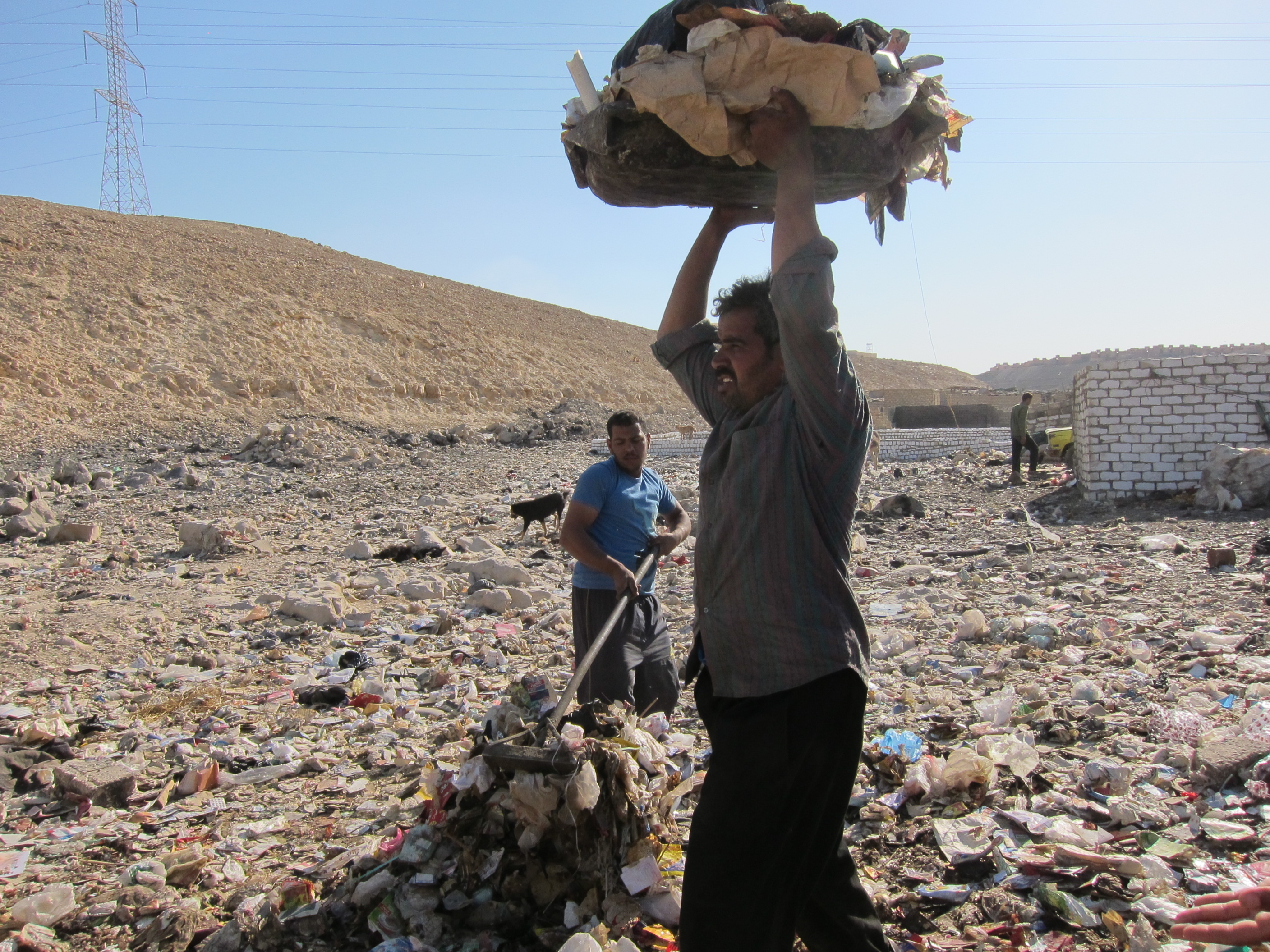
For the past 70 to 80 years, the Zabbaleen have collected Cairo’s waste. Every morning they venture from their slums and into the city to collect garbage door-to-door. At the end of the day, they return to their homes where they spill out their filthy bounty. With bare hands, men, women, and children sort through piles of garbage to pick out any items that they can recycle or resell. The work is difficult and yields barely enough for the poor Zabbaleen to survive another day or two. They cannot rest from their labors.
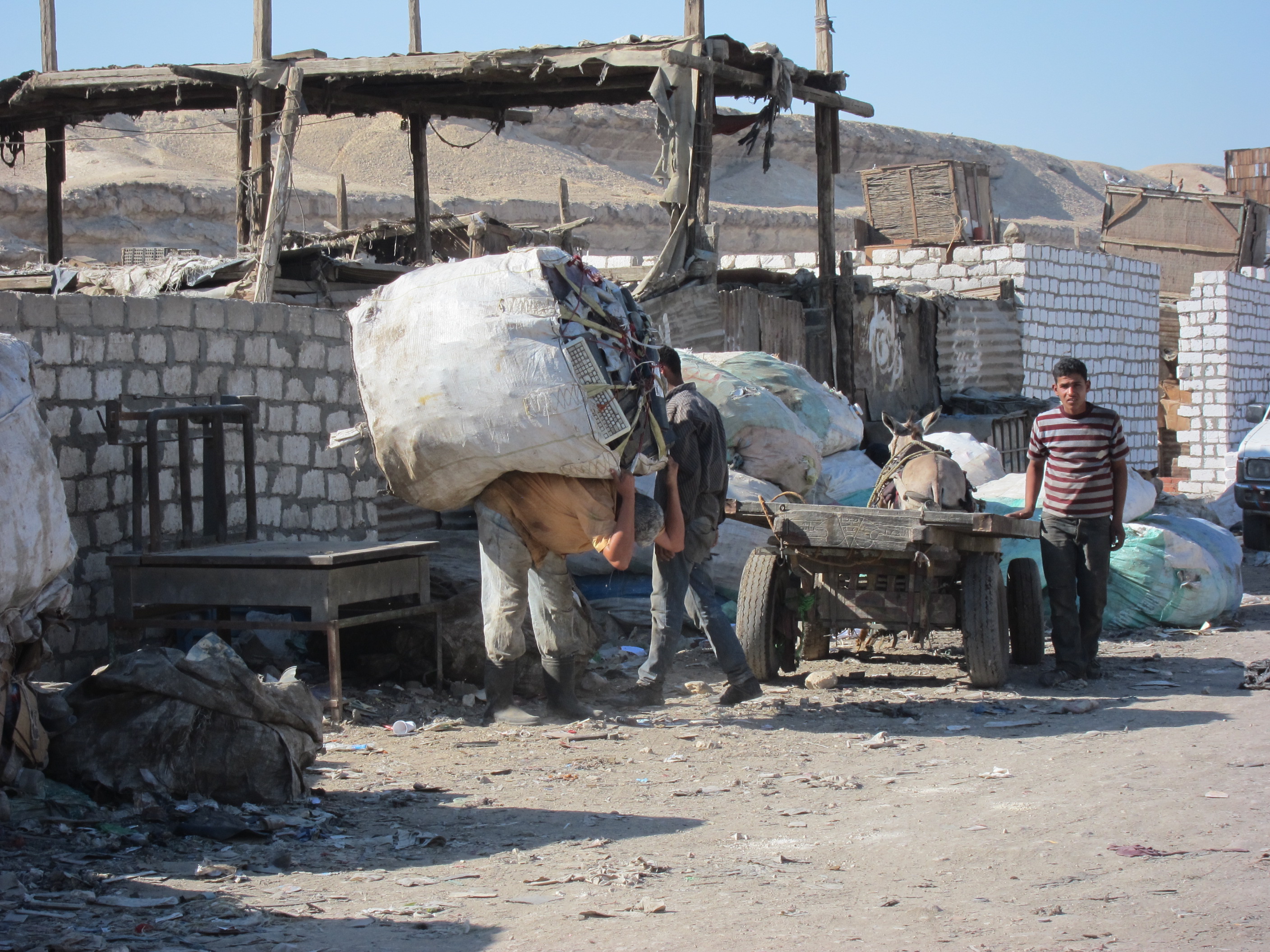
Today, we visited a third Zabbaleen slum area, this one located about 50 kilometers south of Cairo. This slum village is situated next to a cemetery for wealthier people. It was immediately apparent that the elaborate tombs were far nicer than any of the hovels in the slum. Ironically, the cemetery is located on higher ground as if to suggest that the dead have it better than the Zabbaleen. In many ways, they do. This is a place where death and disease and desperation are all close neighbors.

We did however, find something beautiful in the midst of all the garbage today. When we arrived we heard the sounds of worship. Our friend Jamal pointed to a little building where some friends recently started a non-denominational church. What struck me was the writing on the wall outside the building. The words scribbled on the wall simply state: “The Lord is here!” My heart jumped when Jamal read those words to me. “Yes,” I said, “He is indeed here among the poor, despised, and rejected.”
As we walked through the slum and met the people we have come to help, my thoughts turned to one of my favorite movies, “On The Waterfront.” In the movie, Marlon Brando plays a character named Terry Malloy, a prize-fighter wanna-be who ends up working as a longshoreman who witnesses a murder. Later, when a key witness is murdered, Father Barry, played by Karl Malden, is called to the scene of the crime. As dozens look on, a voice in the crowd calls out, “Go back to your church, Father.”
That cynical line is followed by one of the most memorable scenes in the movie. Father Barry, standing beside the dead man, looks at the crowd and says, “Boys, this is my church! And if you don’t think Christ is down here on the waterfront you’ve got another guess coming!” There is more, but I have never forgotten these lines in particular. Father Barry was right. The Lord was on the waterfront and the waterfront was his parish.
Scottish clergyman George MacLeod would agree with Father Barry. MacLeod wrote these memorable lines:
I simply argue that the cross be raised again
at the center of the market place
as well as on the steeple of the church,
I am recovering the claim that
Jesus was not crucified in a cathedral
between two candles:
But on a cross between two thieves;
on a town garbage heap;
At a crossroad of politics so cosmopolitan
that they had to write His title
in Hebrew and in Latin and in Greek…
At the kind of place where cynics talk smut,
and thieves curse and soldiers gamble.
Because that is where He died,
and that is what He died about.
And that is where Christ’s men ought to be,
and what church people ought to shout.
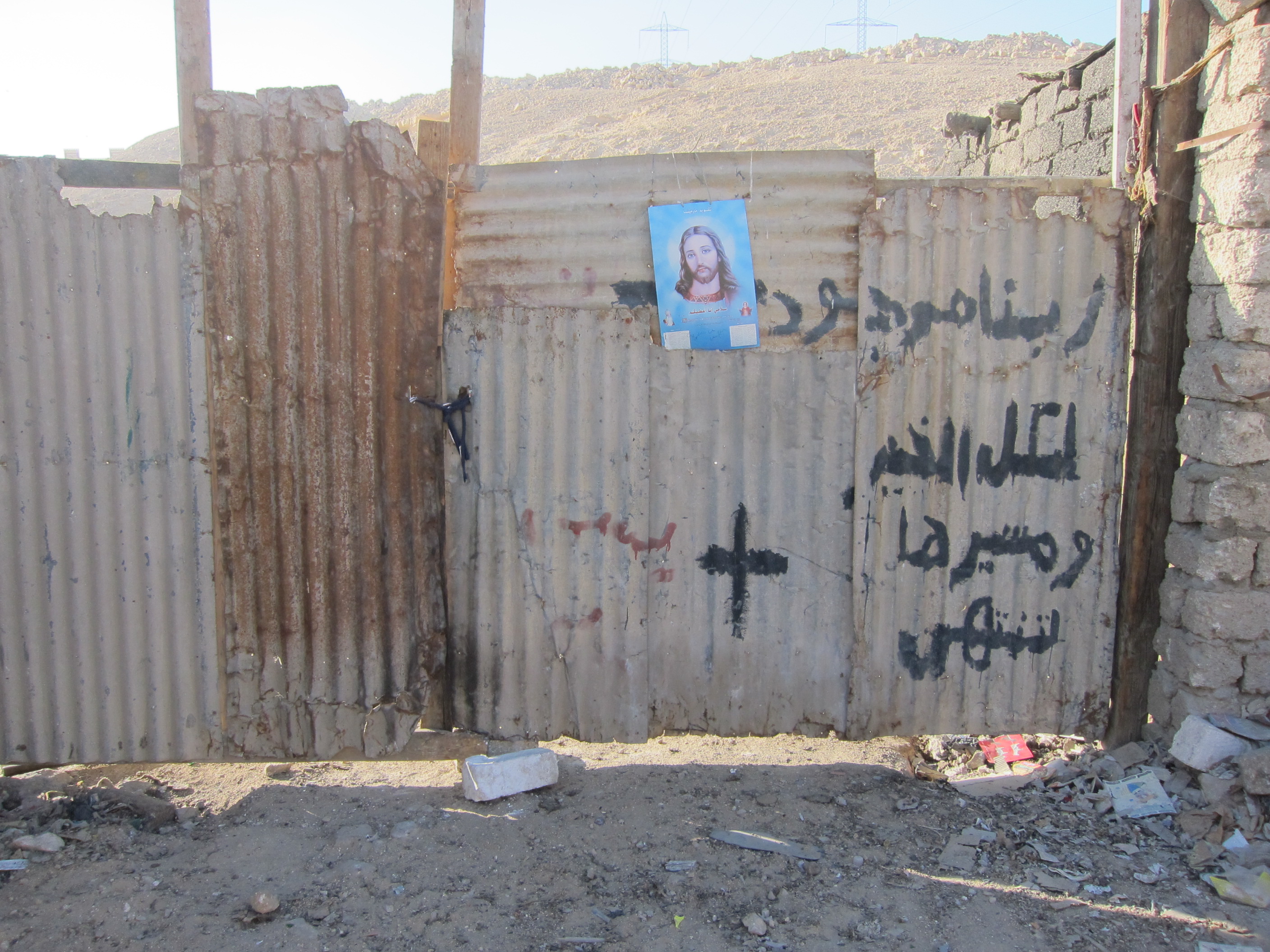
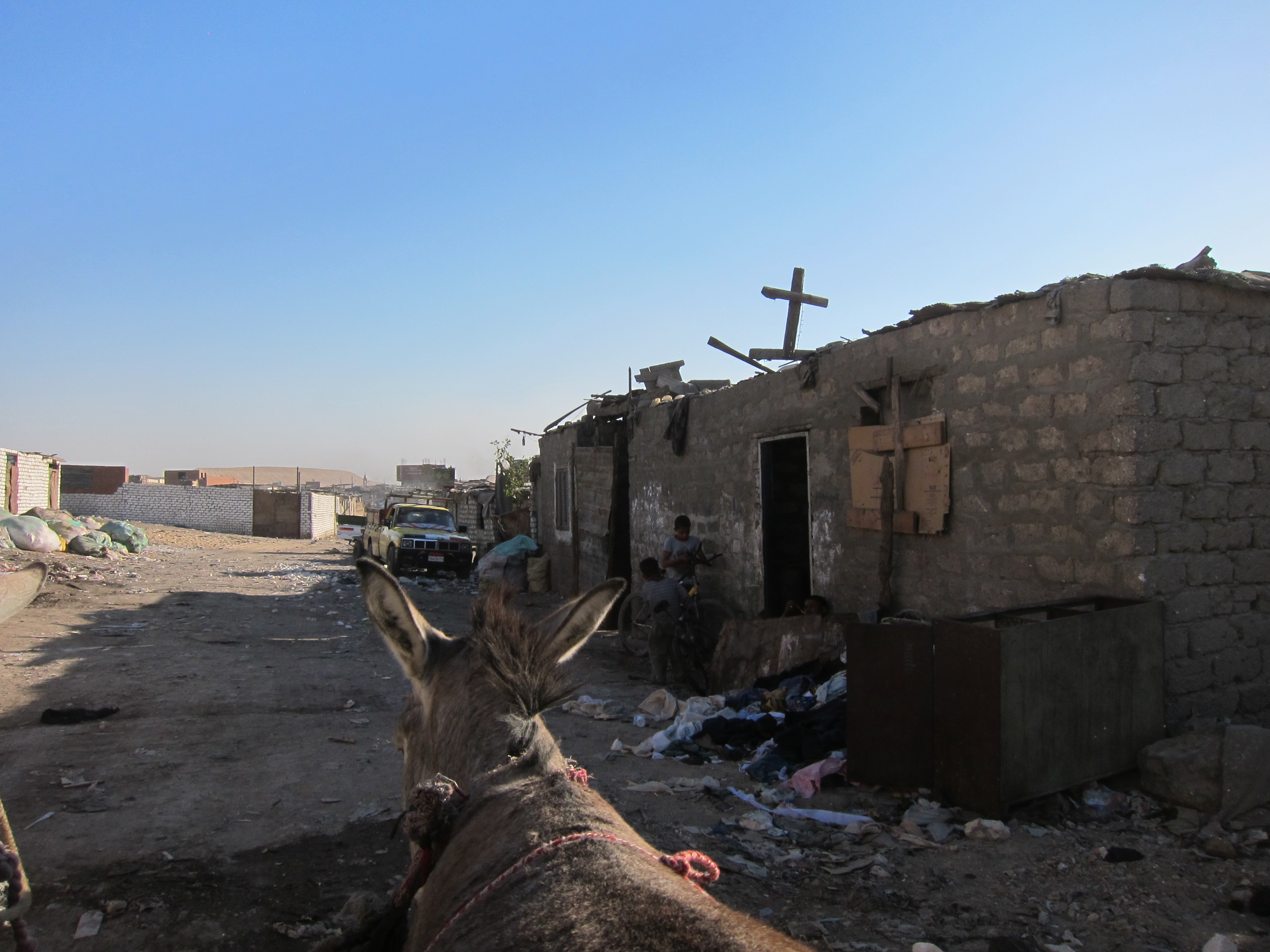
The writing is indeed on the wall for the Zabbaleen — “The Lord is here!” They are not alone, and they know it. As we walked between the rows of crudely built houses in the slum, we noticed crosses either carved or painted on the doors. Most of the Zabbaleen are Christians. It is the hope that they have in Christ that keeps them from drowning in the sea of garbage that surrounds them. They know that the One who was crucified on a town garbage heap understands their plight and sustains them from day-to-day.

Posted in Egypt | Tags: Christianity, human-rights, Inspiration, Photography
Among the Zabbaleen, Cairo’s Garbage People
We arrived in Cairo late this morning after two days of travel. I was relieved to finally be here and anxious to get the day started. After lunch, we checked in to our hotel and then headed to Zariab Musturud, one of the Zabbaleen slum villages. The Zabbaleen are Cairo’s garbage collectors. They are essential for keeping Cairo from becoming buried under the tons of garbage discarded daily by the city’s millions of residents.
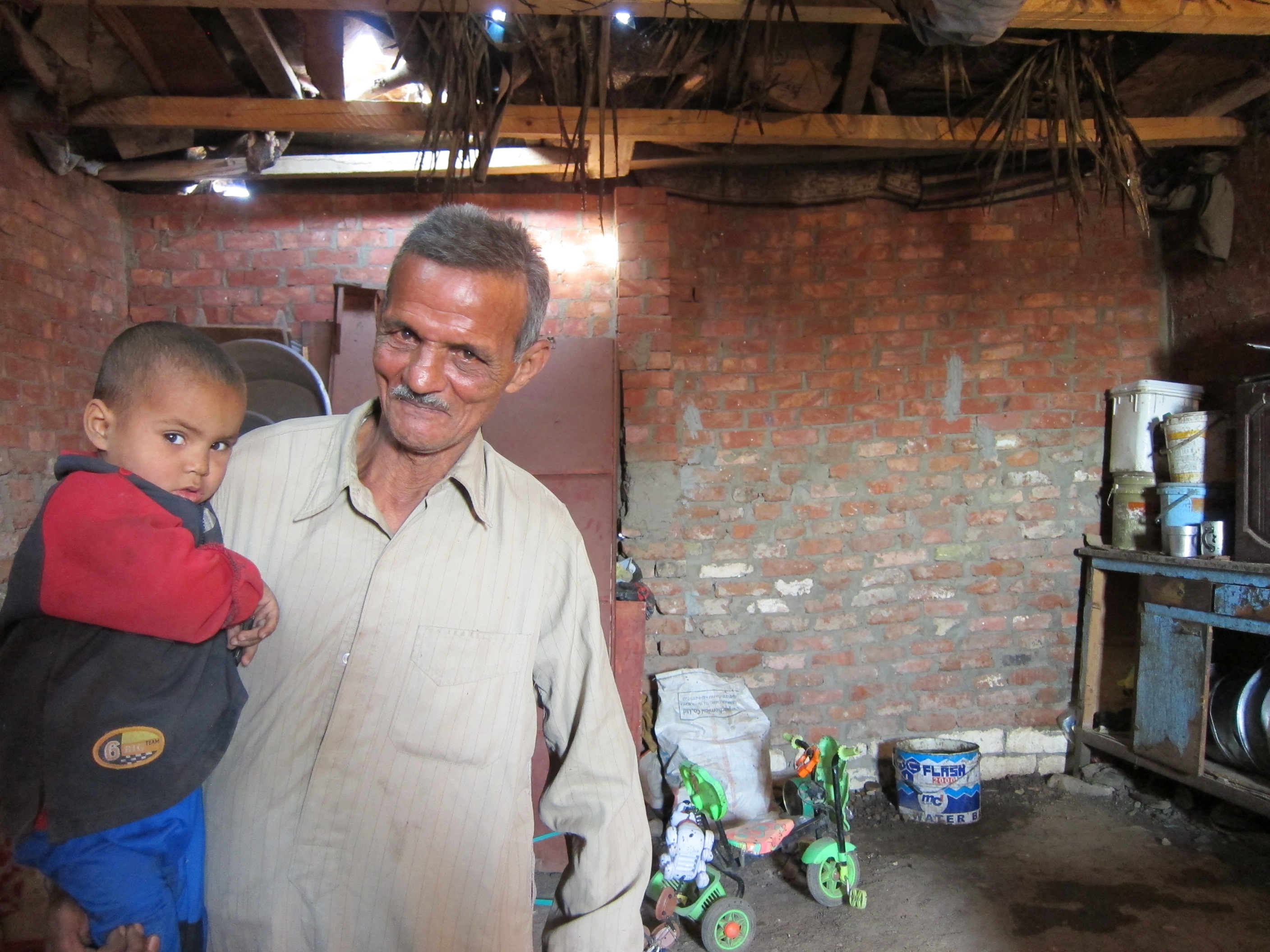
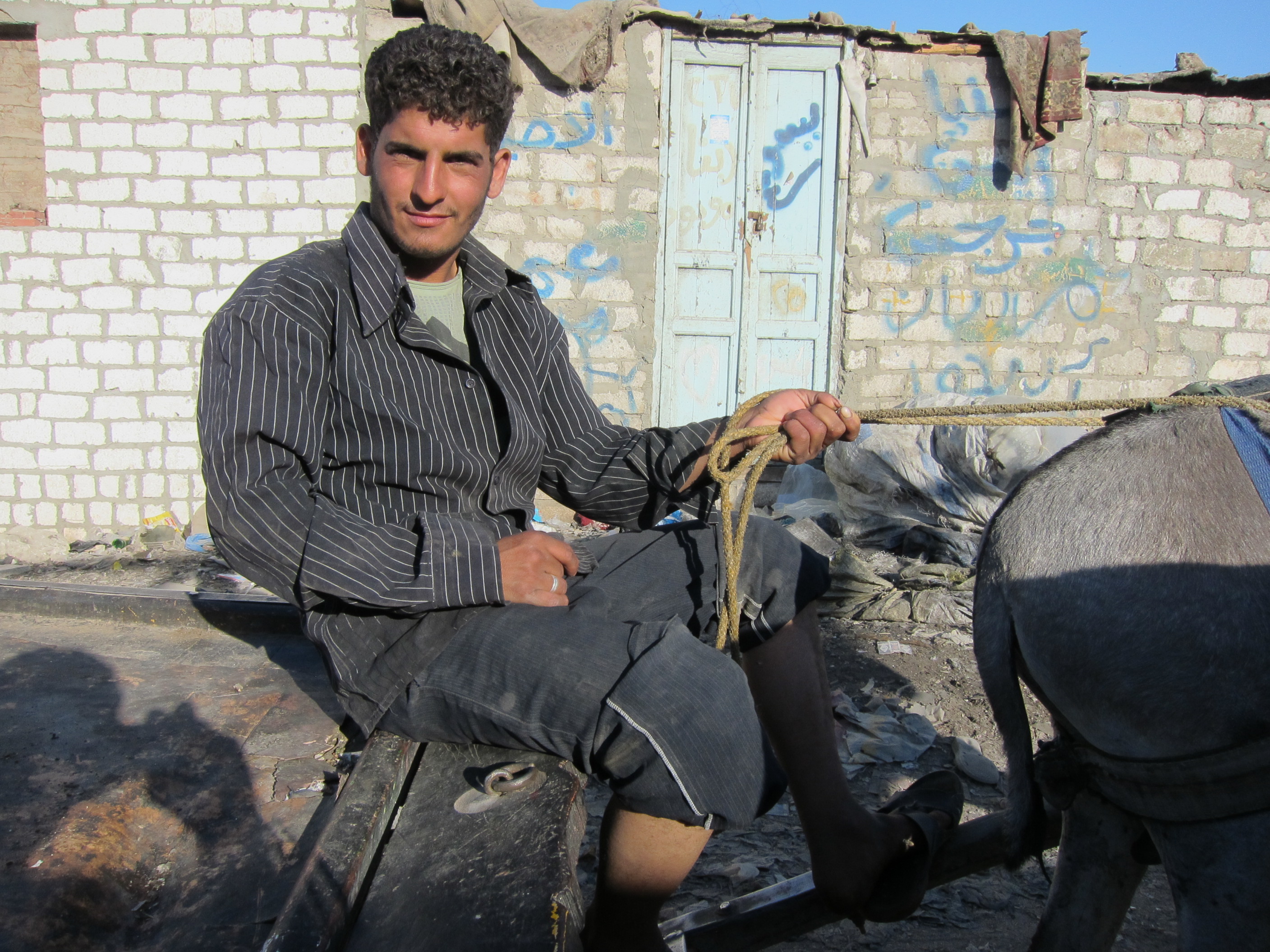
For the Zabbaleen, one man’s garbage is indeed another man’s treasure — albeit only a tiny treasure in reality. As we walked among the Zabbaleen today, I became quickly convinced that they are among the hardest working folks I’ve ever met on any of my travels. Entire families specialize in sorting certain types of garbage in order to sell what they can. Most families only manage to eke out a little more than two dollars a day in exchange for their tireless efforts.

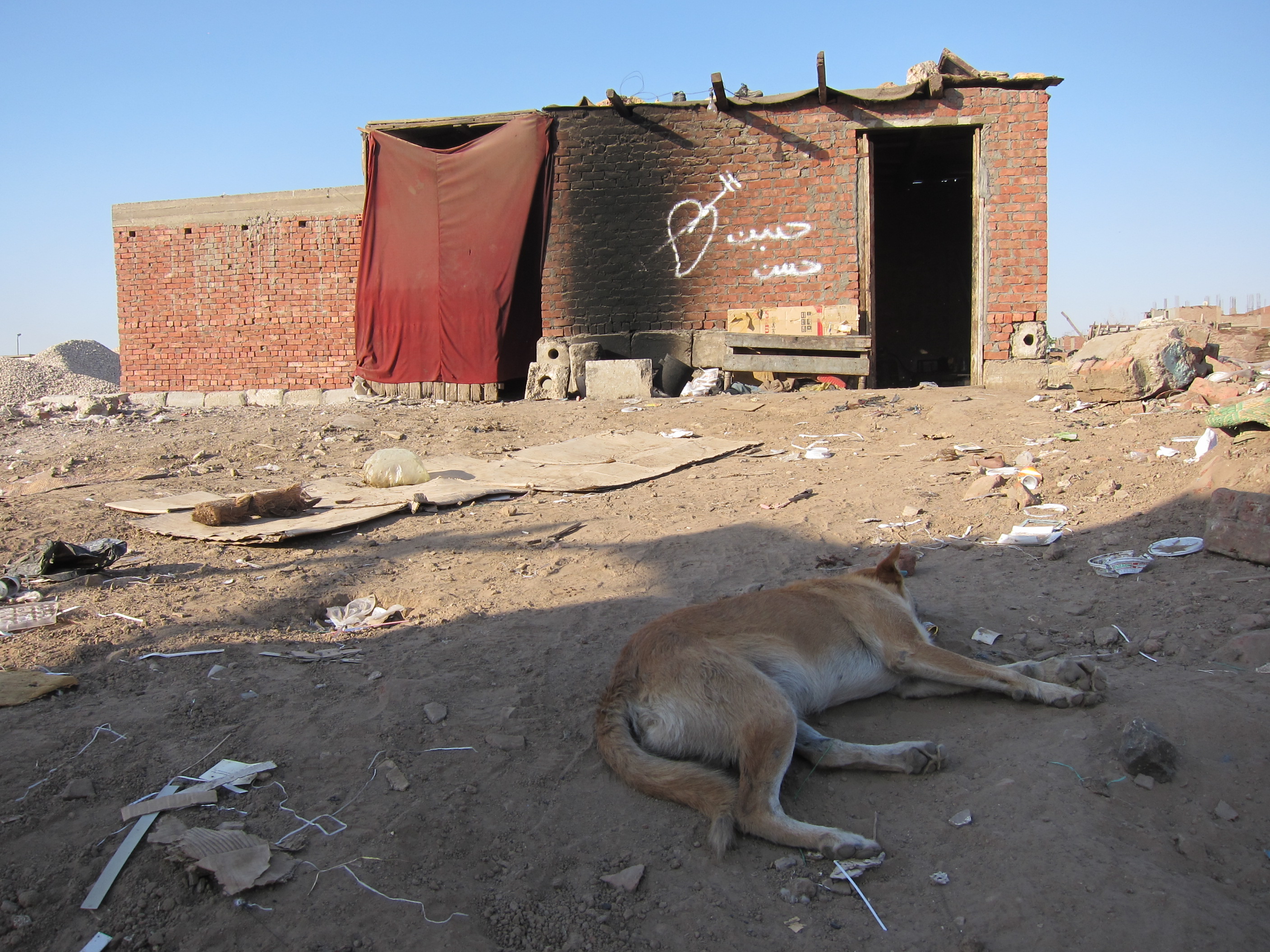
One thing is certain, there are no lazy people in the Zabbaleen slums because if they don’t work they don’t eat. Everywhere I looked today, people were hard at work. Being among these trash pickers was like walking through an ant hill. The activity was off the charts. And everyone works at home because that’s where they bring the garbage they collect. Families live in the garbage. Therefore, everything is covered with flies. Oh my soul, I have never seen so … many … flies. And then there is the stench that no one but us seemed to notice.

We spent the entire afternoon meeting and talking with the people of Zariab Musturud. These families have the same concerns that all families have but they do not have the same access to help. They live in makeshift hovels that are falling apart. They deal with sick kids and no medical care. They are concerned that their children are not getting an education because they too have to work in order to help the family. Despair among the Zabbaleen is the only thing piled higher and deeper than the garbage they live in. I saw despair in the eyes of a young girl bedridden by illness and covered with flies.

In spite of the hardships, the children of the Zabbaleen manage to entertain themselves and to smile. They really are beautiful kids. They just don’t know any other life. As far as they are concerned, all kids must surely live like they do. No running water. Little food. Flies and filth. These are the factors of their childhood. They are neither dumb nor stupid. They have the same potential to succeed as any other kid but are held back by the fetters of poverty that are being forged one link at a time in the slums they call home.

I am glad that we came to Cairo to meet the people who call themselves “The Nothings.” Along with our local partners, we are already formulating a plan to assist the Zabbaleen with some immediate needs but also to offer them a hand-up that will make a greater difference in their lives for years to come. We met one widow who lives in a 100-square-foot shack with her two young daughters. She earns a living by selling tea and bread. We were so impressed with her that we decided to give her a micro-grant (instead of a loan) so that she can purchase the supplies she needs to serve more customers per day.
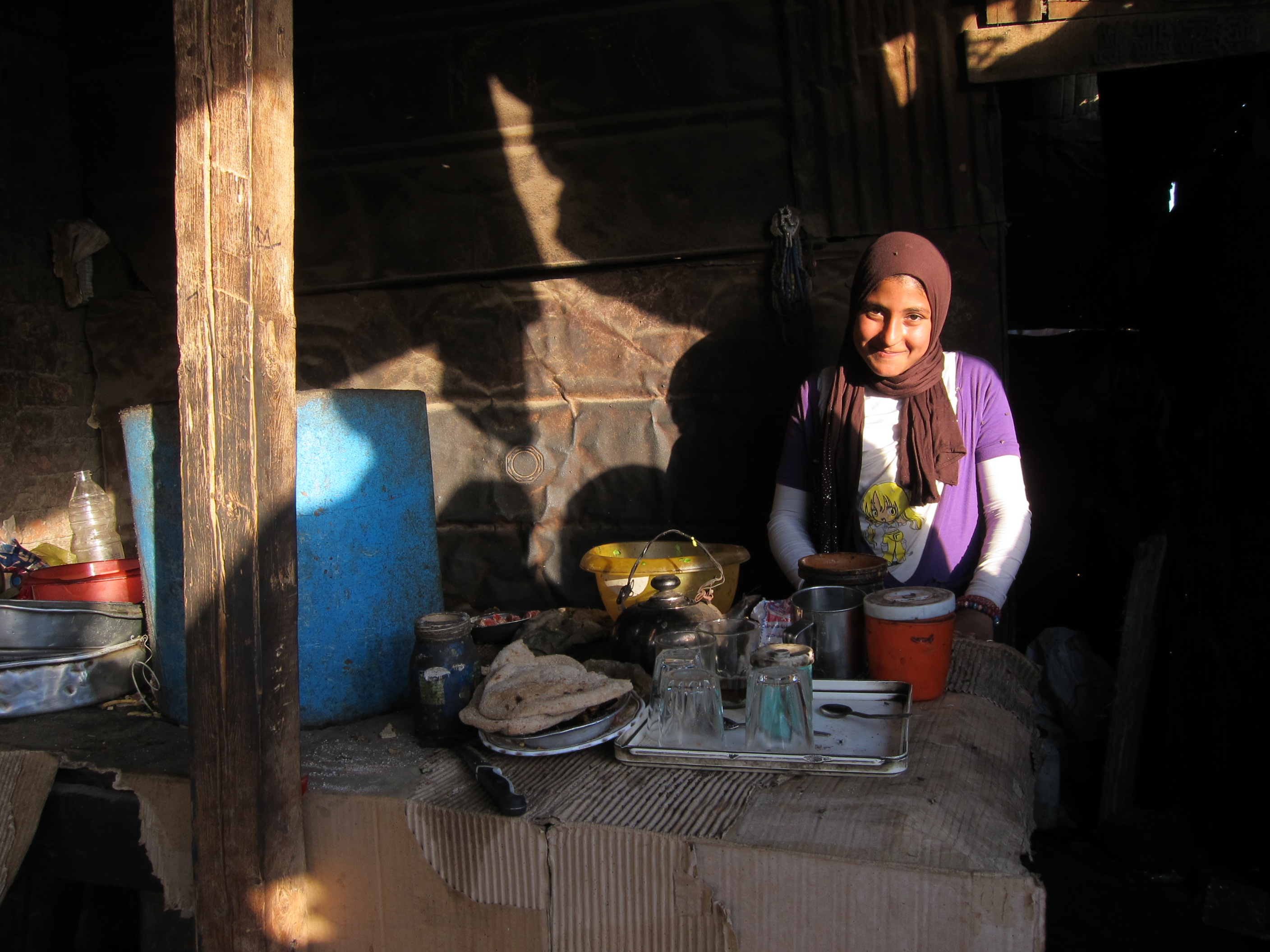
The needs among the Zabbalen are overwhelming but we can’t let the scope of the need paralyze or impede our response. We are determined to make a difference by working strategically to give folks a hand-up so that they can begin to find their way out of the poverty that owns and troubles them daily. We hope to loosen the chains that are holding them back and keeping them among the flies and the filth of their slums. We know we can’t do everything but we are prepared to do something. I can’t wait to walk among the Zabbaleen again tomorrow. The flies and filth can not and will not keep us away.
Posted in Egypt | Tags: Inspiration, Photography, Travel
Houston, Texas en route to Cairo, Egypt
Years ago I learned that the journey to wherever I happen to be going is just as much of an adventure as the destination. I really do enjoy the goings and comings of each trip that I lead. There are always so many interesting people along the way and never a dull moment thanks to things like flight delays, long hours spent in and out of airports, ripping a gaping hole in a shirt (as I did on my last flight to India), and other interesting things that happen along the way. This latest flight from Houston to Dubai has not disappointed.
When we arrived at the airport we learned that our flight would be delayed at least two hours. No problem. Delays are a part of the travel equation. While waiting at our gate, I received email from my friend Andrea. She had read my blog post entitled Cairo’s Garbage People and wrote to tell me that my post had reminded her of a passage from the Psalms: “He lifts the poor from the dust and the needy from the garbage dump. He sets them among princes, even the princes of his own people!” (113:7-8). What a timely and encouraging word. Thanks, Andrea!
While waiting to board, I struck up a conversation with one of the airline agents. We chatted about why my friends and I were traveling to Egypt and Jordan. “Only God can put something like that on your heart,” she said. She also asked me about my name (a question I am often asked overseas). I enjoyed telling her the story of how much my grandfather loved the writings of the Persian poet named Omar Khayyám. Although I am named after my Dad, my Dad was named after Omar Khayyám (his name as it appears on his birth certificate). And then she said, “Let me have your ticket. I want to find you a better seat so that you can rest on your journey.” How nice!
When it was finally time to board, I boarded early (one of my mileage perks). The flight attendant standing next to my seat greeted me with a smile and then we immediately struck up a conversation in Spanish. She is from Argentina. Since we only had a few minutes before general boarding, I turned the conversation to the purpose of our trip. She too was pleased to learn about how the people of Kingsland demonstrate God’s love among the least of these. And then she said, “I will check on you throughout the flight to make sure that you are comfortable.” She did!
When we checked in to our hotel in Dubai, we stopped by the Business Center to get our internet access code. We stood in line behind a group of young people from the Seychelles. So, we struck up a conversation and learned that they are a badminton team representing their country in a big tournament in Algiers. All of these kids speak at least four languages, were very courteous, and told us that they have Olympic aspirations. We had a lot of fun talking with them while we waited in line. It was time well spent!
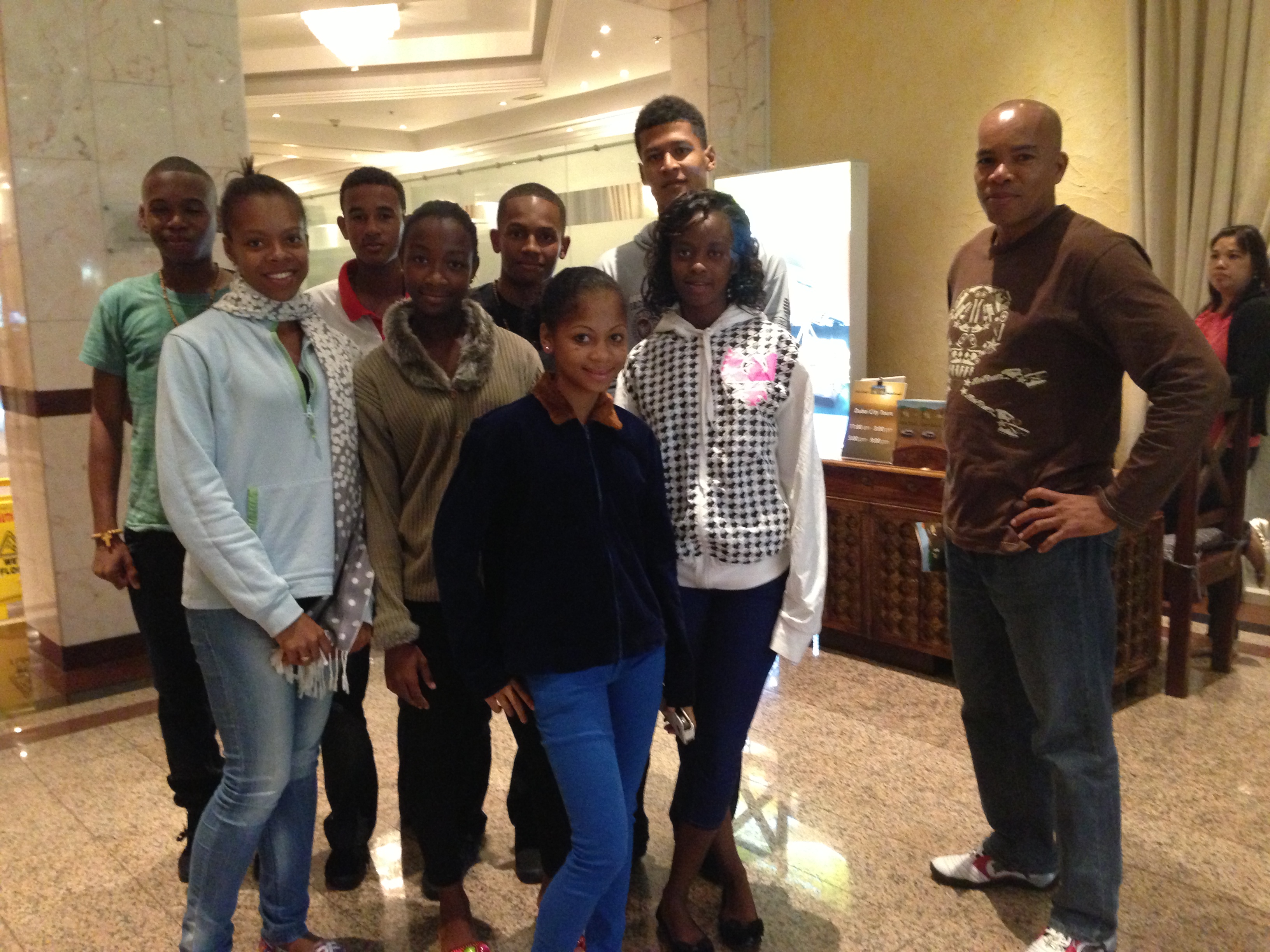
Regardless of where we are going, we should take the initiative to meet the people God puts in our path. Meeting other people and listening to their stories can make our goings and comings a lot more interesting and certainly much less boring. So, the next time you venture out — whether to the grocery store, the soccer field, or some distant place — remember that the journey is just as much a part of the adventure as your destination. Engage others in conversation. Share your story and listen to theirs. And, enjoy the journey!
Over the past several years, our missions ministry has provided micro-loans and micro-grants to give the poor a hand up and a way out of poverty. We have assisted women coming out of a life of prostitution in Central America with micro-grants to start small businesses. The majority of these businesses have succeeded and generated enough income to keep these women from having to sell themselves in order to survive. We have also helped Christian nationals in Bangladesh and Jordan to start small businesses as a key step on their journey out of poverty.
 This month we are initiating a new partnership with friends in Egypt to provide micro-loans to the Zabbaleen — the garbage people of Manshiyat Naser, commonly known as Garbage City. Located outside of Cairo, this is the place where most of Cairo’s trash ends up and the side of Cairo no one wants to see. The Zabbaleen bring the tons of waste that they collect door-to-door into this area. And then families sort through the mountains of garbage in order to find items that they can reuse, resell, or repurpose. They feed the organic waste to their pigs. Without the Zabbaleen, Cairo would drown in its own garbage.
Although the work of the Zabbaleen is critical for the city, they are discriminated against and despised because of their work with garbage. As many as 90% of the Zabbaleen are Coptic Christians. They work extremely hard under very difficult conditions in order to eke out a subsistence living of just a few dollars a day. One Zabbaleen man told a news reporter that he and his family can work twenty-four hours a day and yet never make a living. Children work alongside their parents and do not have the opportunity to get an education. They are trapped in a vicious cycle of generational poverty. As a result, the Zabbaleen call themselves “The Nothings.”
I leave today for Cairo where my friends and I will spend a few days among the Zabbaleen. We hope to help many of these desperate people to begin a journey out of the nothingness and despair that has kept them in garbage for the past 70 to 80 years. And then, we will travel on to Jordan to continue our work with Syrian refugees. Please pray for the Zabbaleen and also for the many Syrians who have had to leave their homeland in order to escape the violence that has claimed tens of thousands of lives. May both the Zabbaleen of Egypt and the Syrian refugees who have fled to Jordan come to know that those who consider themselves nothing or who are regarded as nothing in this world are indeed of great value to God.
Posted in Egypt
 Go Beyond