Posted by: Omar C. Garcia | April 27, 2014

Life in Slow Motion

Shire, Ethiopia

I am still learning the value of slowing down — something that seems to come easier for me when I am far from home. One benefit of serving in a place like Ethiopia is that I am forced to do life at the pace of the people who live here. Among other things, that means walking from place to place, accepting invitations from locals to sit and drink coffee, laughing and playing with kids in the street, or just sitting and observing people going about their daily routines.

IMG_6861
Ethiopians have a fascinating coffee ceremony that we have enjoyed daily. The invitation to a coffee ceremony, something that can easily take an hour or more, is an important social matter. But, that’s ok because it provides an opportunity for good conversation while the host prepares the coffee. Preparing the coffee starts with roasting coffee beans over coals, grinding the beans in a mortar, and mixing the coffee into the boiling water that will yield an aromatic black brew that is thicker than motor oil.
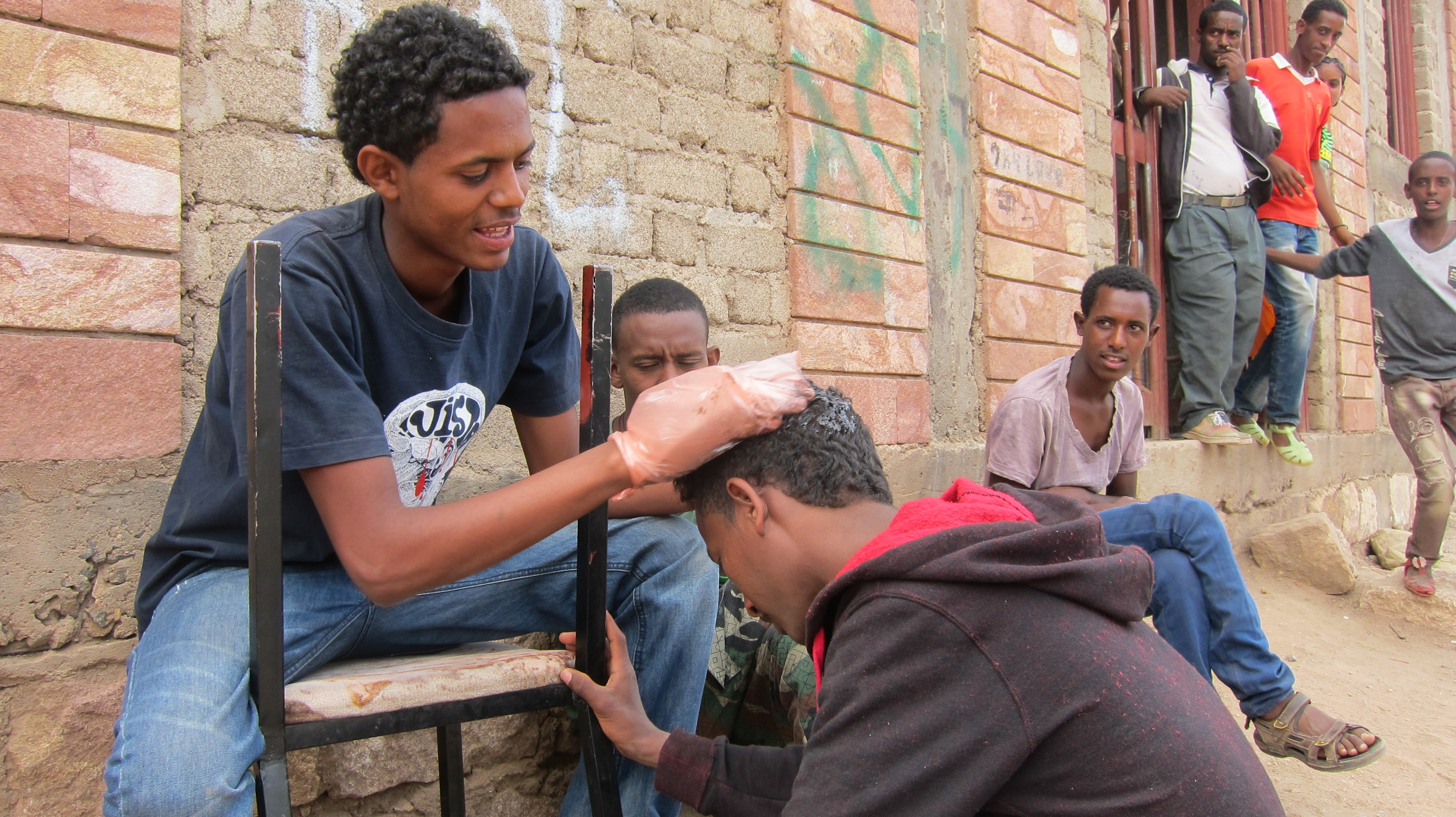
Hair Color
Walking slowly among the people is one of the best ways to gain insight into local life. This afternoon I met some teenage boys outside of a local pool hall. They invited me to sit with them. By combining their limited English vocabulary, we somehow managed to string enough words together to communicate. They explained to me that they were coloring one another’s hair to make it even darker. I watched as one guy poured black hair coloring (made up of who knows what) onto his friend’s head. He then vigorously rubbed it in with his hand that was wrapped in a plastic bag. If I had enough hair I might have asked to be next.
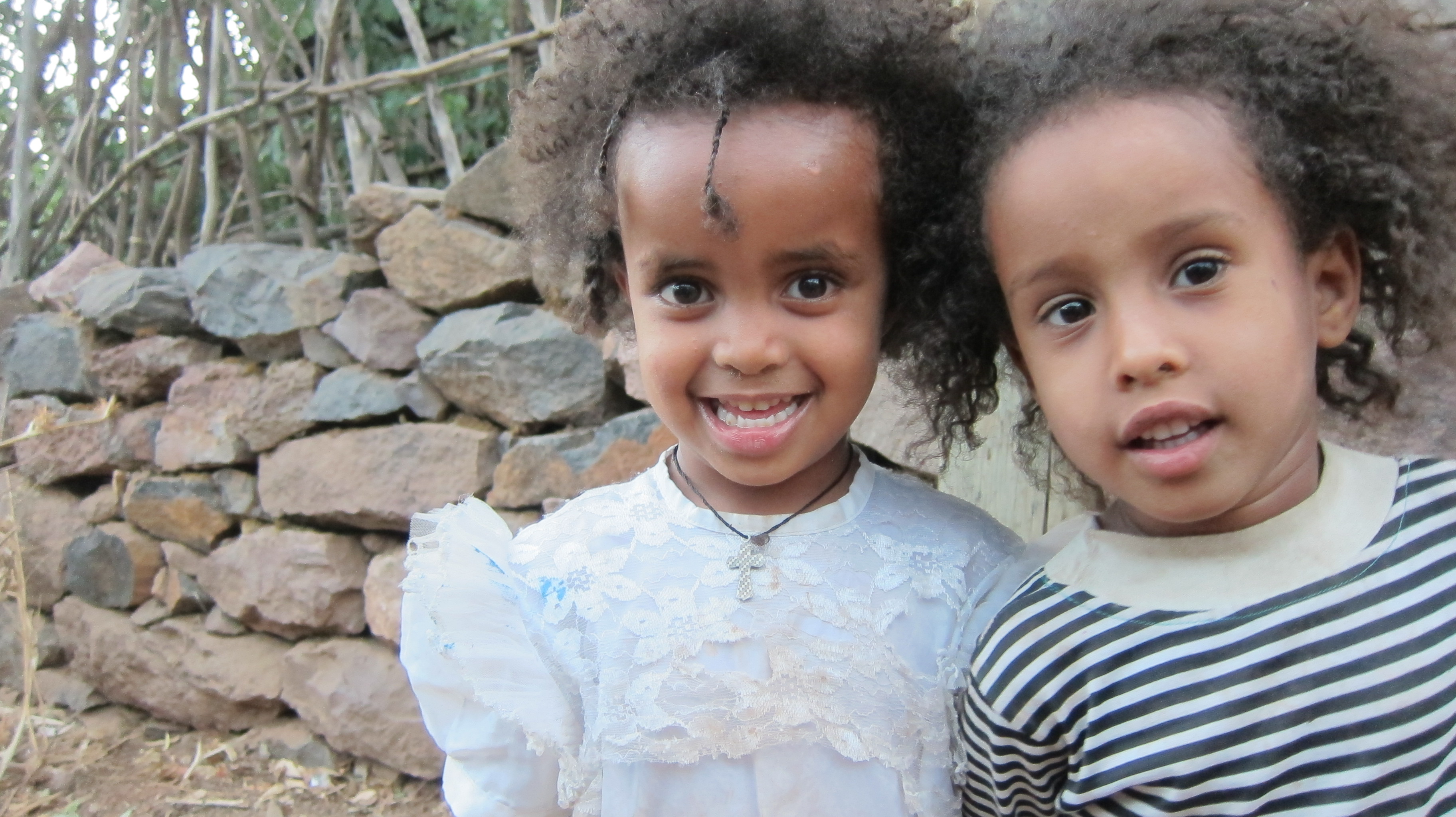
Two Cute Girls
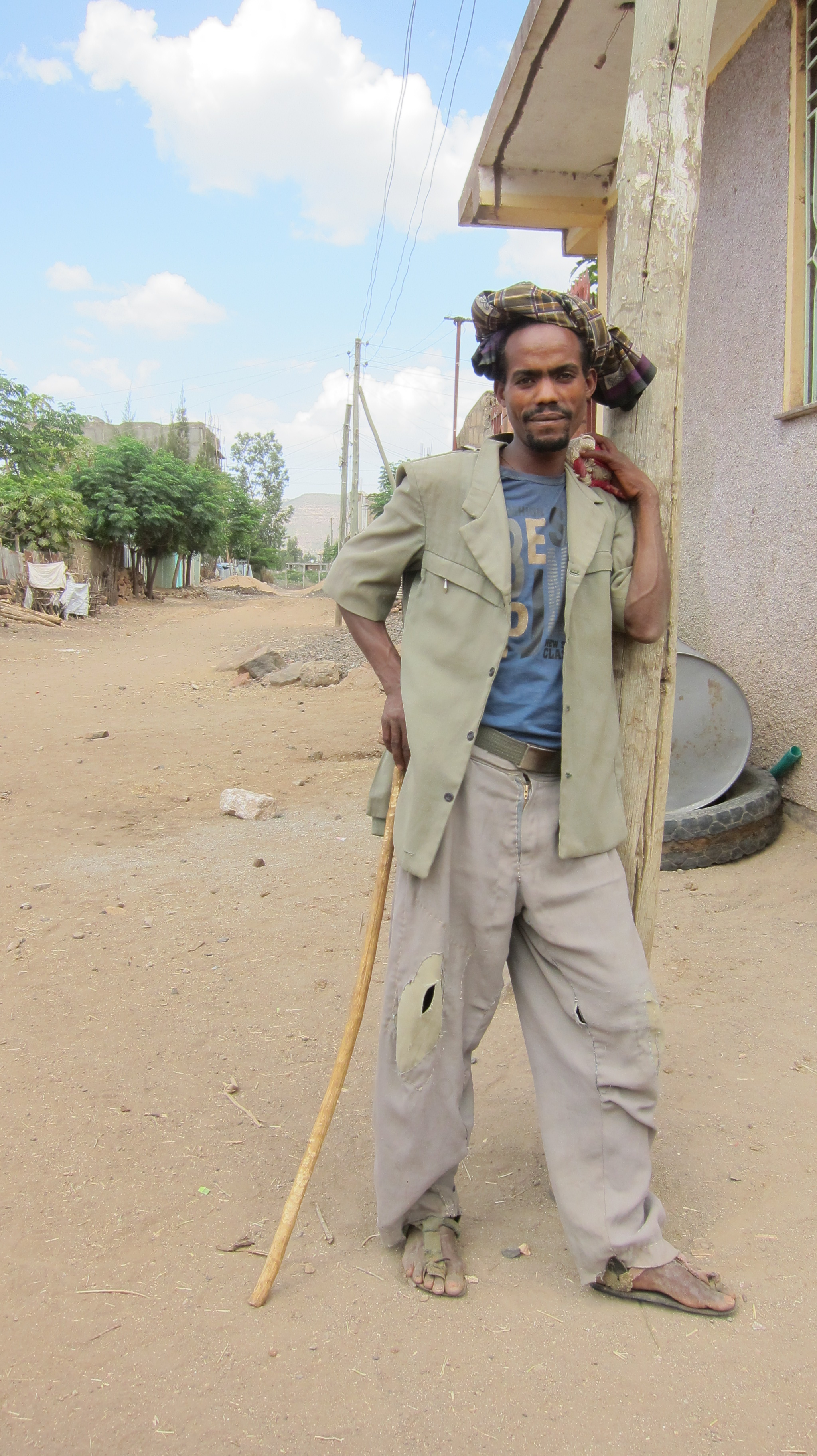
Meeting and talking with people is definitely the best benefit of slowing down in a place like this. The streets here are filed with children entertaining themselves with whatever toys they have found or fashioned. Everywhere you see kids you also hear lots of laughter. The kids in Ethiopia are absolutely among the most beautiful I have ever seen anywhere in the world. And there are so many other interesting people who smile and wave or who want to chat for a few minutes. The pace of life here makes room for these kinds of encounters.
IMG_6799
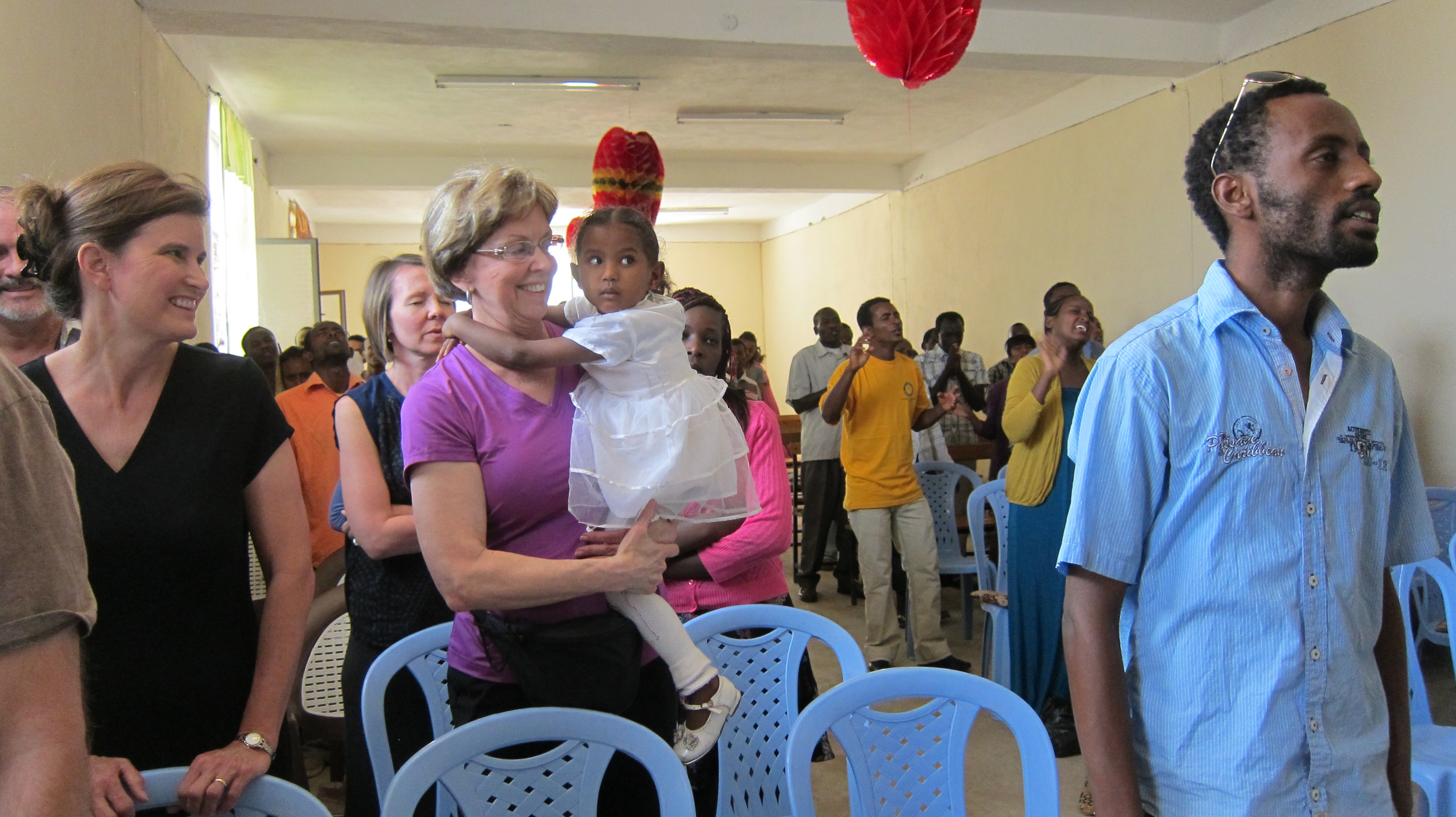
This morning I had the privilege of preaching in one of the local churches. After breakfast we walked to church. We could hear the sounds of their high-energy and passionate worship as we approached the modest little church building. After the service, the folks prayed for us and then greeted us with handshakes, hugs, and even kisses from some of the kids. One young man told me that today was his first time in church. He had actually come at the invitation of my translator. The young man assured me that he intended to continue attending church because he was new to the town and needed friends.
Ethiopian Man w Cane
In the morning we will head to the Endabaguna Transition Center to start our work with the unaccompanied Eritrean refugee kids. Life for these kids is definitely lived in slow motion. Hours pass slowly because they have no opportunity to attend school or any place where they can play safely. If they wander away from the center they are in danger of being kidnapped by human traffickers. If they stay at the center there is nothing for them to do. We hope to change the world for these kids by being the hands and feet of Jesus and making provision for their safety, welfare, and future.

Posted by: Omar C. Garcia | April 26, 2014

Out of The Frying Pan

Shire, Ethiopia via Aksum

Perspective is essential to understanding. As we continue our journey to northern Ethiopia, things are slowly coming into sharper focus. This morning we boarded our Ethiopian Airlines flight from Addis Ababa to Aksum. Our flight route took us through Gondar and Lalibella before we finally bounced on to the tarmac in Aksum. Located in northern Ethiopia, Aksum was in existence at least three-hundred years before the birth of Christ and today is regarded as the spiritual home of Ethiopian Orthodox Christianity.

IMG_6738
Sometimes it’s good to look at things from the 30,000-foot view. Staring out the window at the barren landscape below got me to thinking about the challenges of surviving in such a harsh environment. Having recently completed a 100-mile backpacking trek through the Sam Houston National Forest in Texas, I looked at the rugged landscape below through the eyes of a backpacker. Without question, northern Ethiopia boasts some pretty rugged terrain that would challenge the best of backpackers and survivalists.

How then, I thought to myself, could children and people of all ages who are fleeing Eritrea’s oppressive government at a rate of 3,000 per month survive their escape across such an unforgiving landscape. How desperate do you have to be in order to jump out of the frying pan of Eritrea’s oppressive government and into the fires of a life-threatening route to what you hope will be a better life? Freedom and hope are the twin sirens whose harmonious melodies compel desperate people to risk it all for something better.

IMG_6756
Several people who I met in Aksum asked me if I was a tourist. I am here with friends, I replied, to help Eritrean refugees. I explained that we had traveled far in order to especially care for the needs of the unaccompanied Eritrean kids. No one objected. The people here understand the challenges of survival and the importance of hope. No one begrudged that we are here to help strangers in their land. What is happening in Eritrea does not go unnoticed by those who live on the Ethiopian side of the border.

In the morning I will preach at a local evangelical church in Shire and our team will prepare for our first day at the Endabaguna Transition Center on Monday. We have lots of shopping to do for clothing, shoes, and medical supplies for those who escaped Eritrea with only the clothes on their backs. I look forward to meeting the people there, especially the kids. I already have deep respect for these people who walked across a tough landscape and survived. They are a testimony to what it means to want a better and more decent life for themselves and their loved ones.

IMG_6785
Please continue to pray for our team as we venture deeper into the world of Eritrean refugees in one of the toughest places on the planet.

Posted by: Omar C. Garcia | April 25, 2014

We Are Not There Yet

En route to Shire, Ethiopia

Traveling to the ends of the earth is rarely convenient, even today. So far, our team has traveled as far as Addis Ababa on two flights. Located in Ethiopia’s central highlands, Addis Ababa is the world’s third-highest capital city. Home to three-million people, the city enjoys pleasant temperate weather most of the year. Not unlike other major cities I have visited in this part of the world, Addis also has its fair share of beggars waiting outside of the airport, hoping for a sympathetic handout from visitors.

IMG_2999
As we were loading our luggage for the quick trip to our hotel, a woman with grotesquely deformed arms approached me. She didn’t have to say anything. When I looked at her I was immediately reminded of Mother Teresa’s counsel to always look for Jesus in the distressing disguise of the poor. I could not look the other way. Her life will always be hard no matter what. I slipped a few dollars into the only two fingers she had on a twisted arm and told her it was a gift from the Lord. I don’t always feel led to give to every beggar, but I certainly sensed the Lord prompting me to help her.

We will depart for the airport at 5:30 AM for our flight to Aksum in northern Ethiopia. Aksum is one of the oldest continuously inhabited places in Africa. The Ethiopian Orthodox Church claims that the Biblical Ark of the Covenant is in their possession in Aksum, allegedly kept under guard somewhere near the Church of Our Lady Mary of Zion. Ethiopian traditions also suggest that it was from Aksum that the Queen of Sheba embarked on her journey to visit King Solomon in Jerusalem.

Ethiopia Map
From Aksum we will travel by land to the city of Shire (pronounced she-ray) where we will stay for the duration of our trip. The Endabaguna Transition Center that houses Eritrean refugees is located just a short drive from Shire. Our team will serve the needs of unaccompanied Eritrean refugee kids at this center. These are kids who do not know the whereabouts or welfare of their parents or other family members.

Our understanding is that the transition center is already saturated with minors and may stop receiving these children who are among the most vulnerable of the refugees fleeing Eritrea. We will meet with some United Nations workers on Saturday to learn more about the current condition and needs of these children. Over the coming days our team of volunteers with Innovative Humanitarian Solutions will address the needs of these children. We will also get the wheels rolling on the construction of a safe dormitory for the boys and girls who have nothing to do except to overcome and to survive one more day.

So, we are not there yet but we are definitely making progress in the direction of kids in need. Getting to where these Eritrean children live is not easy. That’s ok. As A.W. Tozer once said, “The truth is that every advance that we make for God and for His cause must be made at our inconvenience. If it does not inconvenience us at all, there is no cross in it!” That’s why we must travel to these lesser accessible places and peoples to be the hands and feet of Jesus and to bring glory to God. Thanks for following our adventure and praying for our team.

Posted by: Omar C. Garcia | April 23, 2014

A Eunuch’s Legacy

En route to Ethiopia

In just a few hours I will board my flight to Ethiopia with my friends from Innovative Humanitarian Solutions. We are headed to northern Ethiopia where we will serve the needs of hundreds of unaccompanied Eritrean refugee kids who don’t know the whereabouts or welfare of their parents. These kids are living on the ragged edge of risk and danger in displacement camps. We are walking through an open door of opportunity to help change the world for these children.

As I have prepared spiritually for this next adventure, I have searched the Scriptures for references to Ethiopia. There are over sixty references to this East African nation in the Bible. Christianity there dates back to the days of Philip in Acts 8. The stoning of Stephen, the first martyr, ignited the expansion of the church beyond Jerusalem. A believer named Philip, later known as Philip the evangelist (Acts 21:8), ventured to Samaria and unwittingly became the first missionary in Acts — the first to carry the good news to unreached peoples.

Acts records that, after a time in Samaria, an angel of the Lord directed Philip to go to a desert road where he met an Ethiopian eunuch who was on his way home from Jerusalem. This man was sitting in his chariot and reading the prophet Isaiah when the Holy Spirit told Philip to take the initiative to walk beside the chariot. Like Philip, we should be sensitive to the Spirit’s promptings to take the initiative in sharing our faith.

When Philip approached the chariot he heard the Ethiopian reading the prophet Isaiah. Listening enabled Philip to discover where the Ethiopian was in his understanding. We can miss opportunities to share the gospel when we fail to listen first. Listening can help us determine what questions to ask that may further open an individual’s heart to the good news about Jesus. Philip took advantage of the opportunity to tactfully ask the man if he understood what he was reading.

philip-with-ethiopian-eunuchFrustrated at being unable to understand the passage, the Ethiopian told Philip that he needed for someone to guide him. He then invited Philip to sit with him in the chariot. There is, perhaps, no greater invitation that a follower of Jesus can receive from someone seeking after the truth. More than once on my travels I have received such an invitation to sit and explain the Scriptures to someone searching for the truth.

The Ethiopian was reading from Isaiah 53 — a passage in which Isaiah foretold the suffering and death of the Messiah. Philip had likely learned the significance of this passage from the teaching of the apostles. So, when the Ethiopian asked Philip to explain whether Isaiah was writing of himself or someone else, Philip was ready to answer him. He could not have had a better starting point for sharing the good news about Jesus. Like Philip, we have to meet people where they are and then use the Scriptures to point them to Jesus.

The rest of the story is history. The Ethiopian eunuch embraced the gospel and became the first to take the good news to his own people. Although he left no physical lineage, the eunuch left a spiritual legacy that continues to this day.

If we will listen carefully, like Philip, we too will hear the sound of chariot wheels that signal an approaching opportunity to talk with others about Jesus. Don’t let those chariots pass you by. Take the initiative to share Jesus with someone seeking the right path. You never know how many generations you might impact by sharing the good news with one person.

I invite you to follow my upcoming journey to Ethiopia over the coming days. And please join me in praying for the welfare of the hundreds of unaccompanied Eritrean children living in displacement camps in northern Ethiopia. Our team will serve the needs of these kids in the name of Jesus — the One who transformed the life of an Ethiopian eunuch searching for answers on a lonely desert road.

Posted by: Omar C. Garcia | April 21, 2014

Escaping Hell

The small nation of Eritrea, located north of Ethiopia and east of Sudan, is among the highest refugee-producing nations in the world. That’s amazing when you consider that Eritrea only recently gained its independence from Ethiopia in 1993. In the short years since then, President Isaias Afwerki has managed to create an intolerable environment for his own people — a hell fueled by the flames of human rights violations.

There have been no elections in Eritrea since it gained its independence. Instead, The People’s Front for Democracy and Justice, headed by President Isaias, is the only political party. His highly centralized, authoritarian regime is known for arbitrary arrests and detention, torture, forced labor, extrajudicial killing, inhumane prison conditions, restrictions on freedom of expression, and religious persecution.

girl
Each month, as many as 3,000 Eritreans flee their native land and seek refuge in Sudan or Ethiopia. It is estimated that as many as 2 million Eritreans now live as refugees globally. Among those fleeing the country are young men seeking to escape forced and indefinite conscription into the military. The most vulnerable among the refugees are the unaccompanied children — those who fled to Ethiopia apart from their parents.

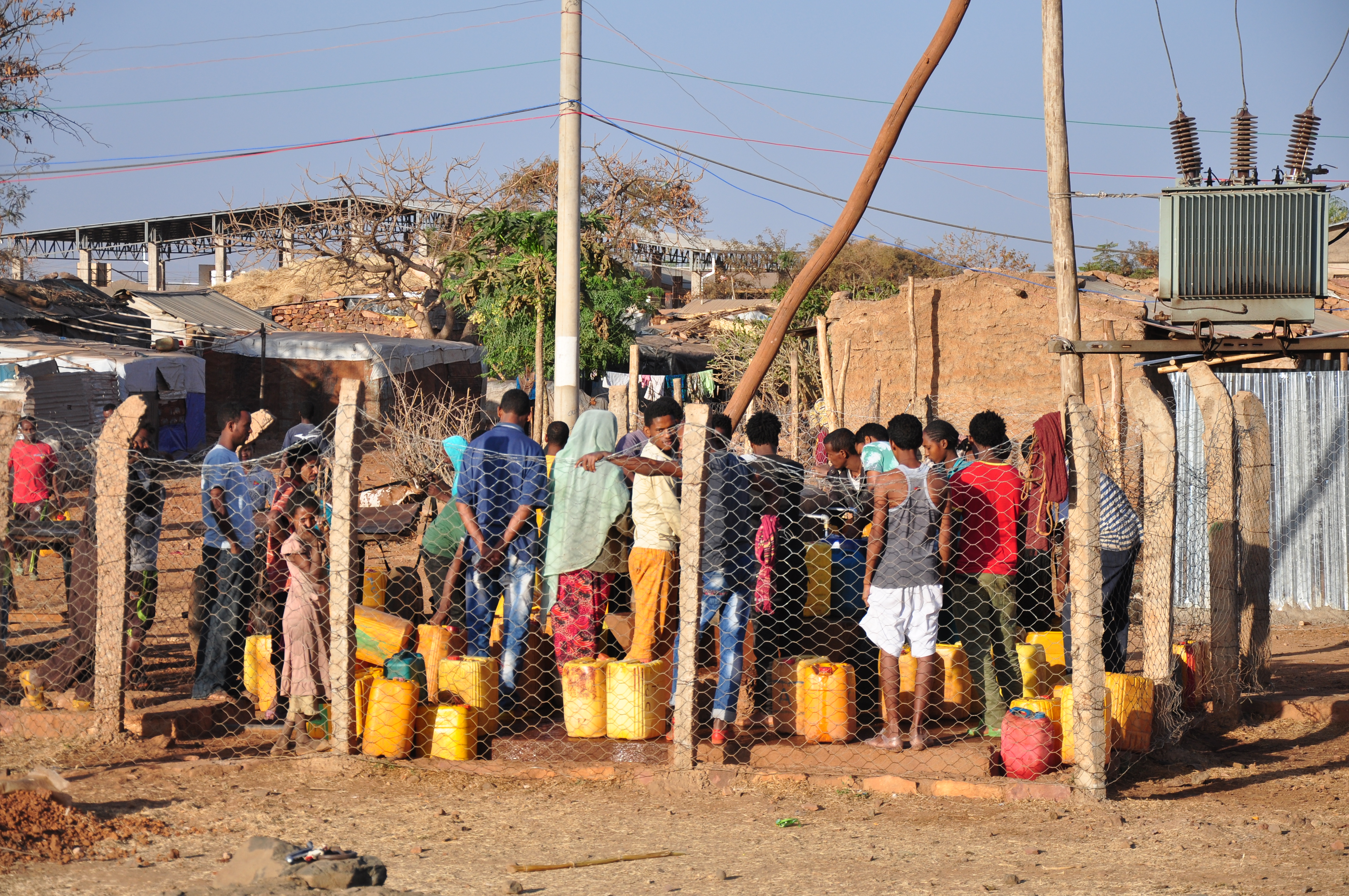
water station
Those fleeing usually leave home with nothing but the clothes on their backs. They do not carry any identification lest they be caught and unwittingly endanger the welfare of any family members still in Eritrea. When refugees arrive in Ethiopia, they are picked up and taken to a transition center where the Ethiopian Administration for Refugee and Returnee Affairs establishes their identity. These individuals are then housed at the Endabaguna Transition Center until they are assigned to one of four refugee camps.

endabaguna 2
Generally, adults and families are relocated to one of the four displacement camps within a matter of days. However, not so for any unaccompanied refugee minors. These kids spend as many as six months at the Endabaguna Transition Center where they sleep as many as fifty per room on hard concrete floors. These children use filthy latrines and have no paper products or water for basic hygiene. They survive on a meager daily food ration, live in fear of human traffickers if they wander from the center, and have nothing to do but wait.

medical need
Our missions ministry will team up with my dear friend and mentor Dr. Jerry Squyres to address the needs of the unaccompanied Eritrean refugee minors living in the Endabaguna Transition Center. Dr. Squyres is the founder of Innovative Humanitarian Solutions, a Christian nongovernmental organization that has been granted permission to help make life better for all unaccompanied refugee minors at the transition center. Plans for the coming months include building a secure dormitory for the girls, complete with bunk beds and restroom facilities. Longer term plans call for providing teachers, medical care, counseling, and helping these children understand the hope of the gospel.

This summer, we will challenge the kids who attend our VBS at Kingsland to help change the world for the unaccompanied Eritrean children living on the ragged edge of danger. Kingsland kids know that God can use them now to make a difference — that they don’t have to wait until they are older to bring healing, help, and hope in Jesus’ name to those in need. On Wednesday, Leslee McWhirter, Kingsland’s Interim Minister to Children, and I will accompany Dr. Squyres and others to northern Ethiopia to serve the Eritrean children there. I invite you to follow our adventure and to pray daily for the endangered children of Eritrea.

__________
Photo Credit: Dr. Jerry Squyres

Posted by: Omar C. Garcia | April 19, 2014

Thinking About Tombs

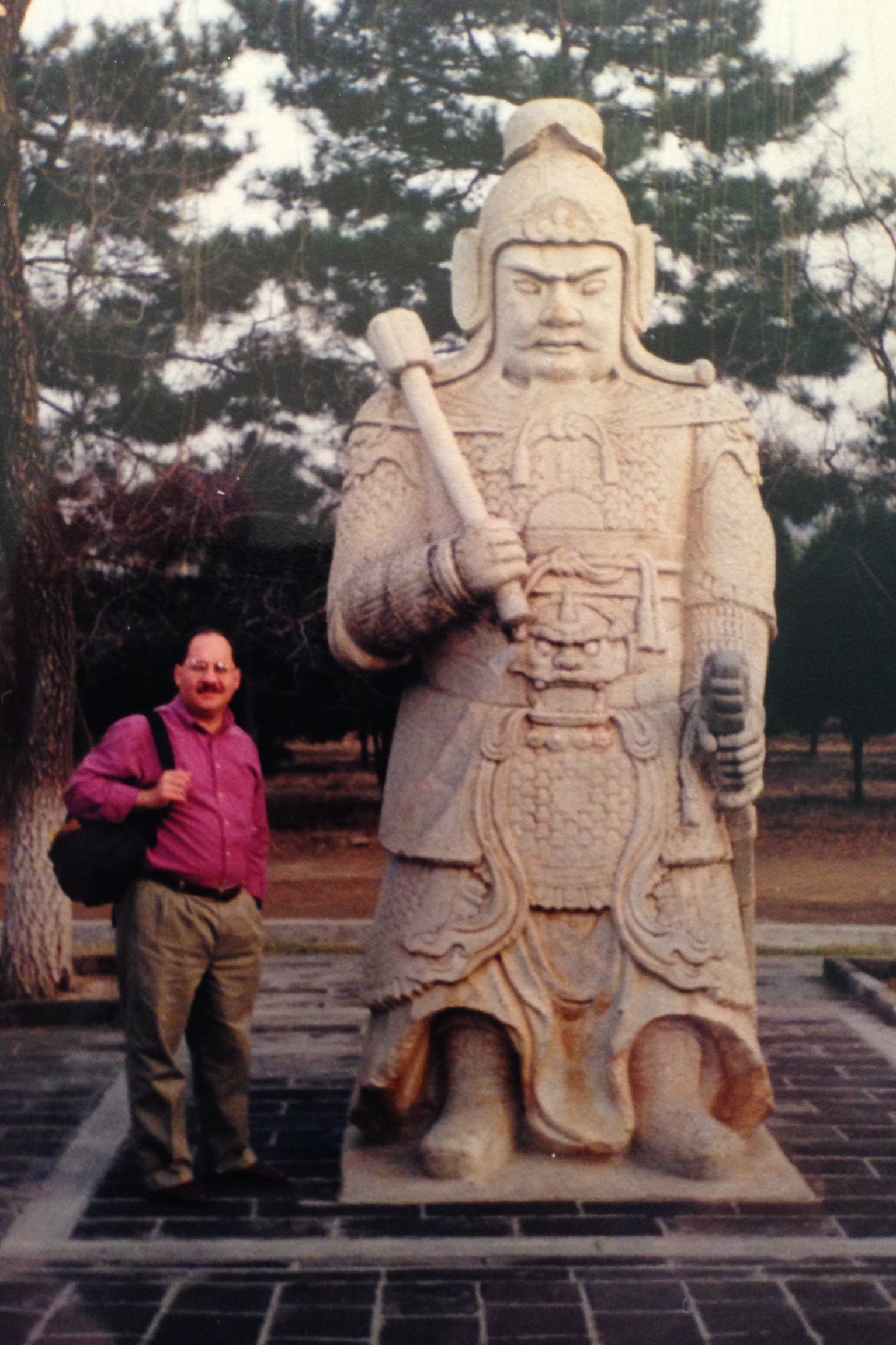
In March of 1998, I visited the Thirteen Tombs of the Ming Dynasty. This complex of tombs in Beijing was designed according to Feng Shui principles to keep away bad spirits and evil winds. The sacred walk leading to the tombs is lined with massive statues of people and animals, first in a standing and then in a kneeling posture to symbolize the obeisance of man and nature to emperors being carried to their tombs. The complex is quite impressive.

Statue along the sacred walk. | 1998 | Ming Dynasty Tombs

Statue along the sacred walk. | 1998 | Ming Dynasty Tombs | China

I also stood in a very long line at Tiananmen Square to visit the very impressive mausoleum of Mao Zedong, hoping to catch a glimpse of his body. Unfortunately, we were only permitted entry into a portion of the mausoleum where a Chinese guard with a Polaroid camera took our photo and charged us a buck. So much for seeing Mao’s carefully preserved remains.

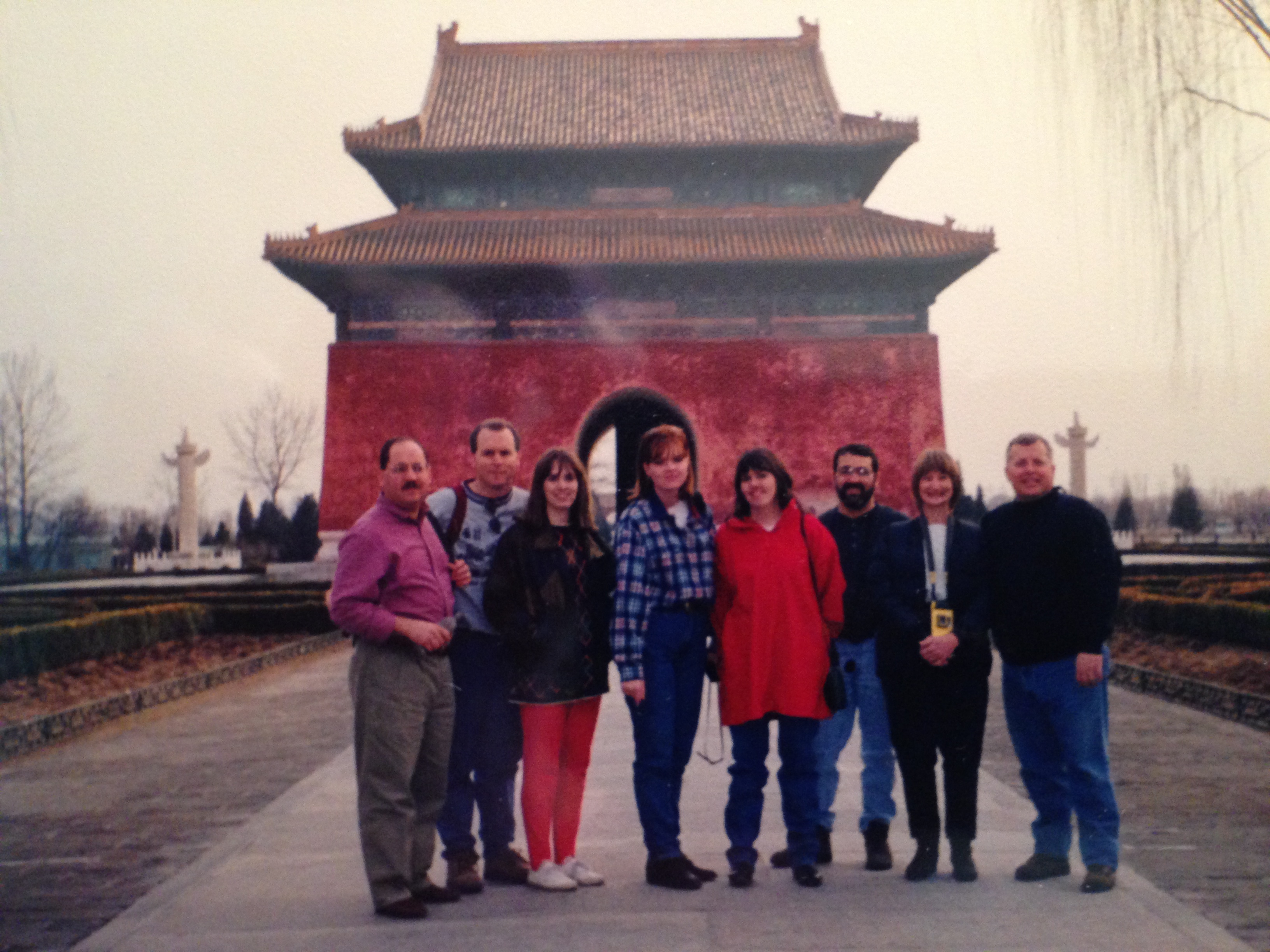
Gate leading to the sacred walk. | 1998 | Ming Dynasty Tombs

Gate leading to the sacred walk. | 1998 | Ming Dynasty Tombs | China

The tombs of many of the world’s leaders, like those I visited in Beijing, are awe-inspiring wonders characterized by elegant architecture, impressive epithets, eternal flames, and beautiful surroundings. In most cases, no expense was spared to memorialize the good, the bad, and the ugly. However, in spite of their magnificence, these tombs all share one common characteristic — they are all still occupied!

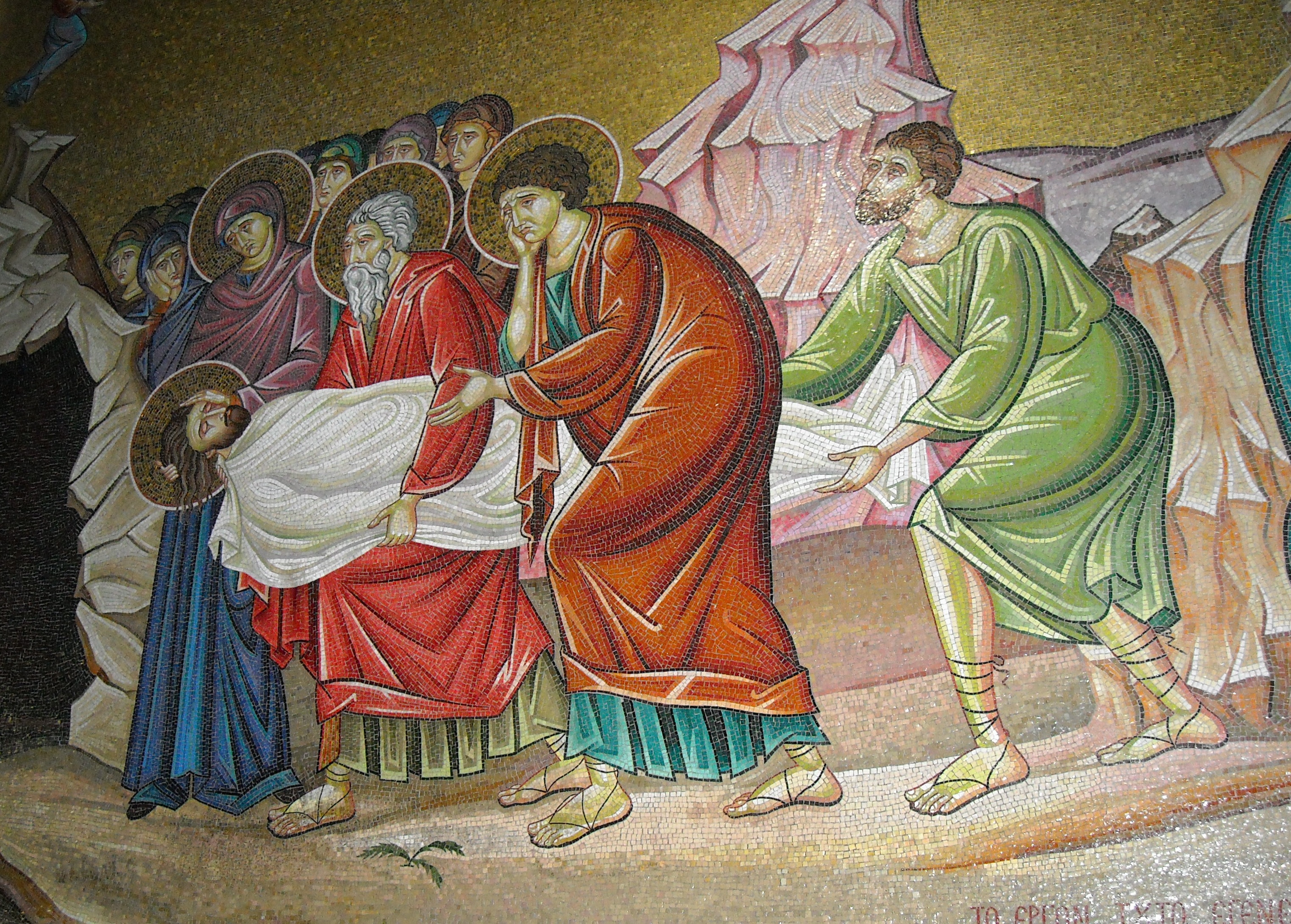
Mosaic in Jerusalem's Church of the Holy Sepulchre | 2009

Mosaic in Jerusalem’s Church of the Holy Sepulchre | 2009 | Israel

By contrast, Jesus was buried in an unpretentious tomb that was not prepared exclusively for Him. No artisan or workman carved it out with the intention of preserving His memory. And yet today, the empty tomb of Jesus remains as mute testimony to His victory over sin and death. His simple tomb assures us that through faith in the risen Jesus, people can experience forgiveness of their sins and a new and everlasting life.

The Apostle Paul understood the supremacy of Christ in life and death. In his letter to the Colossians he wrote these words: “And He is the head of the body, the church. He is the beginning, the firstborn from the dead, that in everything He might be preeminent” (Colossians 1:18). Christ is “the head of the body,” His church. Paul referred to Jesus as “the beginning,” the One who made a way for us to become a part of the church — the fellowship of the redeemed.

But, most important of all, Paul emphasized that Jesus was “the firstborn from the dead.” In other words, He was the first person to be raised from the dead without dying again. He reigns supreme and alone is worthy of our unrivaled love and loyalty. This Easter weekend, we remember His resurrection and victory over the grave. Along with Christ-followers around the world, we rejoice in the fact that He is alive and reigns supreme.

As you reflect on the meaning of Easter, keep these things in mind and take a moment to lead your family in praise and thanksgiving for all that Jesus did to make a way for us to be reconciled to God. Remember that…

E = Easter is about an empty tomb that offers hope to those with empty lives.
A = Easter is about an announcement that Jesus is alive.
S = Easter is about God’s offer of salvation to all who believe.
T = Easter is about the triumph of Jesus over death.
E = Easter is about the joy that we can experience every day.
R = Easter is about our responsibility to share the good news that Jesus is alive.

Posted by: Omar C. Garcia | April 16, 2014

Wordless Wednesday

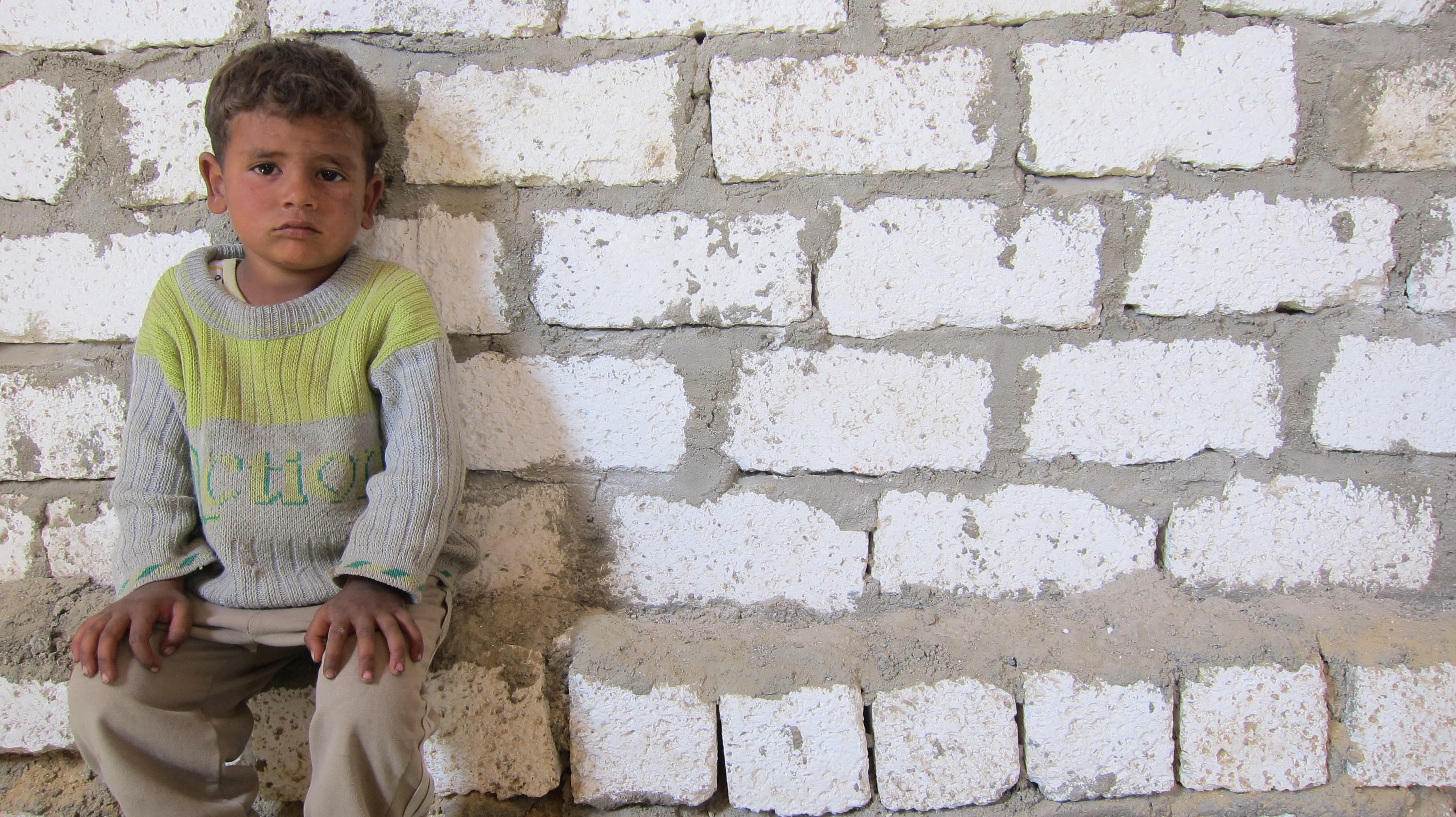
Sad Boy

Zabbaleen Boy | 07 April 2014 | Outside of Helwan, Egypt

Posted by: Omar C. Garcia | April 11, 2014

Beyond the Filth

Helwan, Egypt

Those who know me well will tell you that Don Quixote is at the top of my list of favorite stories. Written in 1605 by the Spanish novelist and playwright Miguel de Cervantes, Don Quixote is considered to be one of the world’s greatest literary works. In a nutshell, Don Quixote is the story of a man who saw the world differently than other people. When the Man of La Mancha, dubbed the Knight of the Woeful Countenance, meets a common prostitute named Aldonza, he looks beyond the filth in her life. This unusual man is somehow able to behold the possibilities buried deep beneath the strata of abuse Aldonza has suffered. By the end of the story, his belief in her changes her life. Aldonza finally becomes Dulcinea, the woman the Man of La Mancha envisioned she could become.

TwoBoys
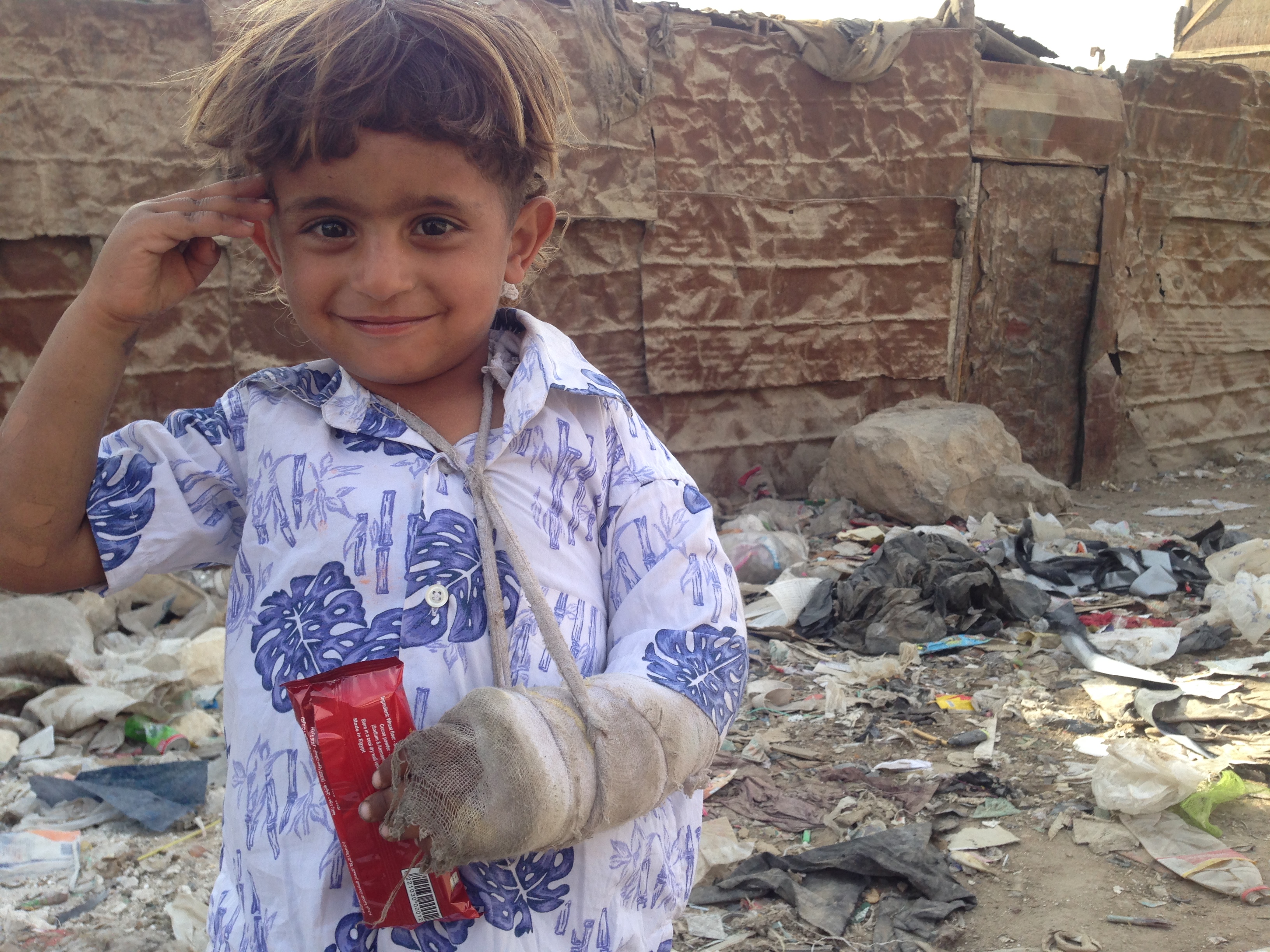
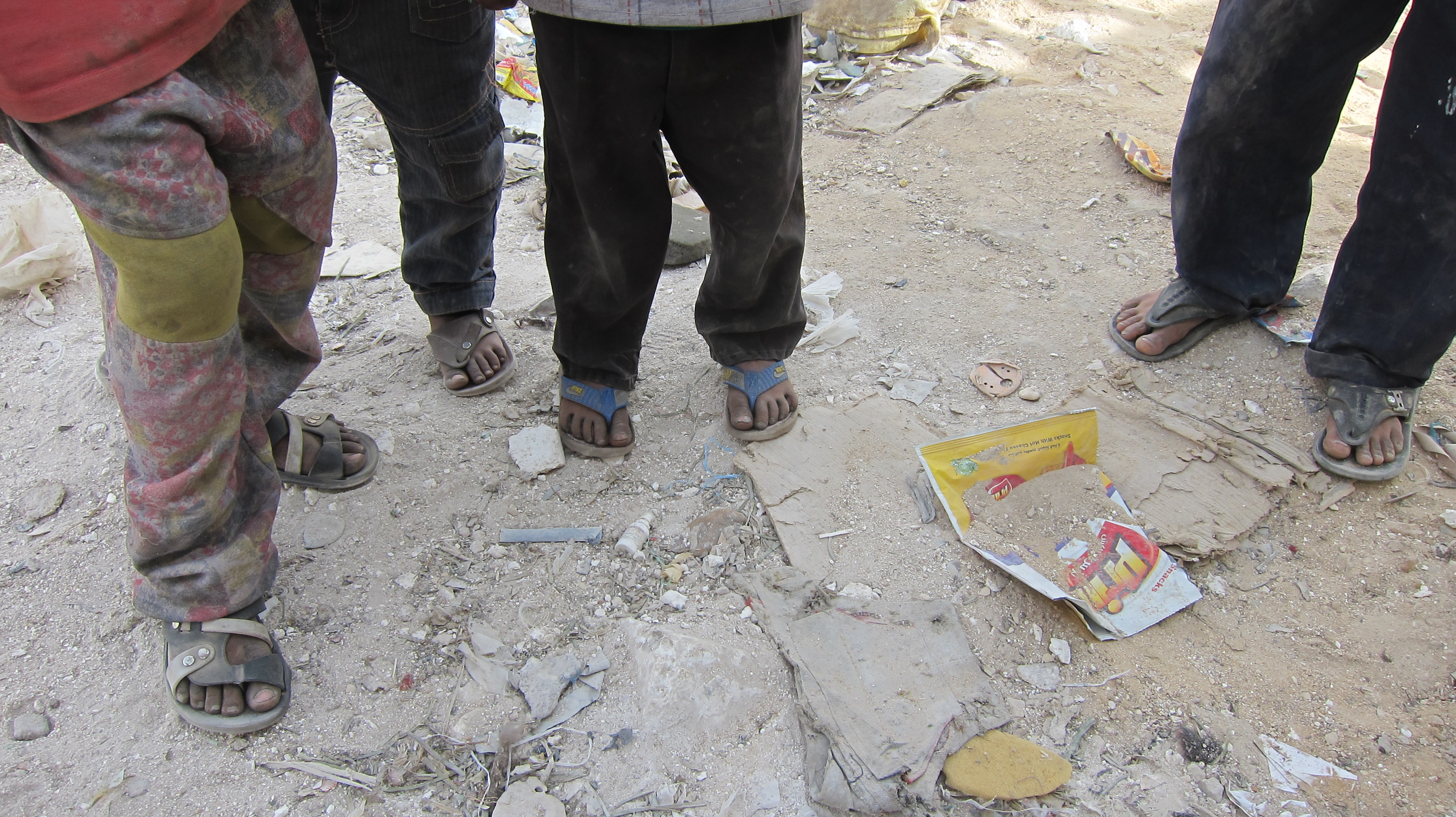
I thought a lot about Aldonza during this week that we have spent serving the children of the Zabbaleen, Cairo’s garbage people. The kids have faithfully come to our little campus every day to listen to Bible stories and to play games. To say that they were unruly at the start of the week would be an understatement. Most of these kids have never attended school and don’t understand what it means to be reasonably still and to respect the person who is teaching. Fights among the kids broke out a few times. And because they have never played sports, being a team player or sharing sports equipment was a totally foreign concept. More than once I felt as though I was trapped in a bad Zabbaleen version of “Lord of the Flies.”

Car Kids
As the week progressed, however, we all began to notice a difference in the kids. Many were actually able to sit still through our Bible lessons. The sports thing still needs some work but many of the kids started to understand that it’s ok to share a soccer ball or a frisbee. Our partners here are very encouraged by the progress made by the kids. They understand that it will take a long-term investment in the lives of these kids in order to help them realize their potential. We are committed to working together to make that investment and to see that kind of transformation come about.

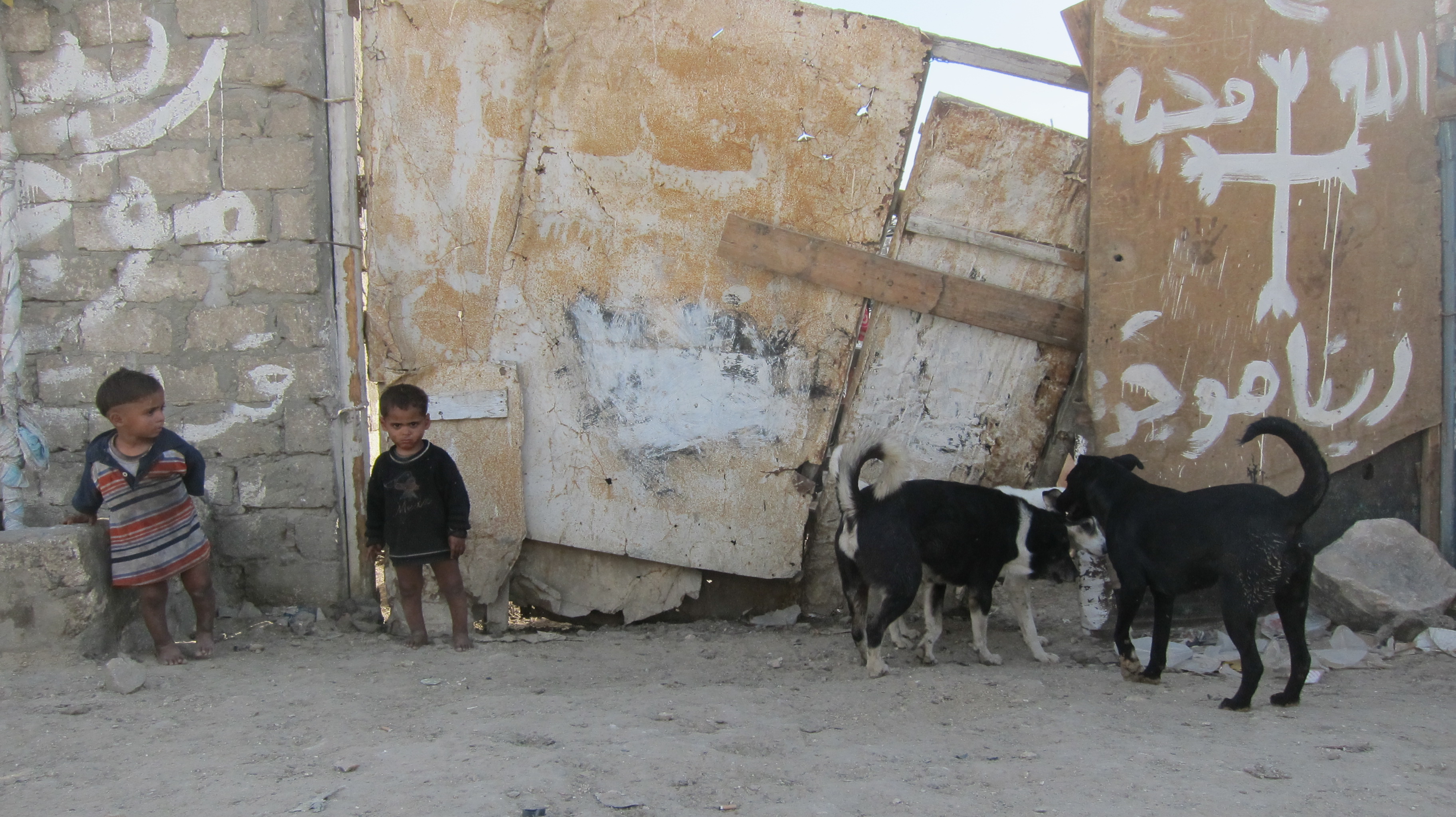
Boys and Dogs
At first glance, it’s easy to be distracted by the filthy little faces of the kids, by their lack of discipline, by their aggressive behavior to hold on to something they think they might lose, and by the desperate environment in which they live. In order to bring help and hope to these kids, we must learn to look beyond the filth — beyond the actualities of their lives in order to behold the possibilities in their lives. Like the blind man whom Jesus healed at Bethhsaida (Mark 8:22-26), we must depend on Jesus to help us see people clearly. And we must understand that changes will not happen overnight. Every investment requires time in order to mature and yield benefits.

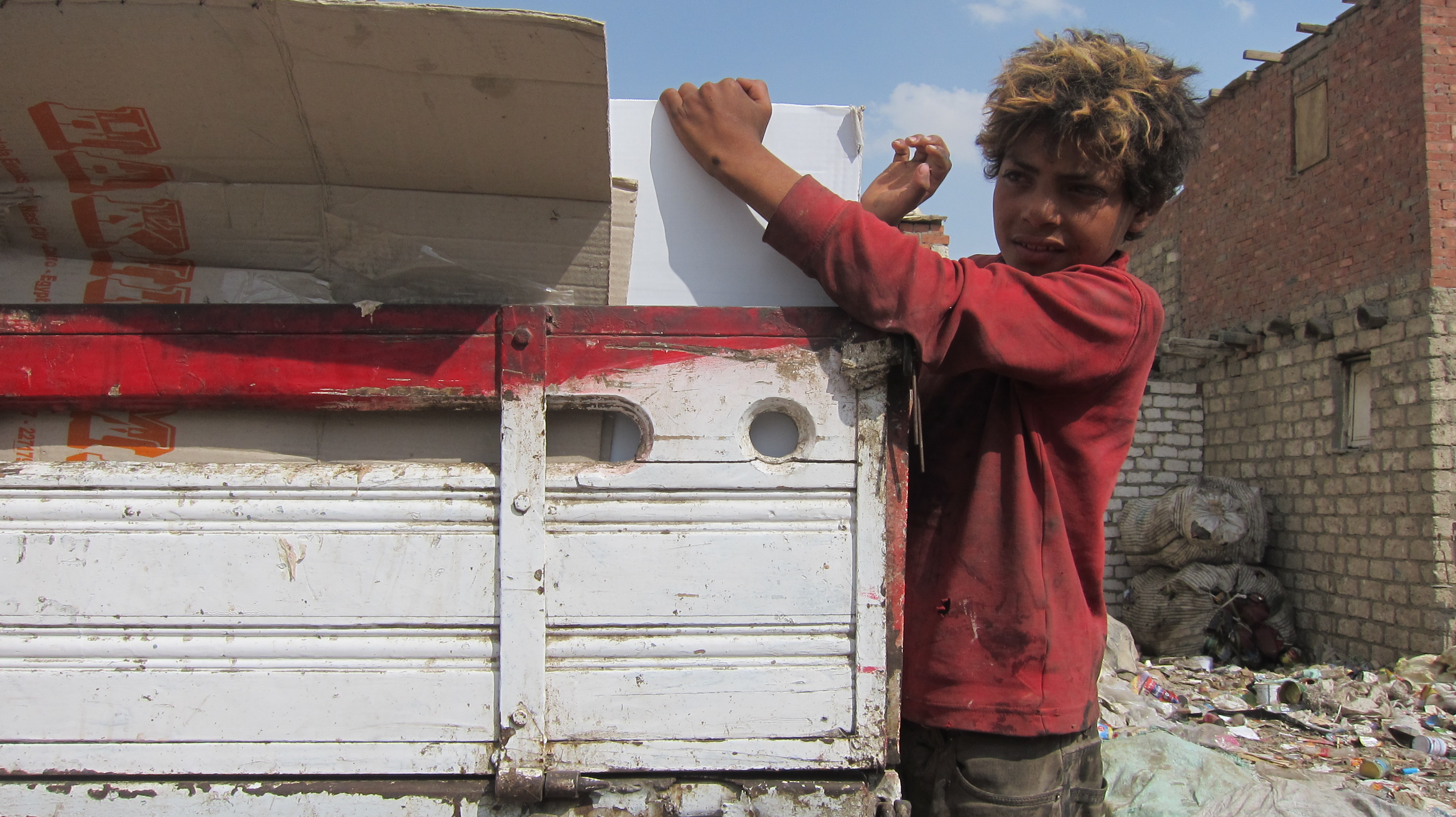
Trash Truck Boy
We have our work cut out for us as we serve the Zabbaleen kids living in filth outside of Helwan. I am convinced, however, that our investment will pay off and that one day many of the kids we met this week will realize a better future. In order for that to happen, we must have an incarnational presence among them. In the coming weeks we will finalize construction of our modest school and community center. We will also enlist workers who will invest in these kids every day of the week — folks who will be the hands and feet of Jesus, washing filthy little faces and feet. Exciting things are still to come in this difficult place. Don Quixote would certainly agree.

IMG_2970
Dirty Feet

Posted by: Omar C. Garcia | April 9, 2014

Consider The Ants

Helwan, Egypt

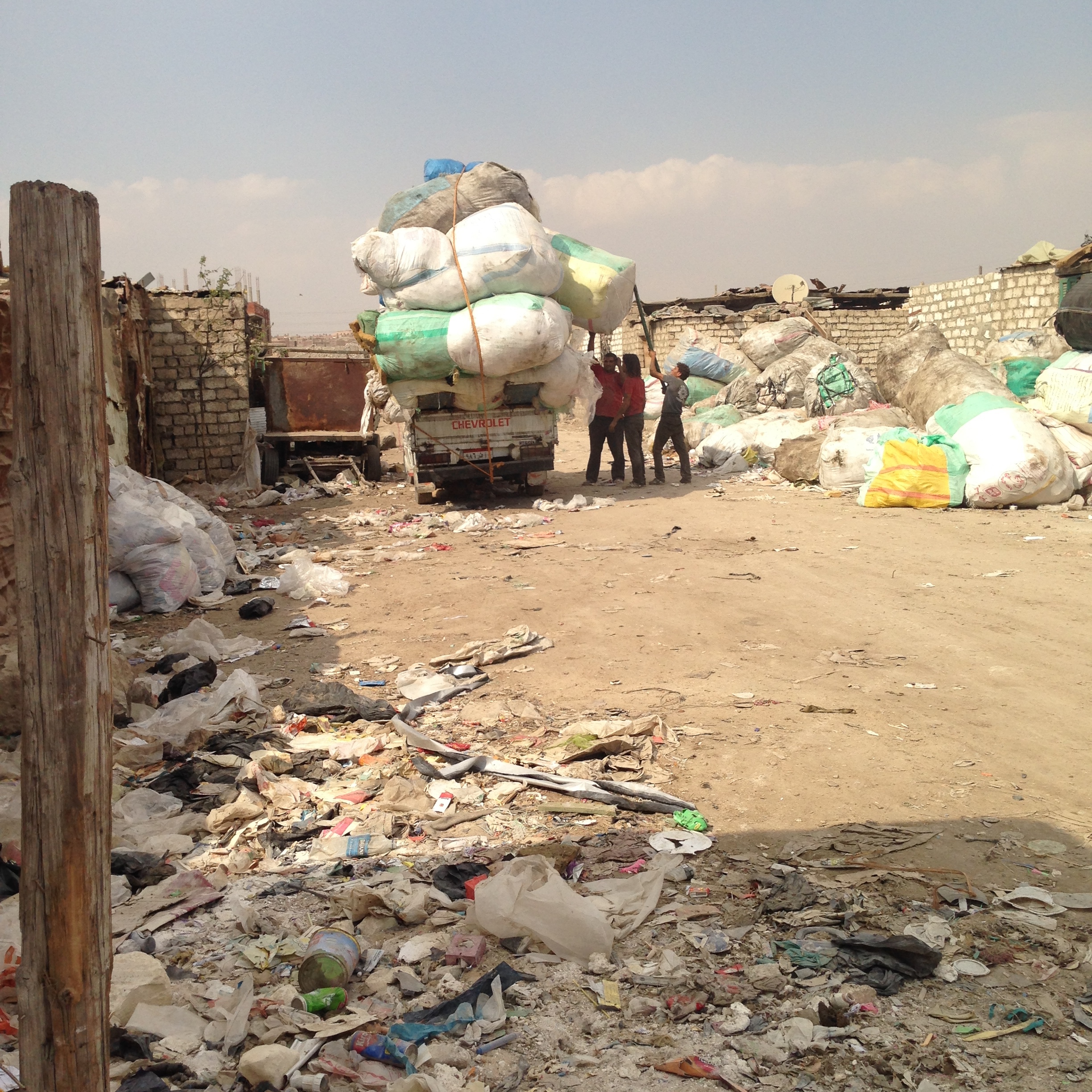
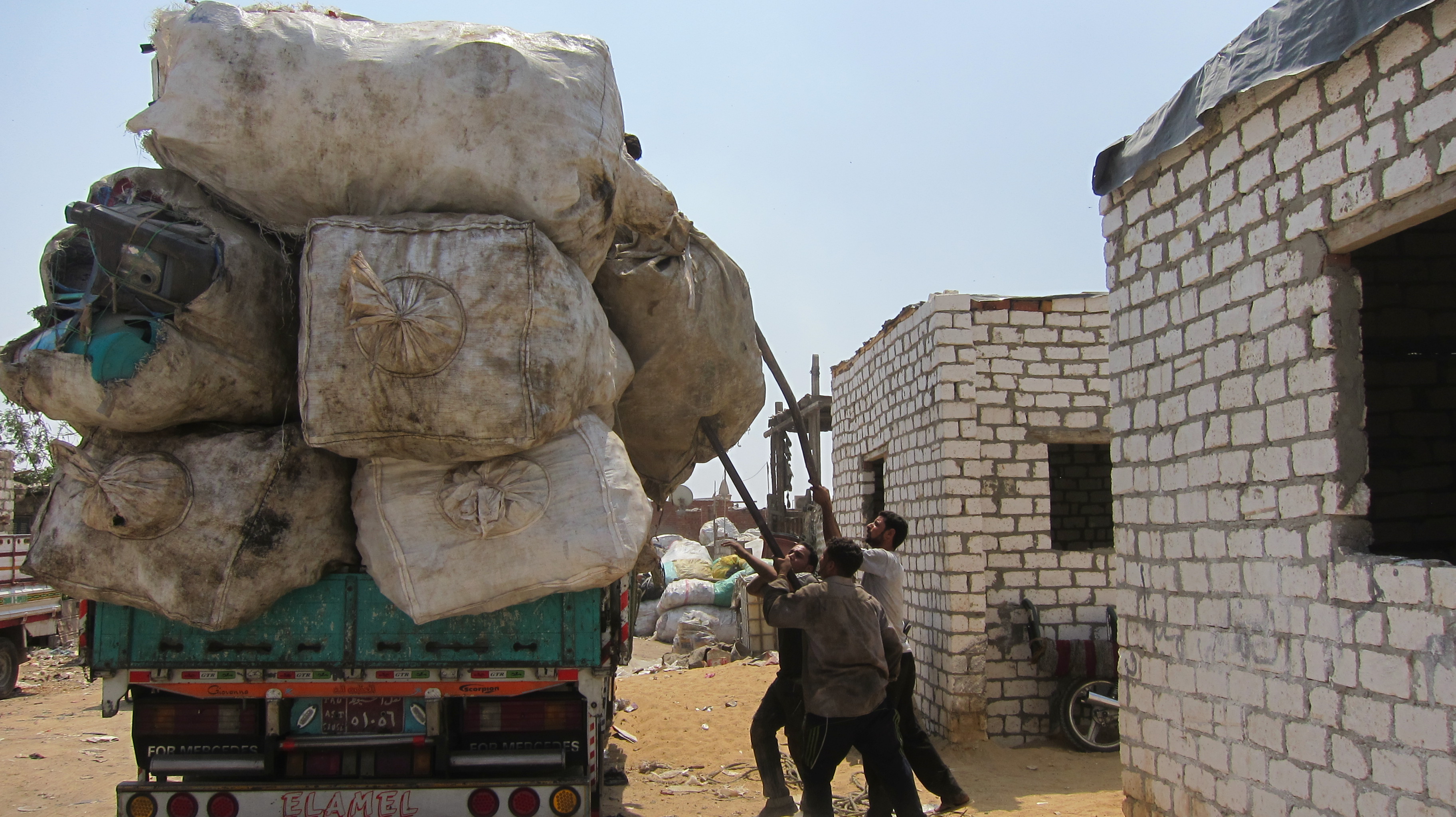
I’m convinced that if God decided to transform all of the human race into bugs and insects, the Zabbaleen would definitely be the ants among us. Observing the Zabbaleen at work is like watching a colony of ants. They are a people in constant motion — transporting Cairo’s garbage to their homes, sorting through it, bagging up recyclable items, loading their bulging bags onto trucks and carts, and finally transporting their goods to market. This is the cycle of life for the Zabbaleen. They cannot afford to be idle or they will not survive.

IMG_2939
The Zabbaleen are masters of hard work and efficiency. They have developed their own systems for turning trash into a meager treasure that gives them enough to survive from day-to-day. Once the trash comes in they must immediately off-load it, begin the picking process, and then systematically get everything to the right pile for processing. Organic waste is fed to animals. The rest is sorted according to categories like paper products, metals, cans, plastics, rubber items (including the soles of shoes), and more. Certain families specialize in certain items and have their methods for bagging and transporting the items they sell to recyclers.

Loading Crew
Because Cairo’s flow of garbage is incessant, the Zabbaleen cannot afford to waste any time. As quickly as they summit today’s mountains of filth, they must do it all again the following day. They must deal with everything they bring in because there is no garbage pick up for any remaining items. Somehow they manage to take almost every item of garbage and make money, even if only a few Egyptian pounds. Observing these industrious people at work is nothing short of inspiring. Their example certainly leaves us without excuse for complaining about how hard we may have to work.

Atop The Trash
When the writer of Proverbs recorded his wisdom about hard work, he used the ants as an example. “Go to the ant, O sluggard; consider her ways and be wise. Without having any chief, officer, or ruler, she prepares her bread in summer and gathers her food in harvest” (Prov. 6:6-8). And again, “the ants are a people not strong, yet they provide their food in the summer” ((Prov. 30:25). And so it is with the Zabbaleen. They have learned to work cooperatively and consistently in order to provide food for their families. They do not know the luxury of a day off or a vacation.

IMG_2928
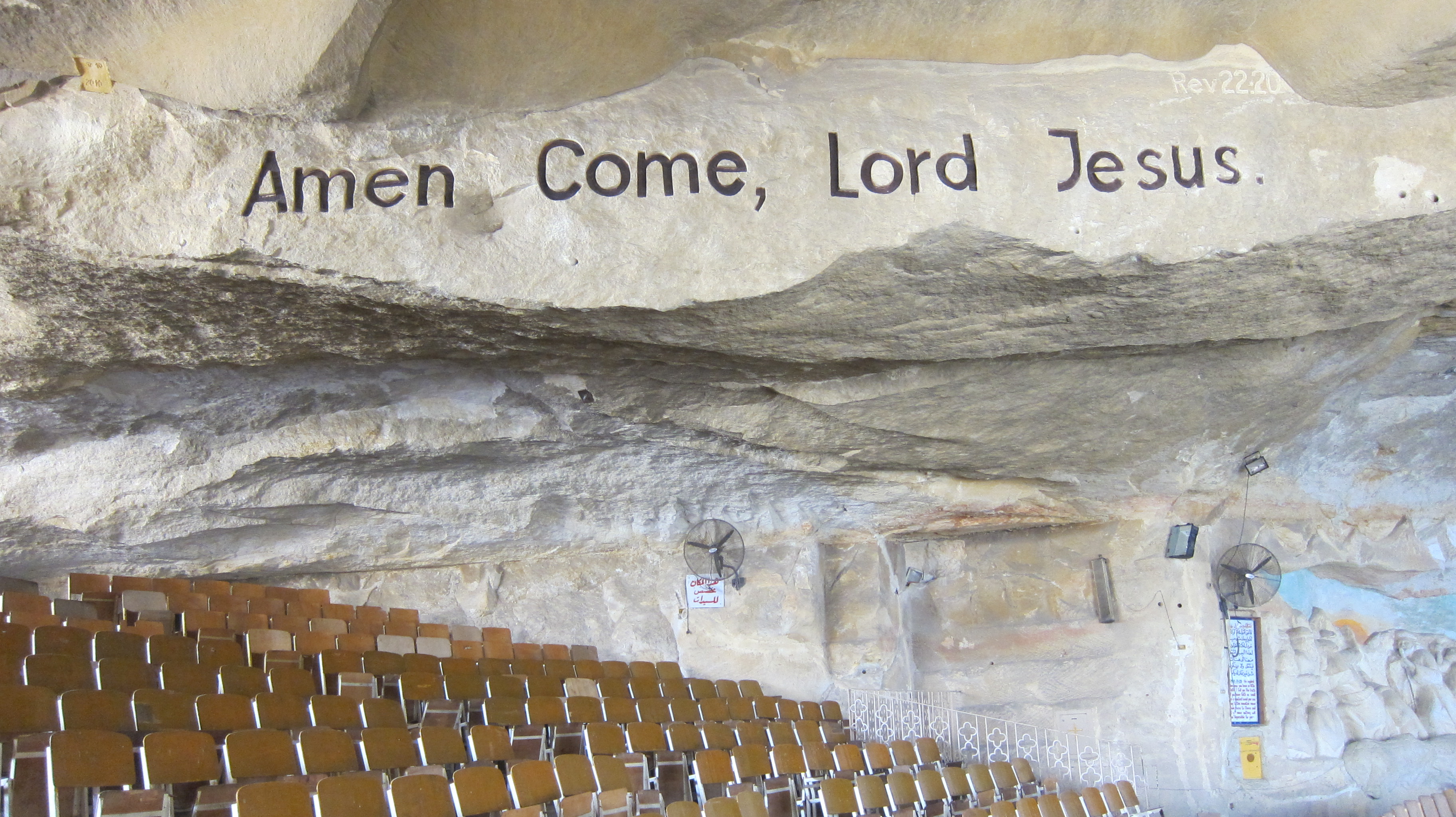
In addition to being an industrious people, the Zabbaleen are also a people of faith. An estimated ninety-percent are Coptic Christians. This morning we took a quick detour through Cairo’s Mokattam district, home to several thousand Zabbaleen. There, they have transformed the caves in the Mokattam mountain into churches, the largest of which is the Cave Church of Saint Simon the Tanner. The church can seat 20,000 people. There are no words to describe the rugged beauty of this church and the other smaller churches nestled in the caves. This religious complex carved into the mountain is a metaphor for the existence that the Zabbaleen have carved out of Cairo’s mountains of garbage.

Come Lord Jesus
We can certainly learn a lot by considering the industrious Zabbaleen, a people whose work ethic is akin to that of the ants. Although life is extremely hard for them, they have managed to survive from day-to-day and to hold on to their faith in a God who loves them. Like Lazarus who longed to eat the crumbs that fell from the rich man’s table (Luke 16:19-31), the Zabbaleen survive on the crumbs swept aside by those more fortunate than them. I am thankful that we are here to serve the Zabbaleen and their children in the name of Jesus — the One who loves us and who loves the Zabbaleen.

Construction Worker

Posted by: Omar C. Garcia | April 8, 2014

What We Take For Granted

Helwan, Egypt

We all take lots of things for granted. For example, once while on a domestic flight somewhere overseas, I sat next to a lady who could not figure out how to buckle her seat belt, even after watching the safety sermon at the beginning of the flight. “I have never used one of these before,” she turned and whispered to me. I unbuckled my own seat belt and then explained to her how to put the two ends together. She was visibly relieved albeit a bit embarrassed.

David Teaches First Aid
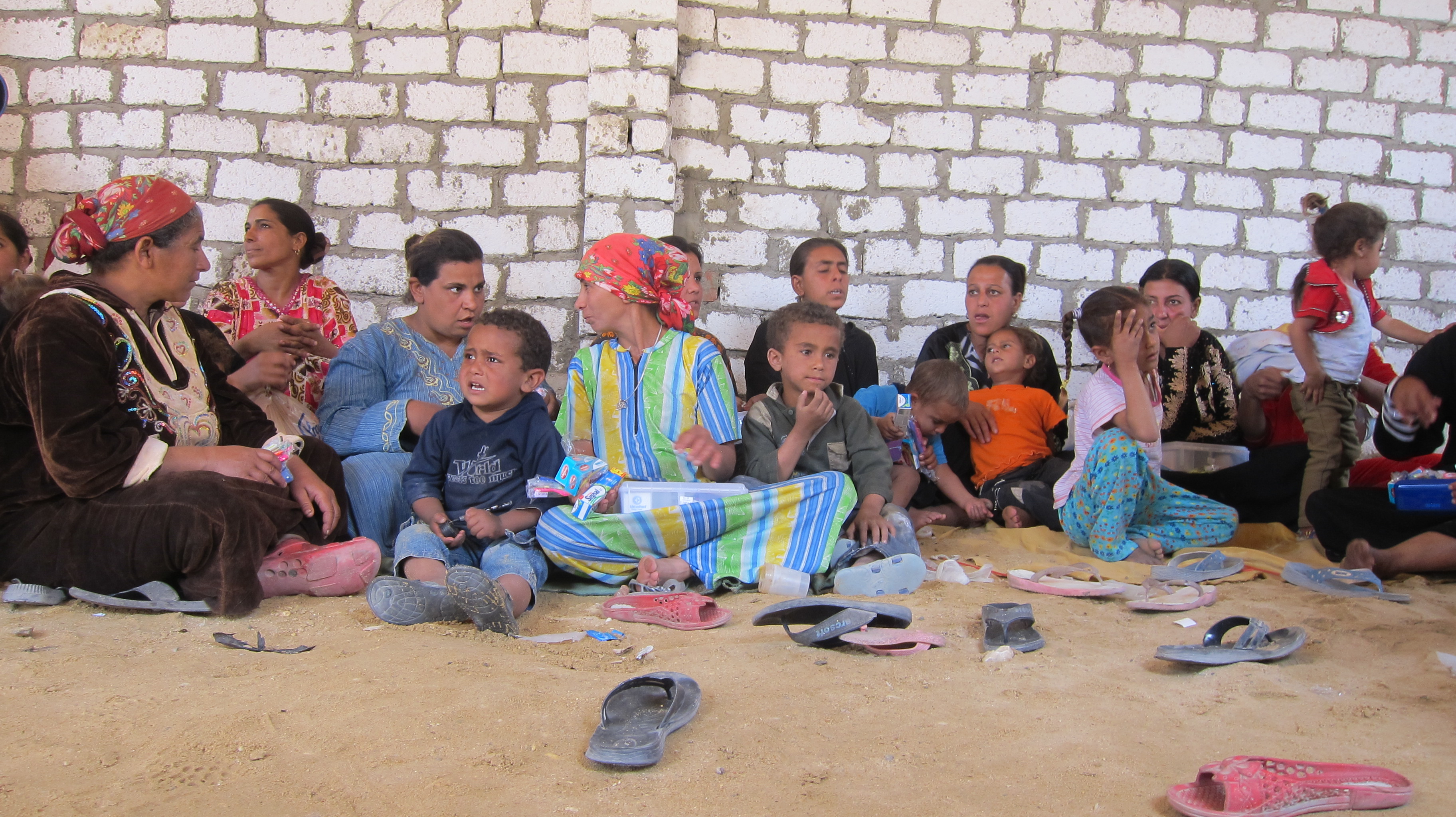
Today, we taught hygiene and first aid lessons to forty Zabbaleen moms. David Budke did a great job of explaining in a careful step-by-step way why it’s important to wash our hands and brush our teeth. One mom asked if brushing teeth was painful — a clue that neither she nor her kids had ever brushed their teeth. David assured her that the process was not painful and then demonstrated how to brush teeth by brushing his own. We then gave dental hygiene items to each family and also cautioned them to use their respective toothbrush.

Moms' First Aid Kits
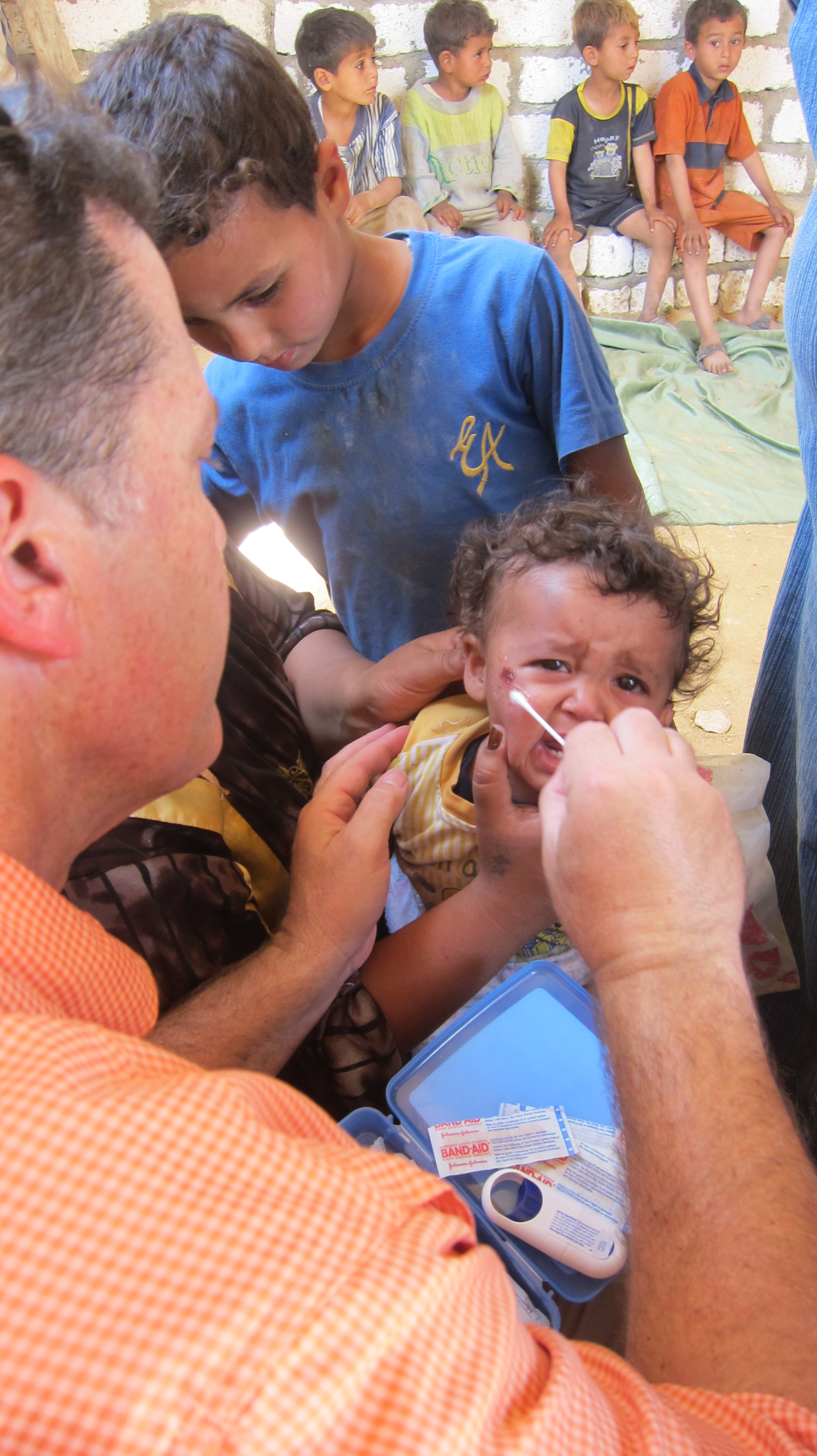
During our first aid lesson, we discovered that no one in the room had ever used a band-aid. Once again, David demonstrated how to apply antiseptic cream and a band-aid to a wound. He also talked to the group about how to take over-the-counter pain relievers and use the other items in the first aid kits we provided. By the way, all of the first aid supplies were donated by the kids at Morton Ranch Elementary, the school where team member Katherine Sand teaches.

David Gives Aid
After the lesson, mothers lingered for another half-hour asking more specific questions like how to use an antiseptic wipe. We also had a few opportunities to do a little basic first aid. We treated a few scrapes and minor cuts and helped an older man who had stepped on a nail. There is no medical care for the Zabbaleen in their village outside of Helwan. That’s why we have set aside one of the rooms at our school to serve as a community clinic. This clinic will allow us to be the hands of Jesus to help those who are hurt.

Christy Teaching
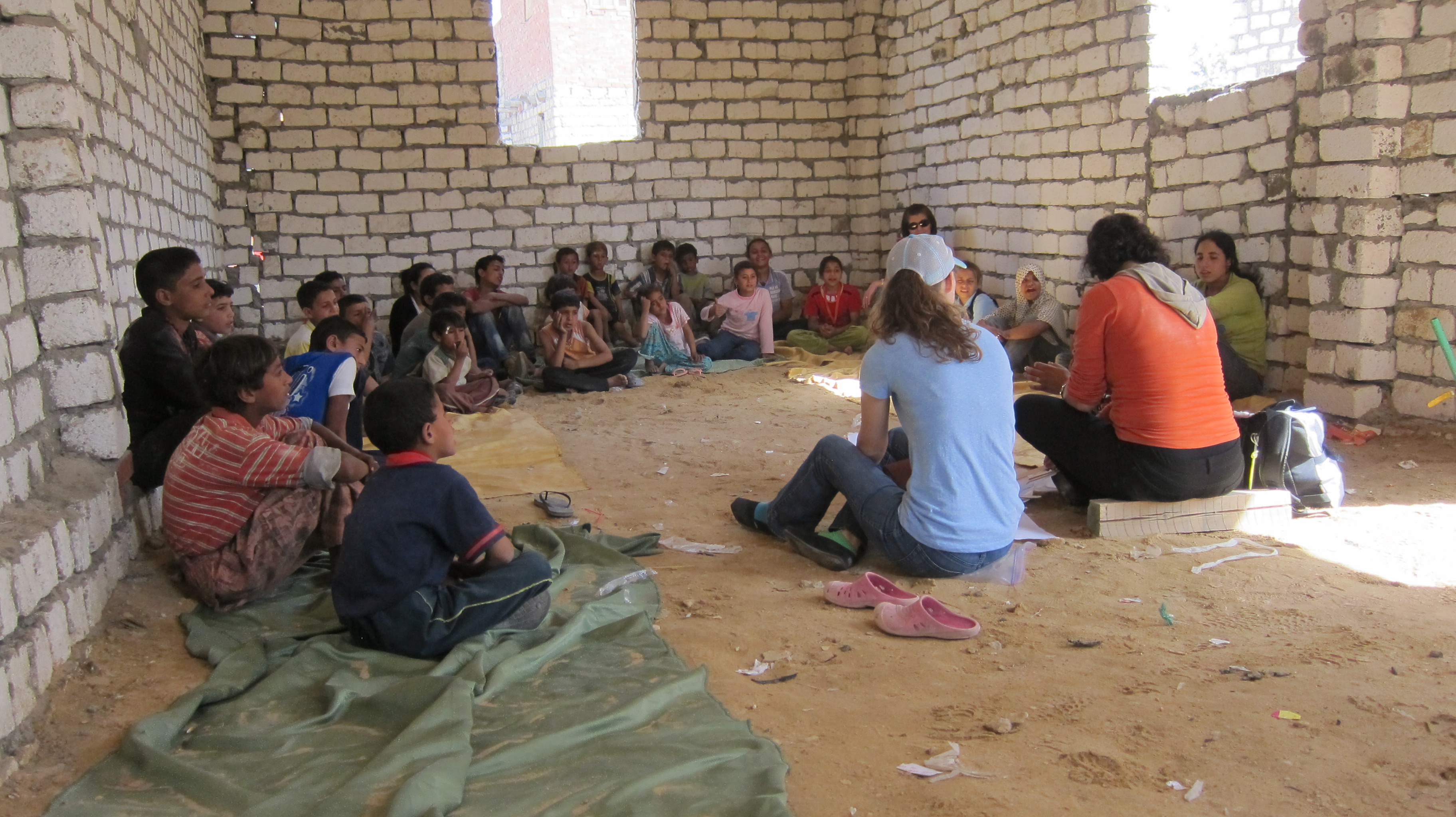
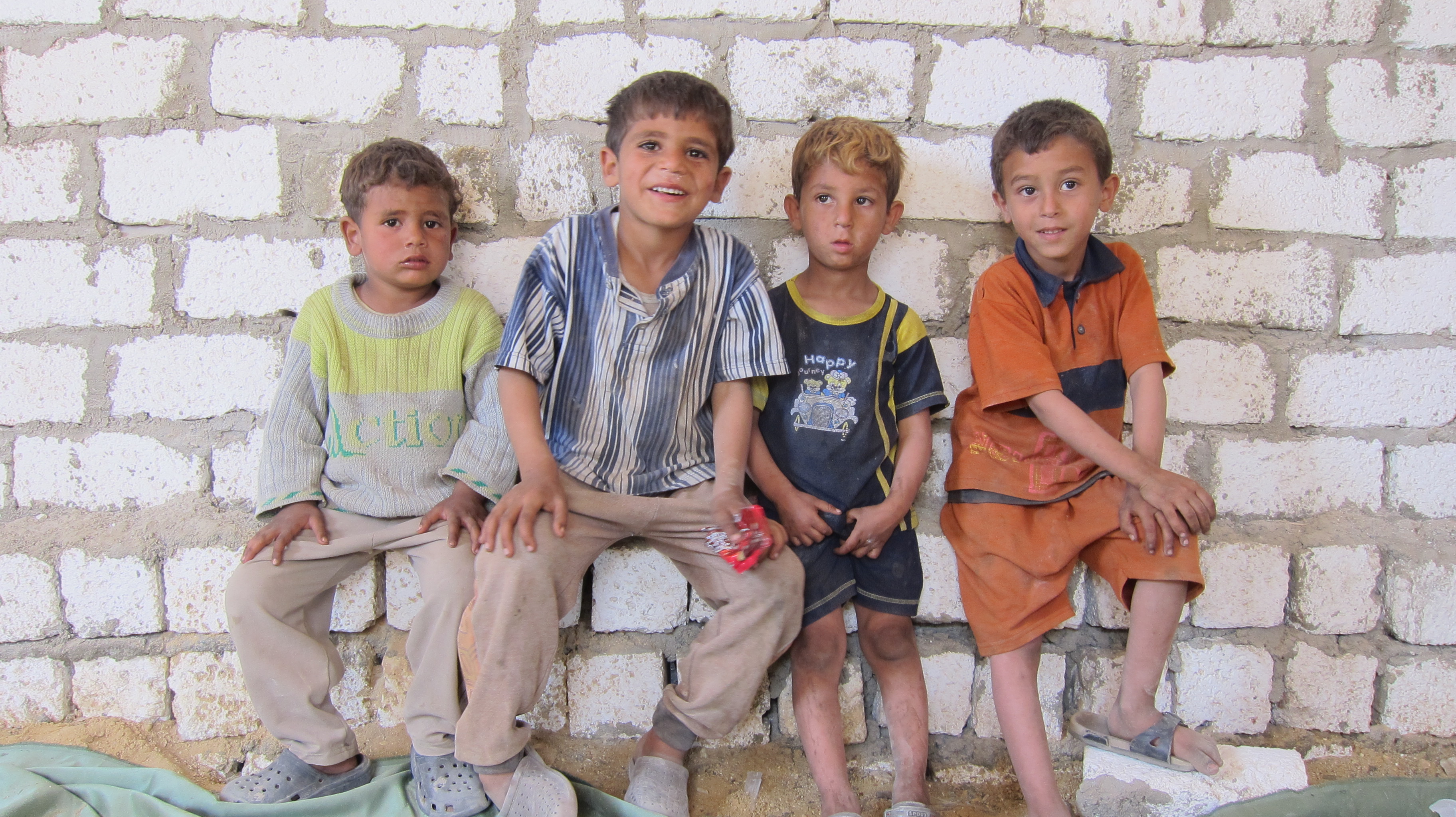
This afternoon we also taught the story of the lost sheep and explained to the kids how much God loves them. Team members Christy Cupit and Katherine did an excellent job of preparing the lessons and making them interesting and memorable. When the kids see the picture of this story in the pictorial Bibles we will provide, they should be able to tell the story to their own families. Everybody is very interested in the stories we are telling and a few of the kids even asked if they could see the Jesus Film again. They are just now learning the Bible stories that many of us have known for years and often take for granted.

Four Boys
I am encouraged by the things that are happening at our little campus in this Zabbaleen village outside of Helwan. I envision that in the coming years many of the kids who live here will realize a better and brighter future because of the investment made by the kids who attended our Vacation Bible School last year. May we never take for granted the way in which God can use our kids to help change the world and bring glory to God.

« Newer Posts - Older Posts »

Categories