Posted by: Omar C. Garcia | December 22, 2024

The Christmas Truce of 1914

Something remarkable and unexpected happened on the first Christmas of the first World War, only five months after the outbreak of war in Europe. Allied and German troops were engaged in trench warfare on the battlefields of Flanders in Belgium along the Western Front. In some places the trenches were less than 60 yards apart with the no-man’s land between them littered with the bodies of dead soldiers.

In the days leading up to Christmas, men on both sides had received gifts from home. Many of the Germans, who had a direct line from home to the front, received table-top trees with candles clamped to the branches — a German tradition. Just after midnight on Christmas Day, the German soldiers placed their trees along the parapets of their trenches and lit the candles.

Christmas Truce


Then, the Allied troops heard the familiar sound of Silent Night coming from the German trenches. They feared this might be a trick until unarmed German soldiers climb out of their trenches and called out Merry Christmas. Soon soldiers from both sides gathered and met between the trenches. They exchanged Christmas greetings and gifts, retrieved and buried their dead, and even competed in a soccer match.

Those who were there and survived wrote to their loved ones about the spontaneous and extraordinary Christmas Truce of 1914. Percy Jones of the Queen’s Westminster Regiment wrote, “Altogether we had a great day with our enemies, and parted with much hand-shaking and mutual goodwill.”

Corporal John Ferguson of the Seaforth Highlanders captured the irony of the truce, “What a sight; little groups of Germans and British extending along the length of our front. Out of the darkness we could hear the laughter and see lighted matches. Where they couldn’t talk the language, they made themselves understood by signs, and everyone seemed to be getting on nicely. Here we were laughing and chatting to men whom only a few hours before we were trying to kill.”

Captain R. Armes of the 1st North Staffordshire regiment reported, “It was a curious scene – a lovely moonlit (Christmas) night, the German trenches with small lights on them, and the men on both sides gathered in groups on the parapets. It is weird to think that tomorrow night we shall be at it again. If one gets through this show it will be a Christmas time to live in one’s memory.”

In 1984, musician John McCutcheon wrote a ballad entitled Christmas in the Trenches, telling the story from the viewpoint of Francis Tolliver, a fictional British soldier from Liverpool. The last stanza of the ballad is a great reminder that the men on both sides of the trenches were the same — a lesson worth remembering at Christmas and throughout the year.

My name is Francis Tolliver, in Liverpool I dwell,
Each Christmas come since World War I, I’ve learned its lessons well,
That the ones who call the shots won’t be among the dead and lame,
And on each end of the rifle we’re the same.

Posted by: Omar C. Garcia | December 12, 2024

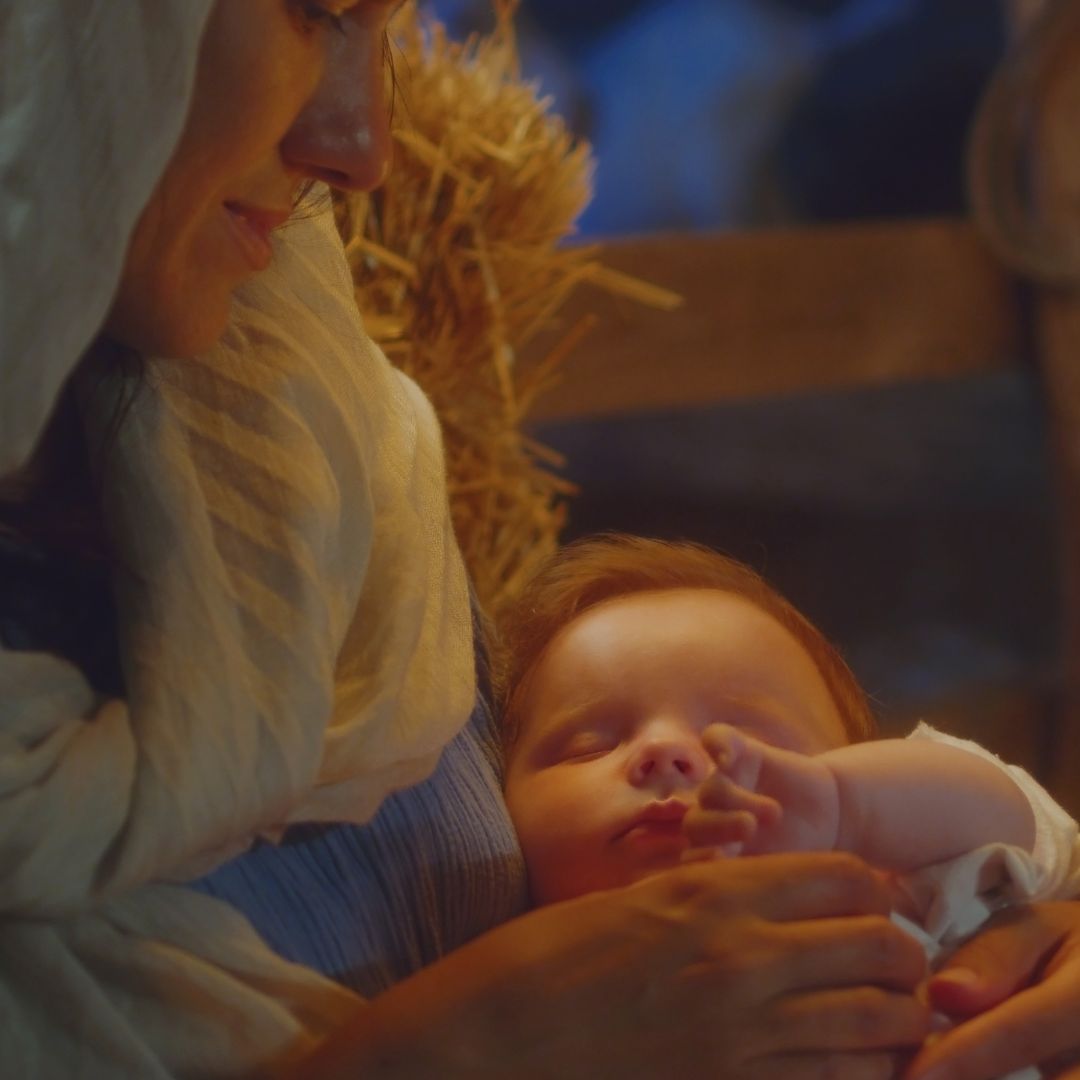
What Mary Treasured in Her Heart

Seven centuries before the birth of Jesus, Isaiah the prophet announced that the Messiah would be born of a virgin (Isa. 7:14). At about the same time, the prophet Micah foretold that the Messiah would be born in the Judean village of Bethlehem (Micah 5:2).

Centuries later an angel named Gabriel announced to a virgin named Mary that she would be with child and give birth to a son. Mary’s son, Gabriel said, would be the long-awaited Messiah (Luke 1:26-38).

During Mary’s pregnancy, Caesar Augustus unknowingly played an important role in the fulfillment of divine prophecy. Caesar ordered a census of the entire Roman world. In order to comply with Caesar’s decree, Joseph and Mary traveled from Nazareth to Bethlehem (Luke 2:1-7).


As Joseph and Mary journeyed south to Bethlehem, God’s divine clock ticked away the hours to the moment when the prophecies concerning the Messiah would find fulfillment in the birth of Mary’s baby. While in Bethlehem, Mary gave birth to her first-born Son in the obscurity of a humble stable.

The birth of Jesus was unique. While the Bible does not tell us the “how” of the virgin birth, it does tell us the “why.” Jesus came into our world to reconcile sinful humanity to a loving God. He alone was born with all of the qualifications to “save His people from their sins” (Matt. 1:21).

All other alleged saviors throughout history share a common condition that disqualifies them from being saviors — they themselves are sinners like the rest of us. A savior in need of salvation is no savior at all. Christ alone is the sinless virgin-born Savior whose birth specifically fulfilled the words of the prophets.

The news of Jesus’ birth was published in the cosmos with the appearance of “His star” (Matt.2:2). An angel announced the good news of His birth to shepherds in the fields outside of Bethlehem (Luke 2:8-15). Those shepherds were the first to visit the baby Jesus and to see the One “who came from the Father, full of grace and truth” (John 1:14).

The shepherds responded to what they had heard and seen by “glorifying and praising God” (Luke 2:20). Praise is a proper response to the mighty works of God and to the good news of salvation through Christ.


Mary’s response was different from that of the shepherds. While the shepherds enthusiastically talked to others about what they had seen and heard, Mary was quiet. Luke recorded that she “was treasuring up all these things in her heart” (Luke 2:19).

The words “treasuring up” mean deep reflection or mulling over. Mary pondered or meditated on the words of the shepherds concerning her newborn child (Luke 2:17-18). The shepherds’ words must have caused her to think back to the words of Gabriel, the things Joseph had experienced, and all that had transpired in the preceding days and months.

Mary’s response reminds us that we must set aside moments for personal and private reflection on who Jesus is, why He came, and what He has done in our lives. So, this Christmas, slow down and set aside some time to do what Mary did. Reflect and meditate on what the Scriptures say about Jesus. Treasure these things in your heart — and then share these valuable truths about Jesus with others throughout the year.

Posted by: Omar C. Garcia | August 12, 2024

A Home for a Young Widow

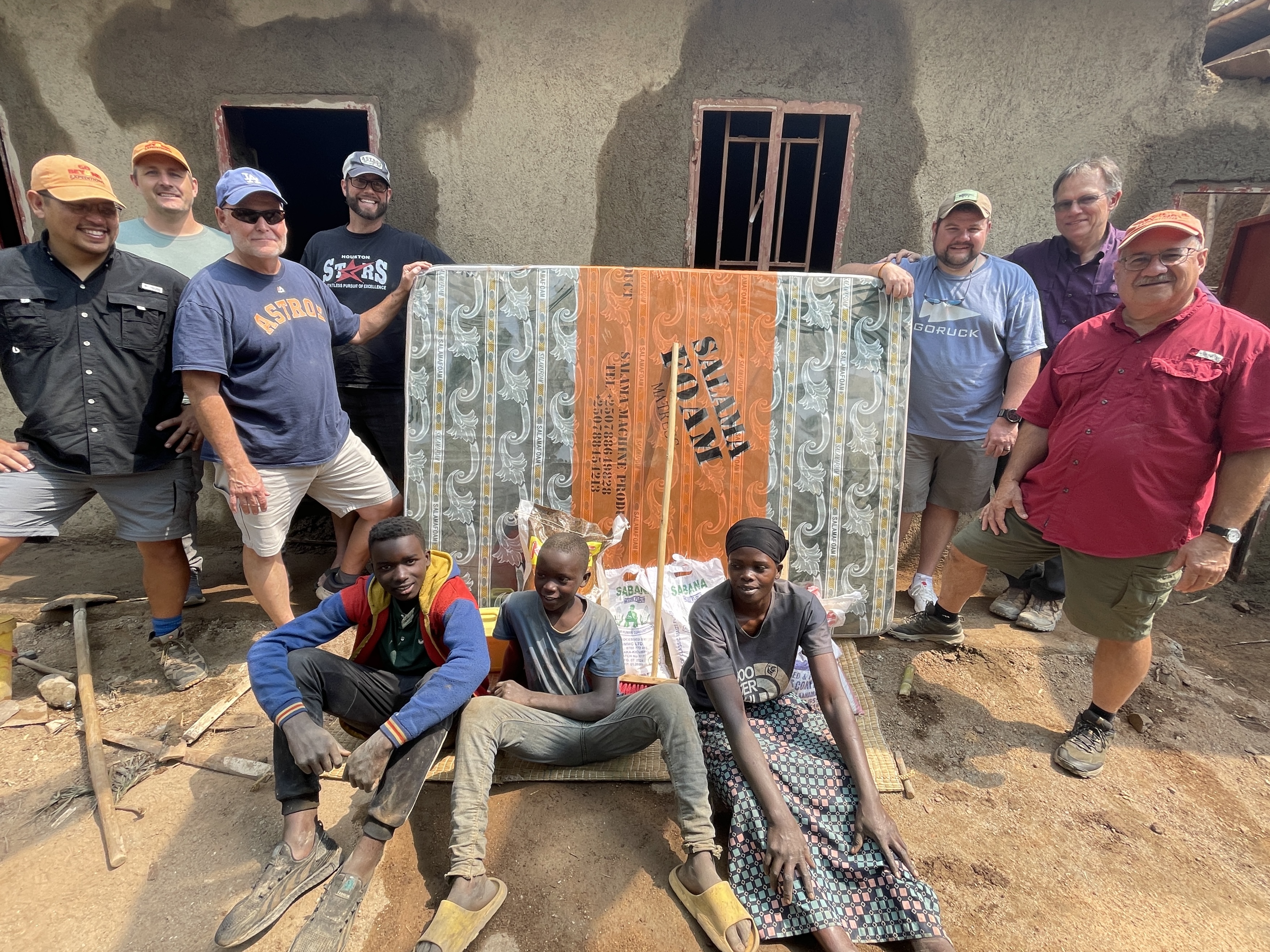
Widowed at thirty-eight, Clementine and her three boys have lived in abject poverty in a tiny two-room adobe structure in a small village nestled in one of Rwanda’s thousand hills. The crumbling walls and deteriorating roof of their tiny abode did little to keep the elements out. All of that changed this month.


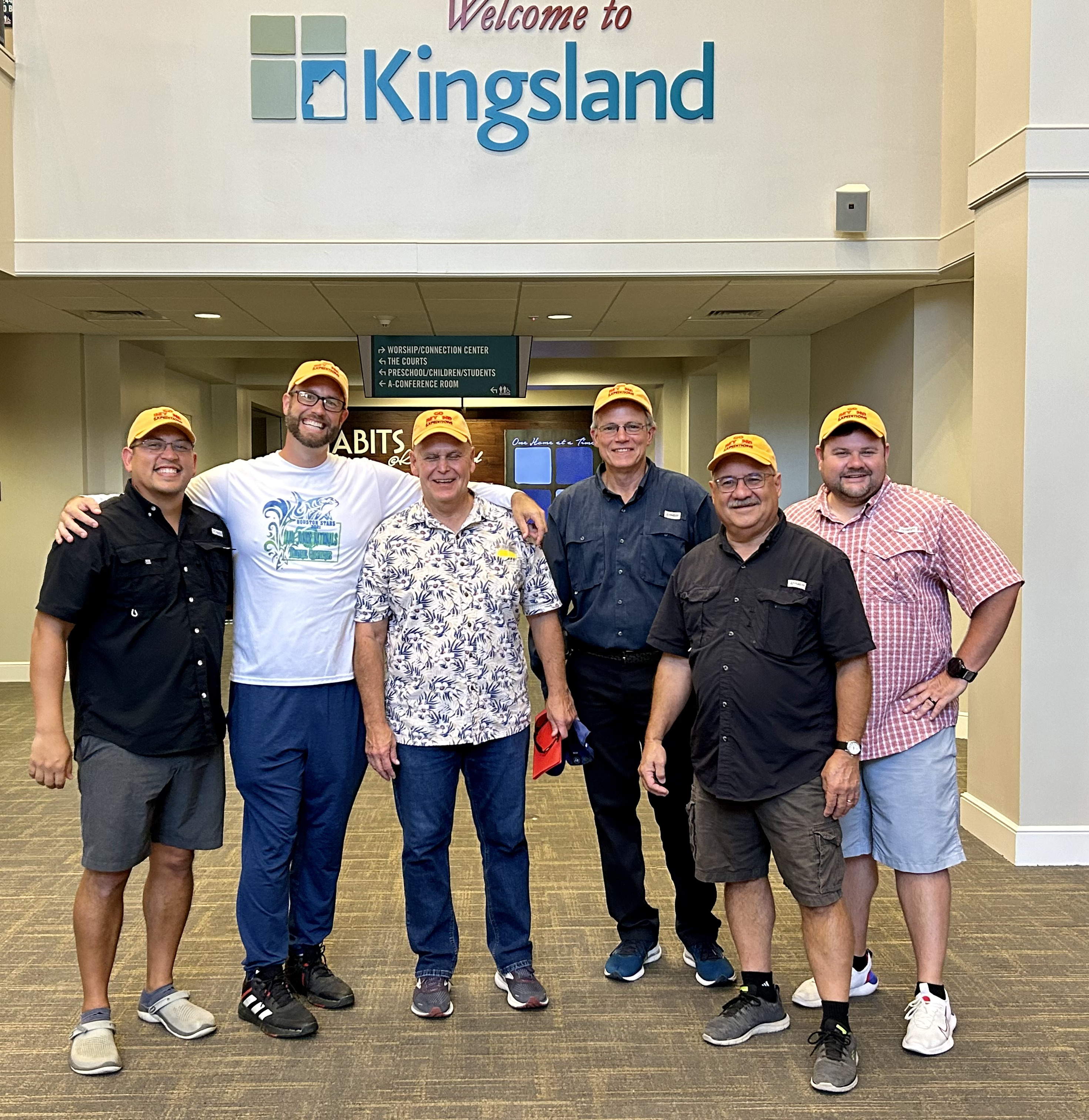
Kingsland members David and Vicki Leatherwood and their family moved to Rwanda several years ago. They are reaching Rwandans through orality training, literacy training, Scripture distribution initiatives, Jesus Film initiatives, and outreach into small villages scattered along the Congo-Nile Trail.


David invited us to join him for a week of intensive manual labor in partnership with Arise Rwanda. This ministry is committed to positively transforming the community of Boneza out of extreme poverty by focusing on education, clean water, health care, pastoral care, and economic development.

David Leatherwood introduced us to John Gasangwa, the founder of Arise Uganda. Both David and John are respectively working to see homes transformed by the power of the gospel. And, it’s happening!


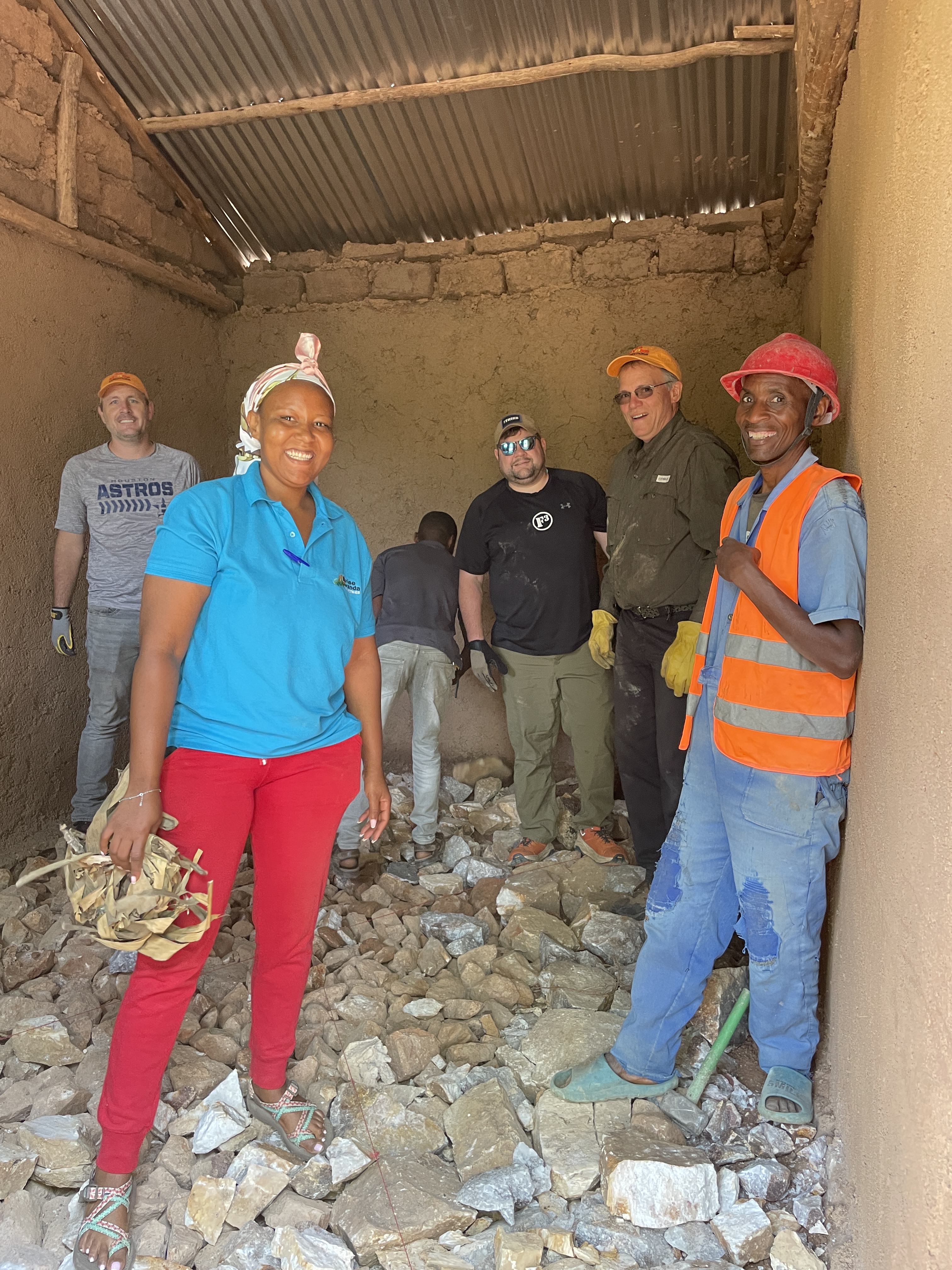
Our team of guys had an amazing week with the folks of Arise Rwanda. Kingsland provided the funding to repair and add on to Clementine’s humble habitat in the Boneza community. Our local friends started the project and we had the opportunity to join them to move the project toward completion.

When we arrived the new walls were ready to receive cement plaster, the tin roof was secured, and the dirt floors were ready for cement. The members of our team all had good construction skills but we all learned new skills, like plastering adobe walls. We had a blast working alongside our Rwandan friends who taught us the finer motions of properly applying plaster.


Within days the entire exterior and interior walls were plastered with a smooth finish and we helped lay the cement floors in the interior rooms. We also hired an electrician to wire each room with a light bulb and outlet and pre-paid six months worth of electricity for Clementine.


Clementine and two of her boys were present every day to invest sweat equity in the construction of their new home. Clementine expressed her gratitude for having a house with a tin roof and cement-plastered walls. This, she said, was an unbelievable blessing.


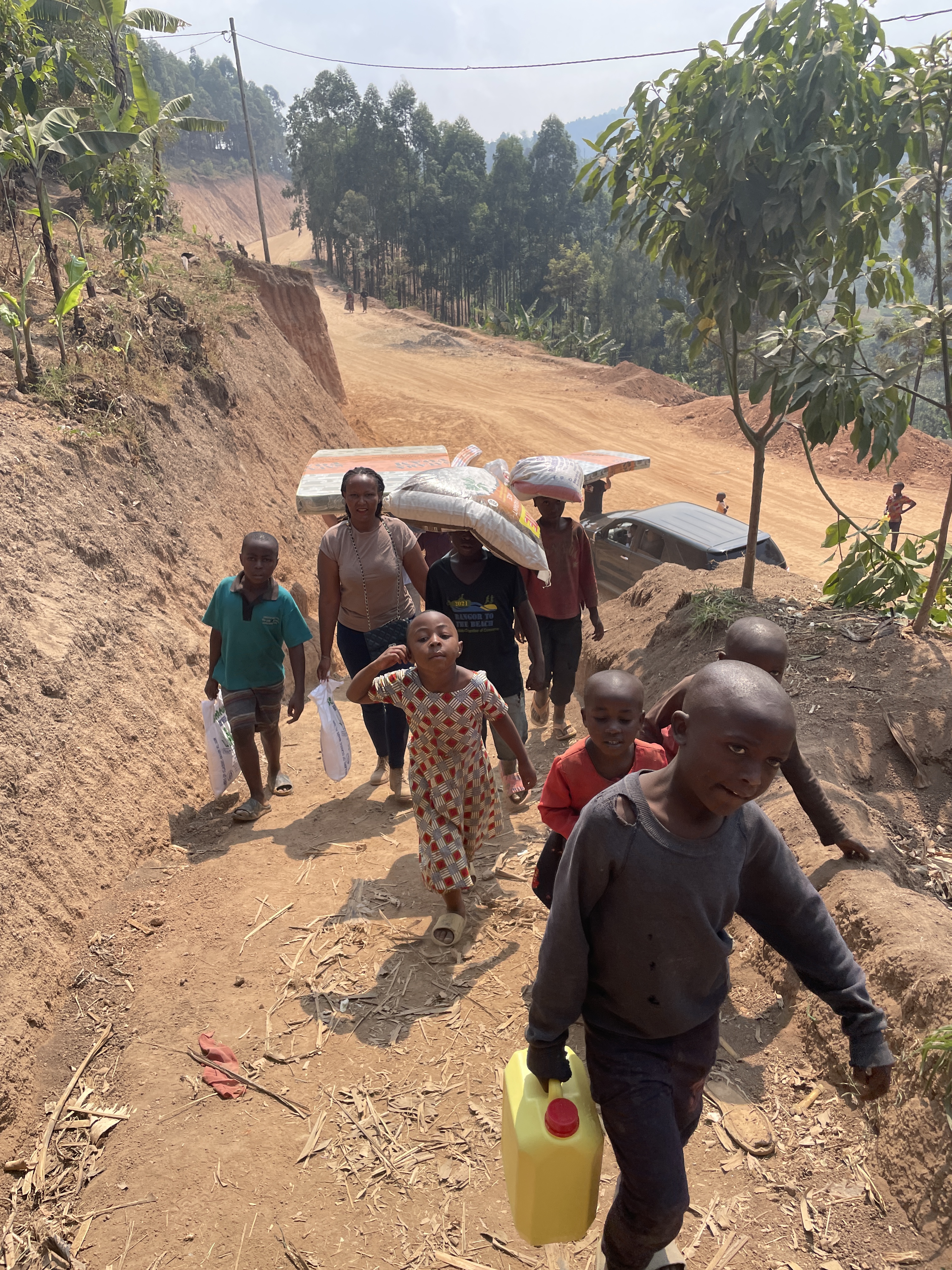
Our team also arranged to have beds constructed for the family, purchased mattresses, and surprised them with these and other household items and groceries. For the first time, Clementine and her boys will each have their own beds and mattresses.


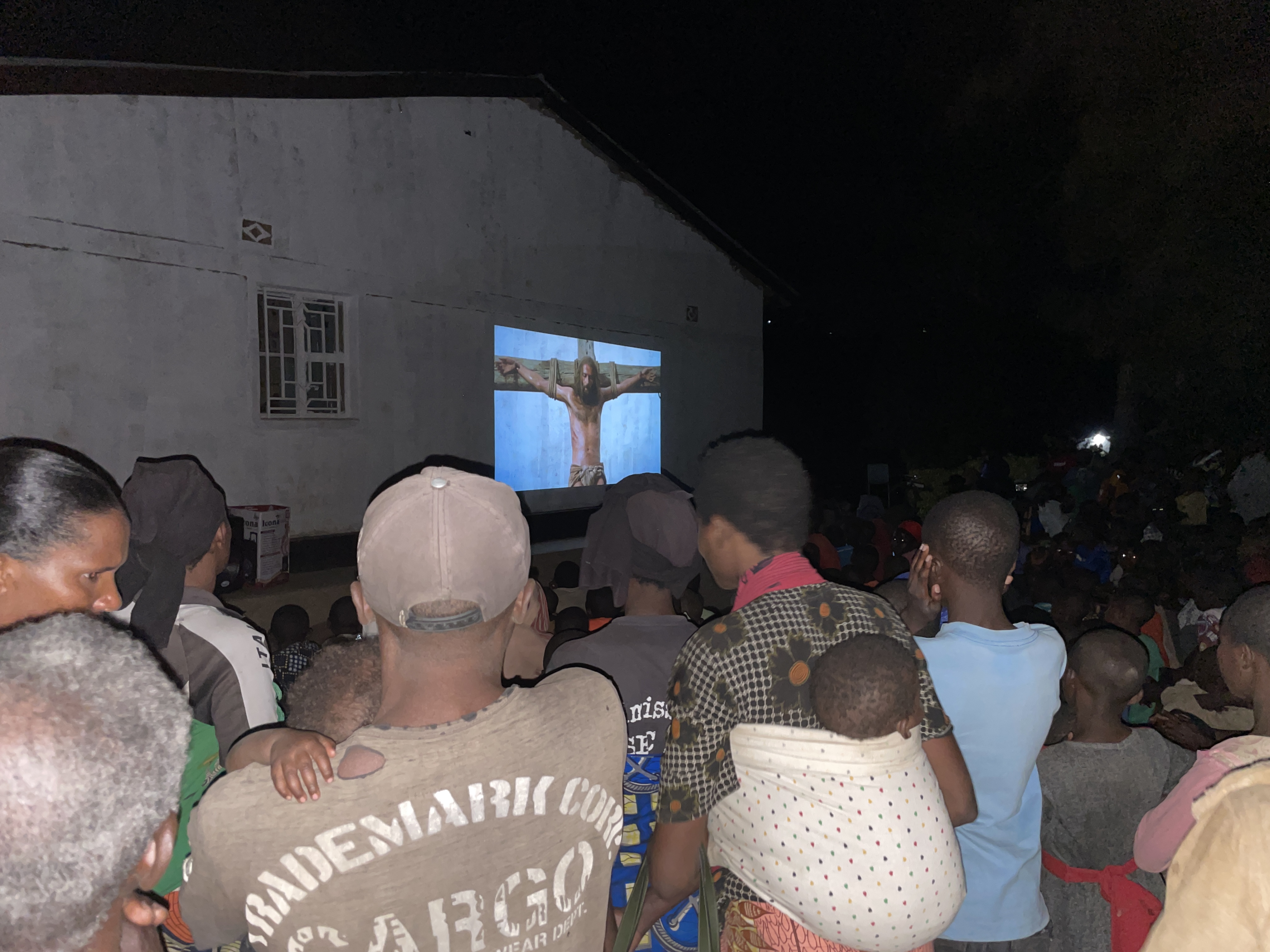
We also had an opportunity to show the Jesus Film in a neighboring village. More than 300 attended the showing and, at the conclusion of the film, more than one-hundred people prayed to receive Christ as their personal Lord and Savior.

On our last day in Boneza, we joined Clementine and her boys and all who worked on her home to dedicate the home to God. We gathered at the front of her new home and prayed and gave thanks for the blessing of a home for Clementine and her boys.


We returned home with that good-kind-of-tired feeling that results from having served someone in need. We are grateful for the time we had to serve alongside one another and our new friends in Boneza. We are already planning to return with a team next year to bless another family in need.

Posted by: Omar C. Garcia | July 17, 2024

An African Adventure

The vast continent of Africa first stirred my imagination when I was a kid in grade school. The stories of the Nile, of vast savannas teeming with wildlife, of dangers lurking in dense jungles, and of intrepid explorers venturing into uncharted regions were brushed in vivid colors across the canvas of my childhood mind.


And, of course, I sat hypnotized in front of our black and white TV, watching Johnny Weissmuller portraying Tarzan, swinging from tree to tree above the jungle floor. This was Africa — a place of danger and of great adventure.


Africa became even more real when my Uncle Phil ventured there and returned to share slides and stories of his adventures. Never could I have imagined that one day I would travel extensively across this amazing continent.

Every year, I have the privilege of leading the graduating seniors in Kingsland’s Student Ministry on their summer mission trip. For the past several years we have traveled to Israel to give our students a better understanding of where our biblical worldview unfolded. However, because of the ongoing conflict between Israel and Hamas, we had to pivot.

I immediately thought of Africa as our alternative destination. Our students must experience Africa — and more specifically, experience it in the context of serving our ministry partners in Uganda.


In late 2005, I led our missions ministry to adopt the pre-born as one of our people groups. We later collaborated with my friend Kurt Dillinger, founder of Life International — an organization whose focus is on the mission field created by abortion around the world. Together we started The Comforter’s Center, the first pregnancy help center in Kampala, Uganda.


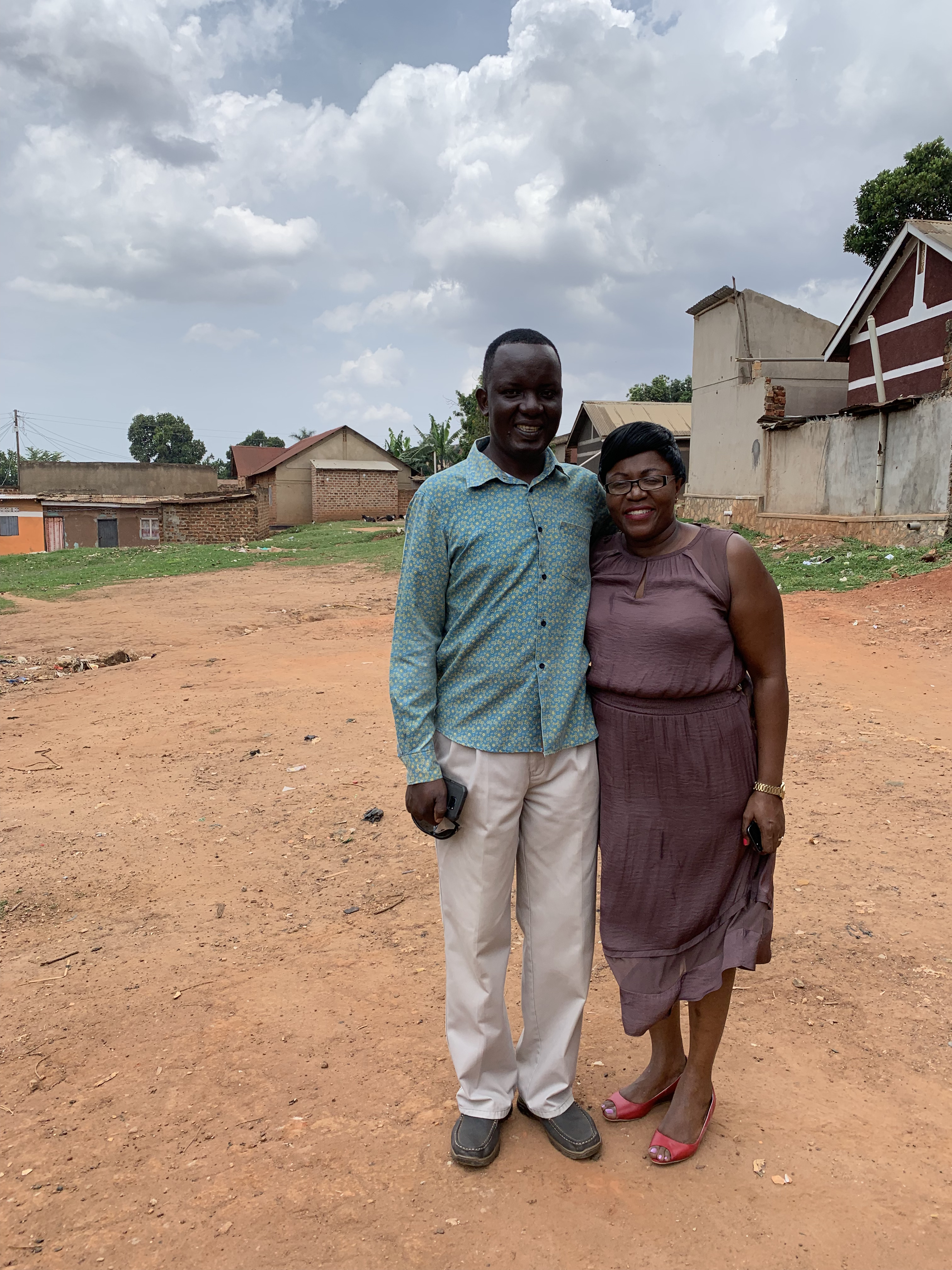
Soon after we started The Comforter’s Center, I met Robert Nabulere. Robert and his wife Rose serve the people of Kawempe, an impoverished area of Kampala. They have started a primary and a high school to educate students from poor families. Kingsland’s missions ministry has invested in the development of these campuses which now serve more than 200 students.


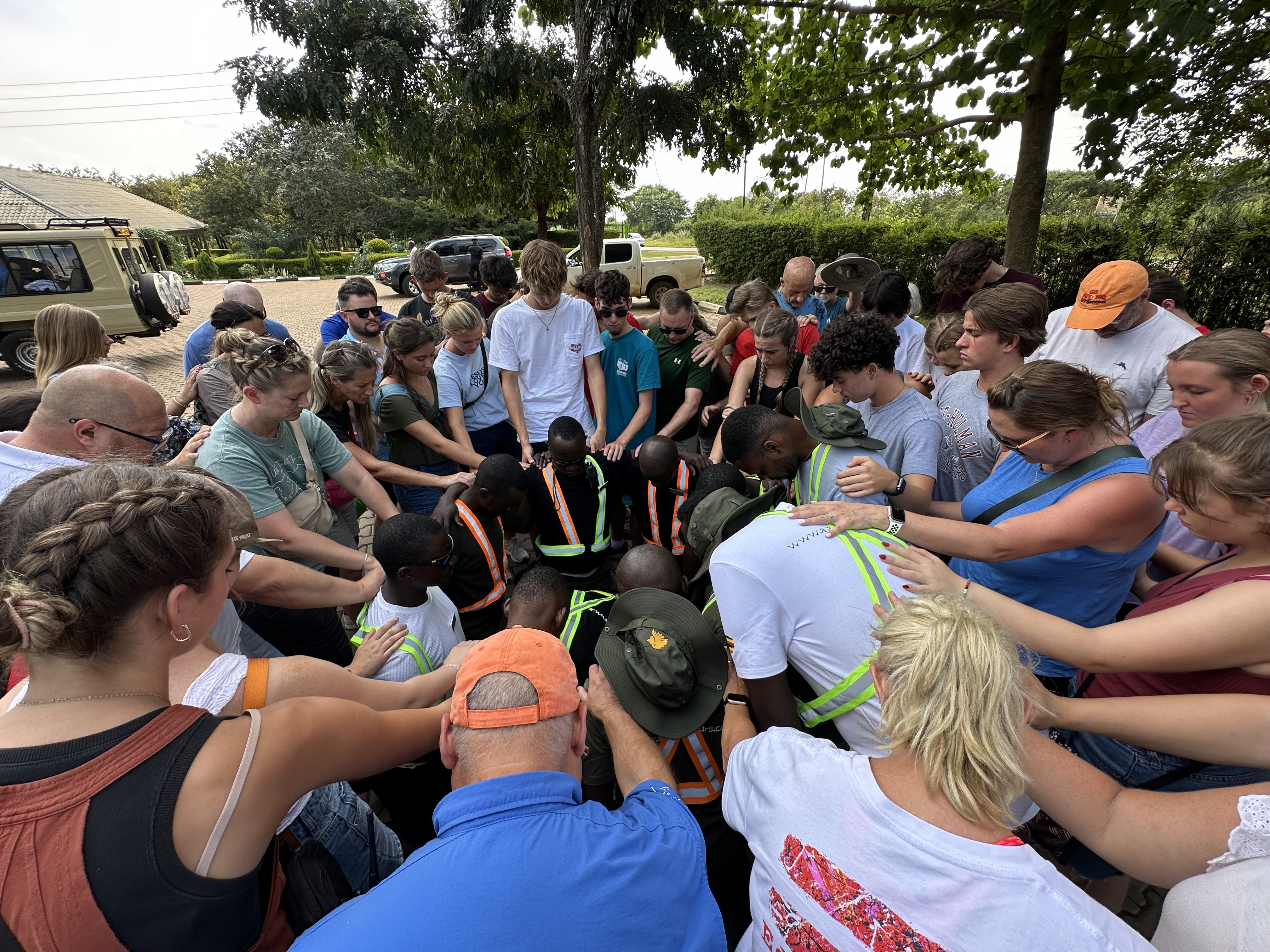
This past week, I led 54 graduating seniors and parents to serve at The Comforter’s Center and at the Miracle Center schools. This trip was an opportunity for our students to experience Africa up close and personal by interacting with folks at the grass roots level.


Those who served at The Comforter’s Center served more than a hundred moms and their babies. The most beautiful sight was babies in the arms of the moms who chose to not abort their babies. Since starting the center, thousands of moms have chosen life for their babies. Our student team played with babies, pampered and prayed with moms, and led in worship.


The students who served at both the primary school and high school blessed children from some of the poorest homes in Kampala. I am grateful for Pastor Robert and his wife Rose and their vision to provide opportunities for children to move toward the realization of their highest potential in life by learning about Jesus and by receiving a good education.


Those who served at the residential high school had the opportunity to worship with the students. My favorite part of visiting the high school is always the worship and the intense passion of the students for God. The students who attend the Miracle Center schools are on track to love and serve God in their generation.


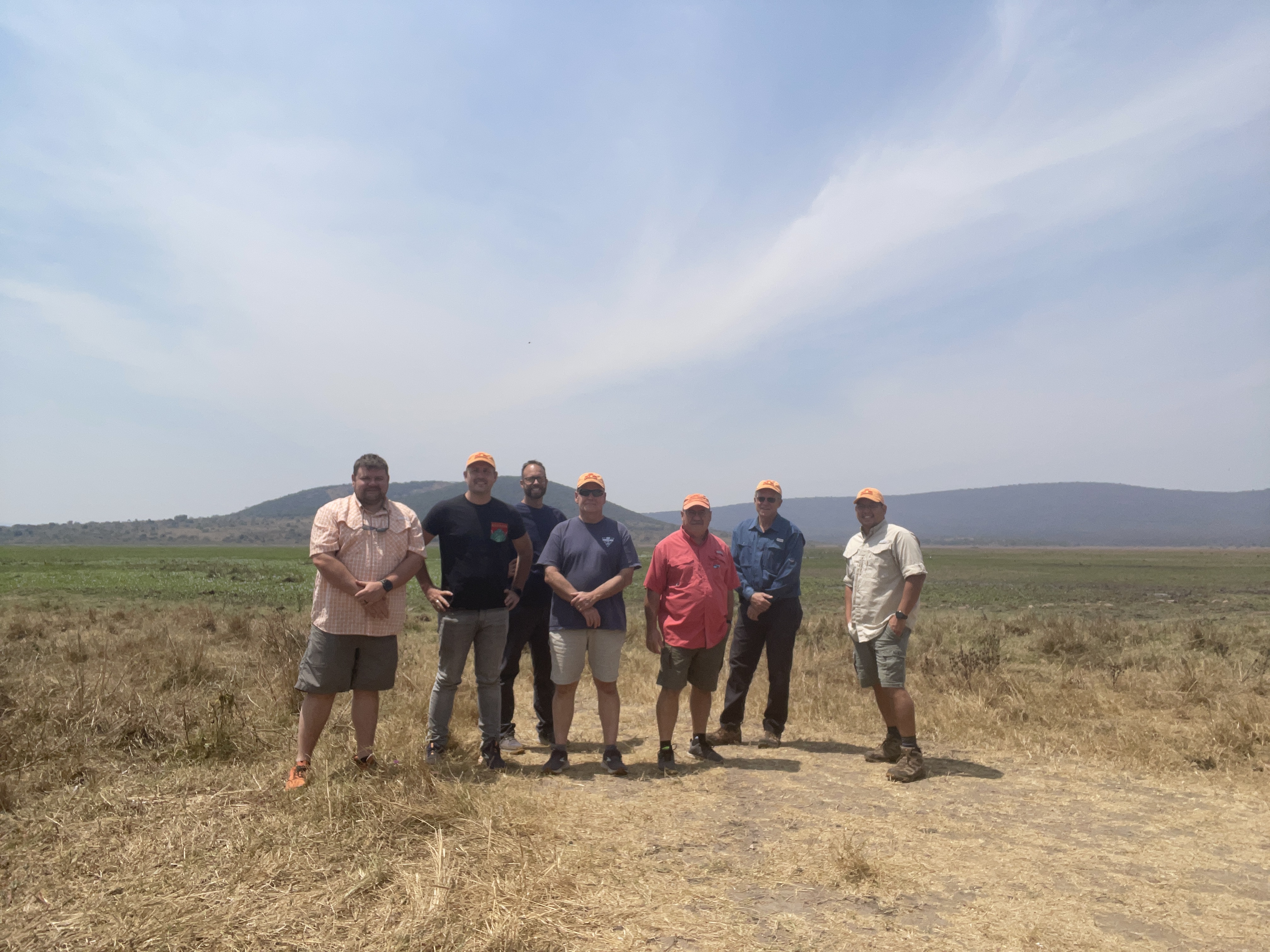
After our service days, I arranged to take our students on safari — without question a bucket list item when it comes to African adventures. We piled into nine safari vehicles and headed into the wide-open savannas to see wildlife in its native habitat. And we were not disappointed. The abundance of wildlife was on full display.


After our game drive we took two boats up the Victoria Nile from Lake Albert toward Murchison Falls. This is the place where the Nile River forces its way through a 23-foot wide gap in the rocks and falls more than 140-feet before flowing westward toward Lake Albert. Murchison Falls is a breath-taking sight.


Every evening we enjoyed worship and a devotional time and an opportunity to debrief. These gatherings were the last opportunity for these students to be together before returning home to head off to colleges around the country.


I am grateful for Kingsland’s Student Ministry and all they have invested in these students and the almost 400+ who served around the globe last week. And I am grateful to have had the opportunity to lead these students on their final adventure together before starting the next chapter of their respective journeys. May God bless them and use them to serve His purposes in their generation.

Posted by: Omar C. Garcia | July 2, 2024

The Red Pen Apologist

On Monday the 19th of February in 1973, a friend seated next to me in Algebra class asked me if I had ever read the Bible. When I replied that I did not own a copy of the Bible, she handed me a copy of the New Testament and asked me to read it.

Intrigued, I opened the pages of that New Testament later that evening and started reading. I continued to read every night — and to mark the pages with questions, thoughts, and reflections. I was absolutely fascinated by the life of Jesus and those who chose to follow Him.

The more I read, the more convicted I became that something was missing in my life. Within a matter of weeks, I heard a presentation of the gospel message. For the first time, I understood my sinful condition and my need for Jesus Christ. I repented of my sins and placed my faith in Jesus Christ alone for salvation.

I have never regretted my decision to follow Christ. Walking with Christ is the greatest adventure of my life.

Soon after I started my journey with Christ, the opposition came. It started in a class I took in high school called “Development of Western Thought” — an intensive three-hour class that was research intensive. When I shared with the class that I was a follower of Jesus, the push-back started.

Looking back on that first year as a believer, I am thankful for the push-back because it caused me to learn how to honor Christ as Lord of my life and to make a defense to everyone who asked me to give an account for what I believed, yet with gentleness and respect (1 Peter 3:15).

Little did I realize how that first challenging year of my journey would prepare me for the coming years. I encountered professors in college who were hostile to the gospel. On one occasion a professor tried to personally humiliate me in class because of what I believed.

I challenged that professor to an open discussion between us — in front of the entire class. He agreed and we spent the next two hours discussing the claims of Christ. At the conclusion, he thanked me and invited me to his office to continue the dialogue. We became friends and from that day forward he treated me with respect.

Hostility to the gospel has been around from the first-century to the present. However, because we live in a day that has no regard for the objective truth of the Scriptures, the challenge of defending the faith is often very challenging.

The rise of social media has given every person with any measure of hostility to the gospel the capacity to publish their personal attacks against the Christian worldview, irrespective of the soundness of their sources, their proficiency in hermeneutics, or the accuracy of their assumptions.

That’s where Tim Barnett comes in. Tim is an apologist and speaker with Stand to Reason — according to their website, “an apologetics ministry dedicated to training Christians to think more clearly about their faith.” Greg Koukl, one of my favorite apologists, founded Stand to Reason in 1993.

Tim has earned a Bachelor of Science in Physics from York University, a Bachelor of Education from Ontario Tech University, and a Master of Arts in Philosophy from Southern Evangelical Seminary.


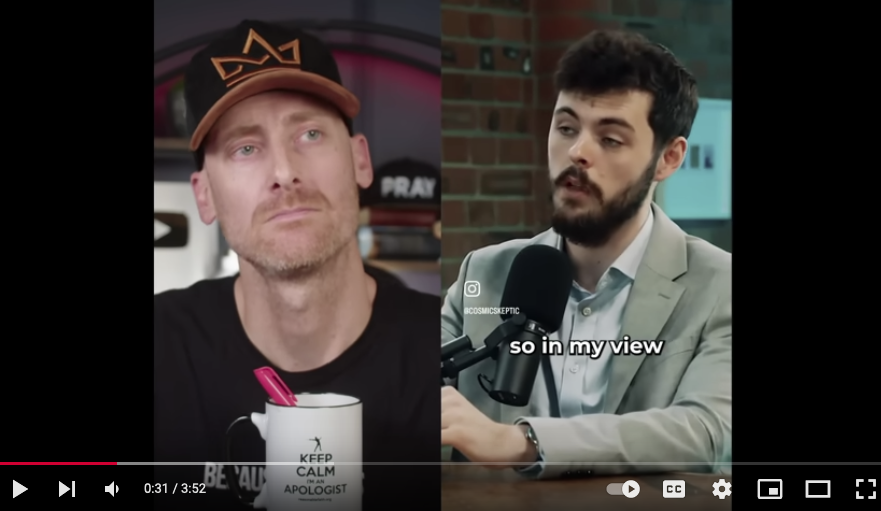
I stumbled across Red Pen Logic with Mr. B, Tim’s YouTube Channel, while following other apologists on YouTube. Tim addresses flawed thinking in essays and social media posts and does it with gentleness and respect as Peter admonished first-century Christians to do.

Tim spent a number of years teaching but, by his own admission, disliked grading until he realized how grading provided an essential teaching opportunity. Using a red pen to grade papers, Tim was able to provide helpful feedback to his students by questioning their assumptions, exposing their errors, and challenging them to think critically.

Tim used his red pen to do more than tell students they were wrong. He wanted to show them why they were wrong so they would not make the same mistake again. He corrected because he cared.

While scrolling through social media, Tim encountered what we all see every day — a lot of bad thinking on display. So, he decided to apply his red pen to this flawed thinking. Thus, Red Pen Logic with Mr. B was born.

What I appreciate most about Tim is that he uses his red pen to address flawed thinking while demonstrating respect. His insights, remarks, and questions will cause you to think deeper about the particular subject under review.

There is too much at stake for Christians today to remain silent in the face of opposition and hostility to the gospel and to the objective truth of the Scriptures. Every Christ-follower must learn to become an apologist or one who gives a defense. But, we must do it in the way prescribed by Peter in the first century — with gentleness and reverence.

I am grateful for Tim and his efforts to speak the truth in love — and with the hope that his feedback will lead others to reconsider their assertions and assumptions. I encourage you to visit Tim’s YouTube channel or Facebook page. He offers us much to consider.

Posted by: Omar C. Garcia | June 26, 2024

Bearing Witness to a Massacre

Earlier this month I received an invitation from The Consulate General of Israel to the Southwest to attend a private closed-door screening of the IDF (Israel Defense Forces) collected footage from the horrific October 7 Hamas massacre in Israel. My initial response was to turn down the invitation. My biggest fear was that if I attended I would not be able to unsee the images of the massacre.

For the next couple of weeks I debated whether or not to accept the invitation and could not get past a 90% no. I thought of my visits to the Dachau and Auschwitz concentration camps and how they had impacted me. The thought of seeing actual footage of the murders of 1,200 people and that those images would find permanent residence in my memory was a serious matter to consider.

The words “bearing witness” on the invitation finally convinced me that I had to do exactly that — bear witness to what had happened on the deadliest day for Jews since the Holocaust. And so, I went.

After introductory remarks from Livia Link Raviv, the Consul General of Israel to the Southwest, the lights dimmed and the video started. Complete silence and nervous anticipation filled the room.

The 45 minute video was a compilation of raw and unedited footage collected by the IDF, including footage from Hamas’ own GoPro cameras and cell phones, footage captured on the personal cell phones of Israelis, CCTV footage, and images captured by the body cams of first responders.

The coordinated attack by Hamas began early on the morning of October 7 as ground troops moved toward 21 communities in the Gaza Envelope, those towns located less than 5 miles from the Gaza Strip.

The opening scenes of the video evoked thoughts of the surprise attack against Pearl Harbor. The video did include subtitles to interpret both Arabic and Hebrew thus making it possible to understand the dialogue. The entire video was difficult to watch. I had to turn my head away and cover my eyes more than once, especially during the scenes of beheadings.

What follows are a few of my impressions and thoughts about what I saw and heard on the video.

First, this attack was anything but fair. It was an attack on unarmed civilians in their homes, on the streets, and those attending a music festival. With the exception of the few IDF on that morning, all of the civilians who died were unarmed.

Second, I was saddened by the unbridled delight expressed by Hamas soldiers as they killed innocent and unarmed civilians. The shouts of “Allah is Great” filled the air. Many of the terrorists chronicled their satisfaction with what they had done on their personal cell phones.

One Hamas terrorist is heard calling his parents — “Dad, I have killed 10 Jews with my bare hands. I am a hero. I am a hero.” The dad responds with delight. “Is Mom there?” he asks, anxious to tell her his good news. What he does not say is that the 10 Jews he killed were unarmed civilians, likely including women and children.

Third, the callous taking of selfies. The owner of every cell phone now has the capacity to chronicle and publish their own history in real time. Many of the Hamas terrorists did just that. They took selfies with the dead. One guy had a friend take a video of him pumping bullets into a woman lying on the floor. He then checked the video and decided it was not good enough and asked that they do it again.

In another scene, a soldier is heard calling his commander and reporting that they have beheaded several people. His commander tells him to throw the heads on the ground and play with them — but to be sure to take video.

Fourth, the denigration of the victims. Throughout the video the Hamas terrorists refer to the Jews as dogs. “Shoot them,” says one, “they are only dogs.” Dogs, however, are treated much better than the unfortunate victims killed by Hamas.

Fifth, the indiscriminate killing of anyone who happened to be in the dark sphere of the attacks. Scenes of shooting people in their cars, dragging out their dead bodies and rummaging through pockets, stealing vehicles. A man walking down the sidewalk shot by a sniper and then shot again and again by terrorists patrolling the streets.

People in their homes just waking up to start their day gunned down in cold blood. In one scene, two boys covered in blood sit weeping because they have just witnessed the murder of their dad. As the boys weep a terrorist looks in their refrigerator and pulls out a Coke, unfazed by the tears of two young boys covered in the blood of their deceased father.

Piles of bodies covered in blood where they fell — in homes, on the streets, and at an outdoor music festival. The fear and panic were palpable. Escape was impossible. Death was inevitable and came in the worst of ways.

Sixth, the jubilant celebration of Palestinians as Hamas terrorists returned home and dragged bodies out of their vehicles — prompting onlookers to reach for their cell phone cameras to record themselves kicking and stomping on the bodies. In one scene, a commander instructed a guy in his unit to take a body back to Gaza to hang in the square so that people could abuse it.

Seventh, killing was not enough to satisfy the terrorists. The remains of the dead were violated in savage ways — from burning to beheading to being put on public display for further indignities. The intense hatred of the Hamas terrorists for the Jews propelled them across the boundaries of any moral restraint.

Finally, the blatant disregard for the sanctity of human life. The actions of the terrorists reflect a worldview with an impoverished understanding of the sanctity of human life. This is why we hear reports of the terrorists using their own people as human shields. An army should stand in front of the people they claim to care for rather than behind them thus exposing them to danger. Hamas’ disregard for the sanctity of human life expressed itself in the most brutal and evil of ways on the morning of October 7.

Jeremiah, one of the pre-exilic Old Testament prophets to the Southern Kingdom of Judah, had this to say (17:9): “The heart is deceitful above all things and desperately sick; who can understand it?”

Therein lies the real problem. The heart of man is deceitful and desperately sick and capable of unimaginable evil.

I have never forgotten a particular discussion we had in my systematic theology class in seminary when we studied the story of the woman caught in adultery (John 8:1-11). This story illustrates how sinners tend to treat other sinners. My professor remarked that he would rather be a sinner in the hands of an angry God than a sinner in the hands of an angry sinner.

The more I thought about his remark the more I agreed with him. The history of human atrocities certainly illustrates the truth of his conclusion. Angry sinners have the capacity to act without regard to any governing constraints. God’s actions are always consistent with His character and tempered by mercy and grace.

My heart aches for all of the people who died on October 7 and for how this unprovoked attack has resulted in even broader casualties. May we look to the only One who can transform hearts steeped in sin and filled with hatred before we all find ourselves in the hands of angry sinners.

Posted by: Omar C. Garcia | May 9, 2024

The Faithful Wounds of a Friend

One of the most difficult things in life is expressing tough love in relationships. Honestly, it’s much easier to let things slide or to look the other way than it is to speak the truth in love. I am grateful for the tender-hearted people in my life — those compassionate, encouraging, and affirming individuals who make me feel good about who I am.

I am also thankful for those who have loved me enough to make me face unpleasant things about myself. These friends have taught me that while tough love is painful, it is also powerful. The writer of Proverbs (27:6) understood the importance of tough love when he wrote, “Faithful are the wounds of a friend, but deceitful are the kisses of an enemy.”


Kissing people is undoubtedly much more pleasant than wounding them, but not always the most loving thing we can do. Here are some practical thoughts about wounding, being wounded, and living with the wounds of a friend.


W = Welcome | One of the key reasons people get into trouble is because they do not build accountability into their lives. Many people prefer to surround themselves with those who will either always agree with them or are too timid to confront them. That’s dangerous! We must welcome friends into our lives that have our permission to speak the truth in love (Eph. 4:15) and to wound us, when necessary. We need to live life in perspective. That means listening to those who are able to see things in us that we cannot see in ourselves or easily overlook and dismiss.

O = Open | When a trusted friend wounds you, be open to what they have to say. A good friend generally has your best interests at heart. There are more than enough timid people who would rather kiss-up than there are people who care enough about you to speak the truth in love. So, embrace and be open to those who love you enough to wound you.

U = Understand | Understand that the one who wounds you also experiences a heaviness of heart. It’s not easy telling a friend what they need to hear. Most people are not wired to confront and struggle when they know they will need to do so. When a friend cares enough about you to wound you, take a moment to consider how difficult it must have been for them to confront you.

N = New | One of the best things about feedback from trusted friends is that it gives us the information we need in order to stay on course, to make course corrections, and to help us move in a new direction. Think of a friend who loves you enough to wound you as a mirror. We get feedback every time we look in the mirror. And, people who are smart make necessary adjustments after looking in the mirror. You may not like what you see reflected back to you through your friend’s feedback, but be smart enough to do the right thing.

D = Defensive | Resist the temptation to be defensive or to excuse or rationalize your present course. Take a deep breath. Listen prayerfully. Ask the Lord to help you process what you have heard, however painful it may be. While most people love to learn, they hate to be taught. Teaching includes feedback and criticism. Apart from the feedback of those who care deeply for us, we can easily lose our way or continue down destructive paths.

S = Strength | Look for the positive in what you might initially perceive to be a negative experience. Harness the feedback of a faithful friend and allow it to make you stronger. Thank God for those who love you enough to wound you. And, thank your friend for being courageous enough to take a risk by speaking the truth to you in love.

As I look back through the years, I can pinpoint many painful experiences when a friend or friends cared enough about me to wound me. I hate to think of where I might be today had they kissed-up rather than getting fed up with my actions or behaviors that were harming me and others. I am a stronger and more stable person today because of these friends. And, I have learned to see each wound as a signature of love.

Posted by: Omar C. Garcia | April 30, 2024

Quo Vadis

Steve Jobs said, “You can’t connect the dots looking forward; you can only connect them looking backwards.” True, indeed. Looking back over the past 46 years in ministry I can see the connections between a lot of dots — providential connections.

The truth of the matter is that none of us become who we are or get where we are solely because of our own efforts. God does indeed use others to provide us with opportunities for growth that we might otherwise have missed, to open doors that might otherwise have remained shut, or to challenge us to consider the direction of our lives.

That’s what happened to me near the end of my freshman year in college. Although I believed that God had called me to serve Him in ministry, I knew little about what I needed to do to follow-through on my commitment to Him. I was drifting without realizing it.


And then, I attended a luncheon and listened to a speaker whose words penetrated my heart and subsequently changed my life. The speaker entitled his talk “Quo Vadis” and explained that this Latin phrase means “Where are you going?”

But, then he added the question, “And, what are you doing to get there?” His words convicted me that I needed to become more intentional about living for Christ and preparing for ministry. My heart was heavy with conviction as I walked to my afternoon class.

When I reached the sidewalk in front of the campus library I stopped and could not move. It’s as if I was alone with God on that public sidewalk. At that moment and on that spot I renewed my commitment to God and determined to become intentional about preparing to serve Him — and that meant taking my education much more seriously.

I have reflected on that particular day many times since then. More than once I have wondered about what might have happened in my life had I not attended that free luncheon or had there been a different speaker on that day.

Although I am far from perfect, the desire of my heart has remained the same since I stopped to pray on the sidewalk in front of the campus library. I am still determined to serve the purpose of God in my generation (Acts 13:36).

One of my favorite songs is entitled “The Motions” by Matthew West — a song with these very convicting lyrics:

I don’t wanna go through the motions

I don’t wanna go one more day

Without Your all-consuming passion inside of me

I don’t wanna spend my whole life asking

What if I had given everything?

Instead of going through the motions


The last thing I want to do when I reach the end of my life is ask, “What if I had given everything?” It’s easy to go through the motions — to learn the language and to do stuff at church and to act the part without ever having to give Him everything.

Matthew West’s song reminded me of a turning point in the life of the famed evangelist D.L. Moody (1837–1899). His life was changed when Henry Varley, a British revivalist, befriended him and challenged him with these words: “The world has yet to see what God will do with and for and through and in and by the man who is fully devoted to Him.” 


Moody later recalled, “He said a man, he did not say a great man, a learned man, a smart man. He just simply said a man. I am a man. And it lies within me whether I will or I will not make this full devotion to God.” And then D.L. Moody said, “I will do my best to be that man.” Moody understood that it’s impossible to change the world by simply going through the motions.

So — quo vadis. Where are you going in your journey with Christ and what are you doing to get there? Have you made yourself available to God without reservation? Are you willing to give Him everything or have you convinced yourself that He cannot use you or what you have to offer Him? What are you holding back and why?

Never underestimate how God can use ordinary people like you and me to serve His purposes in the world today. Don’t be satisfied with going through the motions. Live adventurously for God. Give him everything.

Posted by: Omar C. Garcia | April 24, 2024

Serve the Purpose of God

“The Purpose Driven Life” was written by California mega-church pastor Rick Warren. The book was published in 2002 and became a best-seller with more than 35 million copies sold worldwide. Warren addresses the questions — important questions — that every human being has wrestled with since the beginning of time.

Why am I alive? Does my life matter? What on earth am I here for?

Something deep inside us longs for answers to these questions, answers that are essential to discovering our purpose — which is essential to living a meaningful life.

“Seinfeld” premiered on July 5, 1989 and famously earned the reputation of being a “show about nothing.” The sitcom achieved a remarkable level of popularity in the 90’s primarily because of its plotless programming. One commentator observed that the show was popular because it resonated with the emptiness in the lives of plotless people.

God did not design us to be plotless people who live meaningless and meandering lives. He created us for much more than that. The Bible assures us that God has a plan for each of our lives (Jer. 29:11), which includes doing good works which He prepared in advance for us to do (Eph. 2:10).


In a sermon that Paul preached on his first missionary journey, he said, ”Now when David had served God’s purpose in his own generation, he fell asleep; he was buried with his ancestors and his body decayed.” (Acts 13:36). But, what David did in his generation impacted the course of redemptive history because he faithfully served the purpose of God.

The reality is that each of us have only our generation in which to serve the purpose of God. This is our time. God placed us on the planet to serve His purpose in this generation — not two-hundred years earlier or two-hundred years into the future. Now.

Each of us are stewards of a narrow slice of time in which to serve God’s purposes. After that, we die and return to dust. However, like David, what we do in our generation does not have to die with us if we will responsibly serve God’s purposes while we have opportunity.

In order to serve the purposes of God, we must know God and His purposes. Every Christ-follower should seek to know and understand the purposes of God and then live them out.

Here are three to consider:

First, we must love God and love others. This is known as the Great Commandment (Matt. 22:37-40). Like Jesus, if we will live lives “full of grace and truth” (John 1:14), then we will find favor with God and man (Prov. 3:3-4). Grace often opens the door for people to become receptive to the truth.


Second, we must share the good news about Jesus with the entire world. This is known as the Great Commission (Matt. 28:19-20). God never intended that we keep this good news to ourselves. Those of us who know Christ do, in fact, owe Christ to all who do not know Him (Rom. 1:14).

Third, we must champion the rights of the oppressed, express kindness to others, and walk in dependence upon God. This is known as the Great Requirement (Micah 6:8). Not a day goes by that we do not read or hear about terrible injustices in our world. Christ-followers must be on the front lines of the war against injustice, exploitation, and oppression.

When it comes to living out the purposes of God, our walk and our talk must match. The world will never see the gospel as good news if the messenger is bad news.

In order to serve the purposes of God in our generation, we must understand the times in which we live. 1 Chronicles 12:32 records that the men of Issachar “understood the times and knew what Israel should do.” These guys were in touch with what was happening in their generation and how God could use them to make a difference.


We too, must understand the times in which we live in order to know how to serve God’s purposes, extend His kingdom, and bring glory to His name.

We are living in the best of times and the worst of times that present us with both great opportunities and intimidating obstacles that can only be faced by those with the requisite courage and audacity to fulfill the purposes of God. What we do today to advance the interests of the kingdom of God matters.

One hundred years from now no one will likely know that we ever lived. Our influence, however, can reach far into the future. What we do today to serve the purpose of God has the potential to impact nations and generations long after we are gone.

May we courageously and faithfully serve the purpose of God every day — in our generation. The welfare of so many is at stake both in our generation and the generation to come. What will you do today to serve the purpose of God?

Posted by: Omar C. Garcia | March 31, 2024

One Empty Tomb

In March of 1998, I visited the Thirteen Tombs of the Ming Dynasty. This complex of tombs in Beijing was designed according to Feng Shui principles to keep away bad spirits and evil winds. The sacred walk leading to the tombs is lined with massive statues of people and animals, first in a standing and then in a kneeling posture to symbolize the obeisance of man and nature to emperors being carried to their tombs. The complex is quite impressive.

Statue along the sacred walk. | 1998 | Ming Dynasty Tombs

I also stood in a very long line at Tiananmen Square to visit the very impressive mausoleum of Mao Zedong, hoping to catch a glimpse of his body. Unfortunately, we were only permitted entry into a portion of the mausoleum where a Chinese guard with a Polaroid camera took our photo and charged us a buck. So much for seeing Mao’s carefully preserved remains.

Gate leading to the sacred walk. | 1998 | Ming Dynasty Tombs

The tombs of many of the world’s leaders, like those I visited in Beijing, are awe-inspiring wonders characterized by elegant architecture, impressive epithets, eternal flames, and beautiful surroundings. In most cases, no expense was spared to memorialize the good, the bad, and the ugly. However, in spite of their magnificence, these tombs all share one common characteristic — they are still occupied!

Mosaic in Jerusalem’s Church of the Holy Sepulchre | 2009

By contrast, Jesus was buried in an unpretentious tomb that was not prepared exclusively for Him. No artisan or workman carved it out with the intention of preserving His memory. And yet today, the empty tomb of Jesus remains as mute testimony to His victory over sin and death. His simple tomb assures us that through faith in the risen Jesus, people can experience forgiveness of their sins and a new and everlasting life.

The Apostle Paul understood the supremacy of Christ in life and death. In his letter to the Colossians he wrote these words: “And He is the head of the body, the church. He is the beginning, the firstborn from the dead, that in everything He might be preeminent” (Colossians 1:18). Christ is “the head of the body,” His church. Paul referred to Jesus as “the beginning,” the One who made a way for us to become a part of the church — the fellowship of the redeemed.

But, most important of all, Paul emphasized that Jesus was “the firstborn from the dead.” In other words, He was the first person to be raised from the dead without dying again. He reigns supreme and alone is worthy of our unrivaled love and loyalty. This Easter weekend, we remember His resurrection and victory over the grave. Along with Christ-followers around the world, we rejoice in the fact that He is alive and reigns supreme.

As you reflect on the meaning of Easter, keep these things in mind and take a moment to lead your family in praise and thanksgiving for all that Jesus did to make a way for us to be reconciled to God.

Remember that…

E = Easter is about an empty tomb that offers hope to those with empty lives.
A = Easter is about an announcement that Jesus is alive.
S = Easter is about God’s offer of salvation to all who believe.
T = Easter is about the triumph of Jesus over death.
E = Easter is about the joy that we can experience every day.
R = Easter is about our responsibility to share the good news that Jesus is alive.

« Newer Posts - Older Posts »

Categories