Posted by: Omar C. Garcia | December 23, 2010

The Greatest News

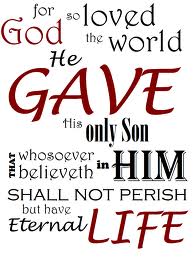
With Christmas just a couple of days away, I thought it appropriate to take a quick look at John 3:16, a verse that explains the reason why God sent His Son into the world. John 3:16 is perhaps the best-known and most-memorized verse in the Bible. All of the great truths of the Old Testament converge toward it and all of the great doctrines of the New Testament emerge from it. Martin Luther called it the gospel in miniature. Others have called it the gospel in a nutshell. John 3:16 announces more than good news, it announces the greatest news.

For God (the greatest lover) | No one can love us like God loves us. We tend to place conditions on our love for others. And, our human love is also largely based on ignorance. We might not love some people if we knew what they really thought about us or what they have said about us in private. But, God’s love is much higher than our love. He loves us unconditionally. He simply says, “I love you.”

so loved (to the greatest degree) | Nobody can love us to the degree to which God loves us. His love is wide enough to include the world, long enough to outlast the world, can reach deep enough to pull us out of the deepest pit, and can take us high enough to set our feet on solid ground.

the world (the greatest company) | The word world refers to every person that has ever lived, is presently living, and that is yet to be born. Our human love is narrow. We love only a few people. We do not love everybody. We see hundreds of people in the course of our daily lives. Yet, we don’t love all those people. But God loves every person in the world — without exception.

that He gave (the greatest act) | Giving is the greatest act of love. Because God loves the world He gave. God’s act of giving grows out of His attitude of loving. God does not love us because Jesus died for us — it’s the other way around. Jesus died for us because God already loved us. The death of Christ on the cross is the proof of God’s love, not the cause of God’s love.

His only begotten Son (the greatest gift) | Jesus is God’s indescribable gift (2 Cor. 9:15). Throughout human history, writers have given us great works of literature, artists have given us great works of art, science and technology have given us great discoveries and inventions, and musicians have given us stirring symphonies and compositions. But the greatest gift the human race has ever received is the gift of God’s Son. God sent His Son to save us from our sins.

that whoever (the greatest opportunity) | The word world is a reference to all of us. The word whoever is a reference to each of us. It’s good to know that God loves the world, but it’s better to know that He loves each one of us. The Bible tells us that God is “not wishing that any should perish, but that all should reach repentance” (2 Peter 3:9). Each of us have the opportunity to accept His wonderful gift.

believes (the greatest simplicity) | God made the way of salvation simple: whoever believes. Salvation is by faith, not by works or riches or intellect. God put salvation on the lower shelf so that it is within reach of every person in the world. We are to believe that we have sinned against God and that the penalty for our sin is death (eternal separation from God). We are to believe that God demonstrated His own love for us by sending His Son to die on the cross for us. And, we are to believe that God raised Jesus from the dead.

in Him (the greatest attraction) | We are to place our faith in Jesus Christ alone for our salvation. We are to trust in Him and what He did on the cross as payment for our sin. Many people miss heaven by only eighteen inches — which is approximately the distance between the head and the heart. Many people believe with their minds but not with their hearts. Knowing facts about Jesus is not enough. We must know Him personally.

should not perish (the greatest promise) | This is the first indication in this verse concerning what happens to those who do not believe in Him. We cannot enter into the presence of God and into heaven apart from a personal relationship with Jesus Christ.

but (the greatest difference) | This little conjunction points out the greatest difference and cautions us that there are consequences to what we believe.

have (the greatest certainty) | This word eliminates doubt and emphasizes assurance and certainty.

eternal life (the greatest possession) | Those who place their faith in Jesus alone for salvation are assured of eternal life.

May you have a blessed Christmas as you celebrate Jesus — God’s indescribable gift. God’s greatest gift! To learn more about who Jesus is and why He came, please visit Who is Jesus?
Posted by: Omar C. Garcia | December 22, 2010

Wordless Wednesday

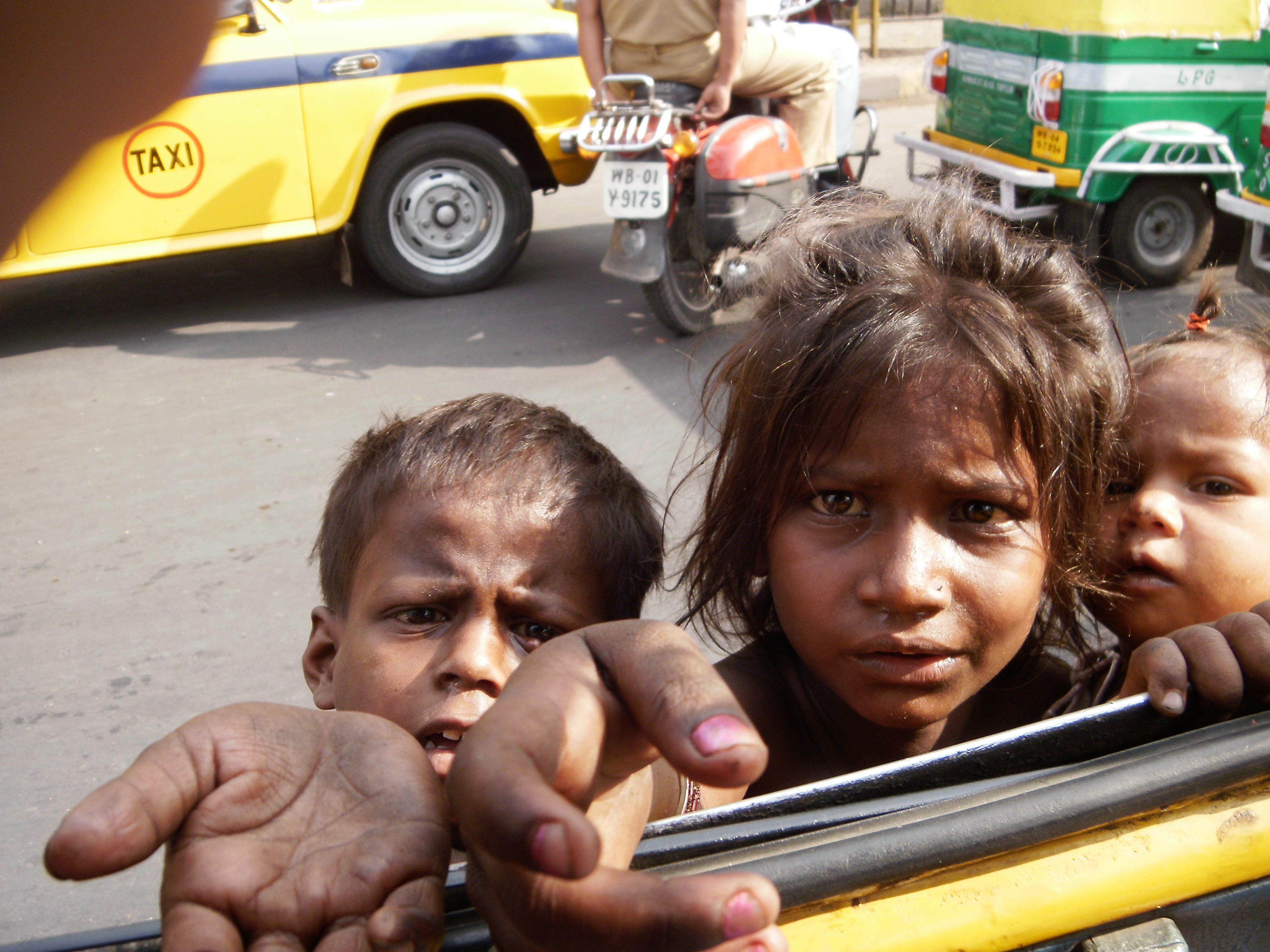
Kids Begging in Traffic | Kolkata, India

Posted by: Omar C. Garcia | December 20, 2010

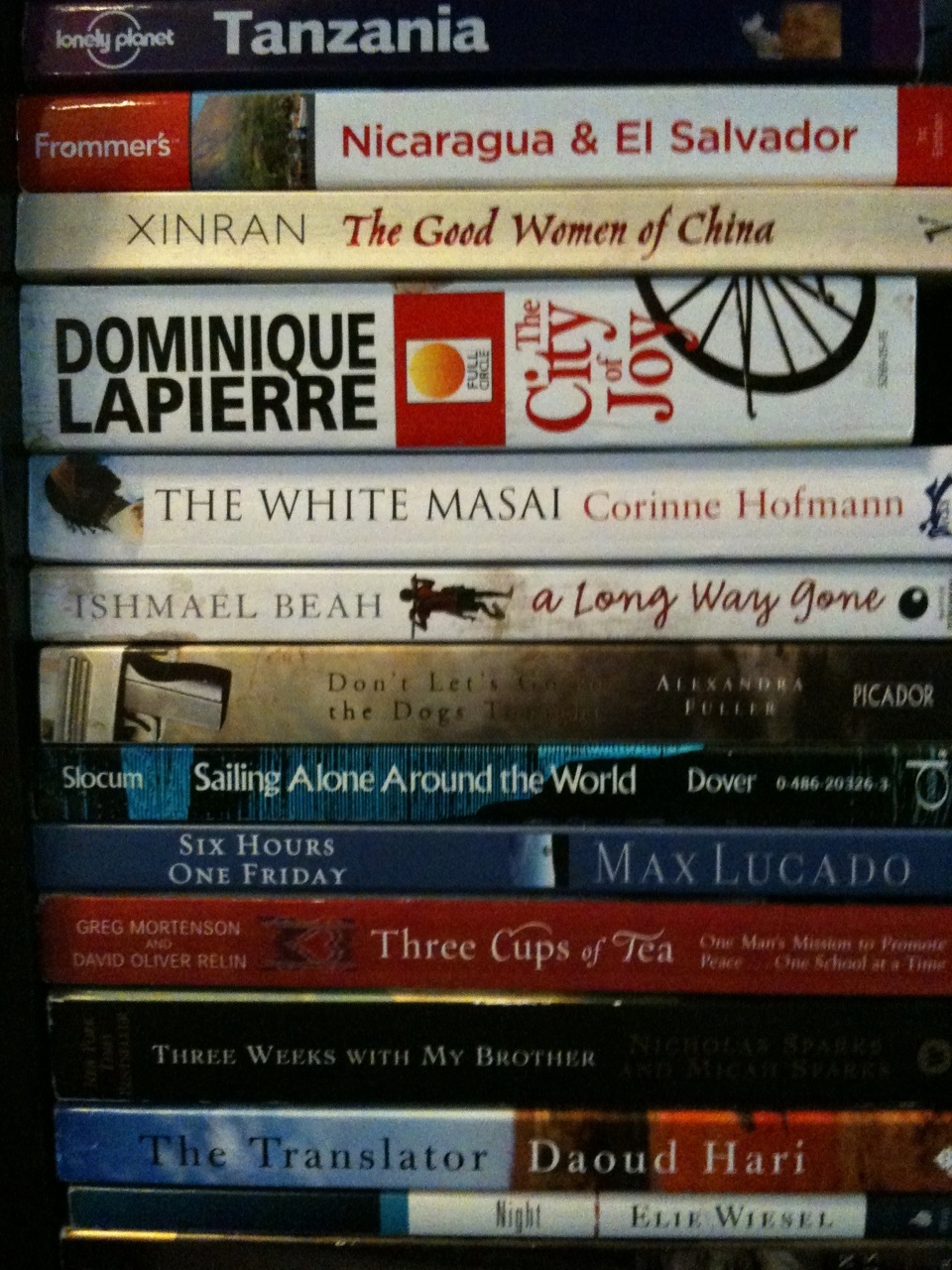
A Love of Reading

I love to read. My parents and my grandfather nurtured my love for reading when I was a kid by keeping me supplied with books. When I was in grade school I wore out my library card by reading every book about dinosaurs and discovery and exploration on the bookshelves. My beautiful mother was a reader. In the year before she died, we both read the same books about Mother Teresa and had some wonderful discussions. Over the years I have accumulated a library of more than two-thousand books. However, as much as I love holding a book in my hand, I now do all of my reading on my Kindle or my iPad. These electronic devices have revolutionized reading by giving readers instant access to hundreds of thousands of titles at affordable prices.

Over the past two weeks I have been reminded of how much I enjoy reading by observing other readers. My pastor, Alex Kennedy, is a reader. On our recent trip to Cambodia, Pastor Alex read four books. Every now and then he would turn to me and say, “You’ve got to hear this!” Or, he would hand me the book he was reading and say, “You’ve got to read this!” I’m glad he did. When we got to Bangkok I downloaded my own copy of one of those books onto my iPad. This led to some great dialogue along the way about what we were reading.

A few days ago I had lunch with some friends who asked me to give them a quick primer on how to use their new Kindle. On Saturday, my youngest daughter and I made a quick trip to the grocery store where I saw a man leaning on his cart and reading a book on his Kindle while his wife shopped. Yesterday morning, my friend Jon Davis told me about the books that he and Amanda purchased to give to their kids on Christmas. Jon and Amanda’s kids are avid readers. Last night my oldest daughter reminded me that I had promised to buy her a copy of “Decision Points” by former President Bush. I think she wants it now!

I’m glad that I had family and teachers who challenged and encouraged me to read when I was a kid. Their efforts started me on what became a lifelong journey of discovery and learning. Lifelong readers are lifelong learners. As parents, one of the best things that we can do for our kids is to instill in them a love for reading. Here are a few suggestions on how to do that.

Read to your kids. | Begin reading to your kids when they are young. Read stories that will stimulate their interest and imagination. And, be sure to be expressive as you read, using different voices for different characters.

Set an example of reading. | If you want for your kids to become interested in reading, then model it for them on a consistent basis.

Talk about what you are reading. | Talk to your kids about something interesting that you read. But, tell them in such a way that you pique their curiosity and interest in the subject. Be prepared to answer any questions they ask.

Visit the library with your kids. | Take your kids to the library and teach them how to look for books on their favorite subjects, hobbies, or interests. While you are at it, teach them how to care for the books they check out.

Buy books for your kids. | Take your kids to the bookstore and let them select a book that interests them. Do this on a regular basis and help them to build their own library.

Make books accessible in your home. | Start your own library at home. Stock your library with a variety of age-appropriate titles.

Set aside time for reading. | Consider setting aside an evening for reading. Ask your kids to select a favorite book to read to the family. Encourage them to read with expression.

Give books as gifts. | On birthdays and at Christmas, be sure to include at least one book as a gift. Or, give a gift card to a local bookstore and let your kids select their own books.

Don’t forget magazines. | Subscribe to magazines that your kids will enjoy reading and that will help them to learn about the world at large and about the many peoples who inhabit our planet.

Posted by: Omar C. Garcia | December 18, 2010

Our Memory Tree

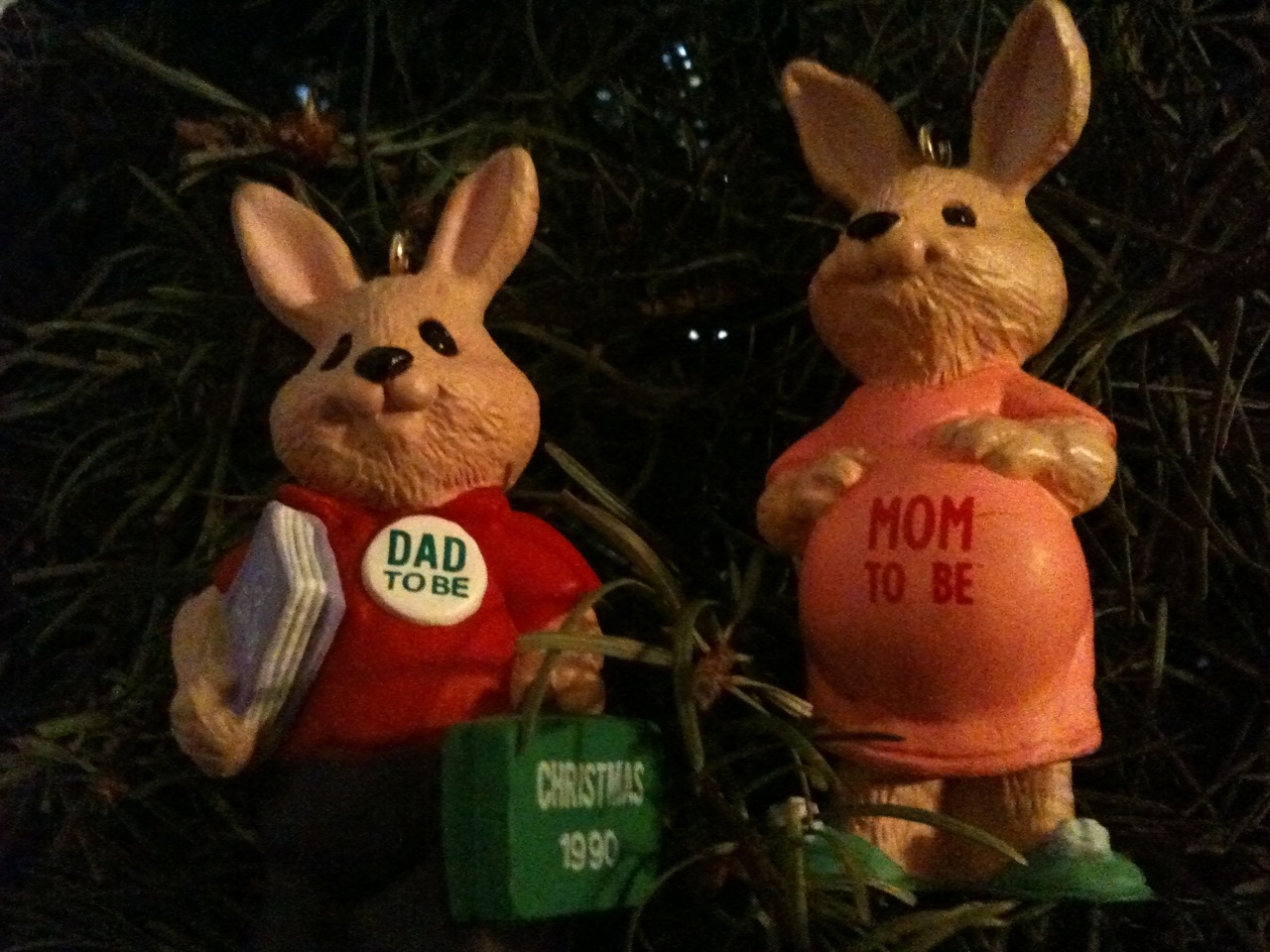
We look forward to setting up our Christmas tree each year. Over the years we have enjoyed both real and artificial trees. However, regardless of the kind of tree we choose, once we add the ornaments our Christmas tree is transformed into a memory tree. Each branch is laden with ornaments that we have collected over the past thirty years of marriage with three kids and more than fifty trips around the world. We handle and hang each ornament with care because each one has a special memory associated with it — something that I do not take for granted. Several years ago I received a call a few days after Christmas informing me that the house of some friends had burned down. When I arrived at the scene, we walked through the smoldering ashes to the spot where their Christmas tree had stood. My friends cried because every ornament they had collected and that the kids had made through the years had burned in the fire.

It’s interesting how hanging a little ornament on a tree can trigger a particular memory, often the kind of memories that never surface until we get the Christmas boxes out of the attic. And, memory is a good thing at Christmas and throughout the year. Just ask Ebenezer Scrooge, the Dickens character who lost touch with the meaning of Christmas in part because he lost touch with his memories. The ornaments on our tree do more than adorn the branches, they play a small but significant role in keeping us connected to memories of our journey together as a family. Every little glittery orb and hand-made ornament remind us of our connection with each other and with the family and friends we are blessed to have and to know. In thinking about the ornaments on our tree, I can classify them into three important categories.

First, our tree is filled with ornaments that remind us of family. These include ornaments our kids made in school and those that we purchased to commemorate special occasions like “First Christmas Together” and “Baby’s First Christmas.” We have ornaments that we purchased on family vacations to national parks, national monuments, and other places we have visited together around the country. After my beautiful mother passed away last year, I ordered some special ornaments that feature family photos taken at Christmas. The ornaments on our tree tell the story of our family in Christmas-sized chunks of time.

Second, our tree is also adorned with ornaments that remind us of friends and neighbors. While in San Antonio, our friends who owned a Hallmark store gave each of us a special Hallmark ornament every year for eight years. Our kids love to see these ornaments on our tree. And, we also have ornaments given to us by neighbors and other friends. These ornaments remind us of how fortunate we have been over the years to have neighborly friends and friendly neighbors.

Finally, our tree is decorated with ornaments that I have collected on my travels around the world. Wherever I go, I always make it a point to find something that I can bring home to hang on our Christmas tree to remind us of the nations. These ornaments remind us to pray for those who live in places hostile to the gospel and the many people groups that are still waiting to hear the story of Christmas. This year I added several more ornaments from the nations.

So, our Christmas tree is really more than a Christmas tree. It is a place for us to put our memories on display and also prayer prompts for the nations at Christmas. As we gather around our tree and in front of our hearth this Christmas, we will enjoy the fragrance of our tree and the sweet aroma of special memories. I pray that you too will enjoy special memories this Christmas. And, if your past is not filled with special memories, begin this year to create the kind of memories that you will enjoy next Christmas and in the many to follow. Best wished for a blessed Christmas.

Posted by: Omar C. Garcia | December 16, 2010

Kudos to Kumar

You do not want to live in Bihar if you have been naughty this Christmas. I’ll tell you why in a moment. Bihar, India’s most impoverished state, borders Nepal to the north and West Bengal to the east. I first learned about Bihar in 1999 while visiting Bangladesh. A friend who lived and served in Bangladesh at the time told me about the out-of-control crime, violence, and corruption in Bihar. He also told me about children from poor villages in western Bangladesh who were kidnapped and trafficked across the border to Bihar to work as carpet slaves. On a follow-up trip to Bangladesh, the women on my team visited villages where children had been kidnapped. They learned that one of the greatest difficulties for families whose children had been kidnapped and trafficked was not having any photos of their children to show to the police. So, using a Polaroid camera, our ladies took photos of children, laminated the photos onto a driver license-size card, and gave these child identification cards to anxious mothers. Our simple child identification card initiative was a big hit with poor village families.

Corruption is at the heart of injustice. The Old Testament prophets spoke against those who perverted justice by bribing judges and witnesses and who cheated their neighbors by using dishonest scales in the marketplace. These prophets condemned those who abused power and used deceit in order to gain advantage over others. Those who took advantage of the weaknesses of others did so with a bold sense of impunity. After all, they had the money to buy favorable decisions in the courts and therefore felt they had nothing to fear. But, they were wrong. While the wheels of God’s justice seem to move slowly, when they come they grind finely. The prophets made it clear that corruption and injustice displeased God and would not go unpunished. Now, back to Bihar.

On my flight home from Cambodia last week, I picked up a copy of the December 12 issue of the Khaleej Times, Dubai’s English language newspaper. One article in particular caught my attention — “Out goes a corrupt official and in comes a school.” Nitish Kumar, the recently reelected chief minister of Bihar, has taken a bold step to make good on a campaign promise to clean up corruption in his state, in particular the “promise to confiscate the property of corrupt officials and turn them into primary schools.” That is what got Raghuvansh Kunwar into trouble. It seems that this former motor vehicle inspector “was allegedly caught red handed accepting a bribe of Rs 50,000” or roughly $1,100.00 USD. Kunwar owns lots of property (assets disproportionate to his income) and has now lost it all. The government is already taking steps to open a school in the man’s house. And, six special courts are waiting to hear fourteen other cases against government officials accused of corruption and who have assets that are grossly disproportionate to their humble incomes.

Things got so bad in Bihar that the people elected a man who promised to come to their rescue. And, that man is keeping his promise. Not only are the “public servants” who have been accused of corruption in trouble, according to The Telegraph, a Kolkata-based newspaper, the relatives of corrupt officials who are found guilty will also be punished. It is clear that Nitish Kumar is serious about restoring sanity to his troubled state and giving hope to the masses that are fed up with corruption, abuse, and injustice. According to a report in The Wall Street Journal (Dec. 13), “Bihar is in the process of setting up a publicly accessible website with details of the personal assets of state assembly members, including Chief Minister Nitish Kumar.” Accountability has come to Bihar, and that is a good thing. This will be an interesting story to follow in the months and years ahead. Kudos to Kumar for having the courage to fight corruption and injustice in Bihar.

Posted by: Omar C. Garcia | December 15, 2010

Wordless Wednesday

Tsaatan Kids (aka Reindeer People) | Khövsgöl Aimag | Northern Mongolia

Posted by: Omar C. Garcia | December 13, 2010

A Christmas Challenge

Earlier this month, I posted a blog entitled New Christmas Paradigm while en route to Cambodia. In that blog I stated that this Christmas, Cheryl and I are giving each of our kids a sum of money to be used solely for the purpose of helping people in need. By the time I returned home from Cambodia on Sunday evening, our oldest daughter told me that she already knows who she will help. Niki wasted no time in finding a need and making a list of things she will purchase to help a single mother and her child. Today, Gina, our youngest daughter, shared with me that she also knows how she will divide the funds that we give her in order to bless others. We have asked our three kids to share their stories with our extended family on Christmas Eve. I can’t wait to hear what they will share.

Keep in mind that you do not have to give or spend money in order to bless others. Consider how you can give of yourself. There are lots of practical things that you can do to help others without spending a dime. As I was thinking about what we have asked our kids to do, I listed some of the benefits of challenging them to help others this Christmas. Here are a few of the things I jotted down.

Tune Your Hearing | The Christmas Challenge will force you to listen more intentionally to others. We can easily miss obvious clues that others are in pain or in need when we fail to listen to what they are saying. We need to intentionally slow down and tune in to the frequency of pain and need. If we will listen carefully we will become aware of needs that we can fill.

Sharpen Your Vision | The Christmas Challenge can sharpen your vision. Look at the world around you through new eyes. Do not overlook those who live in the blurry world of your peripheral vision because that is where many people in pain and in need reside. Ask God to help you to see people clearly.

Open Your Heart | The Christmas Challenge can lead you to open your heart. An open heart is essential to meeting the needs of others. Ask God to break your heart for what breaks His and then ask Him to reveal to you what you can do to help bring healing to the hurting.

Extend Your Hand | The Christmas Challenge must result in practical action to help others. It’s not enough to watch from a sterile distance or to hope that someone else will lift a finger to help. God is calling each of us to get personally involved in the lives of those who are hurting, disenfranchised, suffering, and in pain.

Quicken Your Steps | The Christmas challenge will cause you to quicken your steps. Once you have identified a need, don’t sit around. Act intentionally, responsibly, and in a timely manner. Take whatever steps are necessary in order to respond to the needs of others in a timely and compassionate manner.

It’s not too late to challenge your family to focus on helping others this Christmas. Be intentional about your Christmas gift list. Ask yourself if you really need to give or receive particular items. Redirect money that you would have spent on yourself to help others instead. And, get your kids involved. Don’t underestimate what God can do through your young children. He can use even the youngest kids to make a big difference. Talk with your kids. Help them to process information about how to help others. Affirm them and then help them to meet needs that they have identified. Interact in a loving and Christ-like way with those around you. Make this your best Christmas ever by doing something to bless others in our community.

Posted by: Omar C. Garcia | December 10, 2010

When Evil Prevails

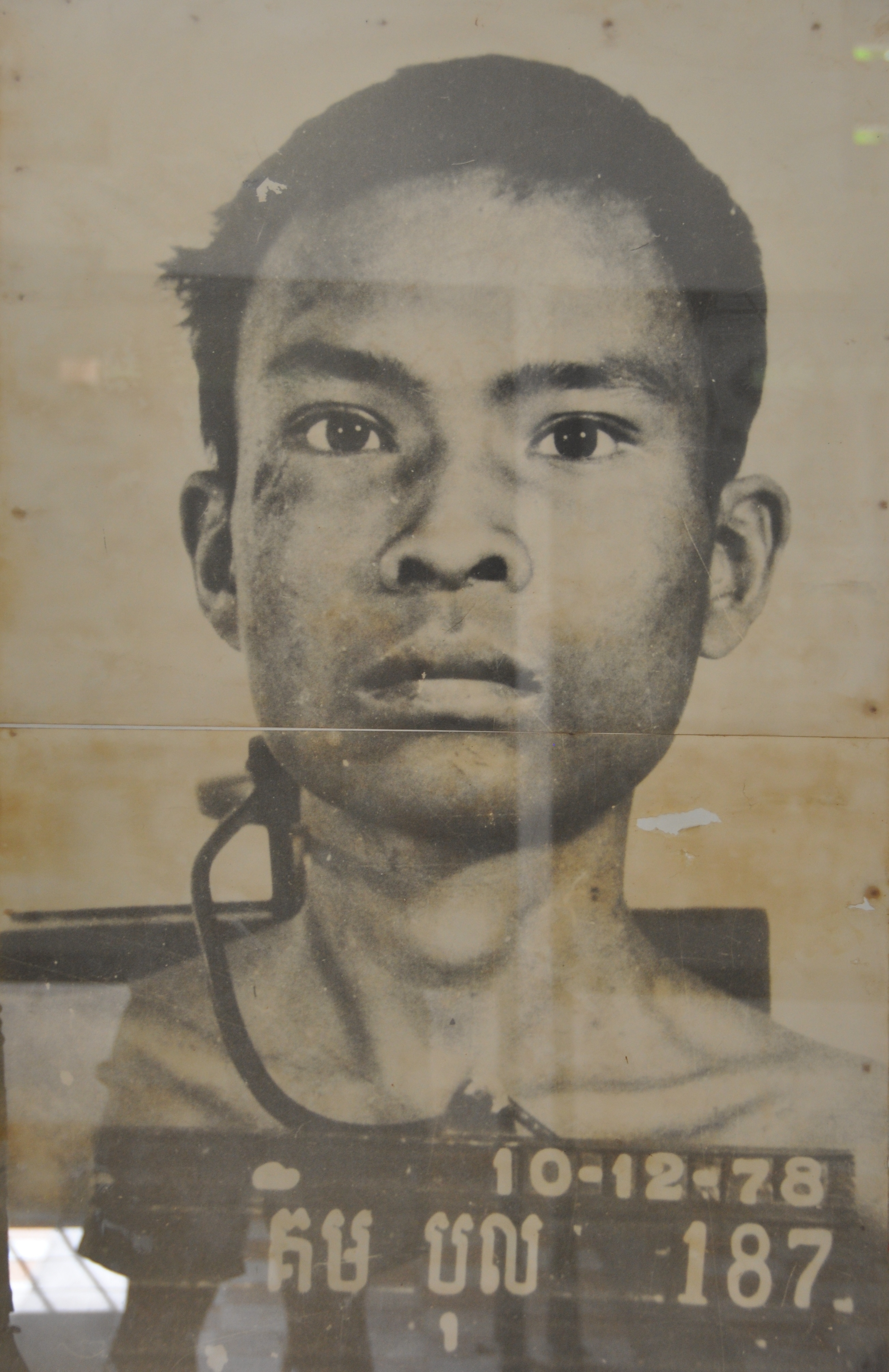
The young man in the photograph was named Kim Bol. His photo is one of hundreds on display at the Tuol Sleng Genocide Museum, known as Security Office 21 during the dark years of the Khmer Rouge. The Khmer Rouge took photos of every person they interrogated, tortured, and killed at S-21. These black and white photographs are the Khmer Rouge’s bloody fingerprints at the scene of one of recent history’s most heinous crimes. Kim Bol had the misfortune of being arrested and taken to S-21 on December 10, 1978 — exactly thirty-two years ago to the day. Earlier this week I returned to S-21 for the fourth time. Every time I visit I make it a point to look at as many of the photos on display as possible. I look at the expressions on each face and try to imagine what these individuals must have thought as they posed for what would be their last photograph. And, I look at the dates on the photos and try to remember what I was doing at the time these unfortunate alumni of S-21 were experiencing a living hell.

S-21 is a troubling study of humanity at its worst and a warning of the logical consequences of a worldview that devalues human life. The photos at S-21 tell the story. No one was exempt from the barbaric and inhumane treatment and torture of the Khmer Rouge. They murdered men and women of every age, teenagers, children, babies, and even pregnant women. And, they murdered Kim Bol whose remains lie buried in a mass grave. On the day that Kim Bol posed for Pol Pot’s photographer, I was just a few months into my journey into full-time vocational ministry and was looking forward to driving home to celebrate Christmas with my family. Life was good for me on December 10, 1978. I was not thinking about Cambodia or even aware that places like S-21 existed. But, they did exist and thousands of people like Kim Bol suffered and died as a result.

All that remains as evidence that Kim Bol briefly existed is a faded black and white photograph taken by the people who killed him. I will never know anything more about Kim Bol other than the single fact that he was photographed on December 10, 1978. I will never know the exact date of his death, where he was buried, whether he has any surviving family members, what made him laugh, or what hopes he had for his future. All I can know for certain is that he is dead but should not be forgotten. Kim Bol’s photo challenges me to live with greater awareness of the injustices in our world and to intentionally do something to make a difference. His photo and the hundreds of others on display at S-21 remind me that the world becomes even more dangerous when good people remain silent and complacent in the face of injustice. We must work to affirm the worth and dignity of all people lest one day the faces of our own children are photographed and put on display to remind a future generation of what can happen when evil prevails.

Posted by: Omar C. Garcia | December 9, 2010

Eight Dead Monkeys

Poipet en route to Siem Reap, Cambodia

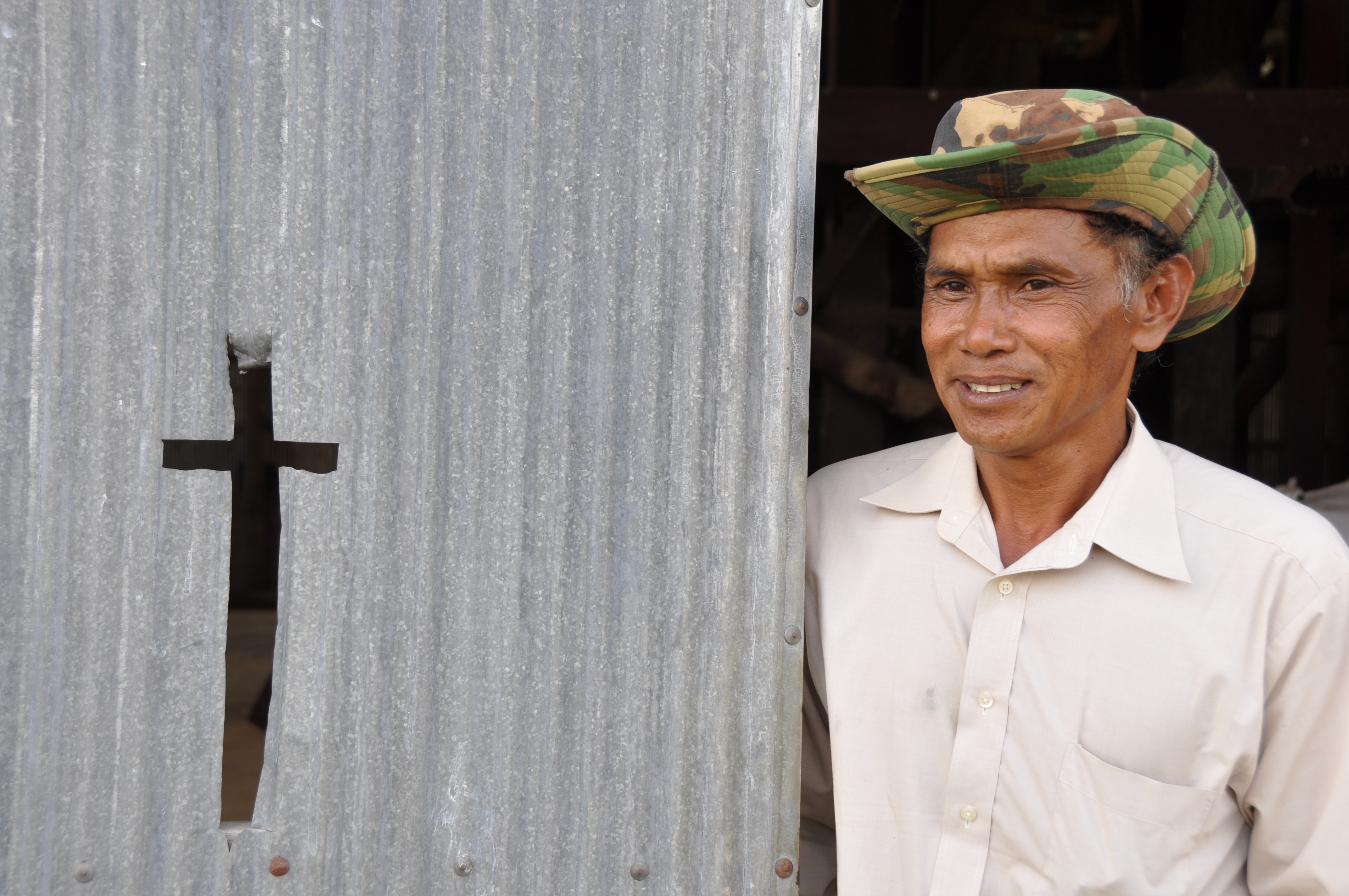
By his own admission, David Chai should have died in 1979. And, he would have died had it not been for eight monkeys that saved his life. David, a Buddhist, was a teenager during the mid-1970’s when the Khmer Rouge seized power in Cambodia and he was taken captive. He was forced to work long hours in the fields with little rest and allowed only one bowl of rice porridge per day. David said that everyone was malnourished and many died of starvation during his years in captivity. One day, while working in the fields, he spotted a small crab. He was so hungry that he picked it up and ate it raw. A Khmer Rouge soldier saw him eat the crab and accused him of stealing from the state. He reminded David that everything belonged to the state, including the small crab he had eaten. The young soldier then sentenced David to be executed for his crime against the state. The Khmer Rouge needed little excuse to execute their captives, especially during their final days in power. David, weak and under-nourished, was doomed to die.

Two Khmer Rouge soldiers took David and several others to a remote location and forced them to dig a mass grave. And then, one by one, they made each individual kneel in front of the grave, bludgeoned them on the back of the head, and dumped their lifeless remains into the grave. David was the last in line and witnessed the horrible execution of the others. Just moments before the soldiers called David to kneel in front of the mass grave, eight monkeys appeared in the trees. The Khmer Rouge soldiers turned their attention away from David and shot and killed all eight monkeys. Too lazy to carry eight dead monkeys back to their camp, the soldiers untied David and told him to carry the monkeys for them. So, instead of executing him, they warned David to never steal from the state again. David’s life was spared at the last possible moment because eight monkeys emerged from the jungle and were killed by two hungry soldiers.

Weeks later, when the Vietnamese invaded Cambodia, David and fifteen others escaped from the Khmer Rouge and began a cross-county trek toward Thailand. Only seven survived. The others were either killed by Khmer soldiers along the way or stepped on land mines. During their escape David was shot in the leg and had his feet pierced in a bamboo booby-trap. Nevertheless, he and the others continued on until they reached a refugee camp in Thailand. A couple of years later a Mennonite pastor sponsored David to live in America where he later became a Christian. David lived in the United States for thirty years. Two years ago, he sold his home in America and returned to Cambodia to help his people, to care for orphans, and to share the story of Jesus.

Soon after David arrived in Cambodia, he purchased seventy acres of land in the same province where he had almost lost his life. He also searched for and found the place where the Khmer Rouge almost killed him. David led twenty people who live nearby that place to faith in Christ. David is committed to spending the remainder of his days sowing seeds of life in Cambodia’s former killing fields. He is also committed to starting churches and caring for orphans. He does all of this and more as he runs his farm and produces the rice that feed the children in Steve Hyde’s orphanages. Today, Pastor Alex and I were privileged to meet this remarkable man and to hear the story of how God preserved his life. Cambodia is a better place today because of people like David — people who are willing to love God, to forgive those who have hurt them, and to change their nation one life at a time.

Posted by: Omar C. Garcia | December 8, 2010

Wordless Wednesday

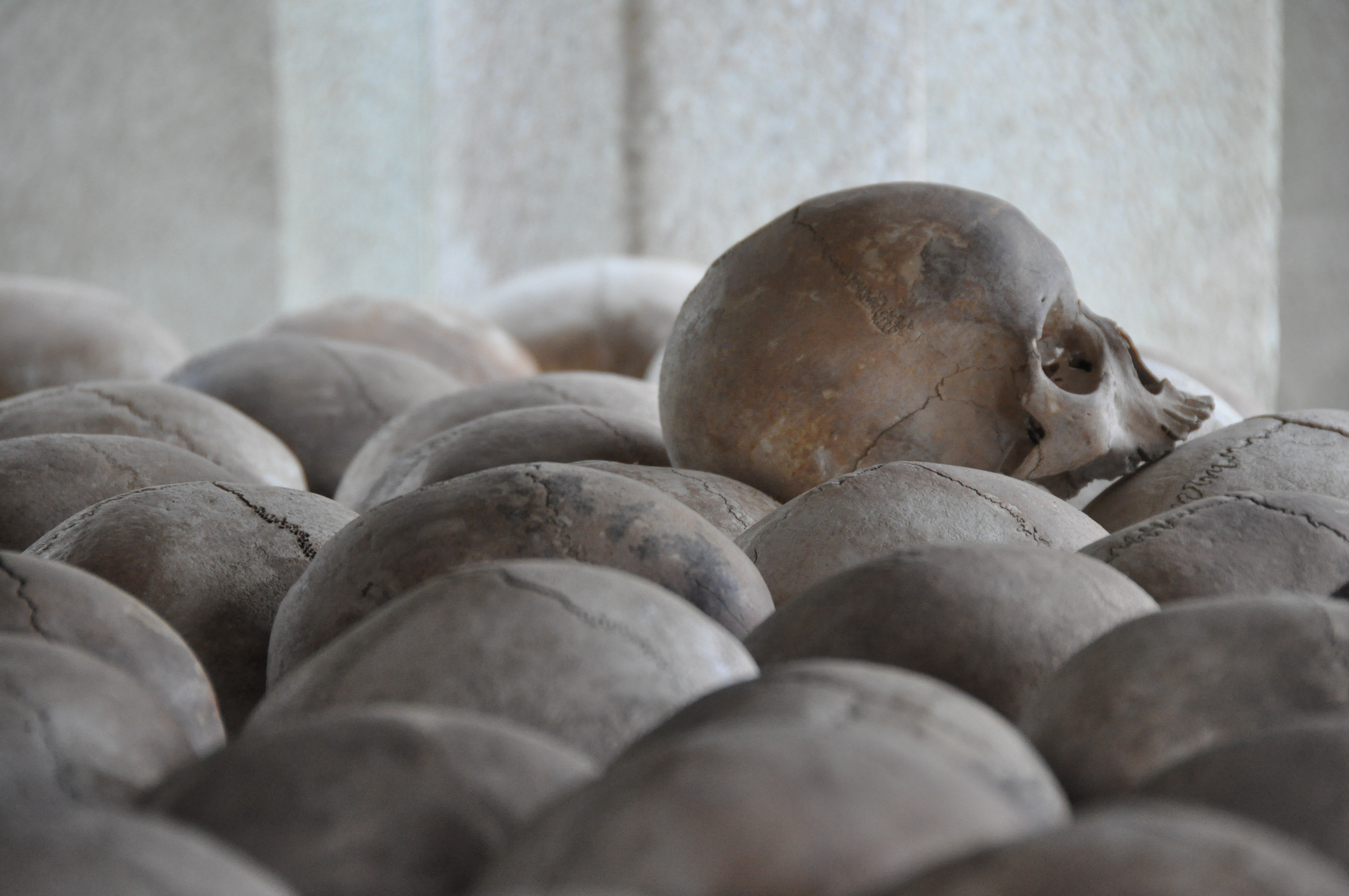
Skulls at Choeung Ek Killing Field | Outside of Phnom Penh, Cambodia

« Newer Posts - Older Posts »

Categories