I am headed back to Bangladesh on Sunday accompanied by my friend Gil. I first considered going to Bangladesh in 1998 while traveling by train from UlanBator, Mongolia to Beijing, China. As the train made its way south across the vast expanse of the Gobi Desert, my heart and mind were trekking across Asia Minor with the Apostle Paul and his companions. Absorbed in Luke’s account of the birth and expansion of the early church, I knew that God wanted me to join Him on mission in the Muslim world. My friend Lee Pullin and I spent considerable time talking about how such a conviction might become a reality. We both felt drawn to the 10/40 Window — home to the world’s least reached peoples. That night, as I listened to the wheels of the train marking time against the tracks, my heart arrived in Bangladesh. The next morning we arrived in Beijing.
Soon after returning home from Mongolia, I read about devastating floods in Bangladesh that had killed thousands and displaced millions. I found myself captivated by the haunting images of the dead and the living as I sat in the comfort of my home. What made these images even more haunting was the realization that out of the thousands who died in the flood waters, relatively few had the opportunity to hear and respond to the gospel of Jesus Christ. I could not help but reflect on the geography of it all. The geography of my birthplace made it possible for me to have access to the gospel — but, not so for those born in Bangladesh. Geography really is a matter of life and death in this overpopulated country — not only physically, but spiritually as well.
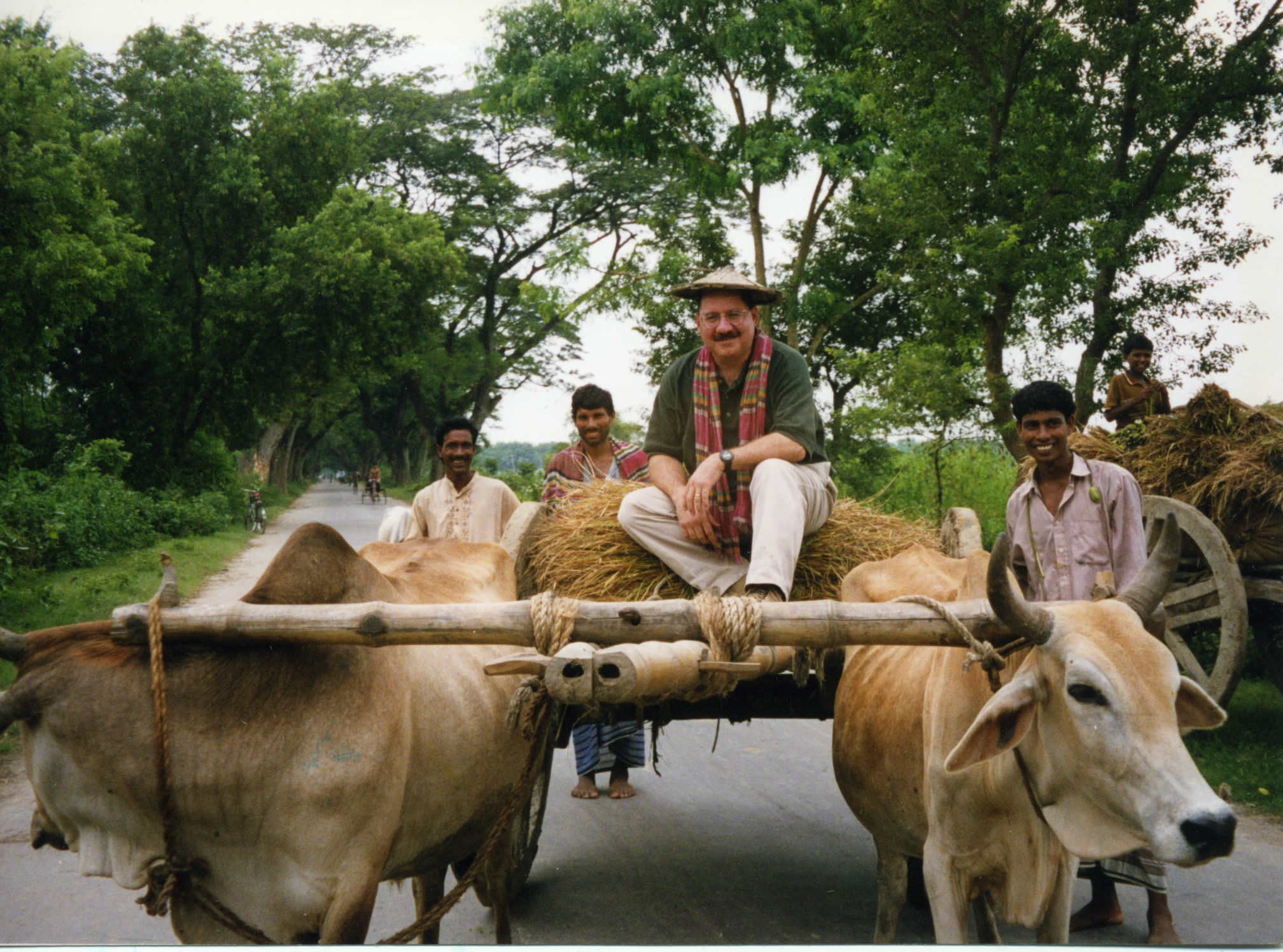 A year after my journey across the Gobi, I finally arrived in Bangladesh. This tiny country is nestled next to India at the very northern part of the Bay of Bengal — an area prone to natural disasters. Bangladesh is home to the third largest concentration of Muslims in the world. The majority of the Muslims in the country are Sunnis, although there is a small Shiite community. Bengali Muslims are the largest unreached people group in the world. On my first visit, I had the opportunity to story the Bible for six Muslim-background believers. Each of these new believers had experienced physical abuse and social alienation because of his faith in Christ. Yet, each of these men was determined to grow in his understanding of the Bible and to develop an apologetic that would enable him to more effectively share his new-found faith.
I returned to Bangladesh less than a year later to search of a man of peace — an approach to evangelism initiated by Jesus when He sent out the seventy-two to preach the good news. Jesus instructed them, “When you enter a house, first say, ‘Peace to this house.’ If a man of peace is there, your peace will rest on him; if not it will return to you. Stay in that house, eating and drinking whatever they give you…” (Luke 10:5-7, NIV). I must admit that it was a bit unnerving as we set out — not knowing where we would sleep and eat or what the day might hold. But, within the hour we had the opportunity to share the gospel with a Bengali man. Within minutes a large crowd gathered around to listen to the conversation. We spoke to people throughout the day and estimate that at least one hundred Bengalis heard the gospel for the very first time. A short time later we met a man of peace who invited us to his home.
The following day we met two men who had heard that we were in the area. Although these men had heard about Jesus, they told us that they had been waiting for four years for someone to come and explain to them more fully the story of Jesus. We had the wonderful opportunity of sharing the gospel with these men as well as with a larger audience of their relatives and friends. As a result of our visit to that village, more than one-hundred men and women placed their faith in Christ for salvation. In the days to follow we continued to meet and share with many people eager to learn more about Jesus Christ.
God loves the people of Bangladesh. And, because they are important to God, they are important to me. In the years since my first visit, I have mobilized teams to test water wells for arsenic content and to travel to remote villages by land and water. Kingsland has provided disaster relief funds as well as money for new water wells. The people of Bangladesh are good people deserving of practical demonstrations of God’s love and concern for them. I am looking forward to returning and reuniting with several of the good friends that I have met there on my many visits over the years. God is using these friends to make a big difference in this small country.
• • • • •
PS | Thank you to all of you who visited Go Beyond Blog in July — a record month with 9,296 guests. Thanks for your readership.
 Go Beyond
Omar, I am so grateful that I had the opportunity to go on mission to Mongolia – not once, but twice. The memories of those trips and the people I met there will never leave me. I recall one dear woman who approached me and asked to have her picture made with me, saying in halting English, “I want this because I am Christian, too.” What a thrill!
In Mongolia, I always felt safe. But you truly do “go beyond”, into regions that we all know are not safe. To confront Muslims on their home ground, however gently it may be done, is to court danger. I know that you go where God leads, that you follow His call. Still, I pray for you and your companions, for your safety, and most of all, for the effectiveness of your ministry. God bless you all.
By: Lanni on August 1, 2010
at 8:12 AM
I am working in Bangladesh for His kingdom. Once I met with you in Chittagong, I was interprator. I believe God is working and called us to join with him. I believe one day many people come to accept Jesus as their personal Savior. Please pray for my ministry.
By: Martin Tushar Biswas on August 23, 2010
at 9:22 PM
Martin…
Thank you for your faithfulness to share and to show the love of God to the people of Bangladesh. May God bless you as you continue to serve Him. You remain in my thoughts and prayers.
Blessings,
Omar~
By: Omar C. Garcia on August 23, 2010
at 10:02 PM